The Original Danish Model
“One has to face the fact that there is something a little elusive about the Folkehøjskole,” Olive Dame Campbell wrote in the introduction to her 1927 book on the topic—still the most definitive volume of its kind. Almost a century later, not much has changed.[1]
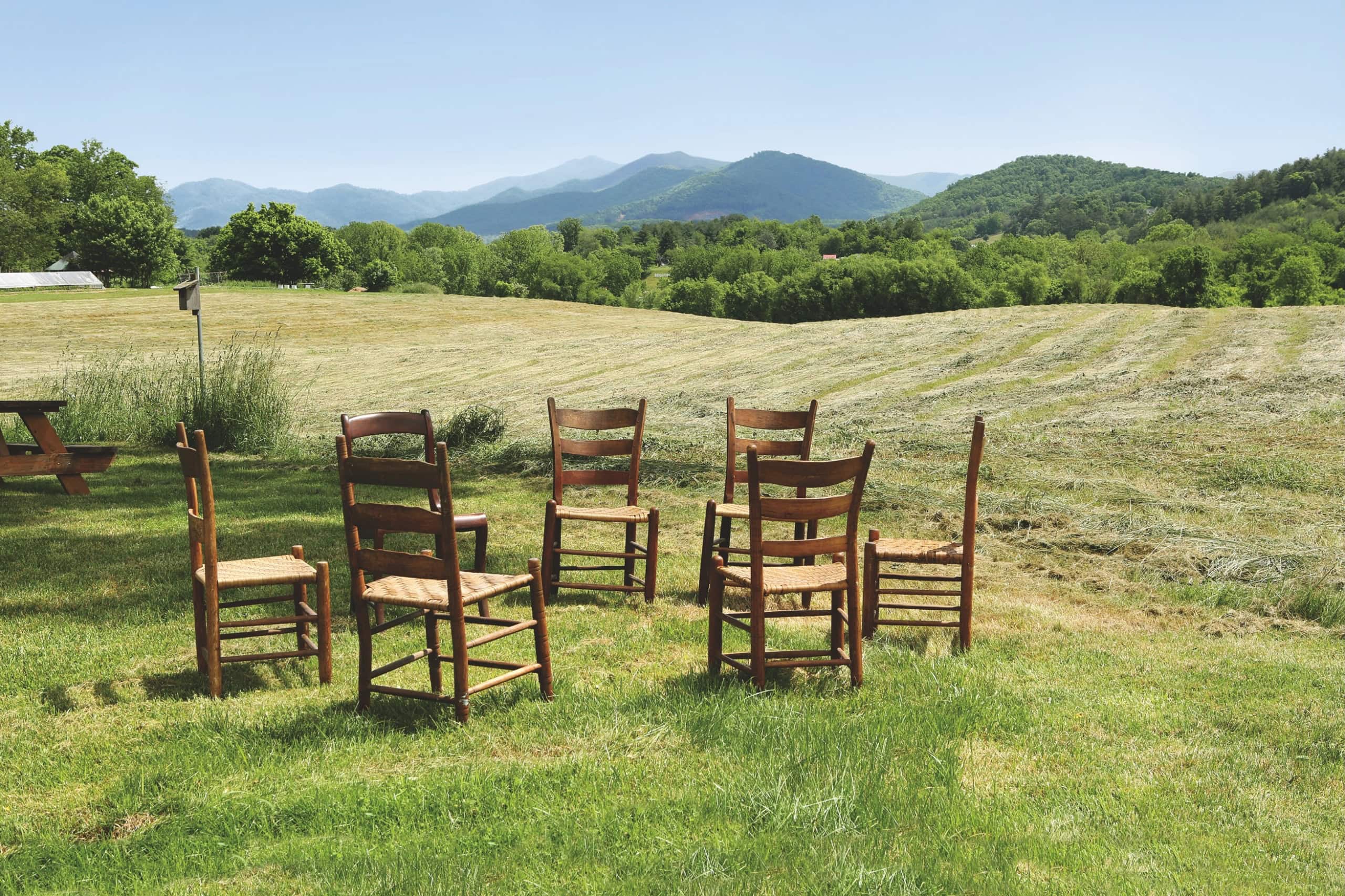
Today, there are over one hundred folk schools stateside, not counting the many community-centric art and craft schools that are often conflated with them, but the consensus around the definition is still as hazy.[2] American folk schools have mostly taken hold in idyllic locales, situated along the picturesque shores of the Great Lakes, under the northern lights of Alaska’s interior region, or tucked into scenic valleys deep in the Appalachian Mountains, often becoming attractions in small towns, a collection of timeworn buildings on a sprawling campus where cell phone service is spotty.
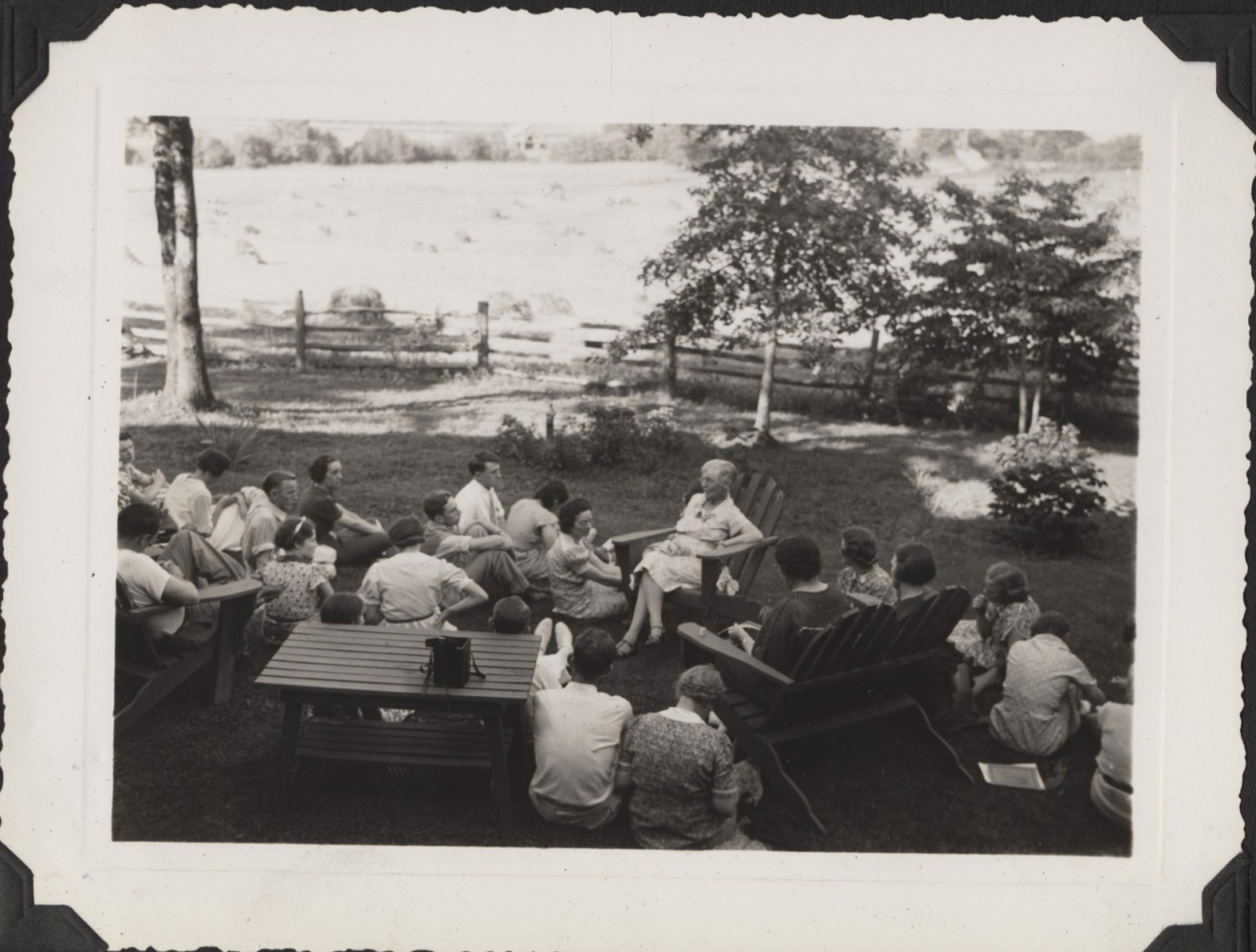
Despite some peripheral commonalities among these venues, the folk education model is usually defined by what it is not, rather than by what it is. A “folk school” is not a college or university. There are no tests, grades, degrees, or certificates. It is not based on a static curriculum; instead, it follows ever-shifting priorities that respond to community needs. There are no divisions between groups: teachers and students live together, learn from each other, and work side by side to keep things running. There is often a focus on rural life and preserving traditional culture, but even in the original writings about the model, that meaning is unclear.[3] Attendance isn’t required—the hope is that people come and stay because they want to. In several places, communal singing helps boost morale and inspires social connection, sometimes taking the form of hymns and blessings before meals or other times of protest songs sung in a round.
In recent years, the idea of a folk school, what it is and whom it serves, has shifted significantly, partially through an unintentional abandonment of the radical politics that originally made the institution influential in Denmark. “U.S. folk schools generally seem to be overwhelmingly white in both leadership and attendance,” wrote the journalist Nylah Iqbal Muhammad in a recent article about the popularity of the North House Folk School in Minnesota, “begging the question of just how accessible these survival skills are for the Black and brown people who are most threatened by environmental change.”[4]
It wasn’t always this way though. Alabama’s Tuskegee University, known as the Tuskegee Normal and Industrial Institute in Campbell’s time, originally focused on agricultural skills and vocational programs, fostering economic independence among Black communities in the rural American South. Led by the reformer Booker T. Washington, who promoted practical, holistic education for Black Americans, going beyond purely academic learning, the groundbreaking school aimed to prepare students, many of whom were formerly enslaved, for self-sufficiency.[5]
In personal correspondence, Campbell wrote that Tuskegee was “a kind of folk school . . . with some rather important differences,” although she also mentioned that a Nordic teacher she met during her travels had told her, “Washington’s school must come nearer to the Danish idea than any in America.”[6]
The Scandinavian theologian Nikolai Frederik Severin Grundtvig (1783–1872) is seen as the “ideological father” to the folk school idea. Grundtvig outlined in early writings an educational institution that would prioritize lived experiences and communal interaction over the “dead knowledge” found in traditional books and Bible studies, making the school truly responsive to the community it serves. He believed that for democracy to flourish in Denmark, especially during its swift transition away from monarchy, individuals needed to learn from one another about cooperation, as well as about cultivating an understanding and acceptance of diverse perspectives, through adult-oriented folkehøjskoles.[7] Sofus Högsbro, principal of Denmark’s Rödding Folk School, stressed this too, writing in 1860 that, “[the folk school] would be for democracy what the church is for Christianity.”[8]
To understand what an American folk school is, or can be, one needs to look at what it was, both in theory and in practice. It’s striking, then, that two of the most well-known and influential American folk schools were originally established in Appalachia to address mounting problems that had emerged in rural areas during the Progressive Era and the early years of the Great Depression. The John C. Campbell Folk School and Highlander Folk School took drastically different approaches while underpinned by the same idea. Both still operate today, speaking perhaps to the success of Grundtvig’s idea while embracing multiple methodologies to reach a common goal.
The John C. Campbell Folk School
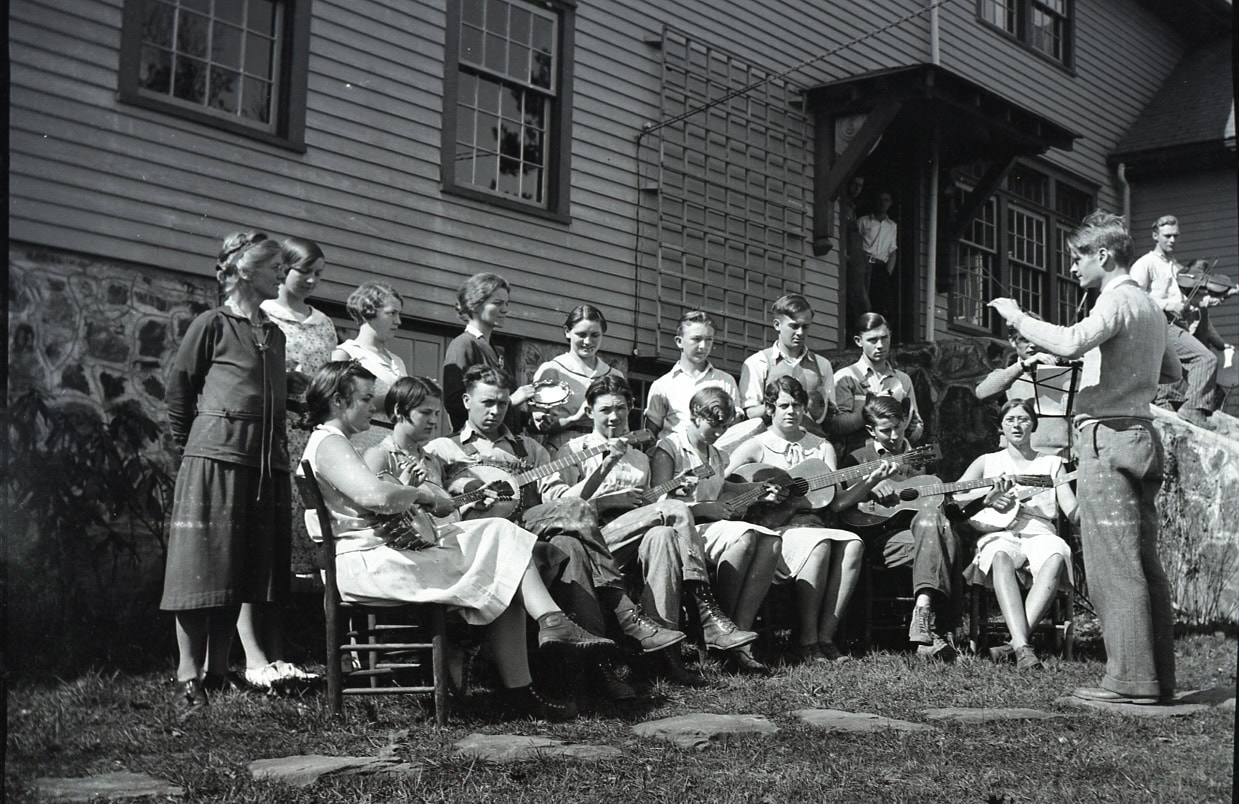
Marguerite Butler arrived in Murphy, North Carolina, in 1925 at the urging of her friend Olive Dame Campbell to find a town suitable for their experiment: a school that would celebrate country life and teach young adults the value of staying and working on local farms, rather than leaving for factory jobs in larger cities. Olive initially considered starting an Appalachian folk school with her husband, John, before his untimely death in 1919. The couple had traveled through southern Appalachia in the early twentieth century; Olive collected songs while John studied the people and region. Butler, an educator from Kentucky’s Pine Mountain Settlement School, bonded with the couple over their shared passion for education reform, and after John’s passing, spent eighteen months in Scandinavia with Olive. The two learned from the many vocational high schools focused on practical lessons for rural communities, which were “both enlivening and enlightening.”[9]
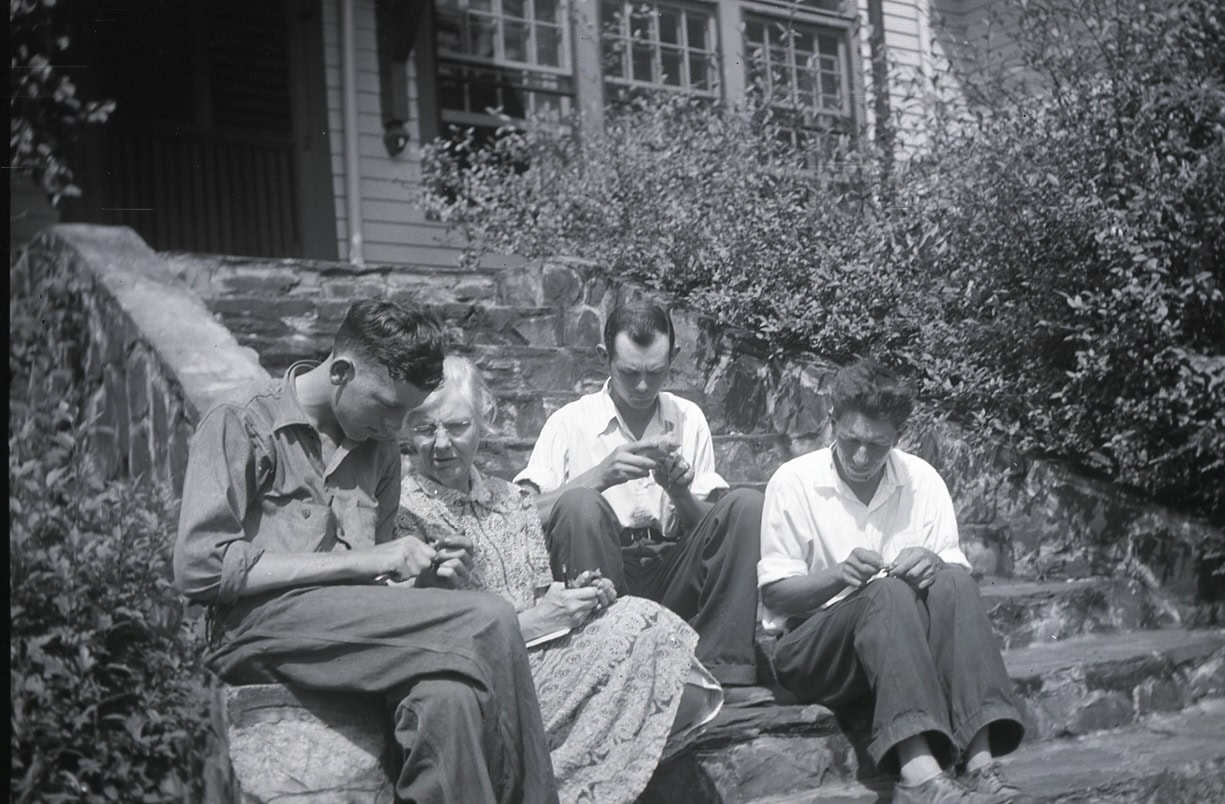
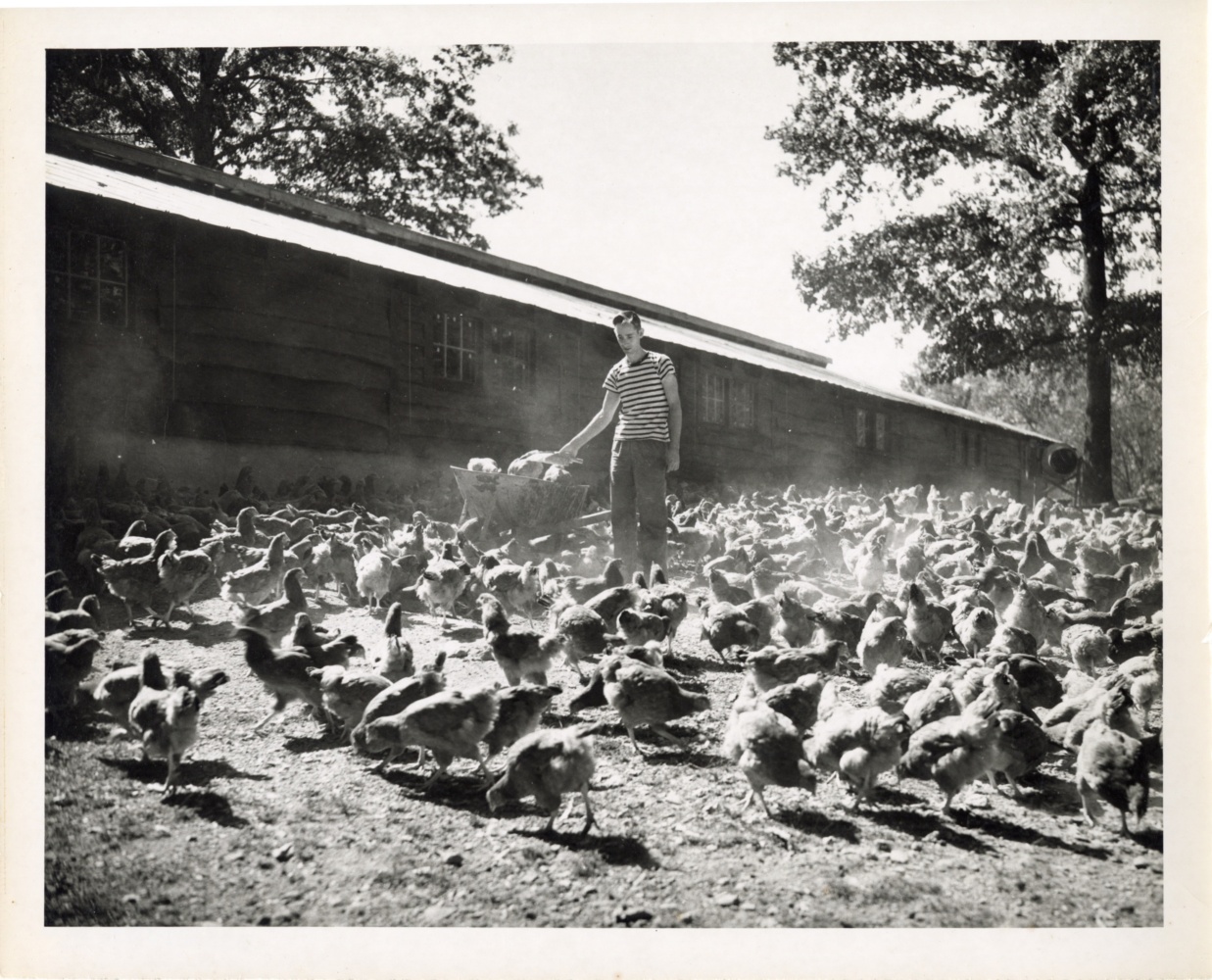
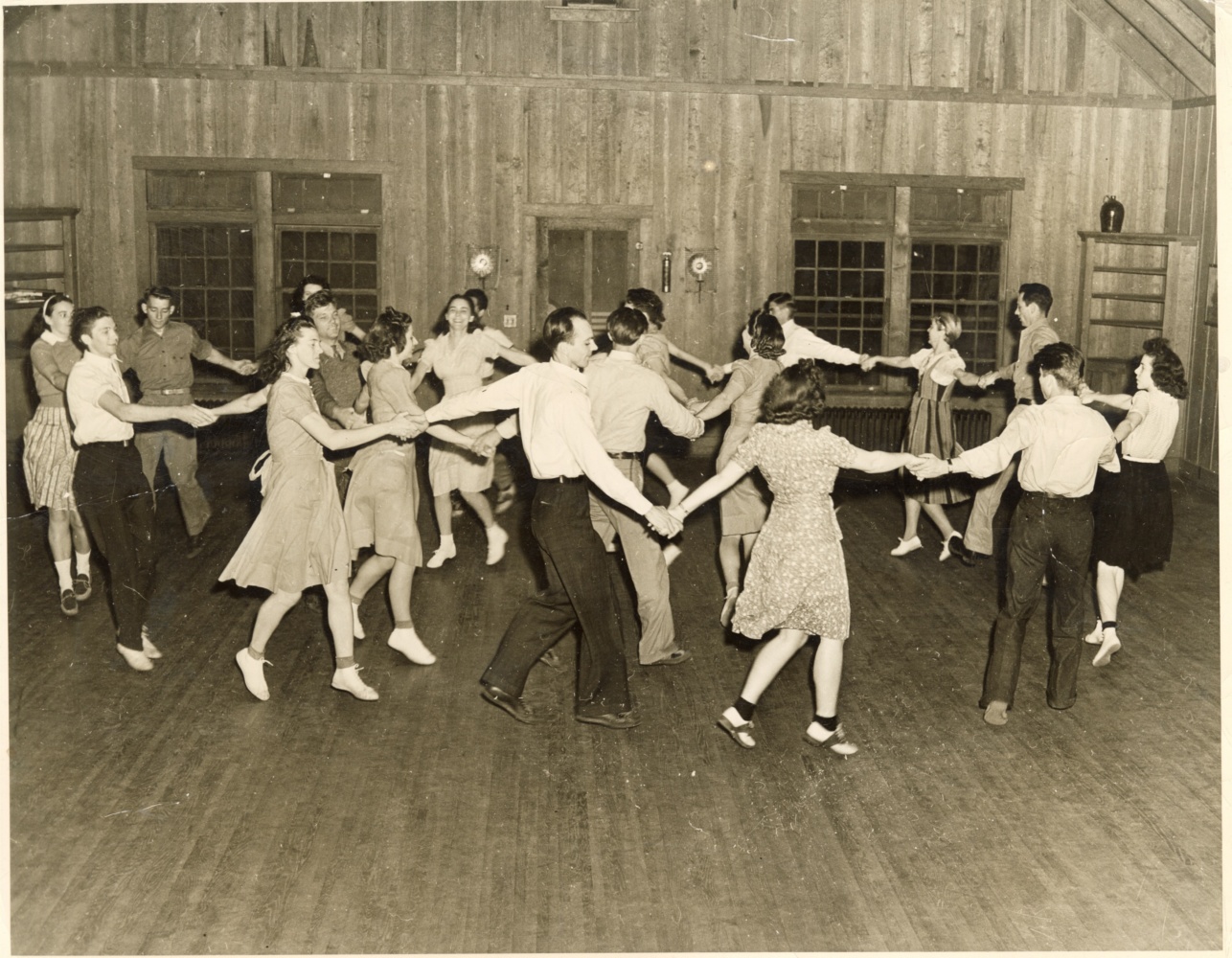
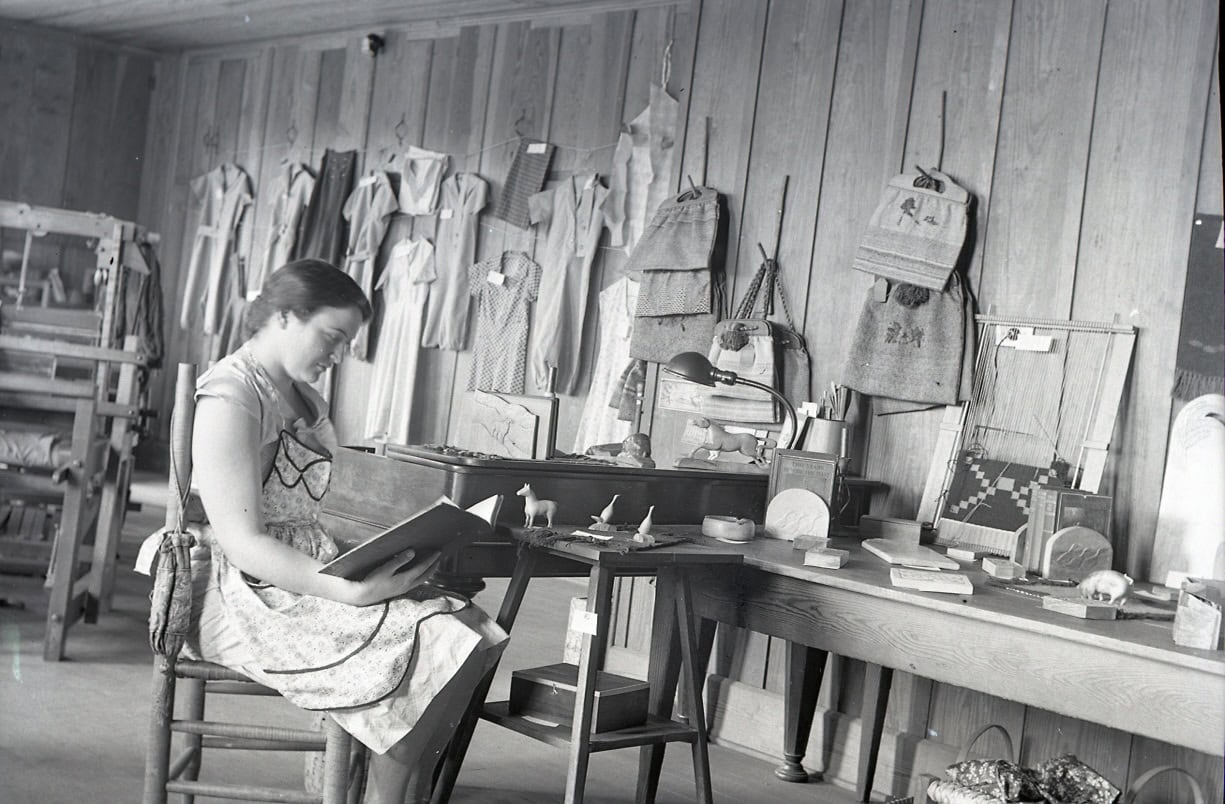
During her Murphy visit, Butler received strong support for the folk school idea in the nearby Brasstown community. Later that year, Butler and Campbell opened the John C. Campbell Folk School, thanks to local donations of labor, land, and resources, especially from the Scroggs family, who donated twenty acres and rallied the community to help.[10] Early folk school offerings included agriculture and crafts workshops, alongside community initiatives like establishing a credit union and dairy cooperative to foster economic progress.[11] The school is still open today, with year-round classes teaching the basics of blacksmithing, folk dancing, and weaving, along with other creative pursuits; however, only a handful of agricultural or cooperative endeavors remain in the curriculum.
Highlander Folk School
Like Campbell, Tennessee-born Myles Horton was inspired by the Grundtvig approach; he traveled to Denmark in 1931 to see folk schools firsthand, convinced that the model would help foster social activism, and advocate for labor rights, in his hometown and across Appalachia.[12]
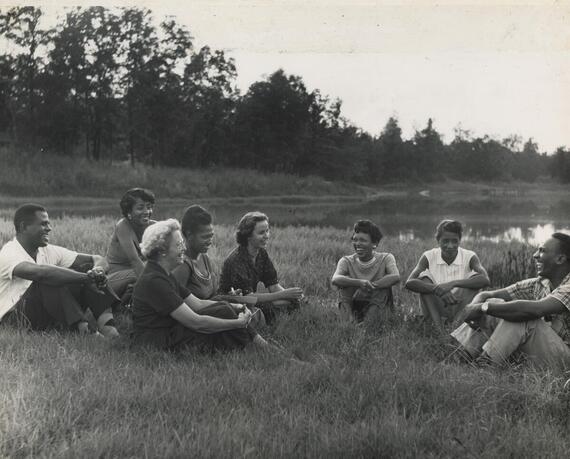
Horton, with Don West and James Dombrowski, would go on to establish Highlander in 1932 in Monteagle, Tennessee, to empower ordinary people to become leaders for social justice. Horton shaped the school’s focus on union organizing, labor strikes, and civil rights, participating alongside students and workers in labor actions and openly challenging segregation laws.[13] Myles’s wife, Zilphia, also played a key role in the school’s early success. Zilphia understood how the arts could help bring people together around shared goals, as the journalist Kim Ruehl pointed out in her 2021 book A Singing Army, and spearheaded much of Highlander’s cultural programming.[14]
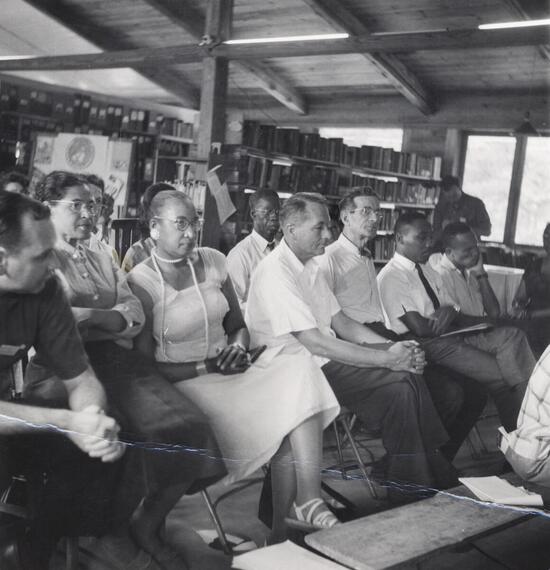
Highlander’s influence, and legacy, loomed large. Rosa Parks attended Highlander for a two-week workshop on school desegregation actions in August 1955, months before refusing to give up her seat on a Montgomery bus.[15] Zilphia helped popularize the protest song “We Shall Overcome,” introducing the tune to celebrated folk musicians including Pete Seeger; the Student Nonviolent Coordinating Committee, learning from these musicians, helped the tune become a civil rights anthem and in turn inspired one of Dr. Martin Luther King Jr.’s most pivotal speeches.[16]
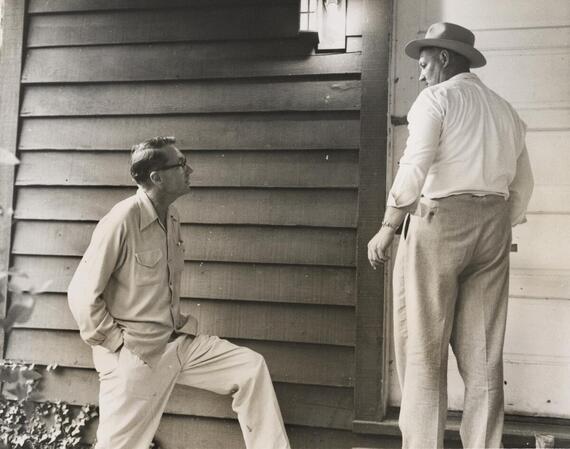
The school’s programs were not without controversy, though. The FBI surveilled Highlander for decades because of its political activity. Regional groups distributed propaganda that labeled it a “Communist Training School,” and advocated for its closure.[17] In 1959, the Tennessee state government, claiming it was illegal for a private school to offer integrated programs, revoked the school’s charter and seized its land, ending, in their eyes, the school’s controversial run. The local sheriff padlocked the building, leading Horton to respond with a phrase that encapsulated the school’s ethos: “You can’t padlock an idea.”[18]
For a short period, the school relocated to Knoxville and then to New Market, Tennessee, where it remains today, renamed the Highlander Research and Education Center and focusing on movement education and organizing work. Unfortunately, animosity against Highlander persists: In March 2019, Highlander’s main office building was burned down in a white supremacist arson attack, and only recently was rebuilt and reopened.[19]
Contemporary Models in Action
In looking at both institutions, one starts to see how a folkehøjskole reflecting a combination of Campbell and Horton’s approaches could be a useful tool for today—encouraging dialogue beyond digital echo chambers, showing the widespread support for democratic values, promoting social change, and using arts and cultural programming (especially social dancing) as a way to break down divisions sparked not by inherent belief but by political polarization.
Newly established folk schools seem to embrace the more political aspects of the Danish model. The Olamina Folk School for Land, Memory & Craft in Tuskegee, Alabama, co-founded by the musician Ash Combahee and artist Jada Patterson in 2026, “is designed for transformative communal education rooted in Southern Black folk tradition.”[20] The school is actively fundraising to establish operations, and was inspired by the organizing work undertaken by Highlander and others. The recently opened Center for People and Craft in Downtown Minneapolis, embraces the potential for folk schools to serve as a “talisman against fascism.”[21]
“[The folk school] would be for democracy what the church is for Christianity.”
Folk schools don’t survive on advancing democracy alone though; anecdotally, people attribute their appeal to a “magic” inherent in the experience—a way to describe the fuzzy feelings that come from pushing oneself into uncomfortable territory, grasping once-challenging skills, embracing vulnerability, and forging deep friendships.
That magic, while it may seem cliché, could also be the folk school’s hidden strength. The joy and camaraderie that stems from creating and learning together in a rural enclave, away from the pressures of the everyday, can often attract people who live, think, and vote very differently from one another. Reformers across generations have relied on the Danish model for this very reason. Folk schools, by uniting an unlikely group around a common goal, can help heal the schisms caused by worsening political and economic conditions or prompt a break from prevailing separatist thinking, all while emphasizing communal well-being and mutual understanding. The “magic” is representative of the hope that it instills in its participants: that, with a little work, maybe daily life could feel this harmonious, too. That hope is necessary in sparking great change. As Horton wrote in his memoir, “Only people with hope will struggle. The people who are hopeless are grist for the fascist mill.”[22]
[1] Olive D. Campbell, The Danish Folk School: Its Influence in the Life of Denmark and the North (Macmillan, 1928), 1.
[2] Dawn Murphy, “What is a Folk School? An interview Dawn Murphy, Vice President of the Folk Education Association of America,” by Robert Alan Grand, John C. Campbell Folk School blog, February 15, 2023.
[3] David E. Whisnant, All That Is Native and Fine: The Politics of Culture in an American Region,25th anniversaryedition (University of North Carolina Press, 2009), 134.
[4] Nylah Iqbal Muhammad, “A Minnesota School Teaches Apocalypse-Proof Crafts and Cooking.” Eater Twin Cities, August 26, 2025, https://twincities.eater.com/eater-archives/36888/north-house-folk-school-minnesota-crafts-food.
[5] “History of Tuskegee University,” Tuskegee University, accessed May 7, 2026, https://www.tuskegee.edu/explore/History-and-Mission.html.
[6] Olive Dame Campbell to John M. Glenn, General Director of the Russel Sage Foundation, November 16, 1923, John C. Campbell Folk School Collection, Berea College Special Collections and Archives.
[7] Sara Skovborg Mortensen, Danish Folk High School (The Association of Folk High Schools in Denmark, 2019), 11–13.
[8] Campbell, The Danish Folk School, 70.
[9] Rooney Floyd, “A Tribute to Olive Dame Campbell, 1882–1954,” Blind Pig and the Acorn, September 23 2016, https://blindpigandtheacorn.com/olive-dame-campbell-1882-1954-2/.
[10] M. Anna Fariello, “Making History: John C. Campbell Folk School,” Craft Revival: Shaping Western North Carolina Past and Present, 2007, accessed May 7, 2026, https://www.wcu.edu/library/DigitalCollections/CraftRevival/story/campbell.html.
[11] The writer David Whisnant has critiqued Campbell’s methods, writing that she took “a gradualist, meliorist approach to social change, directing her work at the folk school toward the small-scale economics of family farms and cooperatives, and assuming that individuals could find adequate room for mobility within an essentially unaltered system.” Whisnant, All That Is Native and Fine, 174.
[12] The academic John Glen recounted how, “Horton had learned about the [John C. Campbell Folk School] . . . but he had believed it to be little more than a quilt-making cooperative, irrelevant to his own more politically radical interests.” John M. Glen, Highlander: No Ordinary School, 2nd ed. (University of Tennessee Press, 1996), 13.
[13] Glen, Highlander, 2.
[14] Kim Ruehl, A Singing Army: Zilphia Horton and the Highlander Folk School ( University of Texas Press, 2021), 68–69.
[15] Jeanne Theoharis, “Highlander Folk School and the Criminalization of Organizing,” The Rebellious Life of Mrs. Rosa Parks, accessed May 7, 2026, https://rosaparksbiography.org/bio/highlander-folk-school-and-the-criminalization-of-organizing/.
[16] Ruehl, A Singing Army, 156-58.
[17] “Martin Luther King at Communist Training School,” broadside, David R. Obey papers, 1962–2014, The Wisconsin Historical Society.
[18] Mie Inouye, “The Highlander Idea,” Jacobin, April 13, 2019, https://jacobin.com/2019/04/highlander-folk-school-tennessee-organizing-movements.
[19] Highlander Center (@highlandercenter), “Highlander staff and friends gathered earlier this month to celebrate the completion of our new office building . . .,” April 17, 2026, https://www.instagram.com/p/DXPhzB0E2YY/.
[20] Tuskegee Land Project (@tuskegeelandproject), “We think it’s time we introduce ourselves! The TLP is a collective of Black and Brown land stewards . . .,” April 15, 2026, https://www.instagram.com/p/DXK2AY1CSQr/.
[21] “The Vision,” Center for People and Craft, accessed May 7, 2026, https://www.peopleandcraft.org/.
[22] Myles Horton, Judith Kohl, and Herbert R. Kohl, The Long Haul: An Autobiography (Doubleday, 1990), 44.