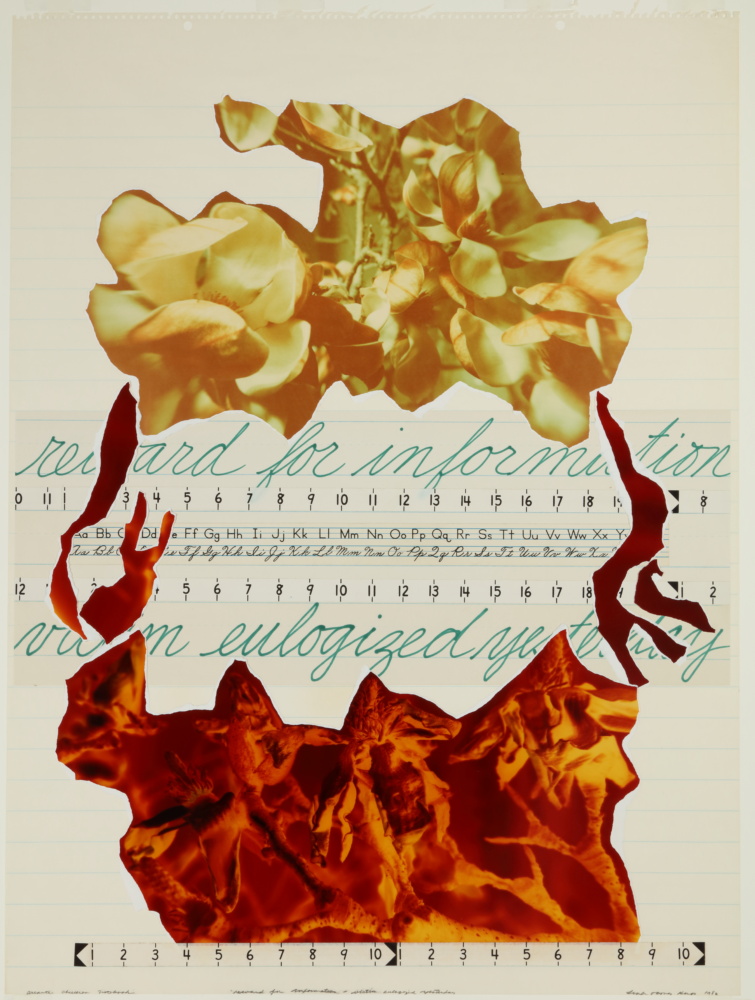
“She couldn’t stand the glory, she will be second to none,” sings Prince on “Annie Christian,” a track buried on the second half of his 1981 album Controversy. “Annie Christian” wasn’t a memorial or a protest song; it was something stranger—a coded dispatch, a flare shot into the atmosphere of the early Reagan era. The character of “Annie” arrives through double entendre, her name a near‑homophone for “Anti-christ,” a symbolic antagonist behind the decade’s incoming, disparate terrors.
Over a frantic synth and a guitar that jitters like a broken metronome, Prince chants about a woman who “moved to Atlanta and bought a blue car,” transcoding the Atlanta child murders of 1978–81 into a pop cipher. The song’s bassline is a warning. His voice—sterile one moment, razor‑edged the next—makes the track feel less like a song and more like a distorted broadcast, an alarm for a decade about to erupt and for a city trying to register a crisis it could not yet fully see.
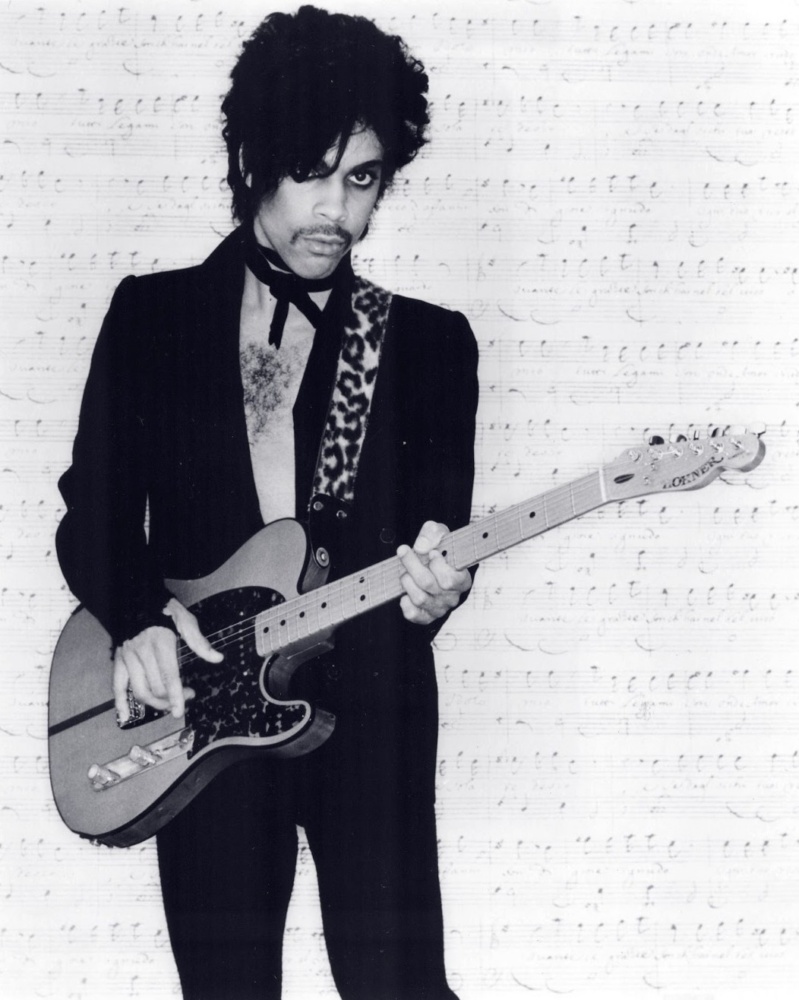
While Atlanta strained to hear itself through sirens and rumors of its missing children, another kind of listening was unfolding hundreds of miles away. The artist Leah Jaynes Karp was attempting to read the crisis from her studio in Philadelphia, her listening attuned by the instincts of a mother raising two young Black sons. As autopsy reports flooded through radio bulletins and the clipped cadence of newsreaders, those words, half‑heard and repeated, found their way directly into her work. If Prince’s song was a distorted broadcast of the decade’s terrors, Karp’s collages were their quiet counter signal: a way of transcribing terror at the scale of the child’s desk. Her 1982 mixed-media series—layering photographs of lilies, measuring tape, and news coverage on the Atlanta child murders—crafts these motifs into a hand‑scale commemoration evocative of funerary bouquets, holding mourning where it could not otherwise be held.
In the late 1970s, a world barely ten years out from the Civil Rights era, ambition pressed against a door that had only just begun to open. Between 1979 and 1981, as twenty‑seven children and two adults were kidnapped and killed, Atlanta moved through a suspended dread that shattered its self‑image as “a city too busy to hate.”[1] There were at least fourteen deaths in 1980 alone, and still no meaningful protocol from the state. This forced the mothers of the slain to form the Committee to Stop Child Murders (STOP) in order to compel Mayor Maynard Jackson into action. What followed were curfews, neighborhood watch patrols, stakeouts on bridges over the Chattahoochee River, and a citywide vigilance that felt both urgent and insufficient. For two years, Atlanta cycled through measures that resembled action but rarely produced clarity, until it collided with the unbearable intimacy of the crimes.
When Wayne Williams was arrested in 1981, the relief was immediate but uneasy. Tried for two adult murders yet thought to also be responsible for the deaths of twenty‑seven children, he became the focal point of a pre‑DNA era hungry for patterns. Skeptics sensed a deeper discord, fearing that the terror haunting Atlanta might not be a faceless evil but someone raised within the world the city hoped to build. Williams’ parents, Homer and Faye Williams, both educators, had risen from the same precarious post–Civil Rights landscape that shaped the young household Karp and her husband were cultivating in Philadelphia. It was a landscape where the work of raising children was inseparable from reading the world closely.
For Karp, motherhood is both a lived condition and the subject driving her artistic arc. Her most consequential works took shape while raising her two sons, Alexander and Oliver—who became not only subjects but instruments, their hands folded into the labor of the work.[2] Using photography as her primary medium, she repurposed homemade objects and family memorabilia into large, fan‑shaped cyanotypes, works that braid domestic life and cultural lineage into a textured language of family ties. Traces of the Karp family are everywhere in her 1982 mixed-media series: a child’s palm flattened and traced like the contour of an autopsy report; elementary school measuring tapes framing the borders; Palmer cursive handwriting drifting through synthetic blooms of purple, pink, and blue.
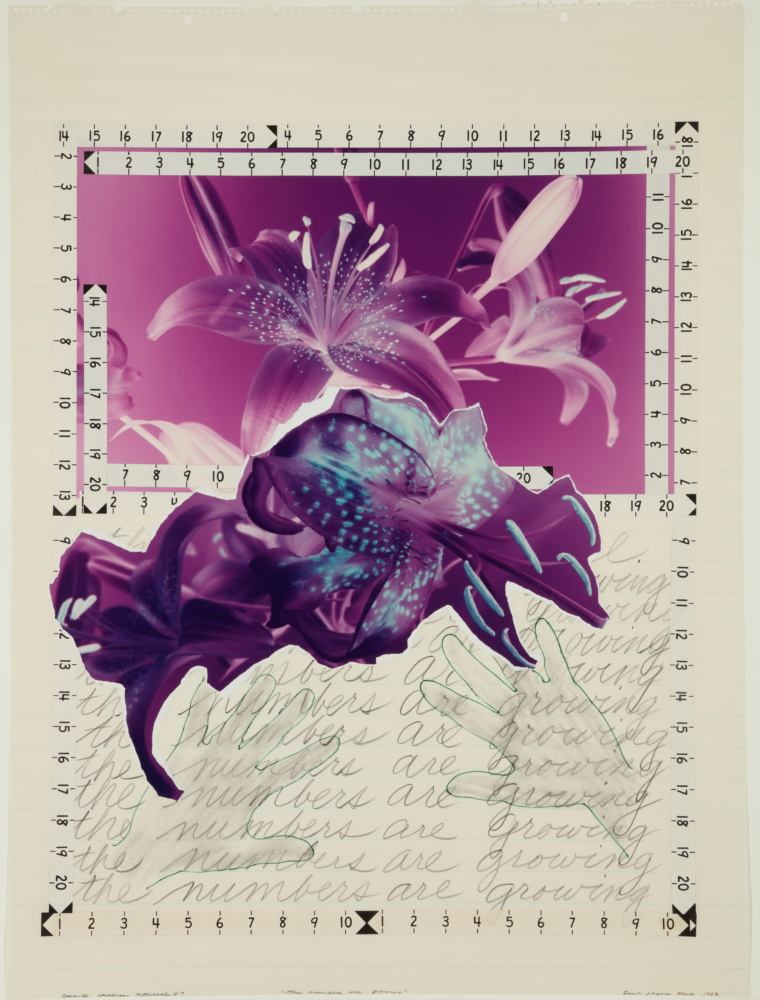
In The Numbers Are Growing (1982), a child’s hand—presumably that of the artist’s own child—appears beside branching forms that read like fiber optic cables or roots. Lilies embellish the edges, cut-out from their stems, spaced apart, and spread like fingers. As both hands and flowers direct inward, they signal a wave for attention that asks to be seen, traced through the absence of their roots. The repeated phrase “the numbers are growing,” written twelve times, invokes both primary literacy drills and the mounting death toll in Atlanta. Karp’s use of repetition becomes an inherited pressure, a pattern passed down, the labor of learning to write, and the quiet expectations of domestic life.
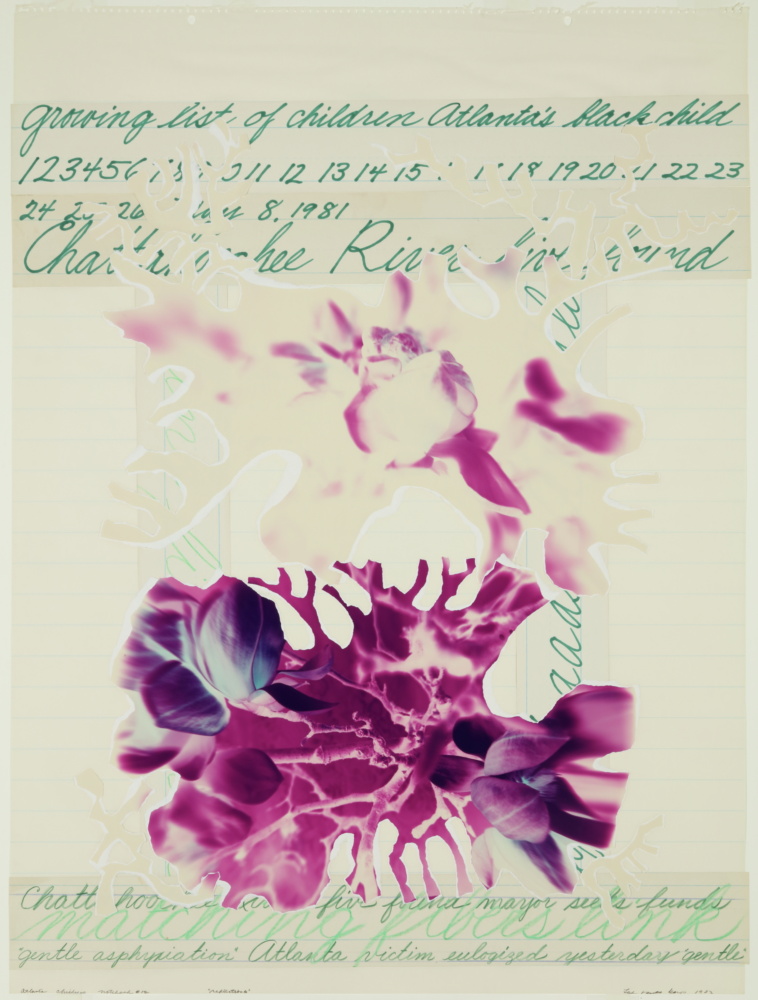
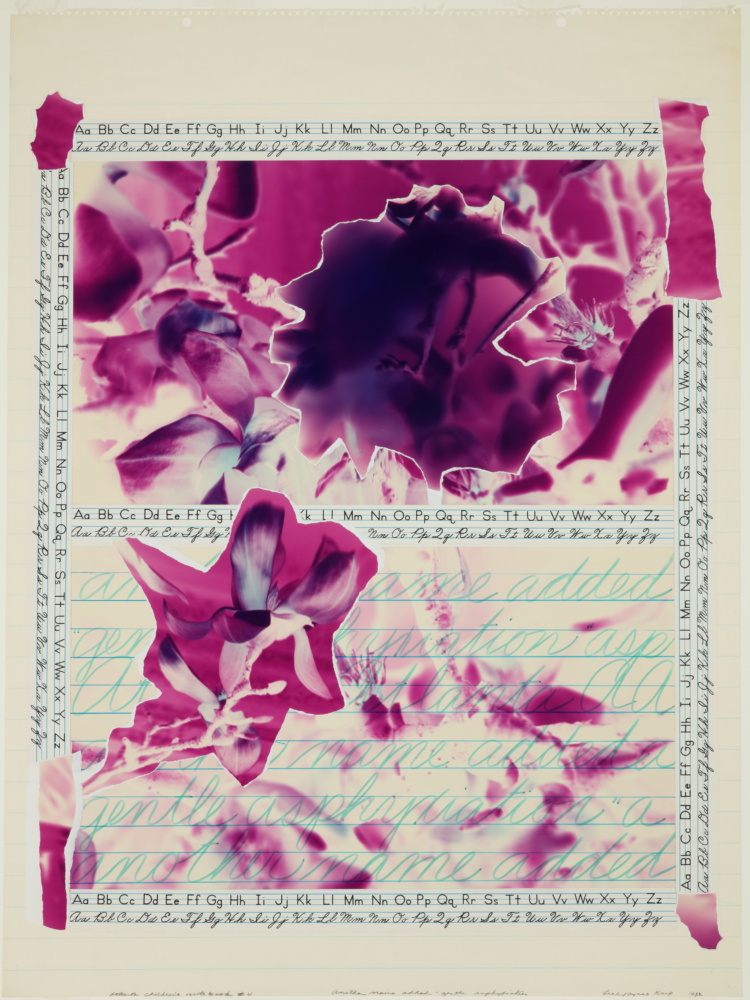
In Reflections (1982), the phrase “matching fibers link” threads across the cyanotype like a soft directive in lime-green colored pencil, alluding to the green fibers that were used as evidence in Williams’ conviction. Beneath it, “a gentle asphyxiation” performs an oxymoron that mirrors the work’s tension, suggesting a domestic suffocation—care that constricts as much as it comforts. This complexity of care, in its capacity to nurture and to constrict, echoes the fraught way Williams’s trial was understood publicly, shaped by disbelief that someone raised in the home of two college educators could commit acts of violence of such intimacy. James Baldwin, writing in The Evidence of Things Unseen (1985), captures this contradiction: “It is conceivable that Wayne was compelled to make the doomed attempt to smother the child his parents smothered. . . . Vengeance takes many forms.”[3] Baldwin’s observation shadows this cyanotype, revealing suffocation as both visual and familial, absorbed and reenacted across generations. Karp extends this pressure into the body itself, depicting lilies rendered like anatomical x‑rays and fragile vascular systems. Framed by text at the top and bottom, Reflections resembles the visual grammar of a missing persons notice, a quiet reminder of the era’s mounting absences.
Karp often described her photography as “a way of saving an experience,” a domesticity that married her own childhood in Pontiac, Illinois, with the daily life of raising her sons. “The idea that if you want to learn something you write it over and over is so Midwestern to me,” she told the Chicago Tribune in 1986. “It reminds me of home.”[4] Home, for Karp, was both a site of inheritance and instruction. Her cyanotypes—referred to as “blueprints for life”—function as an unfinished scrapbook about being a Black woman and the daughter of a Baptist minister, who then married into a Jewish family and had two sons. The works carry this language forward into a grammar of survival rooted in repetition as well as color, a blueprint not just for images but for memory, transmission, and preserving lineage.
"Her work is not simply an act of mourning; it is an act of futurity—an attempt to secure a place for her children in tomorrow."
In a 1983 letter to Lucinda Bunnen, a donor to the High Museum’s Photography Collection, Karp noted that rubrum lilies and magnolias symbolized childhood to her. “I remember as a child that an uncle told me that it was always safe to stop at a restaurant or motel in the South that had blue in its name, so the color symbolizes Blackness to me.”[5] Deep violets bleed through halos of opaque blue and white in Bear Dear Fear Ear (1982). Primary blue and red mix into speckled purples along the flowering stems of tiger lilies. Blue darkening nearly black, the way trapped blood loses oxygen and settles into a bruised haze. A hue cradling both dream and injury in one. The work’s title borrows the cadence of a nursery rhyme, reflecting how children first learn to make danger legible through rhyming, patterned speech, and grammatical error. An early signal language that trains the eye to notice before it can name what it sees.
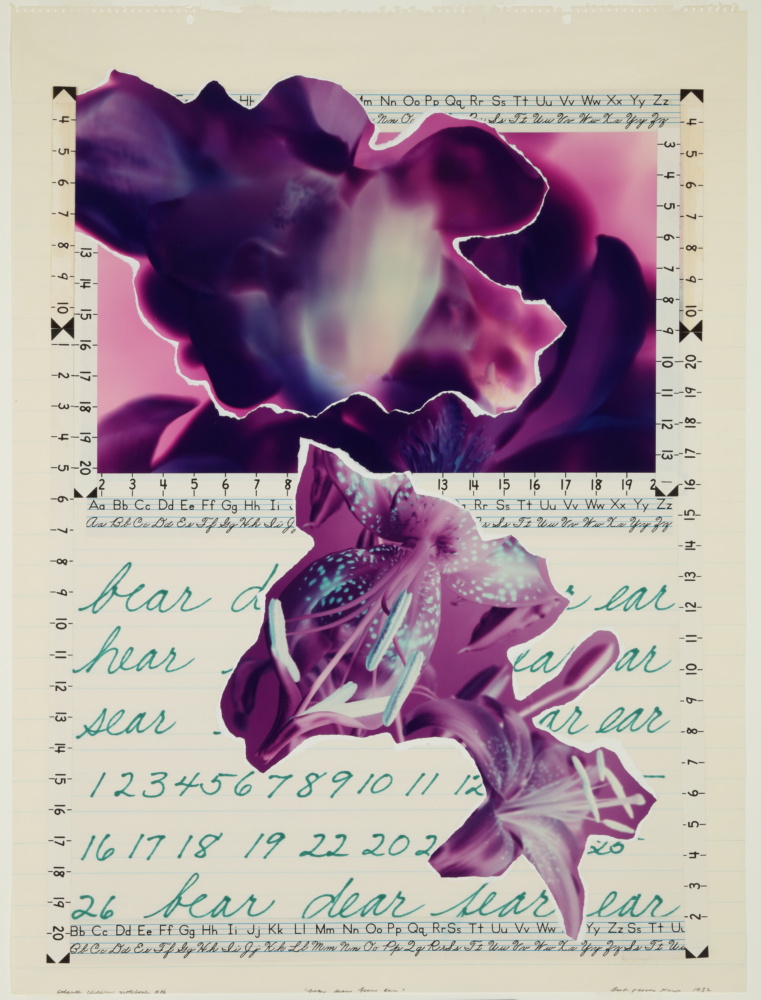
It is the artist’s rare gift to metabolize grief into abstraction, to press sorrow into color and form until it loosens from its weight. Unlike the sterile forensic instruments of a city, Karp’s series speaks to a mother deciphering evidence through the bodies, materials, and memories closest to her. In one cyanotype, there is “a telescopic image of swirls of cosmic dust in space or a fiber optics view of the womb and the umbilical cord. . . . On close inspection . . . [there is] a blow-up of a chubby hand holding two worms.”[6] The child behind the image was one of Karp’s sons, demonstrating the collaborative nature of her practice. It is one that refutes isolation and instead enacts through mothering, home‑making, and the quiet rituals of evidence she built with and around her children.
Karp emerges from the domestic orbit in which she mothered, where every pressure outside the home inevitably spilled into the world inside it. “I’m Black. I’m a woman. I’m a mother. It’s all me and I’m not willing to give up any of it,” she said, declaring how inseparable each identity was from the other.[7] For Black mothers, that orbit has long been structured by vigilance—by the need to protect children in a landscape marked by racialized danger. Born in 1940 and aware of the codes of the Jim Crow South, Karp understood that the threats facing Black children were not episodic but historical. As she raised sons the same age as many of the boys disappearing in Atlanta, protection became both a daily practice and an inherited mandate, a recognition that Black children must be prepared not only to enter the world, but to survive it. In her collages, the labor of mothering and the labor of making converge, registering both the immediate crisis of vanishing children and the long continuum of Black maternal vigilance. Her work is not simply an act of mourning; it is an act of futurity—an attempt to secure a place for her children in tomorrow.
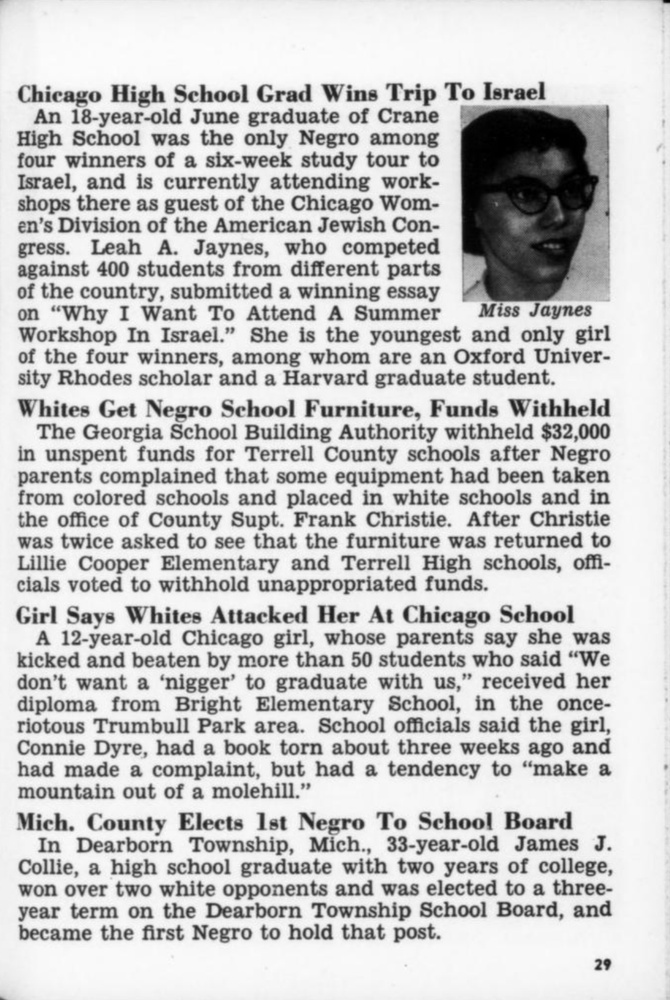
Leah Jaynes Karp’s cyanotypes arose from a period in which Atlanta’s missing persons reports filled the airwaves with devastation and delay. As families waited for answers that never came, the public was forced to witness disappearances that offered no resolve, turning terror into a nightly ritual. Karp’s work refuses the distance of broadcast, consolidating Atlanta’s muted reality with care, mourning, and warning.
The layered code Karp once described in the Tribune, through which Black artists” often deal with themes of continual change involving families on the move,” has migrated forty years into the present. Childhood endures as the blueprint in her world, shaping her cyanotypes, her mothering, and Atlanta itself—a place for which fragilities are pressed into the textures of Karp’s images.
[1] Logan Williams “William B Hartsfield,” in New Georgia Encyclopedia (Georgia Humanities, Atlanta History Center, and the University of Georgia Press, 2004–), published August 12, 2002; last modified July 15, 2020, https://www.georgiaencyclopedia.org/articles/government-politics/william-b-hartsfield-1890-1971/.
[2] Complexly, Leah’s son Alexander Karp, featured in her mixed-media series on the Atlanta child murders, later co-founded Palantir Technologies, a data analytics company widely regarded as controversial for its governmental and surveillance‑adjacent applications, which have profoundly shaped global politics, security, and contemporary life.
[3] James Baldwin, The Evidence of Things Not Seen (Holt, Rinehart and Winston, 1985), 112.
[4] Lynn Van Matre, “Two Artists’ Mixed-Media Works Are Slices of Their Lives,” Chicago Tribune, September 5, 1986.
[5] Leah Jaynes Karp to Lucinda Bunnen, July 1, 1983, High Museum of Art. https://link.underexposed.high.org/archival_object/leah-jaynes-karp-letter-to-lucinda-bunnen/.
[6] Van Matre, “Two Artists’ Mixed-Media Works.”
[7] Van Matre, “Two Artists’ Mixed-Media Works.”