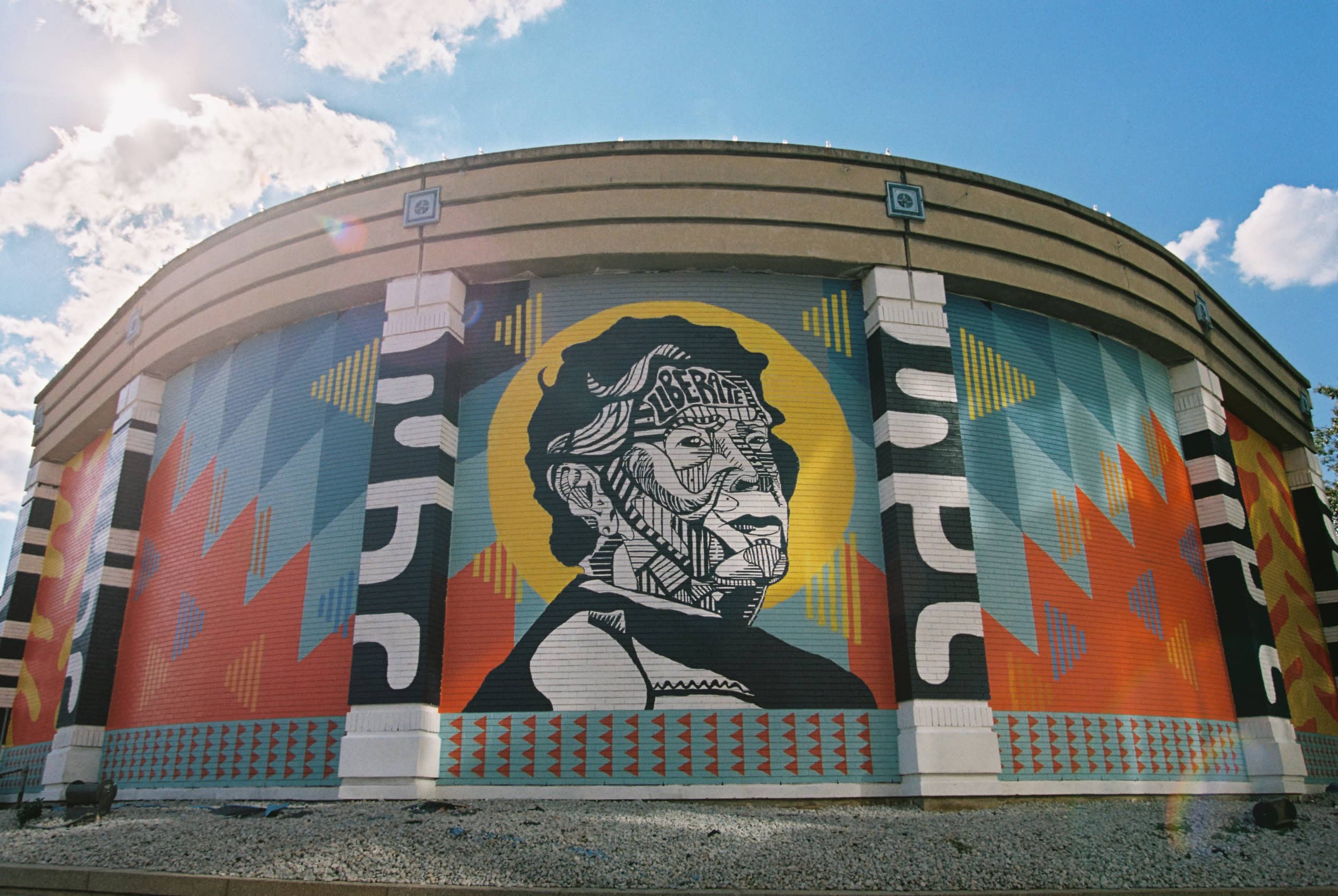
Jasmine Nicole Williams and Suzanne Césaire—two creatives working in different times, spaces, and contexts—share a vision in which art and creative expression are never exercised in vain neutrality. Rather, they are tools to ignite a communal, radical reimagining of systems and regimes that seek to suppress revolutionary thought and action. For Williams, art is meant to shake and stir the spirit dampened by harmful Western ideology. The Atlanta-based printmaker and muralist anchors her identity within the working class, opening her practice to the intersection between artistic vision and cultural liberation.
This interview has been edited for length and clarity, and was originally published in print for the Atlanta Art Fair 2026 broadsheet publication, taking place from October 1 to 4, 2026.
Amina Daugherty: Some see art and activism as separate tools, but for creatives like Suzanne Césaire and yourself, they are inseparable. Did your creative practice fuel your hunger for social justice, or were those impulses always intertwined?
Jasmine Nicole Wiliams: At one point, they were separate because I didn’t see the overlap. I thought of my creative and political selves as two different things. But as I continued studying and joined the Party for Socialism and Liberation, they came together.
Artists often see themselves as artists who happen to have jobs and are always trying to escape the position of workers in order to make art. I came to understand that artists are workers—they are working-class people. Because the ruling class uses art to prop itself up, artists can be placed on a pedestal within our class. I wanted to destroy that pedestal. My work is for and by the people, sharpened by struggle and conversations with other working-class people about what is being confronted on the ground.
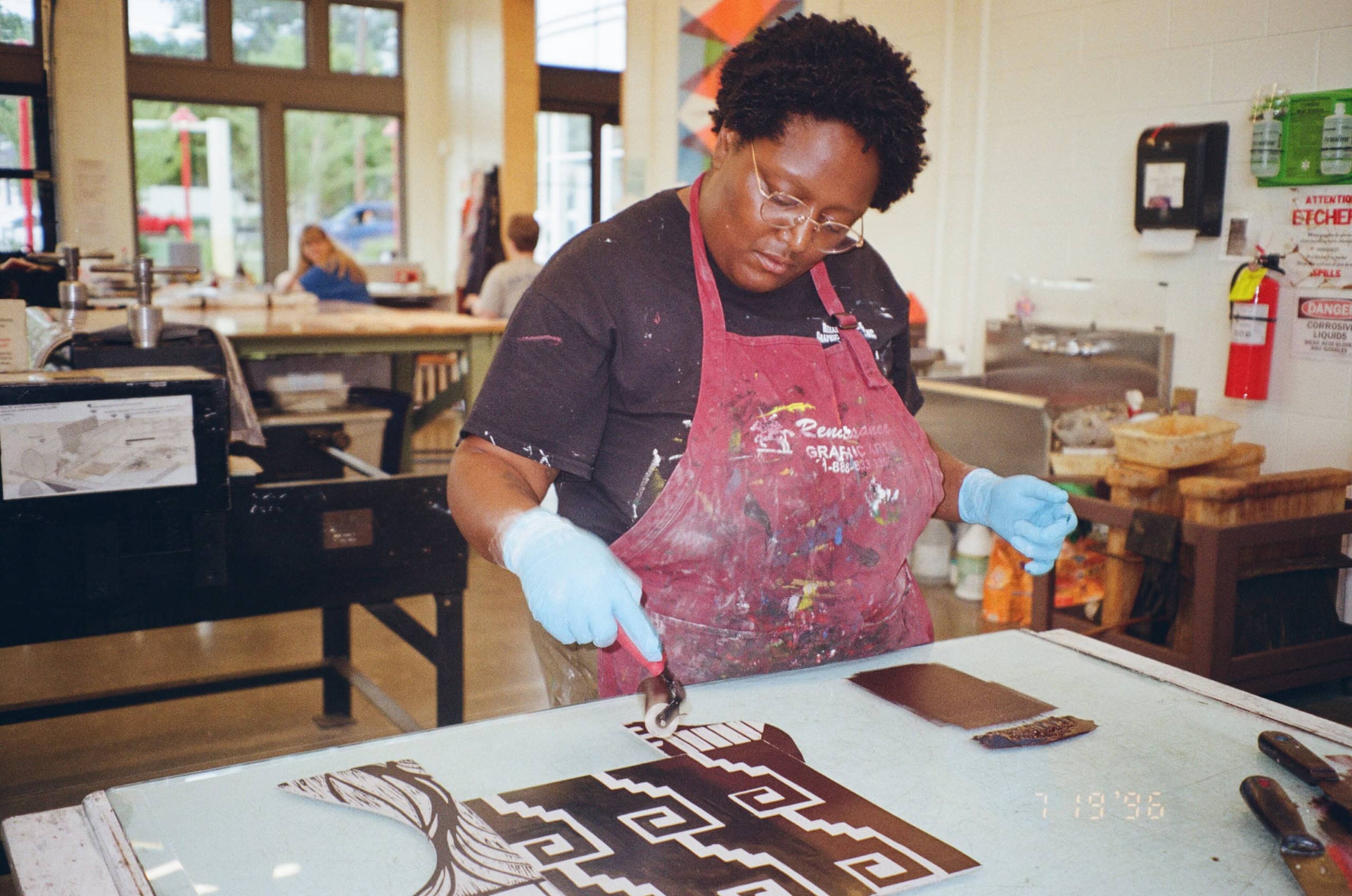
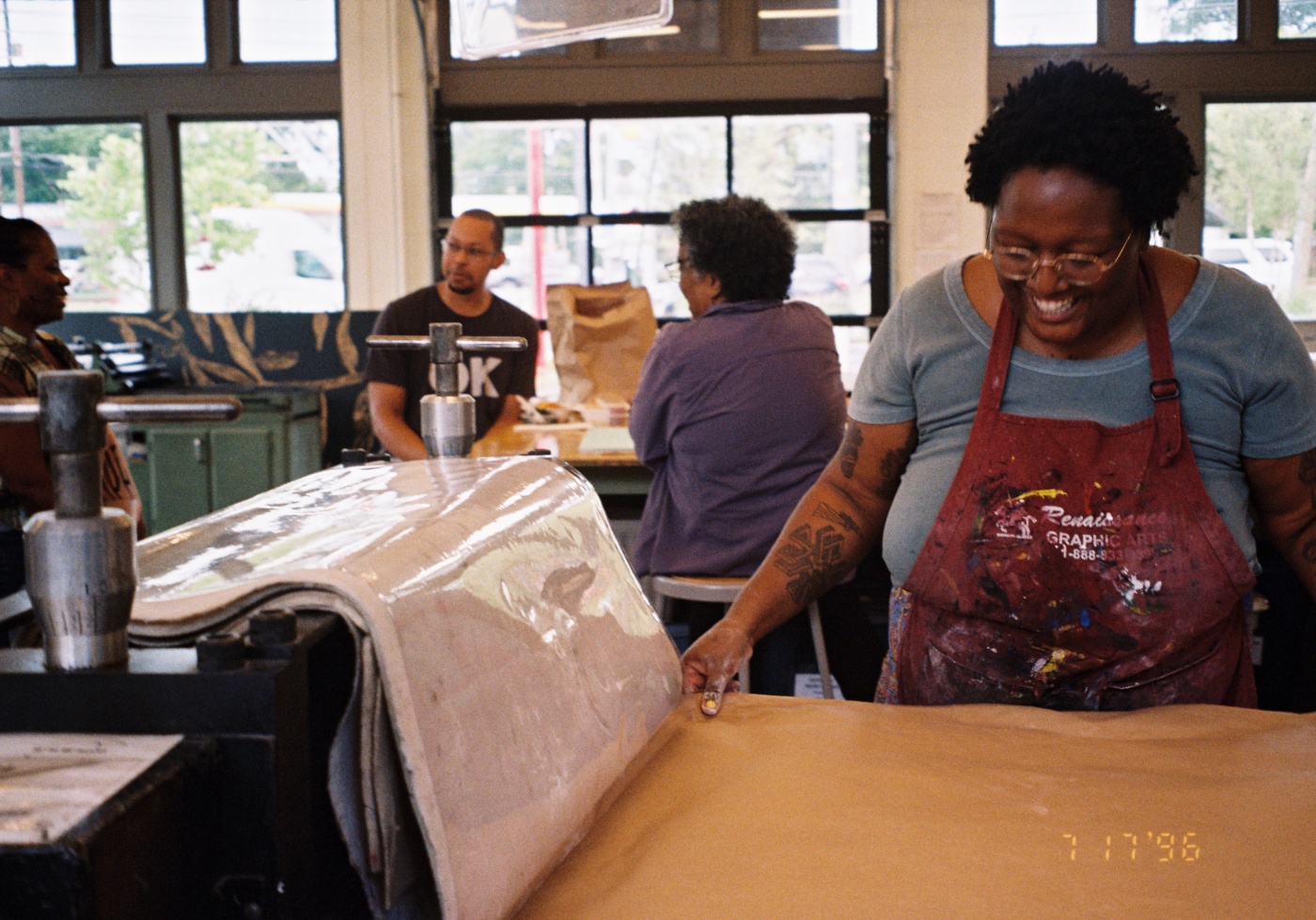
My mediums reinforce that. Printmakers work in communal spaces because presses and tools cost tens of thousands of dollars. At the Atlanta Printmakers Studio, I’ve built a community through conversations about art, politics, and music. Murals are communal too: I hire friends as assistants and photographers who exchange ideas with people on the street as the work takes shape. These practices remind me that I’m not high and mighty or one-of-one. I’m part of a collective.
AD: In her essay “1943: Surrealism and Us,” Suzanne Césaire writes, “When [Andre] Breton created surrealism, the most urgent task was to free the mind from the shackles of absurd logic and of so-called reason.”[1] What “absurd logic” is normalized today, and where does your work clash with it?
JNW: I think one of the most absurd pieces of Western logic is that the individual is greater than the collective—that we can individually transform our conditions. In my work, I hope people see themselves within the collective. One of my favorite things is when someone encounters a piece and recognizes themselves or a loved one, right? My hope is that you see your humanity and then recognize the personhood of those around you. We are confronting the same struggles and the same enemy.
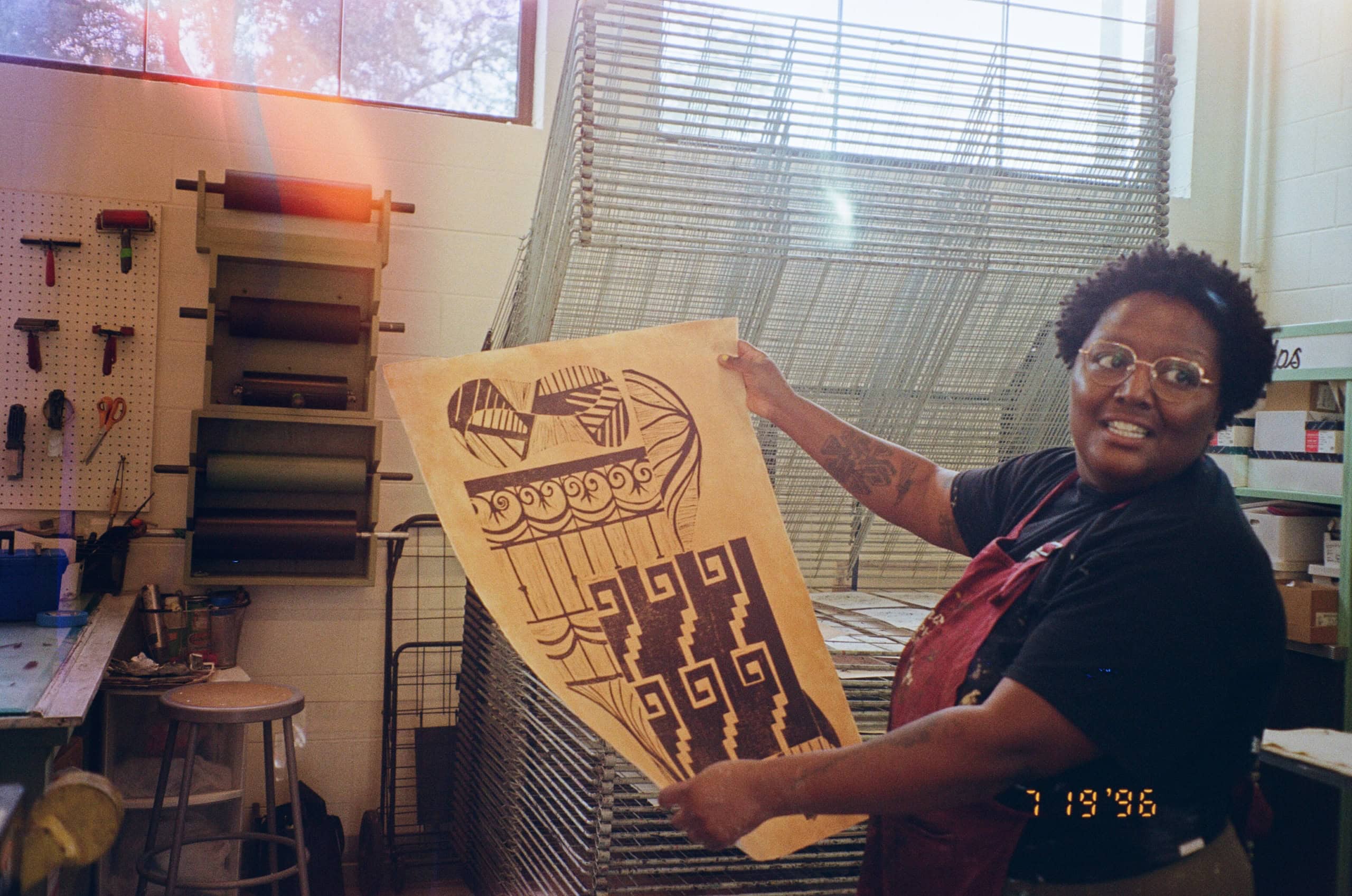
AD: You primarily work in woodcut printmaking and describe carving away material that does not serve us, to refine the contours of our humanity. What have you unearthed through that process?
JNW: One thing I’ve discovered is that each person has a uniqueness, and that’s what makes the working class so vibrant. I use certain techniques for every portrait, but I always leave room for something to surprise me. That’s always fun. There’s something about carving portraits into a living matrix like wood—allowing this living, breathing thing to emerge more fully formed.
I also think about the nature of multiples in printmaking. You know, I’m not creating a one-of-one object; the work can travel and take on different meanings all while remaining rooted in my original intention.
AD: Césaire used surrealism to reclaim African culture under a French regime that demanded Black people abandon their roots—a striking irony given European surrealism’s debts to African art. How does your practice engage in ancestral reclamation, and how can that become a vehicle for communal liberation?
JNW: I’m always calling on ancestral knowledge. I think about my family’s history but also the broader history of Black people in the United States, who have always been a vehicle for change: from enslaved people’s general strike and participation in the Union Army to the Civil Rights revolution, when Black people rejected an apartheid state and demanded our full humanity.
Those processes remain incomplete. In current society, one must work to live, private property is king, and the American dream is about how hard work and education alone transform one’s conditions. My work evokes the ancestors’ fight-back spirit and the tools they left behind. There’s a need to organize as people did in Minneapolis to kick ICE [U.S. Immigration and Customs Enforcement] out and confront what it means for Haitian immigrants to lose TPS [Temporary Protected Status]. How have we fought back before? I always want to kick up those conversations.
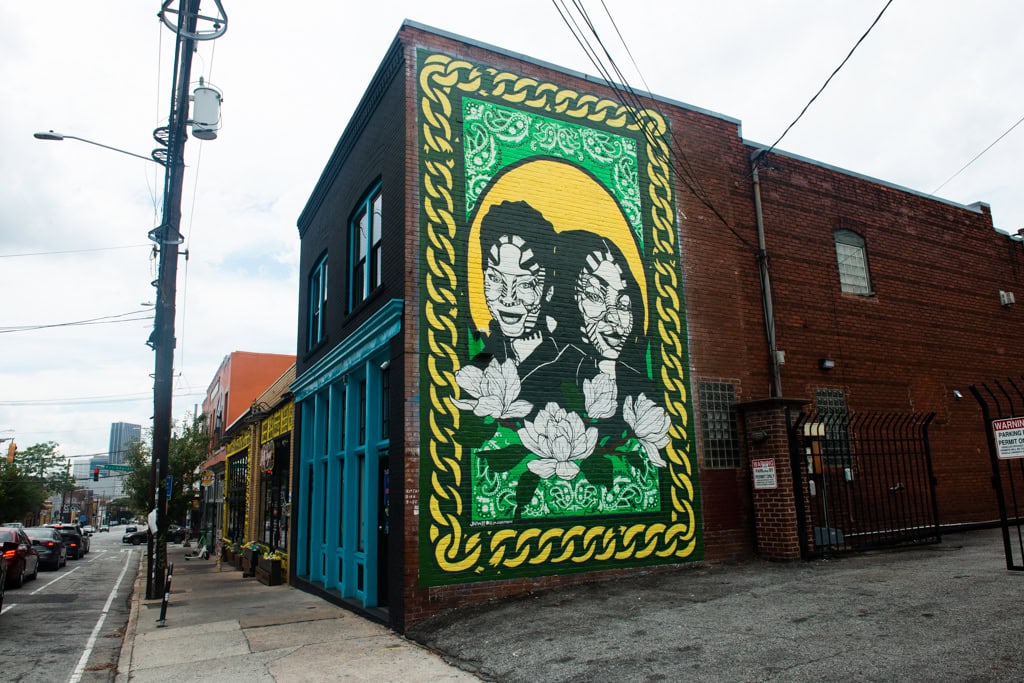
AD: Public environments are shaped by history, surveillance, and capital. What changes when people encounter art there rather than inside traditional institutions, and how can public art reshape their relationship to place and community?
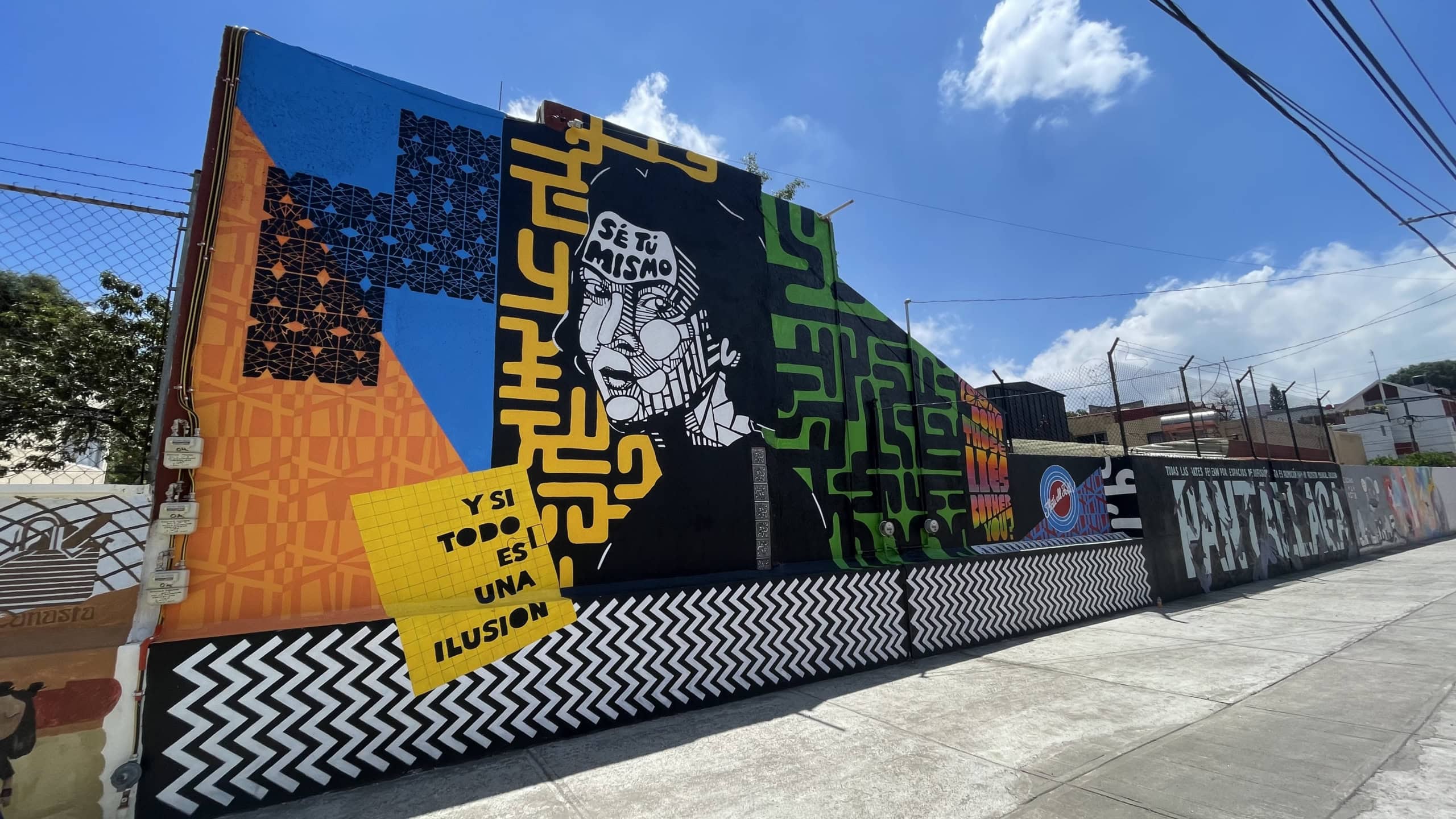
JNW: In my public art practice, I think about how art lives with people—how it becomes a neighborhood landmark, revealing who lives there and something about their history. It helps people situate themselves in the world. With my murals, I want people to keep finding something new that catches their eye. I hope the work helps them connect more deeply with their humanity and community. I want them to ask: How do I care for myself and others? How do I want to see the world transformed?
AD: Césaire ends “1943: Surrealism and Us” with a powerful metaphor: “Surrealism, tightrope of our hope.”[2] What does that mean to you?
JNW: I think it means rebuilding the path to hope. If that path starts as a tightrope, it’s a little wobbly and lofty. As more people join, the collective’s weight lowers it to the ground. It becomes more grounded in that hope.
I also think about Claudia Jones’s words: “A people’s art is the genesis of their freedom.”[3] There needs to be an intentionality about the culture cultivated. Culture is more than art as a commodity; it’s speaking, relating, and caring for one another and the world. What grows from the culture being created? It could be mold—something corrosive—or something beautiful and nourishing that evolves until the systems around us have to change. As long as hope is held onto and culture and community are continuously built, we are closer to the revolutionary change necessary for working-class people to no longer live under someone else’s boot.
[1] Suzanne Césaire, “1943: Surrealism and Us,” in Surrealist Women: An International Anthology, ed. Penelope Rosemont (The Athlone Press, 1998), p. 134.
[2] Césaire, “1943: Surrealism and Us,” p. 137.
[3] Claudia Jones, as quoted in Charlotte Lydia Riley, “’A People’s Art is the Genesis of Their Freedom,’” Tribune, November 6, 2019, https://tribunemag.co.uk/2019/11/a-peoples-art-is-the-genesis-of-their-freedom-notting-hill. This phrase served as the guiding slogan for the Caribbean carnivals organized by Claudia Jones starting in London in 1959