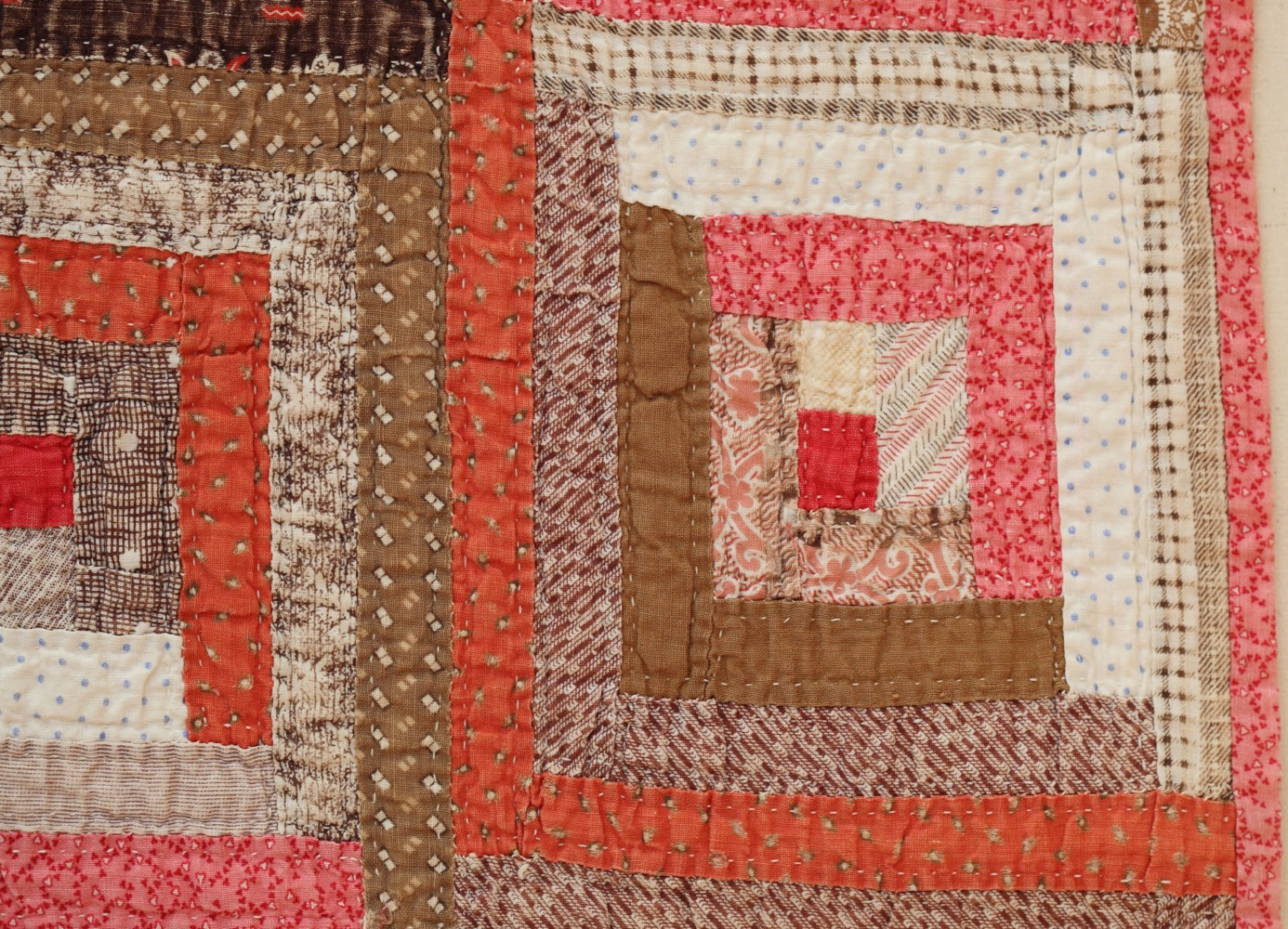
“We are deeply, passionately connected to black women whose sense of aesthetics, whose commitment to ongoing creative work, inspire and sustain. We reclaim their history, call their names, state their particulars, to gather and remember, to share our inheritance.”
bell hooks, Belonging: A Culture of Place[1]
Creators of memory quilts honor loved ones through rich stories and energy contained in strips of fabric that are gathered and stitched together, block by block. Scraps and buttons from a dress or favorite shirt, commemorative ribbon pins, or a lock of hair are tactile, sentimental embellishments that represent important milestones that turn quilts into biographical memorials. More broadly, these memory quilts also commemorate important events as expressions of grief, remembrance, valor, and protest. Among the many sources of documentation used to unlock history, including the written word, photographs, and the oral record, the domain of material culture is fraught with bias, particularly within craft traditions that span multiple contexts in how objects were created and understood. Quilts are viewed through the narrow scope of “women’s work”, as objects of warmth and comfort that serve a decorative purpose. Across time, these perceptions narrowed even further around Black quilting practices that are viewed for aesthetic elements, standards, and traditions that reflect dominant white culture. Significant historical and contextual gaps within Black quilting traditions remain.
Quilts contain keys to the past that speak to a history of resistance that has long eluded formal chronicling. It is this characteristic of the quilt that continues to captivate me through curious footnote in the history of antebellum-era craft traditions: the belief that quilts were used as navigation aids and communication tools in the Underground Railroad. The Underground Railroad Quilt Code is a theory popularized by a book written in the late 90s by Jacqueline Tobin and Raymond Dobard called Hidden in Plain View: A Secret Story of Quilts and the Underground Railroad (1999).
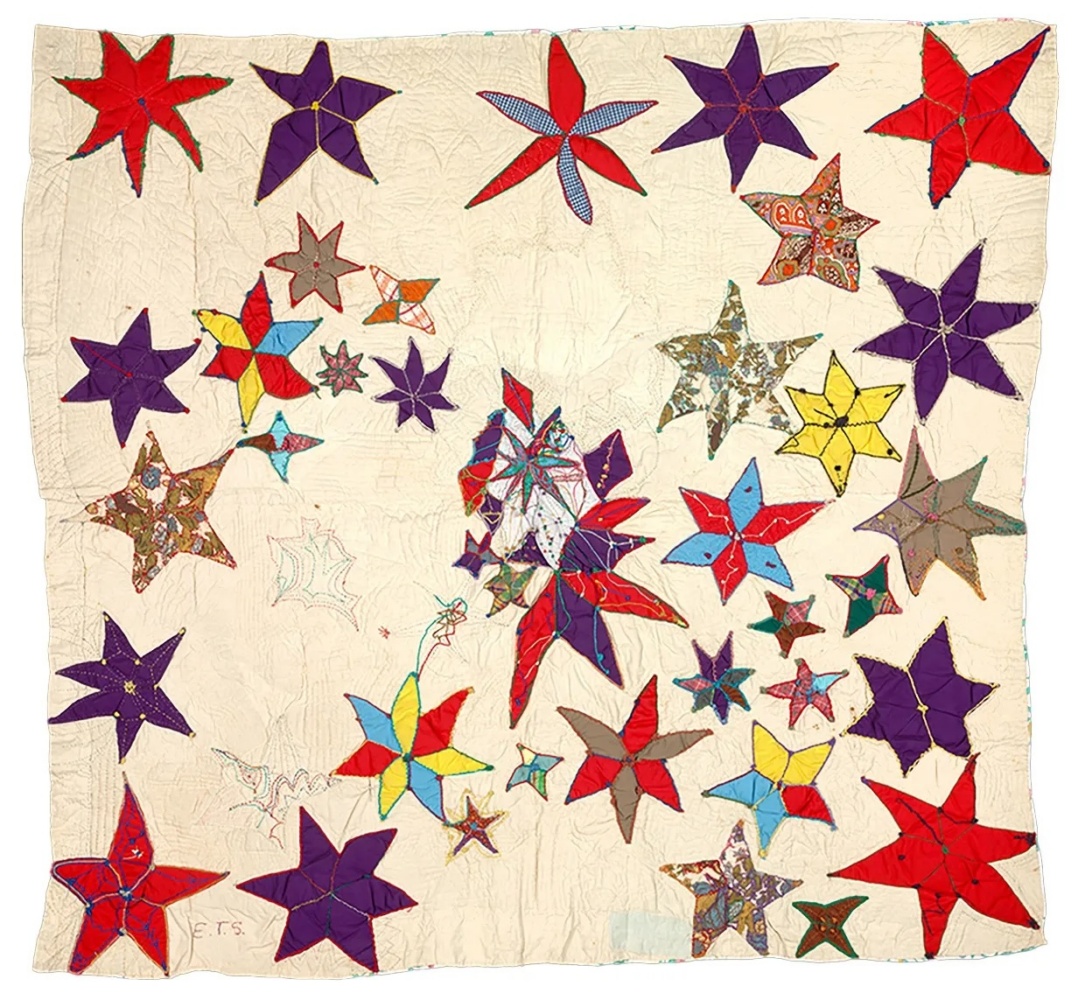
Tobin and Dobard’s research captured the imaginations of quilters, artists, writers, and historians eager to share the code and learn more about the circumstances surrounding their discovery. However, the book also drew the ire of diehard quilt enthusiasts and criticism from historians questioning the veracity of the codes, citing a lack of extant quilts, corroborating evidence in the form of secondary sources, historical inconsistencies, and practical logistical roadblocks that could otherwise link the use of these codes to specific points along the Underground Railroad.[2] Historian Henry Louis Gates Jr. remarked that the story behind the Underground Railroad Quilt Code was “one of the oddest myths propagated in all of African-American history”.[3] Other critiques pertaining to the Underground Railroad Code also deduce it to myth, carrying a similar tone of incredulity. The International Quilt Museum remarked on the quilt code noting, “it’s the kind of story members of the public like to believe…Yet it presents an overly simplified view of the complexities of the Underground Railroad and slavery that is not grounded in historical evidence.”[4] When it comes to the role that quilting played in the antebellum South and its disputed role within the Underground Railroad, reality resides far from simplicity. Contested memory occurs where historic events or phenomena are remembered, interpreted, and translated differently among groups. Between the vast expanse from doubt to belief are important insights on what folklore professes and how history is remembered and shared.
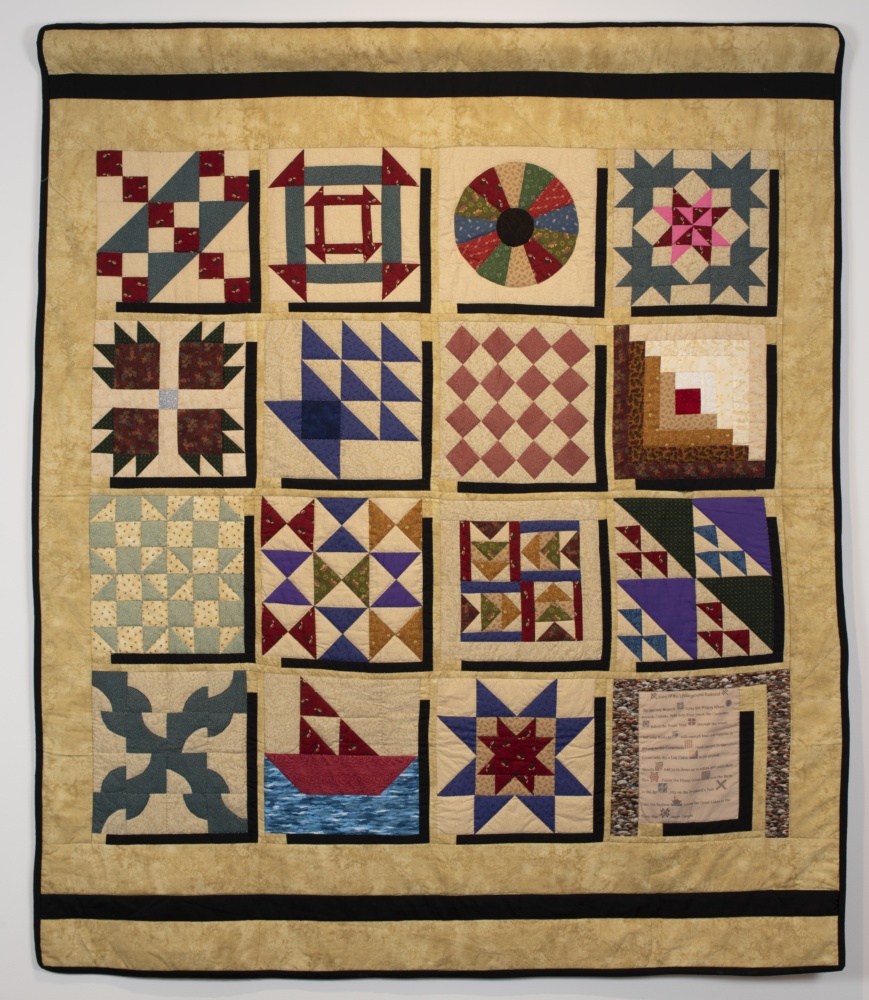
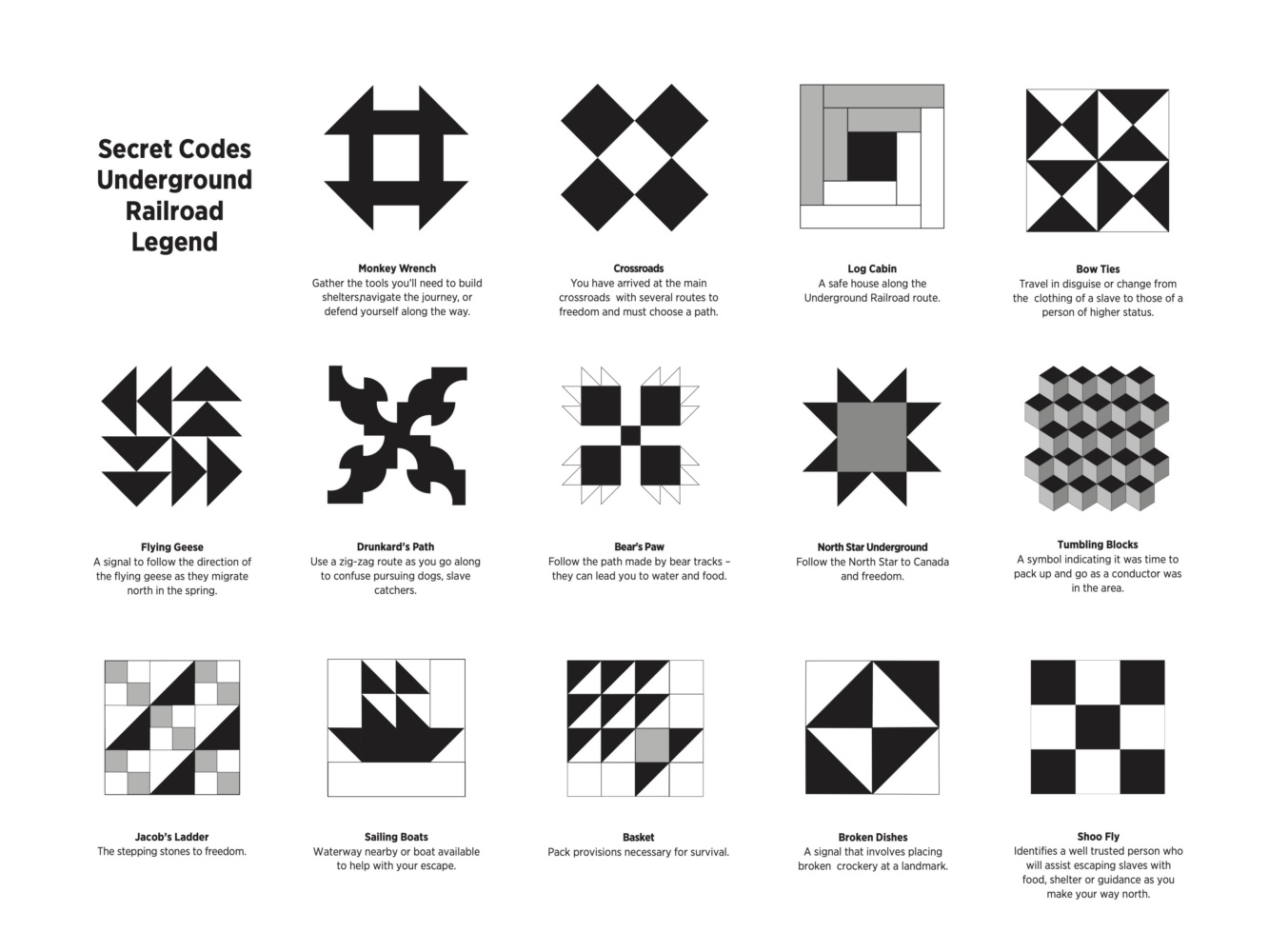
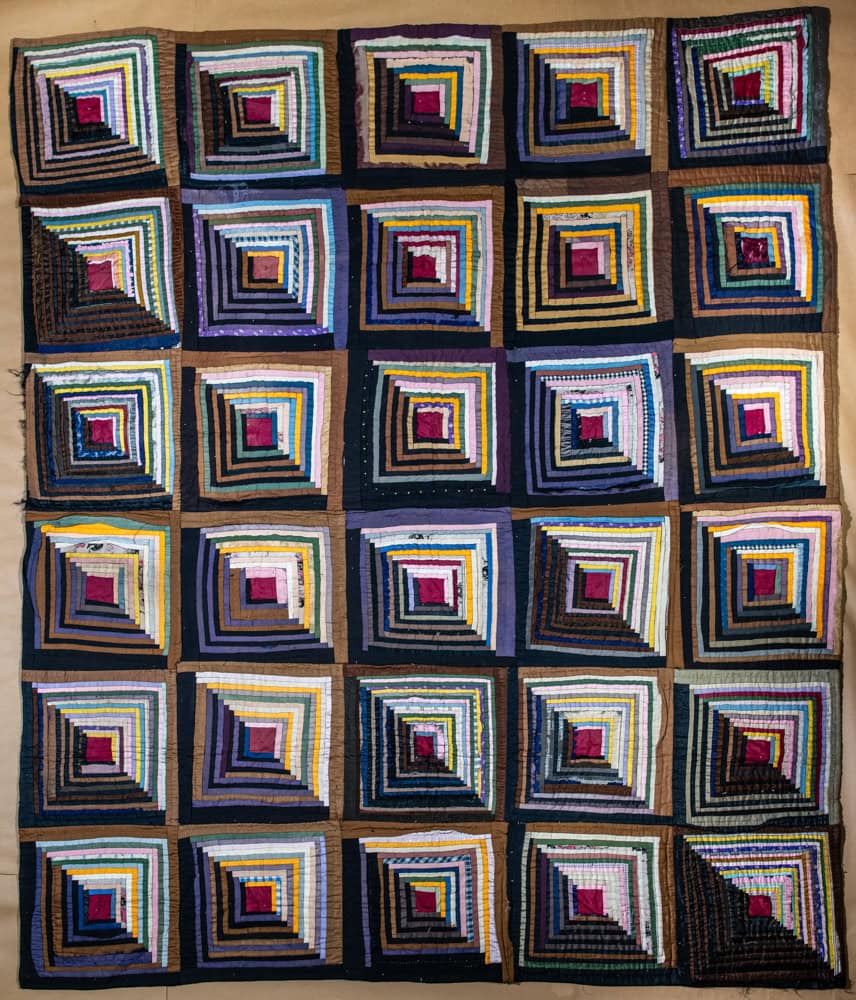
In 1994 Tobin was traveling in Charleston, South Carolina, researching sweetgrass baskets when she met Ozella McDaniel Williams selling quilts at the historic city market. Williams summoned Tobin into the stall where the elder woman asked, “Did you know that these quilts were used by slaves to communicate on the Underground Railroad?”.[5] Months later Tobin revisited the inquiry and returned to South Carolina to learn more about the compelling claim that familiar quilt motifs like the Log Cabin, Bear’s Paw, Flying Geese, and Bowtie represented a call to action, caution, or direction. It is believed that quilts were strategically aired outside of homes and became guideposts for those traversing the dangerous journey north.
While the book has become a lightning rod for criticism, it is worth examining the Underground Railroad Quilt Code within the frame of oral history. Songs and stories told through code are powerful because they convey what cannot be written. Spirituals are the closest antecedent to covert antebellum-era tactics that provide deeper insights into how these sophisticated forms of communication operated. The use of spirituals is historically tied to clandestine gatherings called Hush Harbors or Hush Arbors, where the enslaved would gather for religious communion deep in the woods under thickets of brush, removed from the watchful eyes of slave owners and overseers, but not so distanced from the plantation to arouse suspicion. In her 1886 biography on Harriet Tubman, Sarah Bradford describes how spirituals were more than joyful declarations of praise. “Slaves must not be seen talking together, and so it came about that their communication was often made by singing, and the words of their familiar hymns, telling of the heavenly journey, and the land of Canaan, while they did not attract the attention of the masters, conveyed to their brethren and sisters in bondage something more than met the ear. And so she sang, accompanying the words, when for a moment unwatched, with a meaning look to one and another:
‘When dat ar ole chariot comes,
I’m gwine to lebe you,
I’m boun’ for de promised land,
Frien’s, I’m gwine to lebe you.’”[6]
Tobin and Dobard note that folksongs like “Follow the Drinking Gourd” and “Swing Low, Sweet Chariot” share visual parallels in quilt symbols included among the dozen block patterns and quilting techniques that correspond to the code: “Swing Low Sweet Chariot” and the Monkey Wrench pattern were lyrical and visual alerts to prepare oneself for escape, while the Flying Geese and Drunkard’s Path patterns were directional prompts that guided freedom seekers on their journey north, much like song “Follow the Drinking Gourd” was a code for following the Big Dipper by using the star constellation as a compass.[7]
The encrypted messages embedded within song lyrics and quilt layers contain a compelling conceit: their concealment exists innocently in daily life. Slavery fomented a culture of secrecy that was paramount for survival, and folklore preserves the traces of these survival tactics. Historians unfolding these complicated layers of concealment must also consider the manifold ways folklore functions as a tool for communication, education, and cultural preservation. Beyond their function in religious expression and surreptitious communication, Frederick Douglass also posited a tertiary utility of spirituals as educational tools:
“This they would sing, as a chorus, to words which to many would seem unmeaning jargon, but which, nevertheless, were full of meaning to themselves. I have sometimes thought that the mere hearing of those songs would do more to impress some minds with the horrible character of slavery, than the reading of whole volumes of philosophy on the subject could do.”[8]
What if the quilt codes held the same power? If encoded messaging was an established communication practice, and if quilt codes were not used as explicit mapping devices, is there another call to action that quilts could elicit? One way to explore this possibility resides in the ways quilts influenced Harriet Tubman’s own journey to freedom.[9] Prior to Tubman fleeing the Maryland plantation of Edward Brodess in 1849, Tubman gave a beloved quilt to a Quaker abolitionist who lived nearby. In turn, the woman provided Tubman with the names of two conductors along the Underground Railroad who would assist her in the early stages of Tubman’s escape. These men provided her with safe passage concealed within a wagon, and as Tubman ventured on foot, she notably remarked that she followed the north star between safe houses.[10] Quilt code motifs including the North Star, the Wagon Wheel, and the Log Cabin are all visual corollaries to Tubman’s narrative, and while there is no direct link between Tubman’s craftwork and the quilt code, her quilting practice played a valuable role within the Underground Railroad. During the thirteen liberation missions Tubman conducted between 1850 and 1860 she continued to make quilts that she gave to the enslaved she helped guide to freedom in Canada.[11] The impact of this gesture is enormous—quilts are not only functional items, but they were emblematic of a shared, yet silent history, one that over time has been rendered through the quilt code symbols that reflected that journey. The quilt code functions as a memory map, demonstrating how communities preserve and share history through storytelling. Invalidating the Underground Railroad Quilt Code as a discrete map undermines its function as a metaphorical one.
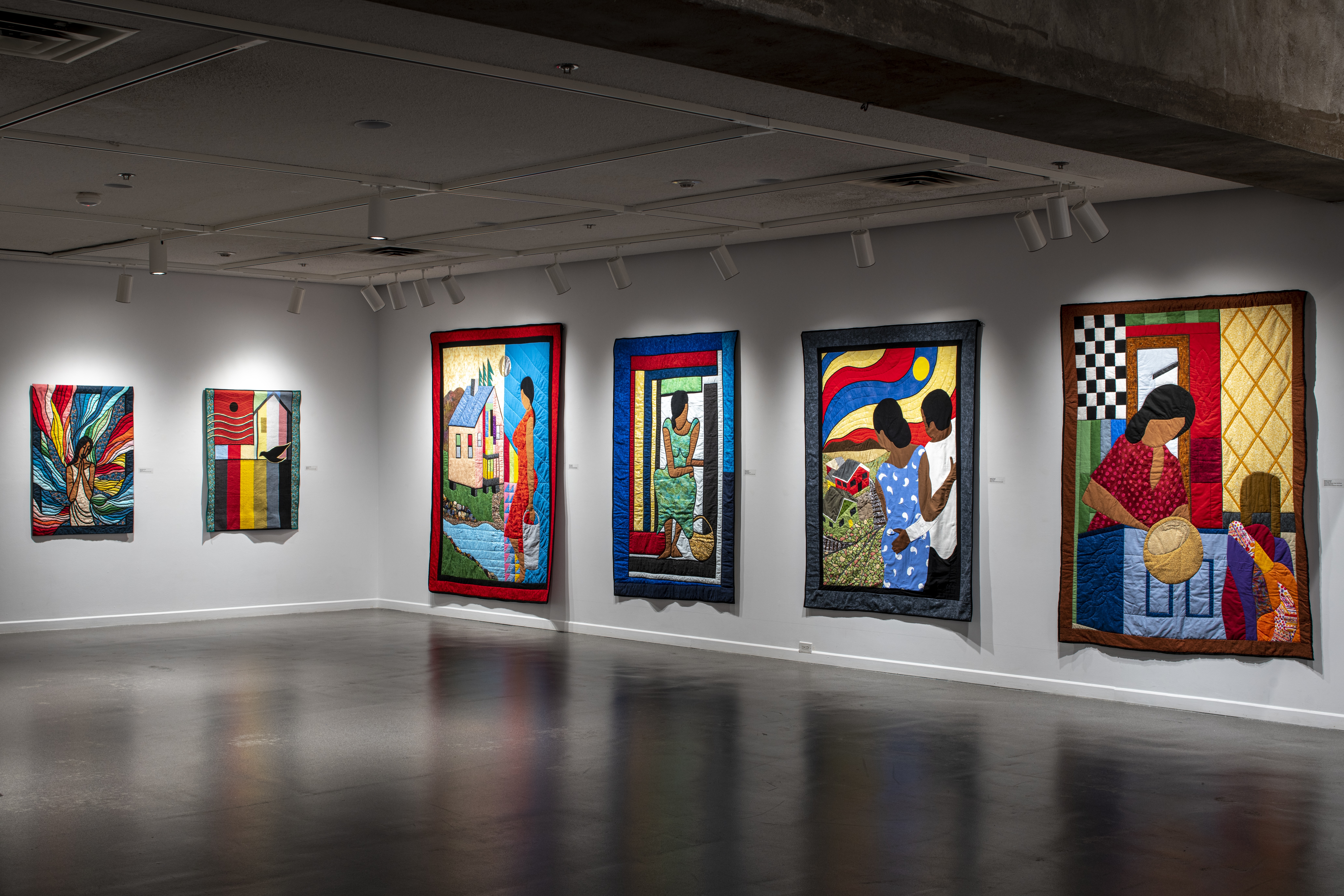
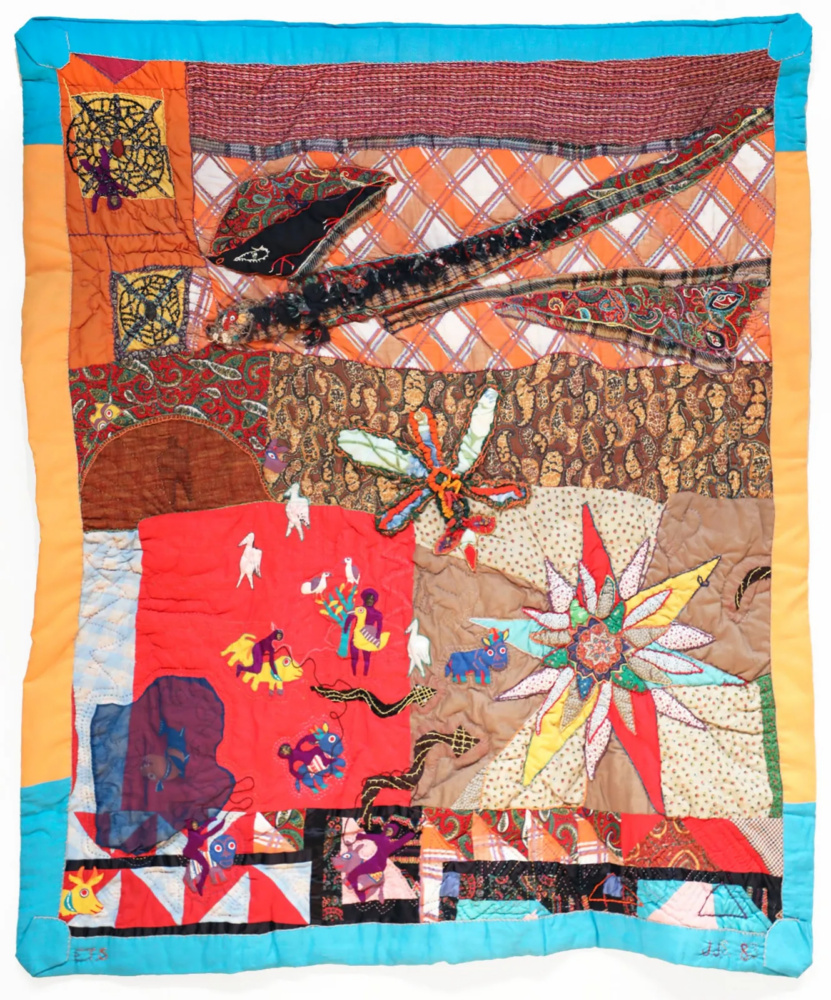
When I first learned about the code through Hidden in Plain View, I was enthralled with its premise, and equally disheartened to hear its voracious, dismissive critique. Encountering a quilt by Elizabeth and Joyce Scott that affirmed how important the quilt codes are to understanding and contextualizing the Underground Railroad. Their collaborative story quilt titled Monsters, Dragons, and Flies (1982), explodes in layers of fabric, animal appliques outlined with intricately embroidered thread, African cosmograms, and strategically placed baubles, crystals, and buttons that evoke the tactile surface of an African lukasa memory board. A large North star rests in the bottom right corner of the quilt, while in the left corner, a small piece of a Flying Geese quilt block, another quilt code motif, is obscured by figurative appliques placed around the quilt surface. In a 1990 interview featuring the two artists, Joyce Smith recalls family stories about a quilt code. “My mother was told that slaves would work out a quilt, piece by piece, field by field, until they had an actual map, an escape route. And they used that map to find out how to get off the plantation.”[12] The quilt is a reflection of an intergenerational collaboration and their cultural inheritance.
Oral history and material culture offer valuable insight into how folklore is used to historicize the Underground Railroad, yet the debate over veracity of the codes threatens to overshadow their instructional value. By conscripting stories like the Underground Railroad Quilt Code to a world of fantasy, scholars undermine the utility of folklore and oral history as vital sources of connection, instruction, and liberation.
[1] hooks, bell. “Belonging: A Culture of Place.” Routledge, New York, 2019, p. 161.
[2] “The Underground Railroad & the Legacy of Quilt Codes.” B&O Railroad Museum, 16 Jan. 2026, www.borail.org/the-underground-railroad-the-legacy-of-quilt-codes/.
[3] Gates, Henry Louis. “Myths about the Underground Railroad.” PBS, Public Broadcasting Service, 8 Nov. 2013. www.pbs.org/wnet/african-americans-many-rivers-to-cross/history/who-really-ran-the-underground-railroad/.
[4] “Underground Railroad Quilts? | World Quilts: The American Story.” n.d. In Worldquilts.Quiltstudy.Org. https://worldquilts.quiltstudy.org/americanstory/quiltsare/undergroundrailroad.
[5] Tobin, Jacqueline, and Raymond Dobard. Hidden in Plain View: A Secret Story of Quilts and the Underground Railroad, Anchor Books, New York, 1999, p. 17.
[6] Bradford, Sarah. “Sarah H. Bradford. Harriet, the Moses of Her People.” GEO R. Lockwood & Son, New York, 1886, Docsouth.unc.edu, docsouth.unc.edu/neh/harriet/harriet.html.
[7] Tobin, Dobard, p. 114-117.
[8] Douglass, Frederick. “Narrative of the Life of Frederick Douglass, an American Slave.” Antislavery Office, 1846: 13-15. Internet Archive. Accessed Jul 1, 2026. From ANCHOR. Library of NC.
[9] Clifford Larson, Kate PhD. 2019. “Harriet Tubman Underground Railroad Monument Historic Research Study.” National Parks Service. https://acrobat.adobe.com/id/urn:aaid:sc:VA6C2:a2cfa60a-01cb-4a71-8866-d7e974ff5dea.
[10] Conrad, Earl. “Harriet Tubman Research Material.” Schomburg Center for Research in Black Culture, Manuscripts, Archives and Rare Books Division. The New York Public Library. https://acrobat.adobe.com/id/urn:aaid:sc:VA6C2:86242964-c423-4e56-8c95-77f52a8ffda.
[11] Tobin, Dobard, p. 62.
[12] Grudin, Eva Ungar, and Williams College Museum of Art. “Stitching Memories: African-American Story Quilts.” Williams College Museum of Art, 1990, p. 32.