Marshall, North Carolina, about twenty miles north of Asheville, sits on the banks of the glinting, cobalt-hued French Broad River. Looking out the back window of the Madison County Arts Council, one can imagine how Tropical Storm Helene, which raised the river by 27 feet, brought thousands of pounds of mud and debris into the space, nearly destroying it. Even a year after the storm, raw strips of plywood lined its brick storefront, while plate-glass windows revealed an active construction zone inside.
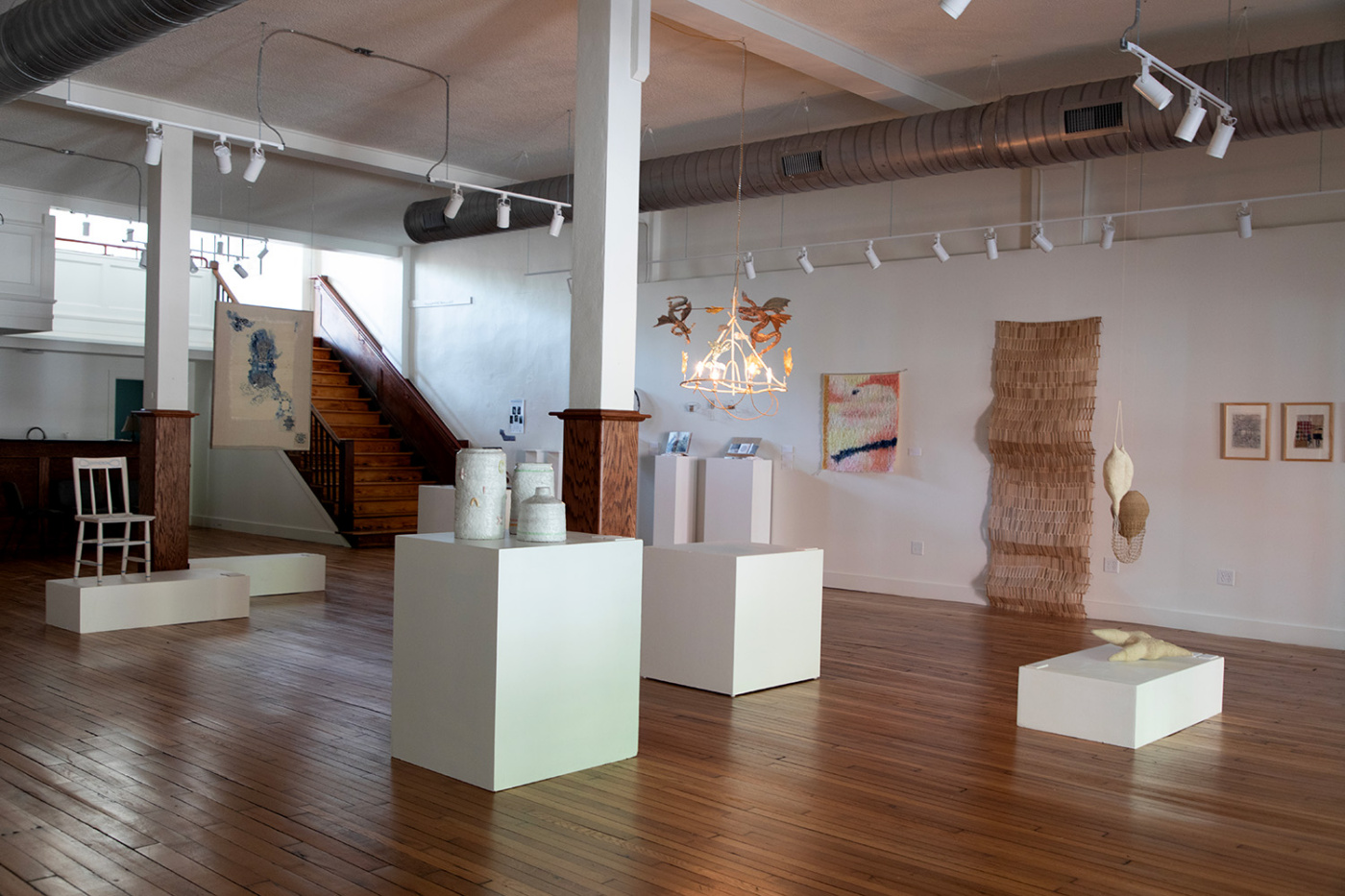
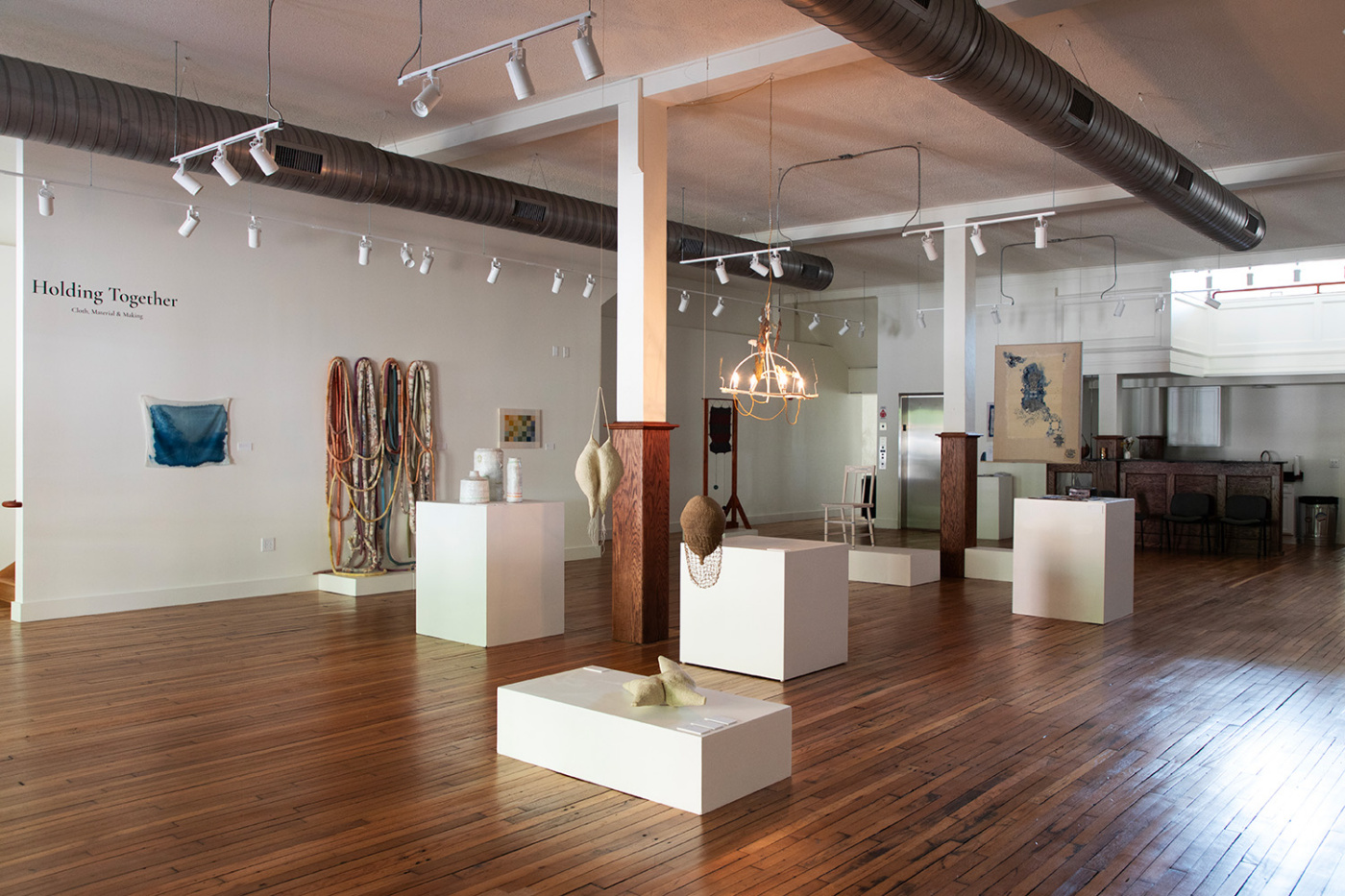
Now, nearly two years since the September 2024 flood, the council space has gleaming wooden floors and pristine white walls. Where once sawdust choked the air, ethereal, soft-toned textiles now flutter gently. The current exhibition, Holding Together: Cloth, Material, and Making, curated by artist Amber M. Jensen, is both a testament to Marshall’s striking comeback and to a much larger artistic concept of weaving as embodying resilience, connection, toughness, and tenderness.
“After Hurricane Helene, I honestly didn’t know whether the Marshall I remembered would still be here,” says Jensen, who recently moved back to town after five years out of state. “Coming back has been incredibly emotional…What I personally noticed when I returned was a tenderness between people that moved me. There seemed to be a closeness among people who had gone through something unimaginable together. And instead of feeling that the spirit of the place had disappeared, I felt it very strongly. I remember thinking: it’s still here.”
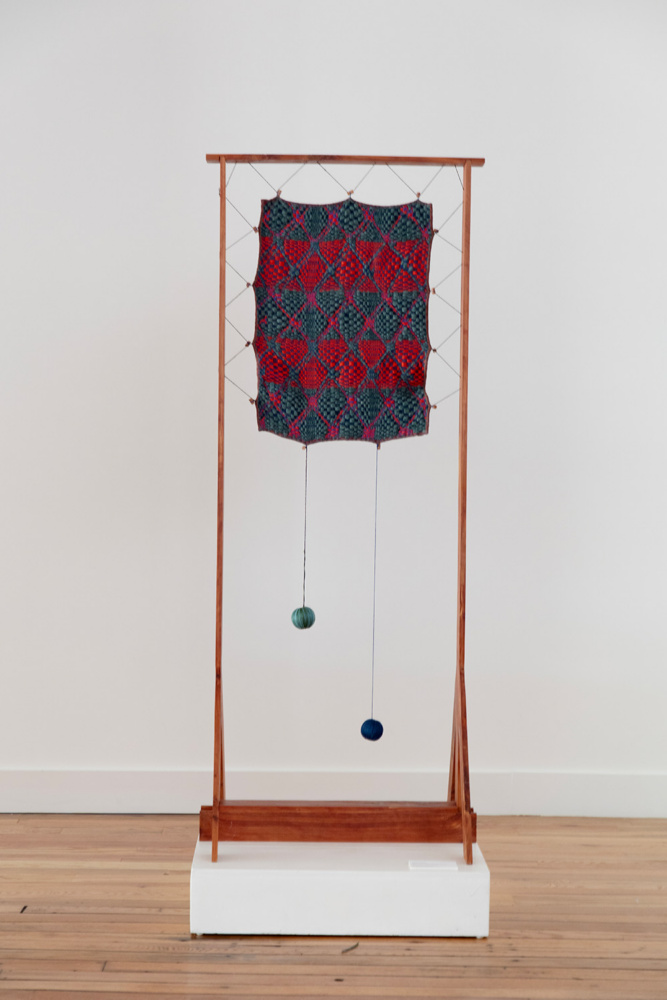
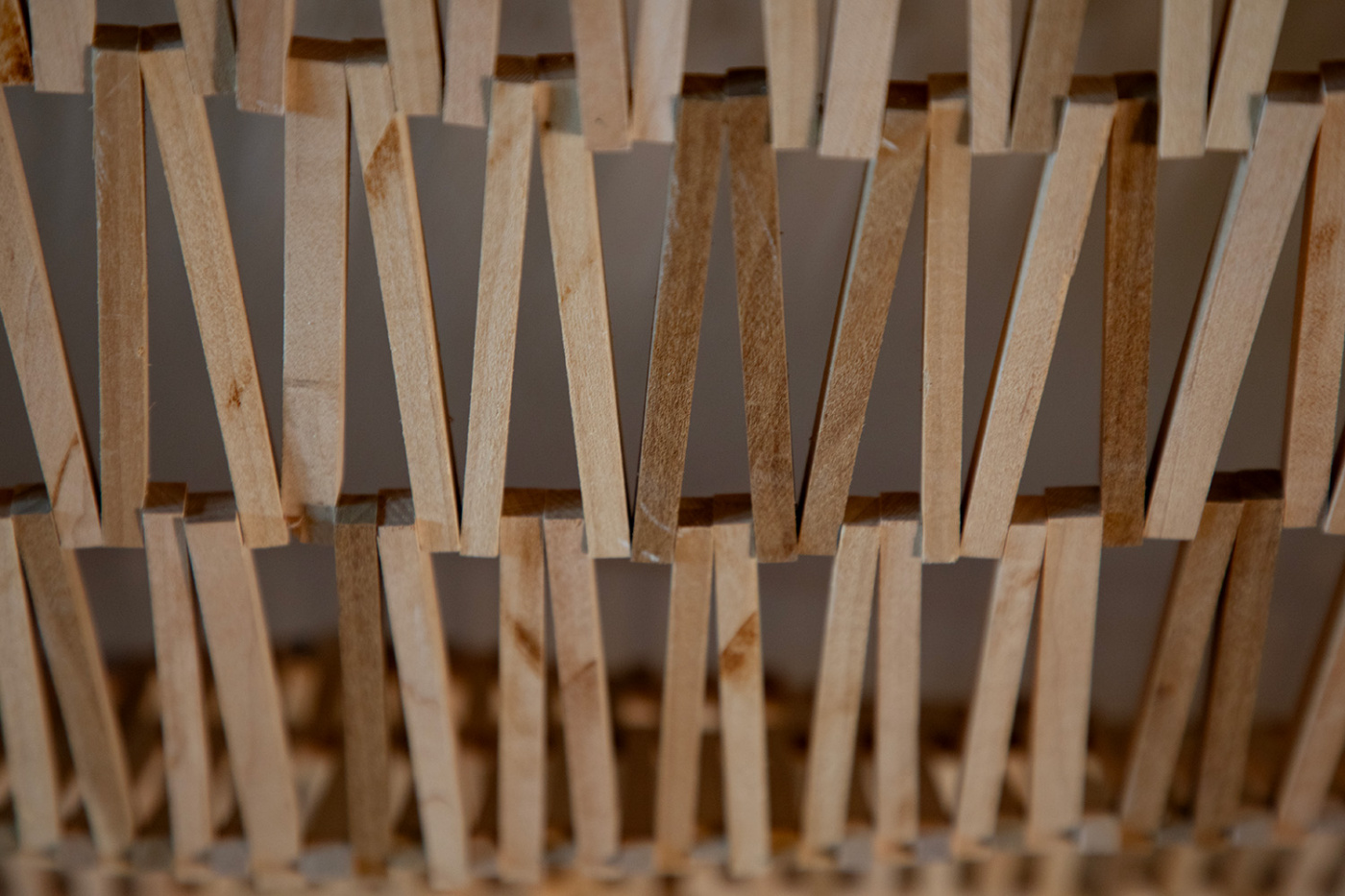
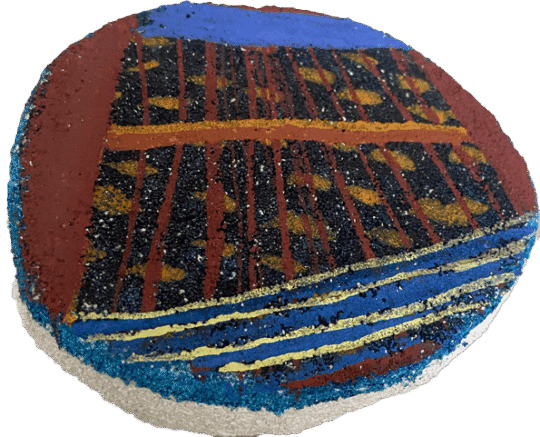
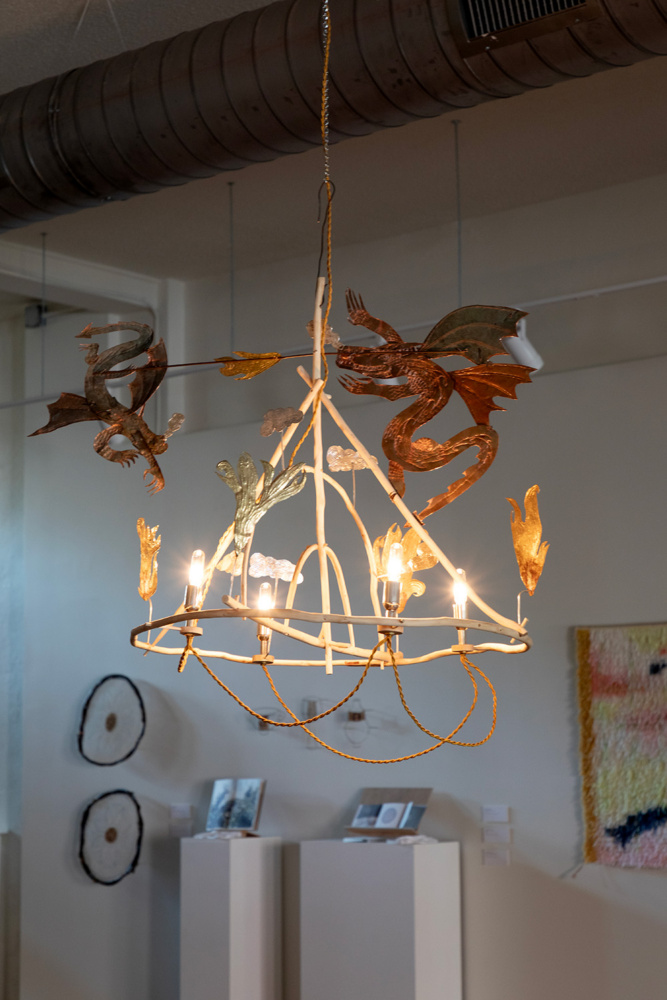
Jensen’s exhibition extends out dramatically from cloth-based art into clay, wood, and even metal, asking viewers to reconsider “holding together” as an organizing principle that signifies, as the artist puts it, “a shared sensitivity to material, to time, to touch, to labor, to the body, and especially to the evidence of the hand.”
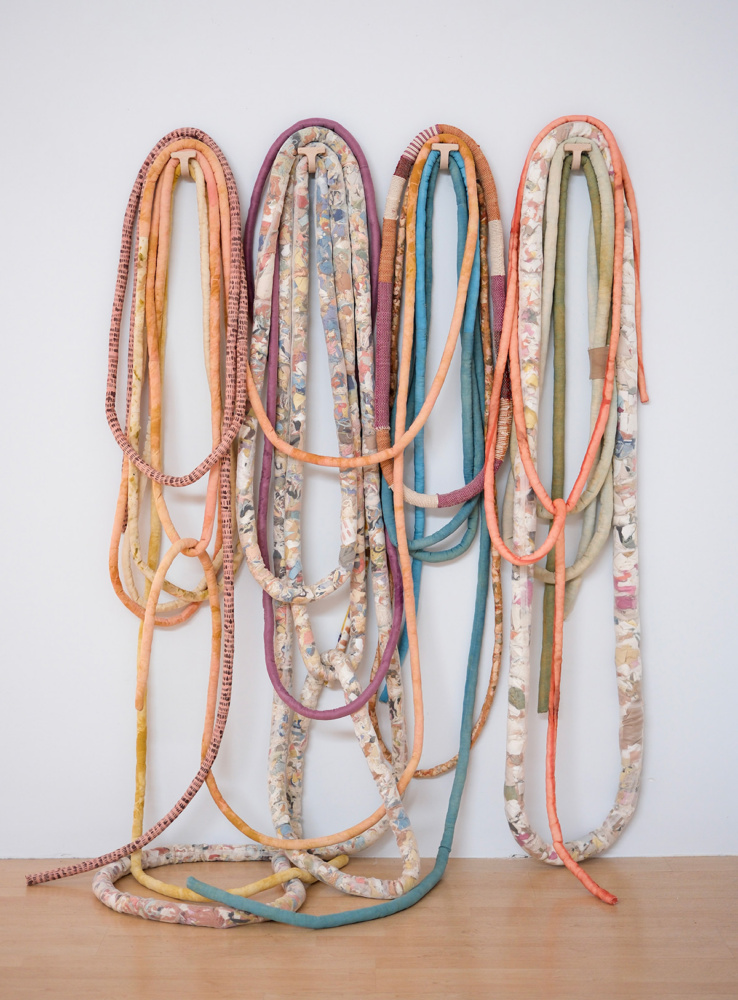
Ropes (2025), by New Mexico-based Kayla Powers, with luscious fabric cords wrapped loosely around four maple hooks, punctuates the space with a wavelike visual rhythm. Powers used natural dyes to tint cotton, linen, silk, and wool, forming thick coils—some patterned, others lightly washed with color, and still others like translucent sausage casings, stuffed with a cacophony of pigmented cloth scraps.
Two works by Marshall’s Miranda Heidler, titled Distelfink and Abundance (both 2026), feature small, carved pieces of hide encircled by a spiderweb of crocheted lace pulled taut by young, flexible willow stems. The centers are brain-tanned buckskin, an ancient method that softens deer hide using animal brain fiber. Her pieces appear as uneven, organic reflections of one another—fraternal twins, two zygotes from the same egg—with a materiality that’s closely tied to the natural environment of Southern Appalachia.
Asheville-based artist Eleanor Annand brings a material contrast to the show with her large ceramic vessels, which reveal the hand gestures and fingerprints implicit in their making. Her robust, cylindrical Vessels No. 1, 2, and 3 (2026), glazed in creamy white, are painted with thin pastel strips, along with lightly raised half moons and circles. They echo the colors and shapes in many of the pieces around them, forming a visual resonance akin to the repeated patterns of a weaving.
Several pieces by Elysabeth F. Cianci, who lives in Vermont, including Canopy (2025), use the tactile form to engage visitors in the artwork itself. A book studded with vibrant archival pigment prints of the natural world, the viewer is invited to put on protective gloves and leaf through its fibrous pages. The book is not itself woven, but its paper is: kozo, made from the inner bark of a Japanese shrub.
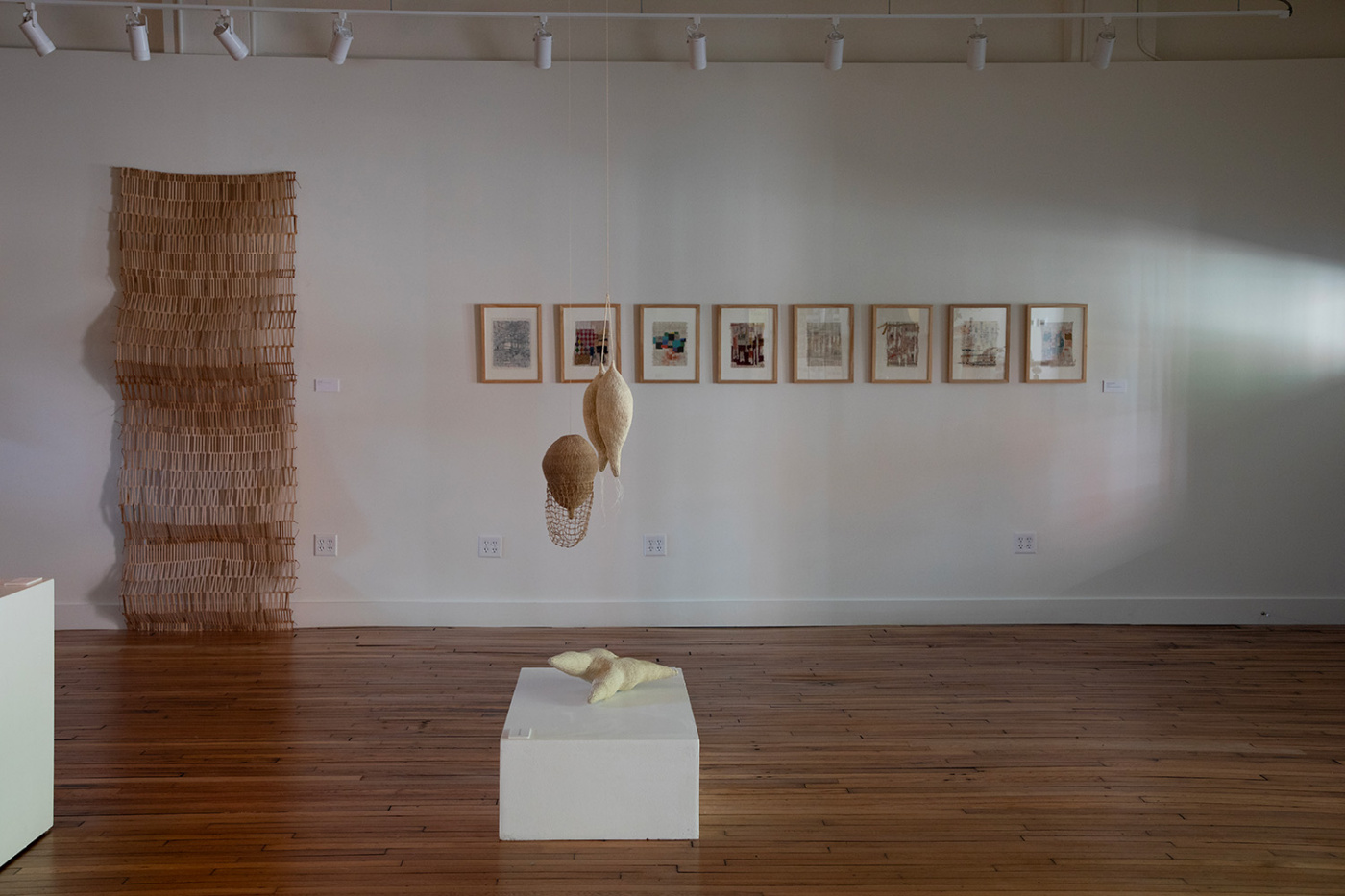
Holding Together’s curation relied on intuition, rather than a master plan for which artists and works to include—both local and from much farther afield—yet the result is remarkably cohesive.
“There is strength in holding something together, but there is tenderness in it too,” Jensen says. “In the way cloth holds itself together through relationships between individual threads, in objects built through coiling, tying, joining and accumulation, and ultimately in the relationships between the works themselves.”