Arielle Weenonia Gray is an Alabama-born Black woman photographer. Her work effortlessly presents on-trend Southern sitters amidst landscapes and homescapes unique to the American South. Gray provides a thoughtful perspective on how one holds onto familial history, intentionally recounting these stories and memories, bringing them into the contemporary moment. Together, we question the depth of the Southern landscape and how growing up during the age of the internet deeply influences an art practice. The following interview touches on topics of nostalgia, being a grandma’s baby, the unique feeling of a summer breeze in the South, and Black vampires.
This interview was edited for length and clarity.
SP: Your bio reads that you’re a Black woman photographer from Alabama. What informed your decision to place being from the deep South at the forefront of your practice?
AG: I was at a point where my bio felt full in such a small amount of time, it felt overwhelming at times. I worked my way into feeling like I needed these titles and accolades to get people to pay attention. Through doing that, I just felt empty because I was thinking, these institutions don’t quite define me.
I think people need to let their work speak for itself, but knowing that I’m from the South is a really big part of the work that I make, and it’s a big part of my life. That’s what I strive to include visually, I try to keep it simple, because the South is a really complicated place, it’s also a really real place.
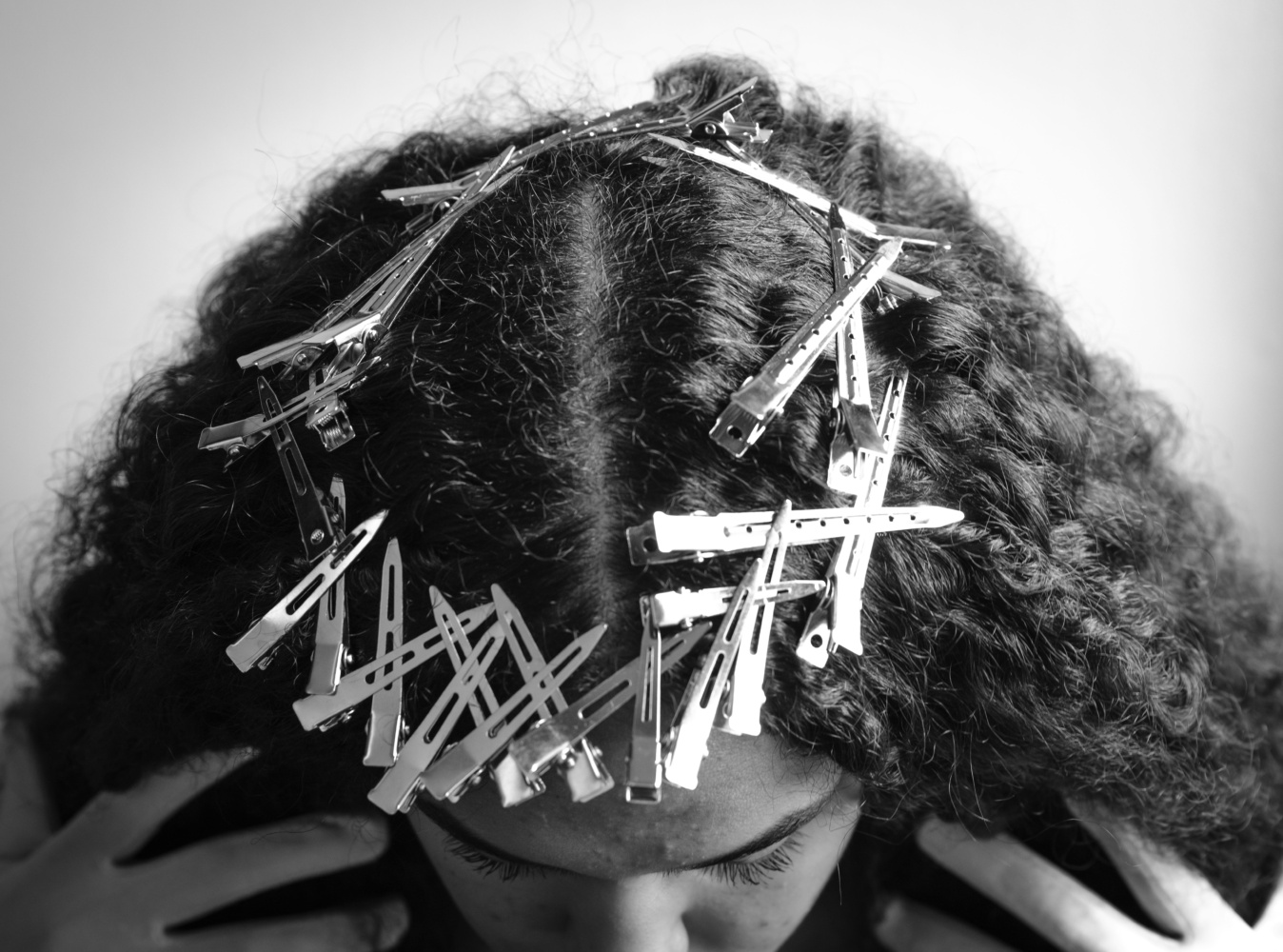
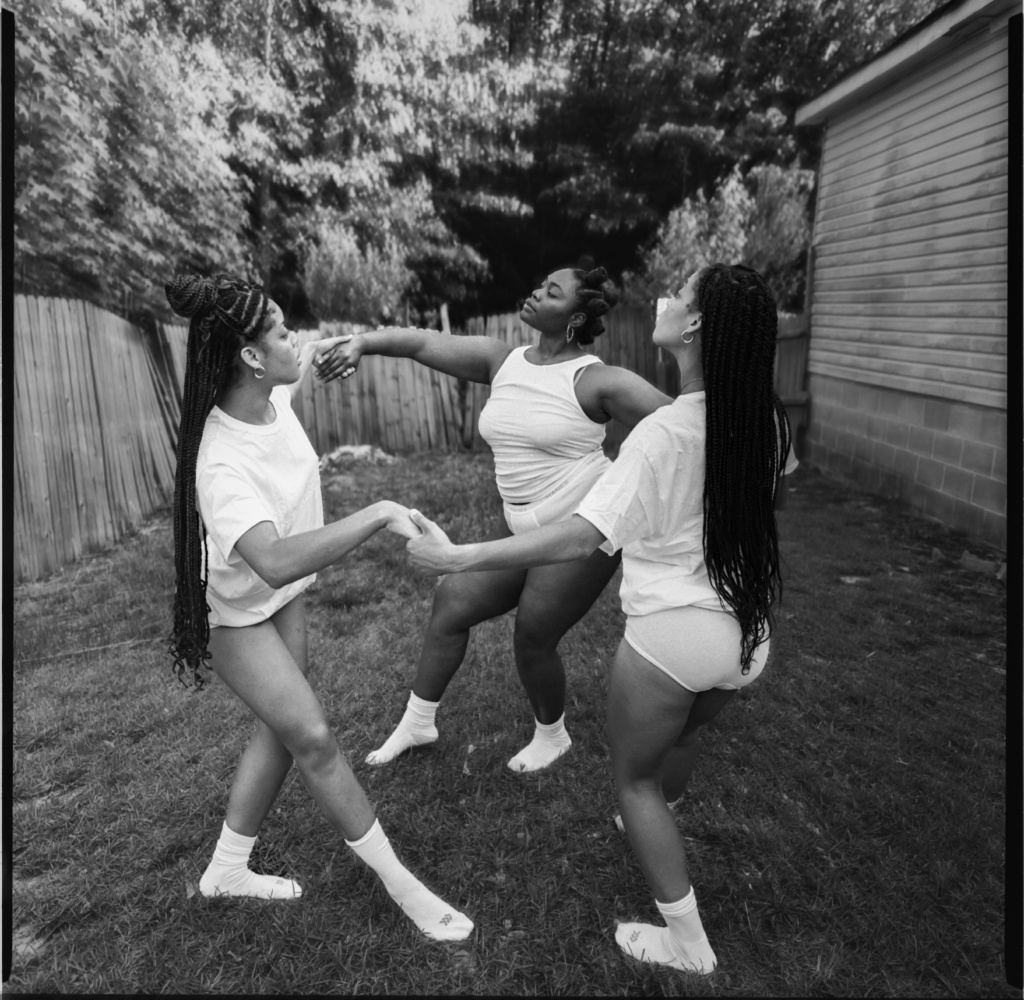
SP: Your photographs often feature your grandmother, your mother, your sister, and yourself. Is there an emphasis on building a matrilineal familial archive in your work? Is this central?
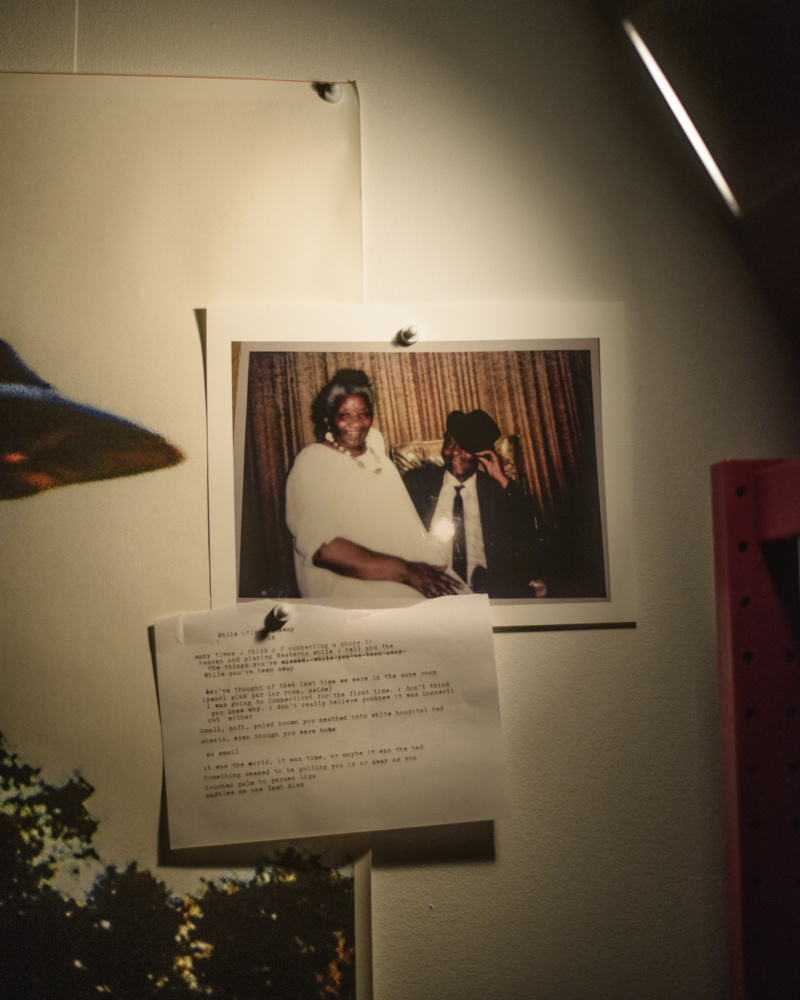
AG: I’ve been raised by women my entire life. The women in my life have been consistent, central, and nurturing. I found home videos I didn’t know we had that felt really compelling. When I was in my mid-twenties, I had this realization that my mom and my grandmother were their own people, and I wanted to know how. I wanted to open the clock face and look at the inside.
My mom and my grandmother were almost best friends, but there was also tension. Two Black women living in the house together; mother-daughter relationships are very complicated. There are all these inner workings of joy, envy; there’s a bitter sweetness of life in the matrilineal line that I come from, and I’m just always trying to build upon it and see what I can contribute. Somebody told me recently that in three generations, people will forget who you are. I’m not trying to live forever, but I do want the coming generations to know that I existed.
SP: That’s really beautiful. Womanhood is hard; you go through so many changes, and you have to, especially in your relationship with your mom. There’s this honoring of family members and the stories that begin to make up their legacy.
AG: I watched my christening, I watched my first birthday party. It was really eye-opening for me to think about it as the lives that we were actually living. We were actually breathing and moving on. It is incredible.
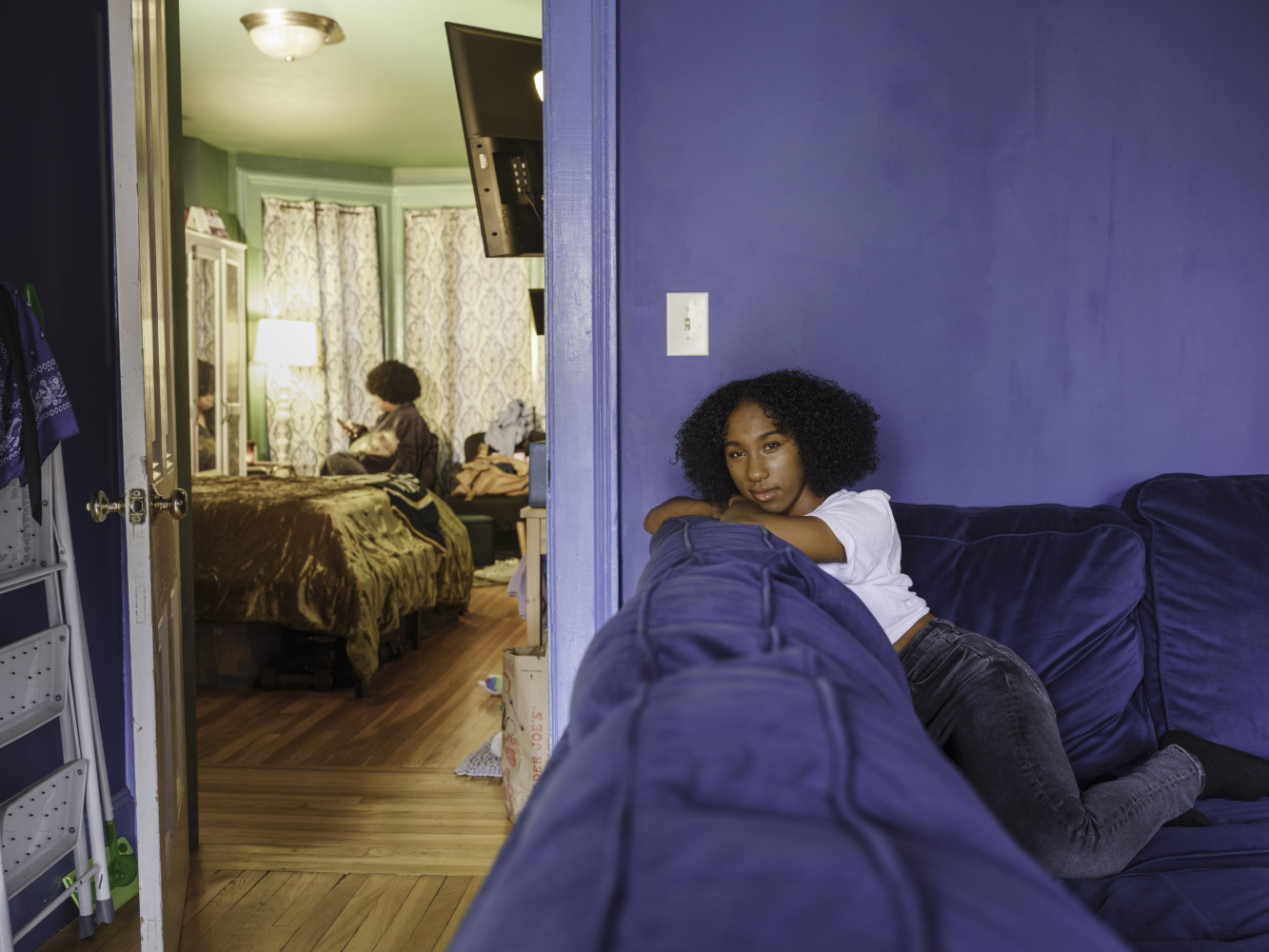
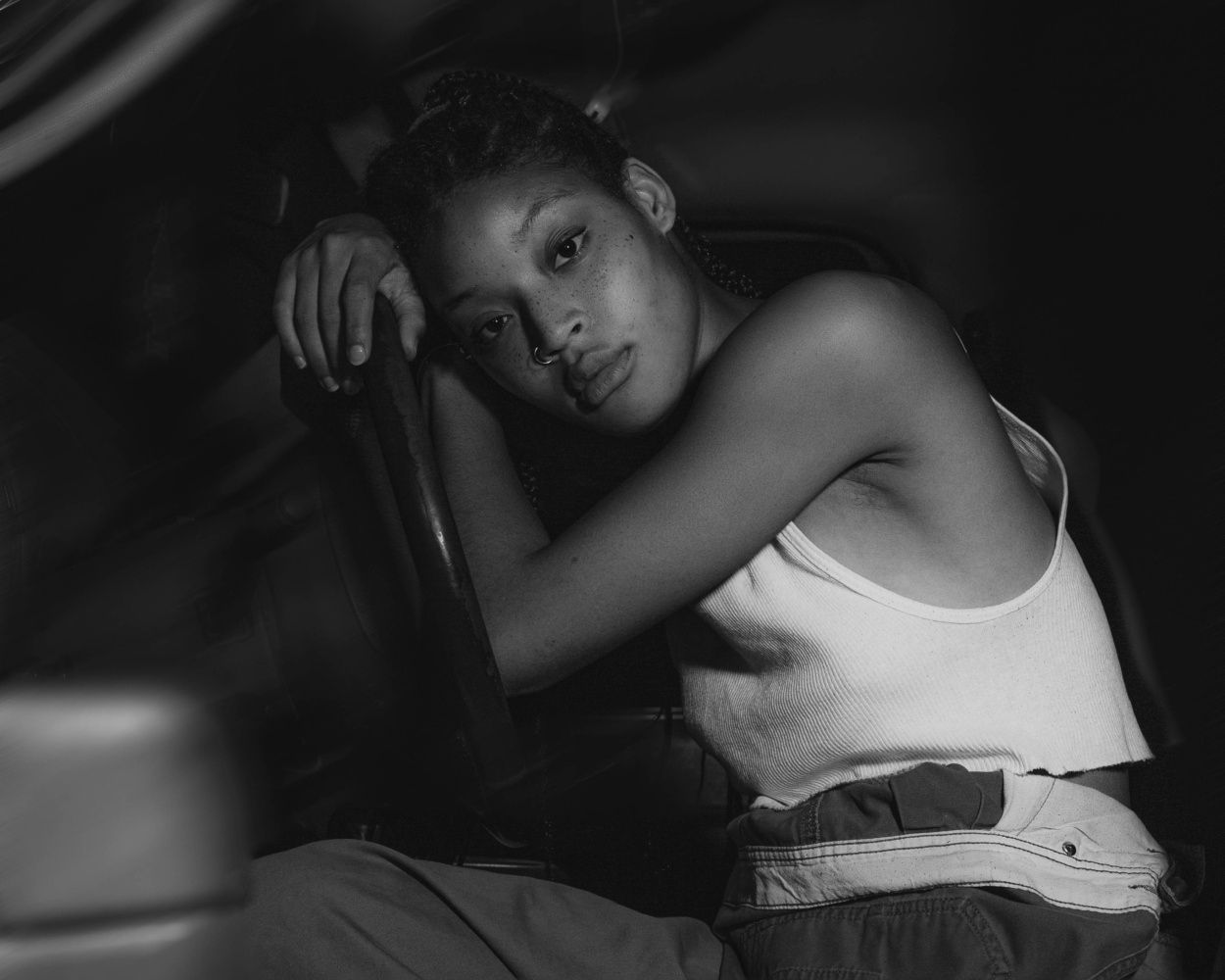
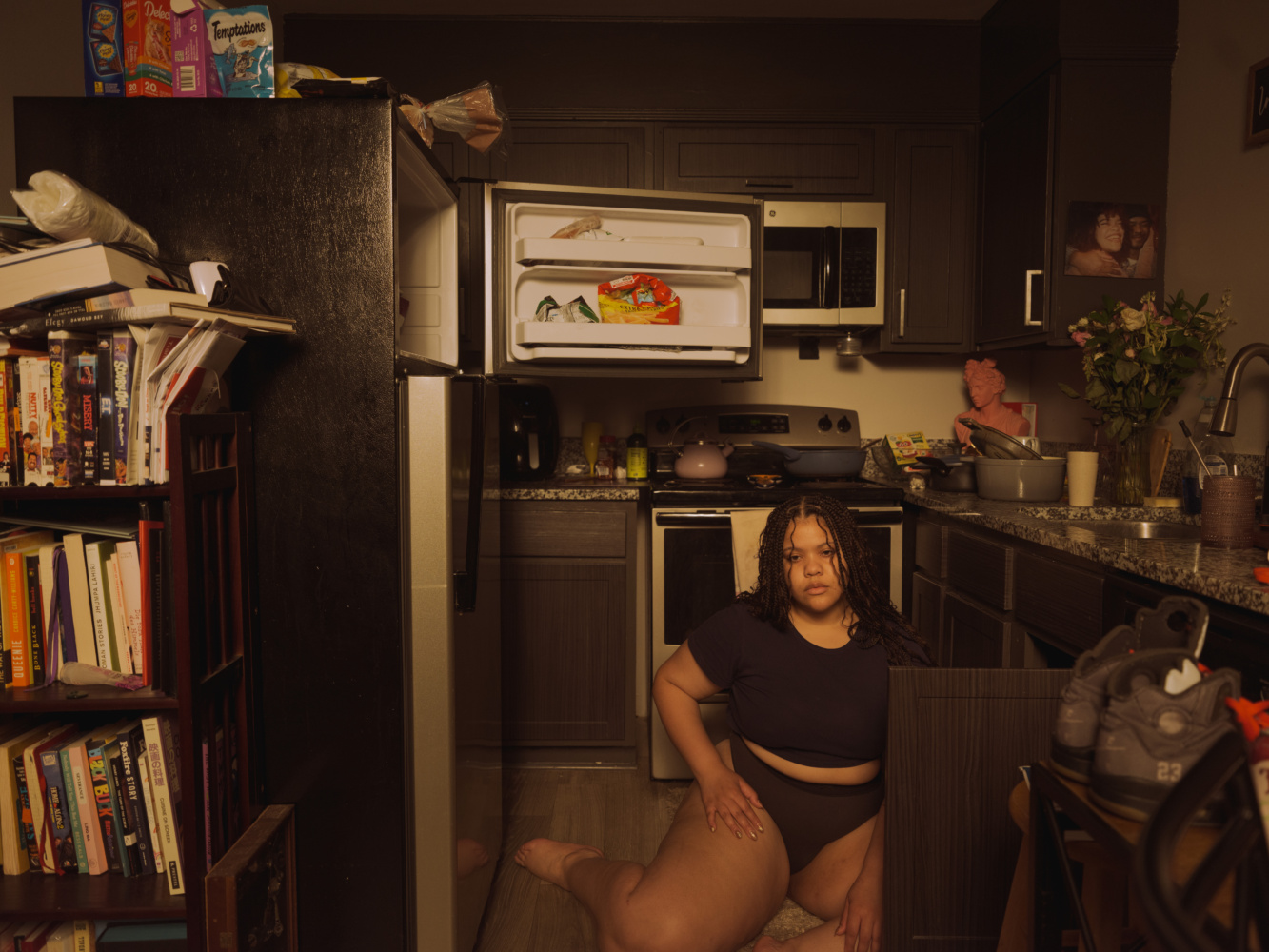
SP: You place the subject or sitter in your photographs in home spaces quite often— they’re always depicted in sites of intimacy and comfort, like the living room or the bedroom.
AG: Intimacy and comfort are things that I feel are necessary; on a more literal note, I want to see how I fit into my own spaces, but also, my connection to other human beings. Intimacy is very hard to come by. To actually feel feelings is a very brave act. My mom always encouraged us to tell the truth, and telling the truth has spread across how I express myself emotionally, and that has no choice but to come into the work. It’s kind of complex, this intimacy. It’s important for other people to see softness in the world, and to know that softness can be rebellion, when there’s so much going on that tries to harden all of us, as Black women. In the world of photography, there’s a lot of images that I feel are mostly observational in their documentary sensibilities, they’re wonderful as a way to be like, okay, these people do exist, but in my work, I want it to be solidified that these people do exist, and they contain this whole world of thought and emotion and softness.
SP: There’s this comforting feeling of nostalgia in your photographs, like a familiar place, or a home place, where does this come from?
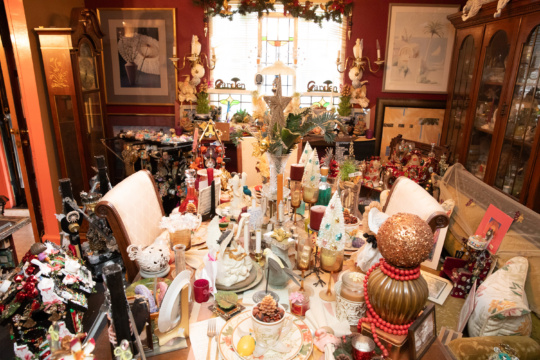
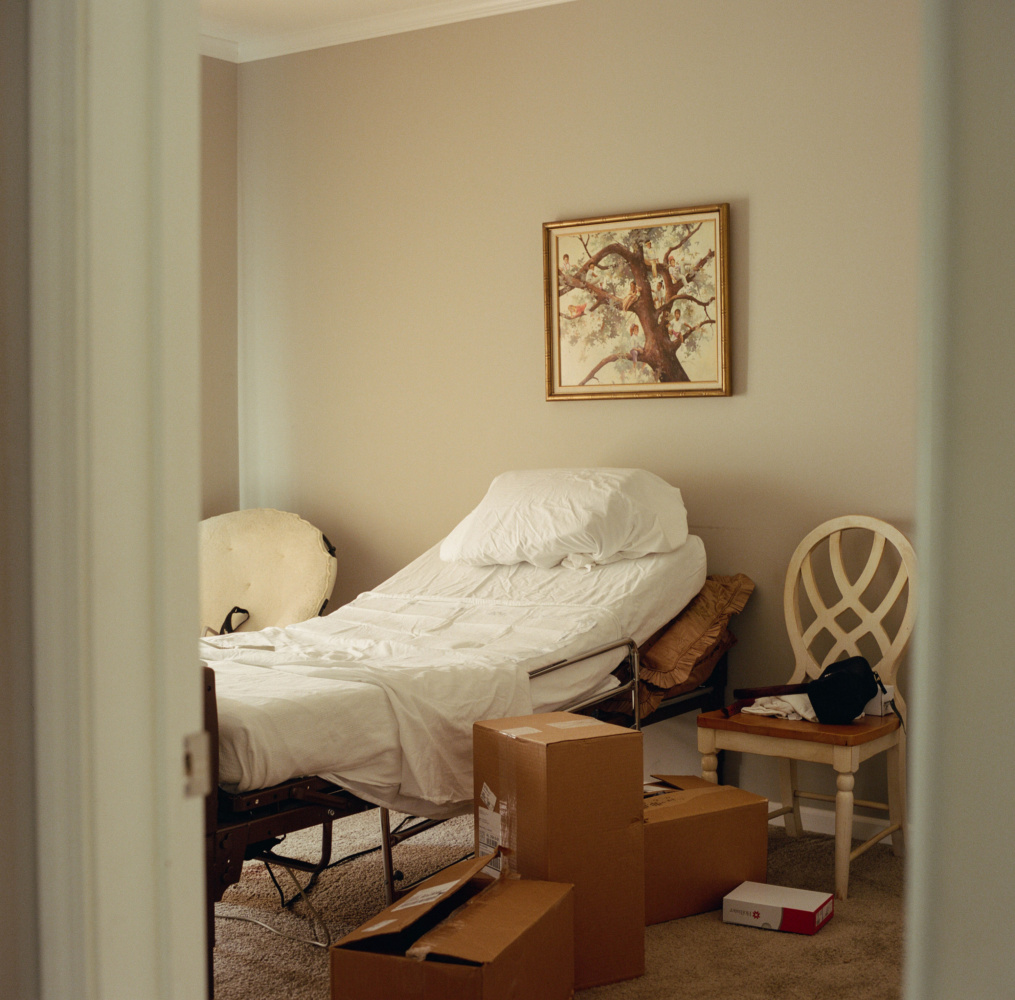
AG: I was a grandma-baby. I was raised by my grandma. I have a mom who’s super into staying on trend, while having a grandma who’s very stout, very traditional. She herself is shedding memories onto me throughout my life. I began to have an affinity for the physical pieces of the house, the hardwood floors, the furniture that matches the floor, the bed that has to have the skirt, the matching pillows that you don’t sleep on, the display towels, and the color palette being peachy and warm. This is my fixation, my tendency to lean towards nostalgia, because of the warmth of memories. I want to preserve that memory. In another way, I’m thinking about old Southern traditional nostalgia, dirt roads, fish fries, fireflies, being inside, and having the door open with the breeze coming in.
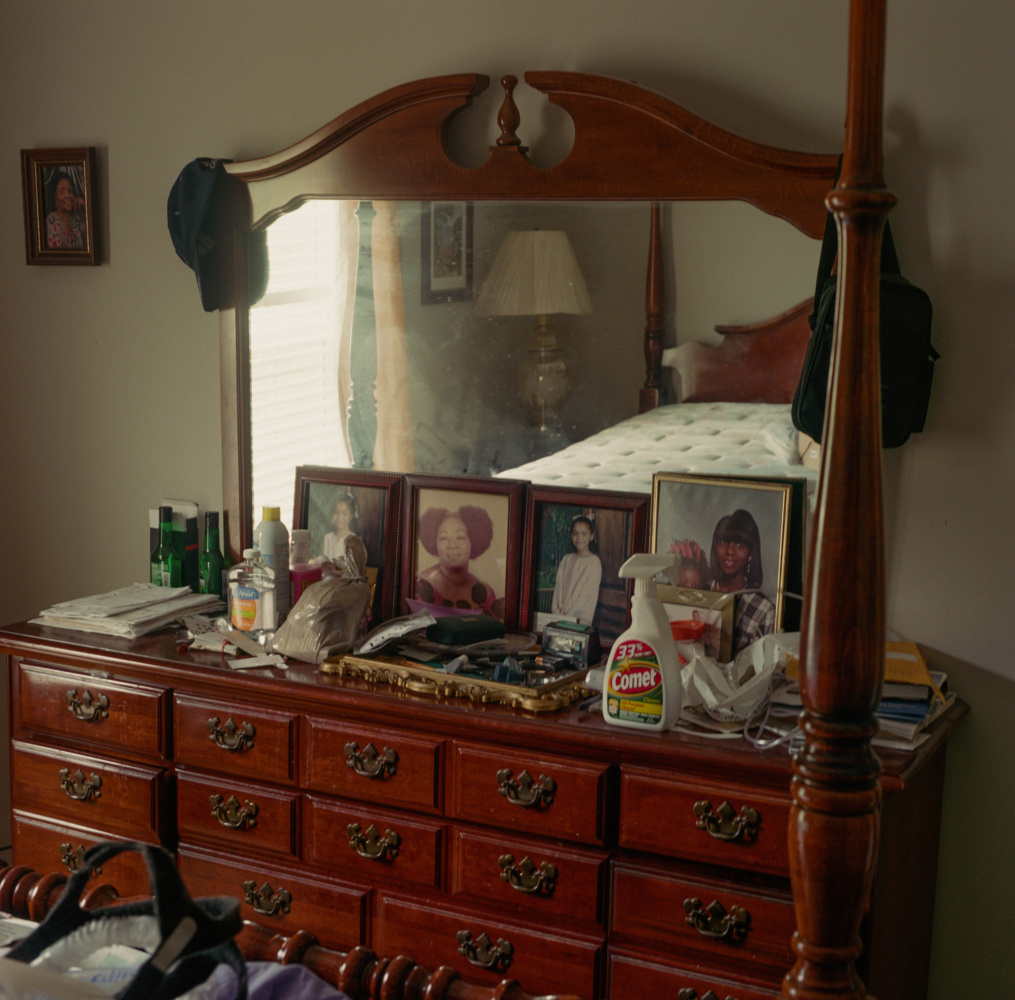
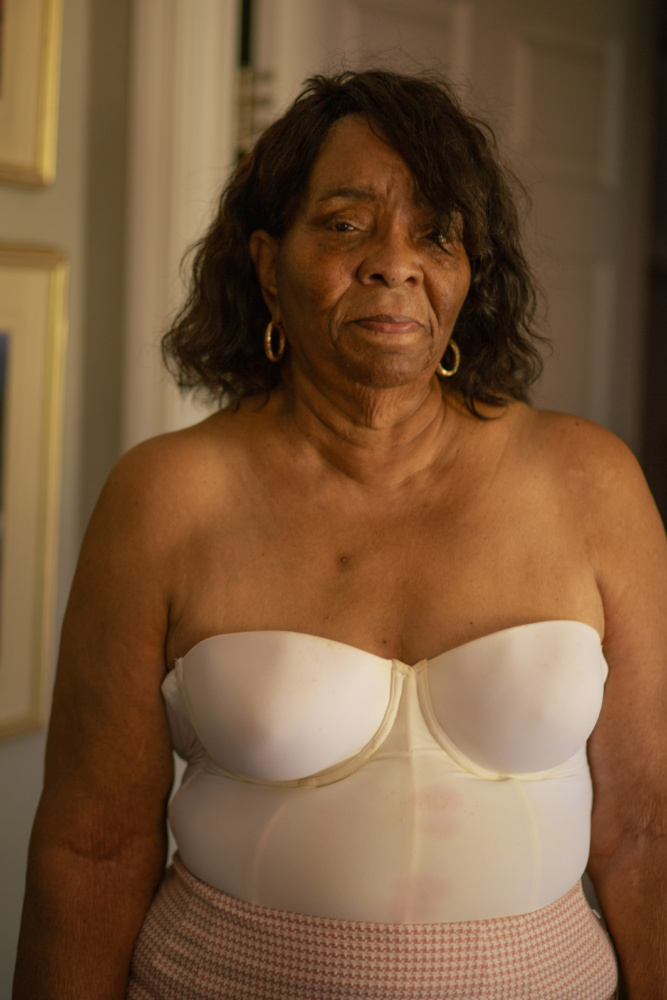
Then there’s also my mom and her nostalgia that is just so contagious, born in Alabama but grew up in Compton. At our home in Alabama, my sister and I would dance to her music. The first time I heard “Brown Sugar” [by D’Angelo] on CD, I didn’t know what to make of it, but I knew I wanted to dance to it.
In another way, I’m thinking about old Southern traditional nostalgia, dirt roads, fish fries, fireflies, being inside, and having the door open with the breeze coming in.
I wanted to keep those feelings and thoughts when I picked up my camera. I didn’t know it at the time, but I wanted to pack these experiences up, take them with me wherever I went, no matter what.
SP: I love the different ages of Southernness; our grandparents’ Southernness isn’t the same as our parents’ Southernness, which isn’t the same as our Southernness.
AG: I’m still asking myself, “Who am I?” In the work. “Am I documenting?”
SP: When you feature yourself or other young Southern people, your sister and friends, it feels like there’s this active pushback or juxtaposition against this notion of the South being stuck in time. The South has so much history, but it’s not stuck; not everything here is just old. Through your work, you’re presenting these contemporary-looking subjects, really on-trend dress, but in a Southern landscape, with Spanish moss and kudzu, this lush vegetation. Your work really mobilizes the South, offering a reminder that young people and trends exist here.
AG: Growing up in the age of the internet was what mobilized me. I would go online, especially Tumblr, and see these girls dressed in really cool clothes. That happens here too. There’s always been people trying to make it work, and I really enjoy that part of the South. A lot of the time, people say the South is backwards, but a lot of it is political. That affects fashion and visual imagery too. I’m just trying to remind folks that the way we dress and represent ourselves as Black people in America is so special. You can’t imitate that anywhere else, and the South always has its flair on it.
SP: Is there a reason why you gravitate towards photographs of lush vegetation and landscape?
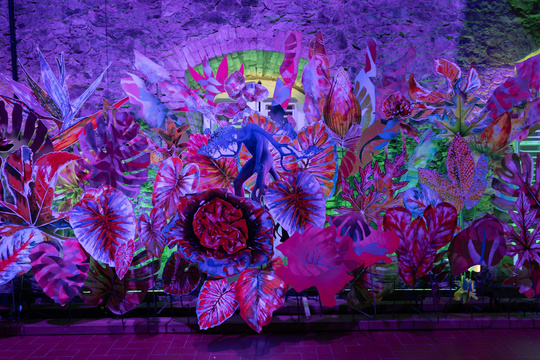
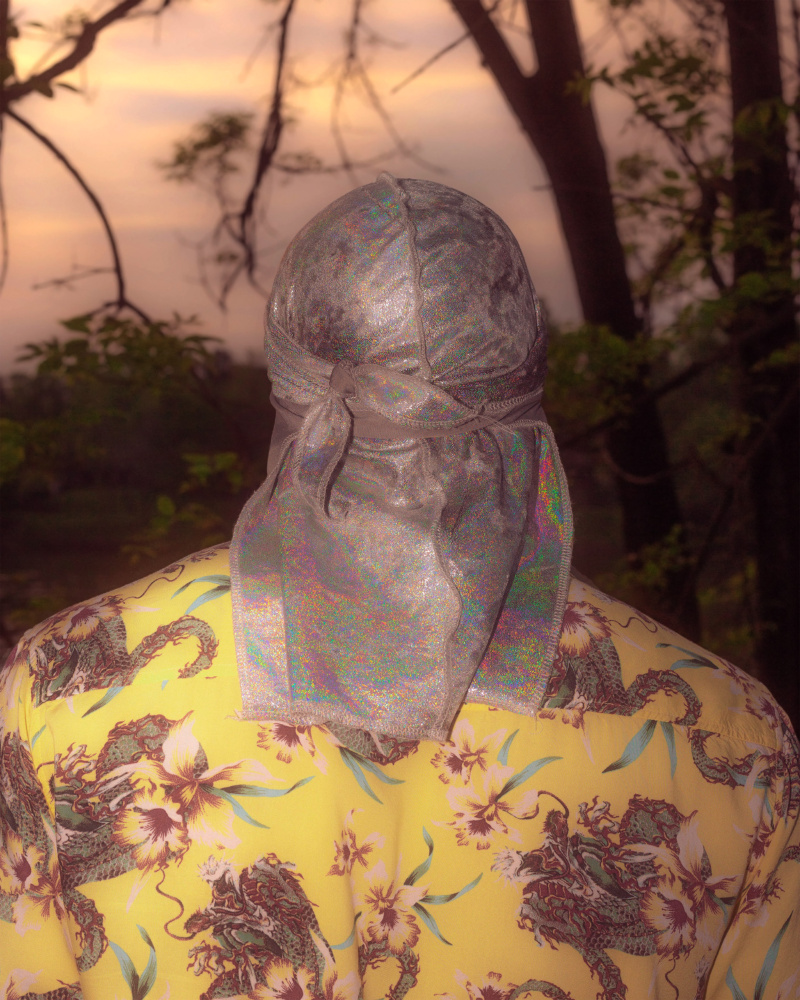
AG: My sister and I grew up on a hill in this town called Moundville and we played outside. Outside was where a lot of possibilities happened. Being children playing on this land and feeling like there are so many opportunities, and then growing up and realizing that there’s so much complexity to the land that we stand on. Trees are indicative of lineage, but they’re also indicative of having resolve; they’re still standing. I believe in respecting nature, specifically of the South, because I think before we had churches, before we had these institutions to go to, we went to the forest, to speak and to escape.
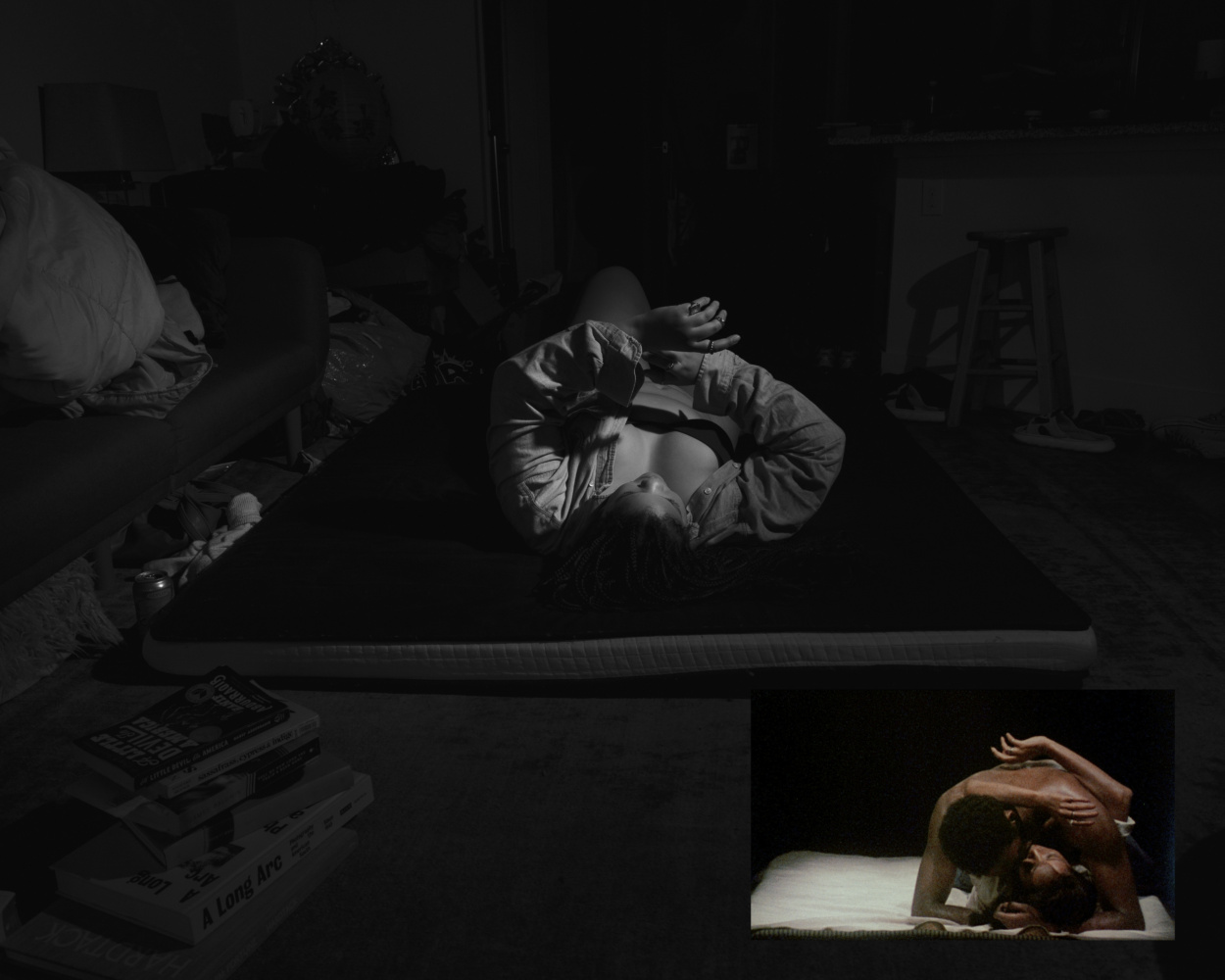
SP: Lastly, let’s talk about your series Ganja, where you take on the spatial positioning of Ganja Meda from the 1973 film Ganja & Hess. Why place yourself in the body of Ganja Meda? To me, this movie was so informative because we don’t know where it took place, but I chose to believe that it was somewhere in the deep South.
AG: I think it’s very plausible for that film to have taken place in the South. I love the darkness and complexity of love in the movie. Ganja is a really compelling character because, as a woman, she is so self-possessed. As someone who is soft and specifically Southern, I also have different versions of myself, and one of those versions aspires to be as self-possessed as Ganja is, but also as desired. In that film, she is able to talk about her pain very directly when she talks about her mother, and instead of recoiling from that, she leans into it further. There’s a passion and direction behind her that’s really inspiring. Bill Gunn was into this beautiful and luxurious depiction of Black life on the screen, and that was also motivating in this character, specifically, having this Black woman character who’s not a stereotype at all. My images were aspirational in a way.
SP: This all comes full circle. At the center of your work is the Black femme body and its multidimensionality. You are tied to your history, but you also have a sense of self that goes through so many changes.