Persiste en el negro cubano, con tenacidad asombrosa, la creencia en la espiritualidad del monte. En los montes y malezas de Cuba habitan, como en las selvas de África, las mismas divinidades ancestrales, los espíritus poderosos que todavía hoy, igual que en los días de la trata, más teme y venera, y de cuya hostilidad o benevolencia siguen dependiendo sus éxitos o sus fracasos.
Lydia Cabrera, El Monte (1954)[1]
The belief in the spirituality of the mountains persists among Black Cubans with astonishing tenacity. The mountains and thickets of Cuba are inhabited, as in the jungles of Africa, by the same ancestral deities, the powerful spirits that even today, as in the days of the slave trade, are most feared and revered, and on whose hostility or benevolence their successes or failures continue to depend.
Lydia Cabrera, El Monte (1954)
The first paragraph of Lydia Cabrera’s El Monte (1954) summarizes the more than six hundred pages that follow—an ethnographic textbook on the practice of Afro-Cuban religions across the island of Cuba. Cabrera’s exposure first came as a child of a white wealthy family in Havana, whose Black domestic staff and private tutors, especially a nanny and seamstress, spoke to her about their spirituality. Thus began a life-long fascination and research-based practice into those who did not share her background, but granted her access to join them in honoring sacred traditions.
While Lucumí and the Abakuá are their own faiths independent of one another, exhibitions on view in Downtown Miami with works by Cuban artists Elliot and Erick Jiménez and Belkis Ayón present an abyss of difference in terms of personal inspiration, interpretive execution, and the role of race and color in the figures on view. In both, use of light and color, or the absence thereof, impact how figures are interpreted. Further, questions of who gets to portray Afro-Cuban spirituality dominate both exhibitions.
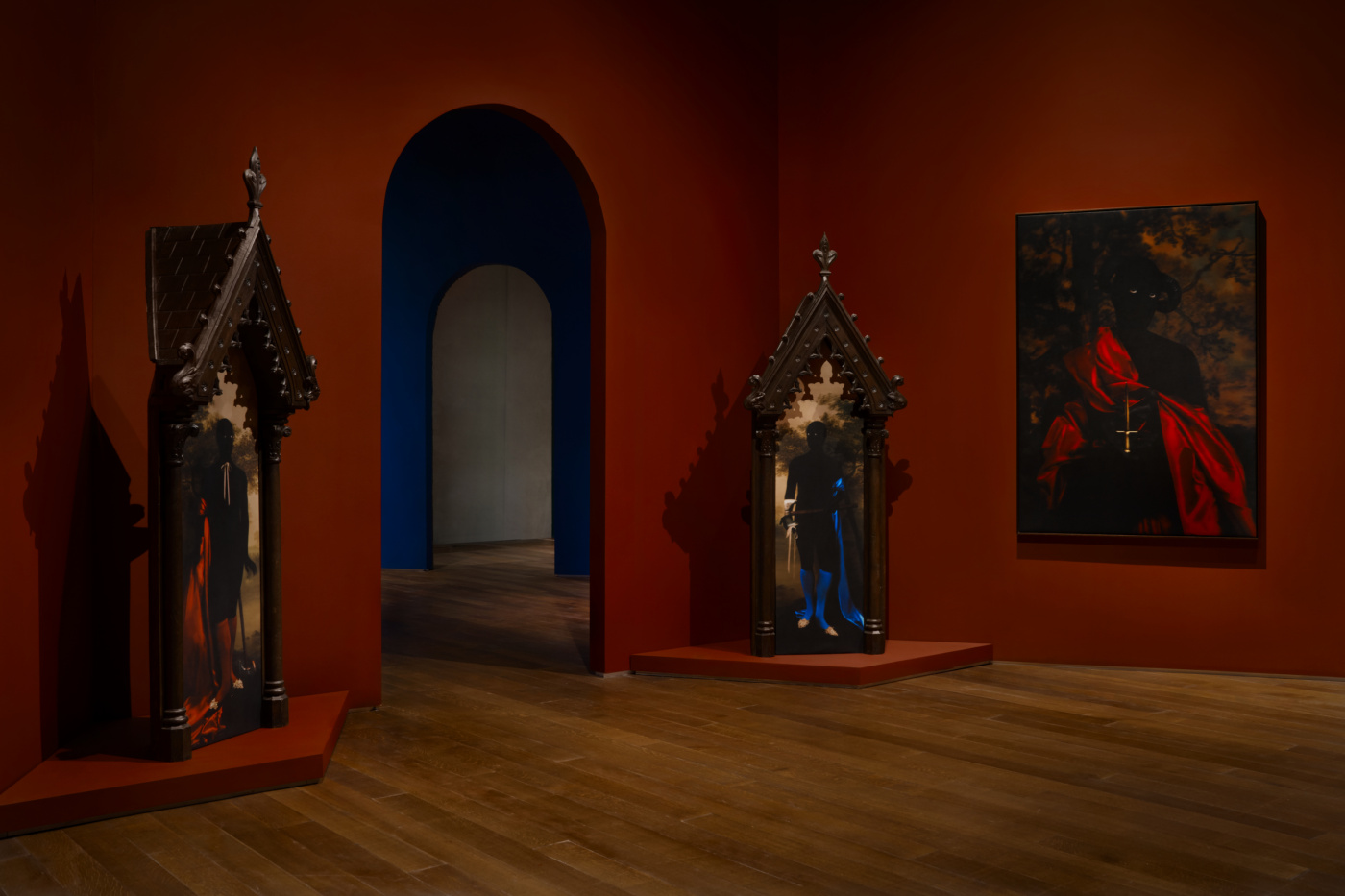
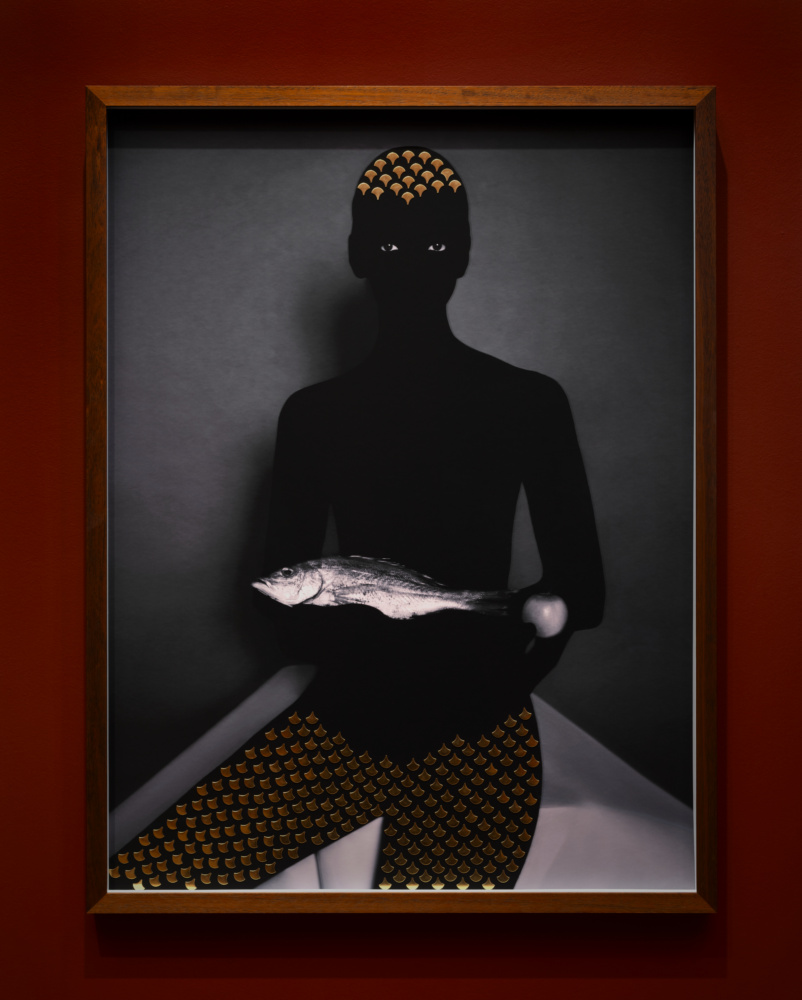
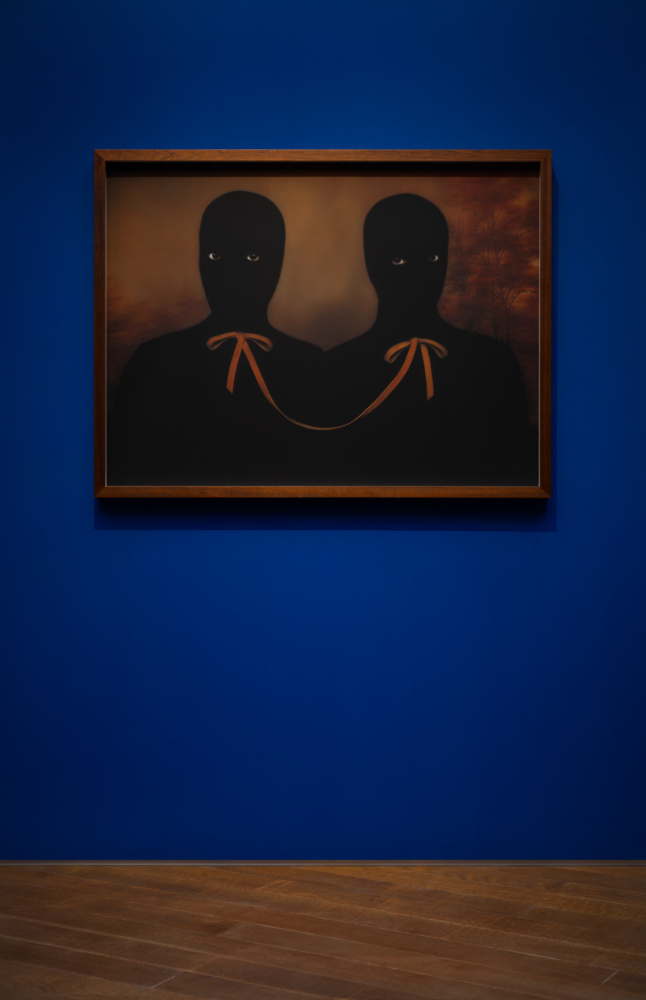
The first solo museum show of the Jiménez twins, first-generation photographers, at the Perez Art Museum Miami (PAMM) was framed by styrofoam makeshift painted walls meant to recreate el monte. A term used to denote the forest that serves as sacred landscape where the spirits and deities of Lucumí—an alternative term for Santeria—reside, el monte curatorially guides one in and out of a dark labyrinth of lens-based works Notably, the black silhouetted figures with peering eyes gave way to nostalgic longing for the late Ayón, explicitly honored in the twins’ work titled Sikán (After Belkis Ayón) (2025).
Ayón, who was Afro-Cuban herself, centered the Abakuá in her printmaking process, an all-male secret fraternity founded in 1836 on the island that retains their practices and customs under a closed lip order. Concurrently on view just blocks down the street, during and past the run of El Monte at PAMM, are Ayon’s own works in Belkis Ayón & Carlos Alfonzo: Odyssey at the Museum of Art & Design at Miami Dade College, within a newly renovated The Freedom Tower, a landmark that was an assistance center from 1962 to 1974 for Cubans entering the United States, including my own parents, grandmothers, and grandfathers.
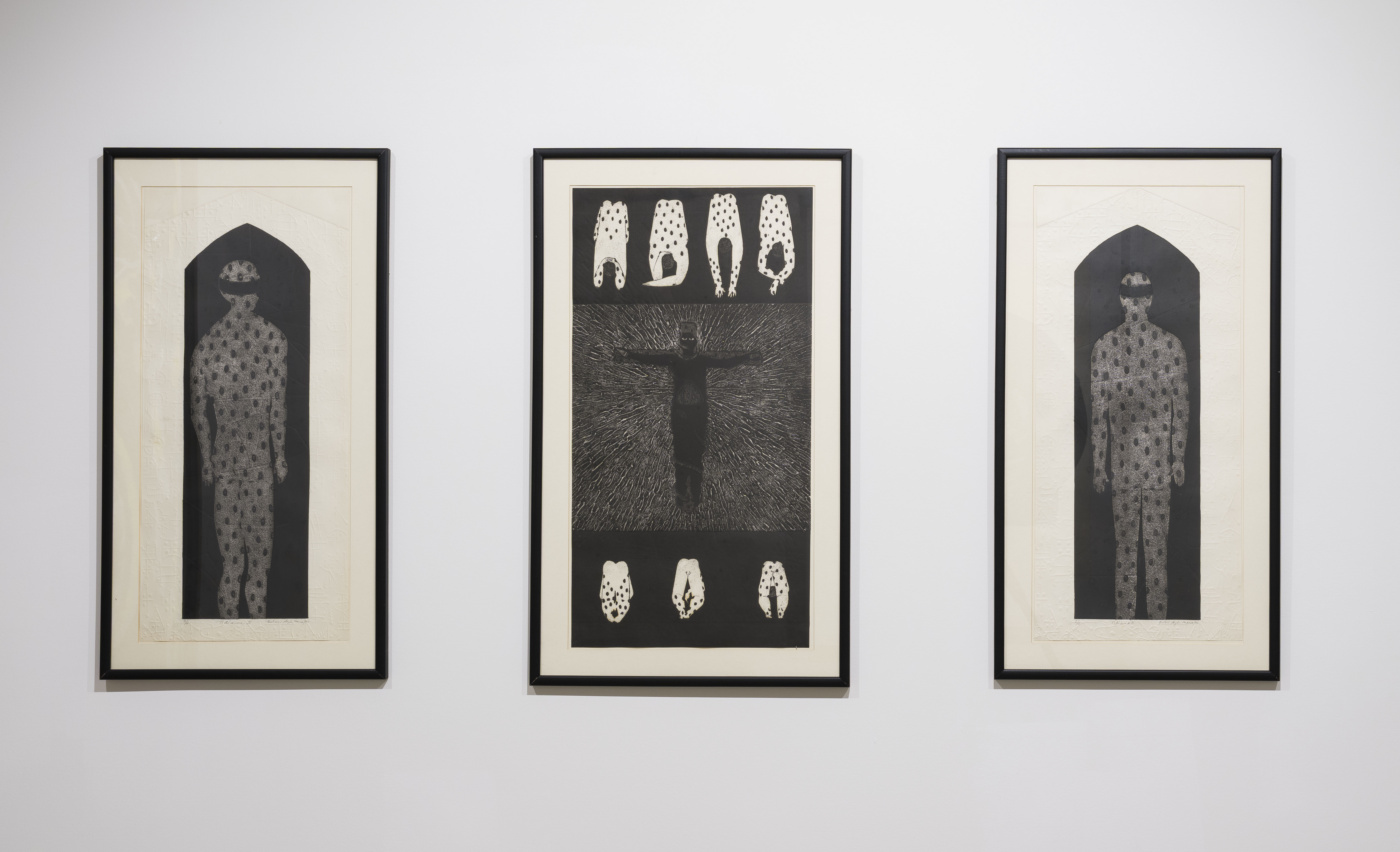
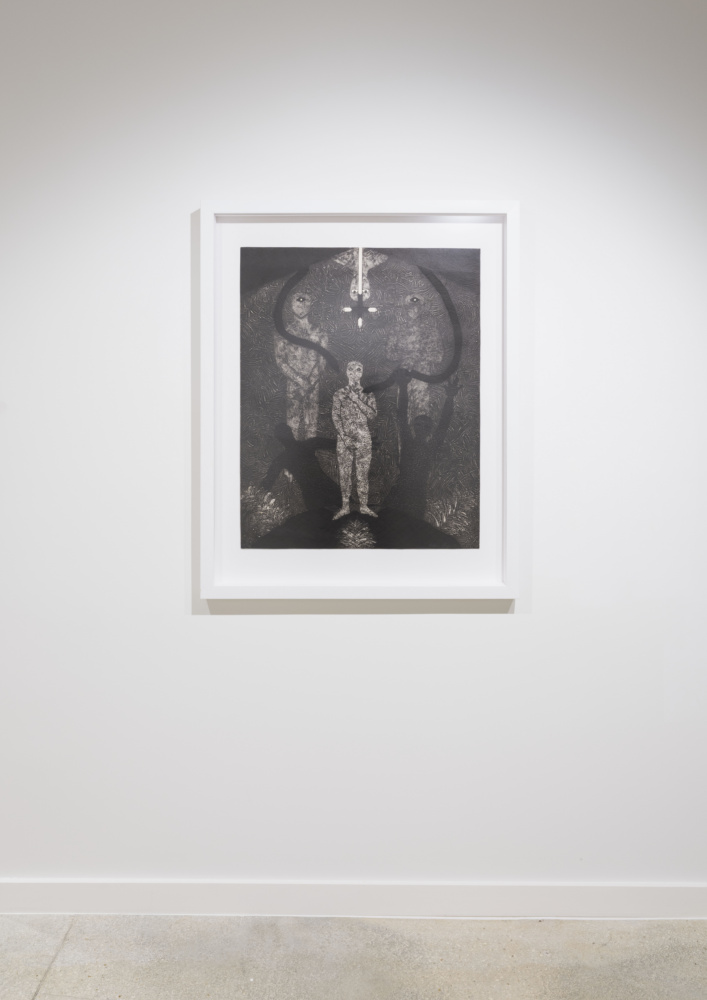
Ayón’s collagraphs exemplify the world-building of the Abakuá through her eyes, or as she states, “…a kind of series of flashes of a sacred memory that I did not live through exactly, but that I always have in my memory because of the research I did.”[2] Her fascination started from researching the Yoruba as a high school student at San Alejandro Academy in Havana, discovering Cabrera’s book, which propelled her to create the figure of Sikán, the only female in the Abakuá legend who is sacrificed for breaking a vow of silence.[3]
Rather than exacting faith onto paper or steering into predominant European depictions of art history, Ayón’s touch as a printmaker centers monochromatic figures that are all shades of black, gray, and white, pulled from spirituality and Byzantine imagery but built a world of her own up until her premature passing at age thirty-two. The mystery of much of Ayon’s work is clarified by what is clear in sight: a voice lost breathed life and awareness of the existence of the Abakuá to the rest of the world.[4]
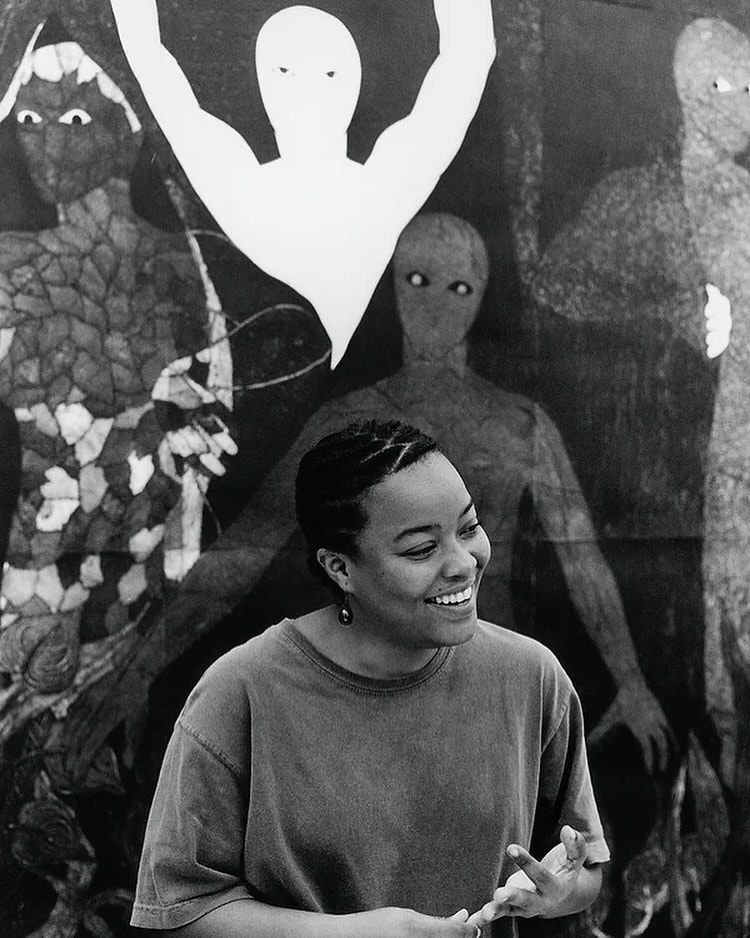
In noting their familial exposure to Lucumí, the Jiménez twins explain, “We inherited Lucumí from our Afro-Cuban grandmother, who raised us and practiced. We grew up with patakís, narrative stories within Lucumí that transmit cosmology and moral teachings through oral tradition. The work was not developed as theological instruction or ritual documentation. We do continue to practice, though not in a strictly institutional way.”[5]
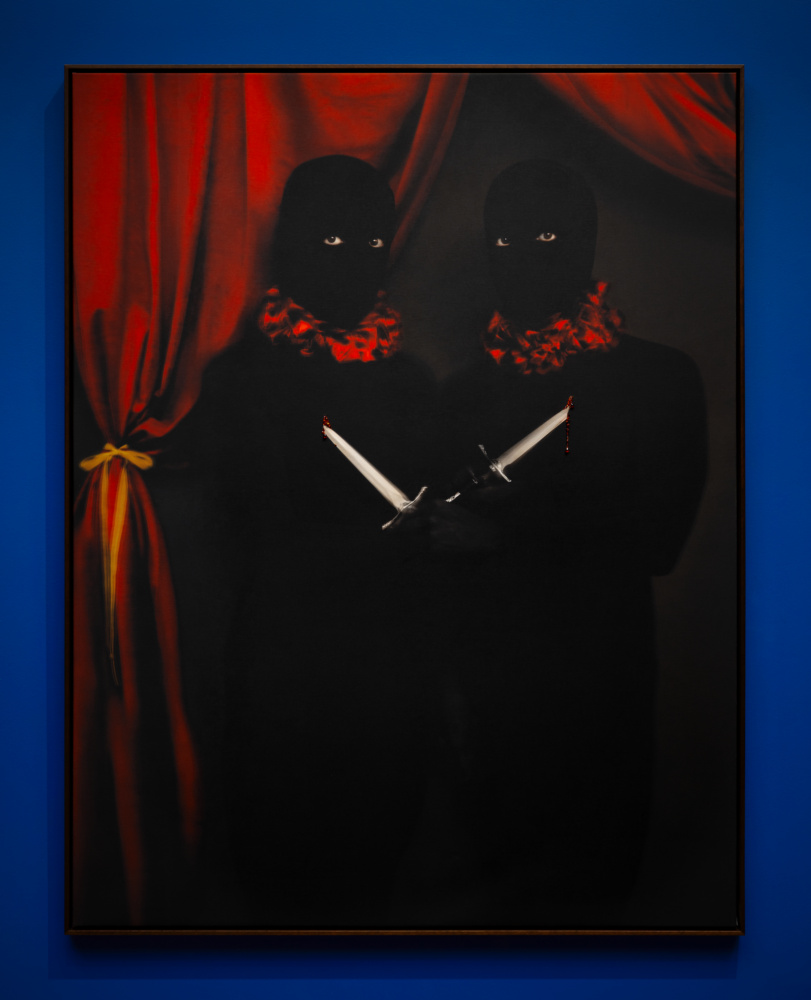
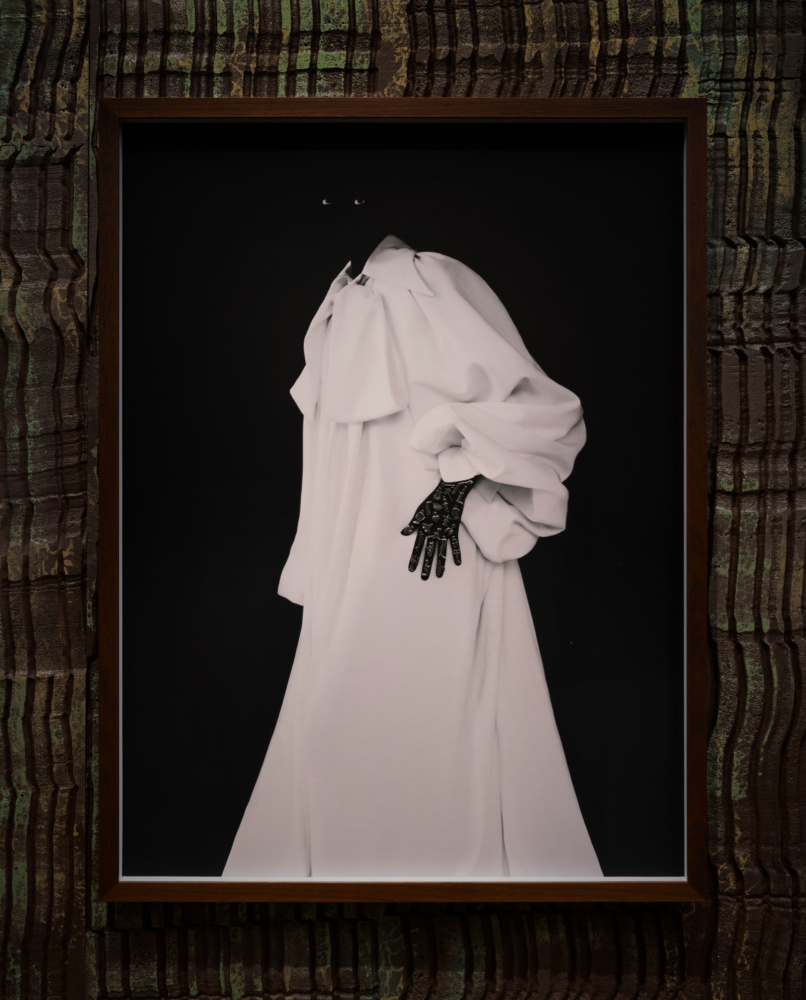
Parallel to Cabrera’s spectator gaze into Lucumí, the deja vu of the Latinx twins synthetically obscuring personal identity when placing white-passing individuals under full body black spandex suits, especially in El Monte, where identity was central, and in reverence to Afro-Cuban faith feels transgressive, and not in a good way.[6] This is especially in light of using photography to render real people into symbolic figures. A solely Lucumí perspective was translated in diasporic context with the safe, mainstream Western remix that is digestible to those who understand the basics of European art history. The energy of this personal syncretism was most exemplified when I considered the artists mirrored and referenced in the works on view: Caravaggio, Antonio del Pollaiuolo, John Everett Millais, Odilon Redon, Peter Paul Rubens. In this clash of references, Catholicism and colonialism synthesized with Santeria and the colonized.
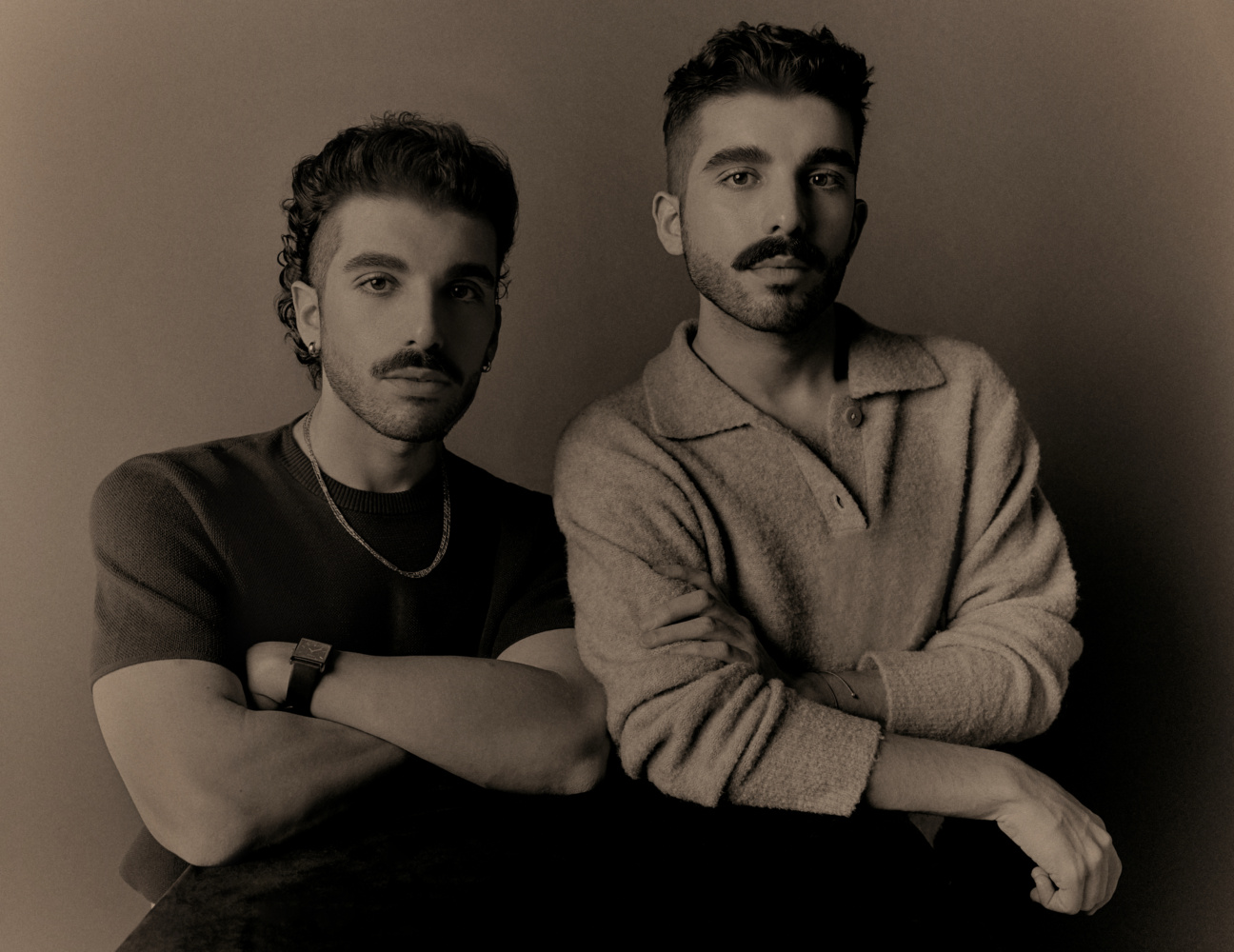
The Jiménez twins explain this by stating, “The obscuring of facial features is entirely deliberate. It reflects the historical concealment embedded within Lucumí and allows darkness to function not as absence, but as presence and power.”[7] The right to practice and define Lucumi rests in the unknown, especially as the orishas are the ultimate judges on who is invited into these traditions, removed and irrespective of the human mortal. What is certain is how historical Cuban genres of Blackface minstrelsy in the late 1800s and early 1900s prevailed into eventual portrayals of the orishas.[8] Left up to personal agency in El Monte is how photographers and their chosen sitters are afforded a pass to portray color as representative of shadow, rather than alluding to Blackness as the majority ethnicity of those who practice Lucumi.
With both El Monte and Belkis Ayón & Carlos Alfonzo: Odyssey exhibited in Miami, there’s an added complexity to what can be considered clandestine and remain opaque by those born on the island and those of diaspora leading the narrative of Lucumí and Abakuá, Afro-Caribbean religions, to a diasporic city with a history of punishing or profaning the faiths and practitioners themselves, through legal ordinances, subsequent court trials, and resistance from those in Cuba who did not accept chapters of the Abakuá in Miami.[9][10]
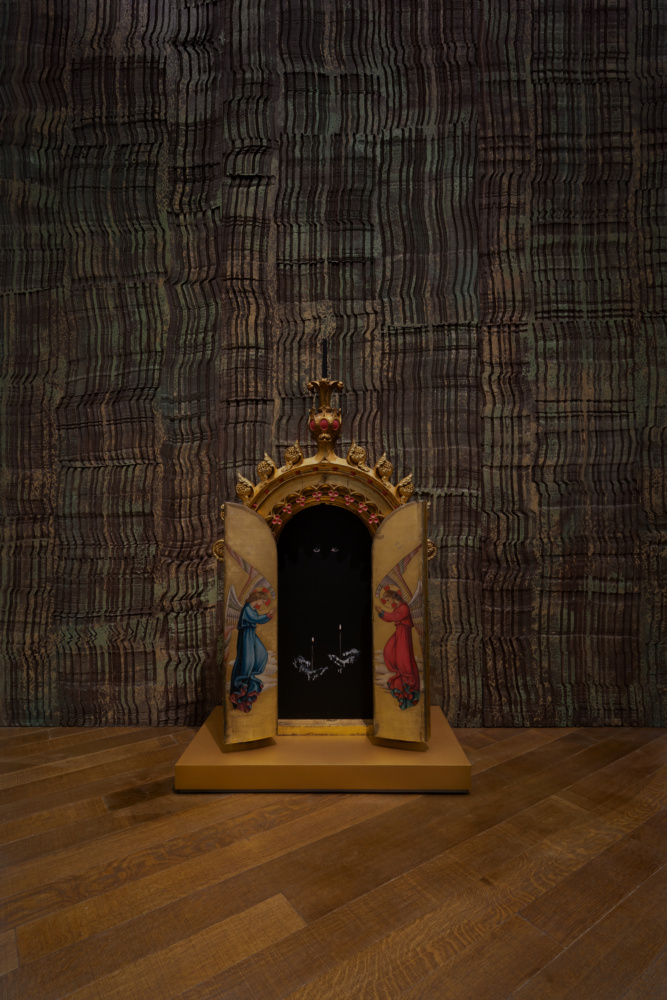
Ibejí Altar (2025) by the Jiménez twins is an installation that represents the Ibejí, divine twin siblings in Lucumí. The center panel holds two eyes that pierce through a veil of darkness, bookended by a red photograph on the left and a blue photograph on the right, showcasing a flower within a candleholder in each vase. Red and blue represent the colors ritually tied to the Ibeji, which in this scenario was embodied by the Jiménez twins as creators of the altar. In a show of this magnitude, the secrecy of Lucumí was canceled out by inserting themselves in the work, making the personal very public through this executed stylistic interpretation.
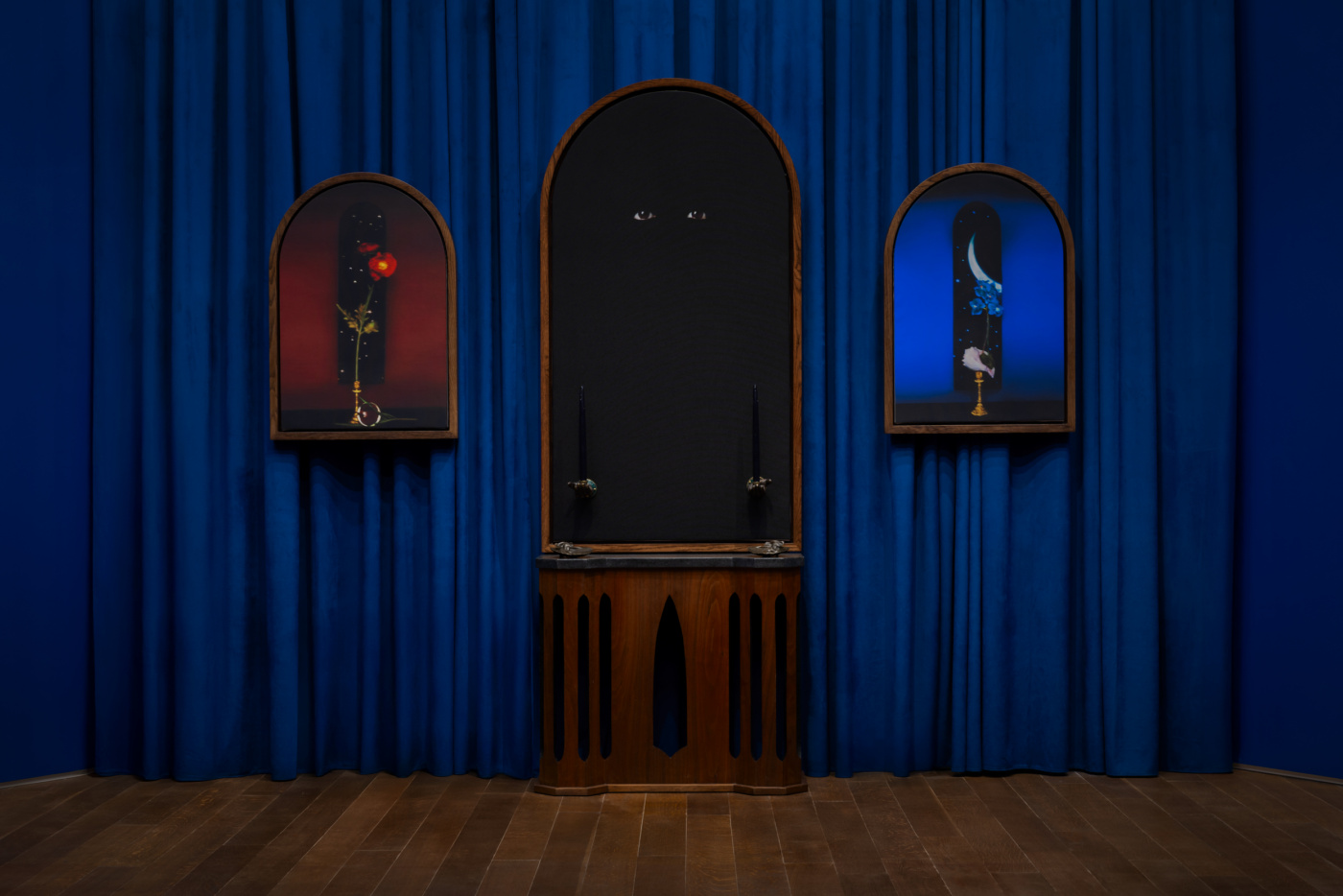
Even more so, Maritza Lacayo, associate curator at PAMM and of El Monte, had a direct involvement in the work. She explains, “Elliot and Erick originally asked me to pose as Elegguá since this orisha is the ‘opener of paths’—they felt that this exhibition was the next step in their career and I had the honor of ‘opening that path’ for them. Instead, Elliot and Erick used the images that they took of just my eyes for the work Ibejí Altar. Elliot and Erick’s spiritual advisor/Babalawo spoke to them about their connection and friendship with me—mentioning Oshun as being the orisha that protects me—all after they had already chosen to use my eyes in Ibejí Altar.”[11]
For Ayón, the sketched eyes of the figures in her collagraphs stare as directly as those exact ones of the Jiménez twins’ photographs, but are inked rather than real. Ayón noted, “[…] these eyes look at you very directly, so I don’t believe you can hide: wherever you move, they are always looking at you, making you an accomplice in what you see.”[12] In the case of Lacayo representing this orisha, the eyes that rested in the middle of the altar became even more eerie as curator watched you intently, taking on a divine form in this committal to the bit. As gods to the Yoruba people of West Africa, a white-passing Latinx woman taking on this role of a Black African deity bears a colonial weight, a trick unknown when walking through the exhibition, one further burdened by the exclusivity tool that a museum has in playing a role in El Monte’s execution.
The right to practice and define Lucumí rests in the unknown, especially as the orishas are the ultimate judges on who is invited into these traditions, removed and irrespective of the human mortal.
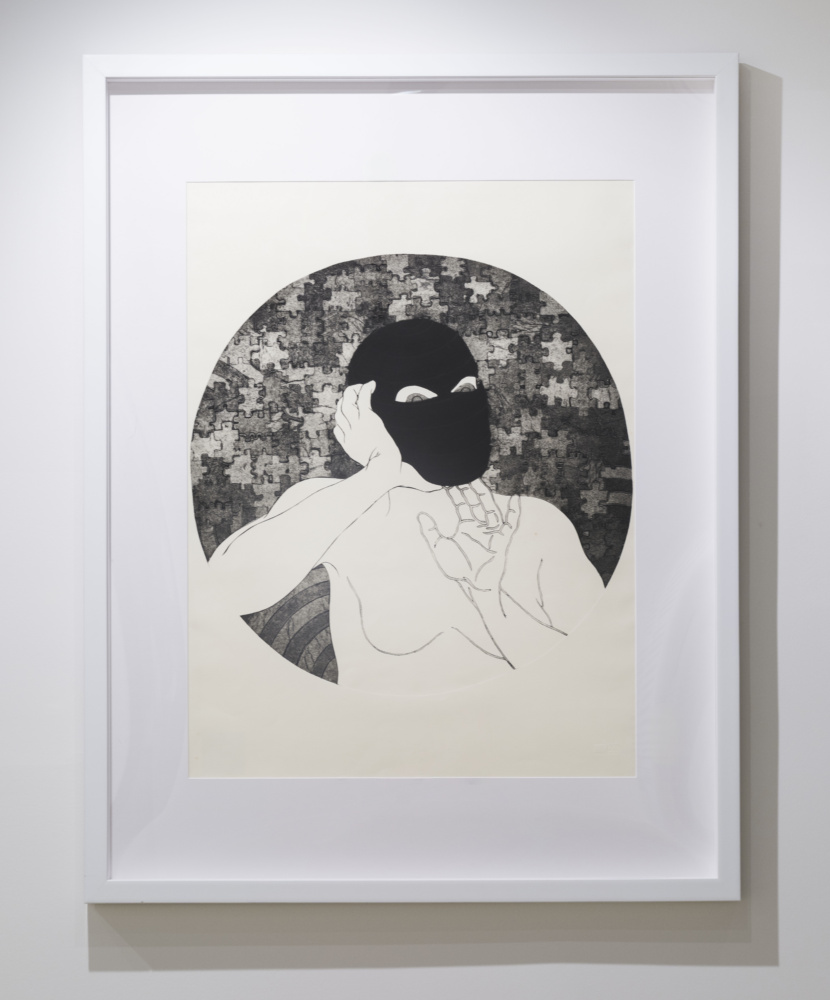
Subverting gender and absent of color, Ayón’s My Vernicle o tu amor me condena [Mi vernicula or Your Love Condemns Me] (1998) is a circular portrait rendering feminine forms in the form of breasts to a white body with a black face, hands cupping one side and turned in front of a prism of puzzle pieces joined together in the foreground. The body blend of black and white displays Ayón’s delicate, resourceful use of these tones as methods to emphasize the rendered figures through texture and light, as the black head of the figure stands out against the business of the jigsaw puzzle. Above any rendering of color as race, the labor intensive nature of collography—a printmaking process in which materials are glued or sealed to a rigid substrate to create a plate—in building textures creates a necessary visual effect that symbolically ties the skins of these figures to stories found within the Abakuá oral legend and monumentalizes them in the work.[13]
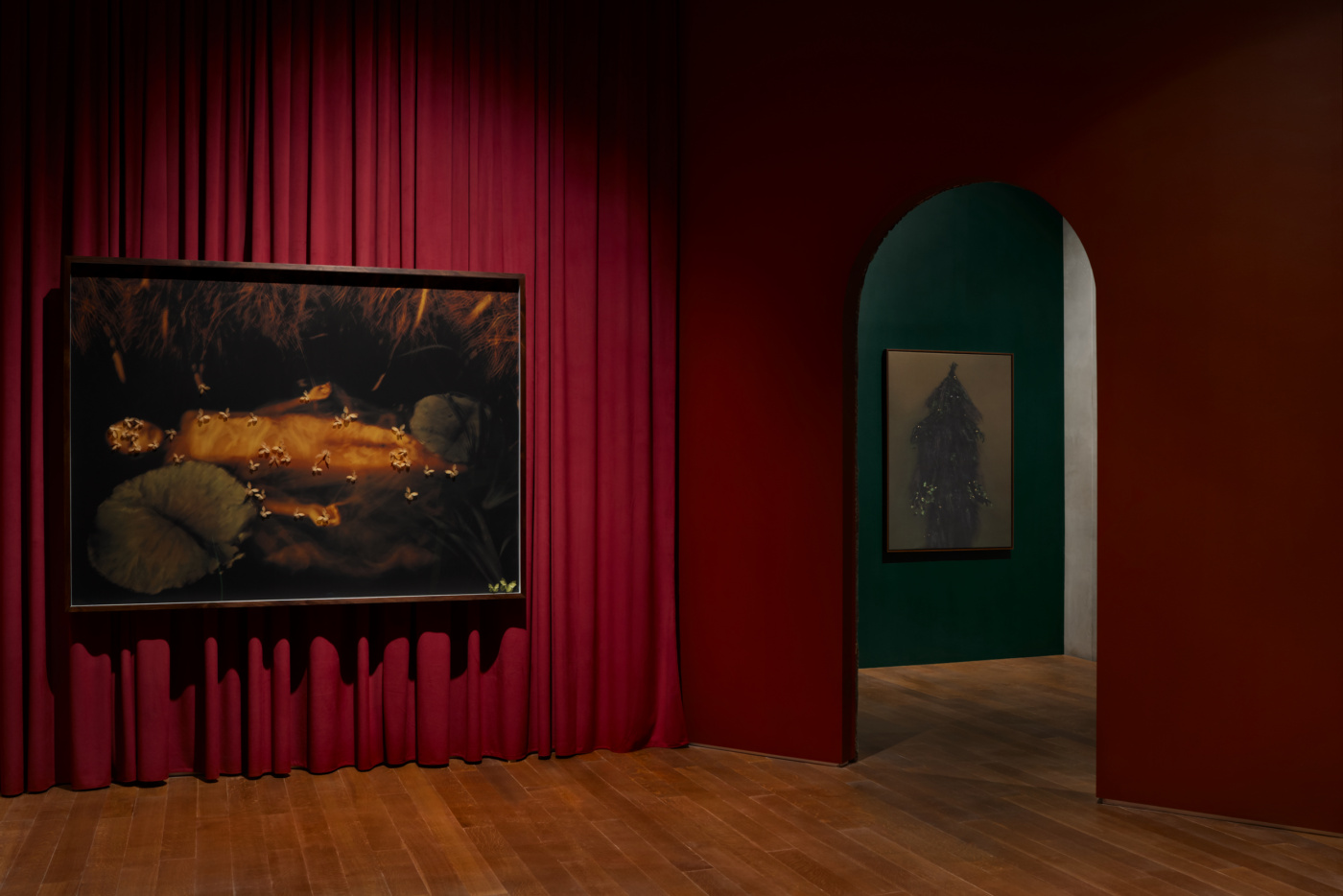
Like the royal velvet curtains that drape the exhibition walls, real and makeshift, El Monte was a stage in which to perform an outsider-looking-in aesthetic body of work that was akin to an editorial assignment but this time, extracted from the faith of a closed loved one and distilled across time and distance from the root. Ayón’s own distance to the Abakuá was never a hindrance to creating a work that was removed of colonial art references and lived experience, excelling instead at imagining without pretense. In Afro-Cuban religion as rendered by a printmaker and photographers, of inheritance and a research fascination, of the veiling of skin through color, of the veiling of skin through texture, I remain wary of imitation. Those with privilege, be it curatorial power, access, fame, and financial resources, are most often those who are given the right to lead religious narrative. “De la prisa no se saca más que el cansancio / Haste brings nothing but fatigue,” so aptly regards Cabrera.
[1] Cabrera, Lydia, and David Font-Navarrete. El Monte: Notes on the religions, magic, and folklore of the black and Creole people of Cuba. Durham: Duke University Press, 2023.
[2] Zuluaga, Natalia, and Gean Moreno. Belkis Ayón. 2023.
[3] “Modern Art Oxford.” Modern Art Oxford. Accessed April 20, 2026. https://modernartoxford.org.uk/blog/killed-for-a-secret-princess-sikan.
[4] Jones, Sam (20 November 2021). “On show at last: the myths and mysteries of Belkis Ayón, a giant of Cuban art”. The Observer.
[5] Elliot and Erick Jiménez, email message to author, February 17, 2026.
[6] “Many of the individuals photographed are family members, close friends, or members of our extended community. In several works (particularly those featuring us as twins) the images function as self-portraits. We cast intuitively, often working with people connected to the Caribbean, Latin America, or African diasporas. That shared proximity to migration, hybridity, and inherited duality creates a personal foundation behind the scenes. At the same time, the obscurity of the body prevents the figure from being reduced to a single identity. These narratives extend beyond one individual and resonate across broader diasporic experience.” Elliot and Erick Jiménez, email message to author, February 17, 2026.
[7] Elliot and Erick Jiménez, email message to author, February 17, 2026.
[8] “Ventura, Arthur. “La Estética de Las Religiones Afrocubanas En La Refracción de Escenarios Trasatlánticos.” Encartes, November 18, 2023. https://encartes.mx/en/de-canibal-a-diosa/.
[9] Just a Moment…” The Institute for Justice. Accessed February 28, 2026. https://ij.org/center-for-judicial-engagement/programs/engagement-in-action/church-of-lukumi-babalu-aye-v-city-of-hialeah-1993/.
[10] 16 Abakuá communities in Florida members of the Cuban Brotherhood in exile. Accessed February 28, 2026. https://www.afrocubaweb.com/Miller%202014.pdf.
[11] Babalawo (definition and history). Accessed February 28, 2026. https://www.wisdomlib.org/cities/babalawo-110561. Maritza Lacayo, email message to author, February 17, 2026.
[12] Zuluaga, Natalia, and Gean Moreno. Belkis Ayón. 2023.
[13] Ayon notes, “White is a value, as is black, as is gray.” Zuluaga, Natalia, and Gean Moreno. Belkis Ayón. 2023.