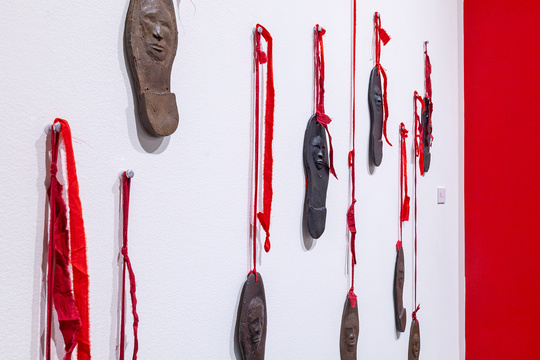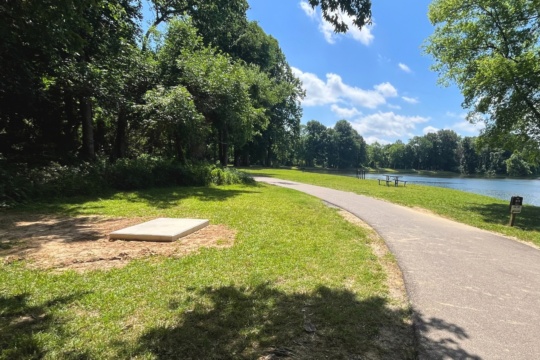
Kolektif K2D is a collective of photographers, photojournalists, and filmmakers based in Port-au-Prince, Haiti. Thirteen members strong, the collective was founded in 2014 with the goal of elevating contemporary discourse around Haiti in Haitian context. They look to spark discussion around the effects of neocolonialism, climate change, natural disasters, and the dictatorships under Fracois Duvalier and his son Jean Claude from 1957 to 1986. International news outlets regularly engage in flat and repetitive discourse with respect to Haiti: they discuss poverty, they discuss corruption, they discuss the natural disasters, and requests for international aid. They often do not, however, offer nuanced representations of how Haiti finds its vulnerability at the confluence of several global issues.
The Kolektif stands to counter these oversimplifications.
When was the last time a large news platform published anything about the precipitous losses in biodiversity in Haiti, or about the several foreign countries engaging in extractivist commercial mining? What coverage is there on the mass migration of Haitians abroad, and their treatment in the Dominican Republic, the bordering nation where many of the most vulnerable seek refuge? Through navigating the intersecting inequalities throughout the country, artists who enjoy greater access to global discourse can also offer cases where this discourse can be applied to Haitian circumstances.
Haiti is not only starved of access to material wealth, with 59% of the population living below the poverty line as of 2023, but of publicly digestible knowledge as well.1 The appetite and need for this access to information is profoundly underserved. According to local educational measures, only 32% of households report achieving a high school diploma.2 Many Haitians do not even have access to information in their native language, Haitian Kreyol, from the school system; with only 10% of the population fluent in French, the main language of public instruction.3 K2D organised grassroots engagement to share their photo book Urgences, going town to town, to ensure access and welcome the public they serve—this access is no longer possible due to gang violence contributing to ongoing instability for the Haitian public. For this reason, and despite several challenges to their safety that may come with remaining in Haiti and treating it as a subject, the Kolektif chooses to build out narratives of contemporary affairs in a grassroots capacity, pushing to disseminate published work locally when possible.
The work is two-fold. It performs one of Kolektif’s central goals, “to reach out to the population and raise awareness of the various current issues facing the country”. Conversely, for balance, it also places Haiti into the worldwide paradigm of issues facing the Global South. The Kolektif shared the following in correspondence that they completed together: “When we choose a subject, our primary focus is public interest. How many people—whether a significant portion or a smaller group—are affected by or engaged with the theme? For us, universality isn’t about celebrating what people have in common. Singularity is also part of the universal.”
“We are particularly drawn to the original work of artists in the region, finding inspiration in the unique solutions they bring to the challenges they face.”
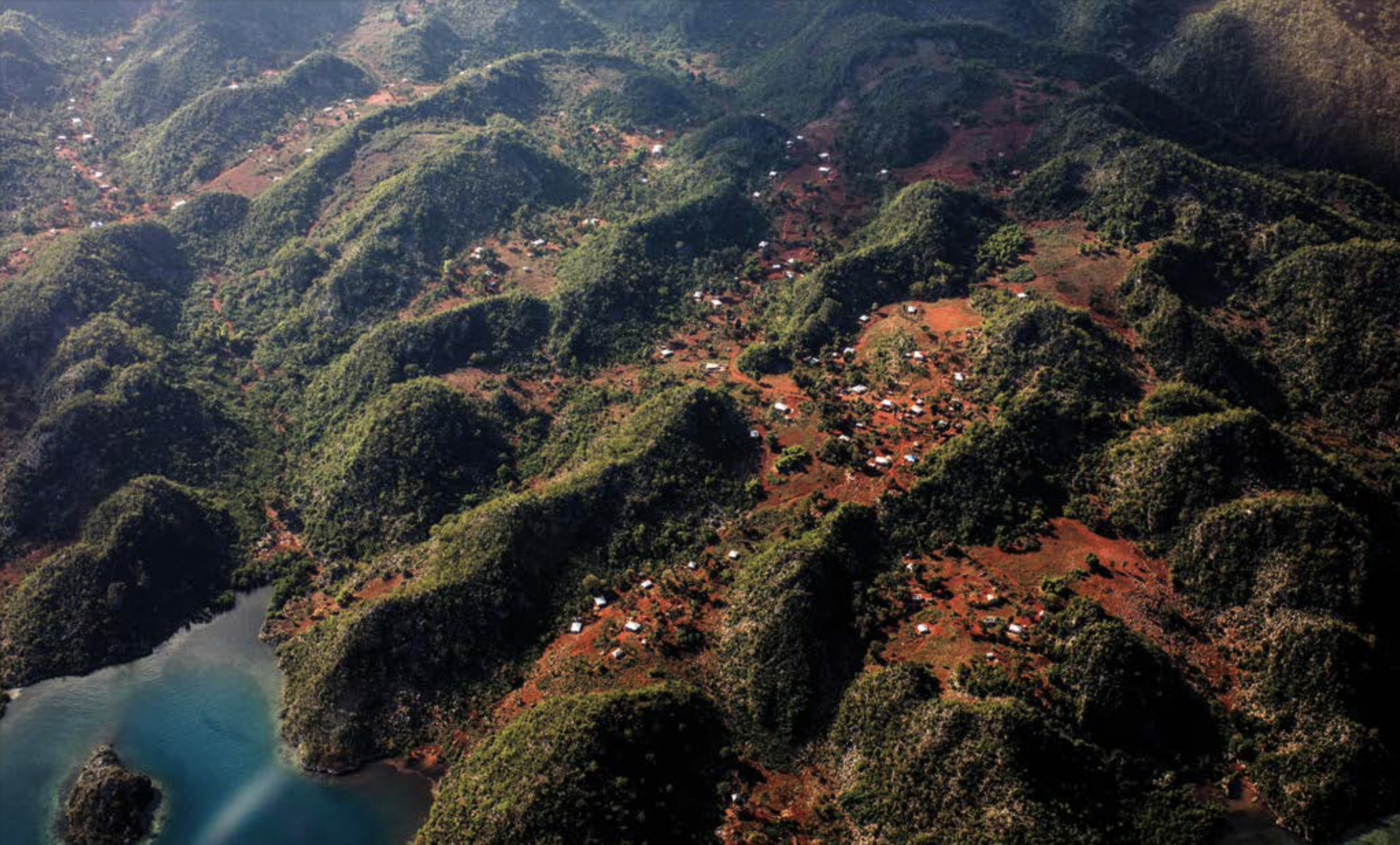
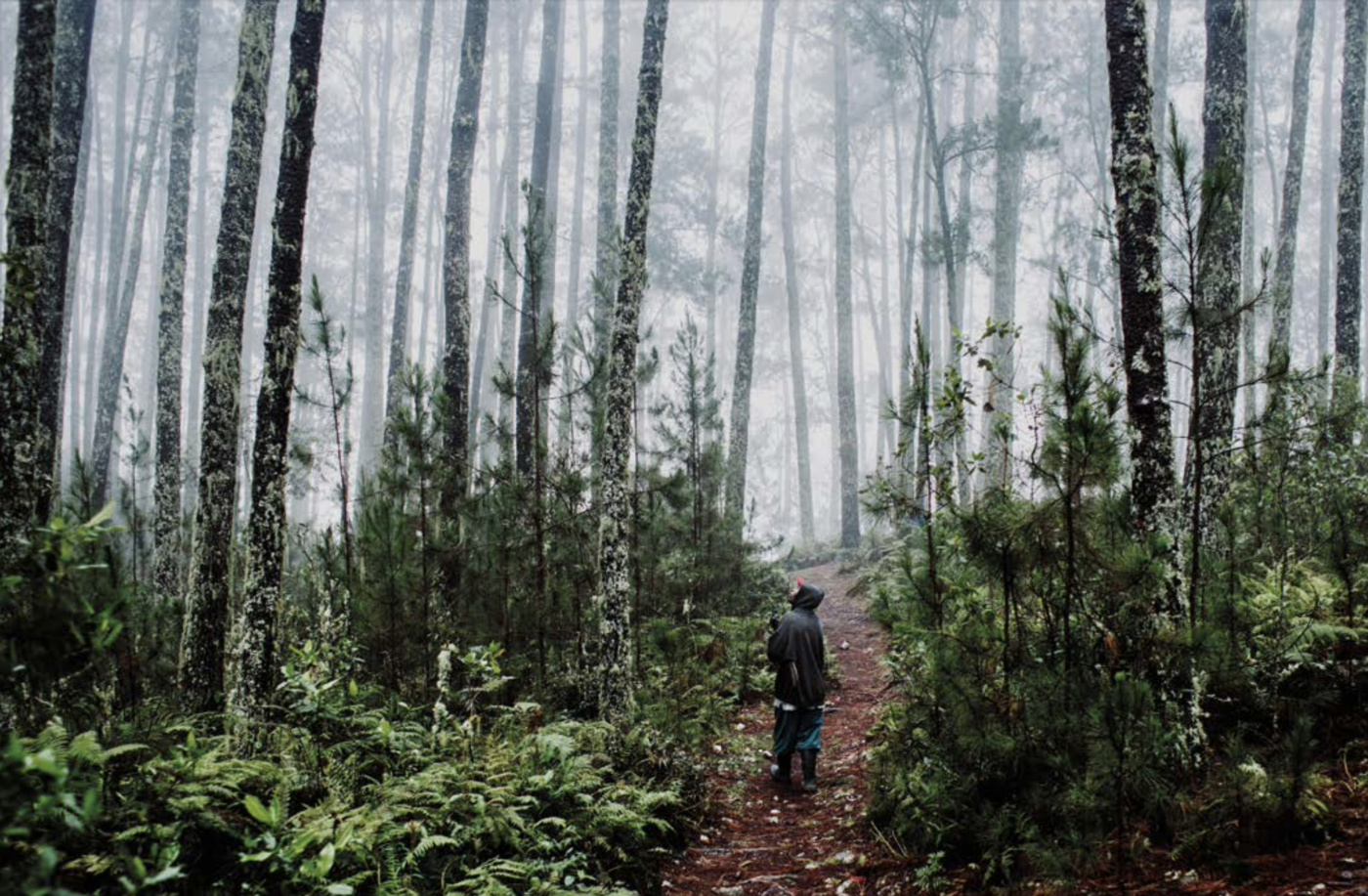
In 2022, the Kolektif published their latest Fotopakle (Kreyol for photopack). Urgences features work by ten of the Kolektif’s members, along with some guest participants like Loic Delvaulx and Josue Azor. The photo review reads like a high-level survey of how the climate crisis manifests throughout the country, from Port au Prince to the Southwestern peninsula that was ravaged by Hurricane Matthew in 2016. Its tone, as the title suggests, is imperative, as the Kolektif wishes to express how near a breaking point the nation’s climate health is, with no clear pathway to resolution in sight. They shared: “When K2D documented the aftermath of Hurricane Matthew, we weren’t working for a media outlet or NGO. Our goal was to bear witness to our compatriots’ experiences and urge authorities to support those affected.” Adding that, “We knew Haitians were resilient, but what we saw on the storm-ravaged peninsula in southern Haiti was extraordinary: most victims were already rebuilding before they’d even fully assessed the damage.”
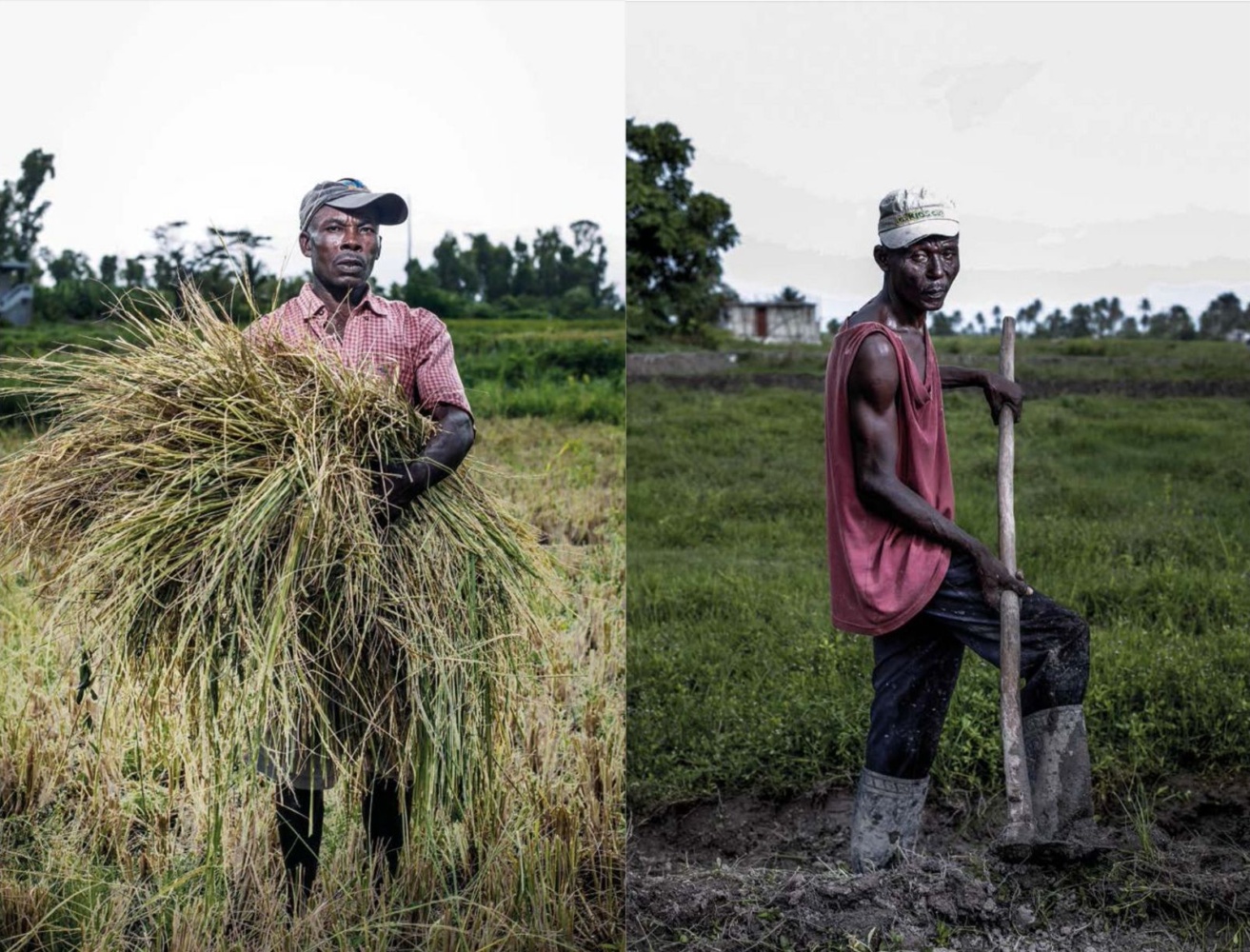
Pierre Michel Jean (director of the Kolektif) photographs Haiti’s agricultural workers from Cayes (in the Sud province), Anse Rouge, and Pont Sonde (both in Artibonite). Farmers have continuously been under attack, from a lack of governmental protections or reforms, to the death of their demand markets thanks to imports from the Dominican Republic and food donations from NGOs (see the TOMS effect).4 After centuries of producing for global appetites as colonies and with forced labor, the Caribbean suffers from a limited ability to produce domestically that which the local population needs: from Providenciales to Georgetown, one may find affordable bread or eggs, but a tube of toothpaste will cost two to three times what someone would pay in the United States. Haiti finds itself at a risk of seeing the same price gouging for something as simple as rice, because so few people will be left to farm produce domestically after farmers seek relief from impossible work circumstances. In the photos, these men hail from opposite ends of the country and yet find themselves in identical predicaments. They stand stoically, looking directly into the camera with a certain defiance. They have lived through all kinds of calamities, and seen several of their peers flock to the cities or to do the same kind of work across the border, yet they remain—by choice or obligation.
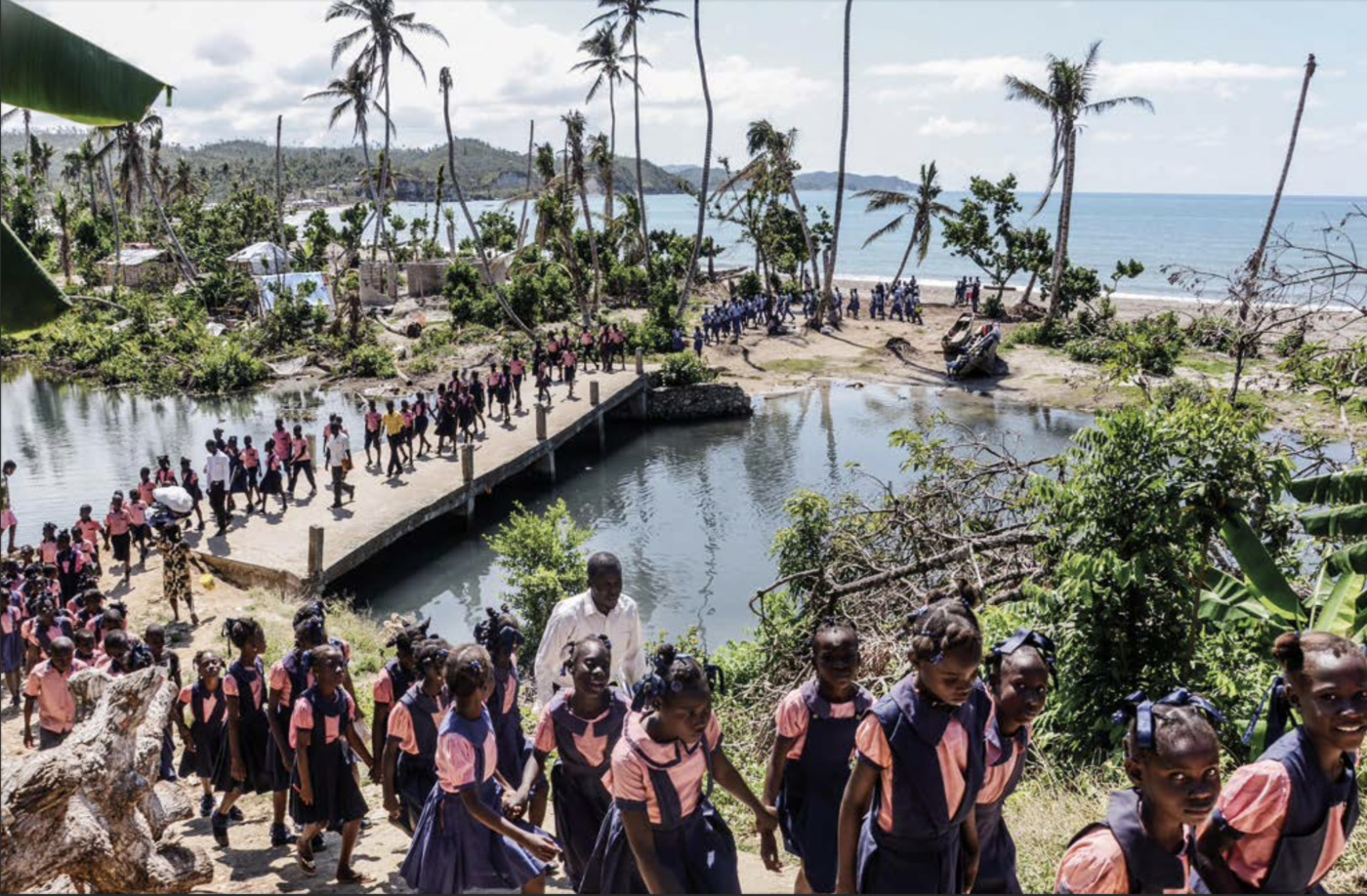
Further on in the Fotopakle are images of several uniformed schoolchildren flocking en masse along a trail to school. In the background, several dilapidated trees speckle the coast, a mere few months after Hurricane Matthew passed through the region. Of the children whose expressions are discernible, several are speaking towards the camera, heedlessly, as if obstinately disobeying an adult who had told them not to do so. This photo by George Rouizier is coupled by several others of rubble and debris, of hometowns full of rubble, and far from being repaired. These are quintessential images that global entities like UNICEF or the Red Cross use to push people in developed countries to donate, despite the fact that even after all these years of aid, Haiti seems worse for wear, and the Kolektif has felt it: “The past five years have been undeniably difficult. The country’s instability forced eight of our members to leave, while those remaining in Haiti have had to adapt to the territory’s disarray—some relocating to other cities.” These images are immediately followed by an article by Claude Patrick Millet, categorically summarizing all of the ways in which Haiti has been devastated by global warming, and why internal discourse and exposure around these issues is necessary. Choosing to include this article after the images demonstrates how the Kolektif does not prioritize currying favor with global entities for a solution, but are rather putting the onus on the nation, using this imagery to spark attention and action.
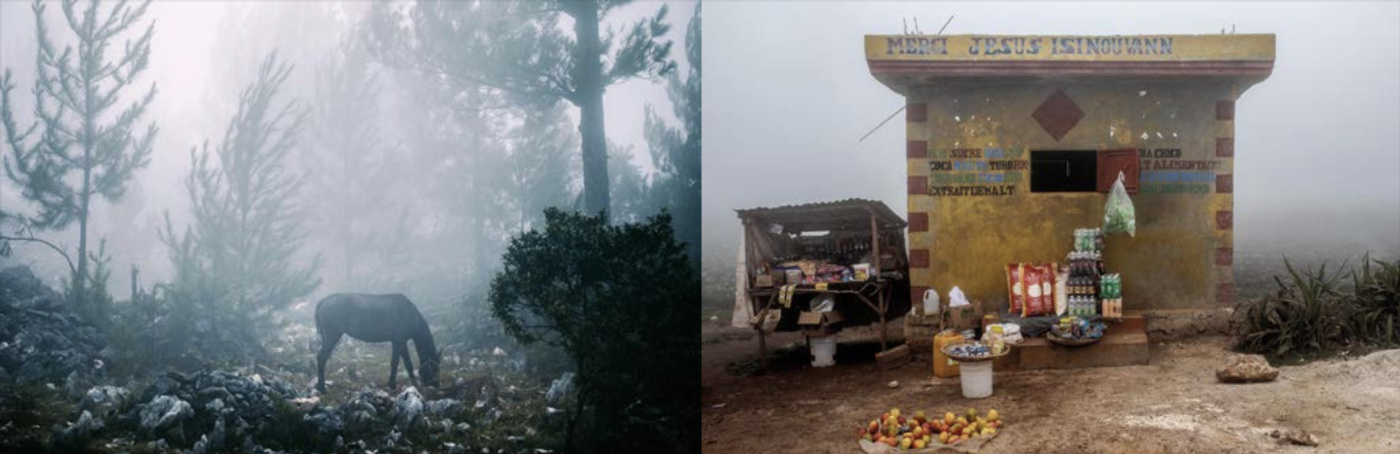
On the importance of representing Haiti’s strength, the Kolektif said the following: “While we curated our photographs, the true credit belongs to the unshaken dignity of the people. Presenting a dignified image of Haiti and Haitians is central to our mission.”
“When the subjects themselves embody such strength, the photographer’s role becomes not just easier, but deeply meaningful.”
Despite the desperate straits the book is intent on communicating, the work also portrays the people at the crux of this crisis with dignity, showing that although vulnerable, they demonstrate astounding resourcefulness prompted by a need to survive. Care can show up as expecting more out of one another, showing confidence that those you care for can do better than they have done. Advocacy is in itself another form of care.
Through their work, and at potential risks to their own safety, the Kolektif has chosen to express enough care to push Haitian discourse towards mobilization. Instead of resigning themselves to the forces that be and the calamity that has been, is, and will continue in postcolonial Haitian civil society, they have chosen to strive towards a future where some of these issues are addressed. As aptly put by the Kolektif, “We reject the idea that Haiti’s current trajectory is inevitable. Instead, we believe that a resurgent Haitian civil society can reverse the decline. As an integral part of this movement, K2D is committed to fulfilling our mission: raising awareness through our work and publications on issues critical to Haiti’s present and future.”
Kouch kap pran swen moun nan tèt kole ak Kolektif K2D : DÈYÈ MÒN GEN MÒN!
Kolektif K2D se yon gwoup fotograf, fotojounalis ak sineyas ki baze nan Potoprens, Ayiti. Kollektif sa a te fonde an 2014 ak trèz manm. Objektif li se te pou ankouraje diskou kontanporen sou Ayiti nan kontèks ayisyen, pwovoke diskisyon sou efè neokolonyalis lan, sou chanjman klimatik, sou dezas natirèl, ak sou konsekans diktati François Duvalier a ak pitit gason l Jean Claude soti lane1957 pou rive 1986. Jeneralman, ajans nouvèl entènasyonal yo itilize yon diskou senplist ou byen monòton e repetitif sou Ayiti: yo pale sou povrete, sou koripsyon, sou dezas natirèl, ak sou demann èd nan men peyi entènasyonal yo. Men, yo pa janm ofri yon imaj klè sou vrè feblès Ayiti nan mitan tout pwoblèm mondyal yo.
Posisyon Kolektif la opoze a tandans sa yo.
Ki dènye fwa yon gwo platfòm nouvèl te pibliye yon bagay sou pèt divèsite byolojik siyifikatif la kap avanse sou peyi dAyiti a, oubyen sou plizyè peyi etranje kap patisipe nan move aktivite pou eksplwate min komèsyal peyi dAyiti yo ? Ki ajans nouvèl ki kouvri sa kap pase sou zafè migrasyon masif ke ayisyen ap fè pou ale nan peyi letranje epi sou tretman ayisyen yo resevwa nan Sendomeng, peyi lòt bò fontyè kote ayisyen ki pi pòv yo al chèche lavi miyò?
Lè yap gade inegalite sa yo ki nan tout peyi a, soti nan inegalite ekonomik (nan lane 2023, 59% moun ap viv anba nivo povrete).1 Rive nan inegalite edikasyonèl (selman 32% moun nan kay yo rapòte ke yo gen yon diplòm lekòl segondè).2 E nan nivo lengwistik (sèlman 10% moun nan popilasyon an pale franse byen, ki se prensipal lang enstriksyon piblik la).3 Atis ki gen plis aksè a diskou global kap fèt nan mond lan ka ofri tou kèk egzanp kote diskou sa yo ka aplike nan kondisyon pèp Ayisyen ap viv kounye a.
Travay la gen de pati. Youn nan objektif santral Kolektif la se : “rive jwenn popilasyon an epi fè l pran kosyans sou diferan pwoblèm ke peyi a ap kofwonte kounye a”. Lòt objektif la se pou ekilibre yon balans pou mete Ayiti tou pami modèl pwoblèm mondyal ke pati Sid Glòb la ap fè fas an jeneral. Nan yon enfomasyon ke korespondans yo te prepare ansanm, Kolektif la te pataje yon detay, ki di : « Lè nou chwazi yon sijè, nou konsantre n prensipalman sou entere piblik yo: konbyen moun ki genyen, se swa yon kantite siyifikatif, ou byen ki pi ti gwoup ki afekte a ou byen ki enplike nan sijè a. Pou nou, inivèsalite pa vle di selebre sa moun gen an komen. Singularite fè pati inivèsalite a tou.”
“Nou patikilyèman atire pa travay orijinal atis yo nan rejyon an, e nap enspire nou plis pou n pote pi bon solisyon pou n fè fas ak defi ke nap afwonte yo.”
Nan lane 2022, Kolektif la te pibliye dènye Fotopakle li a. Urgences (Ijans) te prezante travay dis manm Kolektif la, ansanm ak kèk patisipan ki te envite tou, tankou Loic Delvaulx ak Josue Azor. Nan revizyon foto yo, nou ka wè ke se tankou yon etid wo nivo sou kijan kriz klimatik la manifeste l nan tout peyi a, soti Pòtoprens jouk rive nan penensil Sidwès la ke siklòn Matthew te ravaje nan lane 2016. Jan tit la sijere a, ton li endispansab, paske Kolektif la vle eksprime kijan sante klima peyi a prèske fin degrade, san okenn chimen klè pou jwenn yon rezolisyon vizib. Yo te eksprime yo nan fason sa a: “Lè K2D te dokimante sou konsekans siklòn Matthew a, nou pa t ap travay pou okenn medya ni okenn ONG. Objektif nou se te pou nou temwaye eksperyans konpatriyòt nou yo epi ankouraje kèk otorite ki te sipòte moun ki te afekte yo.” Yo te ajoute ke, “Nou te konnen ke pèp Ayisyen an se yon pèp ki konn reziste, men pou gwo ravaj sa nou te wè tanpèt la te fè nan penensil Sid peyi dAyiti, sa se te yon desas ekstraòdinè: pifò viktim yo te deja ap rebati kay yo anvan menm evalyasyon dega yo te fini.”
Pierre Michel Jean (direktè Kolektif la) te pran foto travayè agrikòl sa yo, ayisyen kap viv nan vil Okay (nan pwovens Sid), Ans Wouj, ak Pont Sonde (toulède nan vil Latibonit). Kiltivatè yo te toujou anba atak, soti nan mank pwoteksyon oswa refòm gouvènman an rive nan mache yo ki te disparèt, akòz enpòtasyon pwodui ki soti nan Sendomeng ak don manje ki soti nan ONG yo (gade efè TOMS la).4 Apre plizyè syèk ke yap pwodui pou satisfè apeti mondyal la kòm koloni e avèk travay fòse, kounye a Karayib la trouve l nan soufrans akoz kapasite li ki vin limite pou pwodui pou popilasyon lakay li e pou reponn a bezwen li. Soti Zile Providenciales yo, jouk rive Georgetown, yon moun ka jwenn pen oswa bon ze, men yon pat dantifris ka koute 2 a 3 fwa plis ke l koute yon moun ki ap viv nan peyi Etazini. Ayiti twouve l nan menm sitiyasyon nan zafe pri pwodui nesesè yo, li riske pou l wè, kote pou yon rezon senp, menm pri diri monte, paske pap gen anpil moun kap rete pou kiltive pwodui lokal yo apre ke tout kiltivatè yo fin al chèche lòt mwayen pou yo soulaje kondsyon difisil sa ke yap travay la. Nan foto mesye sa yo ki soti nan yon zòn lwen ki opoze a peyi a, yo menm tou yo twouve yo nan menm sitiyasyon difisil sa. Yap gade kamera ak yon rega kòm si yo te konnen tout sa ki sou kontwòl ak tout sa ki pa sous kontwòl, e ki montre ke yo pa dakò jan yap viv la. Yo te viv tout kalte kalamite epi yo te wè plizyè nan kanmarad yo ale an foul nan vil yo pou al fè menm kalte travay la, ou byen imigre lòt bo fwontyè a, kote yo rete pa chwa pa yo ou byen paske yo oblije.
Pi lwen nan Fotopakle la, imaj yo montre plizyè timoun lekòl an inifòm kap rasanble an foul sou yon chimen pou al lekòl. Nan fon an, plizyè pyebwa kraze e tonbe bò lakòt la, sèlman kèk mwa apre siklòn Matthew a te pase nan rejyon an. Pami timoun ke ekspresyon figi yo vizib, se tankou plizyè nan yo ap pale ak kamera a avèk endifereans, se tankou si yo te dezobeyi yon granmoun ki te di yo pou yo pa fè sa yap fè a. Se George Rouizier ki te pran foto sa, li vini ak plizyè lòt foto ki montre debri ak fatra, imaj yon vil konpletman detwi, ranpli ak fatra ak debri e lwen pou repare. Sa yo se imaj esansyèl ke òganizasyon mondyal tankou UNICEF oswa Red Cross (Lakwa Wouj) itilize pou motive moun nan peyi devlope yo fè don, menm aprè tout ane èd sa yo, Ayiti sanble l vin pi mal, e Kolektif la te santi sa: “Senk dènye ane yo te vrèman difisil”. Enstabilite nan peyi a te fòse uit nan manm nou yo kite peyi a, pandan ke sa ki te rete te oblije adapte yo ak reyalite peyi ak tout dezòd li gen ladan l yo, kèk ladan yo te oblije demenaje al nan lòt vil.” Touswit apre imaj sa yo nou jwenn atik Claude Patrick Millet ki se yon atik ki rezime kategorikman tout fason ke Ayiti te devaste a akoz rechofman planèt la, e poukisa li nesesè pou gen deba entèn ak ekspozisyon ki dwe fèt sou tèm sa yo. Chwa atik sa a apre imaj sa yo ki montre kijan Kolektif la pa bay priyorite nan chèche solisyon bò kote antite mondyal yo, men pito mete responsablite a nan men nasyon an, li itilize imaj sa yo pou atire atansyon yo epi fè aksyon.
Sou enpòtans pou reprezante fòs Ayiti a, men sa Kolektif la te di: “Se byen lè nou chwazi vrè foto ki montre reyalite a, mem vrè responsablite a se nan men pèp ayisyen an li ye ak diyite li. Nou prezante yon imaj diy de Ayiti ak pèp ayisyen an e sa enpòtan nan misyon nou…
“Lè sijè sa reprezante fòs sa a, wòl fotograf la pa sèlman vin pi fasil, men li vin gen anpil sans.”
Malgre sitiyasyon dezespere ke liv la ta vle kominike a, men travay la montre ak diyite tout moun ki ap viv kriz la, menmsi yo vilnerab, yo demontre yon kapasite pou yo adapte yo e pou yo siviv akoz nesesite yo genyen.
Swen a ka parèt tankou yon bagay ke w ap tan plis ke lòt yo, men lè ou montre konfyans nan moun ke w ap pran swen yo, yo ka fè pi byen ke sa yo te fè avan. Defann dwa moun se yon lòt fòm pou pran swen moun. Atravè travay li yo, pou pwòp sekirite yo, Kolektif la te chwazi eksprime atansyon li pou pouse diskou Ayisyen yo nan yon fason pou mobilize yo. Olye pou yo reziyen yo anba pouvwa dominan yo ak kalamite ki te egziste yo e ki pral kontinye nan sosyete sivil ayisyen postkolonyal la, yo te chwazi batay pou yon demen miyò kote yo kapab abòde vrè pwoblèm. Tankou jan Kolektif la te byen di a: “Nou rejte lide ke trajektwa aktyèl ke Ayiti a inevitab.” Okontrè, nou kwè nan yon sosyete sivil ayisyen ki reprann fòs li e kap ranvèse sitiyasyon an. Kòm pati entegral mouvman sa a, K2D angaje l pou l akonpli misyon li ki se: sansibilize atravè travay li ak piblikasyon yo sou yon seri de tèm ki enpòtan pou prezan ak lavni peyi dAyiti.”
Capas de Cuidado con Kolektif K2D: DÈYÈ MÒN GEN MON
Kolektif K2D es un colectivo de fotógrafos, fotoperiodistas y cineastas con sede en Puerto Príncipe, Haití. Cuenta con trece miembros, el colectivo se fundó en 2014 con el objetivo de elevar el discurso contemporáneo sobre Haití desde una perspectiva haitiana. Buscan generar debate en torno a los efectos del neocolonialismo, el cambio climático, los desastres naturales y las dictaduras de François Duvalier y su hijo Jean-Claude entre 1957 y 1986. Los medios de comunicación internacionales suelen emplear un discurso plano y repetitivo sobre Haití: hablan de pobreza, la corrupción, los desastres naturales y solicitudes de ayuda internacional. No suelen ofrecer representaciones matizadas de cómo Haití se encuentra en una situación de vulnerabilidad ante la confluencia de diversos problemas globales.
Kolektif se sitúa en contra de estos simplismos, con intención y convicción.
¿Cuándo fue la última vez que un medio de comunicación importante publicó algo sobre la drástica pérdida de biodiversidad en Haití, o sobre los diversos países extranjeros que participan en la minería extractivista comercial? ¿Qué cobertura existe sobre la migración masiva de haitianos al extranjero y el trato que reciben en la República Dominicana, el país vecino donde muchos de los más vulnerables buscan refugio?
Al abordar las desigualdades interconectadas en todo el país, los artistas que tienen mayor acceso al discurso global también pueden ofrecer ejemplos de cómo aquel discurso puede aplicarse a circunstancias haitianas. Haití es un país que no solo carece de riqueza material, con un 59% de la población viviendo por debajo del umbral de la pobreza en 2023, sino también de información accesible para el público. La necesidad de y el apetito para esta información está muy desatendida. Según medidas de la educación local, solo el 32% de los hogares declara haber obtenido un diploma de bachillerato. Muchos haitianos ni siquiera pueden acceder a información en su lengua materna, el kreyol haitiano, a través del sistema escolar, ya que solo el 10 % de la población domina el francés, que es el idioma principal de la enseñanza pública. K2D organizó esfuerzos de base para compartir su libro de fotografía, titulada Urgences, visitando pueblo a pueblo para asegurar acceso público y darle la bienvenida a la población que esperan apoyar; este acceso al público ya no es posible por causa de la violencia de pandillas que hoy día contribuye a la actual inestabilidad en Haití. Por esta razón, y a pesar de los diversos riesgos para su seguridad que implica permanecer en Haití y abordar estos temas, el Kolektif opta por construir narrativas sobre la actualidad desde una perspectiva comunitaria, incluso esforzándose por difundir las publicaciones a nivel local siempre que sea posible.
Este proyecto tiene una doble finalidad. Cumple uno de los objetivos centrales de Kolektif: «llegar a la población y concienciar sobre los diversos problemas actuales que enfrenta el país». A su vez y como contrapeso, también sitúa a Haití dentro del contexto universal de los problemas que afectan al Sur Global. Kolektif compartió lo siguiente en una correspondencia conjunta: «Cuando elegimos un tema, nuestro principal enfoque es el interés público. ¿Cuántas personas, ya sea una parte significativa o un grupo más pequeño, se ven afectadas o están involucradas con el tema? Para nosotros, la universalidad no se trata de celebrar lo que la gente tiene en común. La singularidad también forma parte de lo universal.»
«Nos sentimos especialmente atraídos por la obra original de los artistas de la región, encontrando inspiración en las soluciones únicas que aportan a los desafíos que enfrentan».
En 2022, el Kolektif publicó su último Fotopakle (paquete de fotos en kreyol). Urgences presenta el trabajo de diez miembros del Kolektif, junto con algunos participantes invitados como Loic Delvaulx y Josue Azor. Esta revista fotográfica ofrece un panorama general de alto nivel sobre cómo se manifiesta la crisis climática en todo el país, desde Puerto Príncipe hasta la península suroeste, devastada por el huracán Matthew en 2016. Su tono, como sugiere el título, es urgente, ya que el Kolektif desea expresar lo cerca que está la nación de un punto de inflexión en materia climática, sin una solución clara a la vista. Compartieron: “Cuando K2D documentó las consecuencias del huracán Matthew, no trabajábamos para ningún medio de comunicación ni ONG. Nuestro objetivo era ser testigos de las experiencias de nuestros compatriotas e instar a las autoridades a apoyar a los afectados”. Y añadieron: “Sabíamos que los haitianos eran resilientes, pero lo que vimos en la península del sur de Haití azotada por la tormenta fue extraordinario; la mayoría de las víctimas ya estaban reconstruyendo incluso antes de haber evaluado completamente los daños”.
Pierre Michel Jean (director de Kolektif) fotografió a los trabajadores agrícolas de Haití, procedentes de Cayes (en la provincia del Sur), Anse Rouge y Pont Sonde (ambas en Artibonite). Los agricultores han estado continuamente bajo presión, desde la falta de protección y reforma gubernamental, hasta la desaparición de sus mercados debido a importaciones de la República Dominicana y donaciones de alimentos de las ONG (véase el efecto TOMS). Tras siglos de producir para el consumo global como colonias y con mano de obra forzada, el Caribe sufre una limitada capacidad para producir localmente lo que necesita su población: desde Providenciales hasta Georgetown, se puede encontrar pan o huevos a precios asequibles, pero un tubo de pasta de dientes podría costar entre dos y tres veces más que en Estados Unidos. Haití corre el riesgo de sufrir la misma especulación con productos tan básicos como el arroz, ya que cada vez menos personas se dedicarán a la agricultura local después de que muchos busquen alternativas ante las imposibles condiciones laborales. En las siguientes fotografías, estos hombres provienen de diferentes puntos del país y, sin embargo, se encuentran en situaciones idénticas. Permanecen estoicos, mirando directamente a la cámara con cierta actitud desafiante. Han sobrevivido a todo tipo de calamidades y han visto a muchos de sus compañeros emigrar hacia espacios urbanos o a trabajar en el mismo sector al otro lado de la frontera, pero ellos permanecen allí, por elección u obligación.
Más adelante, en el Fotopakle, aparecen imágenes de varios estudiantes jóvenes y uniformados que se dirigen en masa a la escuela por un sendero. Al fondo, varios árboles deteriorados salpican la costa, tan solo unos meses después del paso del huracán Matthew por la región. De los niños cuyas expresiones son visibles, varios miran hacia la cámara, despreocupadamente, como si desobedecieran obstinadamente a un adulto que les hubiera dicho que no lo hicieran. Esta fotografía de Georges Harry Rouzier es acompañada por otras imágenes de escombros y ruinas, de pueblos devastados y poco reconstruidos. Estas son imágenes típicas que organizaciones internacionales como UNICEF o la Cruz Roja utilizan para animar a la gente de los países desarrollados a donar, a pesar de que, incluso después de tantos años de ayuda, Haití parece estar peor, y el Kolektif lo ha sentido: “Los últimos cinco años han sido innegablemente difíciles. La inestabilidad del país obligó a ocho de nuestros miembros a marcharse, mientras que los que permanecen en Haití han tenido que adaptarse al caos del territorio, algunos reubicándoses en otras ciudades”. Estas imágenes van inmediatamente seguidas de un artículo de Claude Patrick Millet, que resume categóricamente todas las formas en las que Haití ha sido devastado por el calentamiento global y por qué es necesario el debate interno y la difusión de información sobre estos temas. La decisión de incluir este artículo después de las imágenes demuestra que el Kolektif no prioriza congraciarse con las organizaciones internacionales para encontrar una solución, sino que, por el contrario, responsabiliza a la nación, utilizando estas imágenes para generar conciencia y acción.
Sobre la importancia de representar la fortaleza de Haití, el Kolektif declaró lo siguiente: “Si bien seleccionamos cuidadosamente nuestras fotografías, el verdadero mérito reside en la inquebrantable dignidad del pueblo. Presentar una imagen digna de Haití y de los haitianos es fundamental para nuestra misión.”
“Cuando los propios sujetos encarnan tal fortaleza, el papel del fotógrafo no solo se vuelve más fácil, sino profundamente significativo”.
A pesar de la desesperada situación que el libro pretende comunicar, la obra también retrata con dignidad a las personas que se encuentran en el centro de esta crisis, mostrando que, aunque vulnerables, demuestran una asombrosa capacidad de adaptación impulsada por la necesidad de sobrevivir.
El cuidado puede manifestarse en la expectativa de que los demás den lo mejor de sí mismos, demostrando confianza en que aquellos a quienes se cuida pueden superarse. La defensa de los derechos es en sí misma otra forma de cuidado. A través de su trabajo, y a pesar de los posibles riesgos para su propia seguridad, el Kolektif ha optado por expresar suficiente preocupación como para impulsar el discurso haitiano hacia la movilización. En lugar de resignarse a las fuerzas dominantes y a la calamidad que ha existido, existe y seguirá existiendo en la sociedad civil haitiana poscolonial, han elegido luchar por un futuro en el que se aborden algunos de estos problemas. Como bien lo expresa el Kolektif: “Rechazamos la idea de que la trayectoria actual de Haití sea inevitable. En cambio, creemos que una sociedad civil haitiana revitalizada puede revertir el declive. Como parte integral de este movimiento, K2D se compromete a cumplir con nuestra misión: crear conciencia a través de nuestro trabajo y publicaciones sobre temas críticos para el presente y el futuro de Haití”.
1 UNICEF, Humanitarian Action for Children: Haiti (Geneva: UNICEF, May 2023), 1-4, https://www.unicef.org/media/132191/file/2023-HAC-Haiti.pdf.
2 ReliefWeb, “Share of households in Haiti in 2023, by educational attainment,” chart, Statista, last modified November 2, 2023, accessed January 8, 2026, https://www.statista.com/statistics/1448592/haiti-households-by-level-of-education/.
3 Jordan Brown, “Lost in Translation: Language, Identity and Education in Haiti,” Release Peace: The Magazine, accessed November 16, 2025, https://releasepeace.org/language-identity-and-education-in-haiti/.
4 When TOMS unveiled their Buy-One-Give-One Model, they had not foreseen economists’ accusations that they hurt local shoe makers by reducing demand. Although the “TOMS effect” was found to be negligible, their name became synonymous with the detrimental effects of donation.
Lè TOMS te devwale Modèl Achte-Yon-Bay-Yon yo a, yo pa t prevwa akizasyon ekonomis yo kòmkwa yo t ap fè soulye lokal yo mal lè yo diminye demann lan. Malgre yo te jwenn ke “efè TOMS” la te neglije, non yo te tounen sinonim ak efè negatif donasyon yo.
Cuando TOMS presentó su modelo “Compra uno, dona uno”, no habían previsto las acusaciones por parte de economistas de que perjudicaban a zapateros locales al reducir la demanda. Si bien se comprobó que el “efecto TOMS” era insignificante, su nombre se convirtió en sinónimo de los efectos perjudiciales de las donaciones.
David Hessekiel, “The Rise and Fall of the Buy-One-Give-One Model at Toms,” Forbes, April 28, 2021, https://www.forbes.com/sites/davidhessekiel/2021/04/28/the-rise-and-fall-of-the-buy-one-give-one-model-at-toms/.
This feature was chosen from submissions to Care in Precarity, Burnaway’s first open call for Caribbean writers, in collaboration with the Caribbean Cultural Center African Diaspora Institute (CCCADI). The initiative sought to nurture writing that explores practices of care as a response to the region’s compounding precarities—from issues of climate crisis and food insecurity, to the enduring colonial structures (social and systemic) that hinder community action. In a deliberate move against the linguistic siloing of the Caribbean, a vestige of its colonial history, the selected pieces are published multilingually to better foster connectivity and sharing. This article has additionally been translated into Kreyol to ensure its accessibility for the artists and Haitian creative community centered in the work.
Atik sa te chwazi pami plizyè lòt ki te soumèt nan Care in Precarity (Swen Prekè), premye apèldòf ki te fè nan Burnaway pou ekriven Karayibyen yo, an kolaborasyon avèk Caribbean Cultural Center African Diaspora Institute (CCCADI) (Enstiti Dyaspora Afriken Sant Kiltirèl Karayibyen an, CCCADI, akwonym angle). Inisyativ la tap chèche fè pwomosyon pou ekriti ki ap eksplore pratik ki pran swen moun kòm yon repons a pwoblèm e bezwen ki ap ogmante nan rejyon an, soti nan pwoblèm kriz klimatik, pwoblèm ensekirite alimantè, pou rive nan pwoblèm estrikti kolonyal ki ap pèsiste a (sosyal e sistemik), e ki anpeche aksyon kominotè reyalize.
Nan lide pou libere n kont kesyon izolman lengwistik nan Karayib la, ki se yon tras listwa kolonyal a, moso ki te chwazi yo te pibliye nan de (2) lang pou n kapab ankouraje koneksyon ak pataj. Atik sa tradui nan lang kreyòl ayisyen pou fasilite aksè atis yo ak kominote kreyatif Ayisyen kote pati santral travay la ye a.
Este artículo fue seleccionado entre las propuestas recibidas para Care in Precarity, la primera convocatoria abierta de Burnaway para escritorxs caribeñxs, en colaboración con el Caribbean Cultural Center African Diaspora Institute (CCCADI). La iniciativa buscó promover la escritura que explora las prácticas de cuidado como respuesta a las crecientes precariedades de la región; desde la crisis climática y la inseguridad alimentaria hasta las persistentes estructuras coloniales (sociales y sistémicas) que obstaculizan la acción comunitaria. En una iniciativa intencional contra el aislamiento lingüístico del Caribe, vestigio de su historia colonial, las obras seleccionadas se publican plurilingüe para fomentar la conectividad y el intercambio.
Translation by Chandi González López and Marissel Hernández Romero.