An Ecological Orientation Amidst Splintered Sovereignty
The Virgin Islands Studies Collective (VISCO) began in 2017 to affirm the Virgin Islands, “as a site of inquiry and theorization beyond a notion of utopia or space that is not meaningfully occupied.” Founding members LaVaughn Belle, Tami Navarro, Hadiya Sewer, and Tiphanie Yanique position the Virgin Islands as critical to interrogating ongoing colonial subjection, a disinvestment in cultural resources, and heightened ecological precarity. I am immensely grateful to learn from and think alongside the collective, and the nuanced offerings from my conversation with Belle and Sewer. Amidst the intertwined rupture of colonialism, capitalist extraction and climate crisis, they emphasize reimagining archives, the environment and embodied feeling as key sources of knowledge creation, legacies of revolution that carry into the Caribbean’s present and future, and the recognition that sovereignty is a fragmented process that must be envisioned outside structures of control and dominance.
Gervais Marsh: The complex ecological worlds of the Virgin Islands have been prominent since the collective’s inception across writing, research, and public programming. What was it about the islands’ ecology that felt critical as a starting point?
Hadiya Sewer: VISCO officially came together in 2018 immediately after Hurricanes Irma and Maria had hit the territory. And at the forefront of our minds is this question of our precarity in the face of climate change. This was very early on in the “recovery process” and it was almost impossible to turn away from the ecological, because we understand we are ourselves as being a frontline community as it pertains to climate change. But we also know that Caribbean islands are not major contributors to climate change, so understanding our vulnerability, our precarity, our relationship to our environment, and what that means in the context of disaster.
GM: How did the urgency of the hurricanes’ impact ignite your thinking?
La Vaughn Belle: There was all of this inter-Caribbean solidarity during that time. The colonial lines that separate us get blurred in a disaster and you see a different way that we operate. It’s a rupture in sensibility, and it carries the potential of reorganizing our thinking, our society, our feeling…our relationship to everything, land and water. You have to find a way to rebuild from that.
What does it mean to live in the Caribbean, where half the year we prepare for hurricanes happening again. We have to live always with the possibility of rupture…there’s something very unique about that, and it gives us a way to think about what we can offer the world, about how we face the precarity of our planet boiling over.
GM: In the Caribbean we are intimately living alongside rupture, because you know it’s going to happen, so you have to be able to negotiate that ongoing reality. What are the strategies, tactics, ways of knowing, that can be learned from the ecological realities of the Virgin Islands, particularly as we’re negotiating increasing precarity with the climate crisis?
HS: So much of the US colonial order in particular, is rooted in the mythos of American exceptionalism. These particular fantasies lend to the illusion that security is found in acquiescing to the imperial and colonial drives of the state. I find that one of the things that disasters and our own sense of possibility in the aftermath of disaster allow for is an honest look at the limits of state-sanctioned power, and a willingness to consider that so many of the things that we fear about decoloniality are already experienced under colonial regimes.
GM: VISCO has organized two decolonial feeling symposiums, interweaving lectures, collective discussion, storytelling, poetry, performance, and archival engagement. How do you conceive of decolonial feeling, both as a collective and in your specific practices?
LVB: The “feeling” concept comes from Dr. Bettina Judd. My practice is thinking through alternative forms of knowledge production. It’s especially significant in the Virgin Islands, where our institutional archives have been taken from us by the Danes, and also distributed in the United States mainland. We’ve had to think through who we are collectively in lieu of that… that has meant that I’ve looked at archival production or narrative building in the ocean, the baobab tree, the sugar mill, and of course, in our own bodies. My practice thinks with nature as a co-conspirator and archive. It’s feeling through the absences and learning that that is a valid form of knowledge production.
GM: In the VISCO statement, there is an explicit “commitment to centering the Virgin Islands as a site of inquiry and theorization beyond a notion of utopia or space that is not meaningfully occupied”. How does emphasizing the centrality of the Virgin Islands shape your larger conceptions of sovereignty?
HS: I think one of the things I’ve always found so puzzling about our continuous colonial subjection is that we have such a robust history of revolutionary, anti-colonial organizing. We have this 1733 revolutionary uprising against slavery, where they maintained sovereignty over the island for approximately 9 months before it was quelled. Edward Wilma Blyden, Hubert Harrison, Barbara Christian, are all Virgin Islanders. The beauty of centering the Virgin Islands in discussions of sovereignty is that it’s impossible to dismiss our continuous colonial subjection without grappling with a people who have been so thoroughly dedicated to the project of freedom, and have languished in continuous colonial subjection. What does that tell us about what it means to be free, what it means to be sovereign, under the prevailing world order?
I love thinking about aporia. To be at an impasse, to feel like that puzzlement or doubt, where you think that you have arrived at a dead end and you don’t know how to go through, is really profound for thinking through questions of sovereignty and freedom because I find that sometimes our nationalist movements and decolonial thinking presumes to have an answer for how to resolve colonial relations. A part of what Virgin Islanders have said is, “actually, no, we don’t have an answer to this.” Because when we look at the aftermath of decolonial and nationalist movements across the Caribbean, African diaspora, and the world, we see that power has reorganized itself in a way that has led to deepening the forms of oppression and violence that our people have faced. We don’t necessarily want to put ourselves in that particular arrangement.
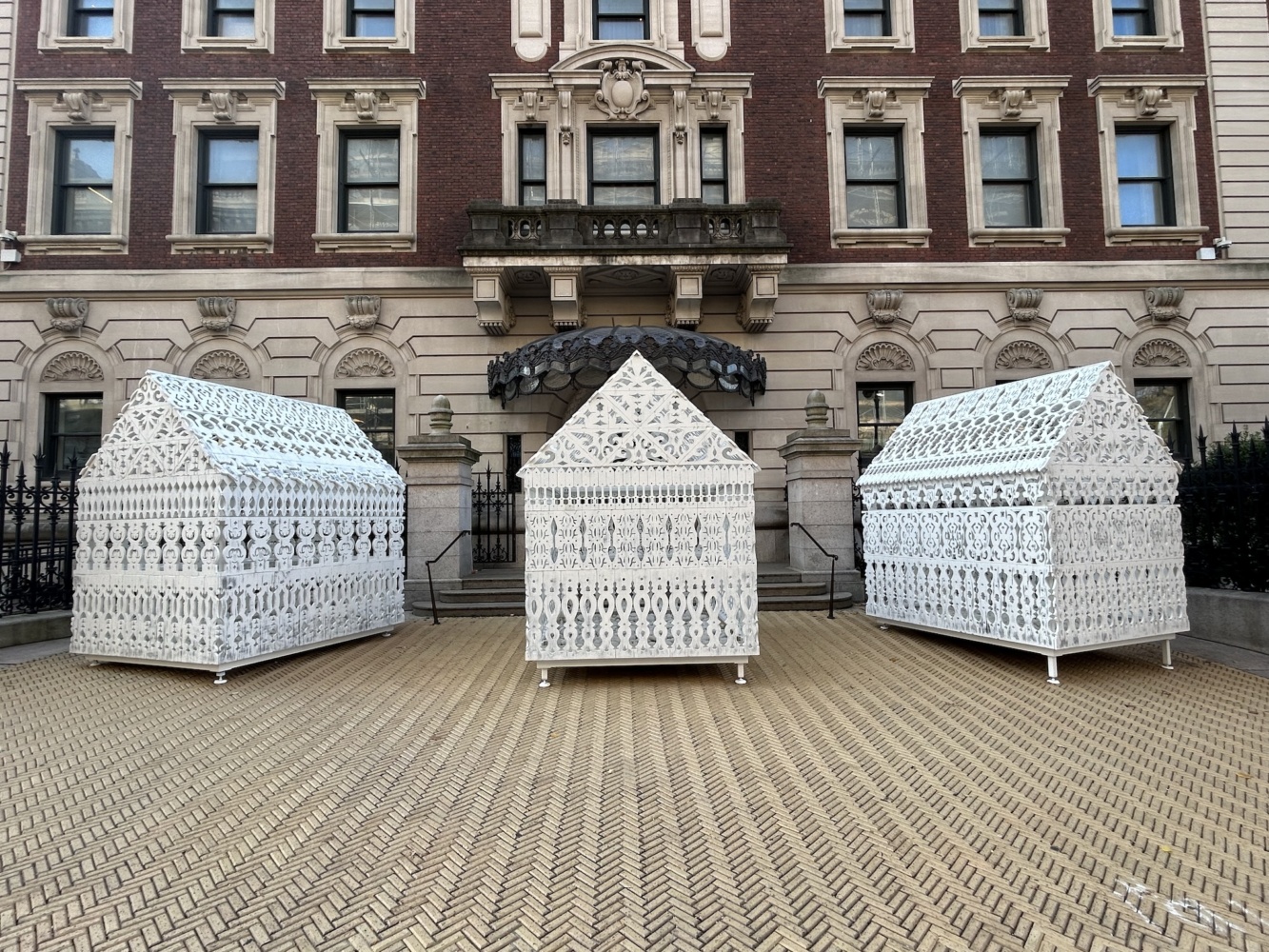
LVB: I keep thinking about my project The House that Freedom Built, because it was investigating what freedom meant to people in the late eighteenth and early nineteenth century, engaging prototypes of the houses from that period.
These [Black] people are “free”, but they can’t leave their house after ten o’clock, they can’t gather in public, they can’t wear certain clothes, the men have to hunt runaway enslaved people as a condition of their freedom… there were so many… conditions upon them. It made me think about what these houses meant for them as some of the only spaces of freedom. Virgin Islanders have been grappling with the limits of our sovereignty, or a different kind of freedom.
GM: Why was it essential, in the collective’s project Elemental Protest, to highlight the grounding of historic liberatory actions by Black communities in the environment of the islands?
HS: Elemental Protest looks at the ways, post American purchase, that the environment shaped our push for freedom. In St. John, we have a lot of land rights struggles. The Virgin Islands National Park, specifically, occupies over two-thirds of our island, and so a lot of our land rights advocacy centers around this looming occupation of a federal entity. La Vaughn discusses Fiyah Bun as a central part in our history of organizing, Tami Navarro looked at the health impacts of the oil refinery on the air and water as connected to coloniality. Tiphanie Yanique grappled with the waterways and the relationship with water mediated by this desire for freedom and sovereignty. It’s also a spiritual question, sitting with the elements invokes African and Indigenous cosmologies about being and our relationship to the environment.
GM: What are some of the dreams you have for the continued growth of VISCO?
LVB: We’ve been writing a lot together, so I share a dream of compiling those writings into a book.
HS: It’s hard to decouple dreams for VISCO with wider dreams for sovereignty, for the Virgin Islands and the world. My dream for VISCO is to continue to be a vessel for not only mirroring back our past and current reality, but holding space for expansive imaginaries.
Conversando con el Colectivo de Estudios de las Islas Vírgenes (VISCO, por sus siglas en inglés)
Una acercamiento ecológico en medio de una soberanía fragmentada
El Virgin Island Studies Collective (VISCO) comenzó en 2017 con el propósito de posicionar a las Islas Vírgenes “como un lugar de investigación y teorización más allá de la noción de utopía o de un espacio que no está ocupado de manera significativa”. Las miembros fundadoras LaVaughn Belle, Tami Navarro, Hadiya Sewer y Tiphanie Yanique sitúan a las Islas Vírgenes como un punto crítico para cuestionar la continua sujeción colonial, la desinversión en recursos culturales y la creciente precariedad ecológica. Estoy profundamente agradecide de aprender de ellas y de pensar junto al Colectivo, y por las aportaciones matizadas que surgieron de mi conversación con Belle y Sewer. En medio de la ruptura entrelazada del colonialismo, la extracción capitalista y la crisis climática, elles enfatizan la necesidad de reimaginar los archivos, el medioambiente y el sentimiento encarnado como fuentes claves de creación de conocimiento; de reconocer los legados de revolución que continúan en el presente y futuro del Caribe; y de comprender que la soberanía es un proceso fragmentado que debe imaginarse fuera de las estructuras de control y dominación.
Gervais Marsh: Los complejos mundos ecológicos de las Islas Vírgenes han sido centrales para el Colectivo desde sus inicios, tanto en la escritura como en la investigación y la programación pública. ¿Qué aspectos de la ecología de las islas les resultaron fundamentales como punto de partida?
Hadiya Sewer: VISCO se formó oficialmente en 2018, inmediatamente después del paso de los huracanes Irma y María. En ese momento, teníamos muy presente la cuestión de nuestra precariedad frente al cambio climático. Estábamos en las primeras etapas del “proceso de recuperación” y resultaba casi imposible alejarnos de lo ecológico, porque entendemos que nosotrxs mismxs somos una comunidad en la primera línea de sus impactos. Pero también sabemos que las islas del Caribe no contribuyen significativamente al cambio climático, por lo que comprendemos nuestra vulnerabilidad, nuestra precariedad, nuestra relación con el medioambiente y lo que esto significa en un contexto de desastre.
GM: ¿Cómo la urgencia de los impactos de los huracanes despierta este pensamiento?
La Vaughn Belle: Durante ese tiempo hubo una gran solidaridad intercaribeña. Las líneas coloniales que nos separan se difuminaron durante el desastre, y se podía ver la forma diferente en que operamos. Fue una ruptura de sensibilidad que carga consigo el potencial de reorganizar nuestro pensamiento, nuestra sociedad, nuestros sentimientos… nuestra relación con todo, con la tierra y el agua. Tenemos que encontrar la manera de reconstruir desde ahí.
¿Qué significa vivir en el Caribe, donde la mitad del año nos preparamos para cuando los huracanes vuelvan a ocurrir? Tenemos que convivir siempre con la posibilidad de una ruptura…hay algo muy particular en eso, y nos brinda una manera de pensar sobre lo que podemos ofrecer al mundo respecto a cómo enfrentamos la precariedad de nuestro planeta en ebullición.
GM: En el Caribe vivimos íntimamente con la ruptura, porque sabemos que va a ocurrir, así que hemos sido capaces de negociar con esa realidad continua. ¿Cuáles son las estrategias, tácticas, maneras de conocer, que se pueden aprender de las realidades ecológicas de las Islas Vírgenes, particularmente mientras enfrentamos una precariedad en aumento debido a la crisis climática?
HS: Gran parte del orden colonial de los Estados Unidos en particular, está enraizado en el mito de excepcionalismo estadounidense. Estas fantasías llevan a la ilusión de que la seguridad se encuentra en acceder a los impulsos coloniales e imperiales del Estado. Yo considero que una de las cosas que el desastre y nuestro sentido de posibilidad tras sus secuelas permiten es mirar honestamente los límites del poder sancionado por el Estado y desarrollar la disposición a reconocer que muchas de las cosas que tememos sobre la decolonialidad ya las estamos experimentando bajo los regímenes coloniales.
GM: VISCO ha organizado tres simposios sobre el sentimiento decolonial, que combinaron charlas, discusiones colectivas, narrativas, poesía, performance e intervenciones en archivos. ¿Cómo conciben el sentimiento decolonial, tanto como colectivo como en sus prácticas específicas?
LVB: El concepto de “sentimiento decolonial” fue acuñado por la Dra. Bettina Judd. Mi práctica consiste en explorar formas alternativas de producción de conocimiento. Esto es especialmente significativo en las Islas Vírgenes, donde nuestros archivos institucionales fueron arrebatados por los daneses y distribuidos en los Estados Unidos. Tuvimos que reflexionar sobre quiénes somos colectivamente ante la ausencia de esos archivos…lo que me ha llevado a buscar la producción de archivos o la construcción de narrativa en el océano, en el árbol baobab, en el molino de azúcar y, por supuesto, en nuestros propios cuerpos. Mi práctica concibe la naturaleza como co-conspiradora y archivo. Es un sentir a través de las ausencias y aprender que eso constituye una forma válida de producción de conocimiento.
GM: En la declaración de VISCO hay un compromiso explícito de “centrar las Islas Vírgenes como un espacio de investigación y teorización, más allá de la noción de utopía o de un espacio que no está ocupado de manera significativa”. ¿De qué manera el énfasis en la centralidad de las Islas Vírgenes influye en sus concepciones más amplias de soberanía?
HS: Creo que una de las cosas que siempre me ha resultado desconcertante sobre nuestra continua sujeción colonial es que tenemos una historia sólida de organización revolucionaria y anticolonial. Tenemos la revuelta de 1733 contra la esclavitud, en la que se mantuvo la soberanía de la isla durante aproximadamente nueve meses antes de ser controlada. Edward Wilma Blyden, Hubert Harrison y Barbara Christian son todos habitantes de las Islas Vírgenes. La belleza de centrar las Islas Vírgenes en las discusiones sobre soberanía es que resulta imposible descartar nuestra continua sujeción colonial sin enfrentar a personas que han estado profundamente dedicadas al proyecto de la libertad y que, aun así, han languidecido bajo la sujeción colonial continua. ¿Qué nos dice eso sobre lo que significa ser libres y lo que significa ser soberanos bajo el orden mundial vigente?
Me gusta pensar en la aporía. Estar en un impasse, sentir ese desconcierto o duda donde crees haber llegado a un callejón sin salida y no sabes cómo atravesarlo, es realmente profundo para reflexionar sobre preguntas de soberanía y libertad, porque a veces nuestros movimientos nacionalistas y el pensamiento decolonial presumen tener una respuesta sobre cómo resolver las relaciones coloniales. Una de las cosas que la gente de las Islas Vírgenes dice es: “de hecho, no, no tenemos una respuesta para esto”. Porque cuando observamos la secuela de los movimientos decoloniales y nacionalistas en el Caribe, en la diáspora africana y en el mundo, vemos que el poder se ha reorganizado de tal manera que ha profundizado las formas de opresión y violencia que nuestra gente enfrenta. No necesariamente queremos colocarnos en ese tipo de arreglo.
LVB: Sigo pensando en mi proyecto La casa que construyó la libertad (The House that Freedom Built) porque investigaba qué significaba libertad para las personas a finales del siglo XVIII y principios de XIX, trabajando con prototipos de las casas de ese período.
Estas personas [negras] son “libres”, pero no pueden salir de su casa después de las 10:00 de la noche; no pueden reunirse en público, no pueden usar cierto tipo de ropa, los hombres tienen que perseguir personas esclavizadas escapadas como condición a su libertad…hubo tantas…condiciones sobre ellos. Eso me hizo pensar en lo que estas casas significaban para ellos como su único espacio de libertad. Los habitantes de las Islas Vírgenes han estado bregando con los límites de la nuestra soberanía o alguna manera diferente de libertad.
GM: ¿Por qué fue esencial en el proyecto Protesta Elemental (Elemental Protest) del Colectivo, destacar cómo las acciones históricas de liberación llevadas a cabo por las comunidades negras estaban ligadas al medio ambiente de las islas?
HS: Protesta Elemental (Elemental Protest) examina las maneras en que, después de la compra de los Estados Unidos, el ambiente marcó nuestro impulso para la liberación. En la isla de Saint John tenemos muchas luchas por el derecho a la tierra. El Parque Nacional de las Islas Vírgenes, específicamente, ocupa sobre dos tercios de nuestra isla y así mucha de nuestra lucha por el derecho a la tierra se centra en esta amenazante ocupación de una entidad federal. La Vaughn analiza Fiyah Bun como parte central en nuestra historia de organización, Tamo Navarro examina el impacto en la salud causados por la refinería del petróleo en el aire y el agua, conectándolos a la colonialidad. Tiphanie Yanique estudia los vías fluviales y la relación con el agua mediada por el deseo por la libertad y soberanía. También es una cuestión espiritual, sentarse con los elementos evoca cosmologías africanas e indígenas sobre el ser y nuestra relación con el medio ambiente.
GM: ¿Cuáles son algunos de los sueños que ustedes tienen para que VISCO continúe creciendo?
LVB: Hemos estado escribiendo mucho juntas, así que yo compartí mi deseo de compilar esos escritos en un libro.
HS: Es difícil separar los sueños para VISCO de los sueños más grandes de soberanía para las Islas Vírgenes y para el mundo. Mi sueño para VISCO es continuar siendo vehículo no solo para reflejar nuestro pasado y nuestra realidad actual, sino también para sostener un espacio para imaginarios expansivos.
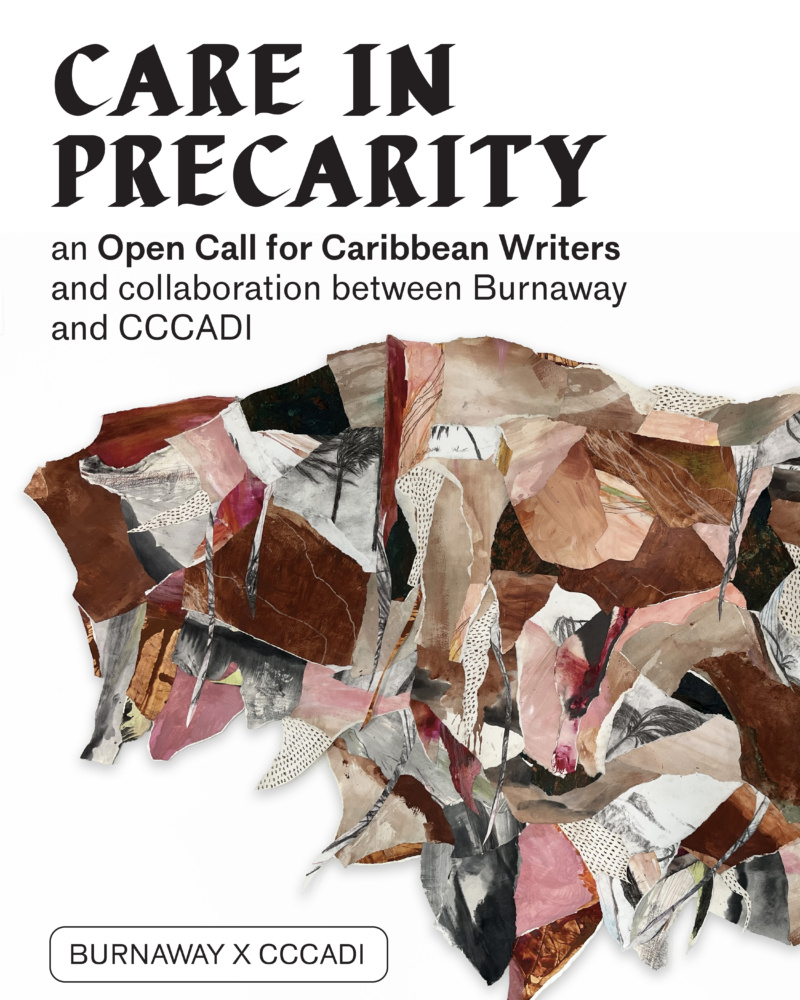
This feature was chosen from submissions to Care in Precarity, Burnaway’s first open call for Caribbean writers, in collaboration with the Caribbean Cultural Center African Diaspora Institute (CCCADI). The initiative sought to nurture writing that explores practices of care as a response to the region’s compounding precarities—from issues of climate crisis and food insecurity, to the enduring colonial structures (social and systemic) that hinder community action. In a deliberate move against the linguistic siloing of the Caribbean, a vestige of its colonial history, the selected pieces are published bilingually to better foster connectivity and sharing.
Este artículo fue seleccionado entre las propuestas recibidas para Care in Precarity, la primera convocatoria abierta de Burnaway para escritorxs caribeñxs, en colaboración con el Caribbean Cultural Center African Diaspora Institute (CCCADI). La iniciativa buscó promover la escritura que explora las prácticas de cuidado como respuesta a las crecientes precariedades de la región; desde la crisis climática y la inseguridad alimentaria hasta las persistentes estructuras coloniales (sociales y sistémicas) que obstaculizan la acción comunitaria. En una iniciativa intencional contra el aislamiento lingüístico del Caribe, vestigio de su historia colonial, las obras seleccionadas se publican bilingües para fomentar la conectividad y el intercambio.