“I cannot tell how it looked from the outside—I can tell this about few prisons, since those which I know, I know only from the inside.”
JEAN GENET, MIRACLE OF THE ROSE
The news arrives in my mailbox every two months, a year or so late, perfect-bound and printed in grayscale, averaging seventy-five pages. It is written and edited by a skeleton staff of three men who chronicle the daily life, politics, and culture of the small community in which they live in central Louisiana. Print subscriptions cost domestic subscribers $30 per year; its contents are undiscoverable otherwise.
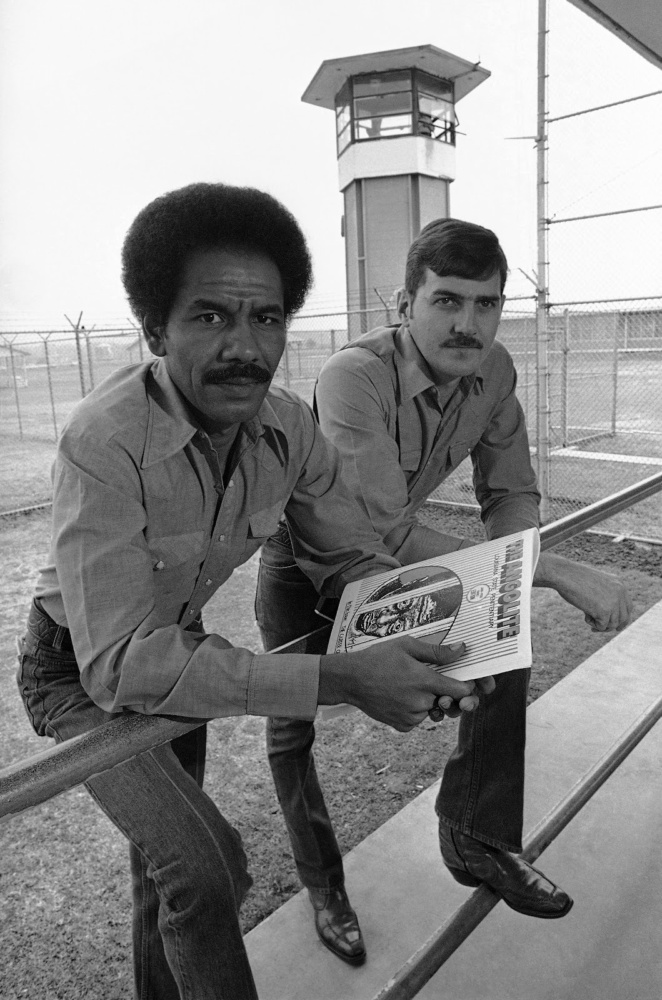
I am writing, of course, of The Angolite, the prison news magazine produced by a dedicated crew of journalists working from within the Louisiana State Penitentiary (also known as Angola). One of the longest-running periodicals in the state, the magazine serves an important and necessary role both as an archive and a developing record of the evolving social and political mores surrounding incarceration, capital punishment, parole, prison reform, and abolition for which Louisiana is exceptionally well-known.
These topics, among others more quotidian, are considered within the magazine’s pages, written for a general audience from the perspective of those most directly affected by their outcomes. Ideally, this publication raises public awareness about the lives and intellectual concerns of a segment of the population from which the unincarcerated generally prefer to remain apart. The magazine also serves as an internal forum for communication among the general prison population, informing the men of Angola of the deaths of fellow inmates and of extracurricular programming in which they may wish to participate. But it is perhaps most meaningfully understood as a vital recourse for those unable to lobby, pursue common avenues of sway and public influence, and exercise the right to vote—offering sharp legal analysis and clever commentary about happenings behind bars to readers who may eventually take such insights with them to the polls.
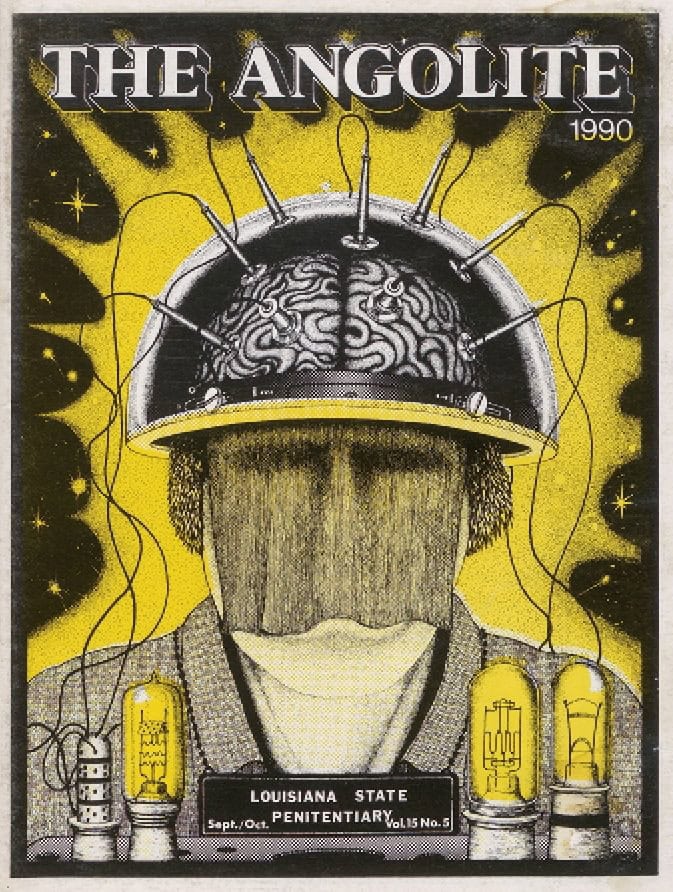
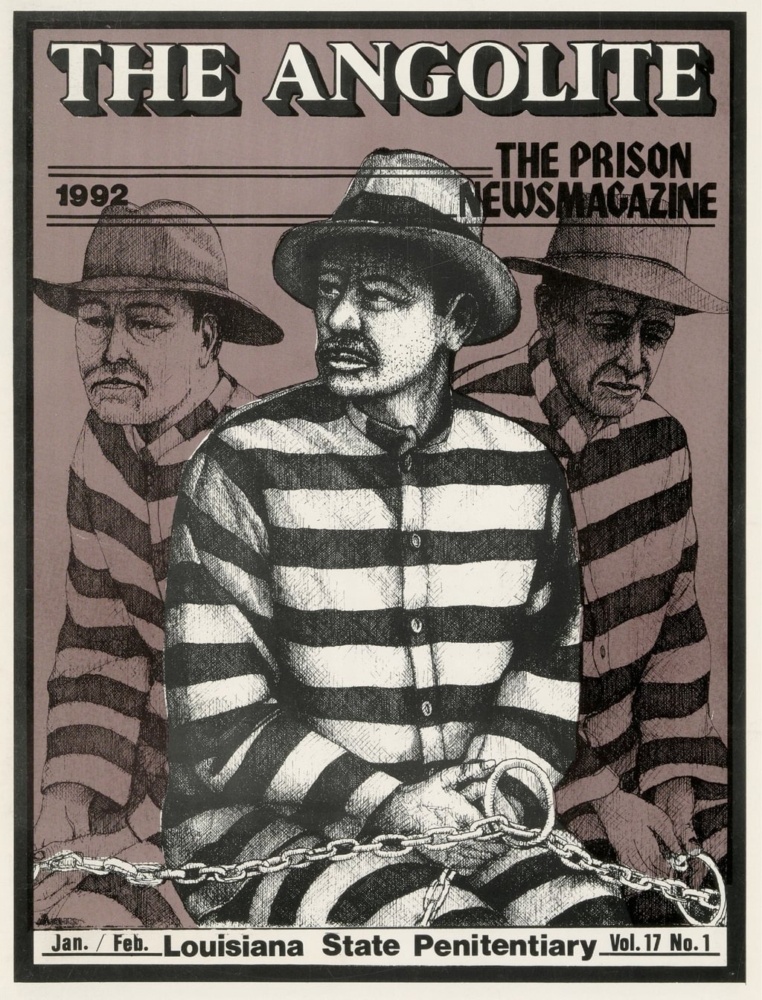
The Angolite, Sept./Oct. 1990, Vol. 15, No. 5. Wilbert Rideau, Editor. All The Angolite covers are courtesy JSTOR, American Prison Newspapers, 1800s–present: Voices from the Inside. CC BY-NC-ND 4.0.
The guarantee of a free press is a right explicitly codified in the United States Constitution—and the First Amendment affirms that Congress may not pass legislation “abridging the freedom of speech.” But prison newspapers and magazines, necessary forums for the discussion of prison life and reforms, operate as somewhat of an exception—they are published at the discretion of a warden, who may be agreeable to a free press or may subject journalists to excessive scrutiny and a watchful eye if they are allowed to publish at all.
The Angolite has historically been afforded the ability to publish freely (with discretion, and, in turn, with minimal editorial interference or censorship on the part of prison authorities) about the subjects that suit its staff’s interests and tastes. In the seventy-two years following its introduction, this reportage has garnered the George Polk Award, the Robert F. Kennedy Journalism Award, the Thurgood Marshall Award, the Silver Gavel Award, a Prevention for Safer Society Award, the Charles C. Clayton Award, the Hillman Prize, a PEN Prison Writing Award, and the APEX Award of Excellence. The Angolite was also a finalist for the National Magazine Award seven times—to this day the only prison magazine to claim the honor. It is likely the most significant periodical of its kind—a reputation hard-earned on the basis of its unflinching investigations into the conditions of Southern life in the era of mass incarceration.
But it is also subject to prison review. And so a decline in the journalistic rigor of the publication in recent years, as well as its unreliable distribution pattern, troubles me—as does the diminished quantity of other magazines of its kind, to say nothing of a similar decline in mainstream magazines and newspapers brought on by corporate consolidation. I cannot help but wonder what stories are not written today—not for a lack of a willing author, but due to an imperiled free press.
Perhaps my collection of late issues of The Angolite can be chalked up to a gross distribution mix-up. Prison officials blame it on backed-up printers. What is more likely is that someone is writing something that the warden, or another person in charge of the materials mailed from a prison post office, would prefer that the outside world not read—or read later, making it irrelevant.
The prevailing character of the penal press was established around 1800, when the first prison newspaper was published from within a debtors’ prison in New York City. Scribed by an incarcerated attorney named William Keteltas, Forlorn Hope’s first editorial called for legislation establishing debt relief at the state level and demanded a federal bankruptcy law, a position usefully attuned to its editor’s personal predicament. But the newspaper quickly expanded its purview, publishing missives on the solutions to a wide variety of social ills, including temperance and gambling suppression, public education for women and Black people, the abolition of both slavery and capital punishment, welfare for orphans, legal aid for the accused, and evangelization efforts within incarcerated populations. The sway and influence of prison journalism fostered the evolution of the institutions that produced them—eventually availing popular recreational and remedial opportunities to the incarcerated, such as Alcoholics Anonymous, GED and other degree-granting programs, access to public defenders, and pro bono legal aid.
It wasn’t until much later in the nineteenth century, however, that the genre grew into a forum for research, activism, and inmate grievances. The expansion of prison newspapers to prisons across the country followed the prison reform movement, which sought to improve the conditions of prisons and rehabilitate incarcerated persons into productive members of society. As the author James McGrath Morris notes in his book Jailhouse Journalism: The Fourth Estate Behind Bars, the expansion of in-house prison publishing opportunities acquainted inmates with writing, editing, photography, illustration, design, typesetting, proofreading, and printing, which established a skilled workforce that could be reintegrated into communities upon their release. These outlets also fostered in inmates the higher-order thinking skills necessary to be self-reflective, which encouraged the practice of non-violent communication and creative self-expression in lieu of crime, thus reducing recidivism.
In the twentieth century, the penal press flourished in the South, commencing publication of the ECHO in Texas, which is still distributed to readers statewide, and The Eagle, which was previously published from within the Alderson, West Virginia, women’s prison where Martha Stewart was once incarcerated. Late in the century, the Cajun Prison Press emerged from Avoyelles Correctional Center in Louisiana to register the results of a spirited contest among inmates to decorate for Mardi Gras and issue book reviews for titles both “hot” and “not.” The long-running Long Line Writer at the Cummins Unit in Arkansas published serial fiction, essays, poetry, crossword puzzles, sports write-ups, and prison “survival secrets” alongside its standard coverage of the criminal justice beat.
When The Angolite debuted from the Louisiana State Penitentiary in January 1953, it was conceived primarily as a newspaper for internal distribution among inmates, following in the tradition of other newsletters that were published and distributed at Angola, such as the Angola Argus, the Angola Messenger, and The Angola News. Coverage of recreational events and weekly news items was printed on mimeographed tabloid sheets at the behest of its first editor, William “Old Wooden Ear” Sadler, who worked under the supervision of Warden Maurice H. Sigler for three years. Following Sadler’s release, the weekly’s editorship passed through many hands in relatively quick succession: Oma G. Fleming’s iteration published a list of prison commissary products in the September 21, 1957, issue, replete with prices (Cigarettes, Picayunes .27, IceCreamAll flavors .05, House Slippers .87), while Maurice Foliae worked under a redesigned nameplate, alerting his audience to the modernization of Fabrica de Hombres Nuevo (Factory of New Men), a euphemism for Lecumberri Palace in Mexico City, an open-air prison that would hold student protestors arrested during the Tlatelolco Massacre. He also spotlighted the production yield of Angola’s soap factory in 1958—HIGHEST OUTPUT EVER, a headline boasts, with production totaling 339,200 bars of hard-milled soap that year. The newspaper throughout this period chronicles the zeitgeist of a mid-century prison for posterity in a voice strangely charming and twee, making it function less as a site for investigative journalism than as a forum for prison publicity.
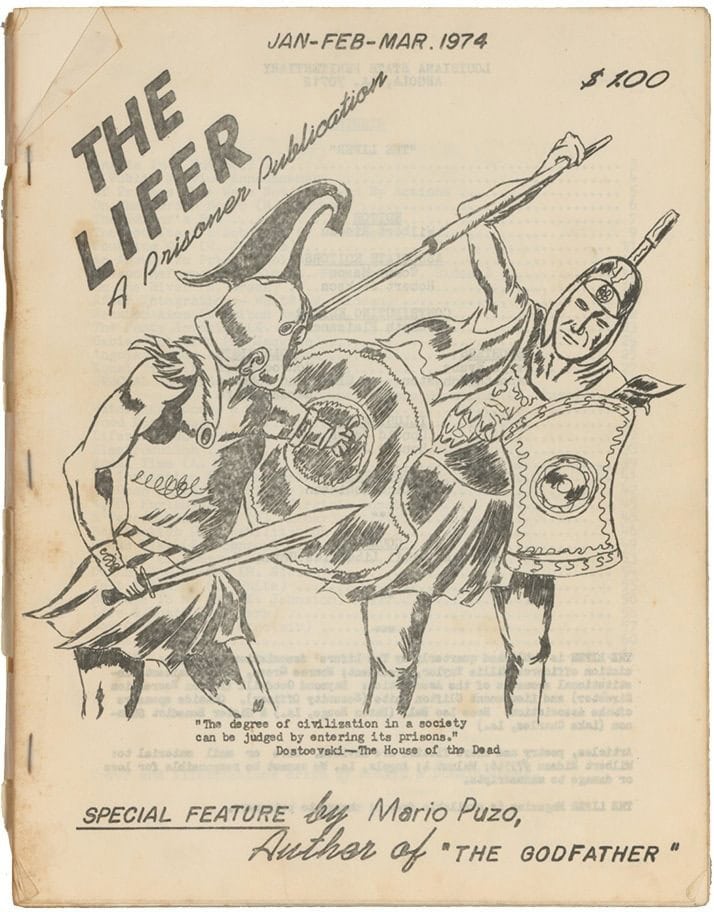
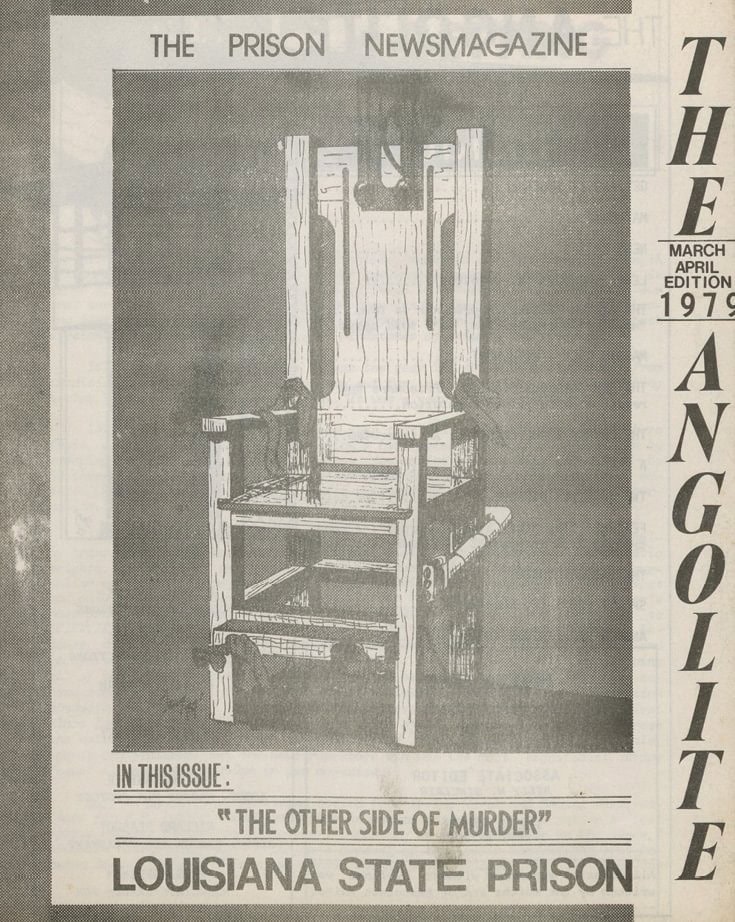
The Lifer: A Prisoner Publication, Jan.-Feb.-Mar. 1974. Wilbert Rideau, Editor. Illustrated by Donald Jones. Collection of the Smithsonian National Museum of African American History and Culture, Gift of Wilbert Rideau and Linda LaBranche.The Angolite, Mar./Apr. 1979. Wilbert Rideau, Editor.
The magazine flourished under editor Wilbert Rideau following his work for Penthouse and the Black bimonthly The Lifer, which was produced from within the Louisiana State Penitentiary prior to The Angolite’s desegregation.
In the mid-seventies, under the supervision of Corrections Secretary C. Paul Phelps, the publication moved to a bimonthly schedule and a magazine format; it was also granted the license to publish without censorship so long as it maintained the same standards of excellence typical of other magazines. It was perhaps also to The Angolite’s advantage that Louisiana’s governor at the time was Edwin Edwards, a colorful politician who championed the state’s unique cultural heritage and who was not exactly shy about his own criminal misadventures—in 1991, when running against the former Knights of the Ku Klux Klan Grand Wizard David Duke, Edwards won the governor’s office under the unofficial slogan “Vote for the Crook,” alluding to the plentiful allegations of bribery and corruption that characterized his earlier terms in public office. The governor would later spend time in prison, and The Angolite’s former editor Billy Sinclair, who authored “The Execution” in the January/February 1984 issue of the magazine (a sixty-four-page missive detailing the death of Robert Wayne Williams and the racial politics that underwrote his sentence), was an informant in an FBI investigation of a pardons-for-sale scheme that eventually resulted in convictions for high-ranking officials in the Edwards administration.
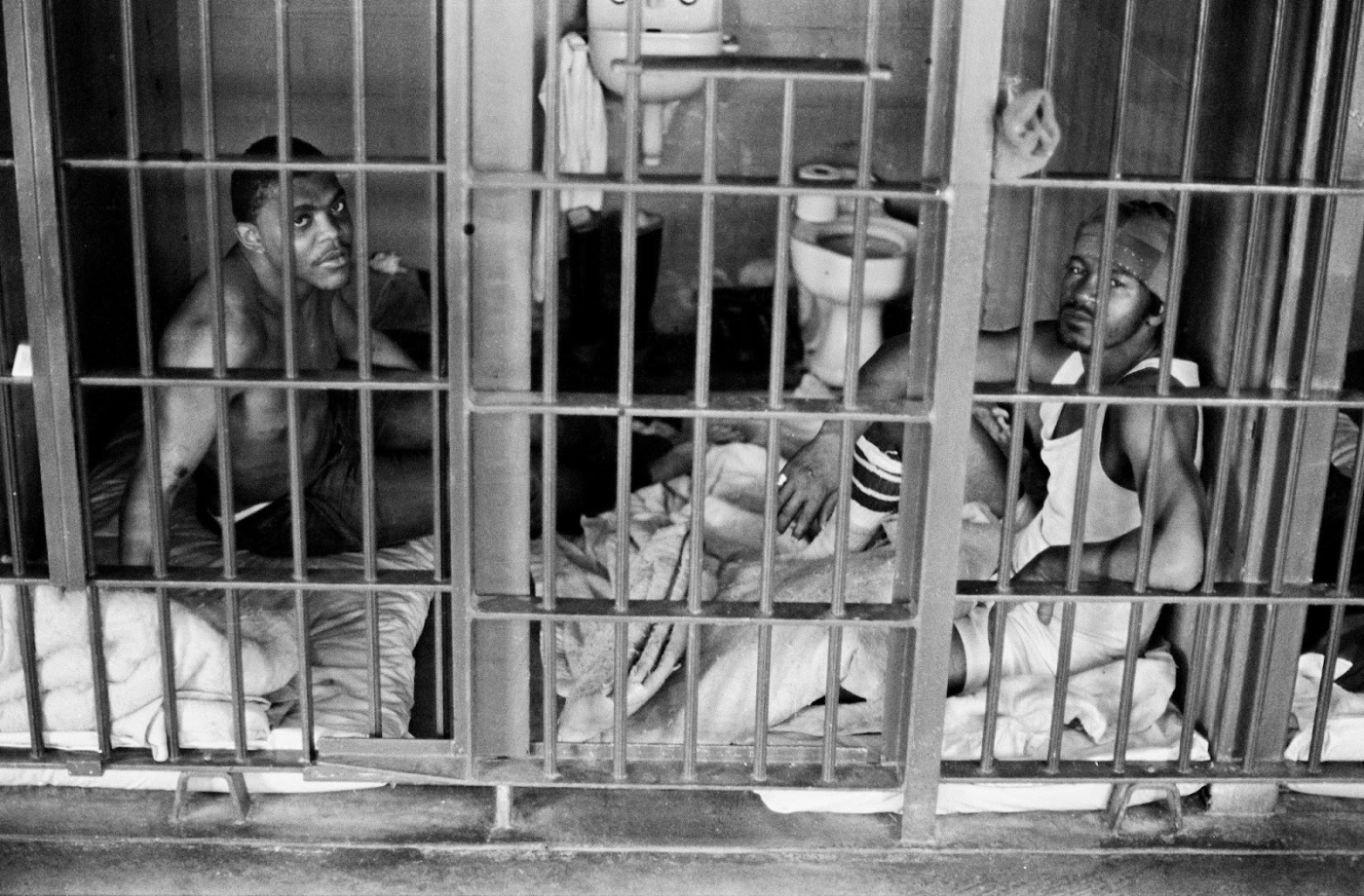
The magazine flourished under editor Wilbert Rideau following his work for Penthouse and the Black bimonthly The Lifer, which was produced from within the Louisiana State Penitentiary prior to The Angolite’s desegregation; the years following 1976 saw the publication of celebrated pieces like his exposé “Prison: The Sexual Jungle” in the November/December 1979 issue, which examined rape and sexual slavery in the prison system. “Conversations with the Dead,” published in the September/October 1978 issue, examined the “living death” of forgotten inmates lost to the bureaucracy of the prison system, scribed to parrot Southern accents and vernacular (“Dey know ah ain’t goin’ no whar. Ah ain’t goan run,” Frank “Cocky” Moore #35510 is quoted as saying at the time, having retained the oldest active prison number in Louisiana. “Ah tell you—if air a man deserves his freedom, ah do… Done served mah time, an’ some others’ too.”). Another exposé reflected on burials of anonymous inmates: “The Forgotten Men,” published in the May/June 1980 issue, offered a sobering account of life sentences in the prison system in a tone more disconcerting than the campy Angolite missives that preceded it in earlier decades, acknowledging that “prison is an experience of blood, violence and death. There is nothing pleasant or pretty about it.”
In a webinar with Reveal Digital, James McGrath Morris recounts an interview he conducted with Wilbert Rideau, in which he acknowledged two subjects he avoided reporting on during his tenure: namely, the corruption of guards and inmate-on-inmate sexual crimes, fearing that such coverage might result in his death, though Rideau did some reporting on sexual violence in the prison anyway. Later, Warden Burl Cain’s emphasis on positive Christian programming quelled the magazine’s output in an effort to appeal to the sensibility of the evangelical religious right from the mid-1990s onward.
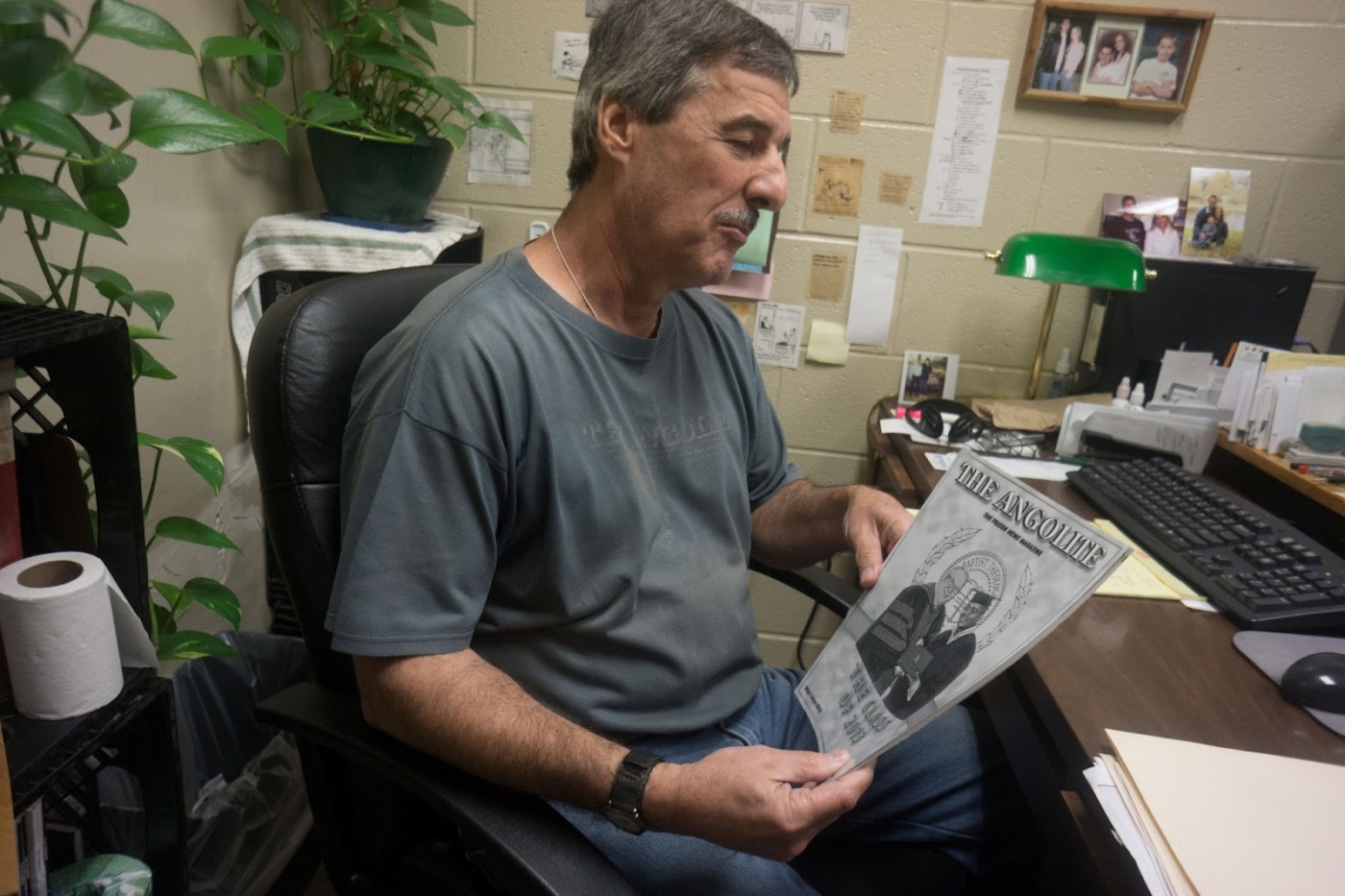
The magazine has not recovered its investigative zeal since. Kerry Myers, a trained journalist, later took over the magazine following Rideau’s release in 2005, at which point the periodical adopted its current design and model. In an interview for this essay, Myers acknowledged having had to make concessions and compromises to suit Cain’s agenda—namely, expanding the “Religion in Prisons” section of the magazine and profiling preachers who visited the prison, such as T. D. Jakes and Joyce Meyer, in order to leverage support for his own reporting and that of his writers. He claims he was only ever limited by prison officials in his attempts to cover ongoing litigation, but he also concedes that he was unable to cover certain stories within the prison due to informal constraints, which accounts for The Angolite’s lack of reporting on the Angola Three, a group of Black Panther Party members who spent decades in solitary confinement for murder convictions that were eventually overturned. He attributes this silence to his inability to access official records and the biases and prejudices of the prison administration that reviewed his work.
The Angolite’s contents in its present edition include obituaries, features, an opinion section titled “Sounding Off,” and a poetry section titled “Expressions.” Its sports coverage, a major focus of the magazine in its earliest years, has returned to a position of prominence. And though The Angolite of the present tends to shy away from the licentious coverage that earned it infamy in the late twentieth century, it still offers outsiders a rare and unique perspective on daily prison life. Unlike the negative accounts typically seen from outside journalists covering prisons, it instead prioritizes joy and communal sharing, the telling of stories, and the achievements and self-fulfillment of the prison population via prison programming. Current editor Jeffrey Dale Hilburn’s publication reaches 862 subscribers across the United States and in five other countries, down from the thousands who subscribed in the late 1980s and early ’90s. Although it has lost some of its status in recent years, it would appear that The Angolite and the Louisiana State Penitentiary itself continue to benefit from the reputation the publication earned in its earlier heyday.
Wilbert Rideau acknowledged two subjects he avoided reporting on during his tenure: namely, the corruption of guards and inmate-on-inmate sexual crimes, fearing that such coverage might result in his death.
The decline in the popularity and the output of the magazine is likely due to how challenging it is to get information into and out of the prison. The media landscape is also oriented differently in the present than in the late twentieth century now that much journalism has moved online. The Angolite has not been able to keep up with these changes: to share files, its journalists still use the same closed-network system of computers first installed in the early 2000s during Kerry Myers’s tenure, prohibiting journalists from writing emails, downloading files or software, or maintaining a web presence online, though the most recent magazine advertises that The Angolite will soon offer emailed PDF subscriptions of future editions. Cain’s influence also limited the political power of the publication—and censorship has likely only compounded this. It is also a challenge to produce nearly 100 pages of journalism bimonthly with such a small staff—three men currently produce The Angolite compared to the six or seven who worked under Myers’s tenure.
My notes from an October 2024 visit to the Angola Prison Rodeo include details of a recently “killed” story about juvenile offenders who were transferred to the adult-population prison at Angola, which became unpublishable when authorities failed to cooperate with researchers working on behalf of the magazine. Similarly, a recent suit filed by currently and formerly incarcerated Angola field workers endeavors to end the field-labor mandate at the prison, likening it to cruel and unusual punishment—but the case goes unmentioned in recent issues of the magazine, perhaps reflecting a continued ban on the reporting of ongoing litigation.
Associate Editor John Corley notes in a recent article for the Historic New Orleans Collection that “as a prisoner-produced publication, The Angolite is subject to administrative oversight, review, and direction, and what that means has varied over time.” He adds that “the current administration prefers to limit the influx of research information and be involved in editorial decisions” when planning the magazine’s content. At the Angola Prison Rodeo in October 2024, Corley indicated a desire to investigate the prevalence of drugs and overdoses in prison and delve into where prison rodeo funds go. But until more recent issues arrive, I won’t be able to assess whether such reports were permitted by prison administrators.
The Angolite and the Louisiana State Penitentiary itself continue to benefit from the reputation the publication earned in its earlier heyday.
Aside from what can be found in JSTOR and Reveal Digital archives, The Angolite, and anything revealed by FOIA requests, unincarcerated journalists also struggle to acquire information about the Louisiana State Penitentiary and similar institutions. When I last reported on the prison for The Nation, I was not permitted a cell phone or audio recorder on prison grounds, and in the weeks following my visit, my attempts to gather supporting data and statistics were stymied by Ken Pastorick, then the communications director for the prison, who refused to respond to basic questions and factual requests. His last communication on the matter, sent via email, read: “I would like to know more about your story/stories, and the angle of these articles. How are they being framed? How is the DOC being portrayed in these pieces? Who have you already interviewed? What questions do you want to ask a DOC representative?”
This is an unusual response from a communications representative for a publicly funded institution. But hostility toward reporters and prioritization of optics over the impartial provisioning of information are typical responses when journalists attempt to report across the slew of operations managed by both the state-run Department of Corrections and the federal detention facilities scattered across the state. The journalist Delaney Nolan, attempting to interview Mahmoud Khalil, a Palestinian activist and the first political prisoner of the second term of the Trump administration, who was incarcerated in Jena for a period of three months, was met with this curt response: “U.S. Immigration and Customs Enforcement is focused on mission execution—arrests and removals—and will not be providing media interview opportunities to those in ICE detention.” My own inquiry was not answered.
Barnard College lecturer Shayoni Mitra, reporting on Khalil’s detention for n+1, spotlights the abnormality of his detainment in Louisiana (a thousand miles away from his family in New Jersey, and the same considerable distance from the concentration of U.S. media and newspaper outlets with offices in New York), noting the droves of interested parties denied access to his deportation hearing, which she attended in April. Khalil’s “Letter from a Palestinian Political Prisoner in Louisiana,” dictated over the phone, asks simply: “Who has the right to have rights?” Another letter Khalil penned to his newborn son from the Jena detention center acknowledges that it was “not a gap in the law that made me a political prisoner in Louisiana,” but the intended functioning of a political system that inhibits the rights to protest and to speak freely. Rümeysa Öztürk, another pro-Palestine activist previously held in Basile, was jailed for co-authoring an opinion piece imploring that Tufts University divest from companies with direct or indirect ties to Israel, writing that “the University is indeed taking a stand against its own declared commitments to free speech, assembly and democratic expression” by penalizing student activists protesting the Israel–Gaza war.
Though the Louisiana State Penitentiary and federal ICE Processing Centers are not overseen by the same authorities, just as the censorship of the penal press and the student movement for a free Palestine are not typically considered in relationship to one another, both converge in banal and bureaucratic ways across the current physical and political landscape of Louisiana: in the prison facilities previously used by the state for the incarceration of the general population, now repurposed for crimmigration proceedings, and in the agendas of our current gubernatorial (and federal) administrations, both unusually hostile to the notion of a free press and troublingly tolerant of violations to (and punishment for) the rights to free speech and protest, despite Louisiana Governor Jeff Landry’s executive order assigning protections for conservative student activism. But if professional, incarcerated, and student journalists are discouraged from reporting on oppugnant issues, and current provisions for a “free press” preclude the possibility of investigating such overlaps in meaningful depth, the lack of transparency that underwrites our current fragile democracy only serves to reinforce the sprawling power of conservative political elites.
As such, the relocation of federal political prisoners to Louisiana is not entirely unexpected, given the state’s prolific carceral configurations. It appears, however perverse, that the prison system is indeed functioning exactly as it was intended to. In the absence of redress, a void opens up in which one branch of bureaucracy infinitely mirrors the other, eventually dimming to a point unable to reflect any light.
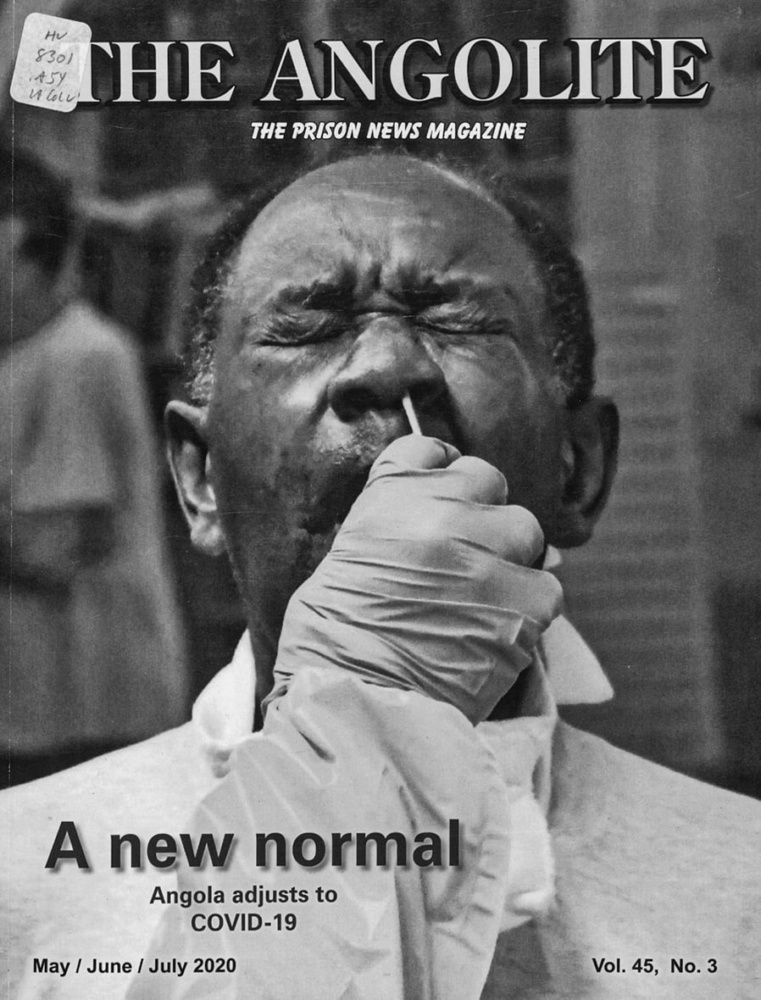
The Angolite, May/June/July 2020, Vol. 45, No. 3. Photograph by Jeffrey Dale Hilburn, Editor.
In 2024, the United States was incarcerating nearly two million people, the highest rate per capita of any other democratic nation. The South holds the highest number of incarcerated individuals per capita. And yet, fewer than twenty-five prison magazines were published nationwide in 2024, down from the hundreds that were printed in the mid-twentieth century, illustrating a mounting crisis that may come to define the death of the “free” press of this modern age: if so many of us are sequestered apart from society, without the resources or the platforms primed to document our daily lives and the social maladies that confound them, how are we to exercise the civil liberties implied by the First Amendment in a fractured democracy eager to criminalize them and then argue them away?A discussion has emerged in certain circles in recent years about the quality (and quantity) of Southern literature being published in the present. Once a behemoth of American letters, the genre now struggles to escape the clichés that once made it so celebrated; some believe that it has failed to adapt to contemporary circumstance, forever enshrined in the troublesome politics and unstylish notions of our nation’s past. Missives from our region’s jails, prisons, and ICE detention and processing facilities—and publications like The Angolite, Solitary by Albert Woodfox of the Angola Three, and Khalil’s letters from a Jena jail—might offer some of the brightest and most evocative elucidations we have of Southern life in the present. If only there were more, and developed to their highest potential… But I’d be writing then of the past, innocent to the losses of time.
Our monthly roundup of opportunities includes residencies in New York, Texas, and Alaska, public art commissions in Florida and Tennessee, an interdisciplinary artist-scientist grant, and juried exhibitions across the country.
Amina Daugherty visits the Atlanta studio of Jasmine Nicole Wiliams to discuss the printmaker's kinship with Suzanne Césaire and her radical vision for cultural liberation.
Annie Moye writes about the environmental and communal ethics of artist Yvette Gunn, whose sculptural practice of building birdhouses in her garden honors the natural world.
Subscribe to BurnawaySign up to recieve the Burnaway newsletter and get notified about upcoming events and opportunities.* required field