These annotation moments trace specific curatorial choices I’ve made: how an exhibition title can hold uncertainty rather than resolve it; whose voice speaks first in public programming; what installation reveals—and what it deliberately keeps out of sight; how an artist’s own words can become an organizing intelligence; and how the exhibition catalog can function as pedagogy. Across these moments, whether it’s a missing question mark, the back of a painting turned toward the viewer, the importance of family-driven “living archives,” or the afterlife of an exhibition once the walls are bare—I return to decisions shaped as much by hesitation as by conviction. Together, they surface the pivots, pauses, and questions that have guided four key projects, revealing the aesthetic and ethical considerations that quietly structure my work.
Drawing from my recent exhibitions over the past three years—Between Rivers and Revolutions and my heart is strong because I walked on blistered feet (Engine for Art, Democracy & Justice at Vanderbilt University, Nashville, TN—founded by María Magdalena Campos-Pons), Donald Locke: Nexus (Atlanta Contemporary), and Are We Free to Move About the World (Florida State University Museum of Fine Arts, Tallahassee, FL)—these annotations reflect my belief that curating is not only about framing meaning, but about creating a space of listening[1]: attentive to artists, to families, to language, to students, and to what remains unsaid.
I. Title as Threshold
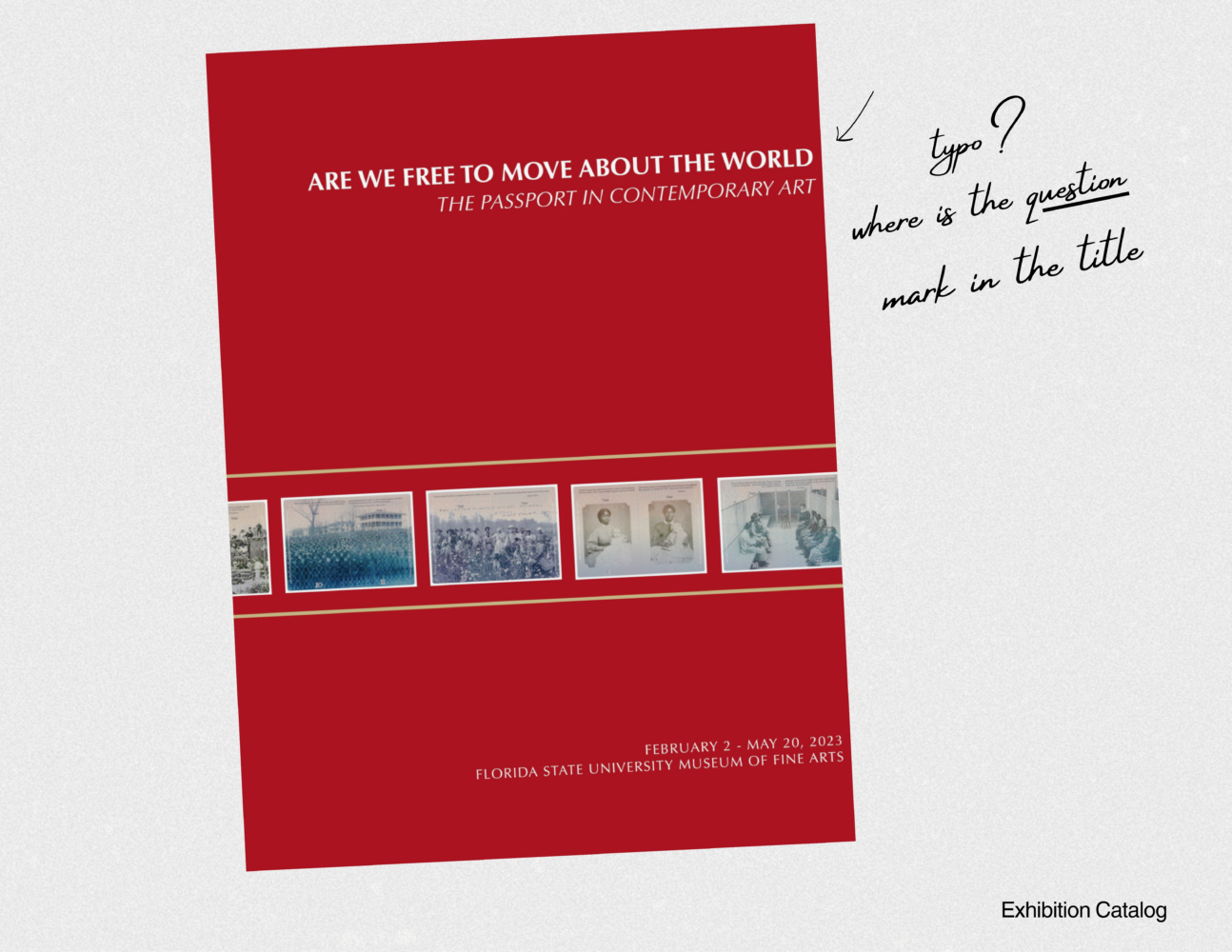
For the exhibition Are We Free to Move About the World: The Passport in Contemporary Art, I am often asked if I forgot to add the question mark to the title. I welcome that question, because the absence was deliberate. I think carefully about titles as they are often the first threshold an audience crosses. I want them to function as curatorial gestures that also carry aesthetic weight. Titles can announce, conceal, disrupt, or invite. Sometimes, a single punctuation mark, or its refusal, can shift the entire register of how a viewer enters the work.
Are We Free to Move About the World brought together fifteen global artists whose relationships to the passport were radically unequal—some moved freely, some under conditions, some not at all. Here, the passport was not a neutral document but a revealing one. It exposed who the world is built to receive and who it is designed to restrain. And the question does not stop at the world. Are we free to move about our own neighborhoods, our cities, our nation?
A question mark would have resolved too much. I removed it so the sentence could remain open, unsettled. The title hovers between statement and searching, mirroring a question that is not theoretical but lived—felt differently from body to body, border to border, day to day. It may read like a glitch, a small refusal of grammatical certainty, but that refusal is the point. I wanted the precarity to be felt. Uncertainty is the message, and we are all living inside it.
It may read like a glitch, a small refusal of grammatical certainty, but that refusal is the point.
II. Installation: What to Reveal, What to Withhold
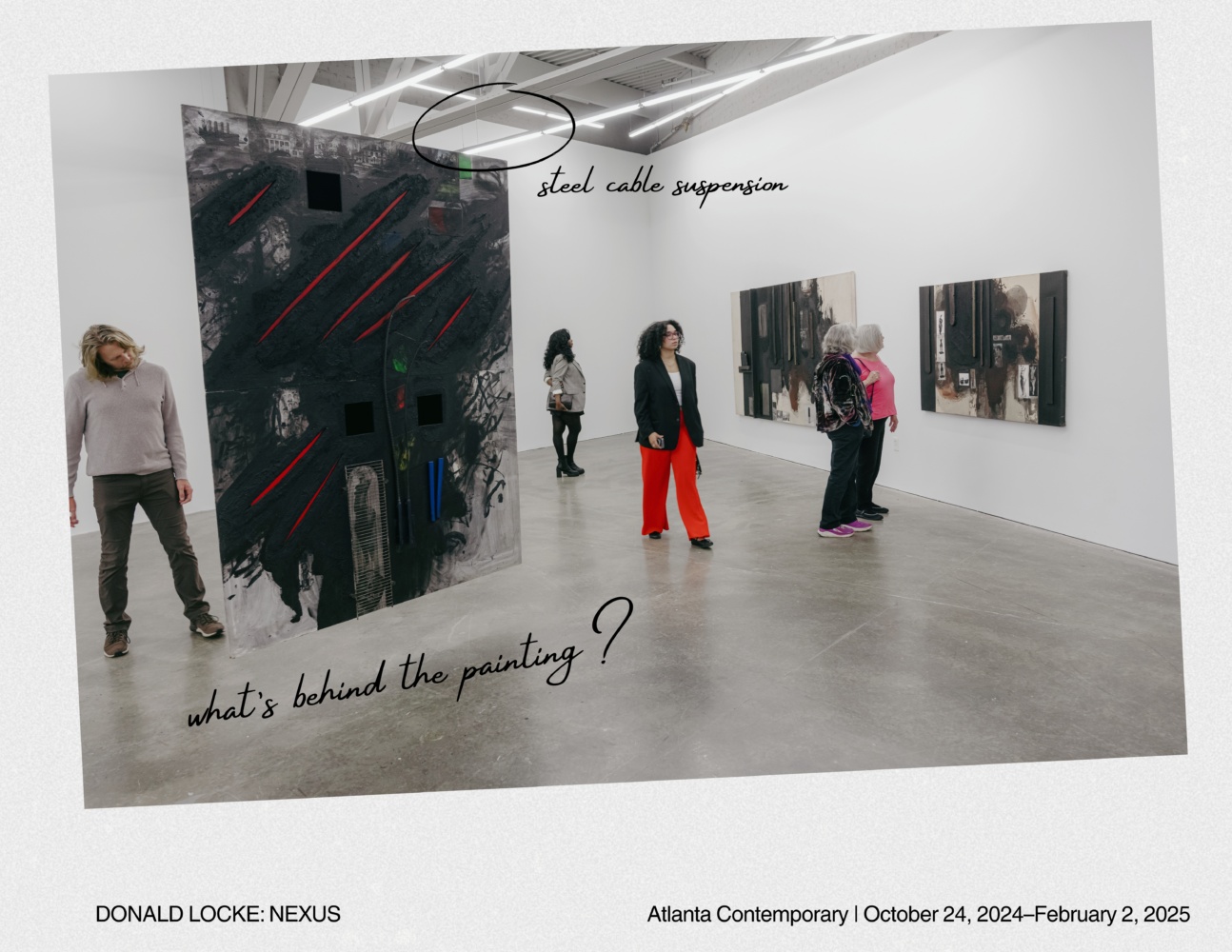
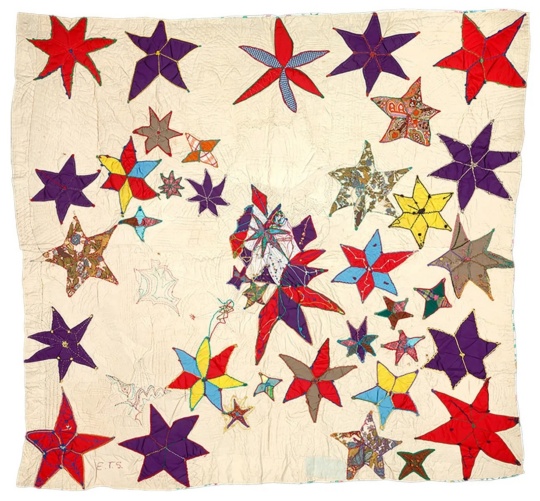
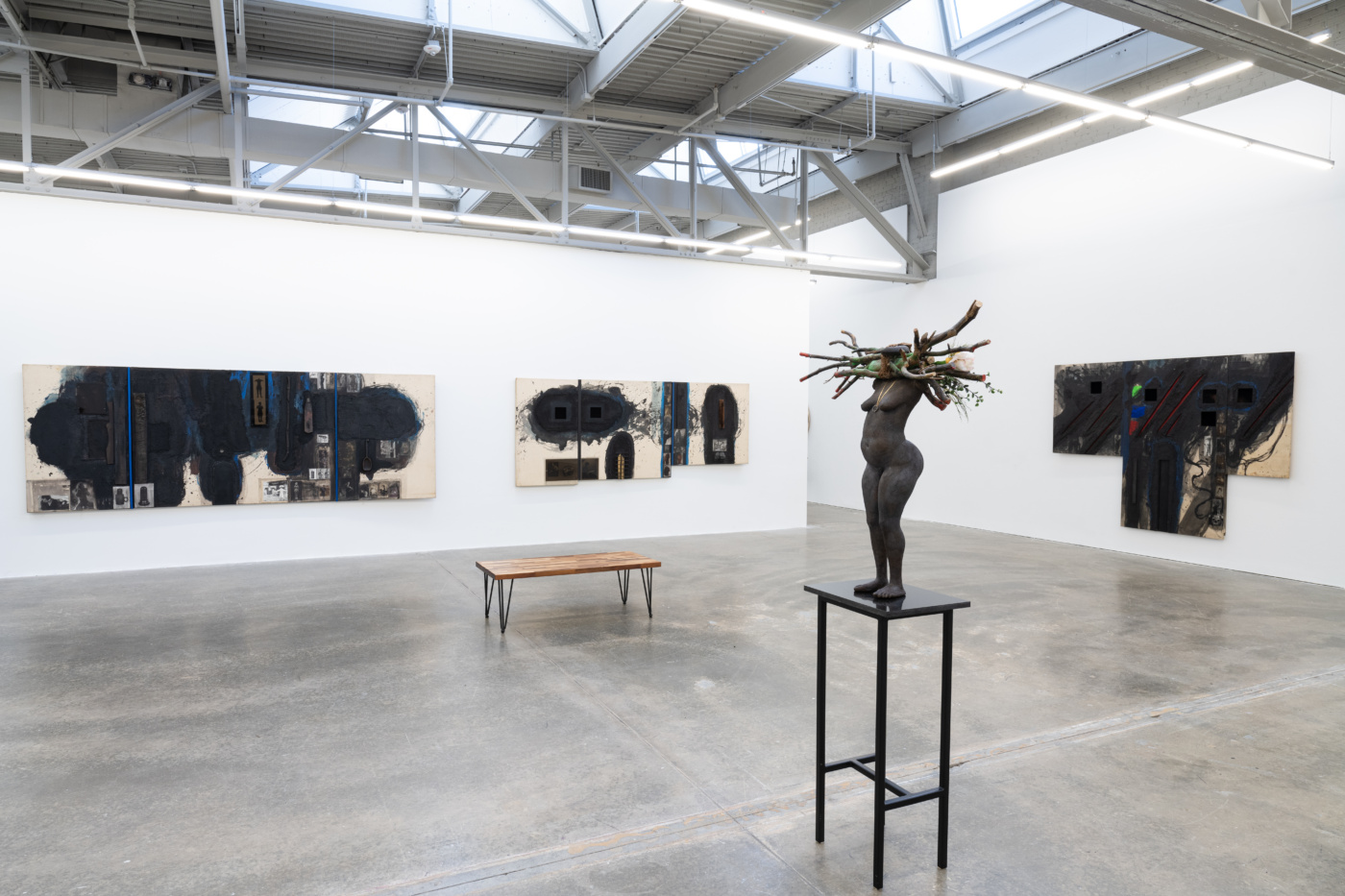
For Donald Locke: Nexus, I made an installation decision that had never been done before: to show one of Locke’s paintings from the back. The Mark of Brer Nancy (1995) had always been presented front-facing, its surface bearing the weight of history, politics, and material force. Suspending it from Atlanta Contemporary’s high ceilings allowed for another mode of looking.
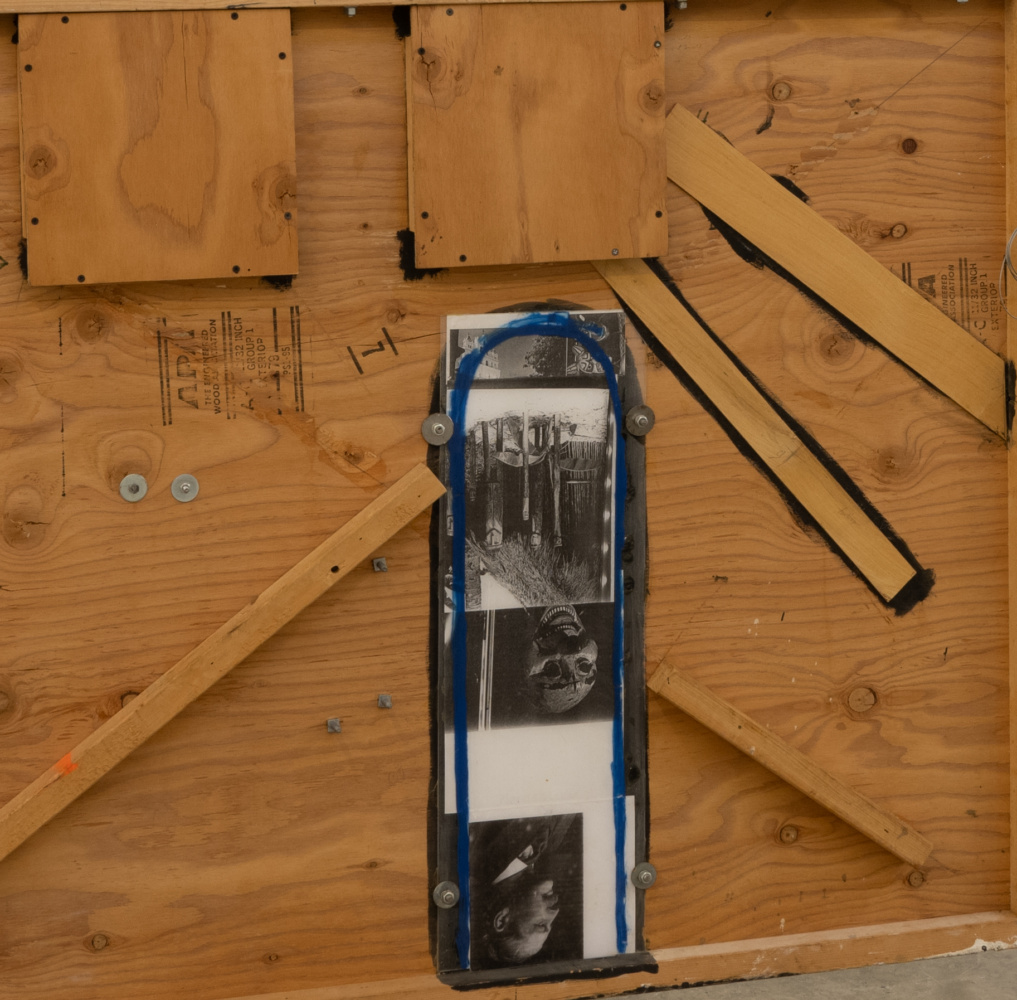
Embedded within the back of the painting is a narrow vertical aperture holding a sequence of black-and-white magazine cutouts, mounted upside down. The images refuse immediate legibility, asking the viewer to slow down, to reorient the body. Locke’s use of found imagery here echoes his broader practice: gathering the detritus of mass culture and reworking it into something private, charged, and unsettled. The images read as psychic residues embedded within the structure of the work itself.
I do not believe Locke intended the back of the painting to remain hidden. It feels deliberate, a trickster’s strategy. In fact, Locke named the work The Mark of Brer Nancy, invoking the trickster figure known across Guyanese and Caribbean folklore as Anansi—the cunning spider who operates through wit, indirection, and double-speak. The painting follows the same logic. By revealing its reverse, I wanted to make legible Locke’s brilliance as a master coder, a writer of ciphers, someone who understood that meaning often travels sideways, through concealment, inversion, and partial revelation.

III. Public Programs as Living Testimony
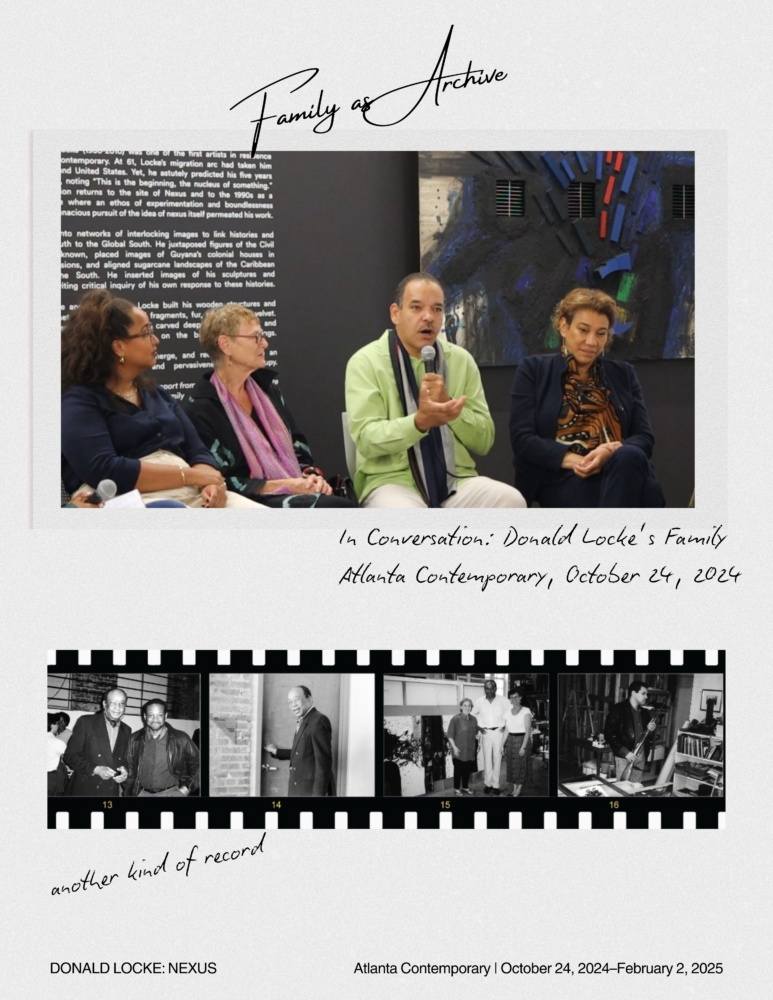
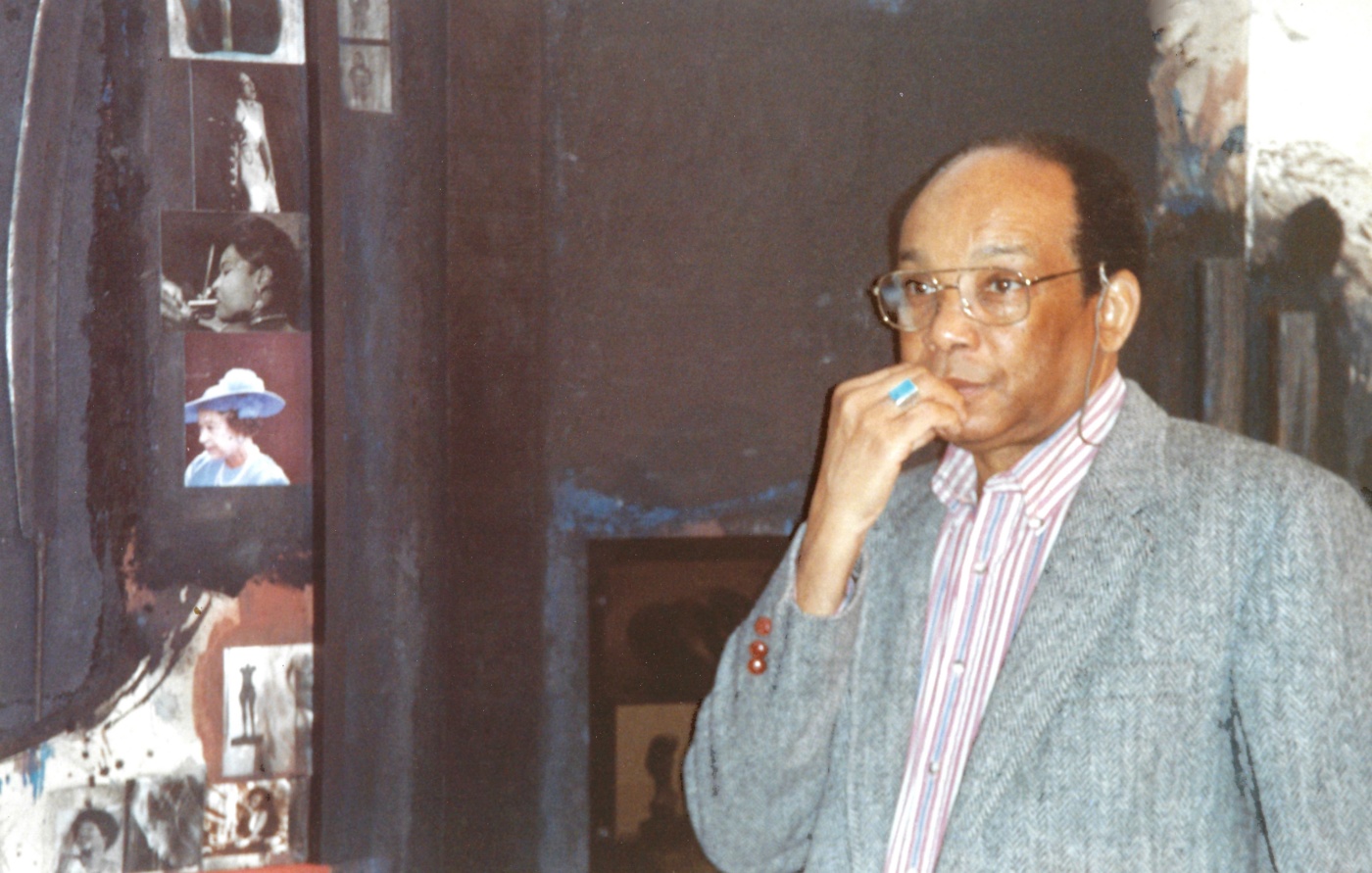
I never met Donald Locke (1930–2010) before he passed. I came to know him through the people who loved him. From them, I learned what archives often cannot hold: humor and rigor, failure and tenderness, the quiet labor of building a life as a Black immigrant in the American South. It was in that spirit that I wanted to open Donald Locke: Nexus, with love as a form of knowledge.
In curating the exhibition’s public programs, I chose to begin with voice rather than interpretation. I opened the show with a public conversation that centered on Locke’s family as the first archive—a decision about authorship and sequence, about who speaks first and why. The opening weekend program marked the first time Locke’s family had been brought together publicly in the United States to speak about him and his work. Jonathan Locke, his son; Corinne Locke, his daughter; Brandi Locke, his granddaughter; and Brenda Locke, his partner, shared the stage together. While these conversations had long lived privately—across kitchen tables and across years—this was their first collective public gathering to speak of their father, grandfather, and partner. It honored the artist family as a witness, an authority on his work that comes from proximity, duration, and love.
Family holds forms of knowledge institutions often overlook. Time and again, it is the artist’s family who is preserving their legacy often when institutions fail to see their value or arrive too late. As Stuart Hall writes in “Constituting an Archive,” diasporic cultural production has too often unfolded “in the absence of any sustained attention or critical dialogue within the dominant institutions of the art world,” which is why Locke’s family feels to me like a “living archive”—“present, on-going, continuing, unfinished [and] open-ended”—carrying what the record alone can’t hold.[2] These were the people who were always in Locke’s studio, at his openings, present for his wins and his losses. They were his first witnesses and his first interlocutors, living alongside the work as it was being formed. Of course, they should be treated as primary sources within the archive. By foregrounding their voices, I wanted to situate the exhibition within a living lineage, allowing the work to be held by those who knew the artist most closely.
Time and again, it is the artist’s family who is preserving their legacy often when institutions fail to see their value or arrive too late.
IV. In the Artist’s Words
I am drawn to artists who are also poets and writers. Artists who understand language not as supplement, but as architecture. This is my curatorial bias. I am interested in practices where the literary and the visual are in constant dialogue, where words do not explain images but move alongside them. And speaking of annotations: work that bears handwriting, marginal notes, scribbles and musings on them—those works automatically have my attention!
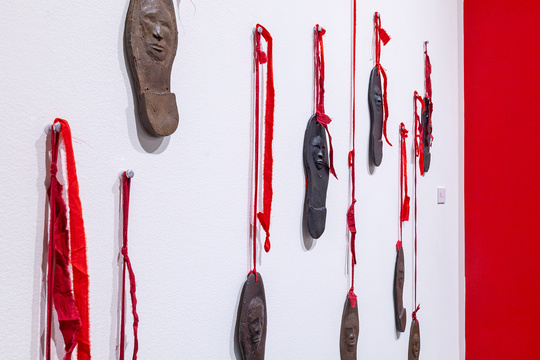
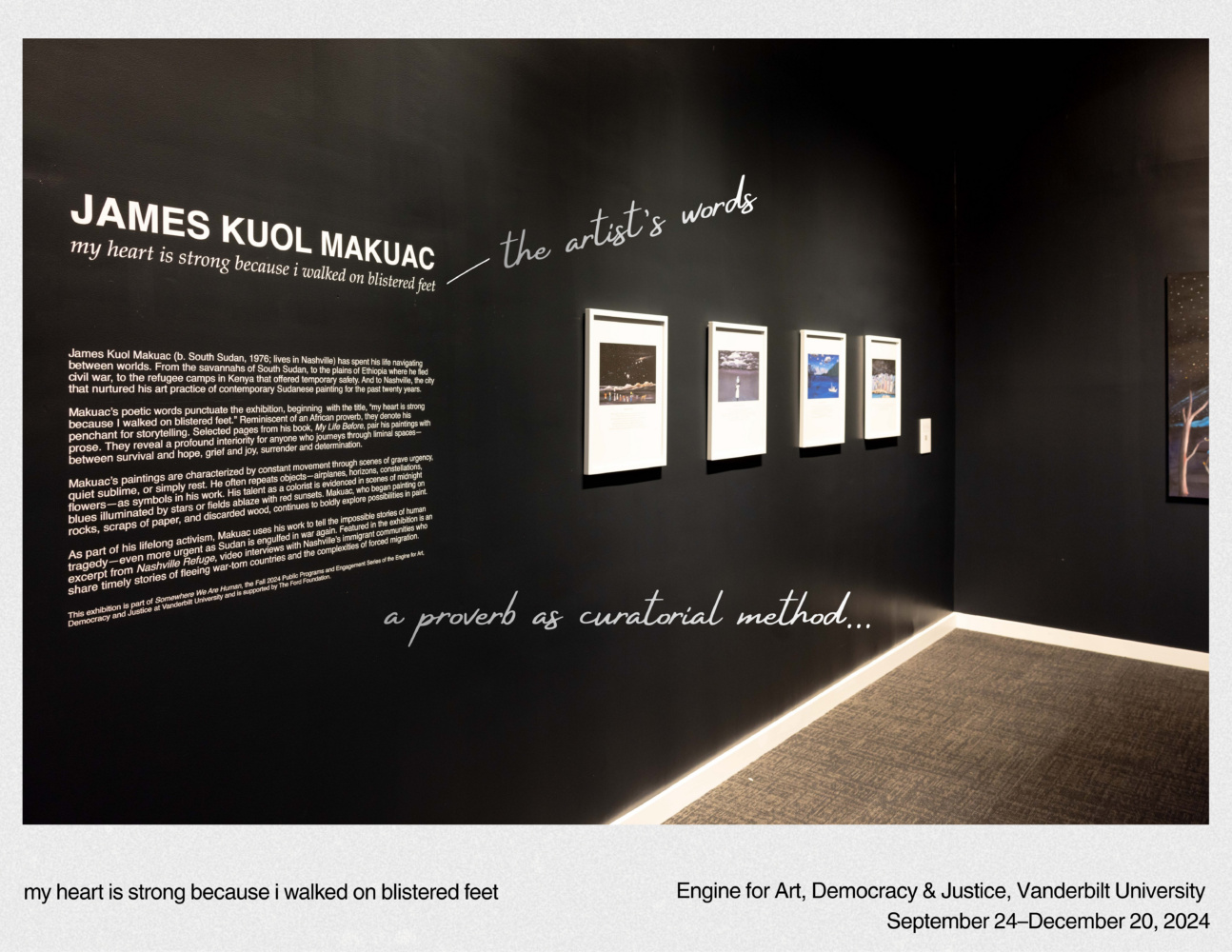
The exhibition, my heart is strong because I walked on blistered feet began with James Kuol Makuac’s words. He wrote the line while reflecting on his movement across worlds—walking from the savannahs of South Sudan, to the plains of Ethiopia where he fled civil war, to the refugee camps in Kenya that offered temporary safety. I was struck by the poetry throughout his book My Life Before: My Story of War and Refuge, and I wanted his words to do more than accompany the paintings. Lifting the line “my heart is strong because I walked on blistered feet” so it could stand on its own—as both proverb and compass—was a way to honor his endurance without turning it into spectacle.
I installed several more of Makuac’s lines across the exhibition’s walls. So when he later reflected, “No one had ever treated my writing this way before in an exhibition. It validated both my voice and my art,” it confirmed the importance of trusting language as form, and trusting the artist’s own voice as an organizing intelligence.
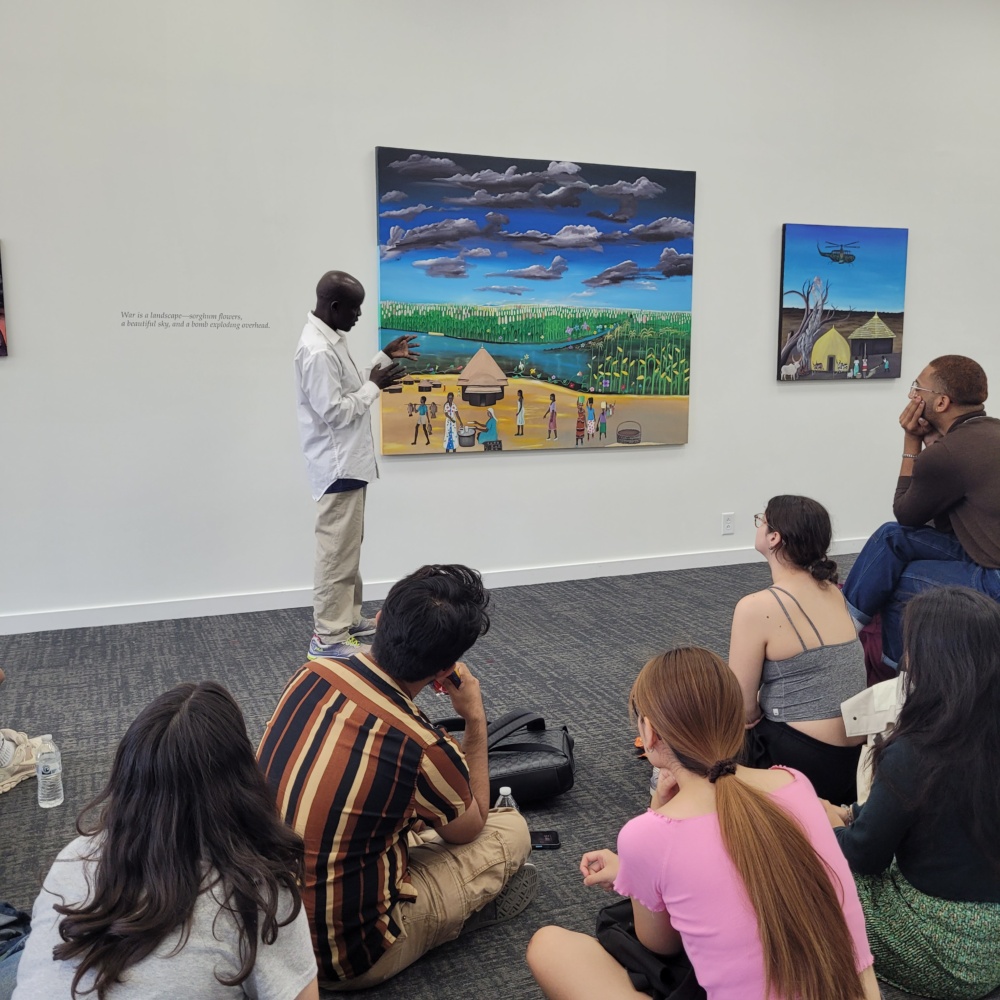
[…] trusting the artist’s own voice as an organizing intelligence.
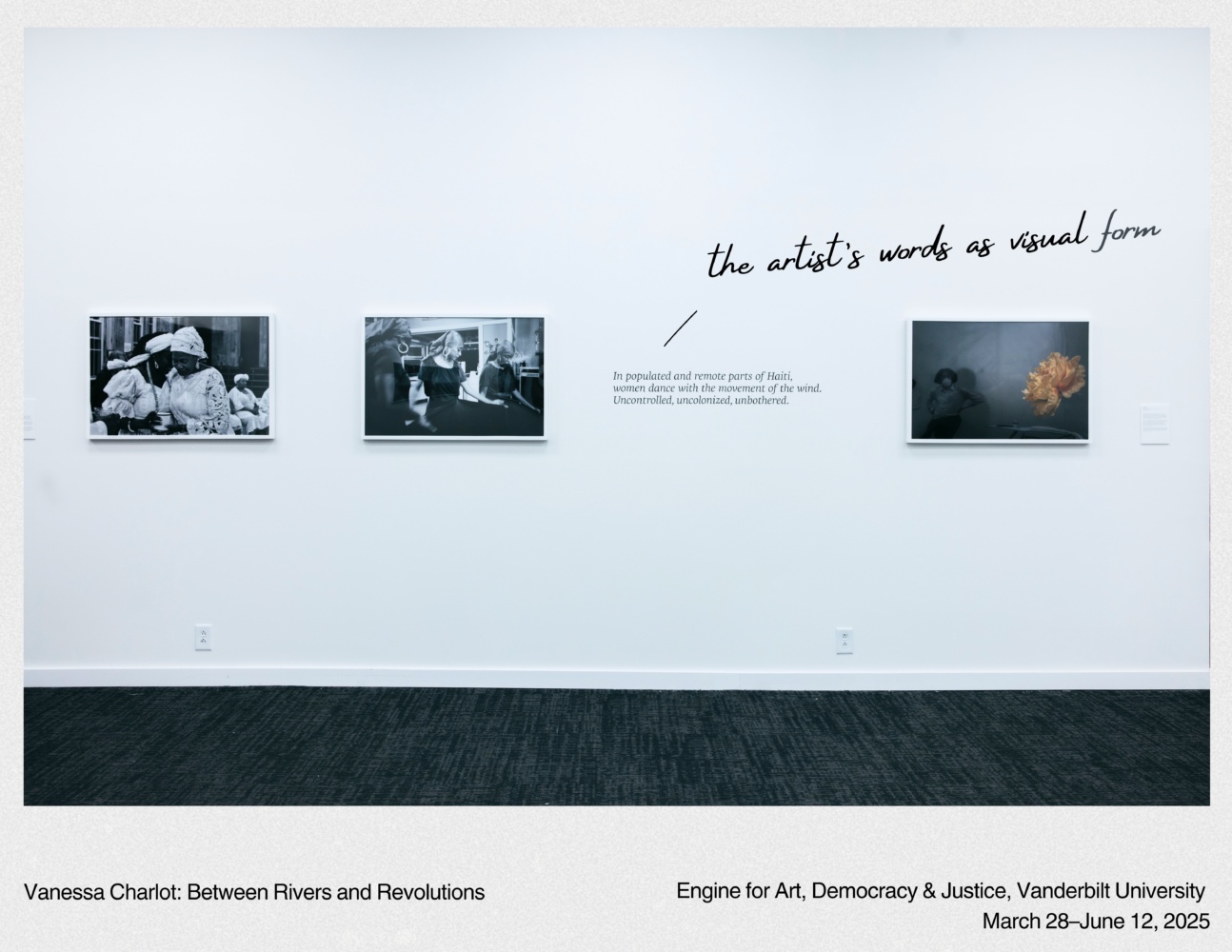
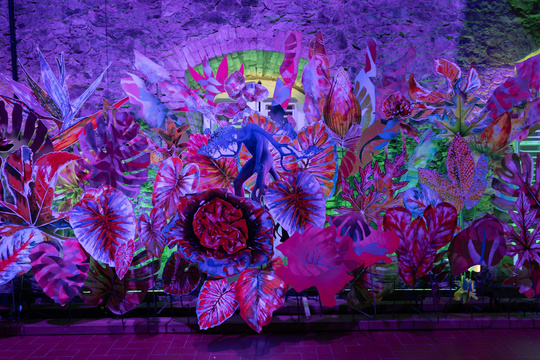
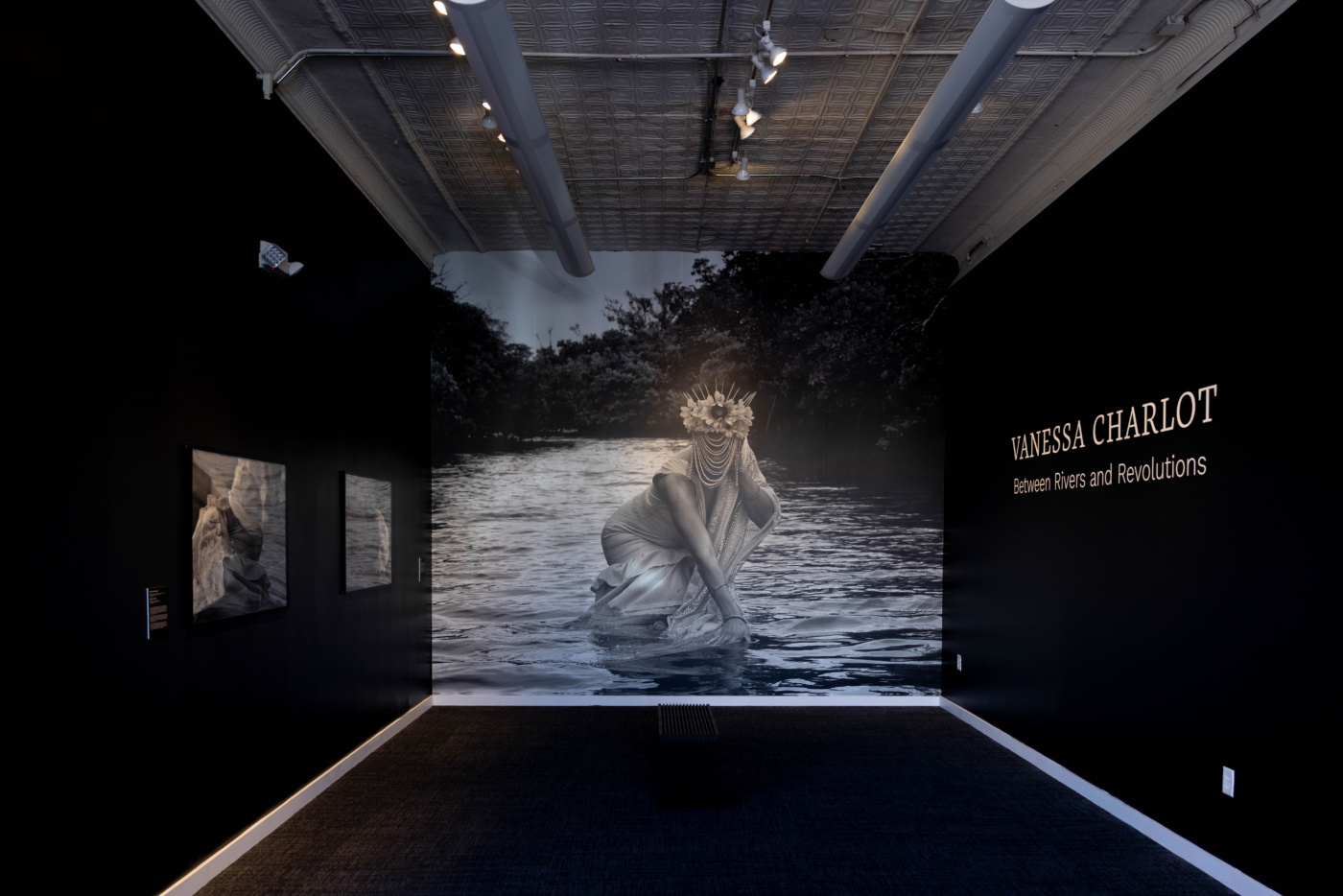
With Between Rivers and Revolutions, I was drawn to Vanessa Charlot’s work because it is grounded in trust—trust earned through presence, accountability, and listening. This is documentary photography. Charlot is not looking from a distance. She moves between Haiti, the Mississippi Delta, and Florida’s coastal edges on the ground, carrying the rigor of reporting alongside the intimacy of lived experience. She works with communities that are too often spoken for rather than spoken with.
For this reason, I excerpted Charlot’s own writing from her image captions and her notes and placed them on the walls alongside her photographs. I treated her words as the lede: not explanatory text, but the point of entry.My curatorial work was to make that trust legible in the space, and letting her language lead the project was how I chose to do that.
V. Catalog as Pedagogy
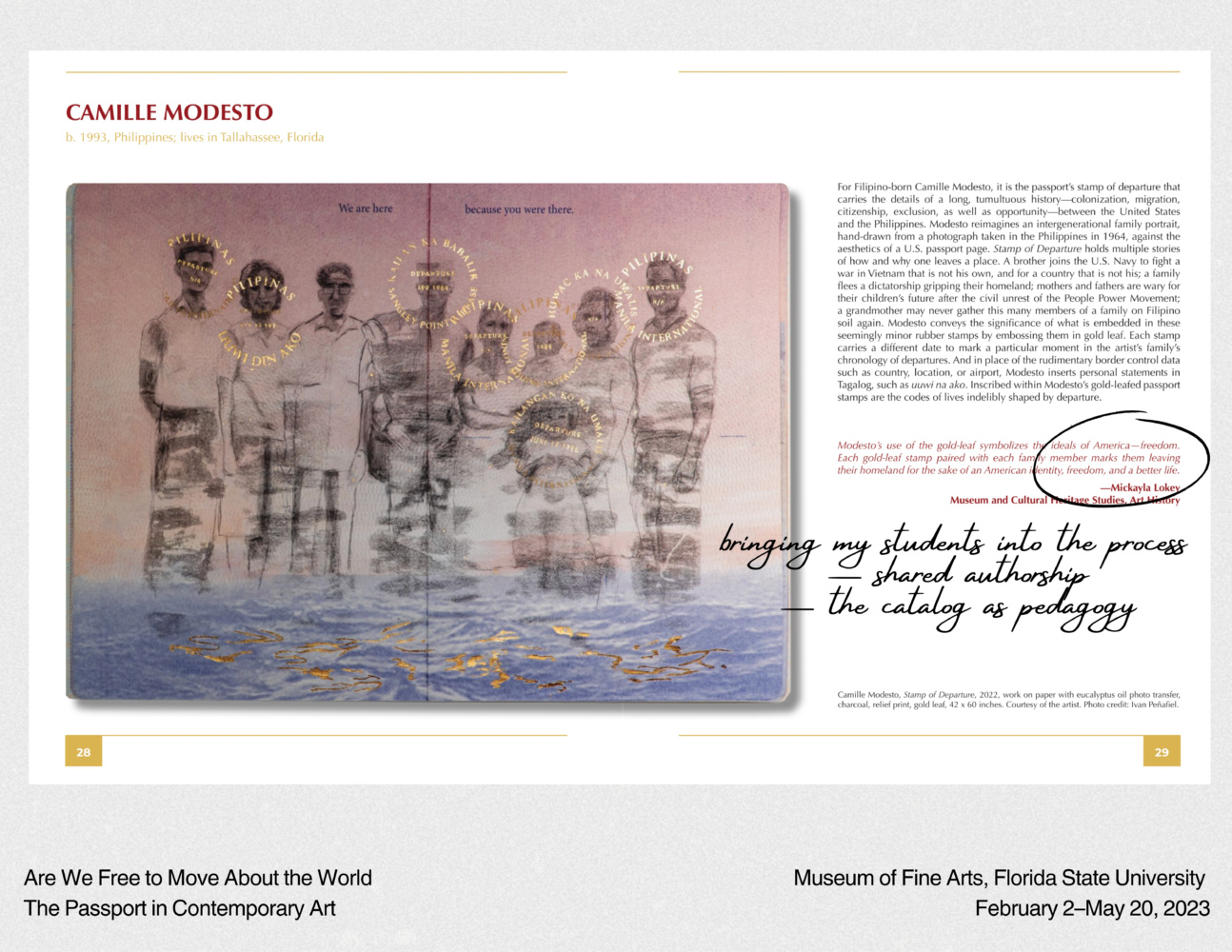
I think of catalogs as the afterlife of an exhibition—not as documentation alone, but as what remains after the walls are bare and the works have moved on. When possible, I choose to produce catalogs after an exhibition has opened. This allows the book to show what unfolds in public: how the work is received, how the installation breathes in space, what conversations surface and linger. The catalog becomes a record of encounter, making room for installation images, audience response, and the unpredictable life of a project once it is released into the world.
This approach also allows me to invite others in—most importantly, my students. I treat the catalog as a pedagogical space: a teaching tool, a living syllabus, a site of shared authorship. By bringing students into the author line, I move away from the singular, authoritative curatorial voice and toward curating as a form of communion—thinking, writing, and learning together. Students are positioned not as observers, but as co-thinkers and co-writers.
Curating and teaching are inseparable for me. The pivots I make away from accepted models of curatorial practice, however subtle they are, are part of what the next generation of curators will inherit and learn from.
[1] Candice Hopkins, quoted in Maximilíano Durón, “The Sound of Listening: Candice Hopkins’s Curating Lets Indigenous Artists Do the Talking,” ARTnews, June 25, 2019.
[2] Stuart Hall, “Constituting an Archive,” Third Text 15, no. 54 (Spring 2001): 89-92.