Clothing is never neutral. It carries the weight of histories and the immediacy of the present, a shifting code through which power, belonging, and resistance are signaled before a word is spoken. Manners of Dress, now at the Rollins Museum of Art (RMA) in Winter Park, FL, dwells in that ciphered realm and initiates dialogue across centuries of style shaped by customs, politics, and community. Drawn entirely from the museum’s permanent collection of over 6,000 works, the exhibition considers how taste is both chosen and imposed, and how what one wears and where it’s worn mediates relationships and identities across time.
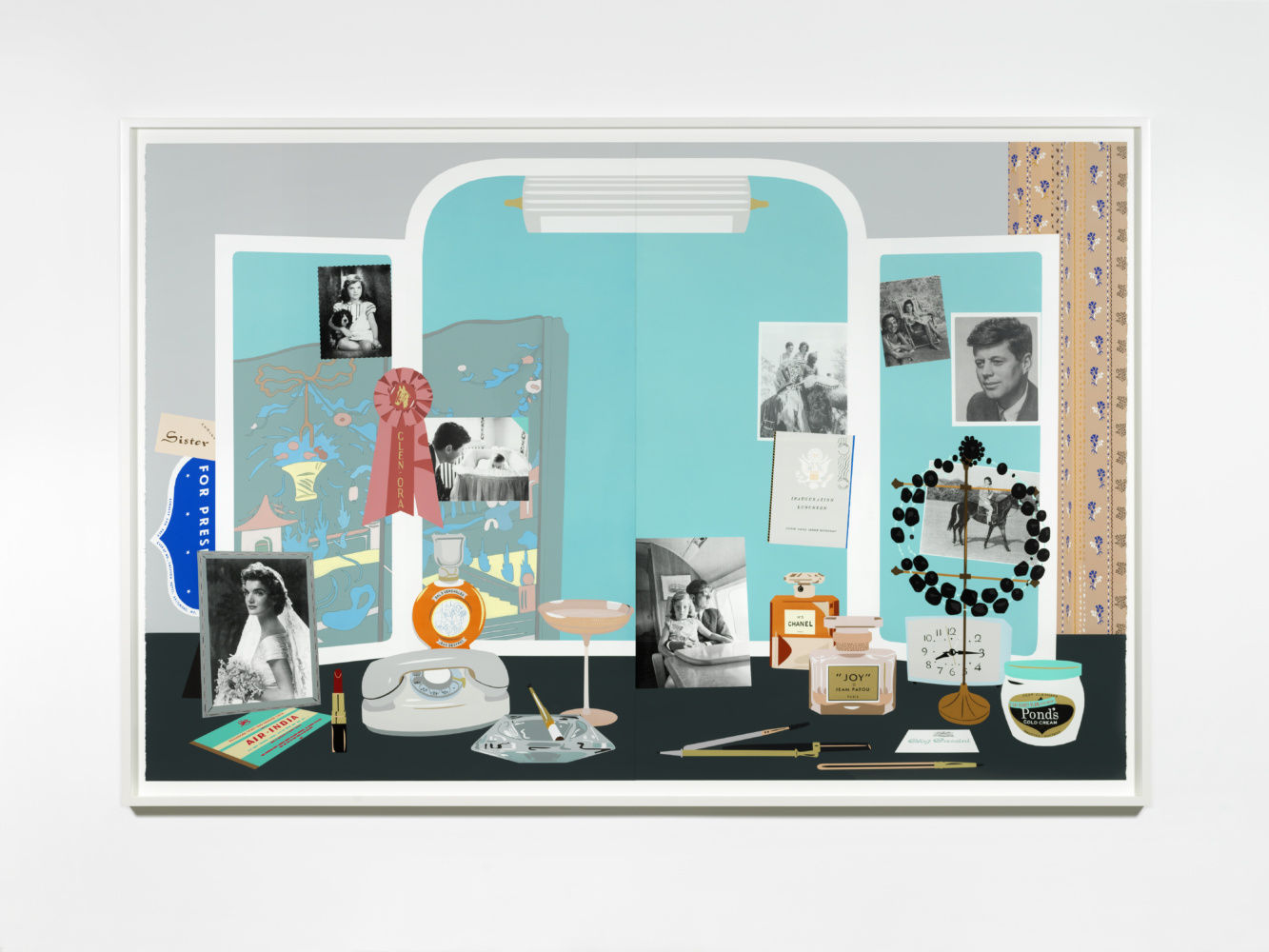
Matthew Brannon’s Jacqueline Kennedy’s White House Dressing Table (2019) captures the faceted tensions of dress with sly precision. Modeled on archival photographs, the large-scale silkscreen still life of the First Lady’s vanity flattens space with a tri-fold mirror saturated in sky blue and a swath of floral patterned wallpaper. Lipstick, family portraits, travel keepsakes, and a jar of Pond’s Cold Cream become instruments of soft power, revealing the quiet labor behind an emblematic elegance meant to project modernity and national strength during the Cold War. This intimate glimpse adds nuance to Jackie Kennedy’s iconic image, examining dress as an act, performed both within the private interior and on the public stage.
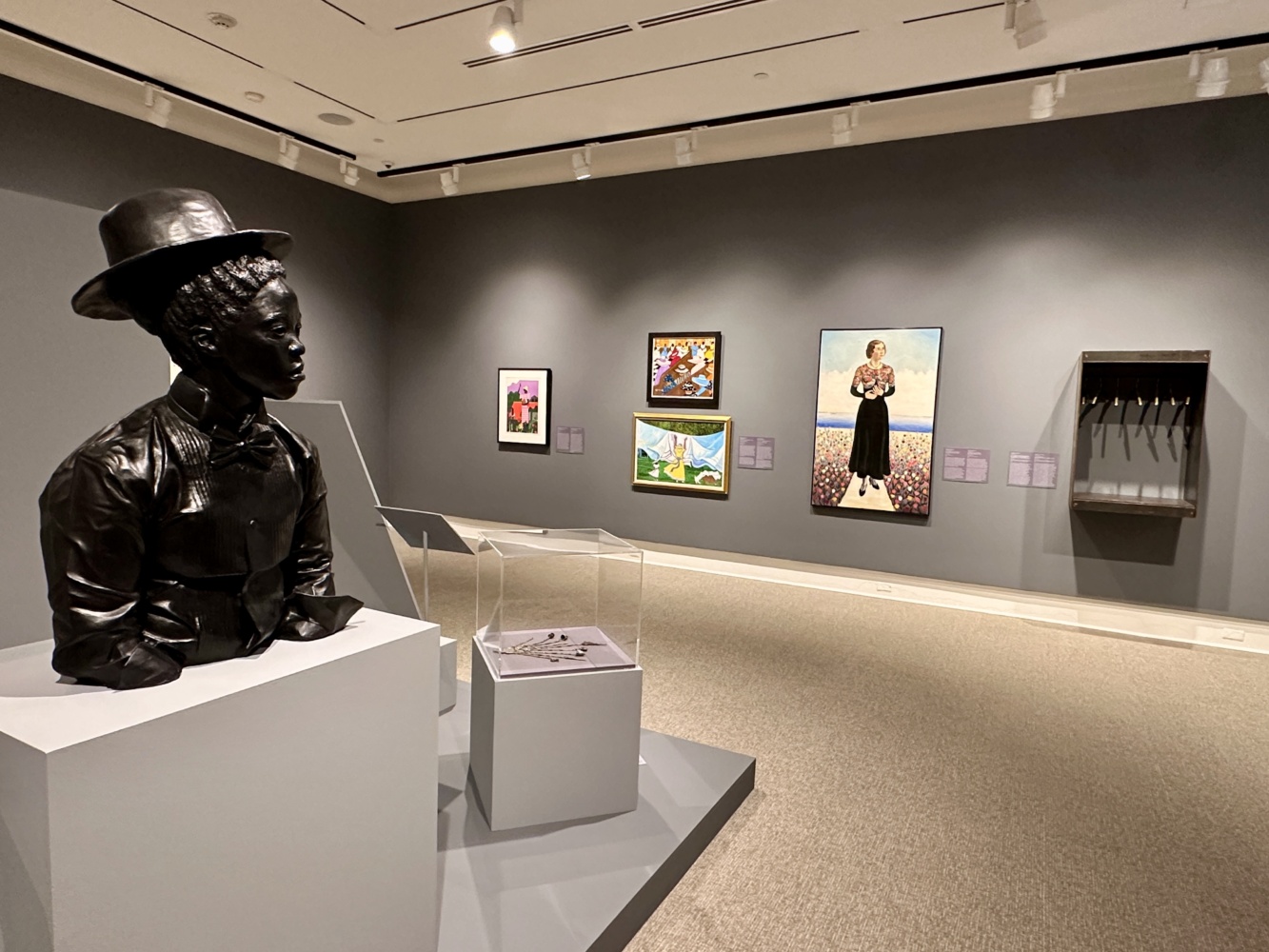
Where Brannon approaches dress obliquely, Luis Zapico’s posthumous Portrait of General Antonio López de Santa Anna (ca. 1876), positioned just to the right of Brannon’s work, performs a complementary calculus in oil. Santa Anna, a controversial Mexican military and political figure, is depicted as a decorated young man clad in gold-fringed epaulettes and a high, embroidered collar. The portrait preserves an idealized image of Santa Anna, casting both him and Mexico as leaders on par with European powers. Placed together, these works collapse centuries into a single conversation, illustrating how visual culture, and dress in particular, constructs identities that continually influence perception.
Such discourse bounces around the gallery, but where many examples locate meaning in display and presentation, Yoan Capote’s La Ausencia (Escuchando El Vacío) / The Absence (Listening to the Void) (2011) communicates through the eloquence of absence. The steel piece resembles a small, doorless wardrobe floating on the wall. Inside, a single rod supports seven solid brass clothing hangers, each cast to trace the outline of Cuba’s southern border. Shaped by the turbulence of Fidel Castro’s regime, the Cuban-born artist evokes the void left by those who fled in search of freedom, transforming absence into a presence that is both material and memorial.
Unlike Brannon, whose cosmetics construct a polished surface of power, or Zapico, whose uniform mythologizes nationalist authority, Capote confronts what it means when self-presentation is systematically stripped away – when garments cannot be worn, or when choice itself is foreclosed. Here, La Ausencia underscores that the language of dress does not vanish in absence; instead, absence itself becomes a register of identity, control, and political memory.
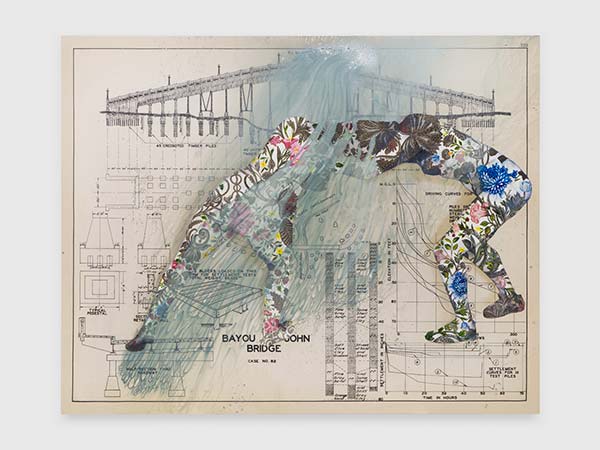
Firelei Báez’s An Open Horizon (Or The Stillness of a Wound) (2019) reveals a similar condition: dress as ambiguity and combat. Born in Santiago de los Caballeros, Dominican Republic, Báez turns to the formation of identity in diasporic communities, particularly through the experiences of women of color. Two silhouetted figures lifted from a video of a staged fight between young women tangle across an architectural plan of the Bayou St. John Bridge in New Orleans, a site scarred by Hurricane Katrina. Their bodies are envelopped in lavish, floral Rococo embroidery drawn from an eighteenth-century British court mantua – an aristocratic garment coded with colonial power – as a rising wave scales the height of the canvas. Báez transforms the ornaments of empire into a contested surface, where diaspora, violence, and survival press against the legacies of control.
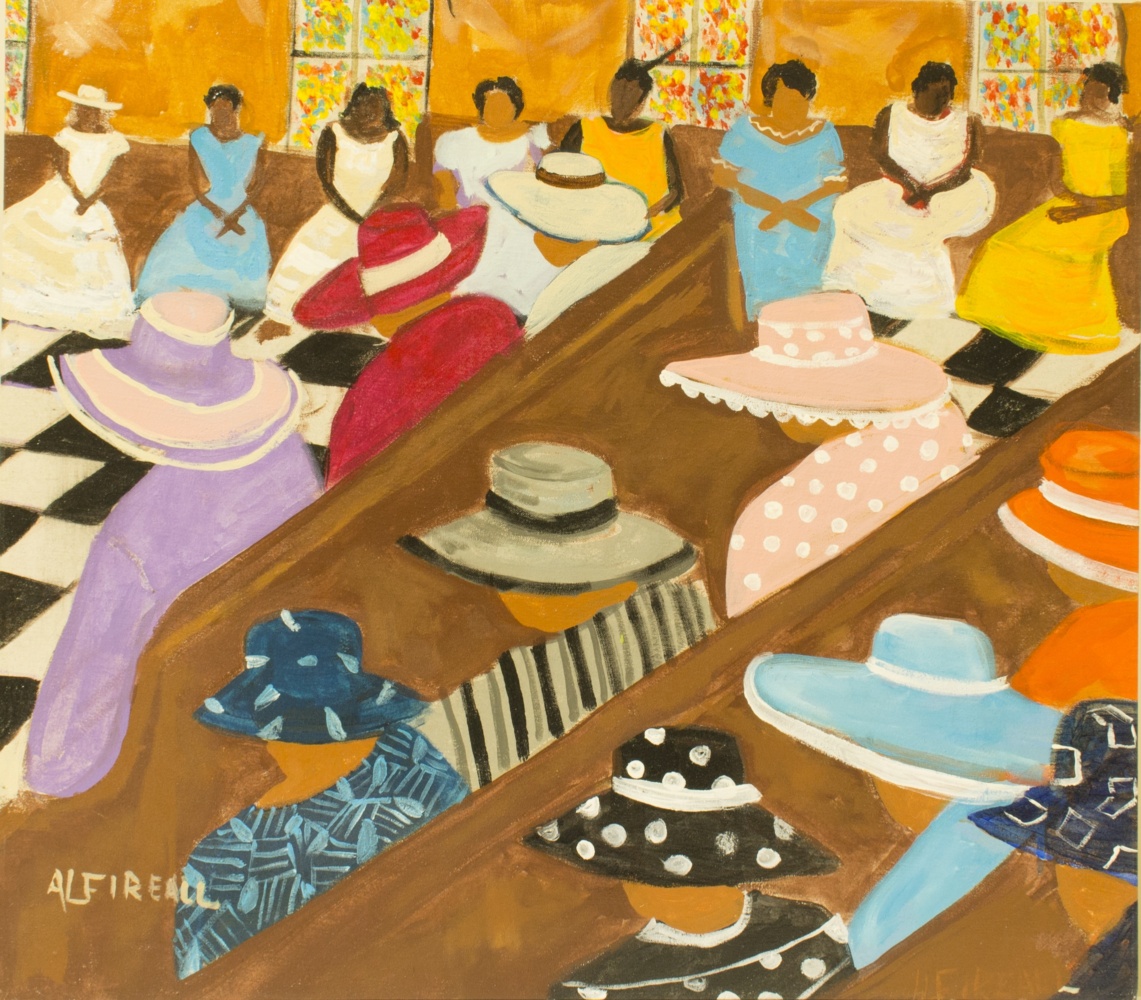
Certain works draw on archival study, such as Elinor Carruci’s Court Collar (2020); others lean into instinct and personal experience, such as Allen Fireall’s Wash Day (2012). Collectively, the selected artworks illuminate how perceptions of adornment shift across time and geography, yet never lose their urgency.
As a university museum, the RMA created something vital: an exhibition with countless points of entry for learning and critique, whether through lenses of art history, geopolitics, diaspora, or everyday acts of self-presentation. Manners of Dress ultimately insists that attire is never just surface level, but a record of survival, aspiration, and power. Garments reflect a language of presence and absence, authority and resistance. The result is an ongoing story of what is worn or withheld, an enduring negotiation of identity and visibility.