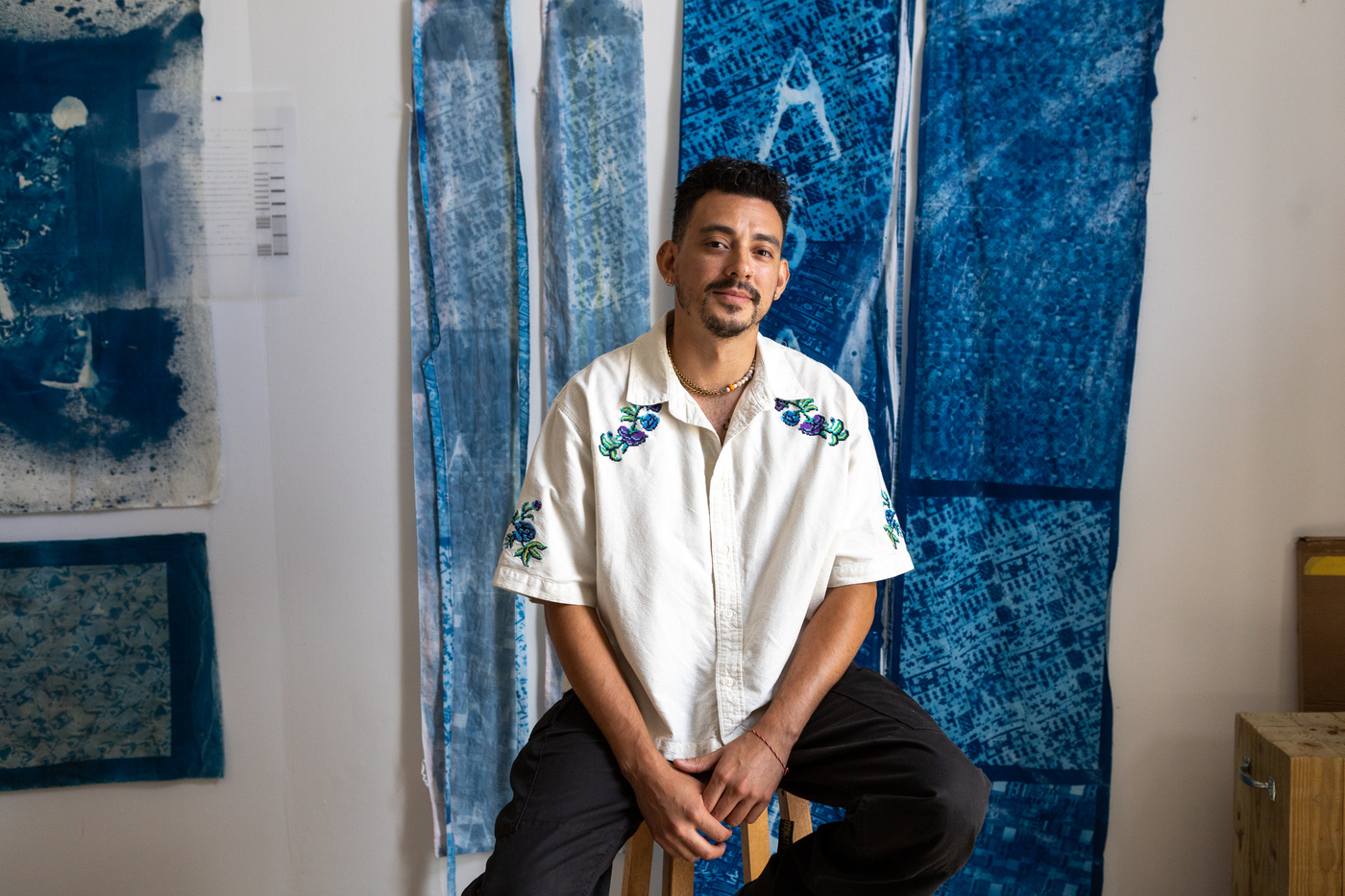
What does it mean to weave an image? Dominique Muñoz is a Guatemalan American visual artist working across photography, sculpture, printmaking, weaving, and performance. In Muñoz’s compositions, vibrant geometric fragments derived from traditional Guatemalan textiles form slick fields of color. He understands the power of constructing an image, and employs weaving practices to destroy, cut, and alter structures and patterns. To weave an image is to break the frame, allowing for boundaries of image, representation, self, and home to move and be redefined.
I spoke with Muñoz during his last week as the Craft and Photography Resident at the Houston Center for Contemporary Craft (HCCC), where he has been expanding photography into sculptural forms with cyanotype printing and basketry weaving. We discussed his interdisciplinary practice, textiles as carriers of memory, and his ever-evolving process. This interview has been edited for length and clarity.
May Howard: Your practice spans many different disciplines: photography, weaving, sculpture. Do you consider photography your primary medium?
Dominique Muñoz: It’s funny you ask that question because I had a visit recently with someone who said, “I dare you to apply for a sculpture job. Be that expansive and don’t feel restricted to labeling yourself as a photographer.” Photography has been my mode of inquiry since I was a teen. That’s where I begin.
Photography has driven my desire to expand into sculpture, but the photograph is always a two-dimensional space that I fall back into. I think about how I can use photography to build a sculpture. How do I destroy and rebuild again with light?
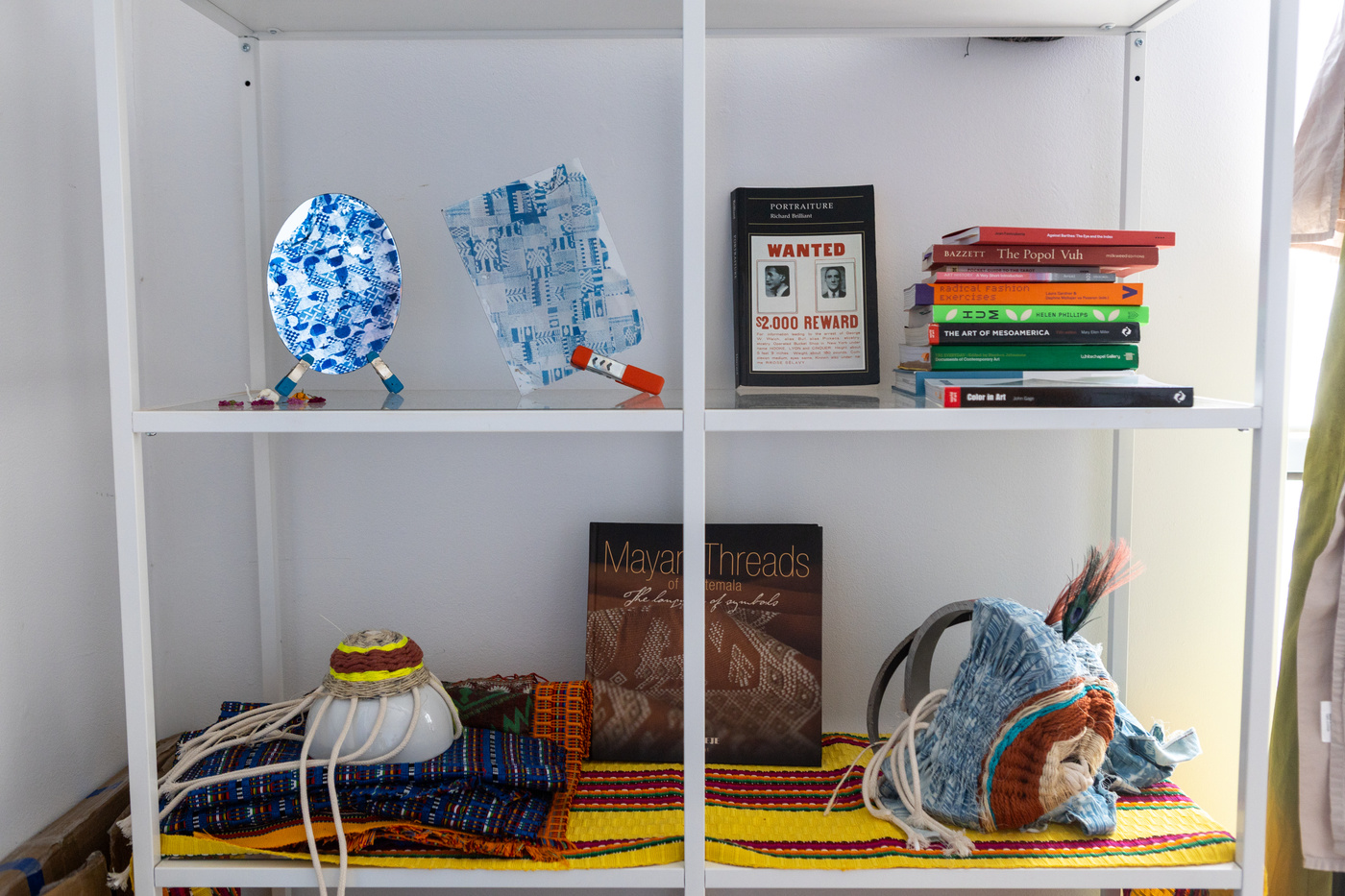
MH: Textiles are important aspects of your practice. Did your interest with textiles begin with ones owned by your mother and grandmother?
DM: When I first went to college, my grandma gave me a blanket to bring with me as a reminder of home. That gesture has always stuck with me. I understood Guatemala from afar through these colors, textures, and patterns. At first, I brought these blankets into my studio as backdrops for my portraits. I started off with photographing the blankets that my grandma and my great grandmother brought when they migrated from Guatemala in the 1970s to D.C.. For them,these were also anchorings of home. My great grandmother is no longer with me, but through these textiles, I feel like she is. She made our beds with them. She mended them. She folded them away in closets.
When bringing them into the studio, I thought about their imprints of touch; how they took care of the blankets. They became a material for me to continue thinking about that lineage, not just in my own family, but as a whole, through the existence of matriarchs and caretakers, and their role within homes and in the passing of knowledge.
MH: How do you source textiles now?
DM: In May, this past year, my family and I went to Guatemala for my mom’s birthday. During that trip, I purchased new textiles for the first time. I was interested in contemporary versions. What motifs, patterns, and colors are weavers currently using?
A mentor from grad school gave me a blanket that he found at a thrift store in North Carolina. It had quetzal birds on it, which is the Guatemala national bird. I’m really interested in this blanket because it has one row of people on it, but they’re all white with blonde hair and blue eyes. That was something I photographed, printed, cut up, and reweaved.
I’m trying to host more workshops that ask people to bring their childhood blankets. Or blankets that their family brought with them during their own migration, to photograph and weave a giant community archive of textures and patterns.
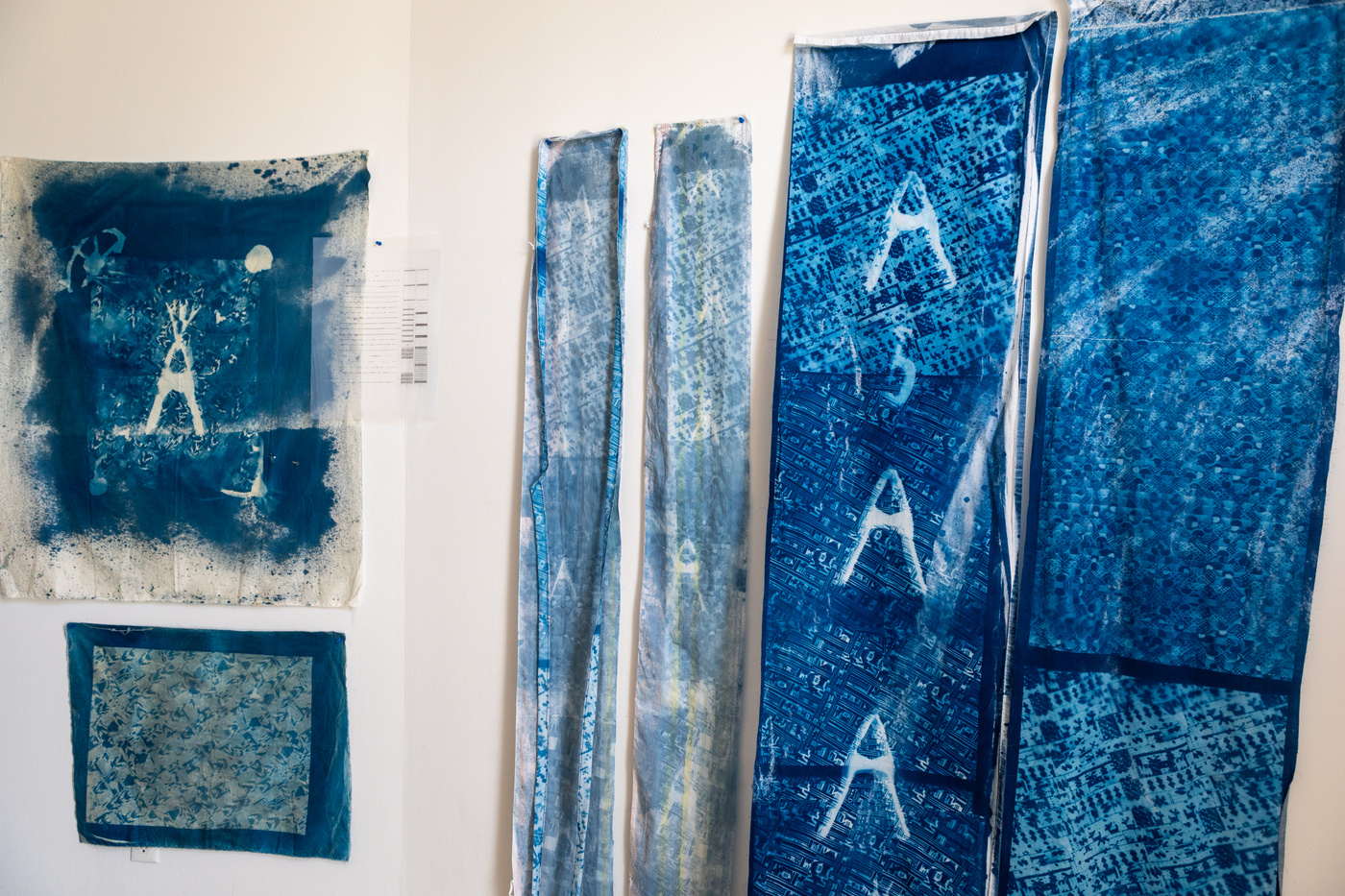
MH: For the majority of your residency, you’ve been experimenting with cyanotype. How has that developed and how do you see it progressing?
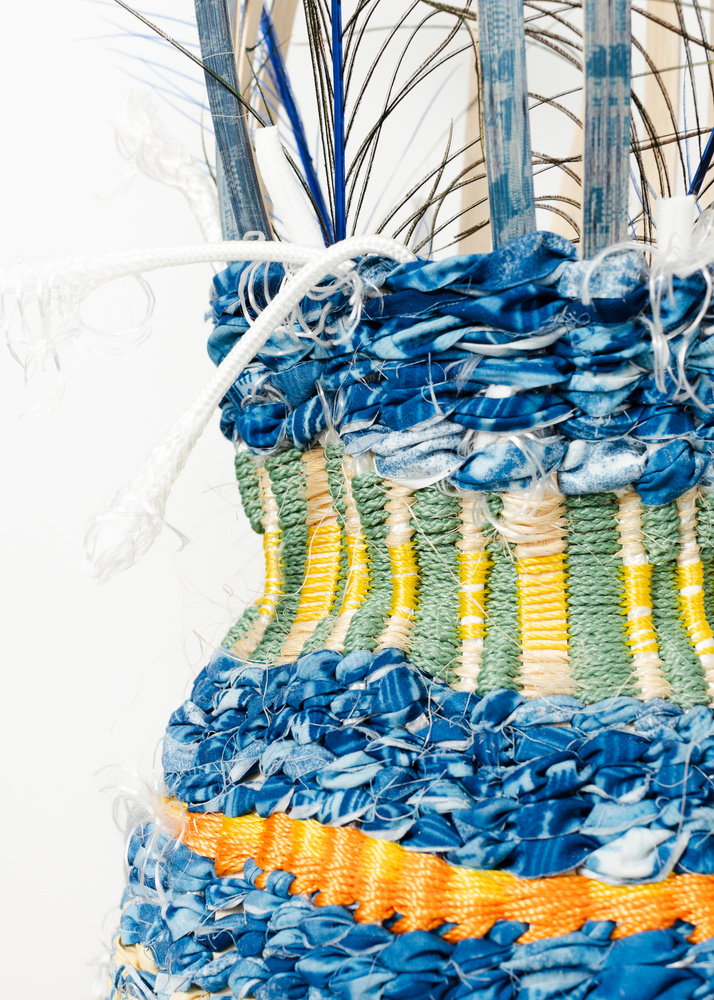
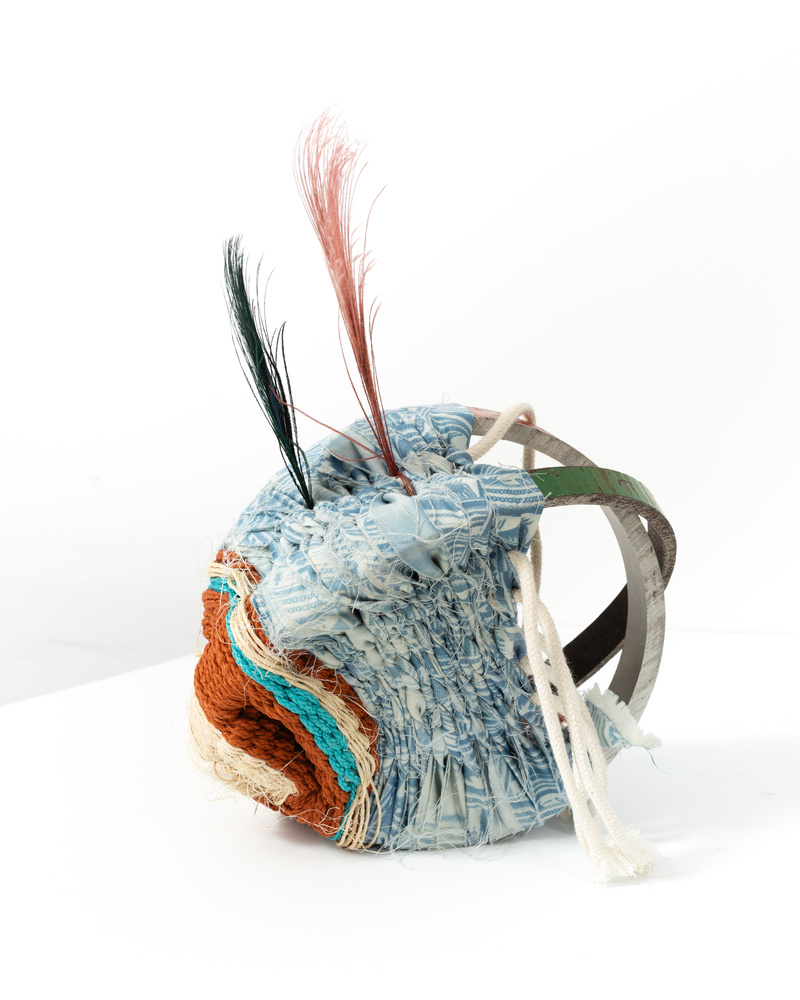
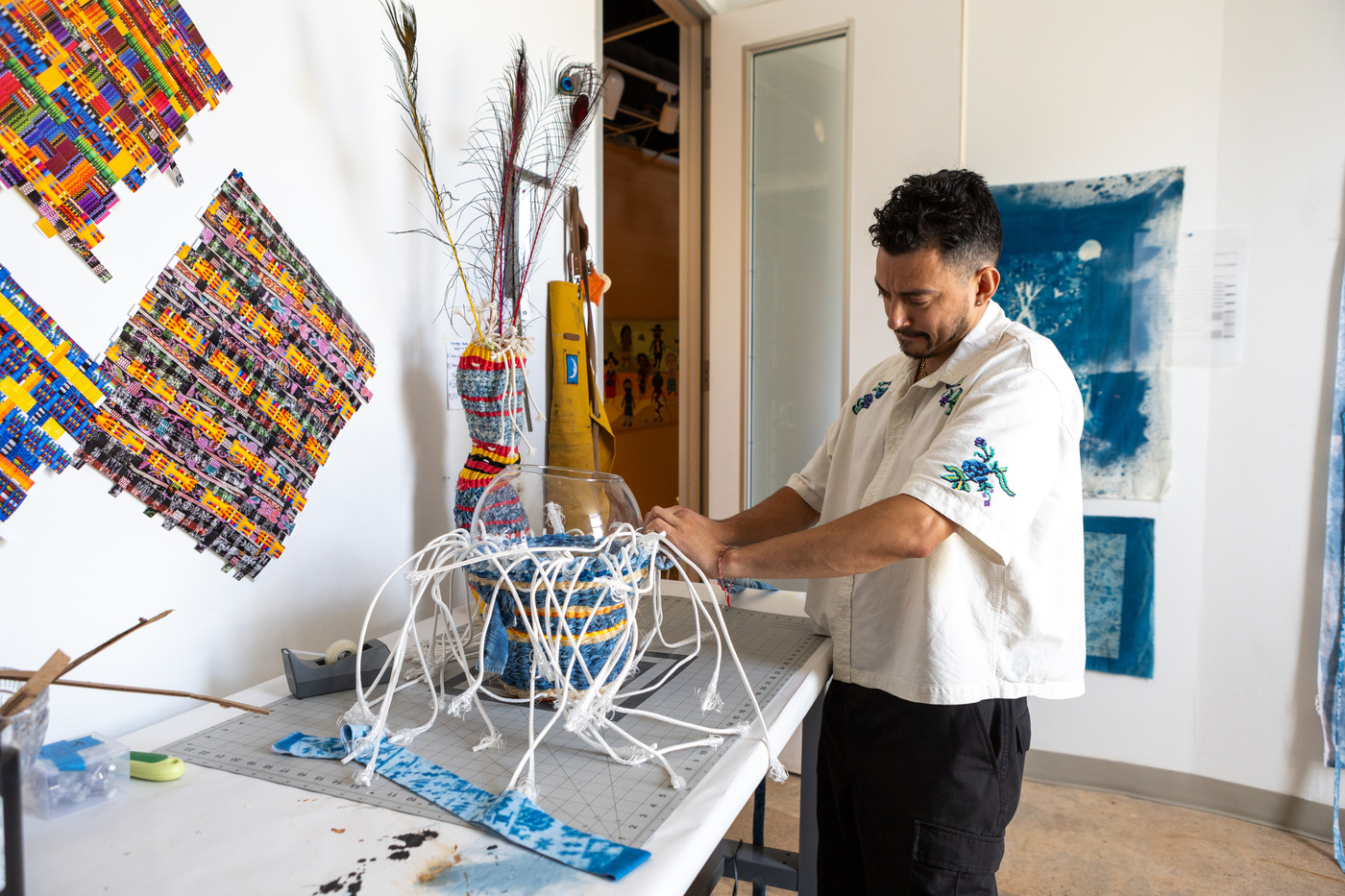
DM: During my residency, I started introducing basket reeds into my basketry weaving. Most recently, I’ve soaked reeds in cyanotype solutions and exposed those to the same transparencies. I recently acquired three large panels of glass that have this beautiful crimped edge. I’m interested in experimenting with using cyanotype and having them stand up vertically, almost like a portrait that people can see through. Transparency of different materials is something that fascinates me.
MH: What is the process of translation from image to cyanotype?
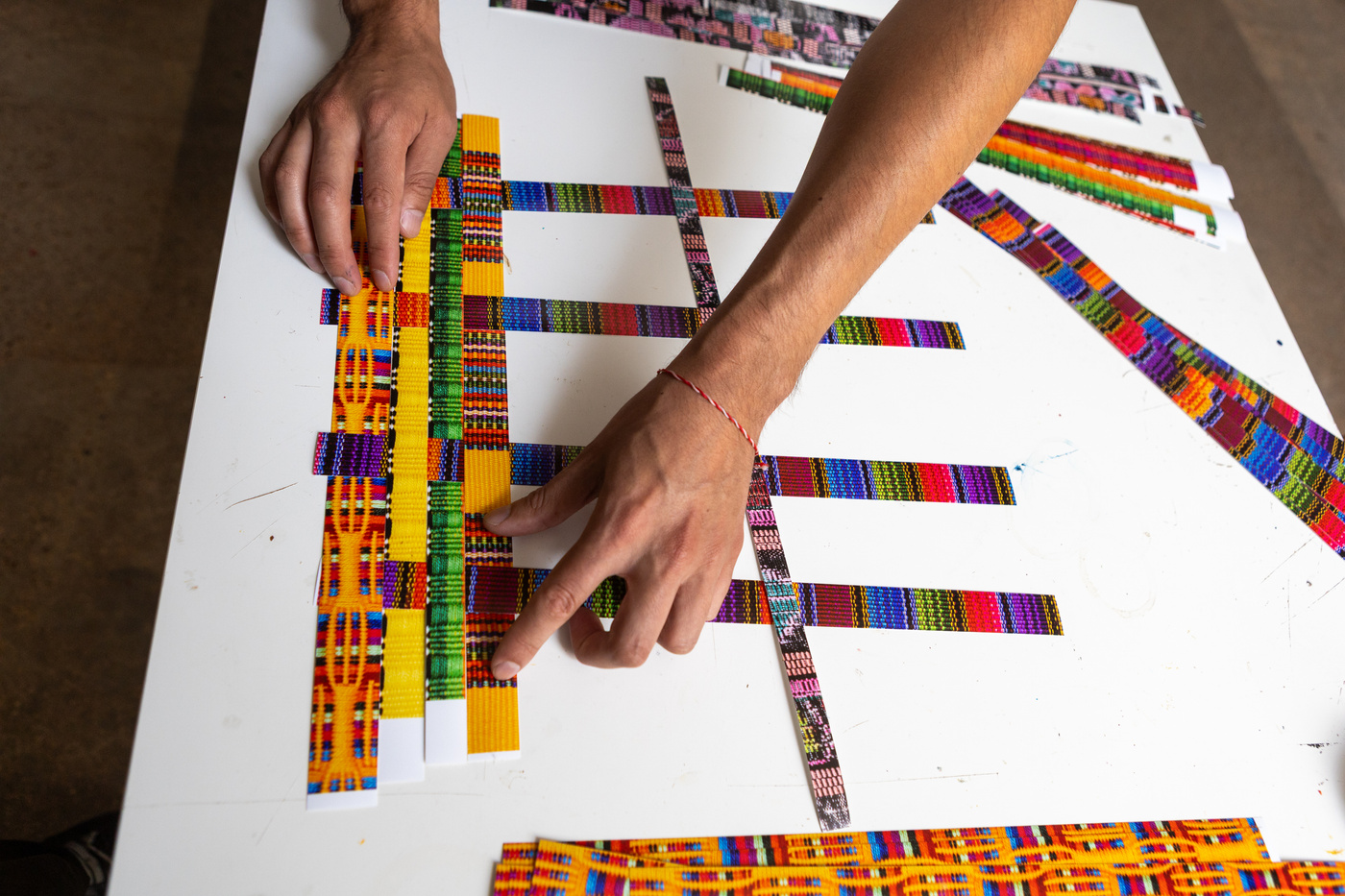
DM: I photograph the original blanket or textile, and print out that image. I cut it into strips, almost like shredding it. I’ll weave those paper strips against each other, changing the pattern grain and the directions of its original weave. Sometimes I combine two blankets together. I end up making twelve by twelve inch squares of pattern samples. Then digitally, I transform these swatches once more, scanning them, altering the motifs through repetition, creating endless variations. These new patterns disrupt the original textiles, reconfiguring them into something new—something queer, unfixed, and full of possibility.
This summer I’m printing on transparency sheets, which act as film negatives. I’m laying the transparencies over fabrics that I thrift in Houston, specifically bedsheets. I wash them, and then soak them in a cyanotype solution. After drying for twenty-four hours, I lay these transparency sheets over the bed sheets, allowing the sunlight to imprint those patterns onto the fabric. I’ll wash it to fix the pattern permanently onto the fabric.
MH: How has your relationship to craft shifted during your residency at the HCCC?
DM: I used to watch my grandma and great grandmother make crafts all the time. Craft has always been around me, that was art.
Now working in a craft space, I’m utilizing the histories of craft. I’m so inspired by it as a conceptual framework. With the baskets, I’m using craft language and techniques, but I’m able to shape them in my own way. I can make something that feels representational, but also using the legacy of craft makers before me. It feels really exciting to work along that line.