Born in 1895 in Paris, Mississippi, Theora Hamblett spent the first half of her life growing up on her family’s chicken farm. After the death of her mother, Hamblett moved to nearby Oxford in 1939, where she worked as a seamstress and opened her home as a boarding house. Hamblett had a longtime interest in art, but did not start painting until the 1950s after taking a few art classes at the newly established University of Mississippi Department of Art, though her techniques were largely self-taught. Hamblett bequeathed the majority of her collection to the University of Mississippi, making them the stewards of the largest collection of her work.
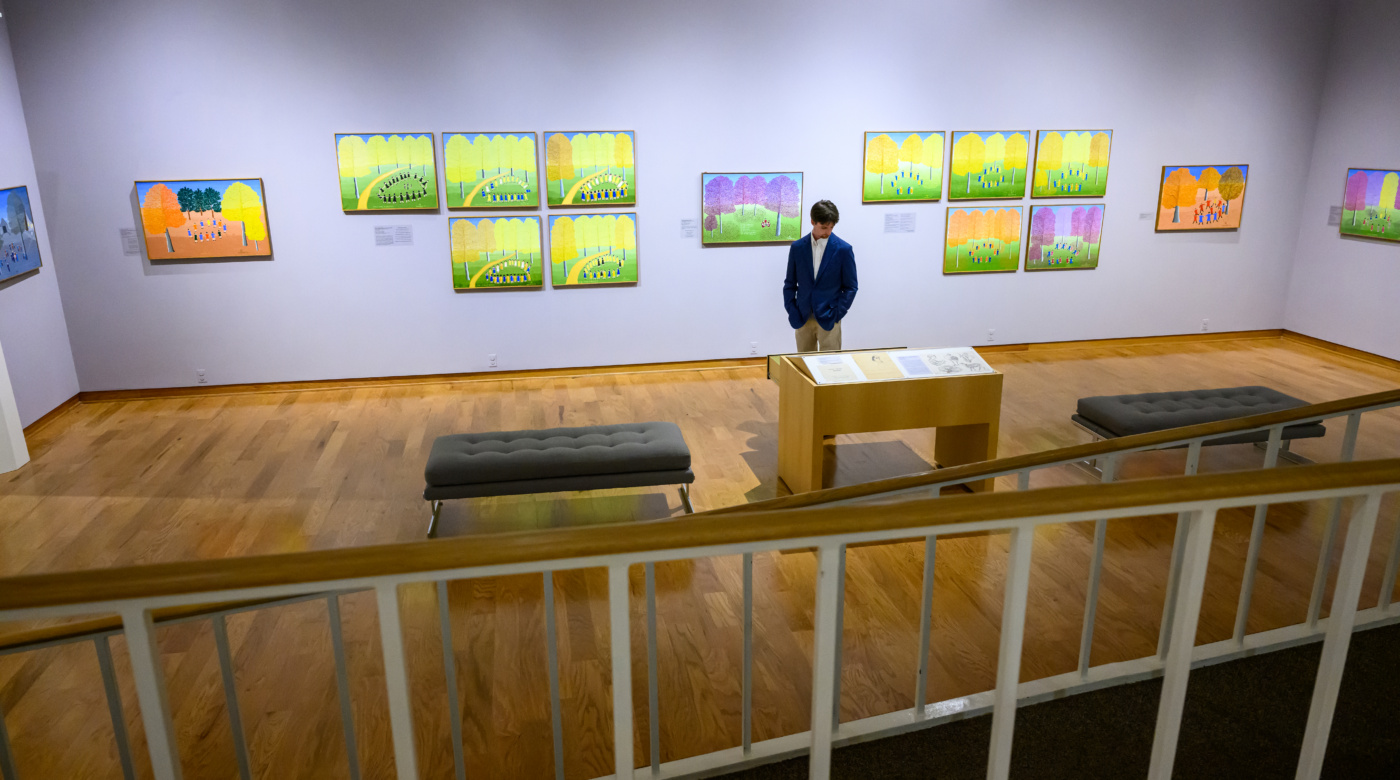
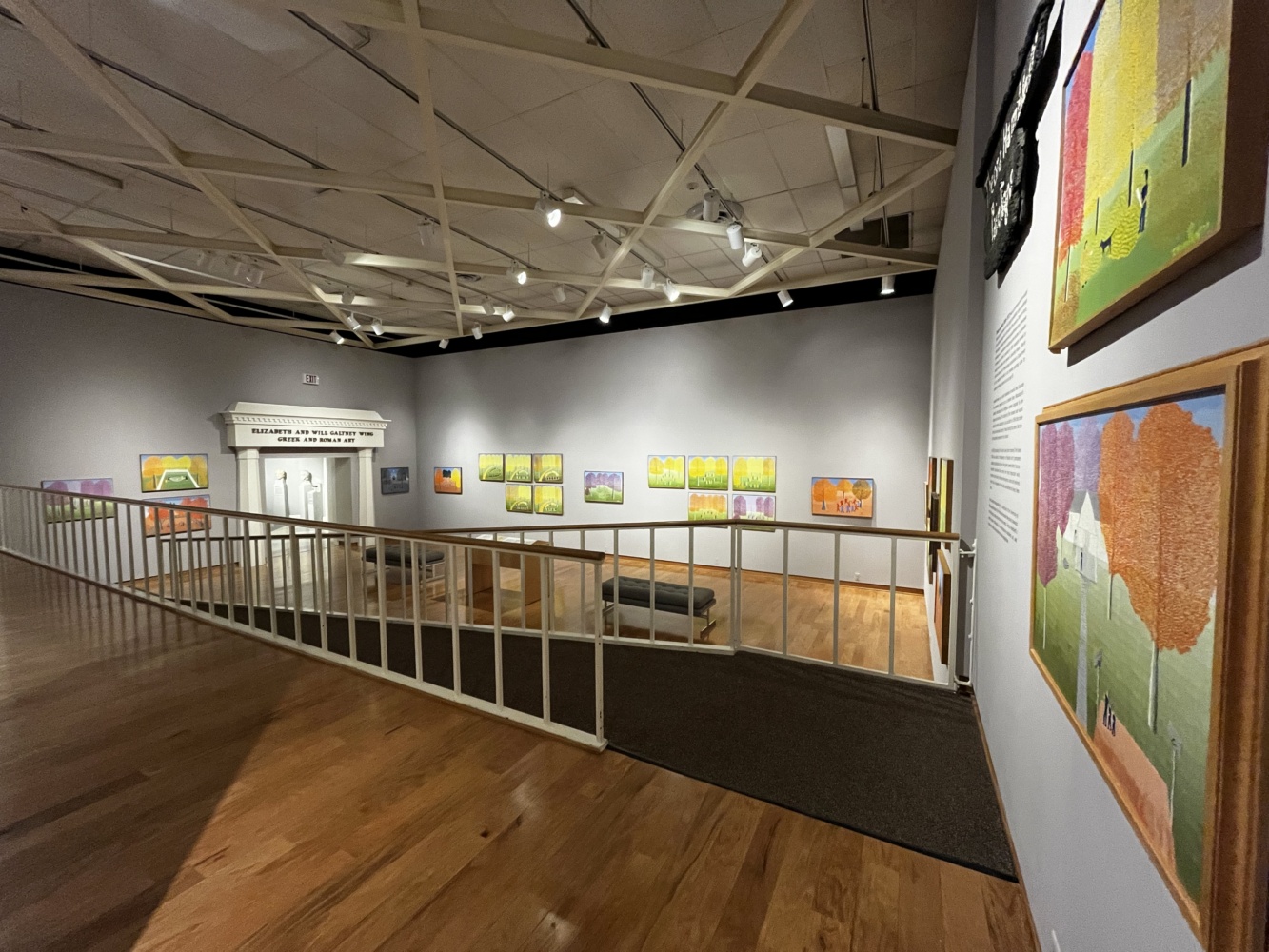
The sign that used to hang from Hamblett’s home announcing in bold white letters “Theora Hamblett Paintings,” invites the viewer into the exhibition space. The Theora Hamblett Collection highlights one of the three primary subject matters of Hamblett’s paintings. Old Home Memories depicts scenes from her childhood on her family’s farm in rural Paris. Dreams and Visions, perhaps her most unique series, depicts religious visions and symbols. Finally, her Children’s Games series, is a folkloric record of typical daily activities from Hamblett’s childhood and the one-room schoolhouse she attended and later taught in.
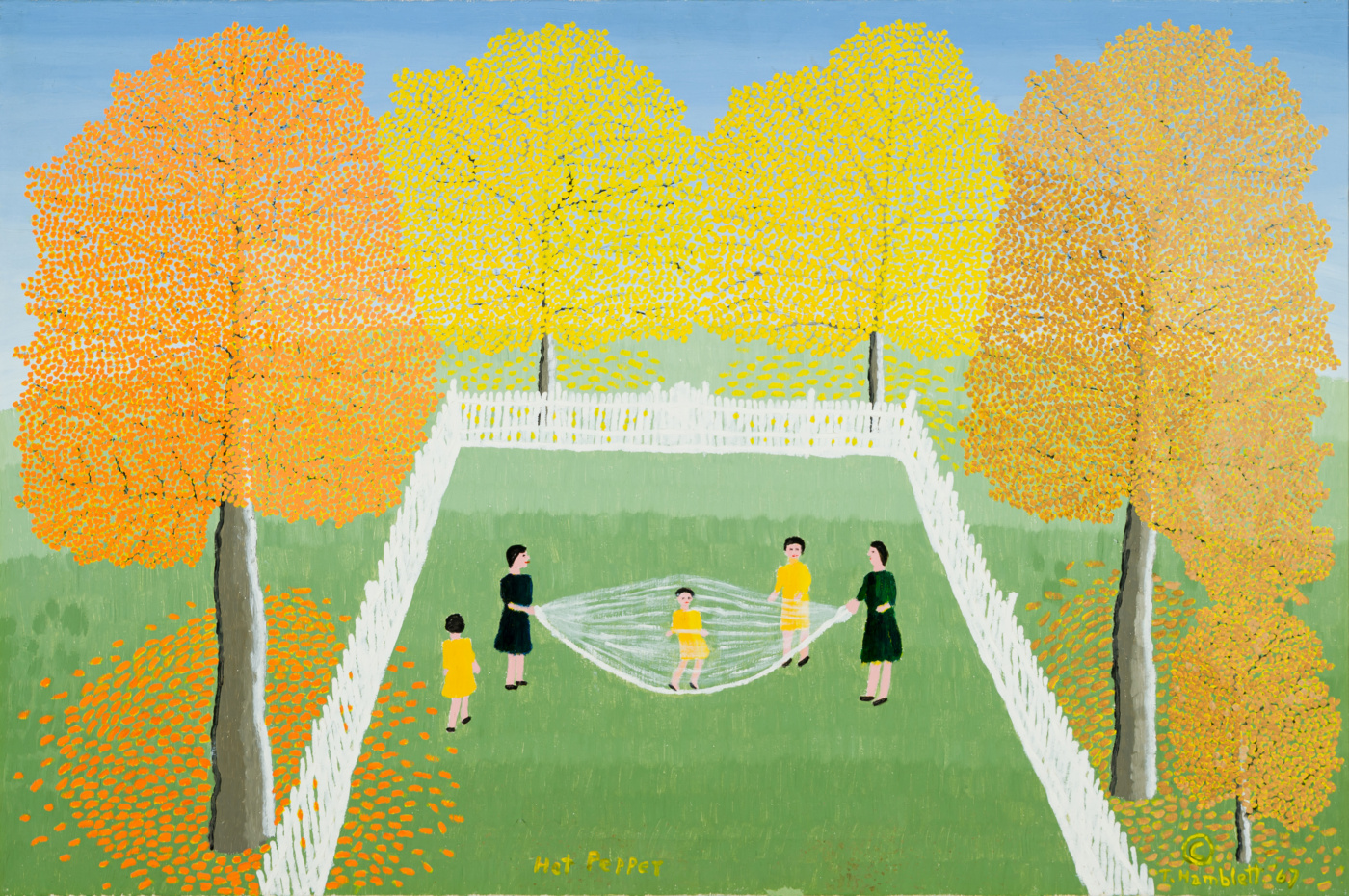
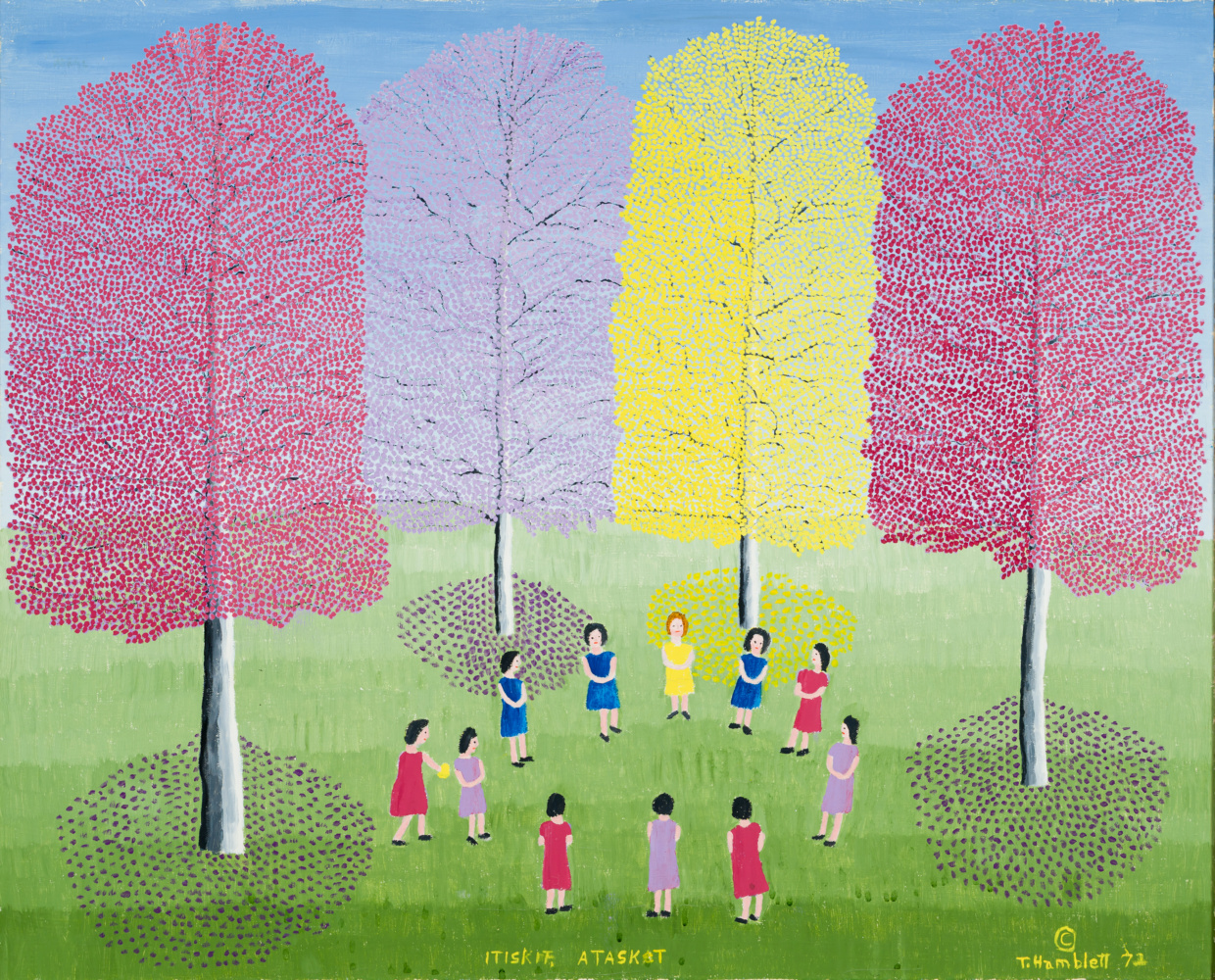
Hamblett utilized unique techniques to achieve her painting style, particularly in how she painted trees. Colorful trees with leaves of yellow, orange, purple and green make up large portions of every painting in the exhibition. Rather than blending her pigments, Hamblett would layer multiple colors on top of each other to paint each individual leaf, creating a stippled effect of colored leaves against a blue sky. This distinctive style may have been a result of her work as a seamstress. As folklorist William Ferris explains in The New Encyclopedia of Southern Culture: Folk Art (2013), “Hamblett’s aesthetics and working methods were also largely products of her background…Hamblett’s characteristic tiny brushstrokes of unmixed color resemble embroidery stitches, and many of her images suggest lacework and tatting.”[1] In this way, Hamblett’s paintings not only document her daily life, but highlight the crafts that helped her create her artistic vision.
The effects of layering colors of paint make the figures in her painting glow with lighter colors peeking through darker ones, especially in regard to the trees, which act as colorful frames for the action taking place underneath their bright branches. The children depicted in these paintings are not detailed. In most of the paintings they wear the same outfits and sport the same hairstyles. Nearly all of the paintings exhibited have a similar layout. Trees of various colors make up the majority of the background, with a typically bright sunny sky behind them. Five to twenty children are depicted, playing both familiar games like jump rope, as well as games seen less frequently today like snap and looby loo. It seems that Hamblett was less concerned with telling the story of the individual characters of her paintings as she was in documenting a place and time.
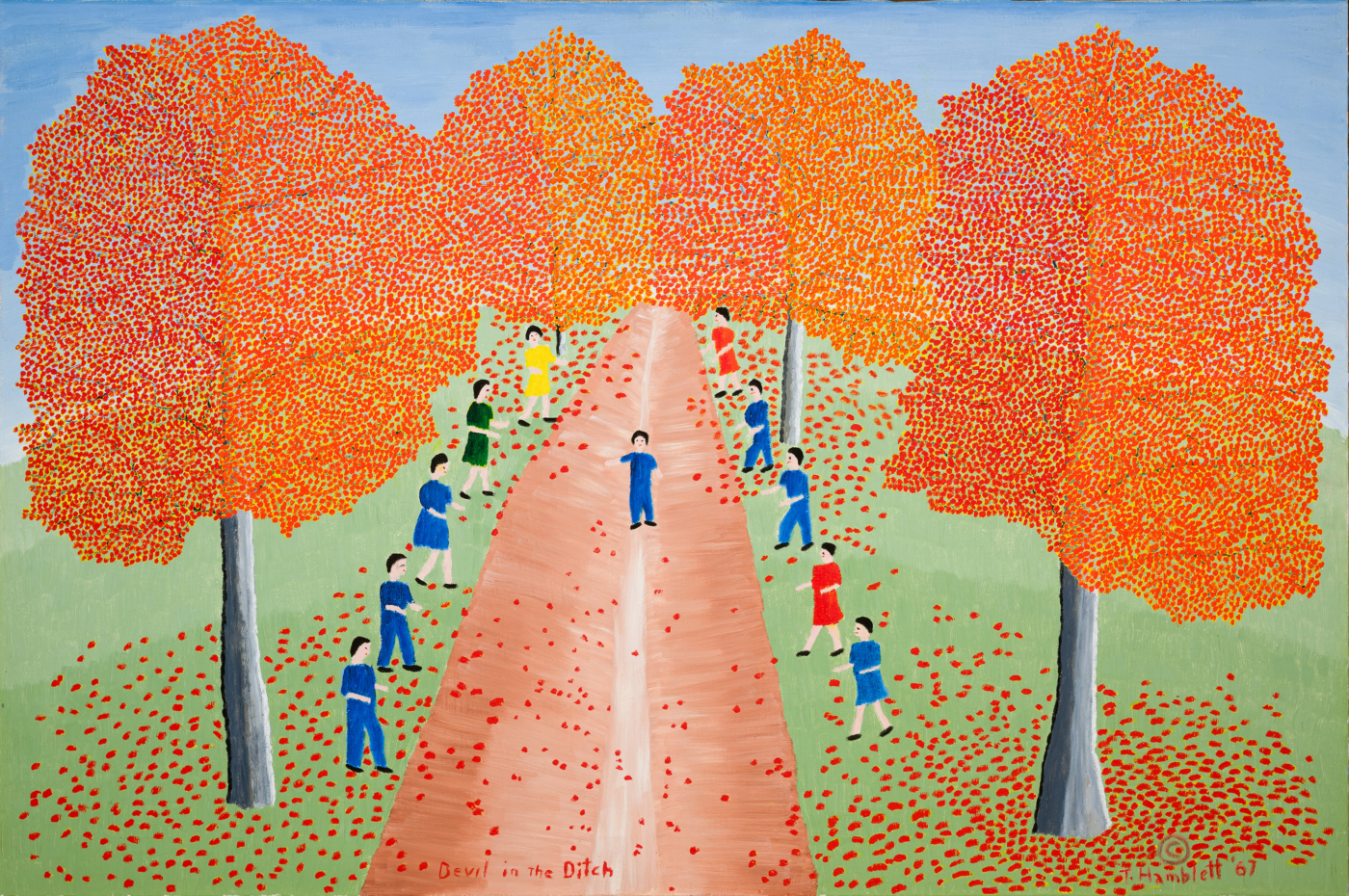
The repetition in her paintings creates an unusual effect. Combined with the flatness of the pigments from layering the paint rather than blending it, the paintings appear almost unearthly. The scenes depicted are common, children playing hopscotch and jump rope outside. But these particular children, in the same outfits and hairstyles, playing under these magically colorful trees, are almost otherworldly. The sameness of the children, who lack many individual characteristics, against the flatness of the background makes the scenes depicted familiar yet slightly removed from reality. This creates a unique juxtaposition against a backdrop of Americana.
Not only do the figures in her paintings tell the story of her childhood, but Hamblett also included text in some of her work. Hamblett titled her paintings with the game the children depicted are playing and occasionally added the words to the rhyme the children sang. For example, in Wire Briar, Limber Lock (1968), the words to a children’s rhyme appear in white at the center of the painting, surrounded by dark purple trees and fallen leaves. Just to the right of the text, a circle of five seated girls, all looking alike, are playing what we assume to be the game that would normally accompany the rhyme.
Hamblett herself offered a glimpse into her life in her 1971 book, I Remember. In it, Hamblett adds written insights and memories to many of her paintings. In the forward, she explains the origins of her passion for learning about and documenting both the past as well as the life that she experienced. She explained, “As a youngster, I enjoyed listening to older persons tell about their experiences, and their experiences became part of my memory.”[2] Through her words and paintings, Hamblett ensured that her own dreams and memories would not be forgotten.
[1] William Ferris, “Hamblett, Theora,” in The New Encyclopedia of Southern Culture – Folk Art. Carol Crown & Cheryl Rivers (University of North Carolina Press, 2013), 296.
[2] Theora Hamblett, I Remember (Theora Hamblett, 1971), 3.