Sleep riding, and sleep talking, not sure where they were. They felt themselves sinking.
Toni Cade Bambara, The Salt Eaters
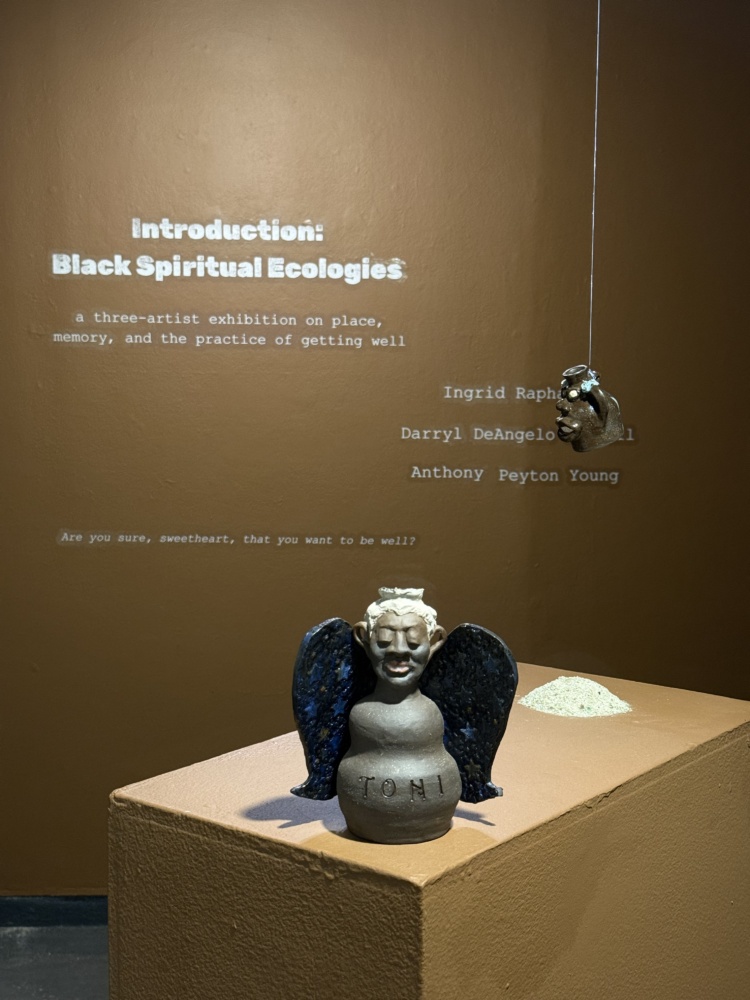
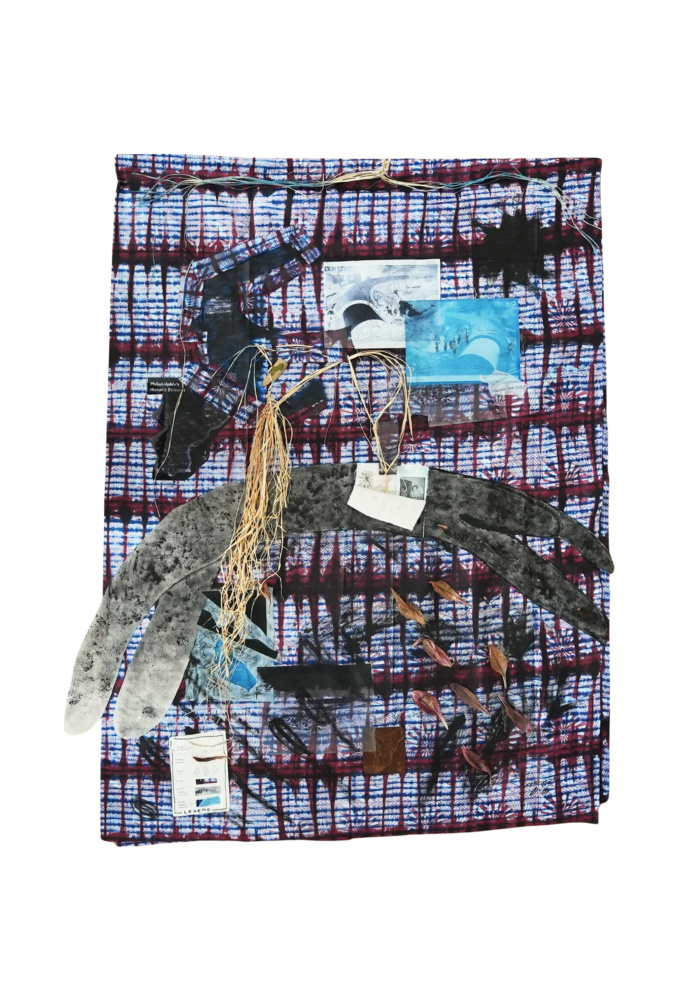
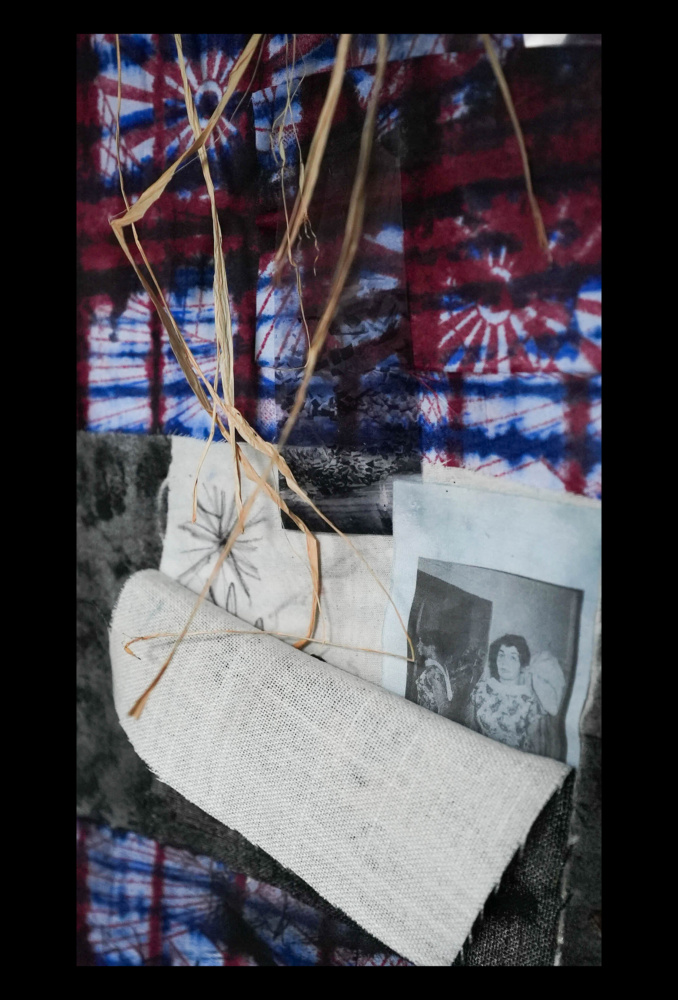
In Darryl DeAngelo Terrell’s A Way to Get Gone (2020 – ongoing) the body is plundered, we become shield, tome, bell. You want to alter my consciousness? Put me in the middle of the room. One emblem is at a crossing. You swim. The next instance is heat. In the architecture of delineated space, the conundrum of history. Something discreet. We emerge fully human, remitting and reordering splinter selves at will. A longitudinal glyph. Cryptic, fanciful things. Place is compulsive, contained. Cheyenne Wyzzard-Jones, of Spiritual is Political, asks viewers to locate themselves within the work. As Head Curator of SIP, Cheyenne developed the Ensemble methodology at the center of SIP’s curatorial practice. Ensemble dismantles the traditional divisions between artist, curator, and audience. Rooted in Theatre of the Oppressed and Black feminist pedagogy, it builds community through shared research, dialogue, and presence. Ensemble is not an event. It is a practice.
Jones has stated that the scholarship of Saidiya Hartman and Katherine McKittrick are profound influences on her curatorial practice. Which makes sense to me, the unruliness, the humanity of such positioning so evident in the work. I spoke with her about her most recent endeavor Introduction: Black Spiritual Ecologies (exhibition installation by Déja M. Jones) at The Front in New Orleans. Here is the retelling.
This interview has been edited for length and clarity.
Sherae Rimpsey: Why The Salt Eaters? What is it about Toni Cade Bambara’s writing that feels especially resonant?
Cheyenne Wyzzard-Jones: The Salt Eaters as text & Toni Cade Bambara as filmmaker, author, and political organizer rooted in a transnational discourse made the most sense as the foundation for the exhibition statement.
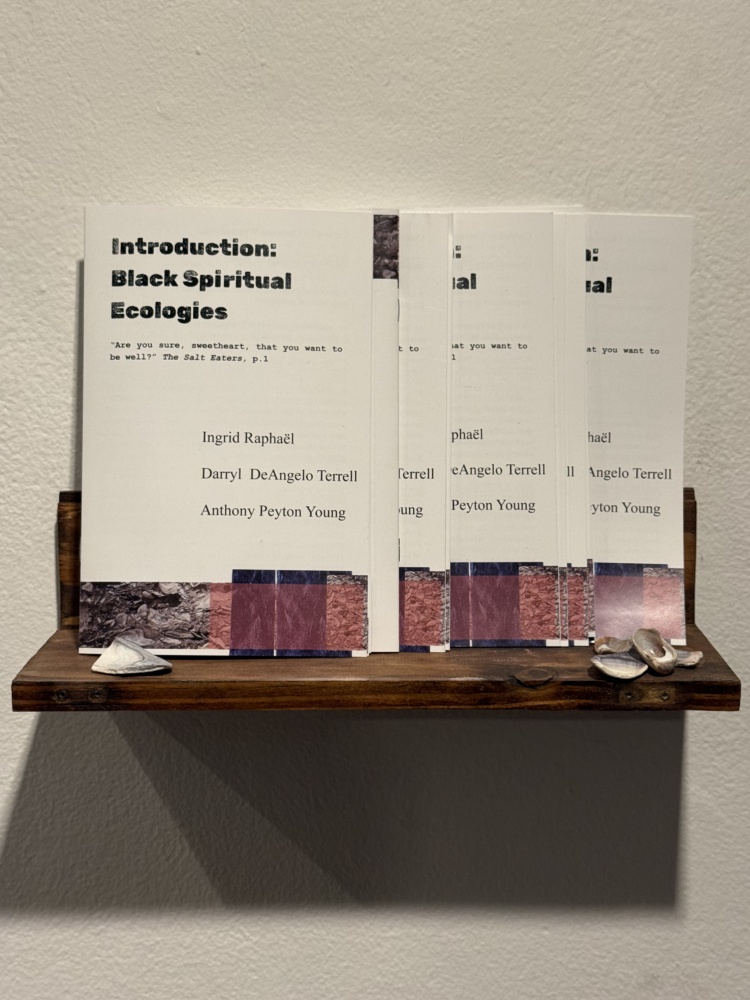
In first reading The Salt Eaters, it reminded me of the poetics of place—as the opening chapter complicates the built environment of a hospital, and who is considered the one who can heal and the one who needs healing. The opening line is what is most remembered from the book, “are you sure, sweetheart, that you want to be well?” and I believe it is because Bambara, as author, is directly asking the audience the same question she is asking the main character – inviting the audience into that reflection. Later in the book the question becomes “can you afford to be whole?” The audience over time gets to understand the layers and intersections of the conditions of place. This is also why layering in Toni Morrison’s framing of “rememory” was so important to the exhibition. In order to contextualize the work each artist is bringing to the exhibit and in making place, the method of embodied memory from a Black feminist framework was essential. With both of the Toni’s work (Bambara and Morrison), there is specificity in each moment they write in.
I am fascinated with how Bambara activates what I like to call the “inbetween” place. Time is slowed down and the audience is taken from one place to another in a few sentences. There is a requirement to pay attention to each phrase. This is why I made the decision to add Chapter 1 of the audio book to the exhibit. I wanted the audience to stop and listen. The activation of memory, pause, portals, and individual methods of wholeness became central to in curating the artists whose work complements and & adds to the curatorial statement.
SR: Why, for you, is placemaking so central to Black life?
CWJ: That question is complex and also simple for me personally. I know that when centering a Black Indigenous practice and framework, understanding the intersections of a built environment and a social environment, often there is overlap in our day to day lives and histories. To make place, which I believe is an aspect of my work as a Black curator, I have been taught to think about all my relations who will be socially, emotionally, and environmentally impacted by what it is I am building. To care about Black life means one should always be thinking about this.
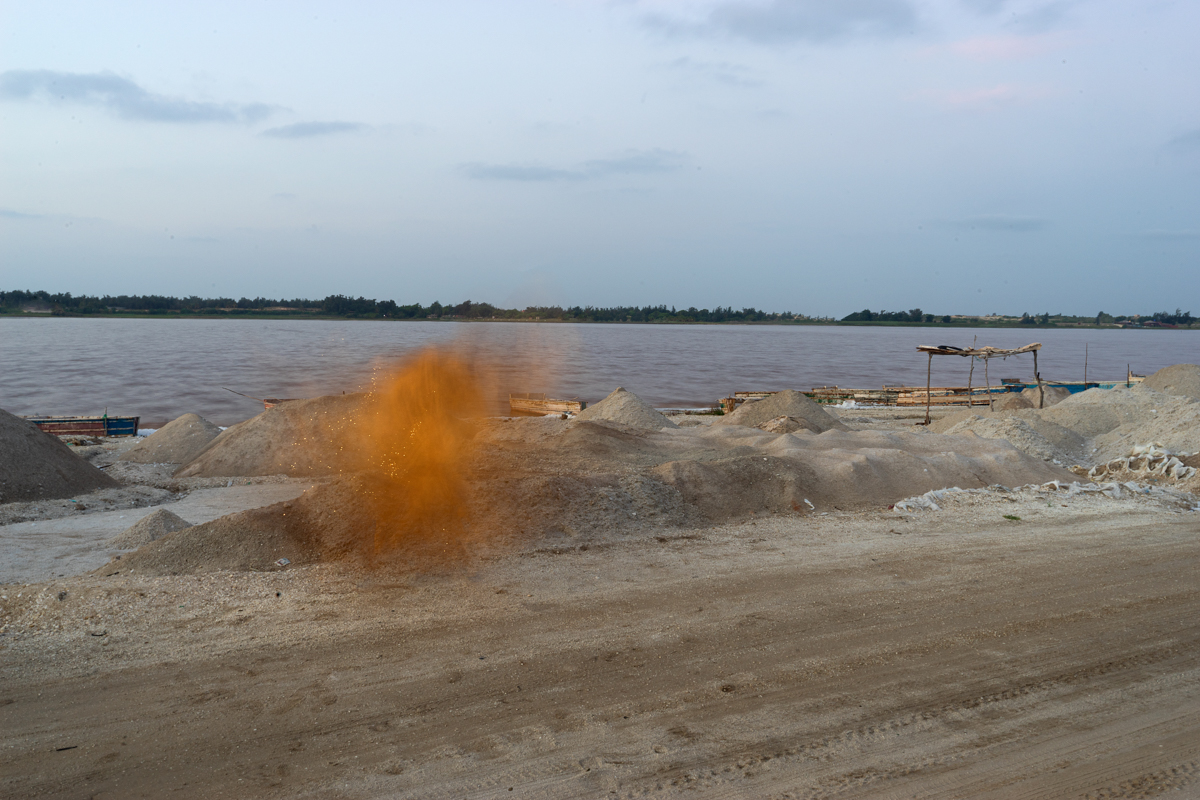
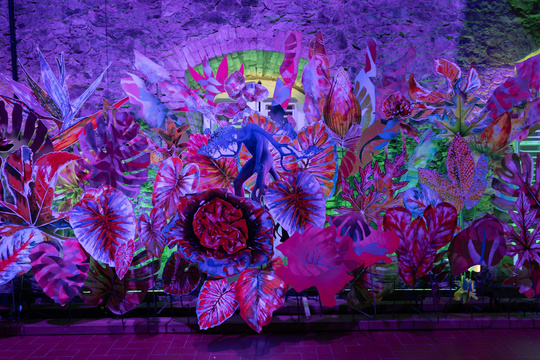
In the context of the exhibition, I became really intrigued by how each artist integrated a specific place in their work to remember, make sense of, and use their own spiritual methods to contextualize an imagined wellness of that place. The materials used within the installation became so important. Exhibition Installation Artist, Déja M. Jones, built a tabby wall with oyster shells, a fire pit with oak, palmetto, and repurposed cypress, and built sand mounds from recycled glass to create the imagined built environment. The historical significance of each material and the place it was sourced from is important. It is a direct response to the continued practice Black people experience from colonial and supremacist systemic violence, always an extraction of the material or land. That for me is why placemaking is so central, and why it became the first pillar in this inquiry.
SR: Is a “poetics of ecology” a means to resist? What else does it give way to?

CWJ: Thank you for this question. I will answer this a little less in depth and a little disjointed because it is an inquiry I am still investigating and want to put the right words to when my thesis of it is made known. However right now I don’t know if it is a means to resist / maybe it’s just it is what it is. For example, when discussing Anthony Peyton Young’s, Toni Morrison: Flight (2026), we discussed in depth how to talk about the method of flying as something that just is. Not mythical but as a method used to go elsewhere. And we talked about air and wind as a place. That makes sense to me. It feels resistant because poetics is a Black methodology of meaning making that inherently makes it a counter narrative toward a white centrist lens to ecology. Also to go elsewhere, to flee, is a form of resistance. This is necessary and what I believe my work is a part of. But depending on who you ask I think it can be discussed as a regular embodied knowing and practice—maybe that still makes it politically resistant, but also maybe it should be discussed without the targeted burden of resistance on Black and Indigenous bodies.