Origins of New Orleans Black Carnival Society: The Story of the Illinois Clubs on display at The Presbytère in New Orleans is a showcase of Black regality and a comprehensive look into the lasting, yet often overlooked, pageantry of Black New Orleans. The exhibition, curated by Dr. Kim Vaz-Deville and Kelly Dorsey Parker, details the long history of The Original Illinois Club as the first Black Carnival club and the first Black club to host a debutante cotillion. The exhibition coincides with the centennial anniversary of the Young Men Illinois Club, an offshoot of the original club, and arrives at the conclusion of a Carnival season still marked by a “tale of two cities” form of racism and exclusion. In response, Origins of New Orleans Black Carnival Society: The Story of the Illinois Clubs serves as a necessary capsule of Black New Orleans’ place within the tradition of Carnival.
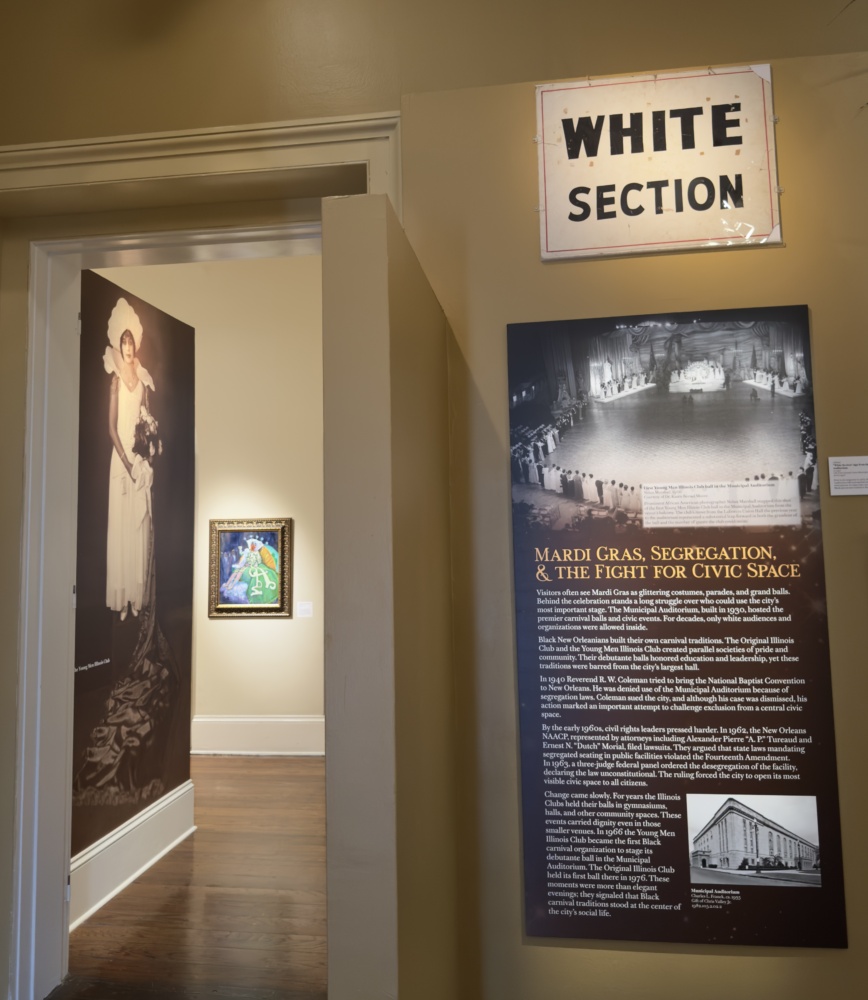
Origins of New Orleans Black Carnival Society: The Story of the Illinois Clubs journeys through the early founding of The Illinois Club by Wiley J. Knight, “Father of Negro Society of New Orleans,” and the fight for civic space for Black Carnival traditions. A “White Section” sign retrieved from the once segregated Municipal Auditorium hangs above a majestic image of the first 1966 Young Men of Illinois Club debutante ball held there. A venue, ironically, located in the oldest Black neighborhood in the country, but once denied access to Black people.
Dr. Karen Becnel Moore reigned as queen that year, indicated by her queen and debutante gowns on display. She and her royal court were the first Black debutantes presented in the Municipal Auditorium. The Illinois Club held its balls in gymnasiums and halls before the integration of this space.
Black beauty glimmered during oppressive times, asserting alternative imagery and narrative in defiance of the degrading stereotypes that were often assigned to Black people. The Black-owned Louisiana Weekly newspaper provided full coverage of Black society events, while the white-owned Times-Picayune newspaper did not fully integrate its debutante coverage until 1990.
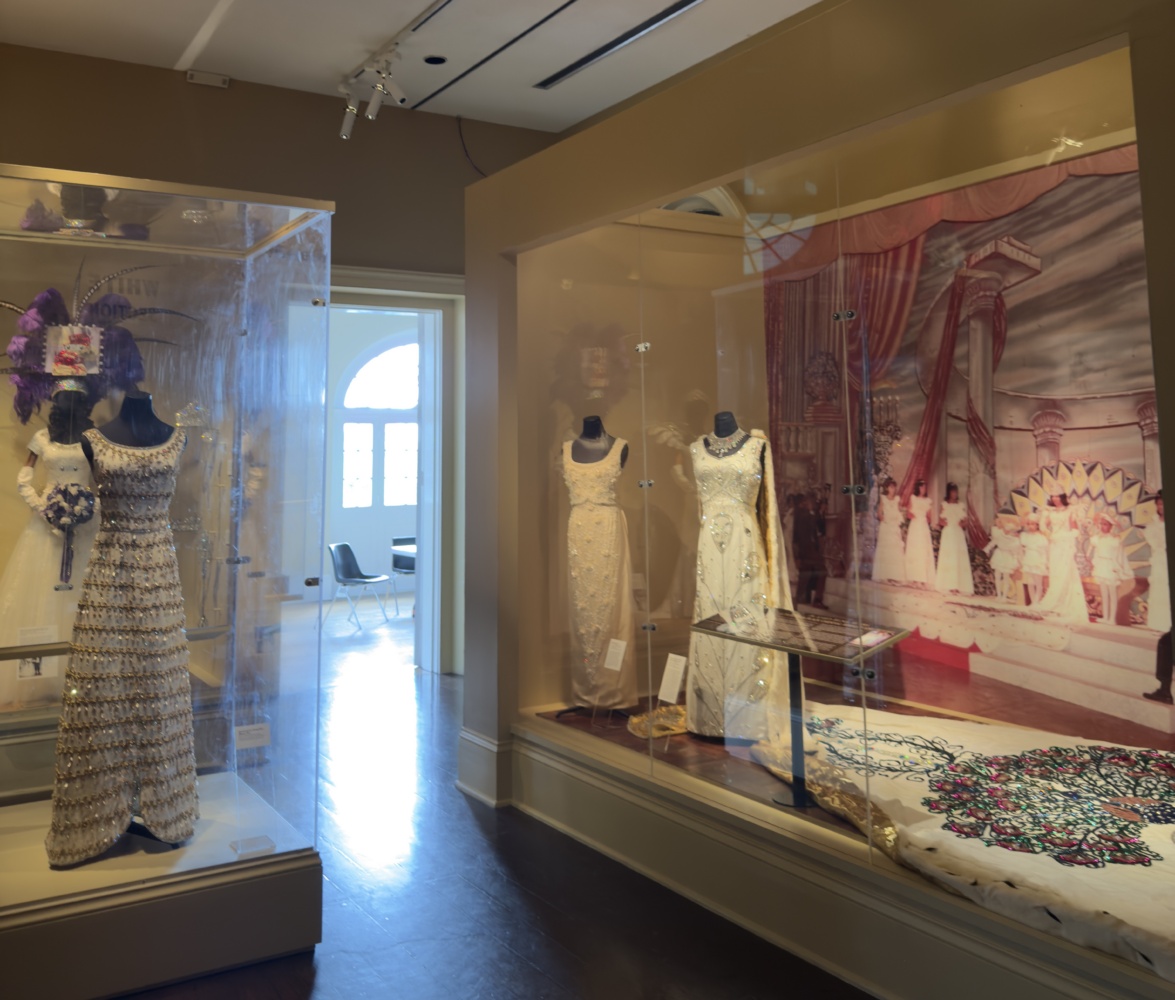
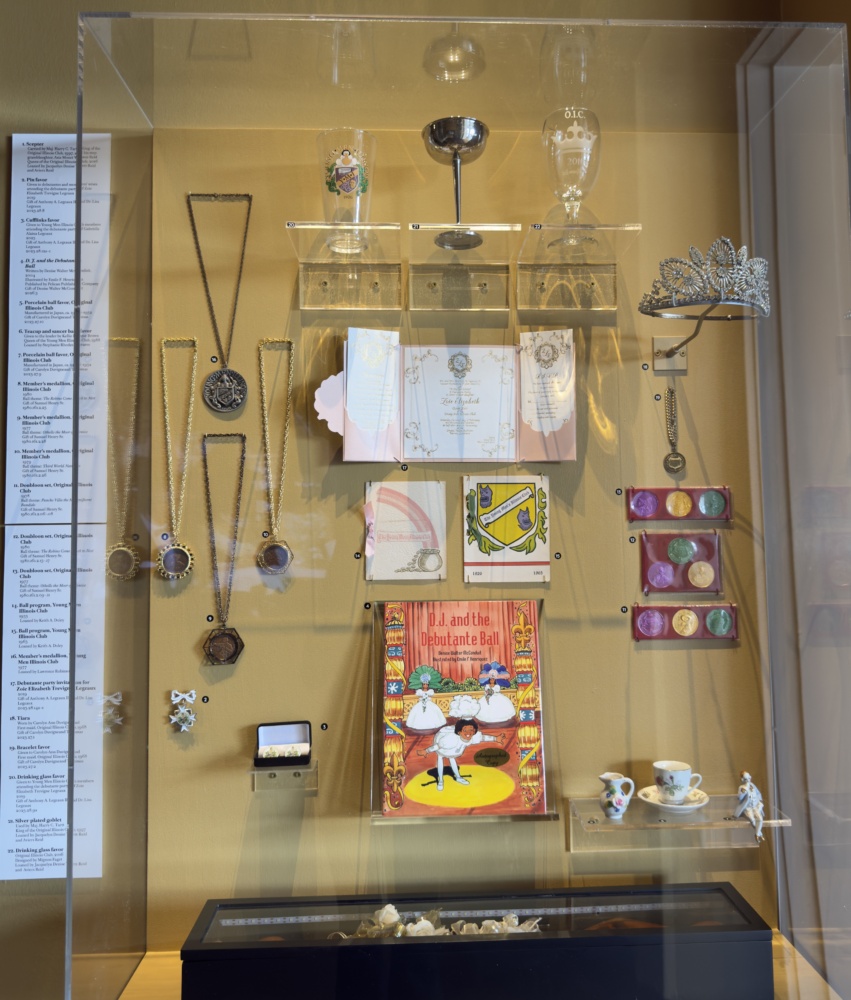
The exhibition features displays of suits, headpieces, doubloons, tiaras, medallions, teacup sets, and detailed gowns passed through generations of Illinois Club and Young Men Illinois Club royalty. Black seamstresses designed and sewed these fabrics by hand, incorporating elaborate designs of grandeur that established the aesthetics of Black Carnival society.
The origins of Black Carnival traditions are often framed as a byproduct of white Carnival, suggesting that Black pageantry exists solely in emulating the culture Black New Orleanians were historically excluded from. This framing ignores the distinction that white Carnival functioned to preserve hierarchy, aristocracy, and power, especially following the loss of the Confederacy in the Civil War. Pageantry became a symbolic form of supremacy.
This exhibition of Black Carnival royalty lies, both physically and historically, in juxtaposition to the other side of Carnival. Carnival societies like Rex and Comus that prohibited Black participation and reserved membership for white elites. Upon entering the second floor of The Presbytère, I immediately paused in front of a large framed painting of a Rex reveler on horseback, with the organization’s signature, Klan-reminiscent mask that conceals all but the eyes.
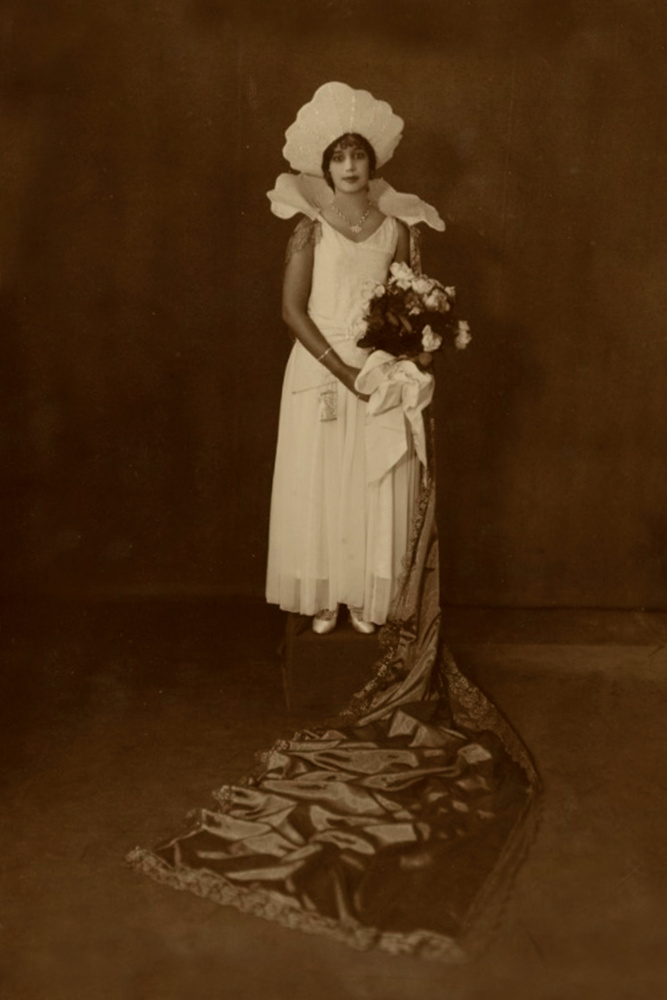
To access Origins of New Orleans Black Carnival Society: The Story of the Illinois Clubs, I first had to walk past displays of white Carnival–imagery that, growing up as a Black child in New Orleans, I always understood as something that was not for me. Nor did I need it to be. My shoulders relaxed and my breathing eased when I turned the corner to a beautiful, full-length portrait of a Black woman in a simple, yet striking white gown.
The adjacent wall shares an image of Verlie Bright, who reigned as Queen of the Young Men Illinois Club in 1930. This contrast epitomizes the basis of Carnival: spectacle and bigotry on one side, self-determination and beauty on the other.