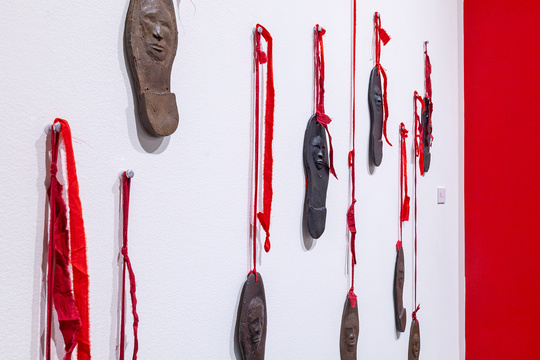
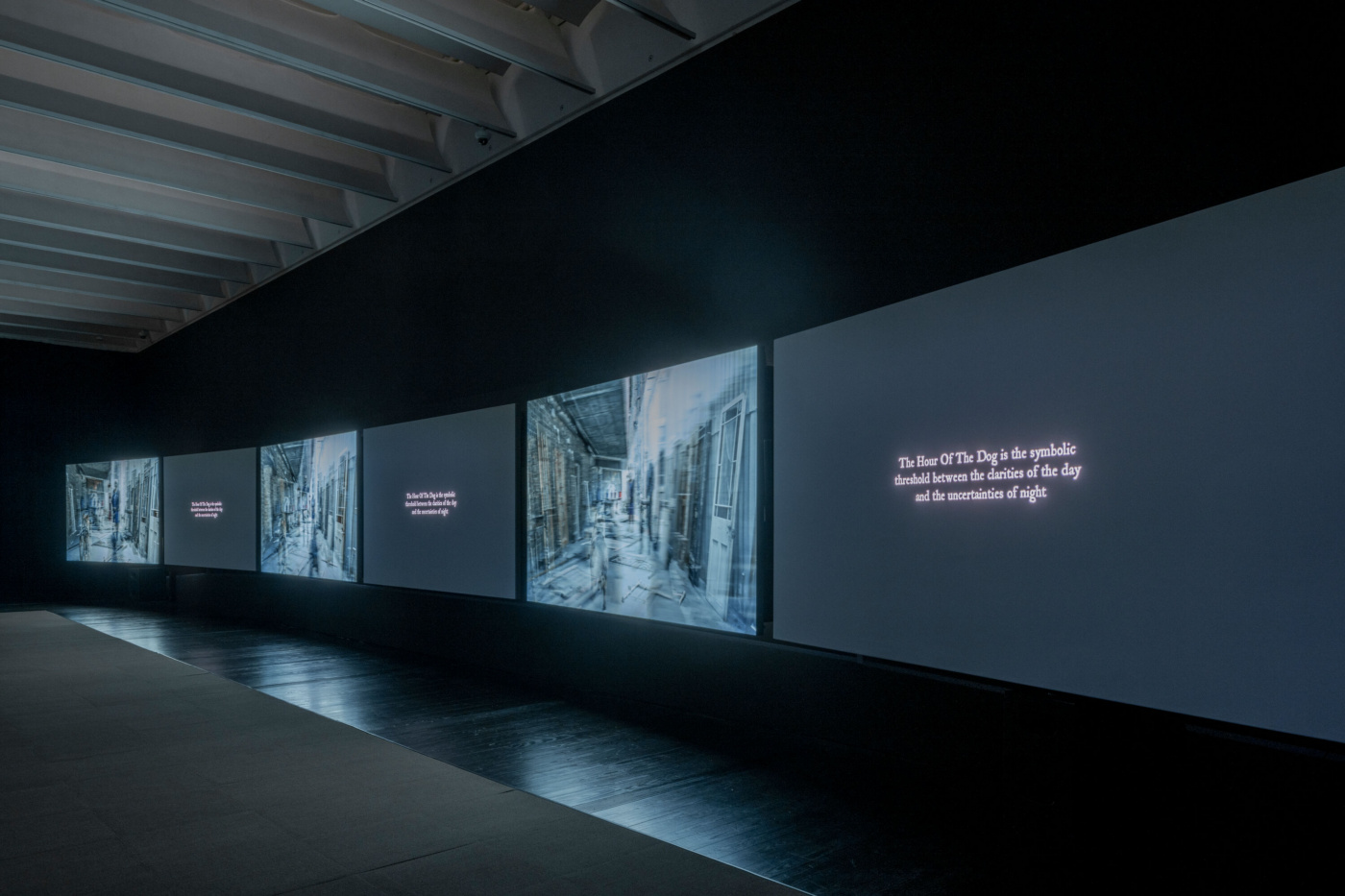
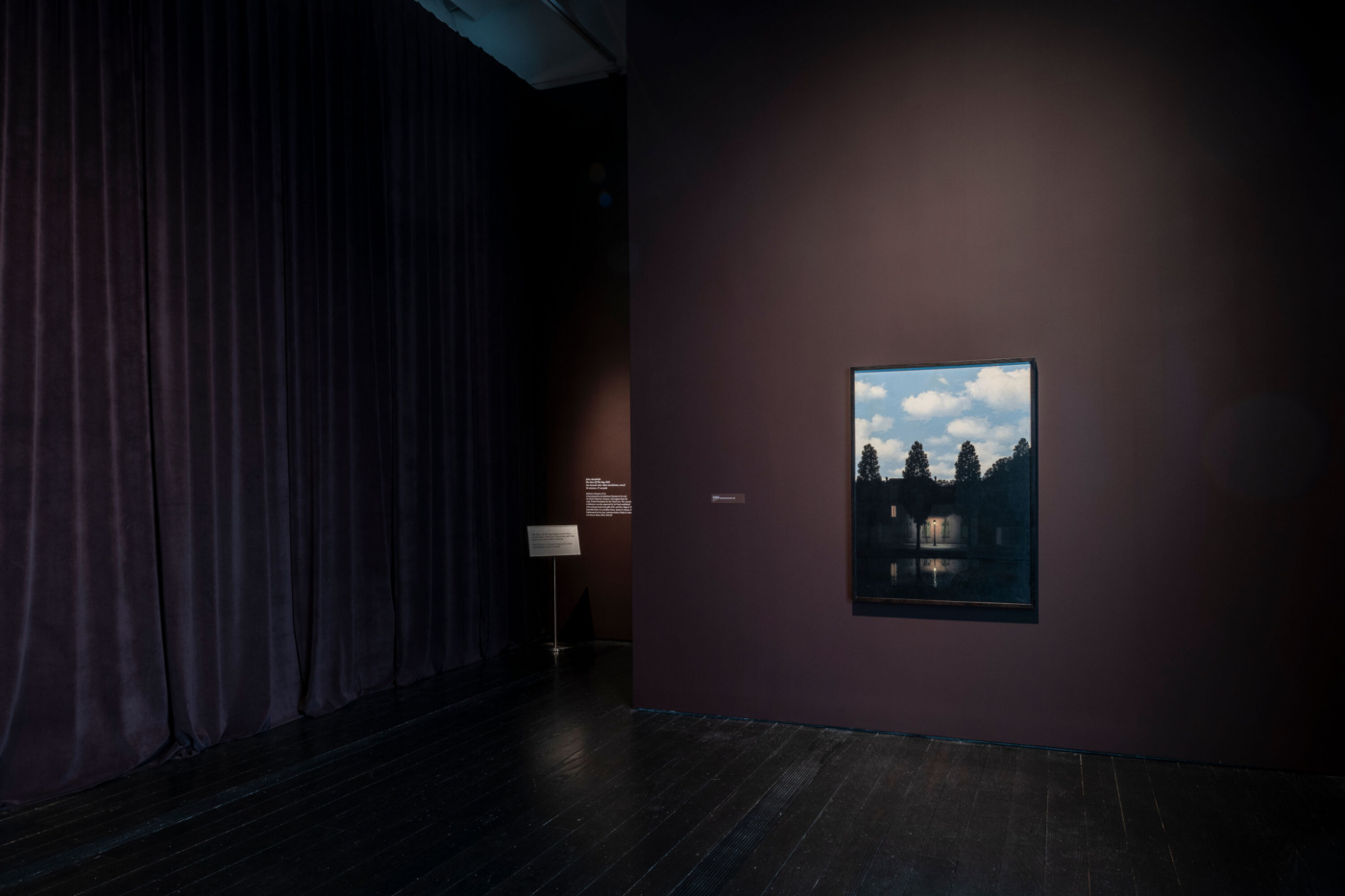
Four artworks from the Menil Collection are displayed in a small gallery preceding John Akomfrah: The Hour Of The Dog, each chosen by the artist to accompany his six-screen audio-visual installation. One is a Kongo nkisi (spirit) figure of a Janus-faced dog, depicted with two heads to reflect the Kongo belief that dogs are intermediaries between the living and the dead. The ambidextrous canine is a fitting introduction to Akomfrah’s fifty-one-minute meditation on youth-led Civil Rights protests in the American South.
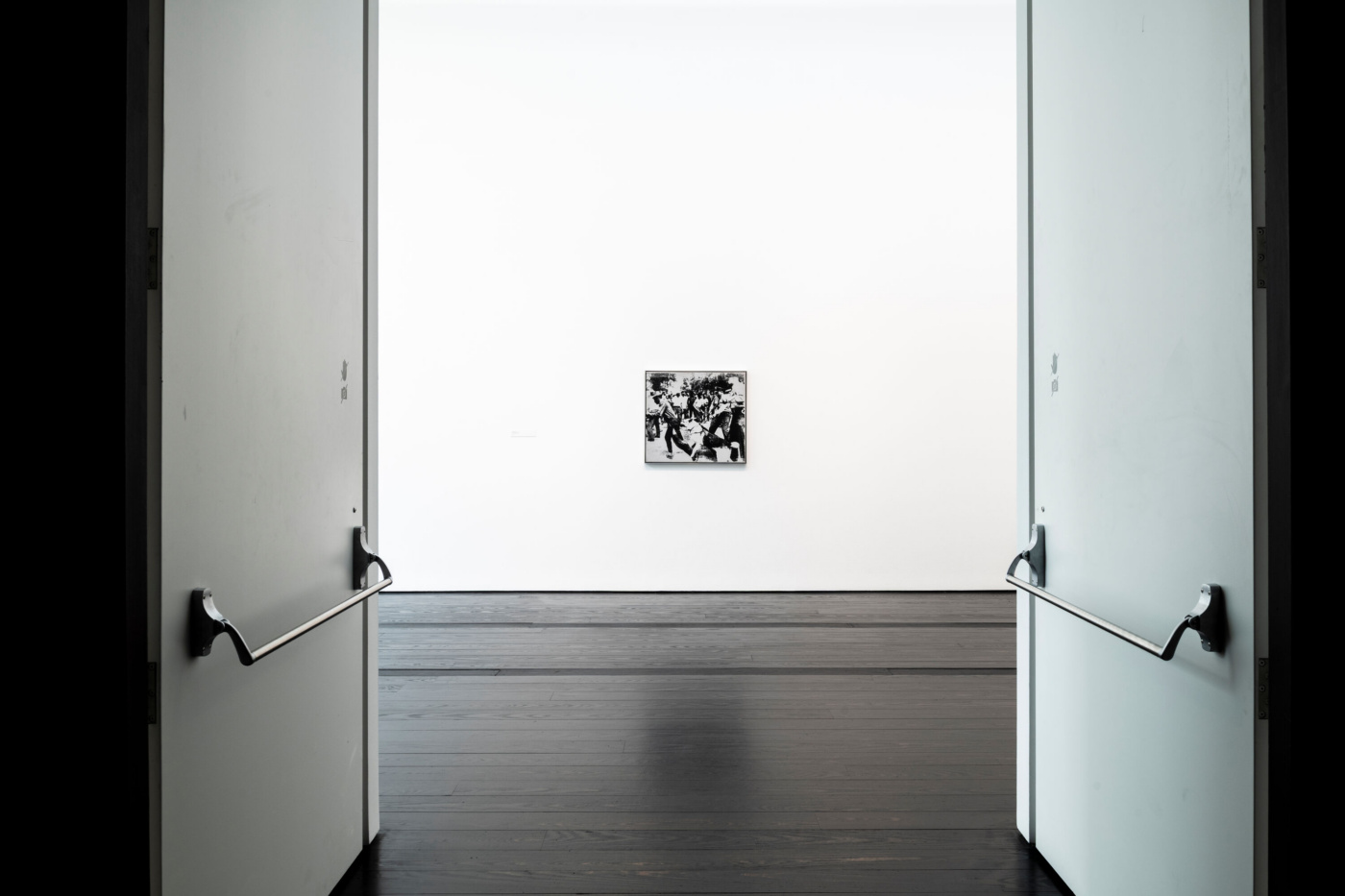
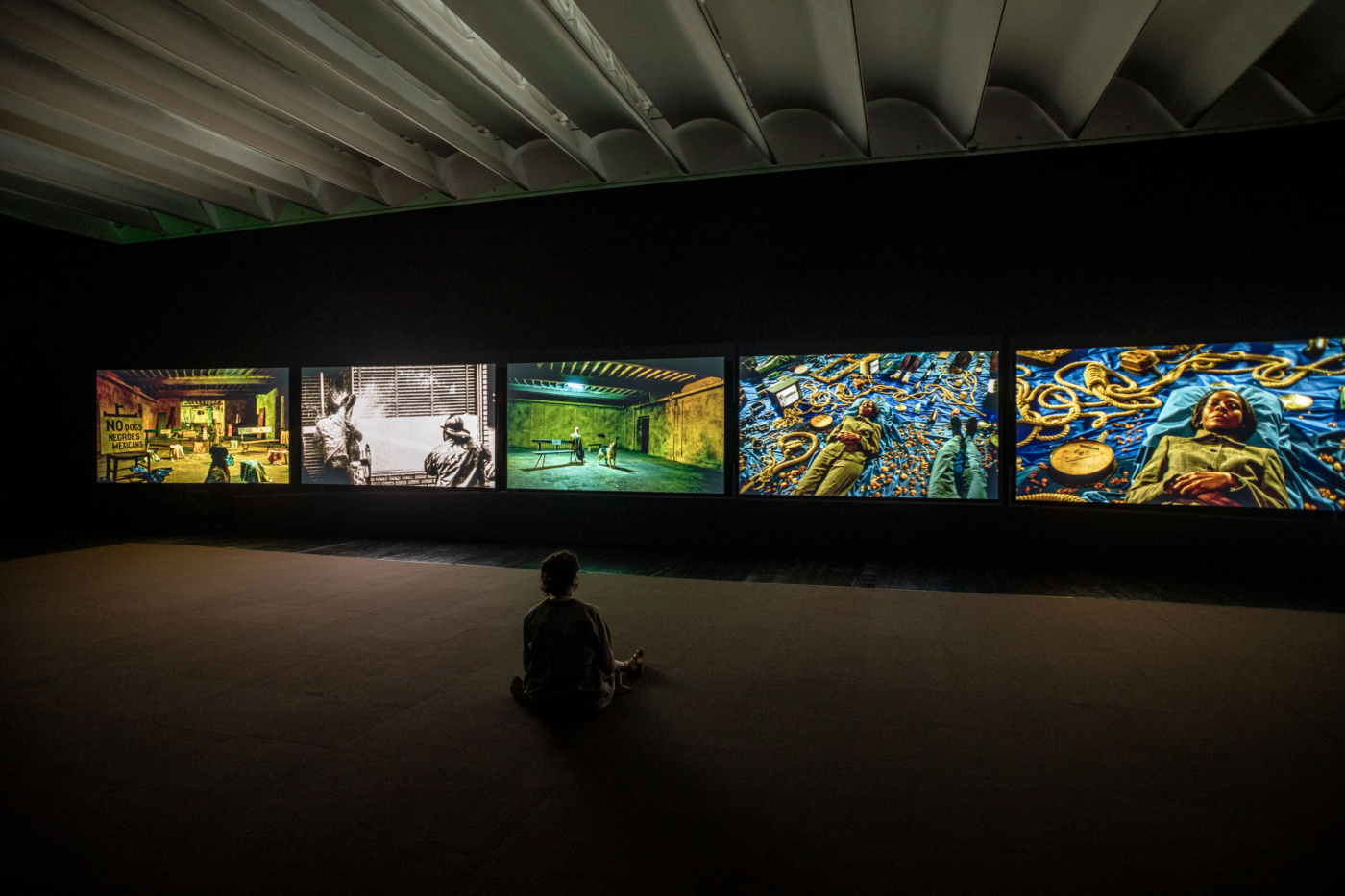
The Hour Of The Dog unfolds as “Five Parables on Fugitivity and Trespass,” each interweaving present-day footage with archival materials. Historical imagery of cotton fields and anti-segregation picketers unfurl across the screens, along with newly filmed vignettes depicting actors in repose, their eyes closed and hands clasped, surrounded by objects: protest signs, cotton bolls, old televisions. The camera pans over the mutual stillness of bodies and things. A faded red fire hose, coiled near a reclining figure’s feet, is also glimpsed in a black-and-white photograph unleashing a torrent of water onto nonviolent activists.
These cinematic tableaus draw on African diasporic funerary practices in which the deceased are accompanied in burial by objects. By blending US history of Black resistance with rituals of the African diaspora—and Akomfrah’s own perspective as a Ghanian-born British artist—this installation reinvigorates a Pan-Africanist ethos around transnational liberation that once flourished in the US, eventually diminished by the assassinations of its biggest proponents. One such leader, Dr. Martin Luther King Jr., appears in the installation’s archival footage and soundtrack, including his achingly unfinished invocation to save the soul of America.
Mugshots of Freedom Riders arrested throughout 1961 in Jackson, Mississippi, float through installation. Remarkably young, they include a twenty-one-year-old John Lewis, who smiles wryly at the camera. Others are incredulous or confident, quietly defying the violence and uncertainty of their incarceration. Akomfrah harnesses the candor of these images, re-invigorating their collectivity as they fan across the screens. The audacity of the activists depicted is further underscored as George Wallace’s infamous exhortation is heard: “segregation now, segregation tomorrow, and segregation forever.”
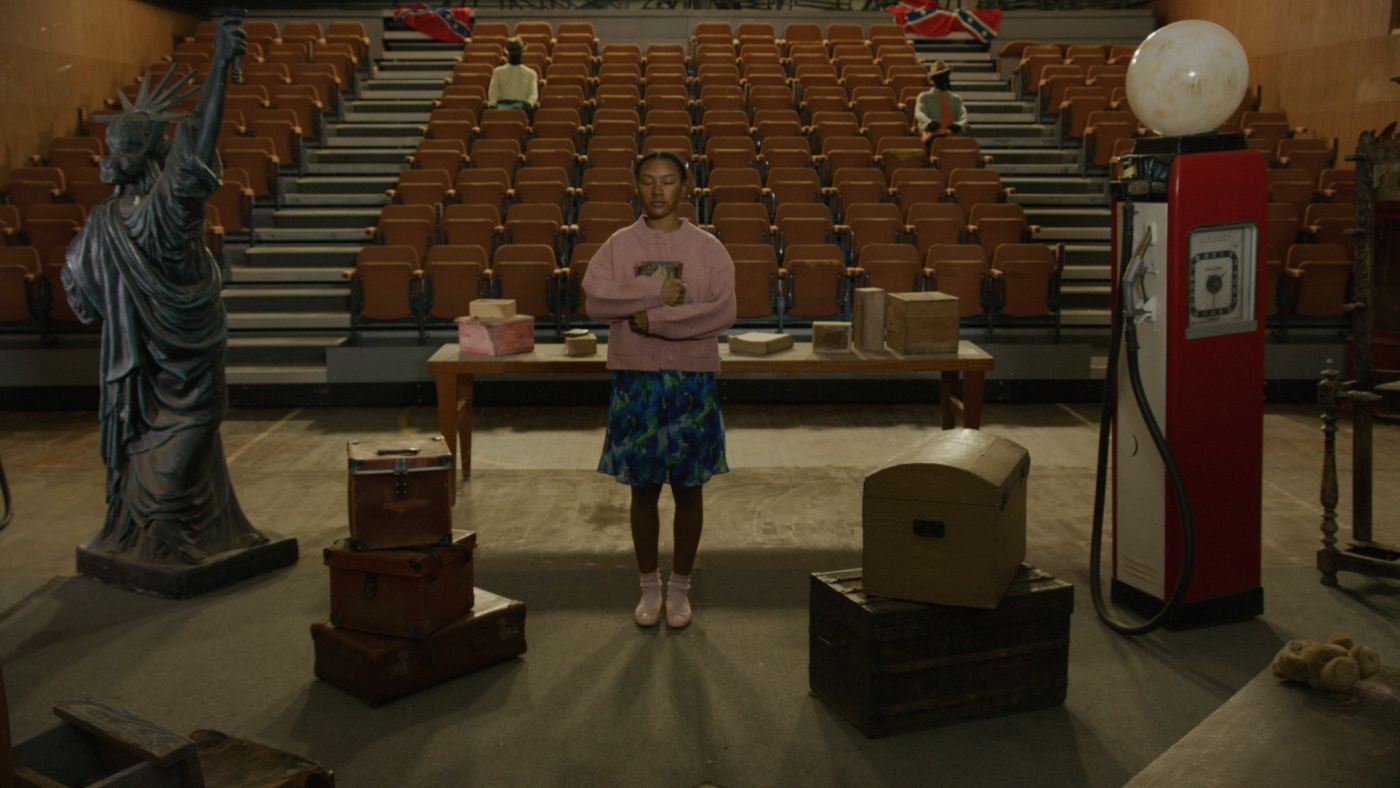
The archival faces appear in eerie resonance with the film’s present-day actors, who stand serenely in ambiguous spaces—a crumbling auditorium, an anonymous alleyway—often confronting the camera with gazes that mirror the mugshots. By intermixing actors and archives, Akomfrah creates uncanny parallels that unsettle linear time and historical narration.
An early title card explains that in the Chinese Zodiac, the Hour of the Dog is the time of twilight, the “symbolic threshold between the clarities of day and the mysteries of night.” Akomfrah considers this temporal space of transition and unknown outcomes as an allegory for the Civil Rights movement itself.
A narrated refrain repeats throughout the work, spoken in varied voices and cadences: “The rush of seconds, hours, years that hurls us towards life then drags us towards nothingness… We inhabit time as fish live in water. Our being is being in time.”[1]
Repeated seemingly ad infinitum, the words are both propulsive and meditative, bridging the work’s many parts. In an artist talk, Akomfrah described their repetition as building an “incantatory logic.”[2] Through archival and alchemical methods, time becomes more elastic across Akomfrah’s six screens, reminding viewers that the potency of this historical moment, still alive in the present day, might bring forth better futures.
[1] The words are excerpts from theoretical physicist Carlo Rovelli’s book The Order of Time (2018), which explores scientific concepts to reveal time’s elasticity.
[2] The Menil Collection, “John Akomfrah in Conversation with Elissa Blount Moorhead,” YouTube, June 9th, 2026: https://www.youtube.com/watch?v=qOQ4wg1zFLI&t=842s.