
Process, labor, and space are critical to the work of artist Nathalie Alfonso, whose practice exists as site-specific and ephemeral interventions. This way of working resists making artworks solely for sale or consumption, as her works almost always disappear completely after the end of an exhibition or installation.
Rooted in family history, her immigration to the United States and the visibility of labor, each artwork progresses from the last, archiving her relationship with a space in a moment in time. After winning the Florida Prize and No Vacancy Juried Prize in 2025, I visited Nathalie in her studio at The Hollywood Art and Culture Center to talk about the origins and evolution of her unique process.
This interview was edited for length and clarity.
Amanda Bradley: 2025 was a huge year for you as an artist. I want to go back to the beginning. How did you arrive at making site-specific, process-based works?
Nathalie Alfonso: Growing up in Colombia, being an artist was never really an option. My parents were both workers: my mother worked as a live-in housekeeper and my father worked in construction. I was a restless and hyperactive child. I needed to be constantly moving so I ended up getting involved in sports to tame the energy I had. Between watching my parents work and my constant need to be moving, labor was engrained in me from a very young age. When I turned eighteen, I moved to the United States and that changed entirely. My teachers paved an understanding that art was now a possibility in my life.
In undergrad, my peers and I started a collective doing pop-up exhibitions and I was always the invisible worker in that dynamic. I found myself quietly attending to details of the production that nobody else really wanted to do, like cleaning, preparing food, and returning the spaces back to normal after the show ended. Eventually, they didn’t consider those contributions as valuable because I still wasn’t making artwork “products” to show in the exhibitions. This was a breaking point for me and I started to question this by asking, “What’s the role of a worker?” and “What’s the role of an artist?” and “How do I put these two Nathalies together?” That’s when performance and process came into play, they were a way for me to study myself.
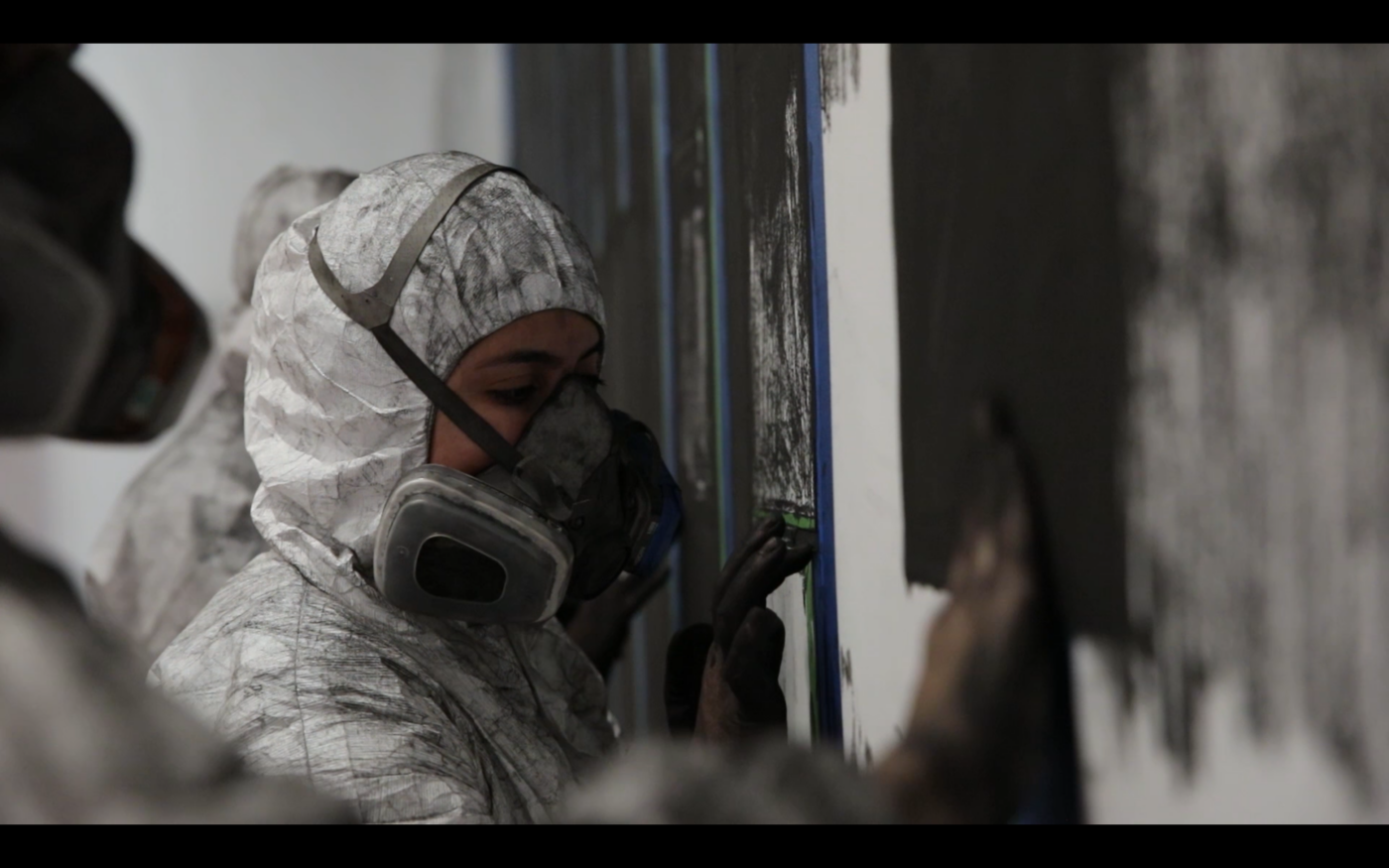
AB: When did you decide on your materials—charcoal, pastel, your body as the mark-making tool—and working directly on walls?
NA: I knew I wanted to create large-scale works, but I needed the materials to be cheap and accessible. The use of charcoal and working directly on the walls of a space allowed me to accomplish this. I was able to use my hands and have my bodily gestures embedded in the drawing. These materials became the building blocks. Over time, these materials also allowed me to resolve some of my family relationships and experiences—charcoal and the process of
cleaning related to my relationship with my mother, and drywall along with construction related to my father. Making site-specific drawings allowed for spontaneity and freedom in knowing that I don’t carry the responsibility of these drawings surviving forever. When the show is done, and the work is washed away or painted over, I know that the next work will progress from and be informed by this last one.
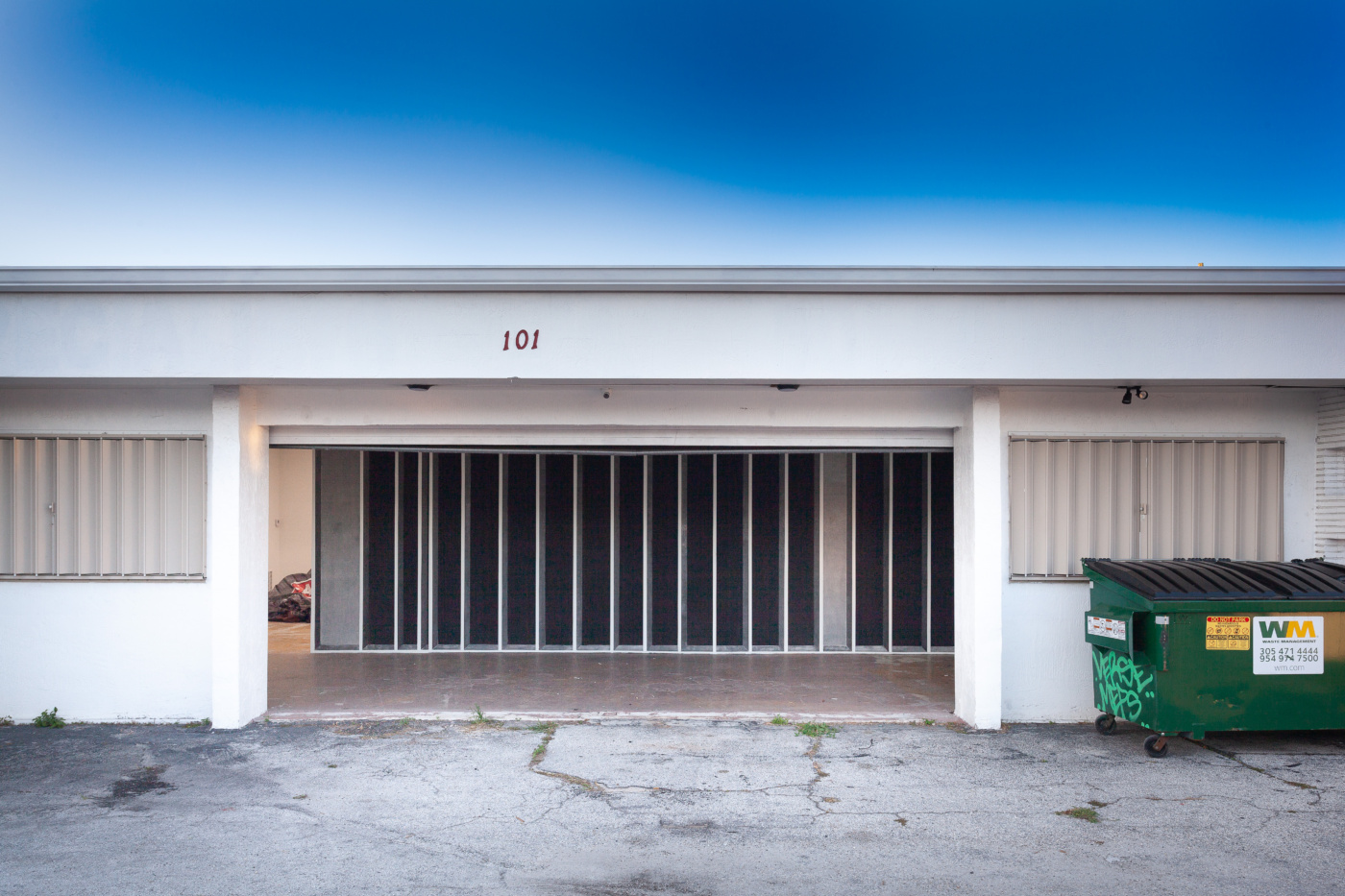
AB: I love that your practice has this intentional and progressive life cycle. Each artwork exists, is archived, and then evolves into the next work. How have your conceptual explorations within the drawings themselves evolved over time?
NA: I think about my practice in stages, each of which is about five years of exploration. The first stage, The Line (2014-2018), was this exploration of a line–cleaning, erasing and the performance of that line in space. The second stage was Unfolding the Line (2018-2023), which was informed by structures and construction, not only because of my dad, but also because I decided to become an art preparator. Being a female in this male-dominated role, I was trying to understand how I fit into this system, by dissecting it directly.
Now, I am in my third and current stage, LineScape— (2023-ongoing), which explores the landscape. When I was in grad school, I did a residency with the now closed Sweet Pass Sculpture Park in Dallas that was an immersive, thirteen-day program about the Blackland Prairie. That’s where I really started to pay attention to this landscape and its complex ecosystems, particularly insects and wildflowers as these vital and invisible layers of labor that surround one everyday but go unnoticed. After moving back to Florida, I started biking through the Everglades regularly and I started to look at these small ecosystems as a metaphor for workers.


AB: When thinking about the line between visible and invisible, how do you balance what’s shown and what’s hidden?
NA: It’s very important to recognize that a worker’s labor often happens out of sight. It is the same way that my works are created. I get in the mindset of both the worker and the athlete because physicality is what allows me to endure the labor needed to create these large-scale drawings.
The intention is that when experiencing these works, both the scale of the drawing and the tiny details created by the gesture of my hands can make someone consider or reflect on the role and existence of labor.