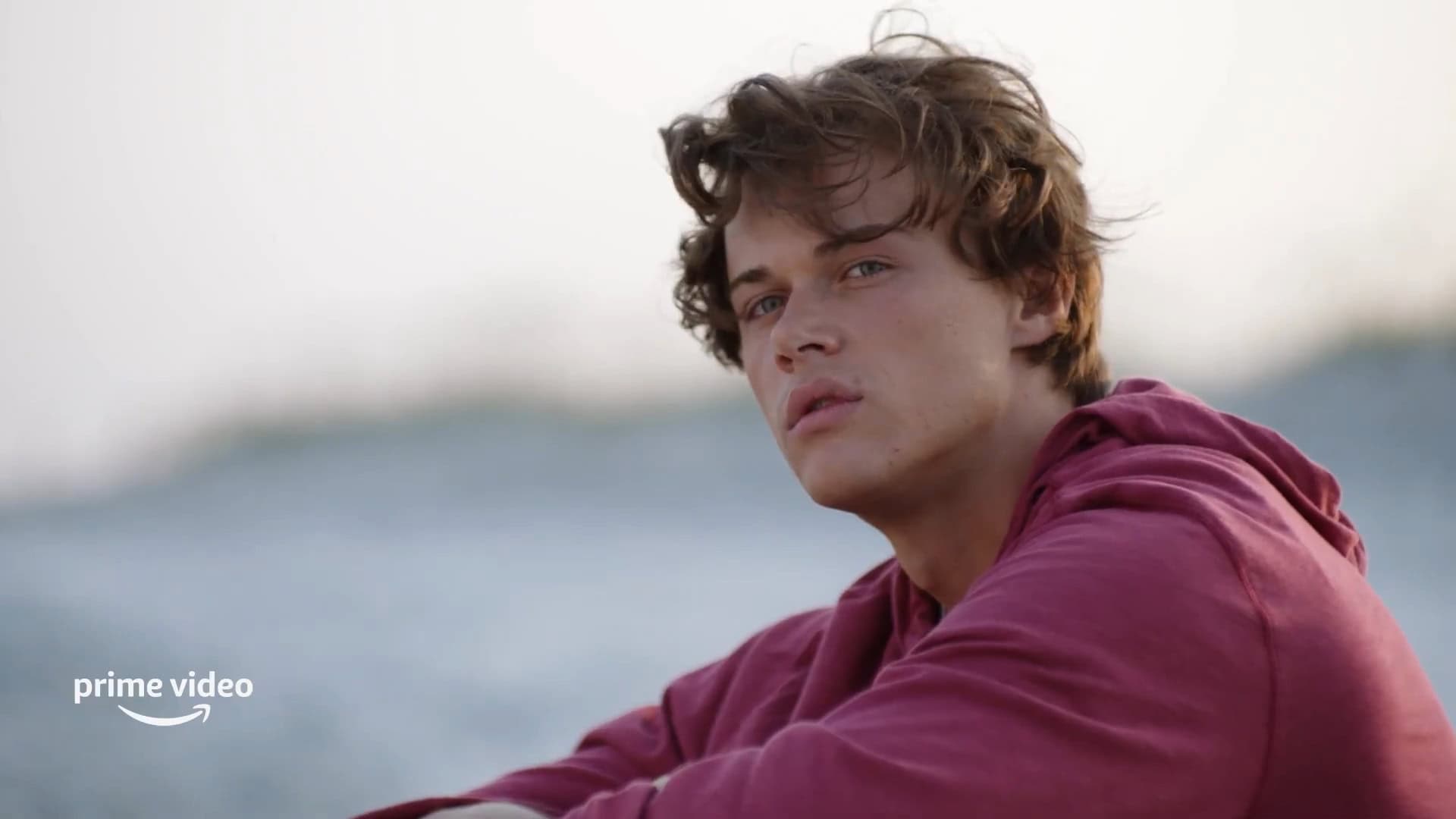
The only proof that it isn’t artificially generated is Conrad Fisher’s unusually hairy legs. It’s something I’m sure would have been smoothed out to better slip into the terrifyingly plastic landscape. The uncanny valley, AI hallucination of The Summer I Turned Pretty (2022) stuck to my teeth long after the Young Adult-series-turned-millennial-obsession finally wrapped up its television run in the summer of 2025. Talking with friends, my manicurist, the librarian that shares a desk with me, my radio station’s book club, I became fixated on figuring out what was making me so upset about this absolutely terrible television show.
The plot, for those who are blessed to have missed it, is about the love triangle between Belly Conklin and the two Fisher Brothers—Conrad and Jeremiah—sustained over several summers in which the Conklins and Fishers spend together on the fictional Cousins Beach. The tension that drives the story is that the audience knows that the Fisher matriarch Susannah, affectionately known as Becks by Conklin matriarch Laurel, has cancer, and is dying. Becks is fixated on having one more perfect summer, at her perfect beach house, before her cancer becomes the focal point of their families lives. Billed as easy, breezy, and beautiful, the plot contains no surprises, no violence, the perfect second screen viewing. It is a show that feels invented to be sponsored by waterproof eyeliner, complete with romantic, slow motion needle drops.
There are plenty of pain points that could give the story some sort of meaning—The Conklins are an interracial family, The Fishers are wealthy and the Conklins are not, Belly’s best friend, Taylor Jewel, is what I would lovingly describe as ‘white trash’, and there is a constant haze of incest over everything down to the name of the damn beach—but none of that is discussed. Summer, despite be set in New England, has many foundational columns of Southern Gothic (poverty, race, family secrets, sexual jealousy, dominating landscape) but instead of acknowledging their existence, Summer forces it all into a flat nothingness. The machinations behind Summer—algorithms, AI, marketing departments—don’t understand that the ‘romance’ tag on Taylor Swift’s metadata isn’t the same ‘romance’ as ‘Mystery of Love’ from Call Me By Your Name (2017); it equates the two. Sameness is the most beautiful thing for Summer, so all romance is the same, all beaches are the same. Summer is furtively trying to deny that underlying it all, is the same ugly Southern Gothic story—the story of the destruction of a family and the odyssey that sees them all fracture, never to become whole again.
In the queasy hours after finishing Summer, I asked friends from around the world if they had found meaning in the story, the landscape, the romance, the death. I began joking around that if this was set in the South, it would be a perfect match for As I Lay Dying (1930), the strangest and perhaps funniest of William Faulkner’s Southern Gothic novels, filled with the grotesque hallmarks of the genre. In the opening sequence, Addie Bundren of As I Lay Dying watches as her first born son Cash builds her coffin outside of her window. There is a storm coming, and Cash is working methodically and without complaint. Cash is the quietest of the Bundrens, and seemingly the most devoted. He is careful with his mother’s coffin, making it tight and clean and perfect. He is constantly willing to sacrifice himself for his family, in total opposition to his disaffected father. Addie’s death happens in a matter of hours, and instead of being able to head straight on to bury her in her hometown, the storm has washed away bridges, and the Bundren family is stuck with Addie’s rotting corpse.
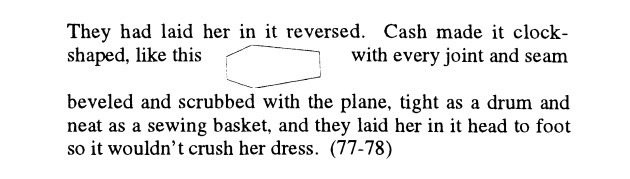
In Summer’s mirror, Becks is at peace with no longer seeking treatment and is calmly preparing for her own death. Conrad is the only one who knows this and is breaking under the weight of this secret. Like Cash, Conrad builds to escape and alleviated the impending death, compulsively repairing boats and the beach house. When Becks’ secret is revealed, Jeremiah demands that Becks do whatever she can to stay alive, even though the cancer is terminal. She folds under his pleading, and like Addie, Becks’ corpse lingers in the house far longer than it should have, poisoning the air and changing the Fishers’ status from just another rich family in Cousins to the family with the dying mom, robbing Becks and her family of dignity, a Faulknerian theme if there ever was one.
The <em>Summer</em> machine can never understand the compulsion towards death, it can never understand velveteen nights that provide the textures of human sexuality and violence.
Anse/Adam, the feckless husbands in As I Lay Dying and Summer, appear only to cause more problems. Anse marries a woman who has leant the Bundrens shovels to bury Addie, seeming not to care about the fate of their house on the other side of the state, nor his injured and incarcerated sons and remaining daughter. Adam similarly takes up with another woman by dating a graduate student while Becks is dying, and has to be repeatedly bullied by Laurel into doing anything to keep Becks’ house for the boys.
Even with the emphasis on Team Jeremiah versus Team Conrad—a wink to millennial Team Edward versus Team Jacob fandom—incest is everywhere. Actor Lola Tung’s Belly is warm and believable, but the only character that has any real chemistry with Conrad is Laurel. Laurel loves him because he is of Becks and constantly reiterates how special their relationship is. Conrad treats Laurel like a girlfriend and like a mother, acting as his true self around her and only her. Subsequently, everyone jokes about the years Conrad spent yearning and being in love with Laurel. Conrad seems to only really love Belly because she is of Laurel, and everyone (minus Laurel) is desperate for Conrad to love them like they love him.
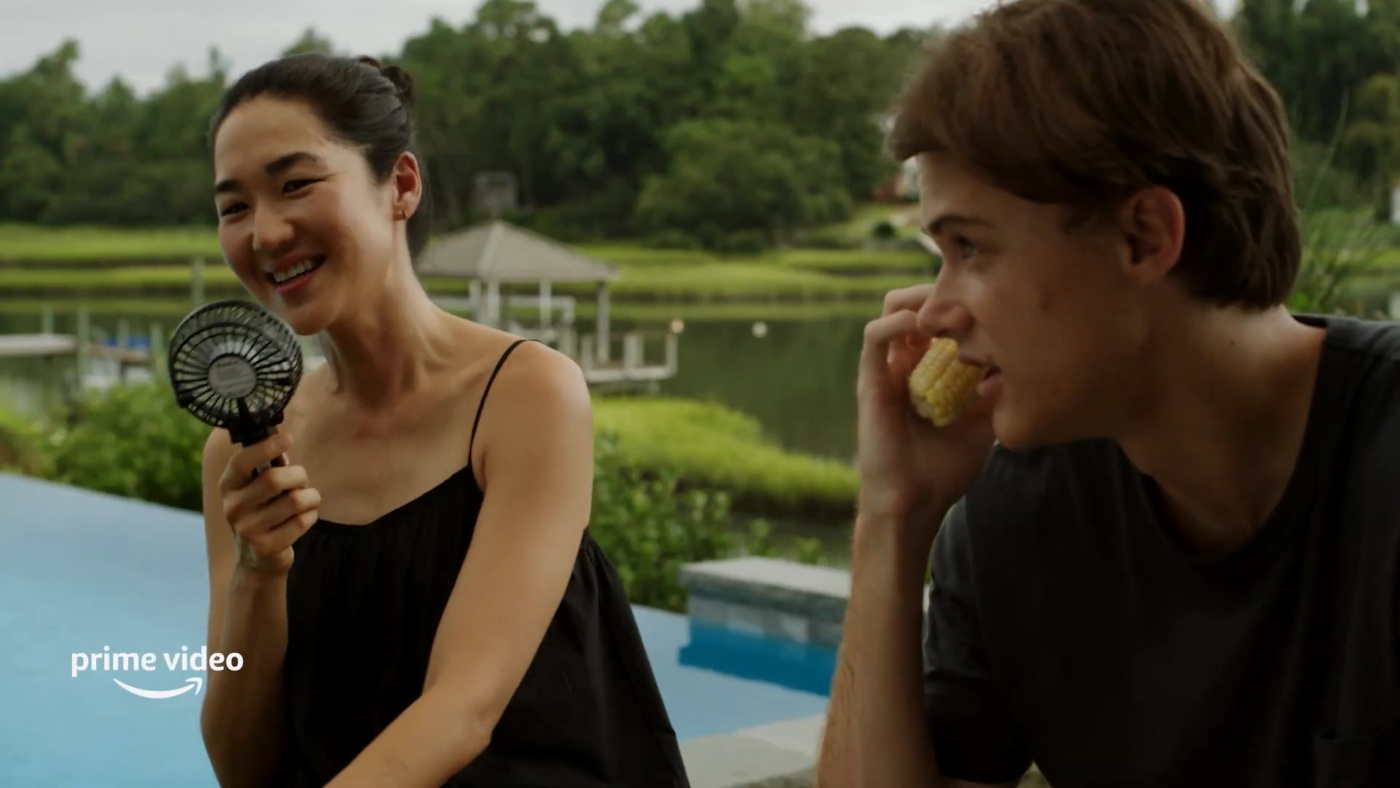
The books differ than the show when it comes to the fate of the beach house after Becks’ death, but if the potential to inherit a beach house was off the table, the show wouldn’t have much runway. (The show also does away with the hair-raising virginity plot of the book and replaces it with a debutante ball which is perhaps worse but recalls a Southern influence.) Everyone would wise up pretty quickly that every interpersonal relationship is too close, too weird, and unhealthy. Becks is the gravitational force—charismatic, beautiful, funny, white, and rich, and no one wants to disappoint her. The only person Becks loves more than Laurel is Conrad, so everyone follows her lead, confusingly mapping all their relationships and desires through these crossed wires, making Conrad the romantic lead in everyone’s story.
While not a perfect sameness, the differences between Summer and As I Lay Dying soothe away the sharp points that would give the audience a way in, something to connect, or explore, or grab the attention of close readers. It even hallucinates away any concept of time. iPhones are owned by teens who aren’t addicted to them and no one fears being photographed walking home naked. There are sing-a-longs to Tom Petty and Taylor Swift, characters name drop The Unusual Suspects’ (1995) Keyser Söze, it is a world with no COVID and no Trump (the mothers complain about ‘the president’, but who is to say they aren’t complaining about Bush?) and no wars.
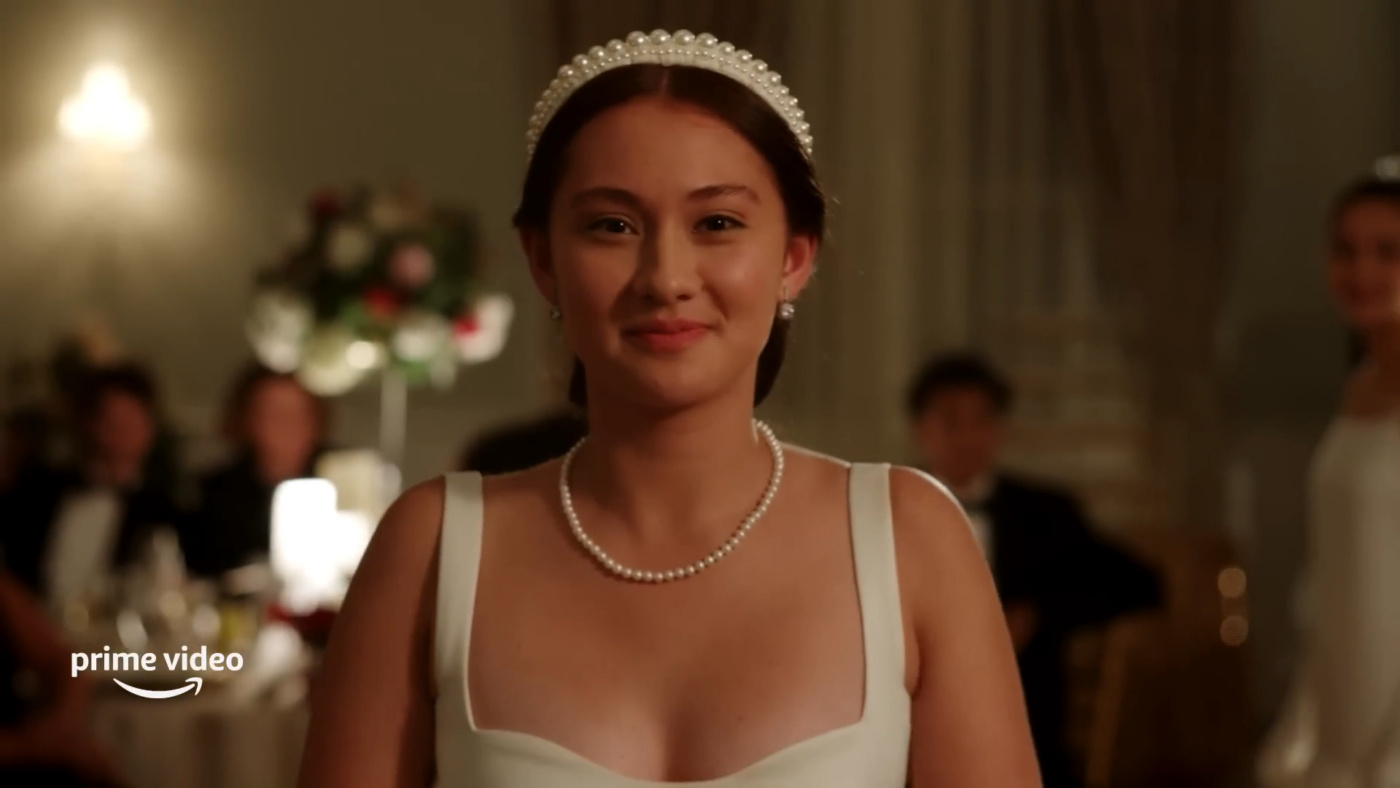
Although it is maybe set in Cape Cod, this is a drama made for a Southern landscape, for a Southern climate.[1] But Summer would never set a ‘contemporary’ story like this in the South. The South’s aesthetic reality chafes against the desire for artificial, seamless beauty. The Summer machine can never understand the compulsion towards death, it can never understand velveteen nights that provide the textures of human sexuality and violence. The machine doesn’t understand that you can’t stop death by taking vitamins and exercising every day. The machine cannot understand the white-hot thrill of fear and arousal that shoots down the spine when one sees a handsome, rich, young white man in a nice suit sweating, rumpled, common, following the beautiful working class colored girl towards the water, be it in episode seven of Summer, the novels of Faulkner, Chopin, or any other moment in Southern Gothic.
Summer was the first real lightning bolt of body shaking terror I have about AI, but also the most reassuring. I live in the South, a place that is unmappable, impossible to smooth out into conformity. The machine can’t lie to Southerners—summer does eventually come to an end down here. The South is the American experience, it is where American culture comes from, where people live closest to the earth, where the soil remains wet with blood and memory. The machine does not want complexity. The machine recoils from such aberrations in its perfect glassy vision.
Summer isn’t over. A feature length film is due sometime in an undated future, with an unexplained plot and unnamed cast. I’m sure I’ll watch it. I’ll tell the machine I need a beach house to watch it in, and it will read the metadata for ‘house’ and instead of Taylor Swift’s sunny Holiday House in Rhode Island, it will match me with ‘House’ by Charli xcx and John Cale.
I was thinking, “What is this place?”
I thought it would be perfect.
I thought, “I want it to be perfect.”
Please, let it be perfect
Am I living in another world? Another world I created?
For what?
If it’s beauty, do you see beauty?
If there’s beauty, say it’s enough
I think I’m gonna die in this house[2]
[1] The shooting locations for the show are around Wilmington, North Carolina, the same shooting location of another fictional Cape Cod town, Dawson’s Creek‘s Capeside, Massachusetts.
[2] House featuring John Cale by Charli xcx and John Cale, written by Charli xcx, John Cale, Finn Keane, and Nathan Klein.