On one of the coldest days in January I went to the artist Marlos E’van’s studio on New York University’s campus. A Mississippi native who recently moved to New York from Nashville, Marlos is a painter, filmbuff (and maker), sculptor, and fervent lover of people, art, and friends. In the corner of their studio was a stack of empty pizza boxes I tried not to notice until I realized later on that remnants of other boxes had been transformed into painted swords hanging on the wall. A walking encyclopedia of images, film references, and art history, Marlos is community driven and pure-of-heart in ways that I discovered throughout our conversation that I am not. Over two hours we spoke about their upbringing, Mississippi, their love of film, how grad school is changing their work, and some of their influences and mentors.
This interview was edited for length and clarity.
Justin Chance: How long have you been in New York?
Marlos E’van: Since last August. August 2025.
JC: Oh, so you came specifically for school?
ME: Around 2021, 2022, I did my first official New York show at a place called Elijah Wheat Showroom, in Newburgh. We found each other during the pandemic.
I did my show here and went back to Nashville and kept living and working as a freelance artist and then, I ran into Derek Fordjour. Derek is one of my mentors. I met him in Nashville. I’m represented by a gallery in Nashville called Red Arrow Gallery and had a show up at the time when I met him. And he was like ‘I’m gonna come to your show tomorrow morning and just do a walkthrough with me and you.’ He kept his word and came through, kicked everybody out the gallery first off. Even the directors and the owner. He was like, ‘I need everybody out. Just me and Marlos.’ He looked at me and he was like, “Can you take an honest critique?”
I’m like, man, this Derek Fordjour. You know what I’m saying? I kind of come from the school of thought of Michael Jordan and Kobe Bryant. Like, the Mamba mentality and the Jordan mentality of, like, yeah, I can take a critique and I’m always working and I’m always practicing. So, everything contributes to what I’m trying to do. So, of course, I want to hear what you think I could do better. It was honest critique.
JC: What did he say?
ME: One of the things he was saying, I had this particular painting in this show. I can’t think of the title. I think it’s something like, “Which one would you choose?” and it was based on a political cartoon from way back. In the cartoon there’s a chicken running on the ground and there’s a Black man holding two watermelons in his arms. The idea of this political cartoon was, is he going to throw the watermelons down to get the chicken or is he going to keep the watermelons and let the chicken go? So, for me, I needed to make that piece. But I think he was like, “Be weary of images like that in your practice for the long run. How can you dig deeper into an idea like that rather than just plucking low hanging fruit?” That right there stuck with me. That’s one of the critiques that really stuck.
He became a close mentor to me. He helped guide me through the process of going to grad school, which I fought for a long time. I come from the streets and punk background. So my thing was, I don’t want going to grad school to compromise my mindset as far as like, ‘I’m punk. I’m from the street, this and that. I don’t want to lose that.’
Derek came to the studio a couple weeks ago and like, just, you know, progress check. For the last month, everything is just snowballing in a really great way.
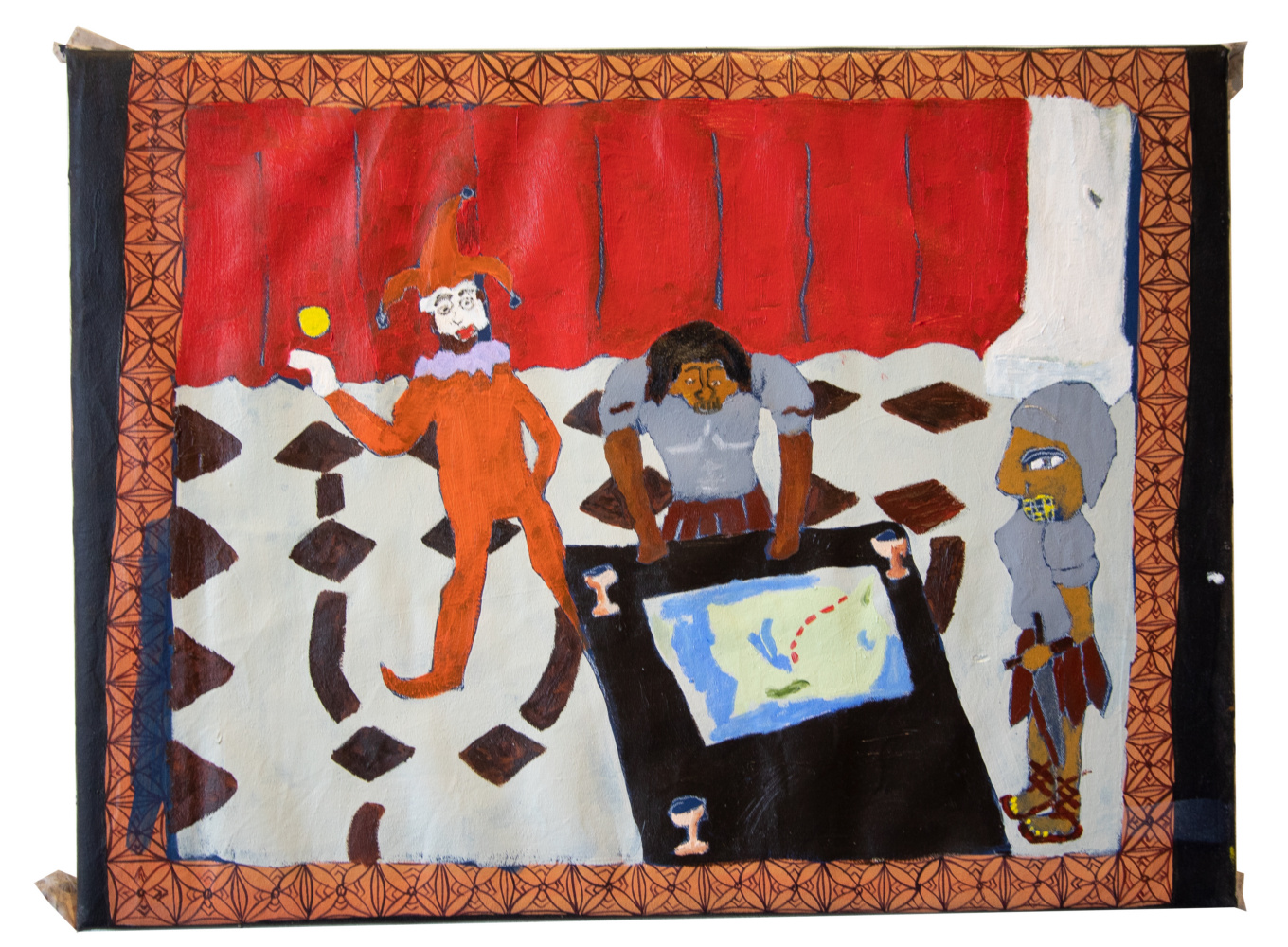
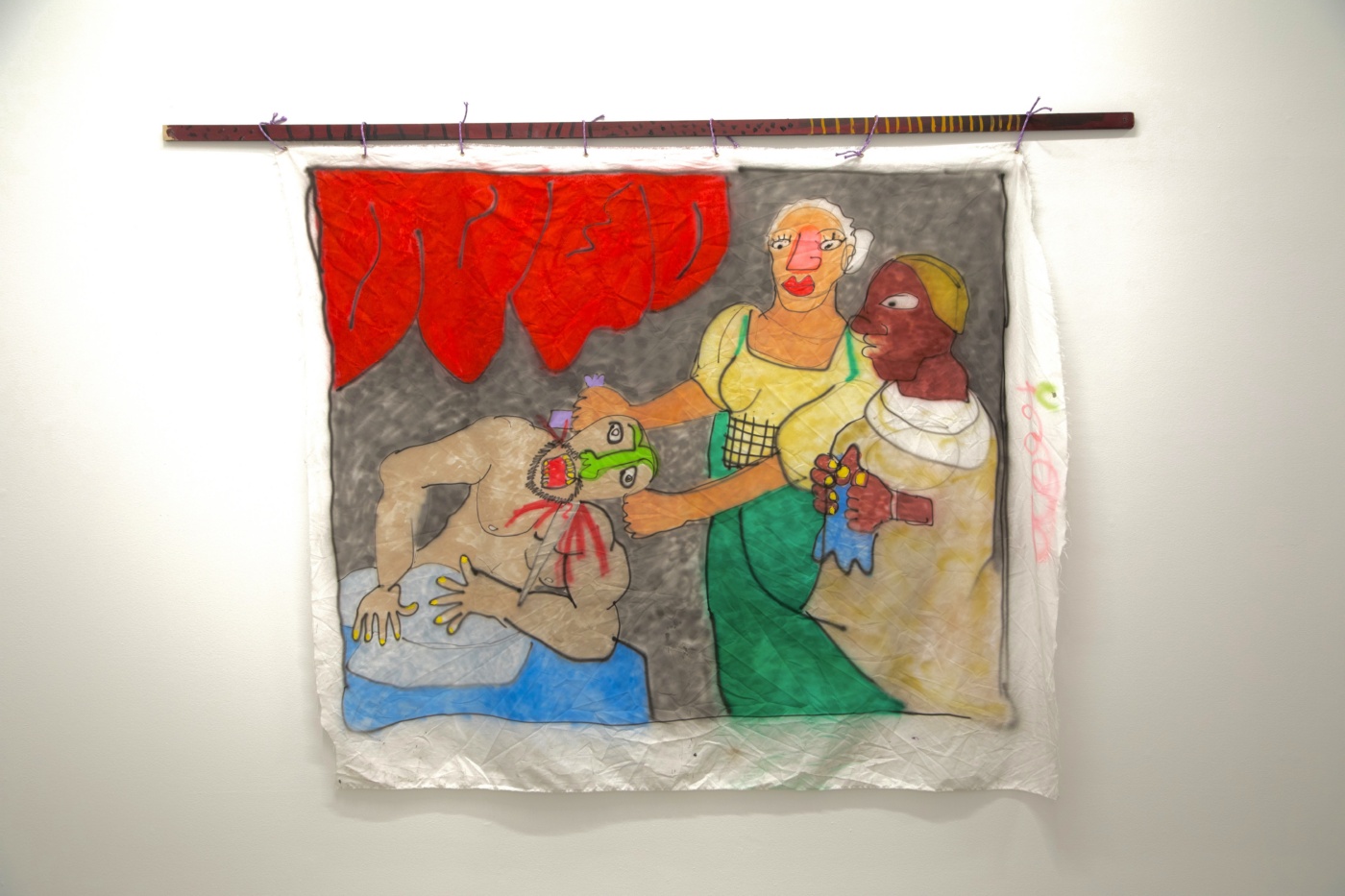
JC: What do you mean by snowballing, how?
ME: Going to shows that I need to go to, meeting so many people, having conversations based around ideas, where my work is going, the potential of where it can go like now or in the future. That’s what I mean by the snowballing effect. I went to the party for his show at MoMA and I met Arthur Jafa. It turns out me, Arthur Jafa, Sam Gilliam and Elvis Presley are all born in the same town: Tupelo, Mississippi.
JC: How long were you in Tupelo for?
ME: So I was in Tupelo until I was about four and the other side of my family is from the Gulf Coast, around Biloxi and I really grew up there. Biloxi, Southern Mississippi. That’s the bottom of the map, actually. As far as you can go in the United States in the South. That stretches from New Orleans to Florida and we’re in the middle of it. So I grew up in a port city exposed to different cultures, different people. It’s interesting because everything is coming fresh off the boat right there. It’s a huge fishing culture down there.
How can I bring other people with me? How can I serve other people at the same time?
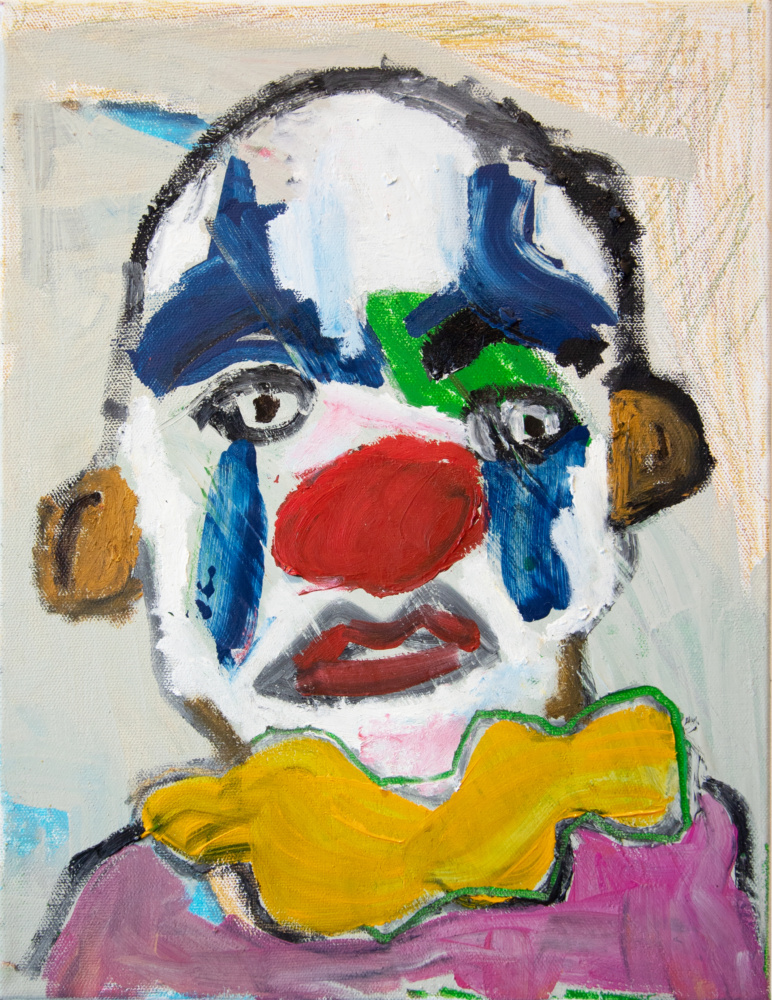
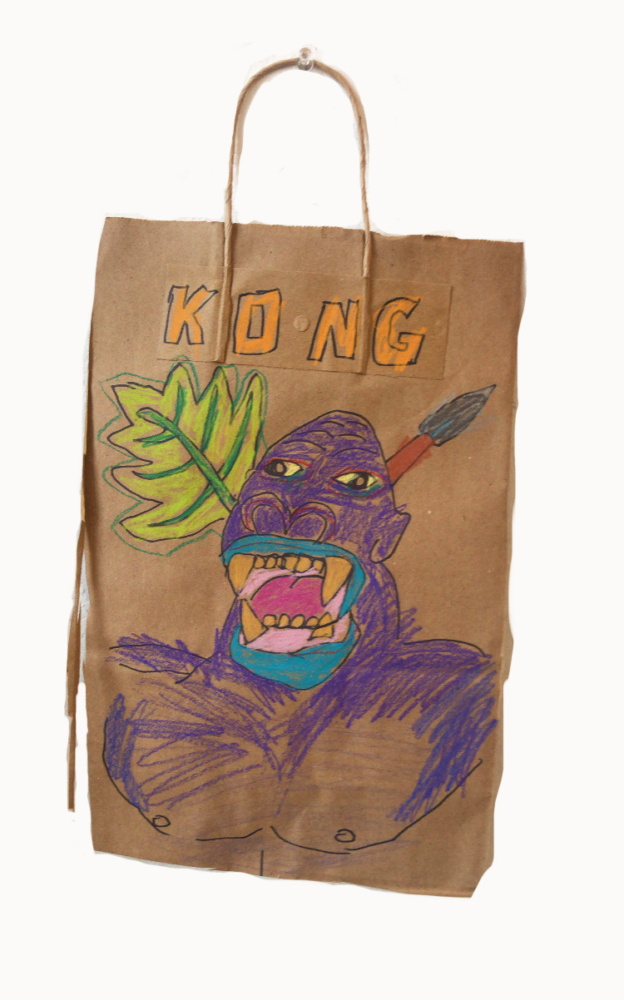
JC: Explain to me this whole thing about surfaces. You work on blankets, you work on paper, you work on unstretched canvas, you work on a paper bag. What’s going on? What’s happening?
ME: So if we go back to my time in North Mississippi, which I moved back to Tupelo before I moved to Nashville and went to undergrad. So I was staying up there with my Grandma and Granddad and one of my uncles who had just got out of prison. So we were just living together. But growing up on the farm too, I learned from them about using what you got and what’s around you. For instance, I talk about the idea of the broken fence pole. Back home, I remember Granddad would walk the fence line where we kept cows and goats, and a fence pole might be broken. But rather than go buy a new fence pole, because you know, country folks don’t really have no type of bread…rather than buy the fence pole, you might find a broken tree limb and replace the old fence pole with that instead.
That’s why I incorporate all of these surfaces. That’s one part of it. I also think about Andy Warhol in my work and the idea of everyday objects. These objects that are there at our disposal that we also overlook. How can they have a second life?
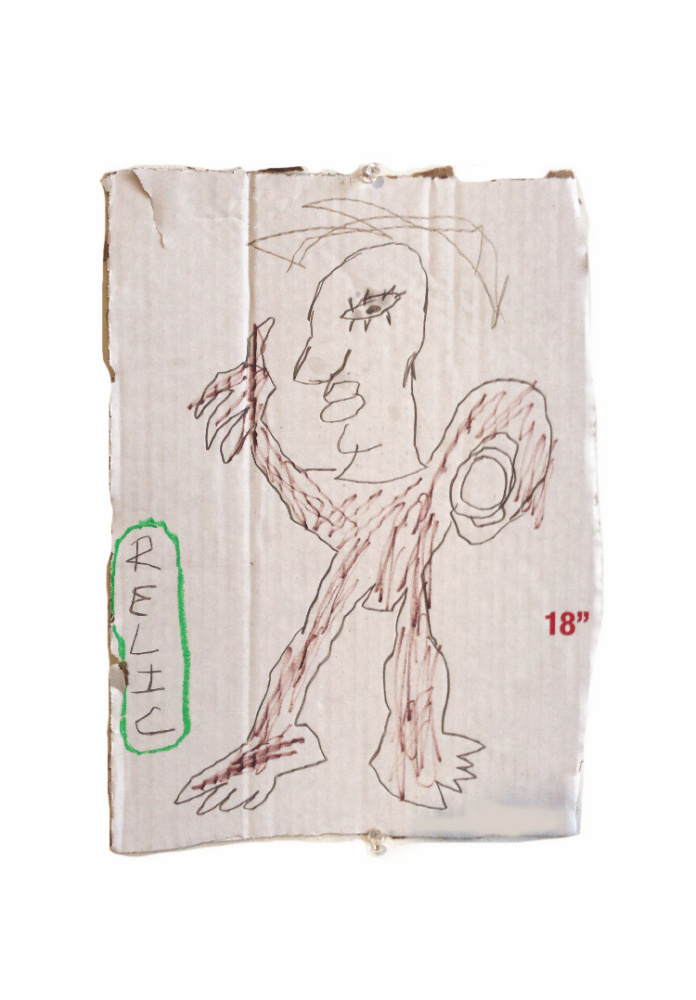
JC: You’re making a t-shirt for Burnaway right? What’s the deal with that? Is it from a painting here in the studio?
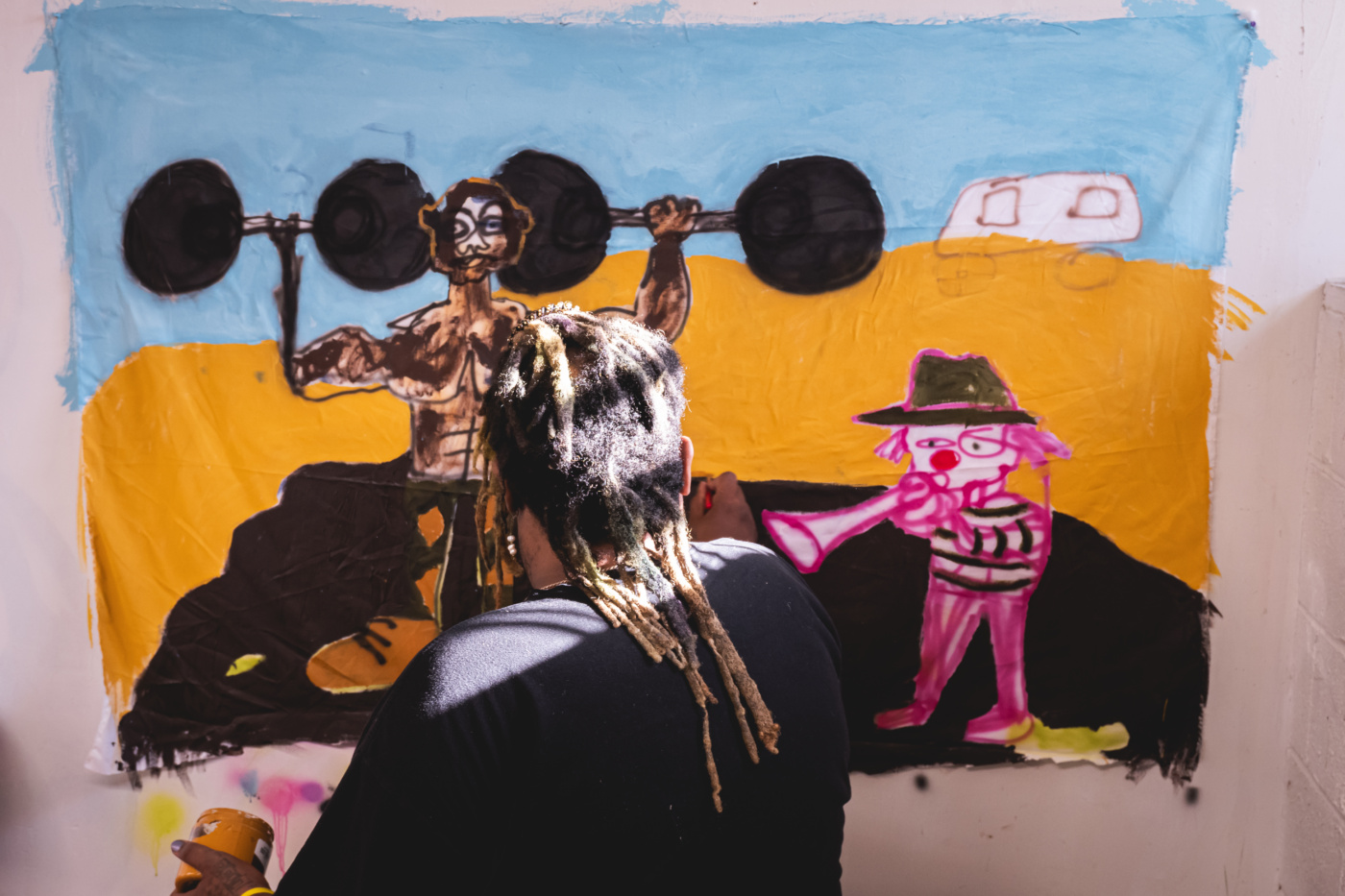
ME: So I’m making a t-shirt that’s based on a painting that’s here in the studio somewhere under one of these paintings. There’s a character inspired by the Fellini film La Strada. I got one with the Strong Man and then that one like feeble character in the corner playing a trumpet. That’s the character that’s going to be on this t-shirt.
For me, I think that character, if you look at the film, that character is somebody who is very naive. The movie is about a woman who knows nothing about sex and life outside of her town being manipulated by the Strong Man but it’s also a story about learning vulnerability and performing masculinity. And you know I don’t want to spoil it or anything, but it’s about like stepping out eventually on your own.
JC: You reference a lot of images, stories and movies. Have those always been important to you?
ME: It has. Man, I’m one of them what they call, latchkey kids. You know, like my mom’s going to work and I get off school, I’m just there to do my thing. Whatever I’m going to do, you know, no real supervision. But one of my passions, from a kid where I was watching movies, like Turner Classic Movie channels and stuff like that. So I’m sitting up here watching, I’m like twelve watching, “Guess Who’s Coming to Dinner” (1967) with Spencer Tracy and Sidney Poitier. Movies have always been an integral part of my life and practice.
JC: Why not make movies then?
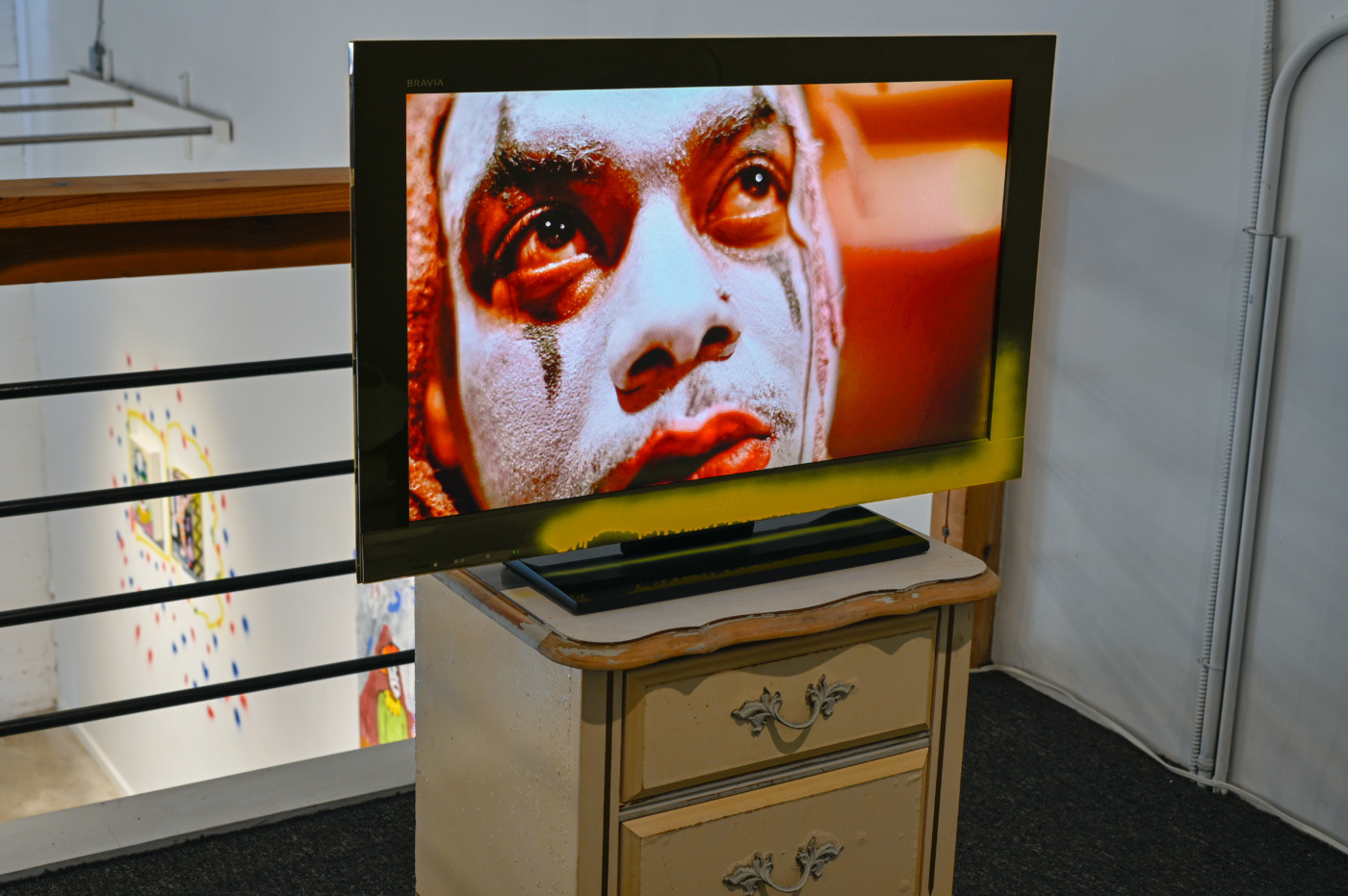
ME: I actually do. I’m getting deeper into the movie making process. I shot my first feature. We started 2023. You might notice the clowns, I got this character I made called Nico the Clown. And I did a show in Nashville called Nico’s Playhouse. And it was about Nico, but somebody stealing their identity and making a whole body of work based on Nico’s identity. And I had two filmmaker friends from LA: Chris and Cicely Treasure. They happened to be living in Nashville at the time. And I debuted my first clown painting in one of these shows talking with them. I’m like, you know, what do I have to do? What would I have to do to bring this character to life? They were like, we got all the equipment and cameras. All we got to do is write the script and go.
Man, I got funding. I think I ended up spending about 30K of funding from different sources. We started shooting in Nashville. Then that ended up taking us to LA, Vegas, Phoenix, back to LA. And now we got a film and they’re editing now.
JC: There is this throughline of mentors, community and people in your work that I think is interesting. Normally, this kind of thing is corny, but it seems like with your practice, the foundation really is people. There’s people all over the work, there’s people in your life who you reference who influence the work. Movies and things like that are all productions that require so many different resources and so many different groups of people. This is actually more of an observation than a question: people are a big deal to you.
ME: It’s crazy. They are. People are a huge deal to me.
JC: Well, you’re in the right city then because you’re surrounded.
ME: Yeah, totally. And it was like that everywhere I’ve been. Like in Nashville before, while I was there, it’s people.
I’m so glad that you made that observation though because that is something that I don’t know if it gets really talked about when it comes to me, my work, or my practice. But that’s a huge part of everything that I do. I come from a place internally where I don’t want to do all this alone. There’s no fun in that. How can I bring other people with me? How can I serve other people at the same time? It’s interesting because I was already on the path of like, how do I serve other people?
JC: Why do you think that?
ME: I think that’s integral for us to start understanding each other, vibing with each other etc. One of my jobs, I feel like with the work, is to try to erase as much division and separatism as possible. So giving people a common ground to stand on, a place and time to sit in front of the work while talking to the person next to you is really important. For Nico’s Playhouse, we did a 30 minute live performance with these actors and where people got pied in the face. If you see the photos from that, it was a circle of people throughout this whole gallery on the top and bottom floors, zoomed in on our performance. They didn’t know what was coming next, but they were all in, feeling those feelings together. That’s what’s important for me.
Burnaway is excited to continue our Artist Editions, a short run of art objects created by artists from the South and the Caribbean and intended for a broad scope of discerning collectors.
For our fourth Artist Edition, Marlos E’van collaborated with Burnaway to create Sweet Lilly-Marie, a tee shirt inspired by a character in La Strada, one of E’van’s favorite films. Playing out in E’van’s practice of visual storytelling, Lilly-Marie represents family, innocence, adventure, love, triumph, and coming of age.
Sweet Lilly-Marie is available for pre-order only in the Burnaway shop through April 10, 2026.