
Arkansas-based artist Danqi Cai deconstructs the infallibility of language through an interdisciplinary practice that spans paper and printmaking, projection mapping, and installation. Words are reversed, hidden between layers of paper, and projected onto translucent surfaces. In her work, legibility does not necessitate understanding. By recognizing language as a culturally specific form of communication, Cai demonstrates how personal experience and upbringing shape one’s perception of the world.
This interview has been edited for length and clarity.
Jaiha Lee: Your early work featured more figurative depictions of children and in more recent work, like Refrain in Three Parts (2025), you reference the Chinese character for “child.” Is this theme of childhood one you’ll continue to explore in your work?
Danqi Cai: Absolutely, I think it’s still something that I will continue to explore. This is best illustrated with a current project I’m working on. I’m continuing to collaborate with composer Rodrigo Camargo who wrote the music for Refrain in Three Parts (2025). Imagine walking into a room with different toy instruments made out of paper cast. There’s a sonic environment that’s warm and harmonious, and when you interact with the instruments, you’re introducing interruptions and disruptions to the rhythms. With sustained engagement, there would be playable zones where visitors continue to play with the ones they’re drawn to after experimenting with the different sounds.

I’m excited to incorporate sound in my work because language is so relevant to sound. Infants discern different phonemes but only retain the ones that are actually present in an early environment. In aging, the plasticity is lost. For this new project, I’m thinking about how adults can metaphorically rehearse decisions that were made when they are most vulnerable. There’s no choice in the environment one is born in. The language being spoken, the familial and interpersonal relationships; they are not chosen, but they are formative.
JL: I’m hoping you could speak a bit more in depth about your exploration into printmaking. What drew you to the practice?
DC: I was introduced to printmaking when I was at the University of Virginia. I took Intro to Drawing with Akemi Ohira, who was one of the few women of color professors I had when I was there. She told me to take printmaking, so my introduction is inextricably tied to her as an educator.
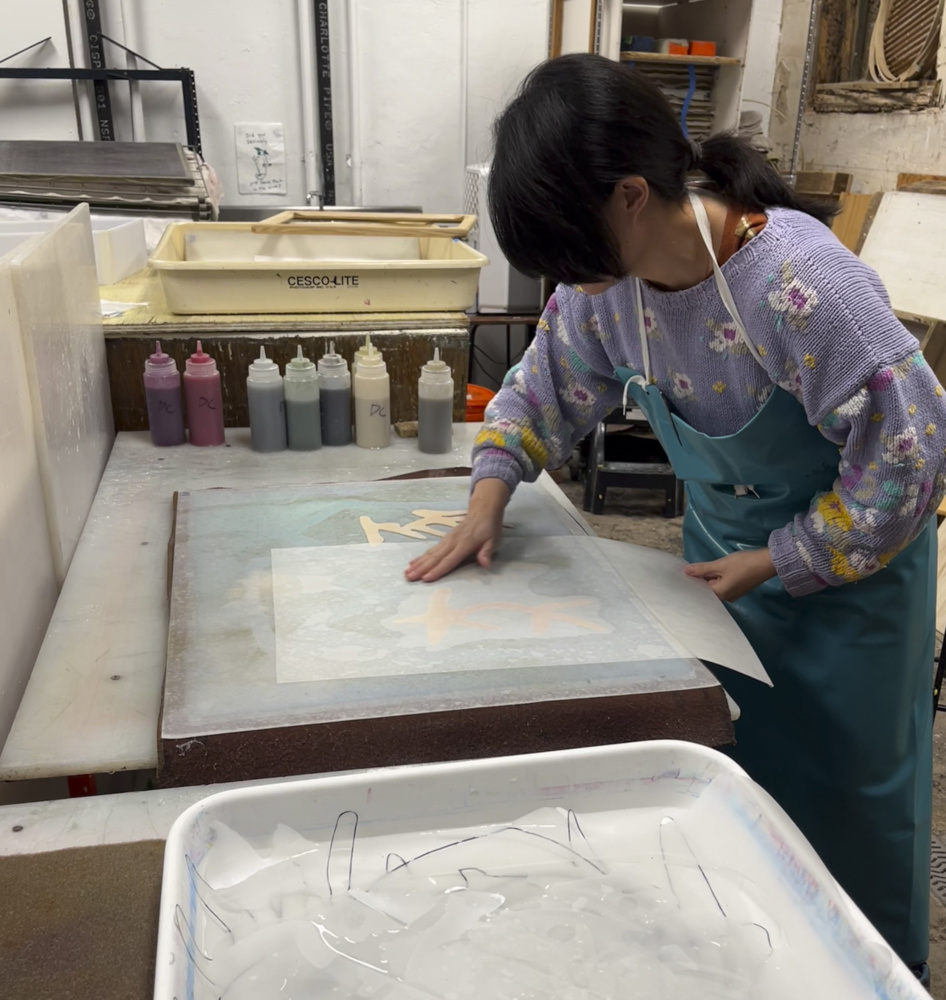
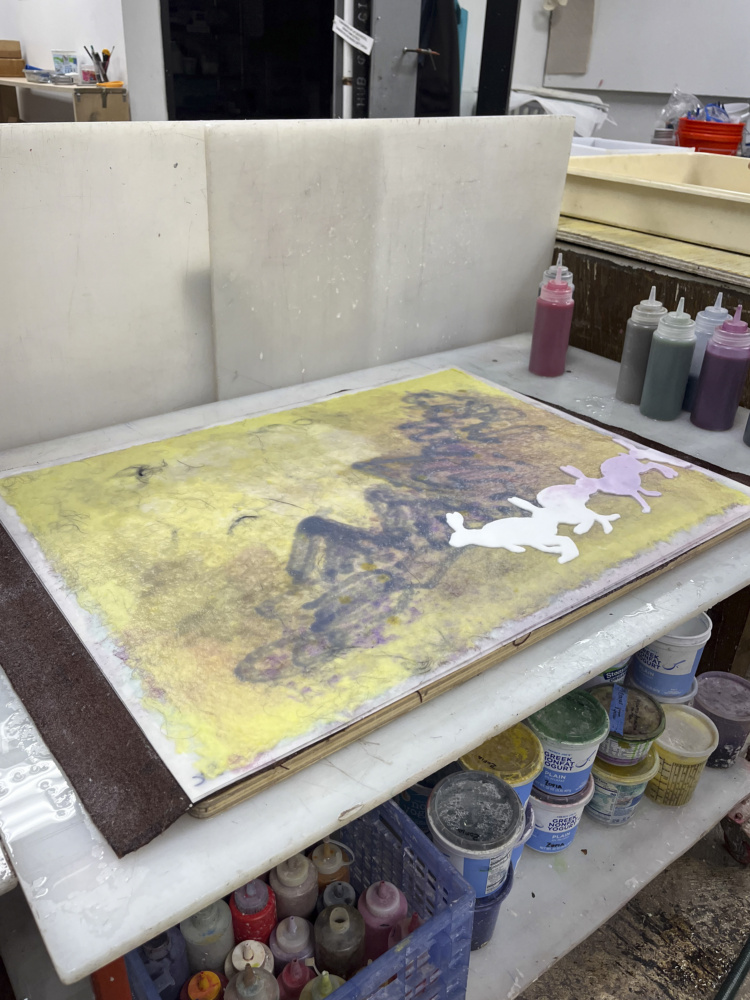
I fell in love with lithography. I feel like if you’re a rule-based person or you like rules, you will like printmaking. There’s also a lot of conceptual possibilities in printmaking. Art historian Jennifer L. Roberts has a lecture series on printmaking and reversal, which I reference a lot, and it’s really part of how I think through artmaking. Papermaking is very therapeutic, the process is very embodied and the transformation is visible. It’s the epitome of artistic sublimation, turning a negative into a positive through one’s own labor.
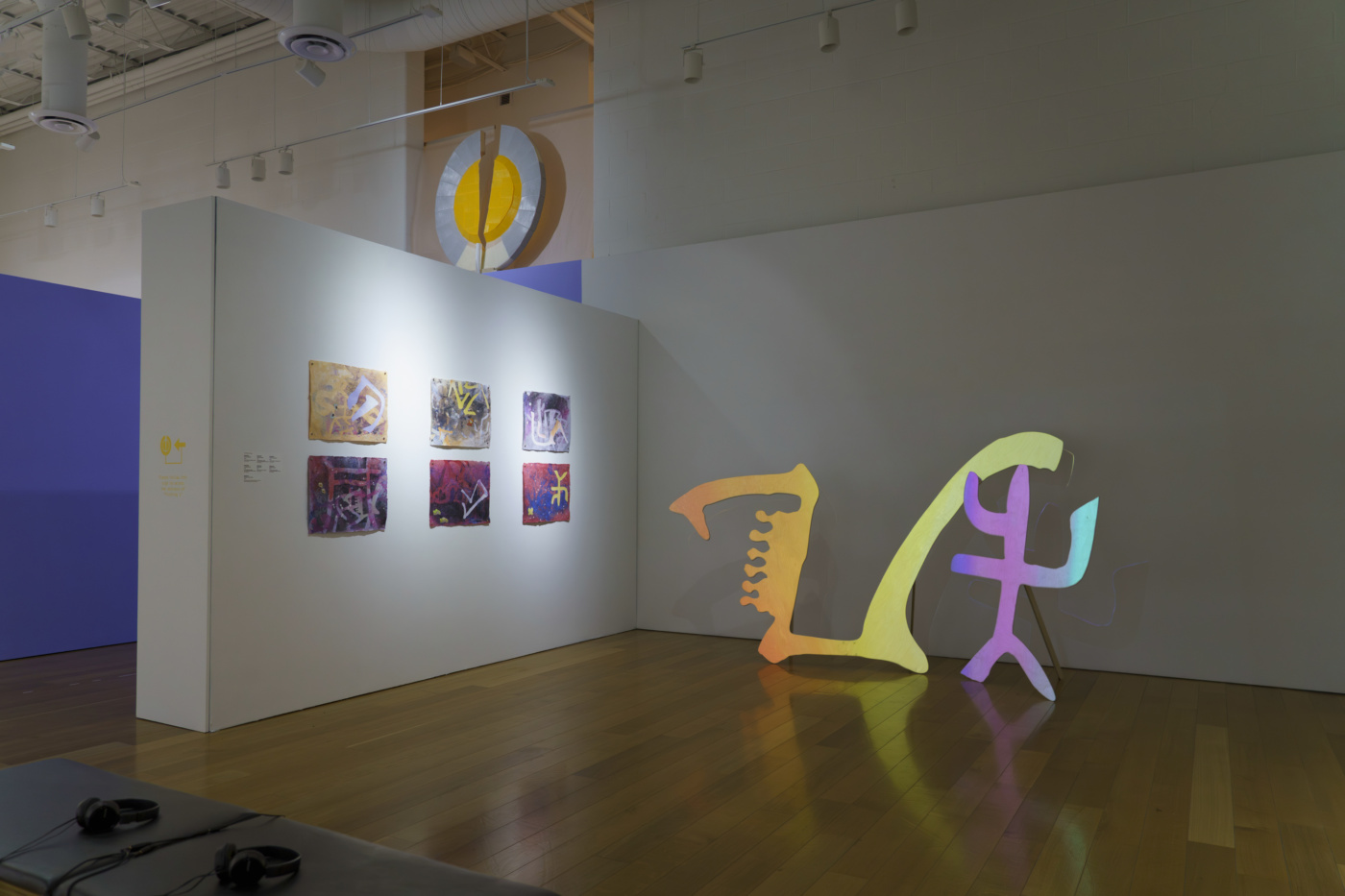
Yet, papermaking is very much a migrant technology. Actually, both paper and print are migrant technologies. The narrow definition of paper started in China and then spread to nearby Asian countries. Then, through trade, it arrived to the Islamic world, and through conquest, spread to the Andalusian region, entering through Spain, and spreading to the rest of Europe. Paper is a migrant technology. Historically and right now, the regime of documentation is about who has paper and who doesn’t have paper. It’s very much tied to colonial power struggles about who gets to produce paper. There’s a tension.
JL: I definitely see that connection because it’s similar to how knowledge is passed down or transferred. The thousand-year-old tradition of papermaking is completely ubiquitous today. Now you combine paper with contemporary mediums like video and projection mapping, and you almost seem to collapse that difference in time. By situating both in the same place, you’re forcing viewers to think about new ways of interacting with art.
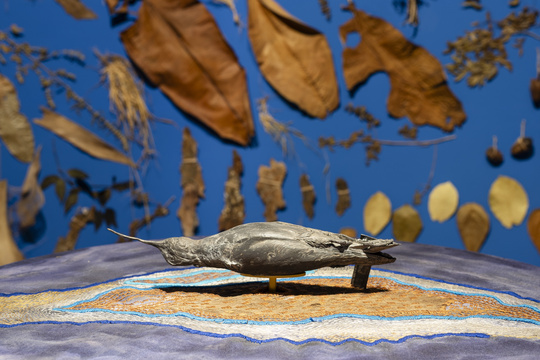
DC: Marrying papermaking and animation projection creates an effect where the work is multidimensional. There’s a front and a back, and the reversal is experienced. Also, the layering, the hierarchy, it changes, right? Information can be hidden in between layers of paper, and with animation, the hidden information is only seen when it’s backlit. It’s a metaphor of how I see individuals, and particularly bicultural or multicultural immigrants. I wanted something in my work where there’s an “easy to miss-ness.” Blink and then it’s gone. Animation, when it’s very fleeting, can do that. It rewards close looking. It’s there, but it needs to be noticed and once noticed, it’s unseeable.
JL: A lot of your recent projects include collaborations with other artists. Does that allow you to be a bit more expansive in your practice?
DC: Especially after my thesis work, which was extremely personal and specific, I always had a hope of making it clear that what I’m addressing is a universal condition, although I’m entering it from a personal standpoint. We were all infants once, right? Things learned in the past now want to be unlearned. Collaboration, for me, is one way to broaden my practice. I’m glad to be able to produce work in that way that refers to this as a shared condition. It’s not just unique to my experience.
JL: A concept I encountered through your work was mistranslation. The idea that directly translating a word or phrase does not guarantee complete understanding. Do you see this type of mistranslation as an inevitable part of your work? Why did you want to explore that in your practice?
DC: A lot of times in directly translating, there’s always gains and losses. I feel like language, in general, can feel like direct communication, but it’s actually so opaque. Linda Hutcheon talked about it in terms of adaptation. With communication, there’s always a layer of adaptation. What leaves your mouth? What’s your intention? It gets filtered through the adaptation. It gets adapted by the time it reaches the other person’s ears. Always filtering and translating and adapting things based on personal foundation.
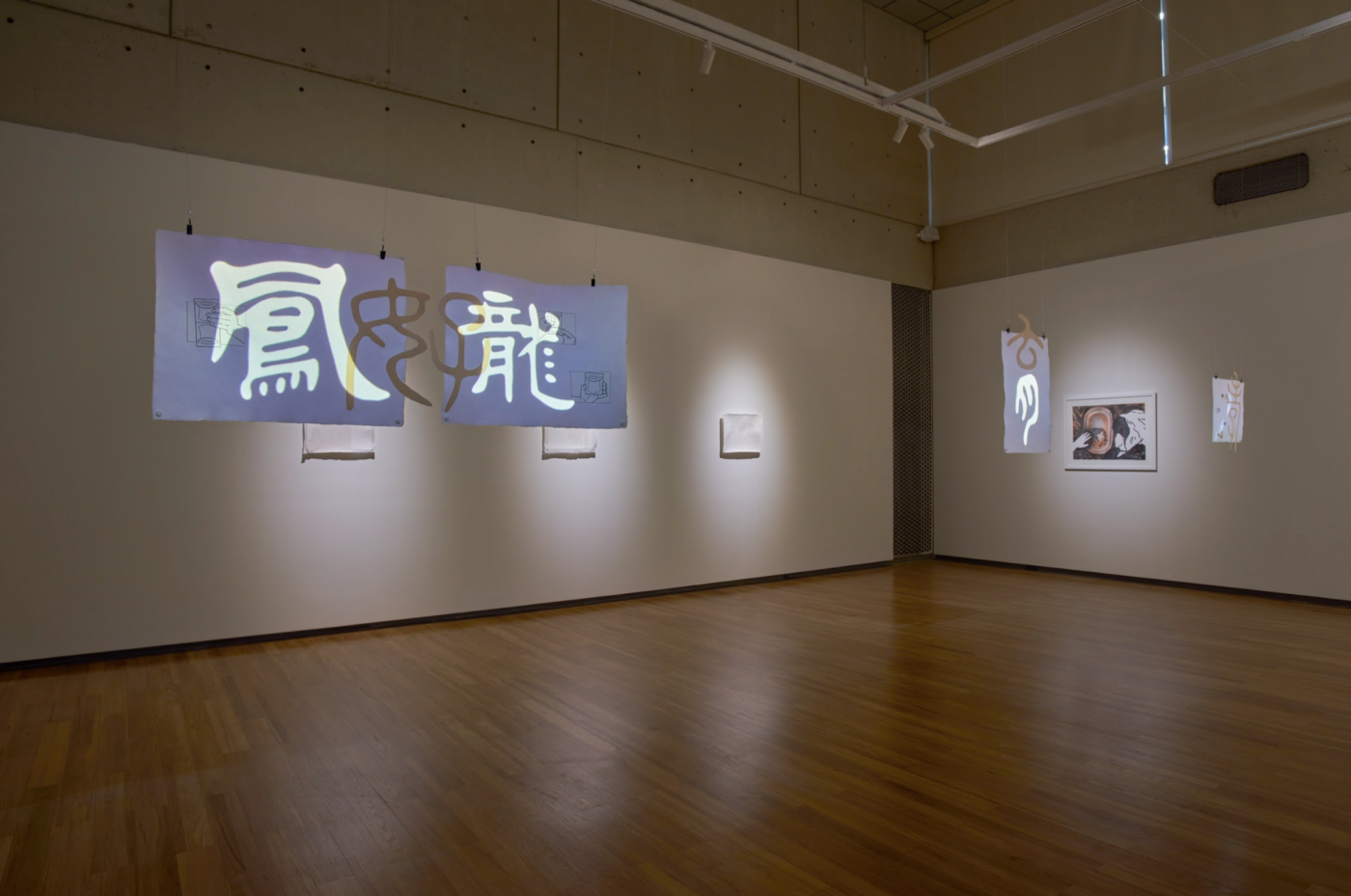
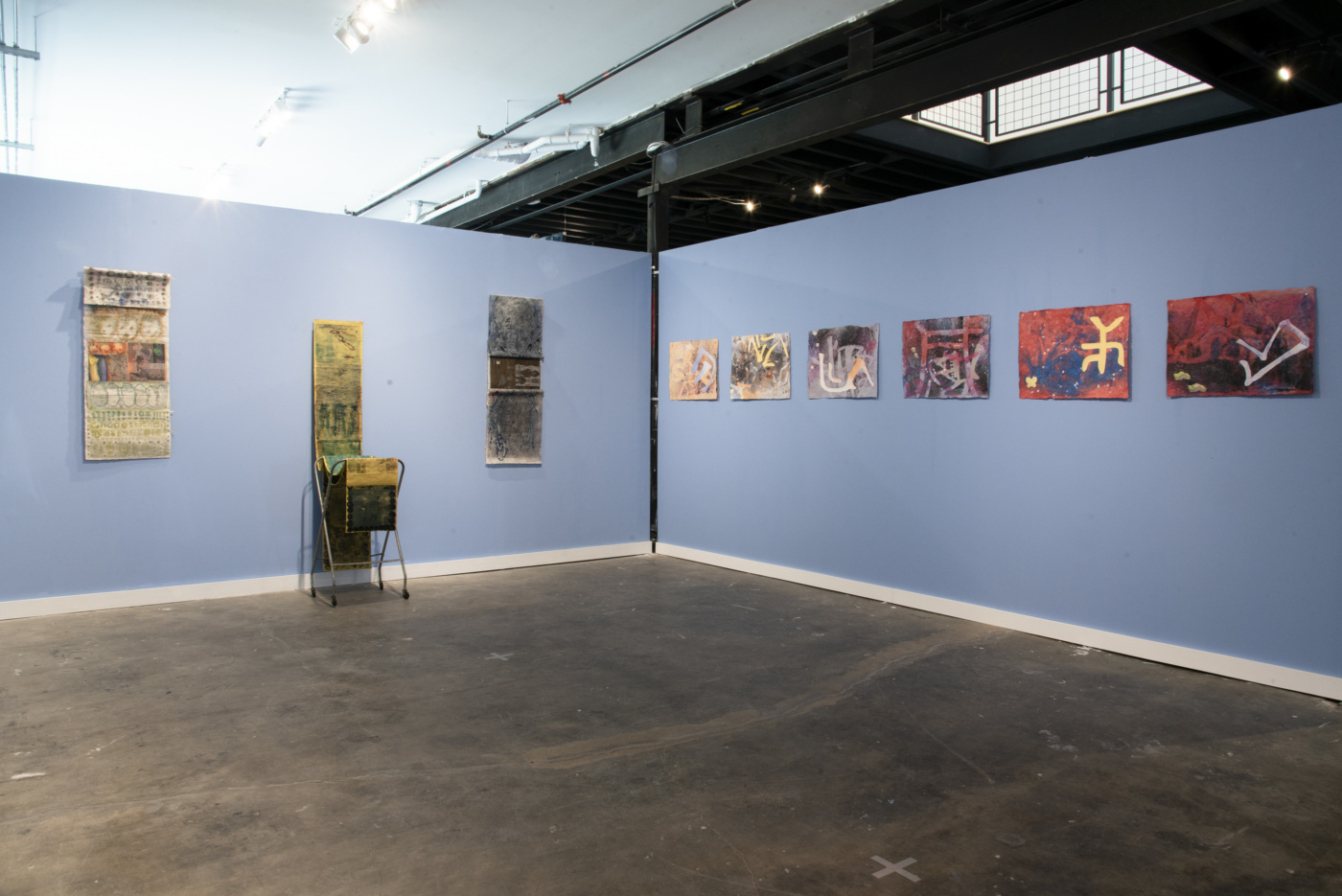
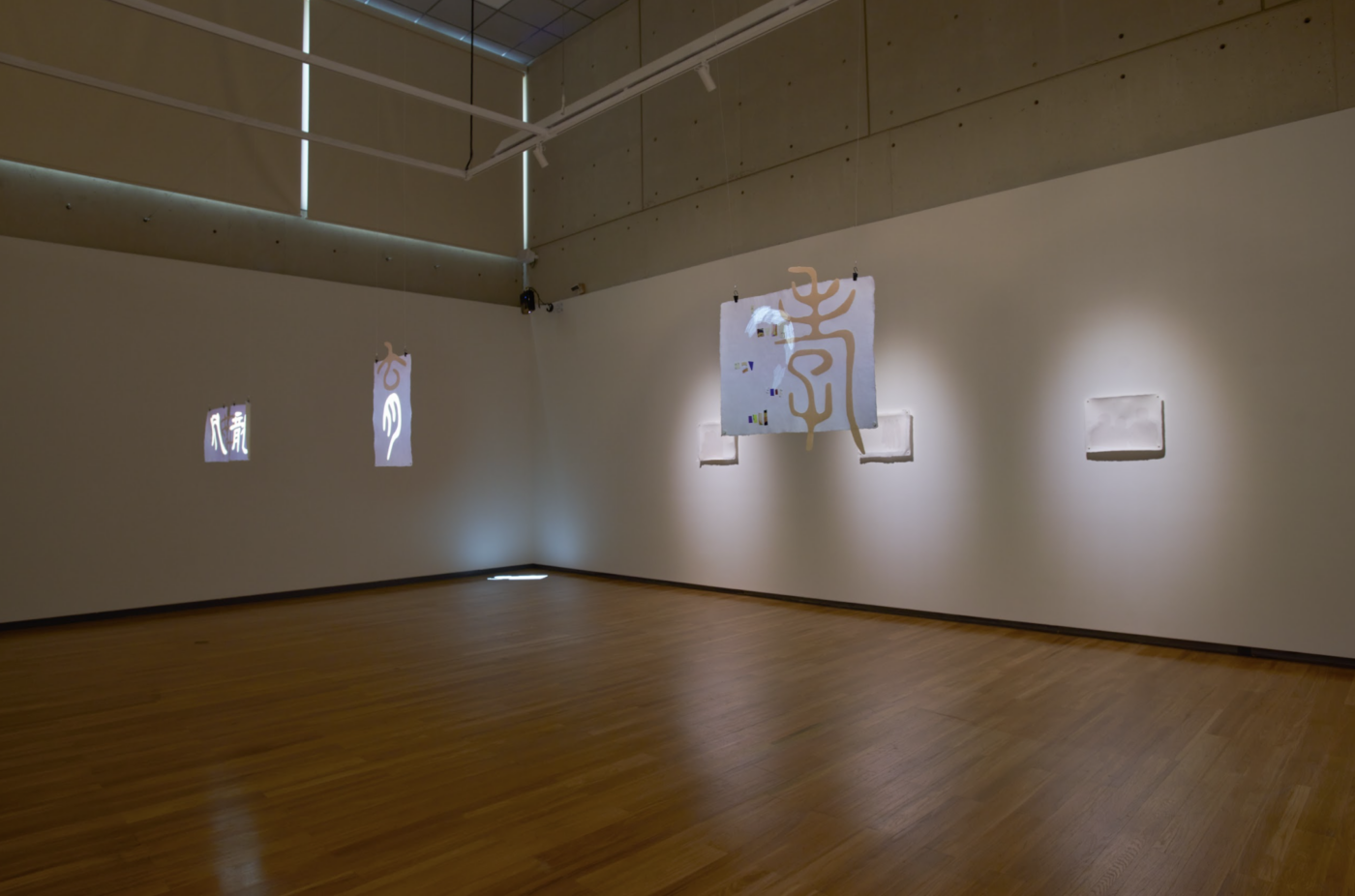
Mistranslation is inevitable. I don’t think it’s just unique to my work, or I should just say that I don’t intend it. Mistranslation is not a goal. It’s just that I see it as inevitable. That’s true for all work, that it’s impossible to speak to everyone. It’s not a prerequisite to know Chinese, but if you share the linguistic or cultural background, then you might see a layer that is potentially insensible to other people. That’s completely fine.
JL: You said it so well. The fact that so many people are coming and seeing your work from different contexts, from different cultural experiences and backgrounds, lends itself to the opportunity for mistranslations. It doesn’t set these interpretations in stone. I’m also curious about a word that I came across in your bio: acculturation. Why did you use that word to describe your experience as an artist in particular?
DC: When I use acculturation, I use it to summarize the fact that I think and dream in English. The way of thinking that I use on a day-to-day basis has fundamentally shifted. Like an anthropologist doing field work, there’s an immersion into a different culture, right? Adapting one’s way of life, but at the same time, retaining an understanding of what it is like to think as an outsider, to be an observer. I also feel like from the standpoint of the art field, there’s a pressure to be legible to the dominant group. It seems to be all about legibility. There should be an allowance to do whatever kind of work. It doesn’t necessarily have to read a certain way or be legible. It’s unfortunate that there’s this specific pressure on artists.
The language being spoken, the familial and interpersonal relationships; they are not chosen, but they are formative.
I don’t know how commonly shared this sentiment is among artists but, and I tell my students too, you’re allowed to have your personal experience with the art. I feel like once the maker makes it, the relationship to the work is personal as long as it is supported with formal analysis. I don’t take the wall label in a museum as the correct answer. I want to have a personal experience. Do I feel sad or happy? Why? I want people to feel that way about my work too.