My tío abuelo was a doctor when Cuba sent him to Angola in the 1970s. He was part of the massive wave of internationalist aid that linked the Caribbean island to struggles for liberation across Africa. Once, my mom recounts to me, he performed a C-section with no electricity, guiding his hands by flashlight in the middle of a war. When he came back to Havana, the state rewarded him with what passed for privilege in a country under embargo and rigid state control: permission to build a home on top of his Marianao house, and the rare chance to purchase a car.
“You went to Angola and you came back a hero,” my mom says.
It was the same car—his Russian Lada—that met me at the airport. My first glimpse of Havana was framed through those windows: palm trees interspersed with decaying concrete.
I’ve walked past those buildings countless times, without knowing they were born from another kind of heroism: a shared belief that architecture could be an infrastructure for liberation rather than domination. It is here, in this triangulation of architecture, memory, and ideology, that the work of Cuban artist Carlos Garaicoa becomes an essential lens. Garaicoa has spent three decades exploring Havana’s built environment as a political archive—mapping ruins, unfinished buildings, and stalled utopian projects. His practice makes clear that architecture is never neutral. Buildings are records of ambition and survival.
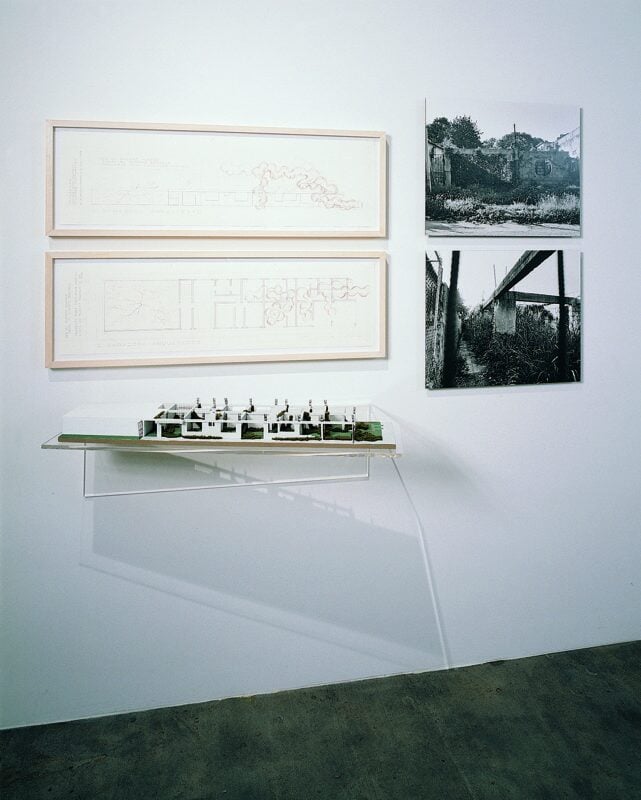
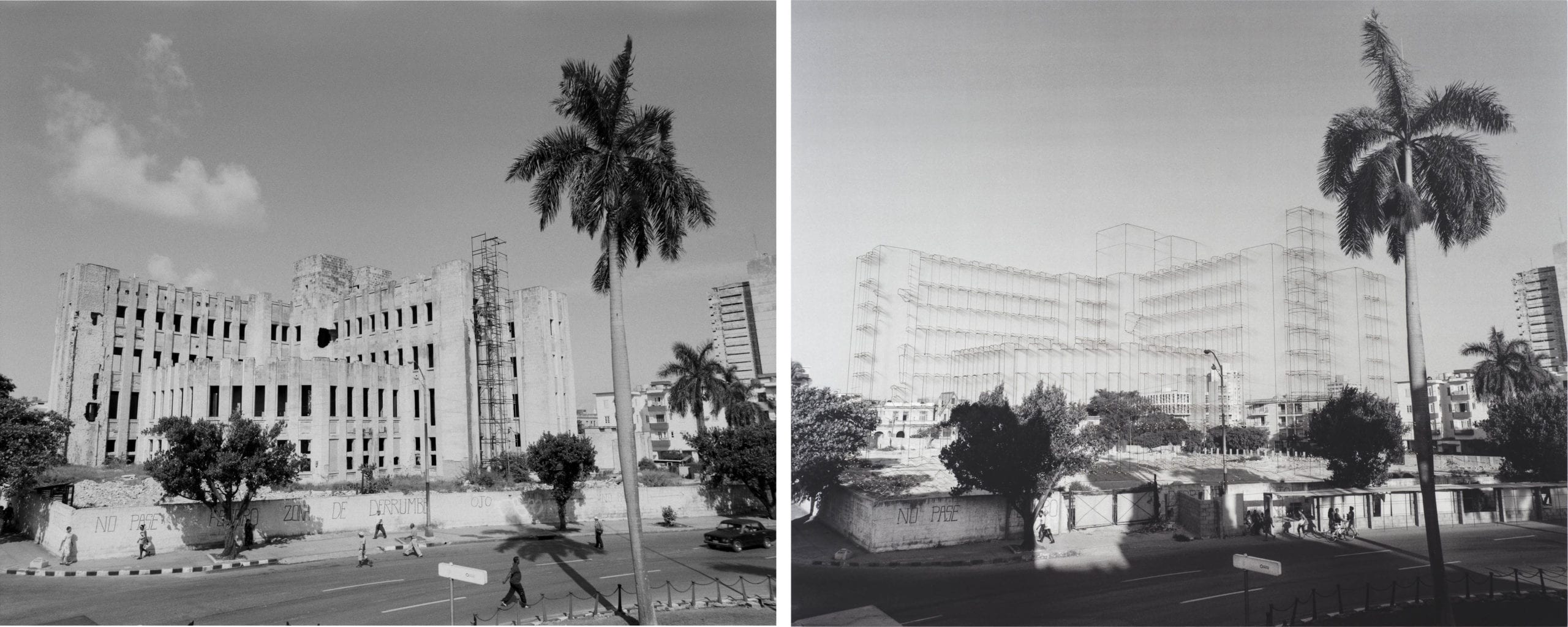
In his landmark series Continuity of Somebody’s Architecture (2002), Garaicoa photographs abandoned microbrigade buildings and pairs them with meticulous architectural models imagining their completion.[1] Rather than mourning what was lost, he proposes alternate futures: what the city might have been, had political will, economic conditions, or international alliances aligned differently.
In Garaicoa’s work, these untold stories often surface through repetition and pattern. The modular logic of certain housing blocks—their stacked slabs, exposed joints, and standardized proportions—becomes a visual language he returns to again and again. His photographs linger on seams: joints where prefabricated elements meet, where repairs interrupt original plans, and improvisation fills the gaps left by stalled construction. A system of building emerges—one that points to when Havana was part of a transnational architectural experiment shaped by socialist exchange rather than colonial extraction. The city itself becomes an archive of the circulation of ideas and material technologies exchanged between Yugoslavia, Cuba, and Angola.
This is also the terrain mapped by Prefabricating Solidarity: IMS-Žeželj Between Yugoslavia, Cuba, and Angola, the exhibition shown last year at Vanderbilt University’s Engine for Art, Democracy & Justice (EADJ). It carefully traces how a Yugoslav system of prefabricated construction traveled between Belgrade, Havana, and Luanda in the 1970s and ’80s.
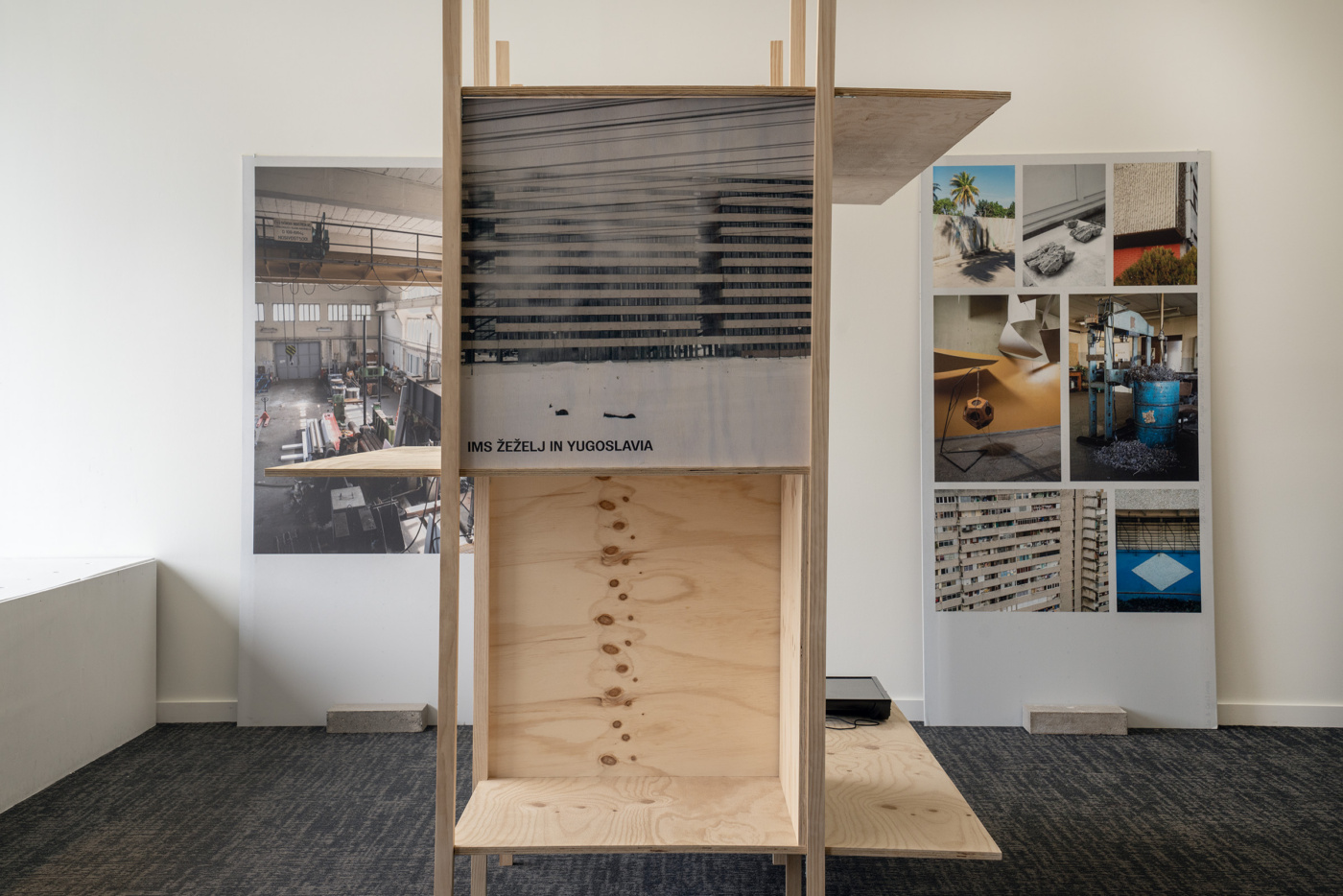
If the exhibition at the EADJ reconstructs the political and logistical history of the IMS system, Garaicoa offers an emotional and conceptual counterpart. His work emerged during the 1990s Special Period, a time when Cuba’s economy collapsed, and construction projects froze in place. He has described these stalled structures as “ruins of the future”—not remnants of the past, but the solidified failures of unfulfilled plans. Read through Garaicoa’s lens, these structures register as traces of shared utopian dreams imagined laterally—among postcolonial societies seeking to build dignified futures on their own terms. It is this infrastructural lineage—embedded in the everyday architecture Garaicoa documents—that Prefabricating Solidarity later makes explicit, tracing the political ambitions and lived consequences of a shared modernist vocabulary cast in concrete.[2]
Even at their inception, these systems were not without contradiction. The microbrigades, often celebrated as collective self-help housing, depended on a tightly controlled state apparatus that determined access to materials, labor, and land. Participation was collective, but not always voluntary; the same structures that enabled large-scale housing production also limited individual agency. The architecture that emerged from this system reflects that tension: an ethos of solidarity shaped within—and constrained by—centralized power.
Together, Prefabricating Solidarity and Garaicoa’s work pose a shared question:
What stories are carried in concrete, and how are inherited structures read?
This speculative approach around buildings as relics of survival mirrors the questions raised in Prefabricating Solidarity. Both treat architecture as something that can be read and rewritten, something lived. Both reveal that buildings are storytellers in their own right and that it falls to artists and historians to unearth what time has folded into them.
The IMS-Žeželj system was developed in Yugoslavia in the late 1940s as a highly rationalized method of prefabricated construction—modular, fast, and adaptable. In the 1970s and ’80s, Cuba adopted the system during an acute housing shortage, erecting IMS buildings in districts such as El Vedado, Alamar, and Cienfuegos. Angola deployed the system as well, building new urban neighborhoods as the country emerged from colonial rule. Fredo Rivera, one of the exhibition’s curators, traveled with their Serbian and Angolan colleagues searching for surviving IMS structures. “Architecture can tell stories political histories leave out,” Rivera says. “It reveals how solidarity was lived on a daily basis.” The research team discovered uncanny resonances: a tower in Havana resembled housing blocks in Serbia; a prefab neighborhood in Angola looked like a tropical echo of Eastern Europe. They’re evidence of a global modernism built through political cooperation outside the superpower divide.
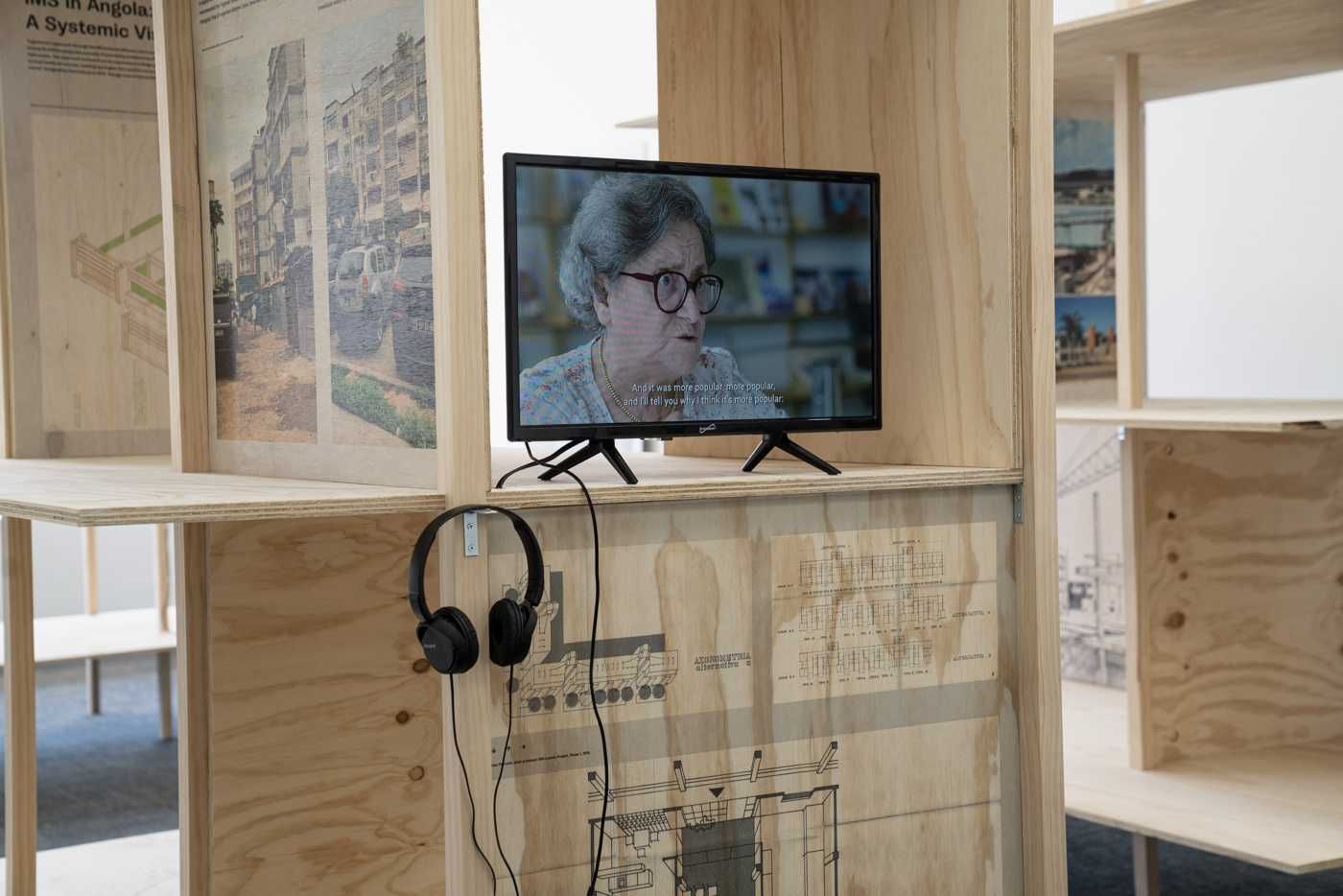
One of the exhibition’s most compelling gestures is its reframing of Cold War architectural history. Instead of the familiar East–West binary, Prefabricating Solidarity highlights a third vector: South–South collaboration among postcolonial nations. If the exhibition arrives at this reframing through archival research and geopolitical analysis, Garaicoa reaches a similar conclusion intuitively—by reading Havana’s unfinished and improvised architecture as evidence of solidarities forged beyond imperial centers.
The IMS buildings, with their weathered façades and improvised repairs, were imperfect but built with an ethos that feels rare: housing that centers dignity and community rather than speculation. The EADJ and Garaicoa’s practice don’t romanticize their subject, but collectively ask what can be learned from these flawed but ambitious ideas and subsequent structures—how ideas of collective housing might inform today’s crisis.
Today, those material conditions are once again being reshaped—but under far more acute strain. In 2026, a U.S.-imposed fuel blockade severely restricted Cuba’s access to oil, triggering widespread blackouts, transportation disruptions, and shortages that ripple through everyday life.[3] The infrastructure that sustains the city—its electrical grid, its transport systems, even its capacity to repair buildings—has become precarious. At the same time, the Cuban state continues to mediate access to resources, managing scarcity through centralized systems that can both sustain and constrain daily life.[4] For ordinary Cubans, survival unfolds within this dual pressure: external restriction and internal control. In this context, even the arrival of a single oil tanker becomes a charged event—a reminder that the island’s capacity to function remains tethered to global flows of material and power. If the microbrigades once embodied a vision of solidarity built through shared labor and exchange, the present moment reveals a harsher reality: infrastructure can just as easily be withheld or weaponized.
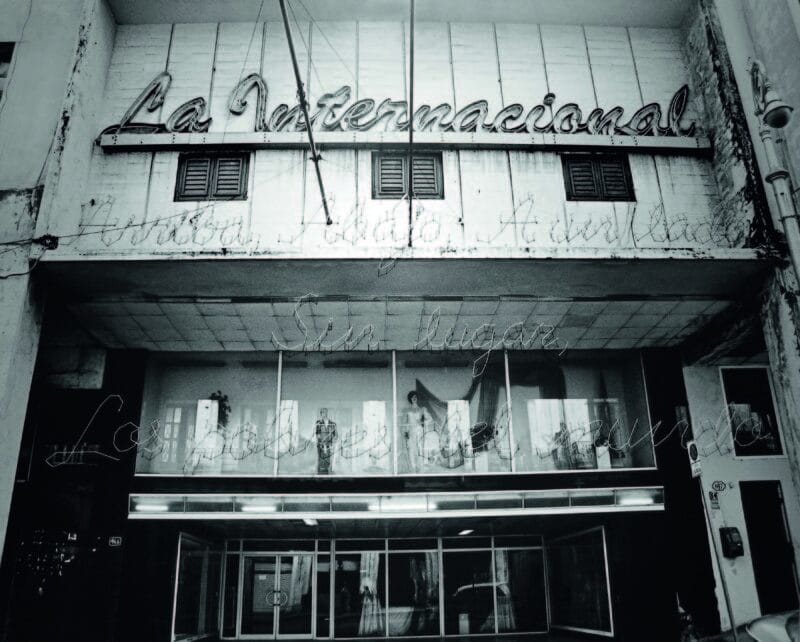
Garaicoa’s attention to unfinished, altered, and weathered buildings insists that architecture holds emotional residue, that it records the intimacy of everyday life lived within it. As I viewed the EADJ exhibition, I kept thinking of my mother’s tears in front of her Vedado building, of her uncle’s Lada waiting for me at the airport, and of the ways architecture quietly shapes the inherited stories.
Solidarity, too, is constructed. It can be fragile, cracked, or incomplete. It leaves traces—in buildings, in memories, in the improvisations people make while trying to live well inside imperfect worlds. In the surviving IMS structures of Havana, in Garaicoa’s speculative cities, and in the fragments of stories passed down through my family, I see the outlines of what was attempted—and the conditions that interrupted it.
Before the concrete sets again, the real question is: What forms of solidarity can be imagined now?
[1] Microbrigades were worker-based construction collectives formed by the Cuban state to address housing shortages, in which nonprofessional laborers built standardized apartment blocks for collective use—many of which remain unfinished or heavily modified today. Mathéy, Kosta. “MICROBRIGADAS IN CUBA: : A COLLECTIVE FORM OF SELF-HELP HOUSING.” The Netherlands Journal of Housing and Environmental Research 4, no. 1 (1989): 67–83. http://www.jstor.org/stable/43932851.
[2] Prefabricating Solidarity, documents how this technology moved across continents. The exhibition assembles archival photographs, blueprints, engineering manuals, and interviews with planners and residents. It was conceived and organized by a collaborative curatorial and authorial team, including Vladimir Kulić, Vesna Pavlović, Jelica Jovanović, Fredo Rivera, Ana Knežević, and Emilia Epštajn. Exhibition and Graphic Design by Antun Sevšek and Damir Gamulin. The technical implementation by Ivan Vukdragović (Belgrade installation) and Taylor Raboin (Nashville Installation). The exhibition first premiered at the Museum of African Art, Belgrade (MAU) in May 2025.
Prefabricating Solidarity, documents how this technology moved across continents. The exhibition assembles archival photographs, blueprints, engineering manuals, and interviews with planners and residents.
[3] Mauricio Torres and Michael Rios, “Cuba Is Going Dark Under US Pressure. How the Crisis Unfolded and Why Its Troubles Are Far from Over,” CNN, March 18, 2026,https://www.cnn.com/2026/03/18/americas/cuba-us-pressure-blackout-latam-intl
[4] María Elena Rodríguez, “In Cuba, Government Mismanagement and US Oil Moves Tell in Human Suffering,” The New Humanitarian, March 3, 2026, https://www.thenewhumanitarian.org/news-feature/2026/03/03/cuba-relentless-us-pressure-human-suffering