Caribbean Diasporic Artists on the Frontlines of Response
There have been regular survey exhibitions of contemporary Caribbean art throughout the twenty-first century so far. Questions continue to arise when reflecting on shows such as: Infinite Island (2007), Caribbean: Crossroads of the World (2012), Relational Undercurrents (2018), The Other Side of Now (2019), Tropical is Political (2023), Forecast Form (2023), no existe un mundo poshuracán (20223), and Surrealism and Us (2024). Where are we now, nineteen years since Infinite Island, as the world dives deeper into climate catastrophe? What does it mean for the Caribbean to not just be the crossroads of the world’s imperial enterprises, but also now the crossroads and climate frontlines for the end of this world? As coral reefs bleach from warming waters, sea levels rise steadily to absorb the archipelago, and hurricanes become common black swan events, what shape does care in precarity take before the Caribbean disappears from our land- and seascapes, to become seemingly inevitable geologic history?
Fourteen years later, the Caribbean is face-to-face with climate crisis as its lived reality. In 2022, United Nations Secretary-General António Guterres declared that the Caribbean was “‘ground zero’ for the global climate emergency.” In more local contexts on the ground, a press release on the financial impacts of climate change on the Caribbean, the Central Bank of Barbados shared that the region had experienced 793 climate events between 2000 and 2023 alone—with approximately fifty percent of those events being tropical storms, and over thirty percent being floods. In May of 2024, several organisations met in Bridgetown, Barbados to sign a memo of understanding on disaster risk management and resilience in Latin America and the Caribbean focused on natural and man-made disaster preparedness.. Beyond carbon emission reductions, adapting to climate change has been recommended as an additional strategy by the United Nations, with adaptation plans, information on regional knowledge networks, and educational resources readily available on the UN’s Environment Programme site.
Thinking through Ruben Natal-San Miguel’s Puerto Rico: Paradise Ruined, Its Aftermath (2017 to present), Joiri Minaya’s The Cloaking (2017-2021) series, and Scherezade Garcia’s Sábana de la Mar, Salvation Action (2003) with these questions and contexts in mind, the idea of taking care in the midst of precarity in the Caribbean can take shape as direct and lifesaving community action, revisioning violent cityscapes with environmental possibilities, and documenting landscapes despite their devastation to create an archive of what remains. The various manifestations of these actions are as complex as the intersections between their artistic mediums and their diasporic identities. Born in Arecibo, Puerto Rico and based in Harlem in New York, Natal-San Miguel is a self-taught artist who uses photography as his main medium to create spontaneous intimate portraits of people he meets on his daily walks and also document everyday landscapes and scenes from life. Minaya, a Dominican-American artist based in New York (born in the city and raised in the Dominican Republic), deploys drawing, installation, performance, printmaking, photo, sculpture, textile, and video to reveal and critique colonialism’s tropical imaginary. Garcia, a Dominican-American artist based between Austin, Texas and Brooklyn, New York, uses installation, painting, and printmaking to unpack transgenerational memory and migration as impacted by colonialism and politics. The artists’ work is not only in conversation with each other’s, it is also in dialogue with the Caribbean’s reality and lived histories.
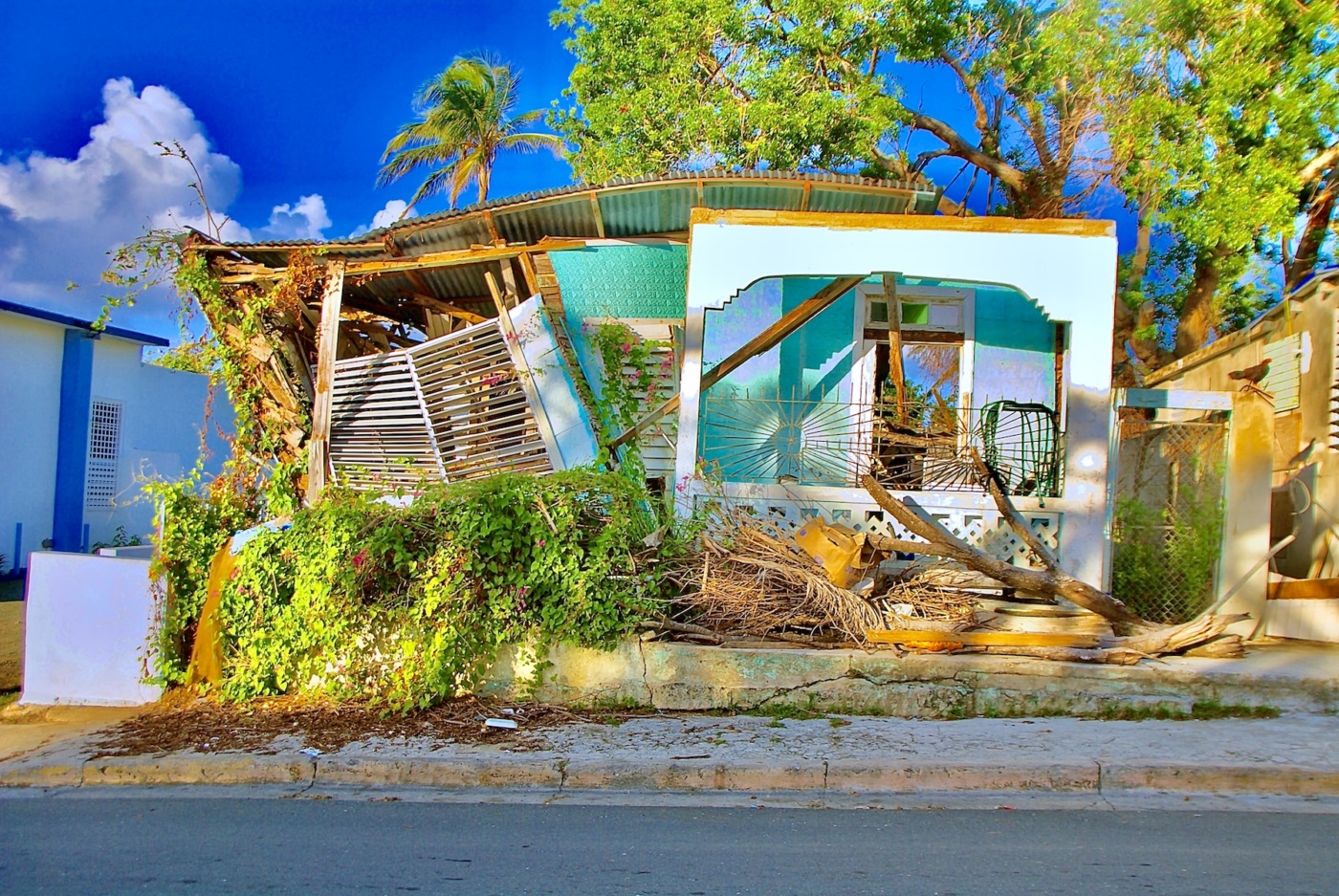
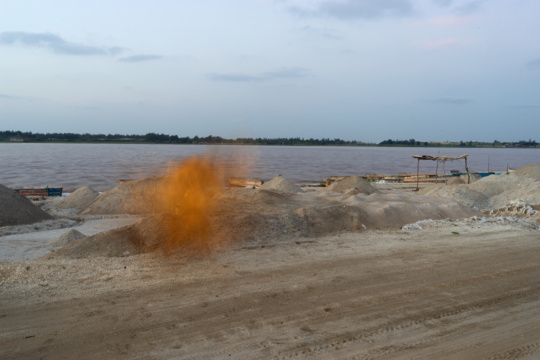
Ruben Natal-San Miguel’s Puerto Rico: Paradise Ruined, Its Aftermath (2017 to present) series features twenty photographs documenting the standing remains of homes across the island that were destroyed by Hurricane Maria in 2017. Natal-San Miguel documents the remains of homes that continue to stand long after the storm’s impact, capturing the memory of the structures, that once housed families that have since been displaced, while also tracking how these structures deteriorate over time as the original inhabitants are unable to repair and their abodes, with particular documentary attention paid to two sites that experienced extensive destruction: the La Perla neighborhood and Vieques Island.
Natal-San Miguel’s repeated documentation of these decaying structures functions in several ways: memorializing the homes and families that once lived where these remains stand; producing a chronological record of structural deterioration that attests to the economic inability to repair these sites (a testament to the slow responses from governing agencies and organizations to the environmental crisis in the hurricane’s wake); and an archive of what remains and survives in spite of environmental catastrophe. With each click of the shutter, Natal-San Miguel maps a cartography of climate catastrophe through this series, a map that includes landscapes that once existed overlain by the destruction they endured and the evidence of what remains as testimonies to the reality of climate crisis.
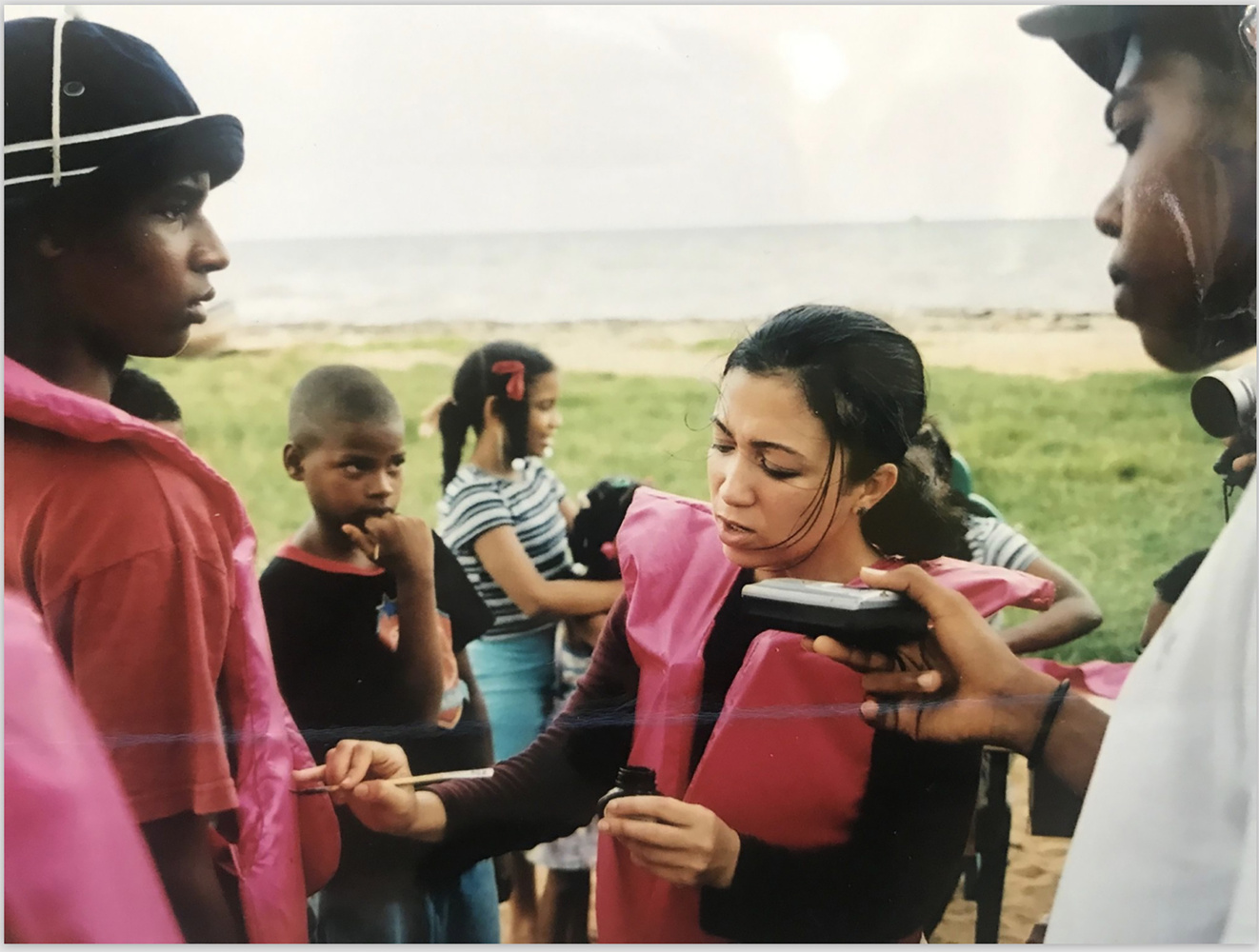
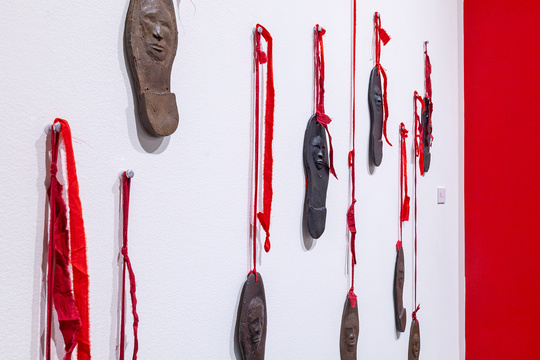
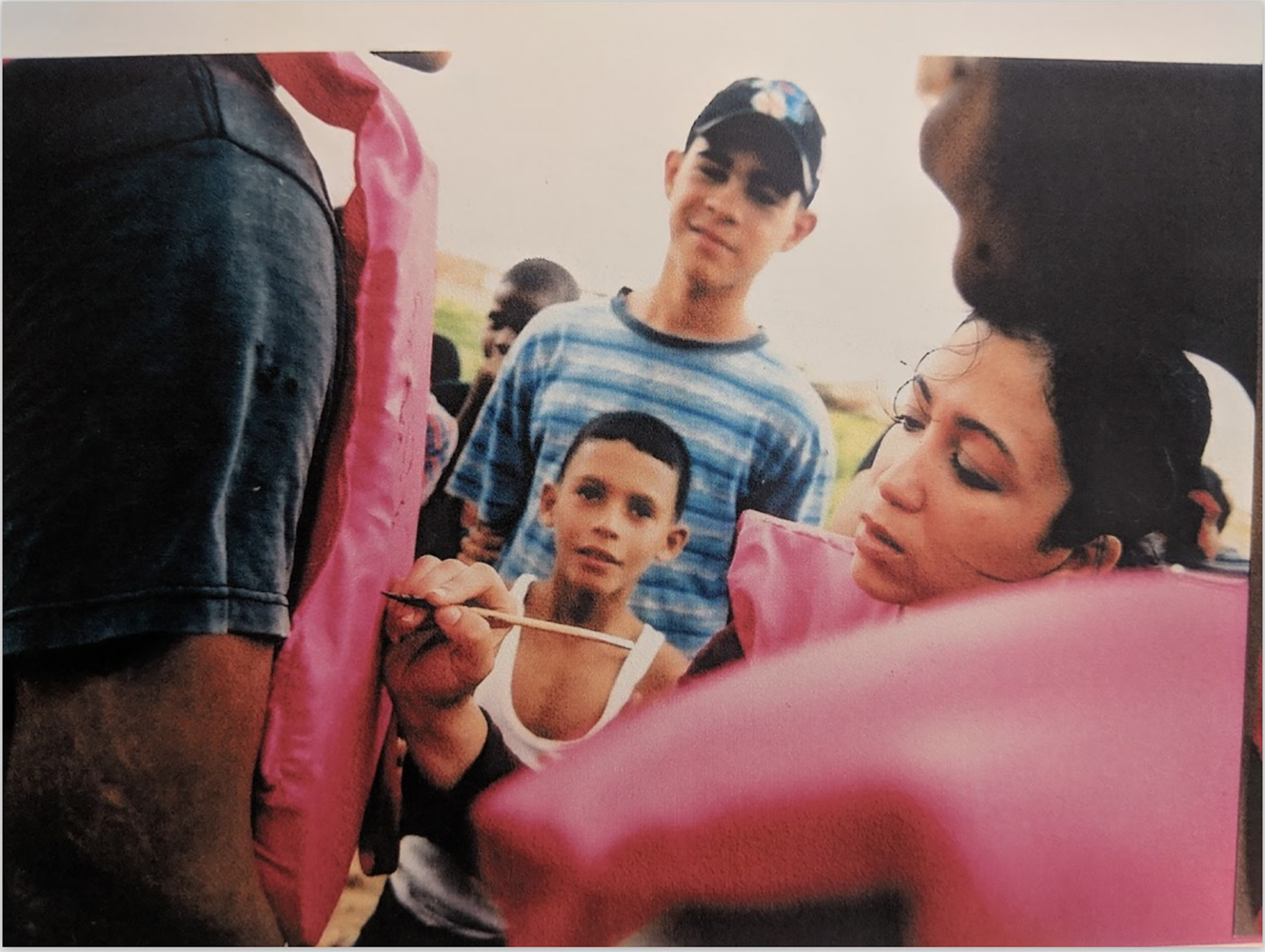
Scherezade Garcia’s Salvation action, Sabana de la Mar (2003) takes a direct-action approach to care in precarity. Garcia worked with curator Alanna Lockwood to create lifejackets for migrants to wear when attempting to leave the Dominican Republic by sea. Although executed in 2003, Garcia’s action reflects an ongoing crisis. The Missing Migrants Project estimates that 441 migrants have been lost trying to migrate from the Dominican Republic to Puerto Rico since 2014, estimating that 430 of those migrants perished by drowning. This number represents approximately a quarter of the total 1,728 migrant deaths by drowning recorded in the Caribbean since 2014 by the project. Garcia’s Salvation action is an act of direct care by providing a lifesaving object (lifejackets) to migrants who would otherwise be unprotected while attempting to cross by sea. The artist not only makes the lifejackets and shows wearers how to put them on, but she also completes the equipment process by painting words, images, flourishes, and other icons onto the lifejackets by hand with ink, almost as if casting a visual spell or prayer to protect them from harm. That the lifejackets are both art objects and flotation devices draws a connection between art as artfulness or cleverness that can generate solutions to real world problems like reducing the probability of more life being lost at sea by using these functional art objects.
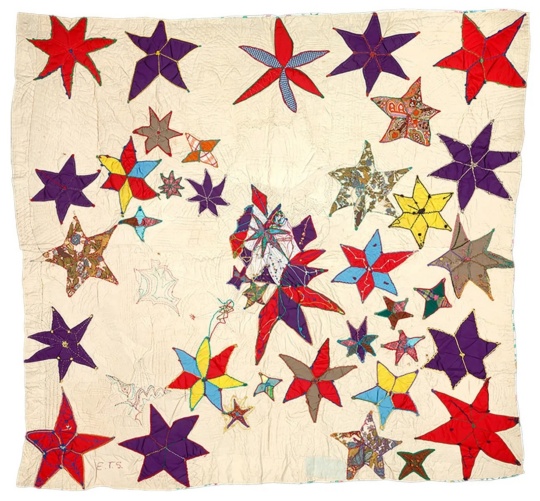
Joiri Minaya’s use of camouflage in The Cloaking (2017-2019) series acts as a form of site responsive care in precarity. Minaya describes camouflage as a survival tactic within the natural world that can become a liberatory tool through its ability to quickly reveal and conceal both known and hidden histories to the viewer. In this series, Minaya covers public sculptures dedicated to colonial histories with textiles patterned with botanical illustrations of her own making. They depict plants used by colonized peoples as weapons, poisons, or other tools of resistance against their colonizers.
By covering the colonial statue with these patterned textiles, Minaya shares that they become monuments to people who resisted colonialism, but were never recognized for doing so.
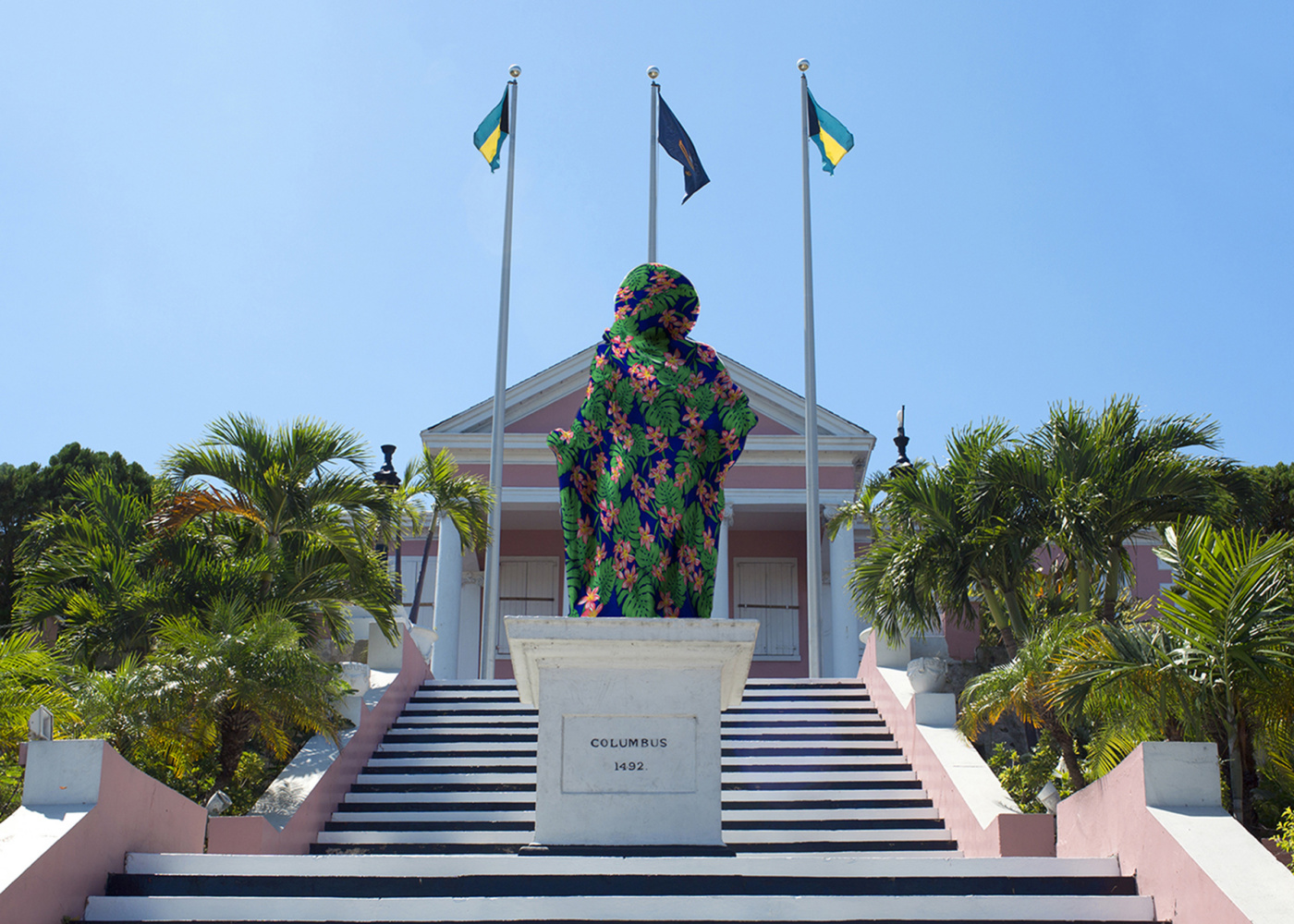
Minaya’s act of covering monuments to colonial violence shields viewers from monuments that visually recall the historical trauma that Caribbean peoples have endured, and continue to be impacted by, while also revisioning the landscape with a symbolic artistic gesture of nature reclaiming the violated land. In thinking of cloaking as evoking a reclamation from violence, with an emphasis on indigenous ancestors and their reverence to landscape, the series’ title extends beyond the artist’s action of covering the colonial monuments, and into a sense of warmth and protection that being cloaked in a protective material provides when faced by harsh elements. In this way, Minaya’s action of cloaking becomes an act of care, offering a metaphorical salve that attempts to prevent the Caribbean viewer from being retraumatized by the monumental reminders dotting the cityscapes they move across every day—offering care for collective memory in the everyday.
Together, Natal-San Miguel, Garcia, and Minaya’s works embody a core tenet of Caribbean life embedded even in diaspora: carework is a practice of everyday life in a region irrevocably transformed by colonialism and climate change. If the Caribbean is truly the frontlines for the end of this world as we know it, will the rest of the world follow suit and adapt everyday community carework practices in time before the end of the world becomes a global certainty under climate catastrophe’s ever expanding impacts? Against our present newscape’s backdrop, I’m not sure if we have enough time left to tell, but I hope we do.
Cuidado En La Precariedad, Cuidado En Comunidad
Artistas Caribeños de la Diáspora en Primera Línea de Respuesta
En lo que va del siglo XXI se han curado periódicamente exposiciones de arte contemporáneo del Caribe. Al reflexionar sobre muestras como: Infinite Island (2007), Caribbean: Crossroads of the World (2012), Relational Undercurrents (2018), The Other Side of Now (2019), Tropical is Political (2023), Forecast Form (2023), no existe un mundo poshuracán (2022) y Surrealism and Us (2024) siguen surgiendo preguntas tales como: ¿Dónde estamos ahora, diecinueve años después de Infinite Island, mientras el mundo se sumerge cada vez más en la catástrofe climática? ¿Qué significa para el Caribe no solo ser el cruce de los emprendimientos imperiales del mundo, sino ahora también el cruce y la primera línea climática del fin de este mundo? Mientras los arrecifes de coral se blanquean por el calentamiento de las aguas, el nivel del mar aumenta de manera constante absorbiendo el archipiélago caribeño y los huracanes son más extremos e impredecibles cada vez, ¿qué forma adopta el cuidado en la precariedad antes de que el Caribe desaparezca de nuestros paisajes terrestres y marinos para convertirse en una historia geológica aparentemente inevitable?
Catorce años después, el Caribe se encuentra cara a cara con la crisis climática como realidad viva. En 2022, el Secretario General de las Naciones Unidas, António Guterres, declaró que el Caribe era el “‘punto cero’ de la emergencia climática global”. En contextos más locales, en un comunicado de prensa sobre los impactos financieros del cambio climático en el Caribe, el Banco Central de Barbados compartió que la región había experimentado 793 eventos climáticos entre los años 2000 y 2023, con aproximadamente el 50 % de esos eventos siendo tormentas tropicales y más del 30 % siendo inundaciones. En mayo de 2024, varias organizaciones se reunieron en Bridgetown, Barbados, para firmar un memorando de entendimiento sobre la gestión del riesgo de desastres y la resiliencia en América Latina y el Caribe, centrado en la preparación ante desastres naturales y provocados por el ser humano. Más allá de la reducción de emisiones de carbono, la adaptación al cambio climático ha sido recomendada por las Naciones Unidas como una estrategia adicional, con planes de adaptación, información sobre redes regionales de conocimiento y recursos educativos disponibles en la página del Programa de Medio Ambiente de la ONU.
Reflexionando sobre Puerto Rico: Paradise Ruined, Its Aftermath (2017–presente) de Rubén Natal-San Miguel, la serie The Cloaking (2017–2021) de Joiri Minaya y Sábana de la Mar, Salvation Action (2003) de Scherezade García, con estas interrogantes y contextos en mente, la idea de cuidar en medio de la precariedad en el Caribe puede tomar forma de una acción comunitaria directa que salve vidas, revisar paisajes urbanos violentos con posibilidades ambientales y documentar paisajes a pesar de su devastación para crear un archivo de lo que queda.
Las diversas manifestaciones de estas acciones son tan complejas como las intersecciones entre sus medios artísticos y sus identidades diaspóricas. Nacido en Arecibo, Puerto Rico y residente en Harlem, Nueva York, Natal-San Miguel es un artista autodidacta que utiliza la fotografía como su principal medio para crear retratos íntimos y espontáneos de las personas que conoce en sus paseos diarios, así como para documentar paisajes y escenas cotidianas. Minaya, artista dominicano-estadounidense radicada en Nueva York (nacida en la ciudad y criada en la República Dominicana), utiliza el dibujo, la instalación, la performance, el grabado, la fotografía, la escultura, el textil y el video para revelar y criticar el imaginario tropical del colonialismo. García, artista dominicano-estadounidense radicada entre Austin, Texas, y Brooklyn, Nueva York, utiliza la instalación, la pintura y el grabado para desentrañar la memoria transgeneracional y la migración, impactadas por el colonialismo y la política. El trabajo de estos artistas no solo dialoga entre sí, sino que también dialoga con la realidad y las historias vividas en el Caribe.
La serie Puerto Rico: Paradise Ruined, Its Aftermath (2017 al presente) de Rubén Natal-San Miguel presenta veinte fotografías que documentan las ruinas de las casas en toda la isla que fueron destruidas por el huracán María en 2017. Natal-San Miguel documenta los restos de las casas que siguen en pie mucho después del impacto de la tormenta, capturando la memoria de las estructuras, que una vez albergaron a familias que desde entonces han sido desplazadas, al mismo tiempo que rastrea cómo estas estructuras se deterioran con el tiempo a medida que los habitantes originales no pueden reparar sus moradas, con especial atención documental a dos sitios que sufrieron una destrucción extensa: el vecindario de La Perla y la isla de Vieques.
La documentación constante de Natal-San Miguel de estas estructuras en decadencia funciona de varias maneras: conmemora los hogares y las familias que vivieron donde se encuentran estas ruinas; produce un registro cronológico del deterioro estructural que da fe de la incapacidad económica para reparar estos sitios (un testimonio de la lenta respuesta de las agencias gubernamentales y organizaciones a la crisis ambiental tras el huracán); y un archivo de lo que permanece y sobrevive a pesar de la catástrofe ambiental. Con cada clic, Natal-San Miguel traza una cartografía de la catástrofe climática a través de esta serie, un mapa que incluye paisajes que alguna vez existieron, cubiertos por la destrucción que sufrieron, y la evidencia de lo que permanece como testimonio de la realidad de la crisis climática.
Salvation action, Sabana de la Mar (2003) de Scherezade García, adopta un enfoque de acción directa para el cuidado en la precariedad. García colaboró con la curadora Alanna Lockwood para crear chalecos salvavidas que los migrantes usarían al intentar salir de la República Dominicana por mar. Aunque realizada en 2003, la acción de García refleja una crisis continua. El Proyecto Migrantes Desaparecidos estima que 441 migrantes se han perdido intentando migrar de República Dominicana a Puerto Rico desde 2014, estimando que 430 de esos migrantes perecieron ahogados. Esta cifra representa aproximadamente una cuarta parte del total de 1.728 muertes de migrantes por ahogamiento registradas en el Caribe desde 2014 por el proyecto. La propuesta de García es un acto de cuidado directo al proporcionar un objeto salvavidas (chalecos salvavidas) a migrantes que de otro modo estarían desprotegidos al intentar cruzar por mar. La artista no solo fabrica los chalecos salvavidas y muestra a los usuarios cómo ponérselos, sino que también completa el proceso del equipo pintando palabras, imágenes y otros íconos a mano con tinta en los chalecos salvavidas, casi como si lanzara un hechizo visual o una oración para protegerlos del daño. El hecho de que los chalecos salvavidas sean a la vez objetos de arte y dispositivos de flotación establece una conexión entre el arte como ingenio o astucia que puede generar soluciones a problemas del mundo real, como reducir la probabilidad de que se pierdan más vidas en el mar mediante el uso de estos objetos de arte funcionales.
El uso del camuflaje por parte de Joiri Minaya en la serie The Cloaking (2017-2019) funciona como una forma de atención sensible en situaciones de precariedad. Minaya describe el camuflaje como una táctica de supervivencia en el mundo natural que puede convertirse en una herramienta liberadora gracias a su capacidad para revelar y ocultar rápidamente historias conocidas y ocultas al espectador. En esta serie, Minaya cubre esculturas públicas dedicadas a historias coloniales con textiles con estampados de ilustraciones botánicas de su propia creación. Representan plantas utilizadas por los pueblos colonizados como armas, venenos u otras herramientas de resistencia contra sus colonizadores.
Al cubrir la estatua colonial con estos textiles estampados, Minaya propone que se conviertan en monumentos a las personas que resistieron al colonialismo pero nunca fueron reconocidas por hacerlo.
El acto de Minaya de cubrir monumentos a la violencia colonial protege al espectador de monumentos que evocan visualmente el trauma histórico que los pueblos caribeños han padecido y que siguen impactando, a la vez que reinterpreta el paisaje con un gesto artístico simbólico de la naturaleza que reclama la tierra violada. Al pensar en el encubrimiento como una forma de reclamar desde la violencia, con énfasis en los ancestros indígenas y su veneración por el paisaje, el título de la serie trasciende la acción del artista de cubrir los monumentos coloniales y se adentra en la sensación de calidez y protección que brinda el encubrimiento ante las inclemencias del tiempo. De esta manera, el encubrimiento de Minaya se convierte en un acto de cuidado, ofreciendo un bálsamo metafórico que intenta evitar que el espectador caribeño se vuelva a traumatizar con los recordatorios monumentales que salpican los paisajes urbanos que recorre a diario, ofreciendo así un cuidado para la memoria colectiva en lo cotidiano.
Las obras de Natal-San Miguel, García y Minaya encarnan un principio fundamental de la vida caribeña, arraigado incluso en la diáspora: el trabajo de cuidados es una práctica cotidiana en una región irrevocablemente transformada por el colonialismo y el cambio climático. Si el Caribe es realmente la primera línea de fuego para el fin de este mundo tal como lo conocemos, ¿seguirá el resto del mundo el ejemplo y adaptará las prácticas cotidianas de trabajo comunitario de cuidados a tiempo antes de que el fin del mundo se convierta en una certeza global bajo los impactos cada vez mayores de la catástrofe climática? Con el panorama actual, no estoy segura de si nos queda tiempo suficiente para saberlo.
1. “The Caribbean is ‘ground zero’ for the global climate emergency: Guterres,” Climate and Environment, United Nations News, July 3, 2022, https://news.un.org/en/story/2022/07/1121902.
2. Christopher L.A. Kinch, “The Cost of Climate Change for Caribbean Economies,” Central Bank of Barbados, July 4, 2024, https://www.centralbank.org.bb/news/press-releases/the-cost-of-climate-change-for-caribbean-economies. For a recent summary on extreme weather events in the Caribbean and international and regional responses to these events, see High-Level Working Group on Climate Change in the Caribbean, “Extreme Weather Events and Resilience,” Global Americans, May 2023, https://globalamericans.org/wp-content/uploads/2023/05/Extreme-Weather-Events-and-Resilience-in-the-Caribbean.pdf. For a recent summary on the economic impacts of natural disasters on the Caribbean, see “A review of loss and damage in the Caribbean (1994 to 2024),” Climate Analytics, June 2024, https://ca1-clm.edcdn.com/publications/Review-of-loss-and-damage-in-the-Caribbean-1994-2024.pdf?v=1717576292.
Christopher L.A. Kinch, “The Cost of Climate Change for Caribbean Economies,” Central Bank of Barbados, July 4, 2024, https://www.centralbank.org.bb/news/press-releases/the-cost-of-climate-change-for-caribbean-economies. Para un resumen reciente sobre los fenómenos meteorológicos extremos en el Caribe y las respuestas internacionales y regionales a estos eventos, véase el informe del Grupo de Trabajo de Alto Nivel sobre el Cambio Climático en el Caribe, “Eventos meteorológicos extremos y resiliencia”, Global Americans, mayo de 2023, https://globalamericans.org/wp-content/uploads/2023/05/Extreme-Weather-Events-and-Resilience-in-the-Caribbean.pdf. Para un resumen reciente sobre los impactos económicos de los desastres naturales en el Caribe, véase “Un análisis de las pérdidas y los daños en el Caribe (1994 a 2024)”, Climate Analytics, junio de 2024, https://ca1-clm.edcdn.com/publications/Review-of-loss-and-damage-in-the-Caribbean-1994-2024.pdf?v=1717576292.
3. Namely, the European Union, the Coordination Center for the Prevention of Disasters in Central America and the Dominican Republic, the Caribbean Disaster Emergency Management Agency, the General Secretariat for the Andean Community of Nations, the Meeting of Ministers and High Authorities for Integrated Risk Management of the South American Common Market, and signatories for the nations of Chile, Cuba, and Mexico.
“Landmark regional agreement with the EU strengthens disaster risk management in Latin American and the Caribbean,” United Nations Office for Disaster Risk Reduction, May 15, 2024, https://www.undrr.org/news/landmark-regional-agreement-eu-strengthens-disaster-risk-management-latin-america-and.
A saber, la Unión Europea, el Centro de Coordinación para la Prevención de Desastres en Centroamérica y República Dominicana, la Agencia Caribeña para el Manejo de Emergencias por Desastres, la Secretaría General de la Comunidad Andina de Naciones, la Reunión de Ministros y Altas Autoridades para la Gestión Integral del Riesgo del Mercado Común Suramericano, y los signatarios de Chile, Cuba y México. “Un acuerdo regional histórico con la UE fortalece la gestión del riesgo de desastres en América Latina y el Caribe”, Oficina de las Naciones Unidas para la Reducción del Riesgo de Desastres, 15 de mayo de 2024, https://www.undrr.org/news/landmark-regional-agreement-eu-strengthens-disaster-risk-management-latin-america-and.
4. “Adaptation and resilience,” United Nations Environment Programme, accessed January 6, 2026, https://www.unep.org/topics/climate-action/adaptation.
5. “Puerto Rico: Paradise Ruined, Its Aftermath,” Ruben Natal-San Miguel, accessed January 10, 2026, https://www.rubennatal-sanmiguel.com/works/puerto-rico-paradise-ruined.
6. For some of the early reports of Hurricane Maria’s damage, see Nicole Chavez, “Hurricane Maria: Puerto Rico officials describe ‘apocalyptic’ conditions,” CNN, updated September 24, 2017, https://www.cnn.com/2017/09/24/americas/hurricane-maria-puerto-rico-aftermath. For an early report covering the damage to the La Perla neighborhood, see Laura Diaz-Zuniga, “‘Despacito’ made this neighborhood famous. Hurricane Maria left it in ruins,” CNN, updated September 22, 2017, https://www.cnn.com/2017/09/21/us/despacito-puerto-rico-video-damage-trnd. For an early report covering the damage to Vieques Island, see Bill Weir, “Islanders cut off from world: ‘We’ve lost everything,’” CNN, updated September 28, 2017, https://www.cnn.com/2017/09/28/us/vieques-cut-off-after-hurricane-maria.
Para conocer algunos de los primeros informes sobre los daños causados por el huracán María, véase Nicole Chavez, “Hurricane Maria: Puerto Rico authorities describes ‘apocalyptic’ conditions”, CNN, actualizado el 24 de septiembre de 2017.
7. “Migration within the Americas,” Missing Migrants Project, last incident recorded February 8, 2026, https://missingmigrants.iom.int/region/americas?region_incident=4026&route=3881&incident_date%5Bmin%5D=&incident_date%5Bmax%5D=.
“Migración en las Américas”, Proyecto Migrantes Desaparecidos, último incidente registrado al momento de editar este artículo fue el 8 de febrero de 2026, https://missingmigrants.iom.int/region/americas?region_incident=4026&route=3881&incident_date%5Bmin%5D=&incident_date%5Bmax%5D=.
8. “Migration within the Americas,” Missing Migrants Project.
9. For more on Salvation action, Sabana de la Mar, see Scherezade García V., “From Amor Eterno to Sabana de la Mar,” Small Axe 10, no. 1 (2006): 100-105, https://muse.jhu.edu/article/195738 and Marisel C. Moreno, Crossing Waters: Undocumented Migration in Hispanophone Caribbean and Latinx Literature & Art (University of Texas Austin Press, 2022), 118-122, EBSCOhost.
10. Alina Rancier, director and producer, “Joiri Minaya’s Pattern Making,” art21, May 31, 2023, 6 min, 57 sec., https://art21.org/watch/new-york-close-up/joiri-minayas-pattern-making/.
11. Rancier, “Joiri Minaya’s Pattern Making,” 5:18-6:08.
12. Rancier, “Joiri Minaya’s Pattern Making,” 6:12-29.
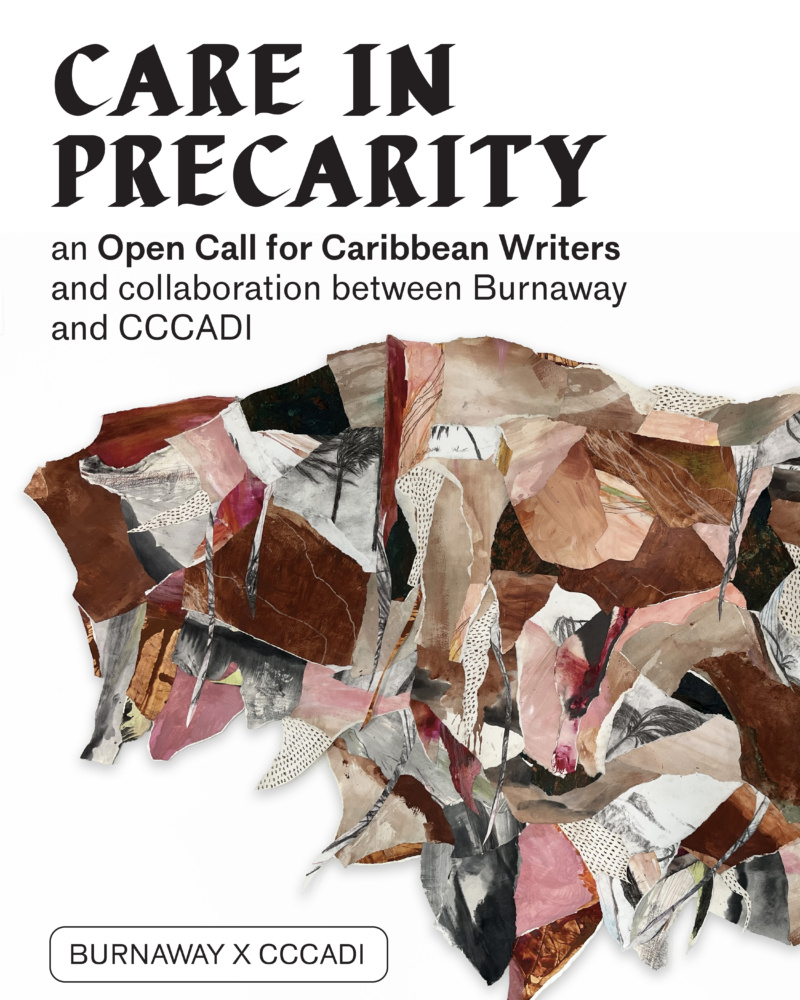
This feature was chosen from submissions to Care in Precarity, Burnaway’s first open call for Caribbean writers, in collaboration with the Caribbean Cultural Center African Diaspora Institute (CCCADI). The initiative sought to nurture writing that explores practices of care as a response to the region’s compounding precarities—from issues of climate crisis and food insecurity, to the enduring colonial structures (social and systemic) that hinder community action. In a deliberate move against the linguistic siloing of the Caribbean, a vestige of its colonial history, the selected pieces are published bilingually to better foster connectivity and sharing.
Este artículo fue seleccionado entre las propuestas recibidas para Care in Precarity, la primera convocatoria abierta de Burnaway para escritorxs caribeñxs, en colaboración con el Caribbean Cultural Center African Diaspora Institute (CCCADI). La iniciativa buscó promover la escritura que explora las prácticas de cuidado como respuesta a las crecientes precariedades de la región; desde la crisis climática y la inseguridad alimentaria hasta las persistentes estructuras coloniales (sociales y sistémicas) que obstaculizan la acción comunitaria. En una iniciativa intencional contra el aislamiento lingüístico del Caribe, vestigio de su historia colonial, las obras seleccionadas se publican bilingües para fomentar la conectividad y el intercambio.
Translation by Marissel Hernández Romero.