
It was 2:30 in the morning on SXSW Eve in March of 1995 and Susan and I had just finished our zine. We were standing on the sidewalk in front of the Kinko’s killing time and smoking cigarettes while we waited for the manager to go on break so our friend could charge two hundred copies of our zine to the Sony Records Street Team account. We were making our own magazines, and we knew we weren’t the first people to do it. I mean, I’d read other people’s zines before I made my own, but I didn’t yet know about the rich and important history of alternative publishing. I was just writing about my friends’ bands and road trips and stuff.
Much later I learned I was a part of a local music zine scene that began decades before me and is still going strong today. And those zines are often the only places you can find out about a lot of stuff that happened in Austin but went unreported by all but the most alternative of publications.
A couple points about my selections: I’ve pulled from my personal zine collection as well as the holdings of the Austin History Center. Since the archives are primarily fed by donations from community members, zines are present in the collections but not well represented. Donations are welcome! Also, I’m not a zine scholar or music historian, just a fan with a stack of zines I want to show you.
Out of respect for the intellectual property concerns of the creators, I’m presenting only excerpts of the various zines. You can find contemporary zines for sale on websites, Instagram, Etsy, etc., and vintage zines can often be found on eBay, Etsy, or at your coolest local record and book stores. Zine libraries are also scattered across the country, and one day you’ll be able to search across dozens (hundreds?) of zine libraries at zinecat.org (now in beta).
Let’s take a spin through some Austin music zines!

This photocopy from the Austin Challenger, May 1, 1985, depicts the rich history of independent publishing in Austin. I don’t see any titles I’d call zines on here, but dang, that’s a lot of titles!
Covering local music their way without having to answer to a mainstream publisher

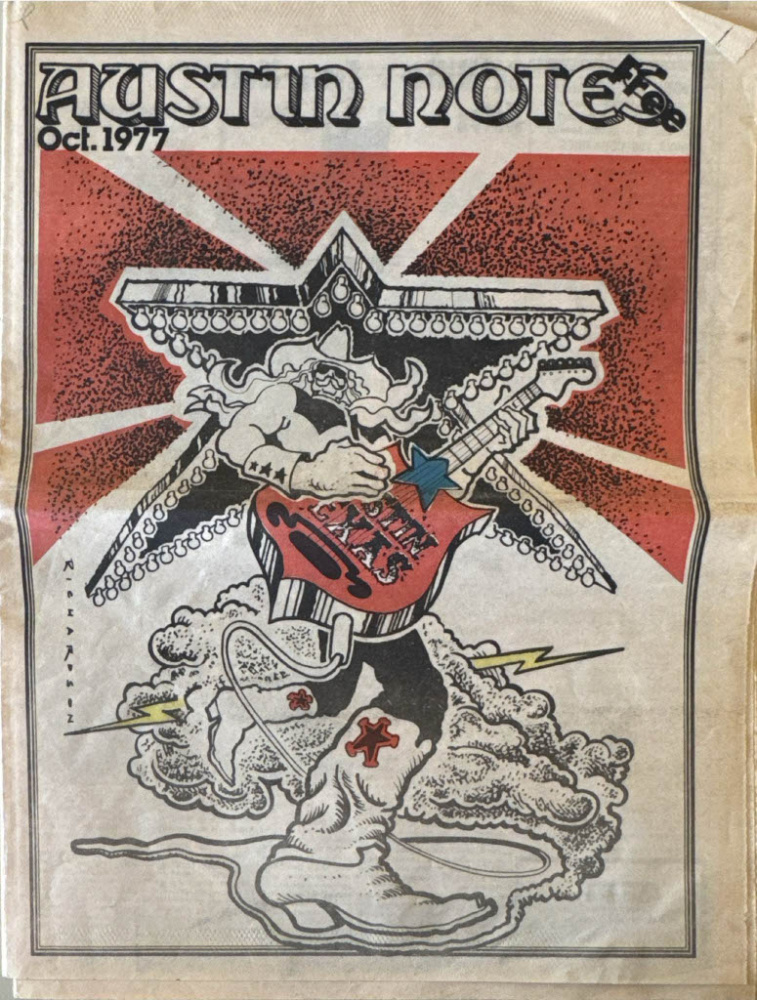


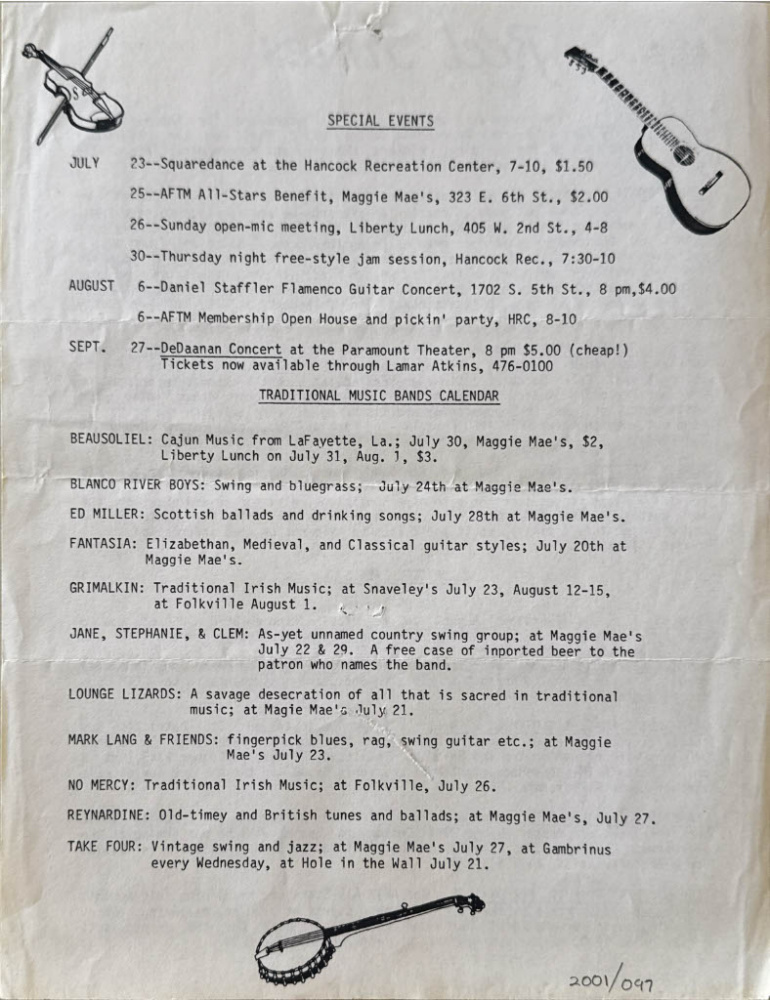
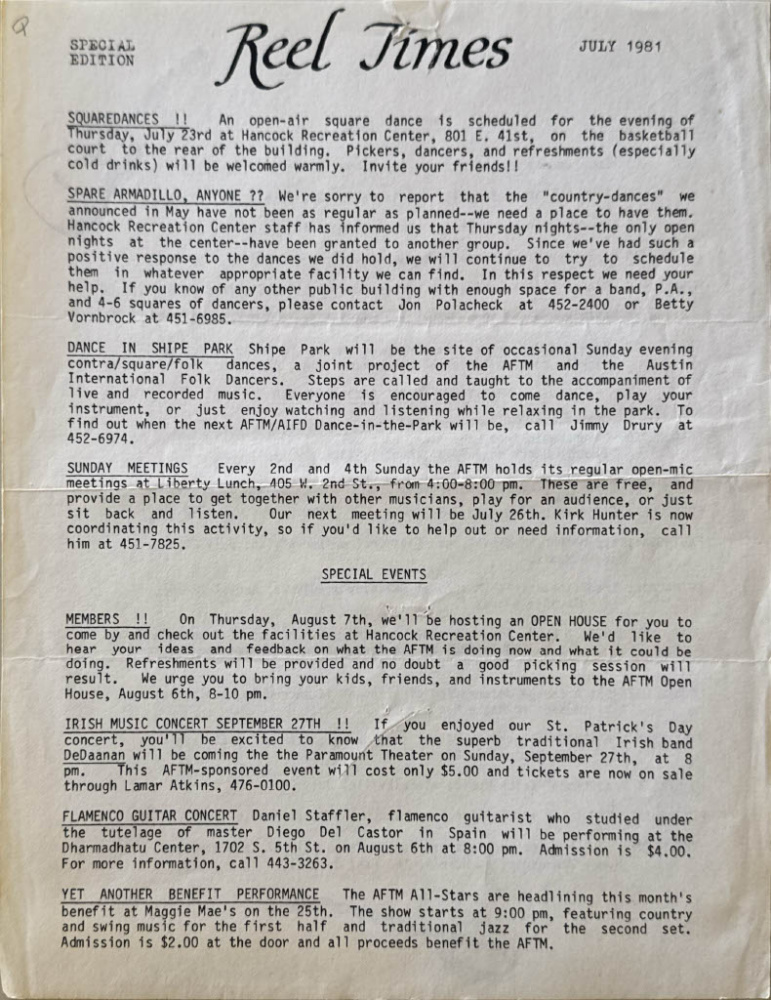
Buddy, Austin Notes, Bluegrass Newsletter, and Reel Times are examples of independent magazines and newsletters. While not generally considered zines, they’re doing the same job of covering local music their way without having to answer to a mainstream publisher.

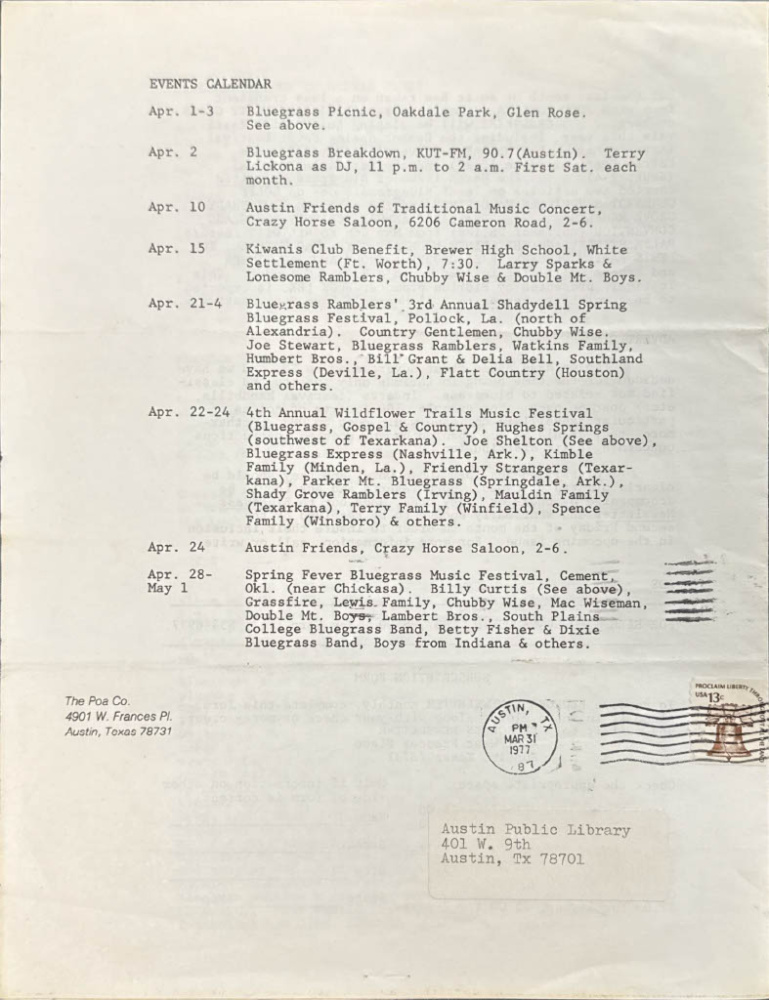
I was interested to learn that longtime Austin City Limits producer Terry Lickona had a bluegrass show on our local public radio station in 1977.

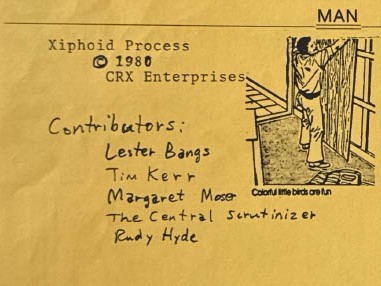
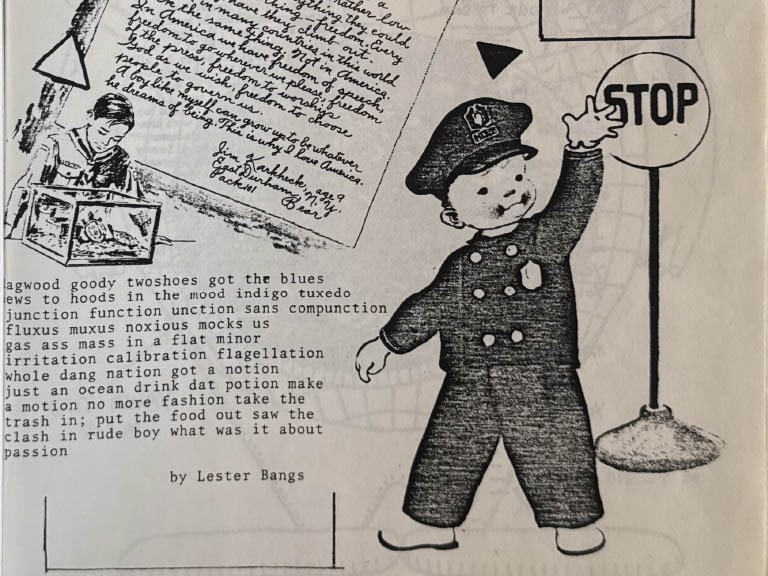
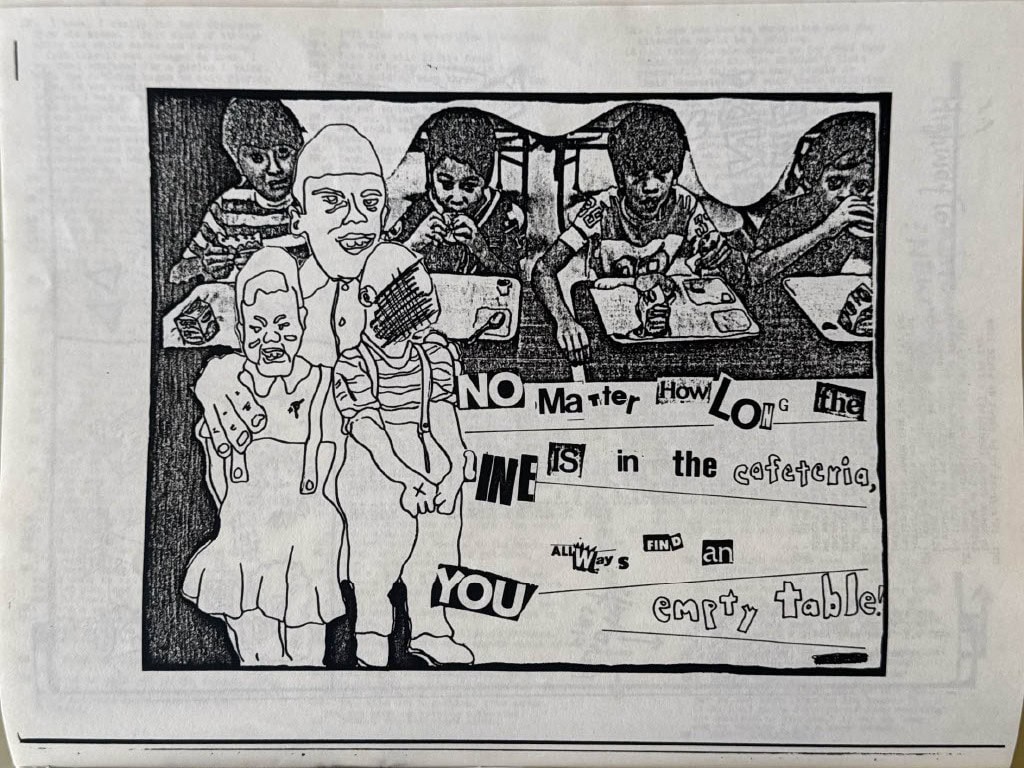
Created by Control Rat X (aka now-archivist John Slate), Xiphoid Process is an archetypal 1980s punk zine. Super varied content, explicitly anti-racist, and featuring proto/semi-star contributors including Lester Bangs, Tim Kerr, then of The Big Boys (he now plays Irish and Old Time music and remains a practicing visual artist in the portraiture vein seen here), and Margaret Moser, beloved local on-stage-groupie-turned-rock-writer. Another issue featured poetry by Gary Floyd of the Dicks.
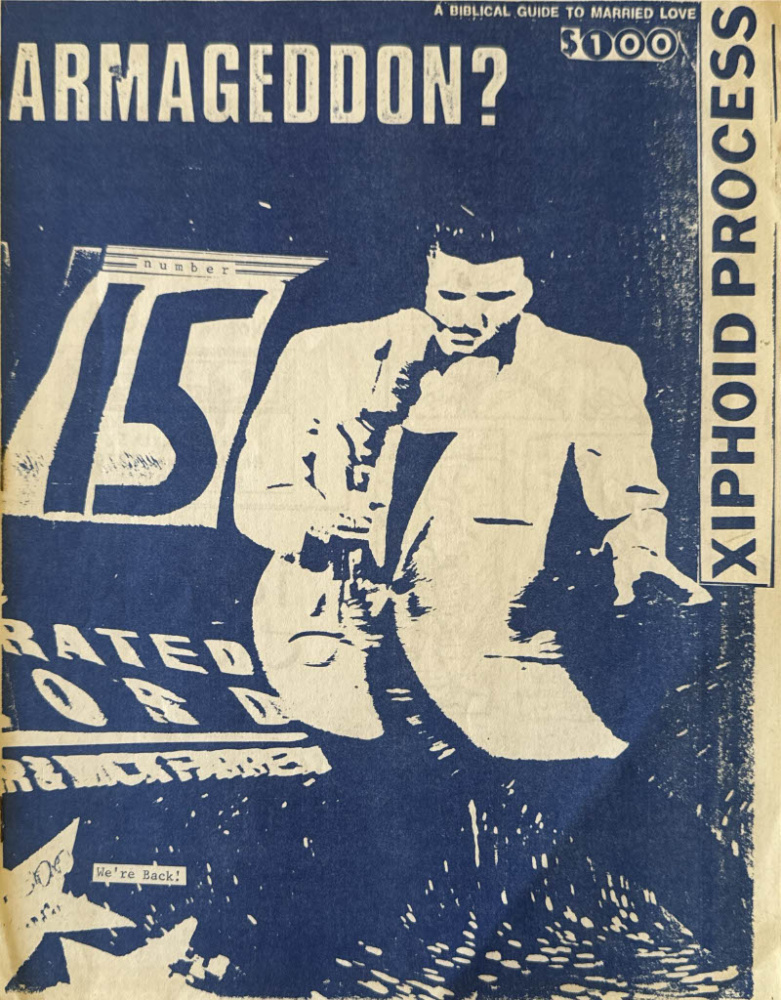
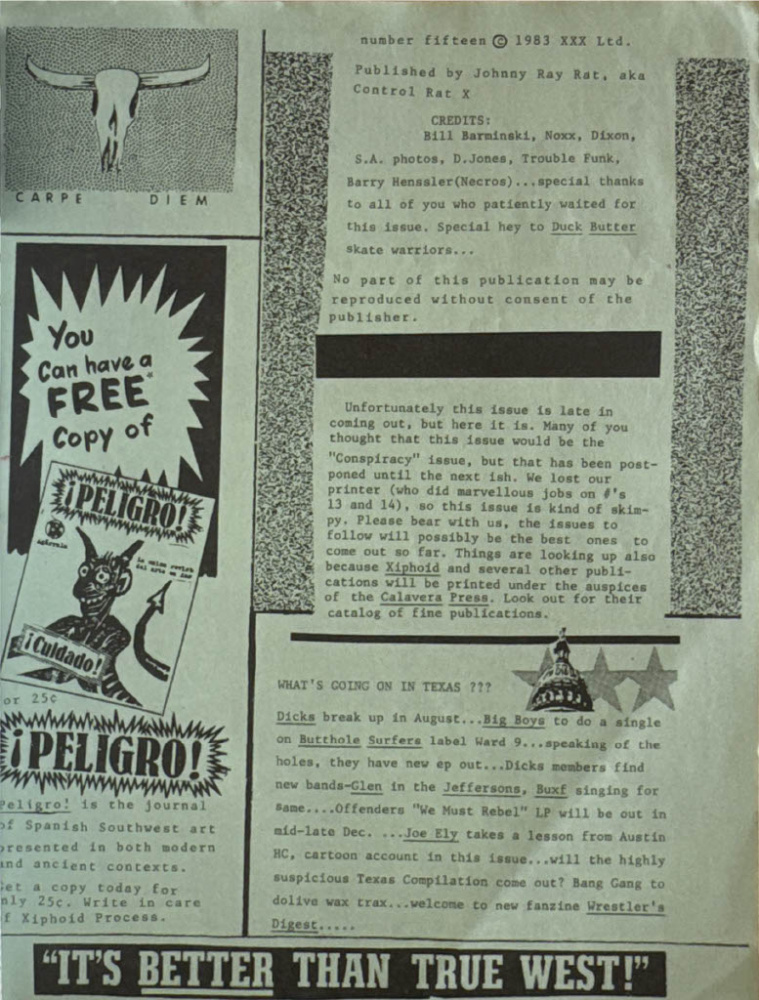
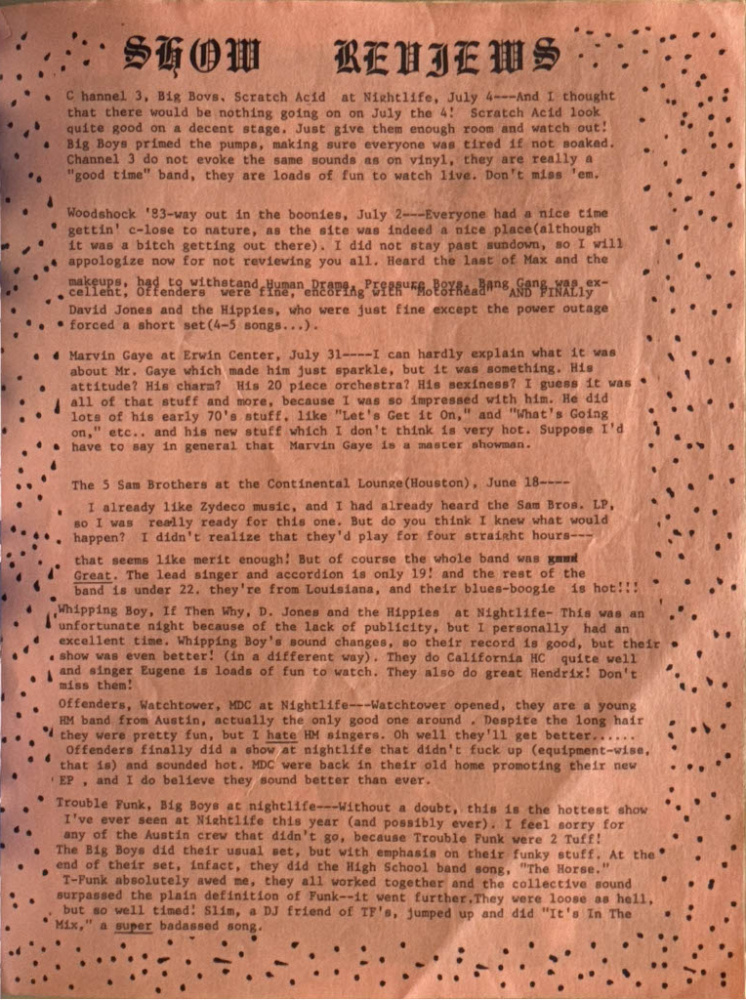
Talk about archetypal!
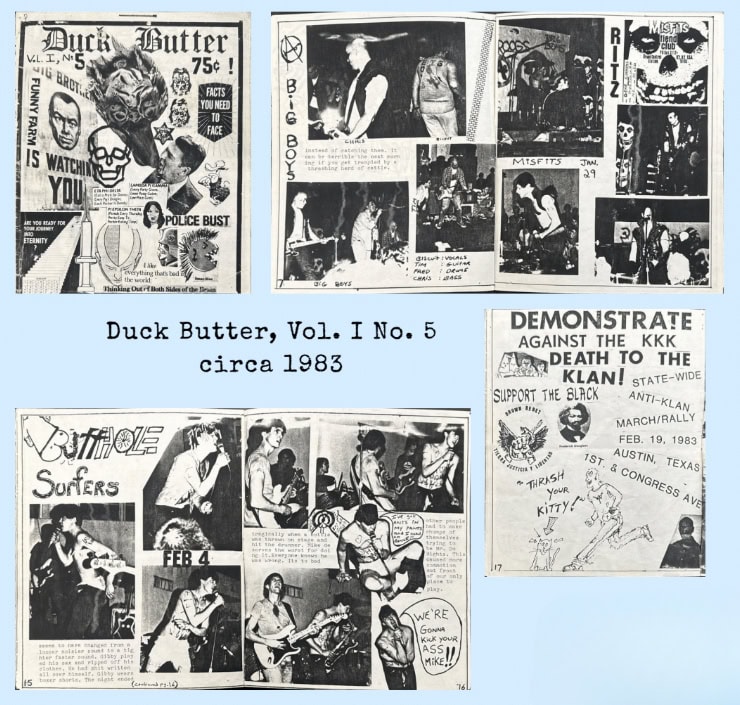

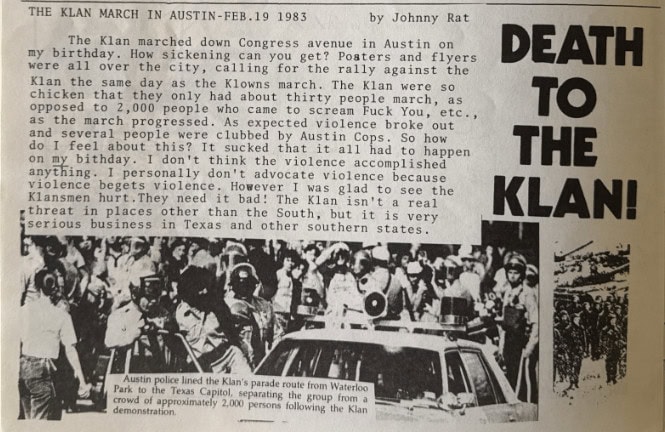
The classically raw 1980s punk zine Duck Butter featured photocopied photographs of local shows, touring bands, skate boarding competitions, plus skate poetry and another call to demonstrate against the Klan march.

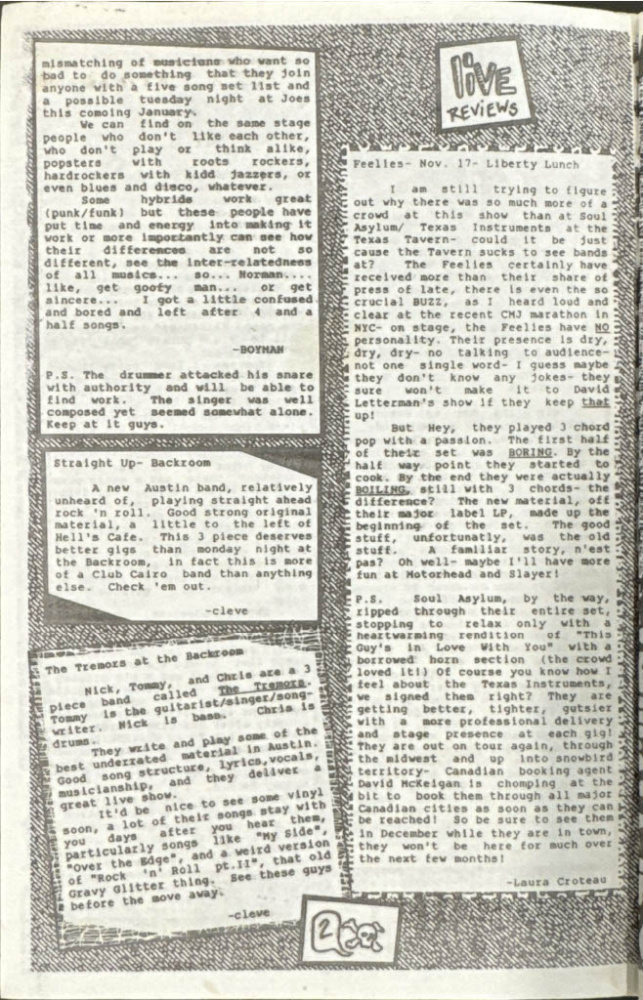
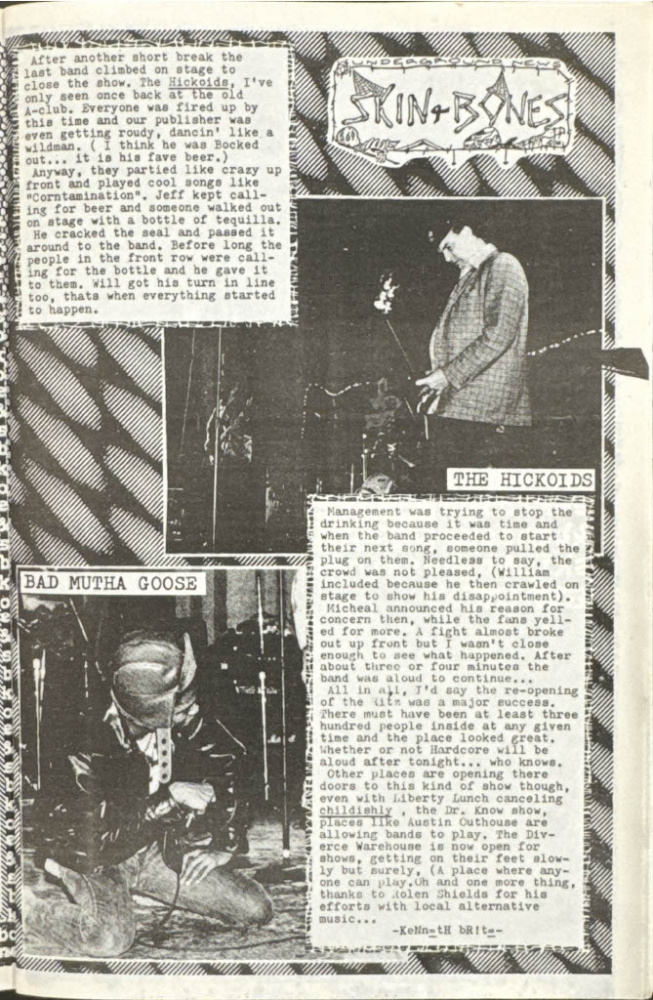
Skin & Bones was a raw but refined zine covering a pretty wide-ranging variety of local and touring bands.


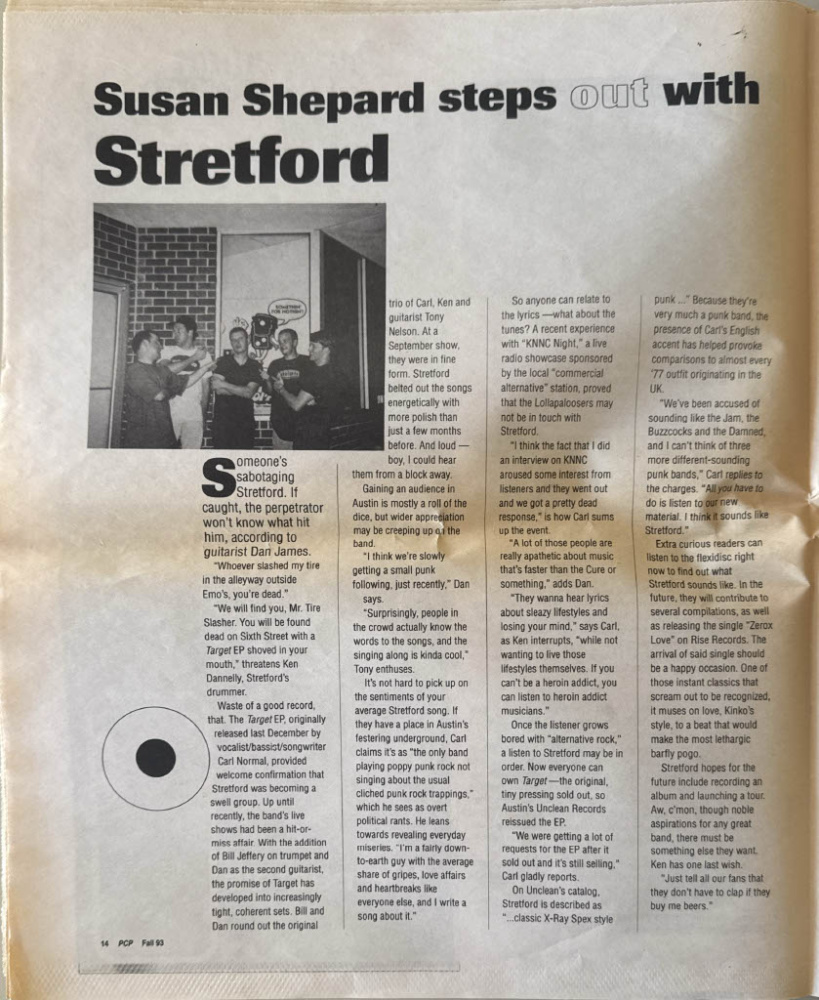
Luann Williams founded Pop Culture Press in Memphis, and it came along when Luann moved to Austin in 1988. The magazine thus features a weird mix of Austin and Memphis content that was a guidepost for my pilgrimages to the Bluff City. The zine was professionally turned out but was a fanzine in spirit. It attracted some high quality writers and sometimes? often? always? had a flexidisc or CD sampler stuffed inside the issues.
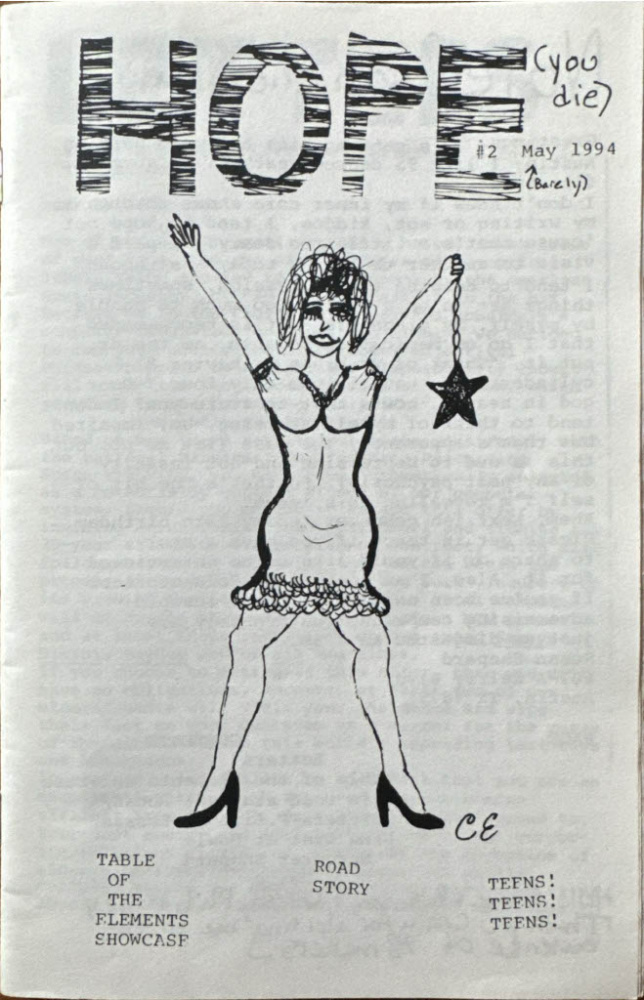
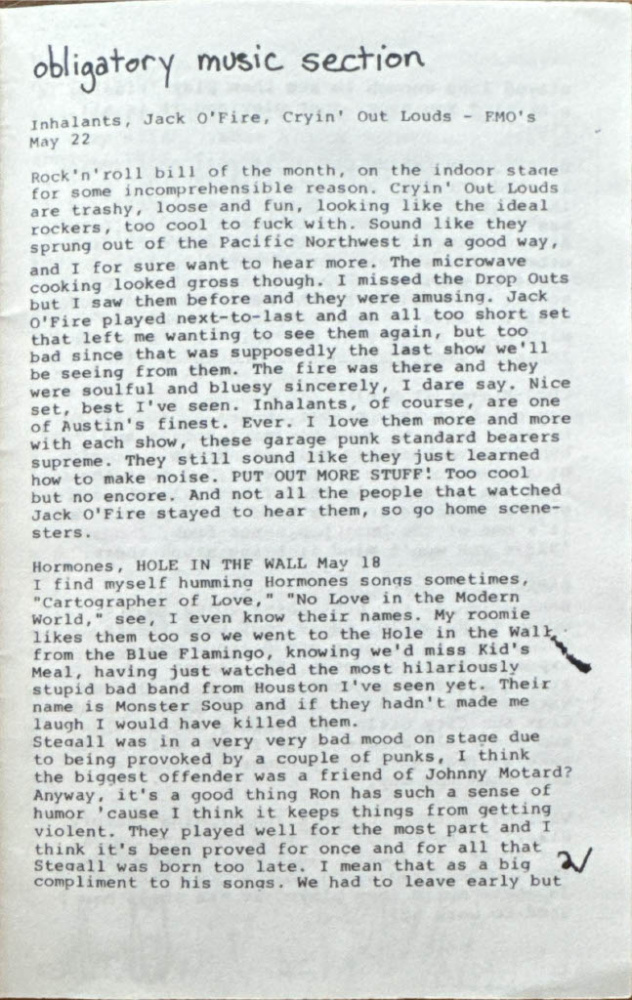
Susan Shepard, who interviewed Stretford for PCP (above), published a bunch of issues of a zine variously called HOPE, HOPE (You Die), and Hope You Die Before I Grow Up. She wrote for lots of other local publications and went on to spend much of her career working as a journalist. We have collaborated on a lot of zines.

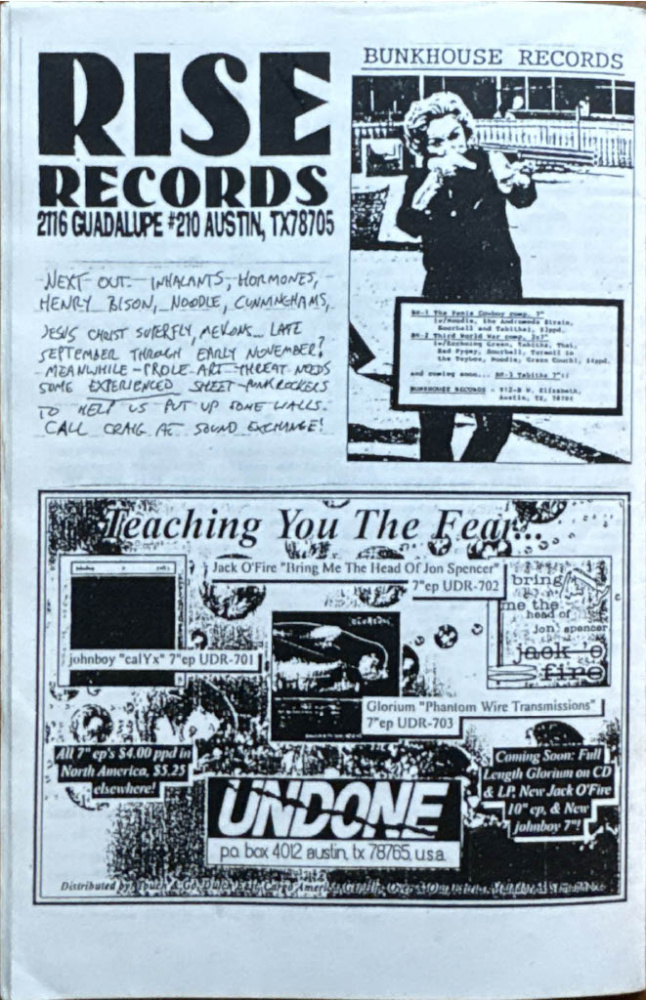
Another fun thing I’ve noticed, looking back at this era of independent publishing, is what relatively early adopters of Internet technology we were for a bunch of non-techies.
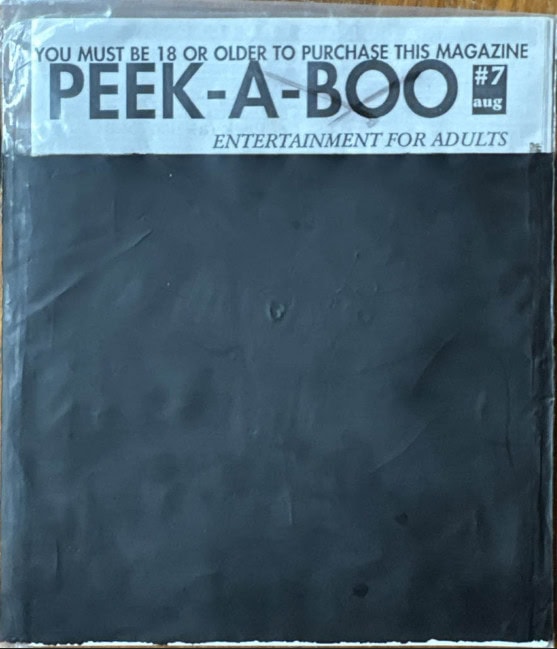
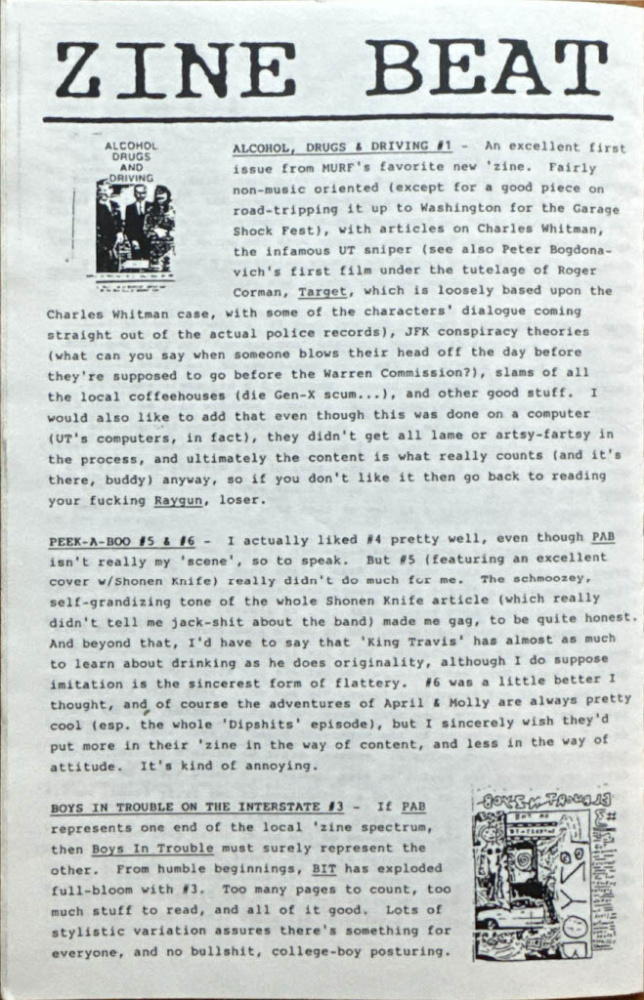
Peek-A-Boo was Austin’s wackiest zine. They had show reviews, record reviews, and band interviews (often with bands connected to the zine), but they also had hilarious parody pieces including the society column “Keg Fly” and the advice column “Letters to Mephistopheles,” wherein the inquirer could get advice straight from Satan himself. It was always very, very, very bad advice.
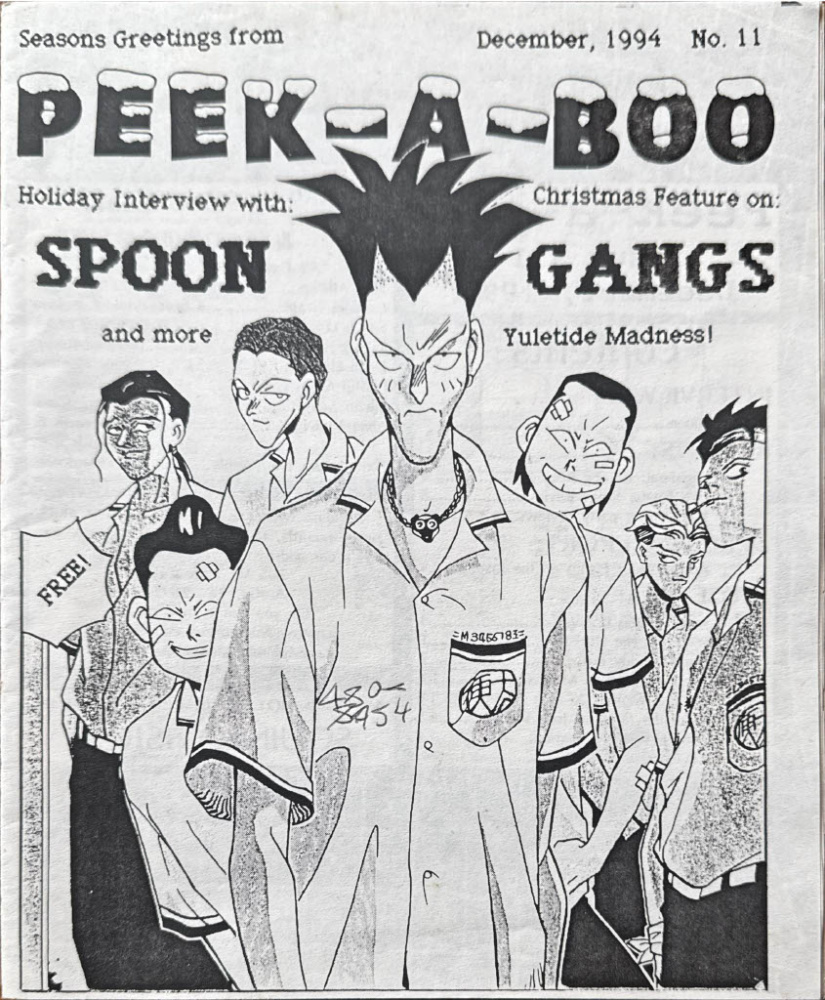
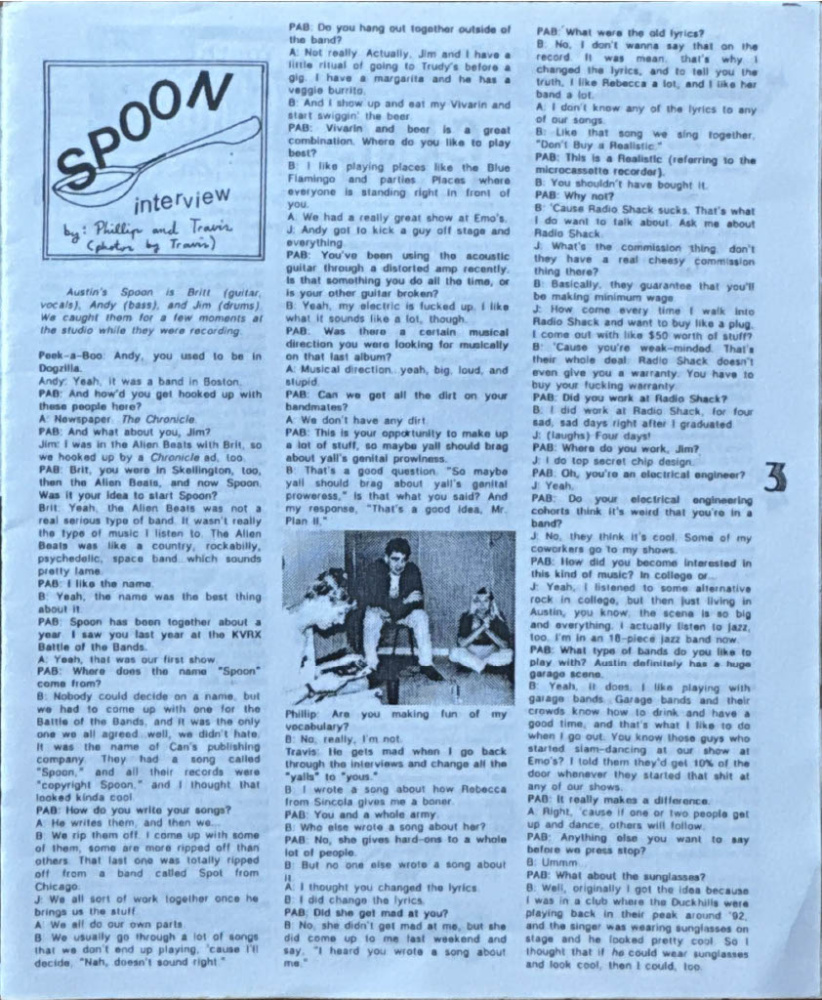
One of Peek-A-Boo’s main motivators was Travis Higdon who went on to found Peek-A-Boo Records, the label that gave Spoon their first major exposure and released some fantastic lo-fi garage rock to boot. Travis’s partner in crime, Phillip Niemeyer, runs an art gallery in Austin, and Niemeyer’s band, the John-Pauls, just put out a new record.
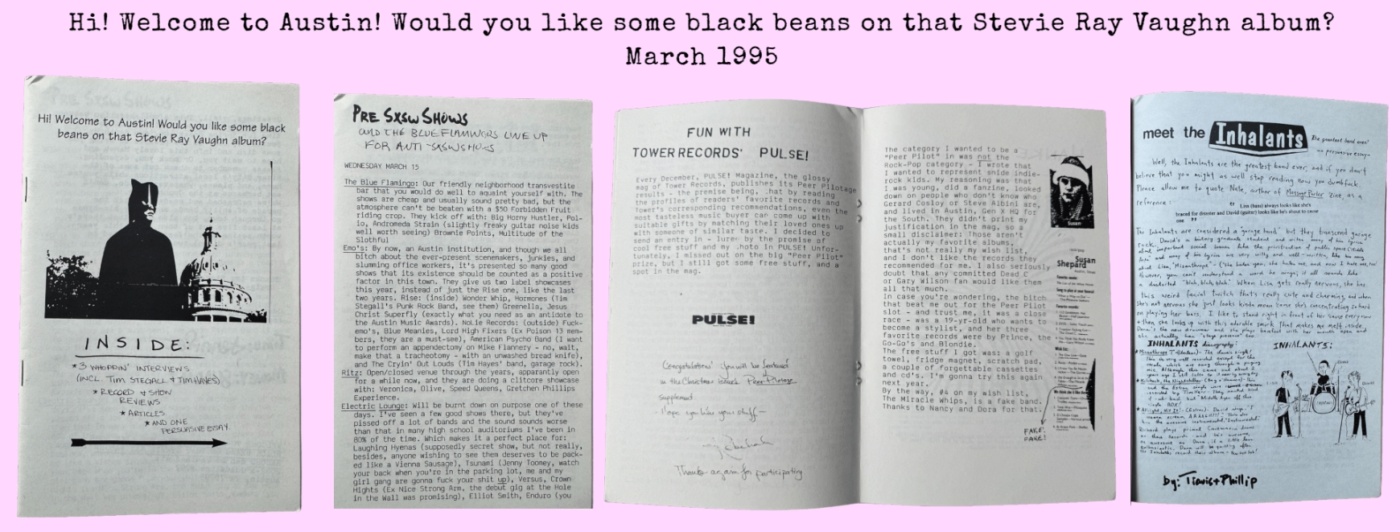
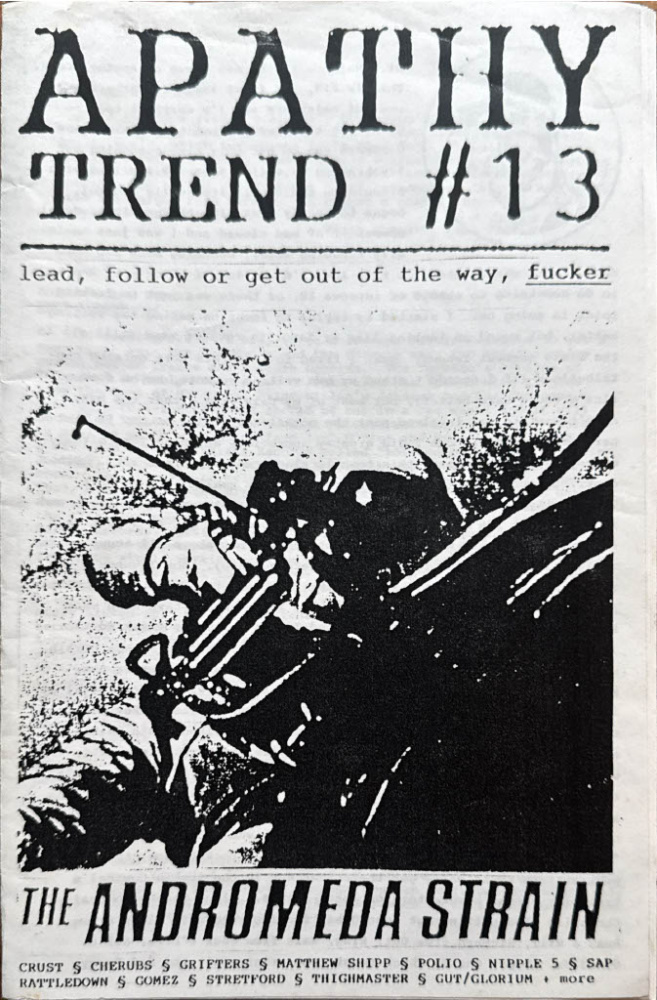
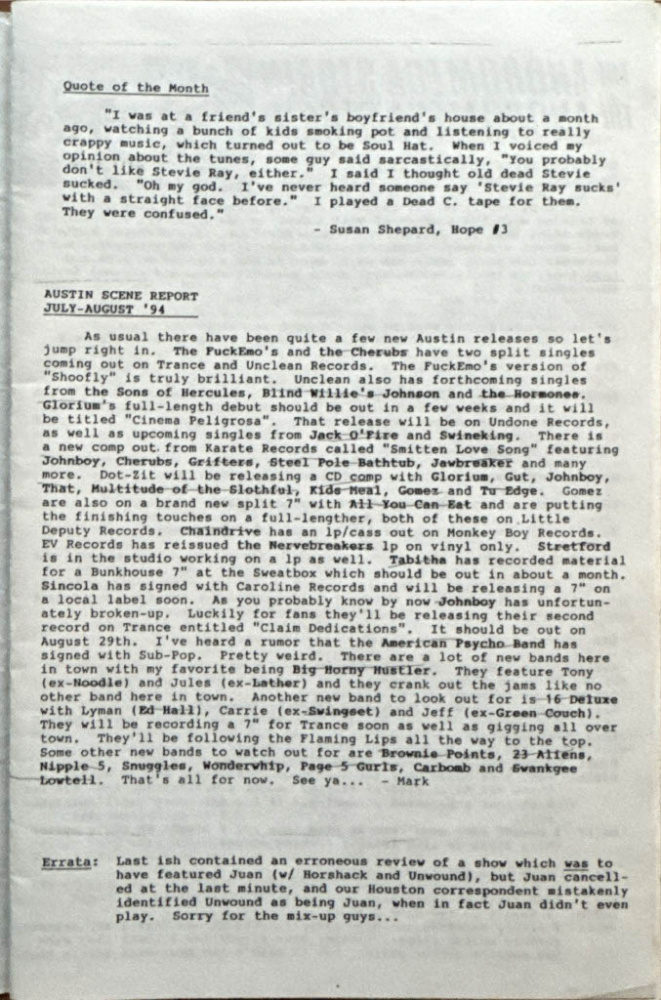
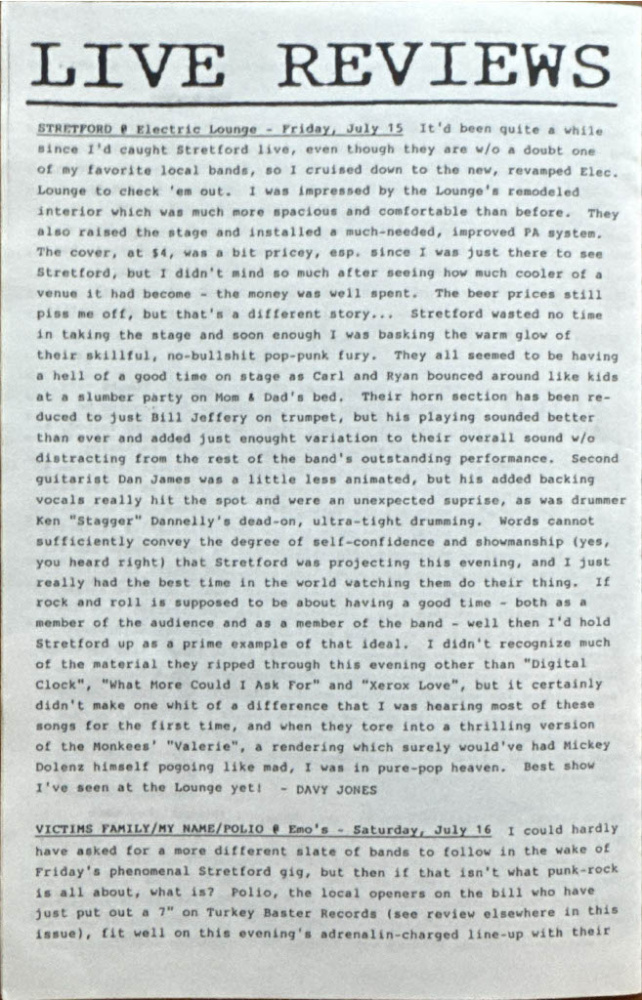
This was a fun collab between me and Susan Shepard featuring our show recommendations, a story about Susan punking the Tower Records holiday gift guide, a piece on The Inhalants by guest interviewers Travis and Philip of Peek-A-Boo, and more. And, yeah, I misspelled Vaughan. Maybe on purpose. Though I now respect and even somewhat enjoy SRV’s music, at the time we really, really resented that he was sucking all the air, as you may recall from Apathy Trend #13‘s “Quote of the Month.”
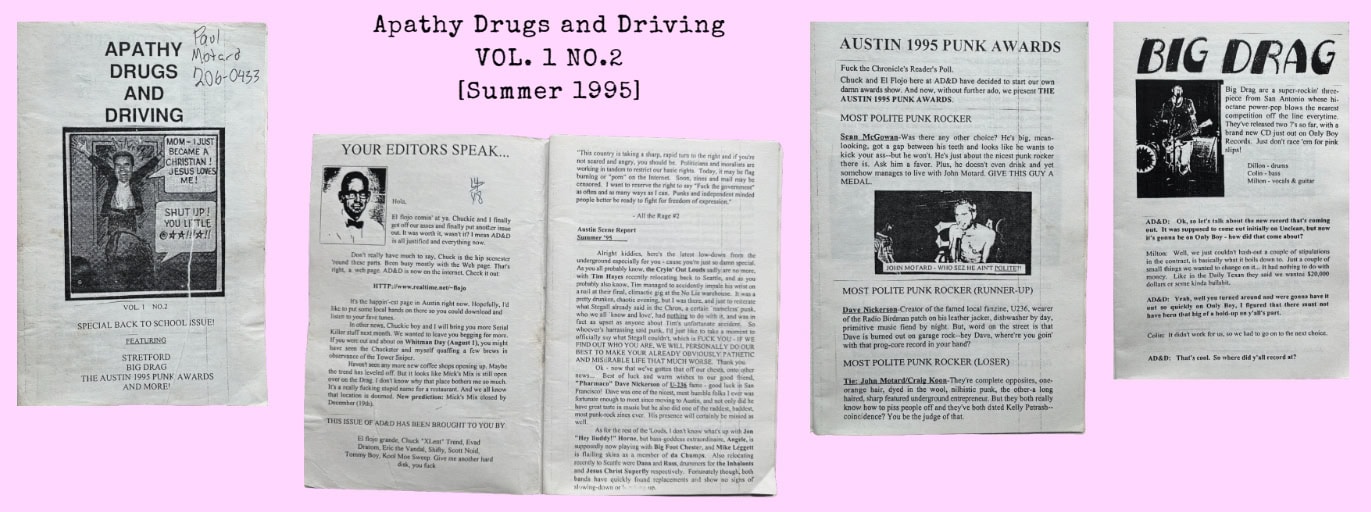
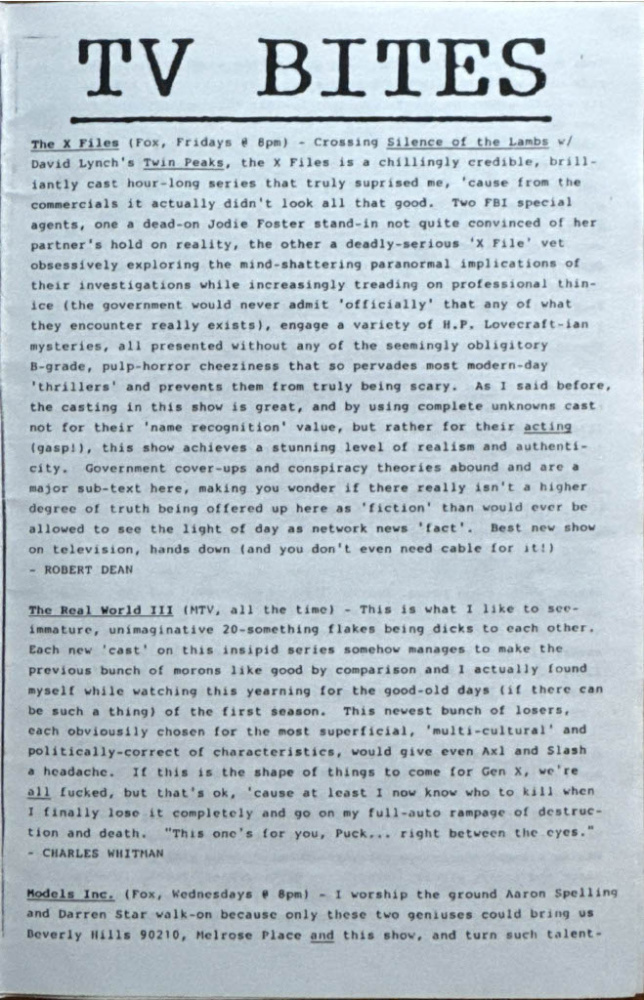
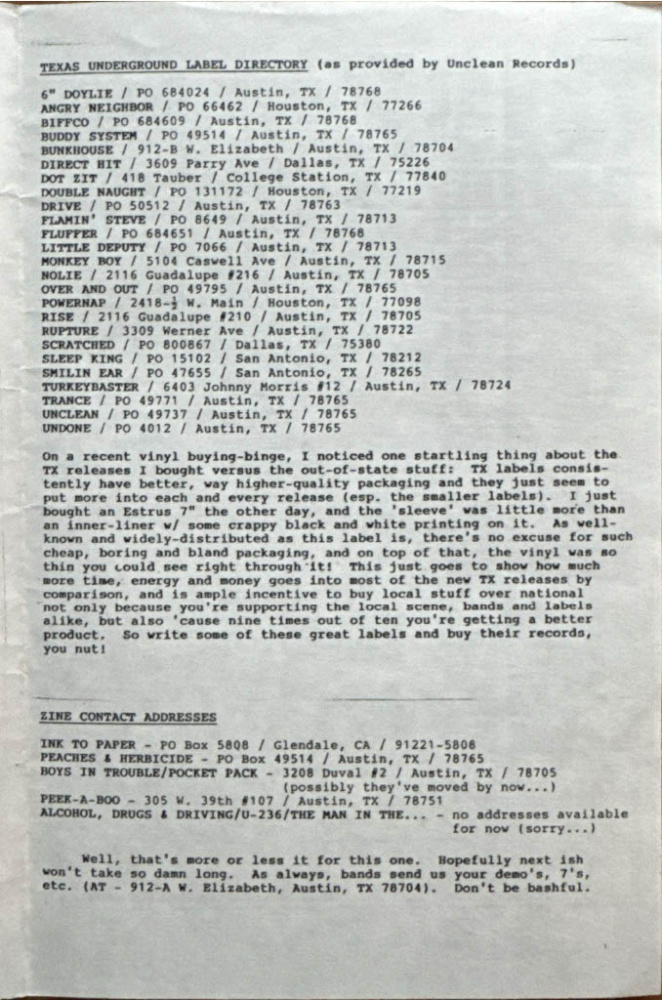
Another spin-off/collab from the creators of Alcohol Drugs and Driving and Apathy Trend. The same year they put out their Austin 1995 Punk Awards list, Jeremy Reuter from the excellent zine Boyz in Trouble on the Interstate put out the 1995 Punk Rock Yearbook, which is the kind of real-time historical documentation I’d wager not too many punk scenes can point to. Another fun thing I’ve noticed, looking back at this era of independent publishing, is what relatively early adopters of Internet technology we were for a bunch of non-techies. The URLs are cute, too.
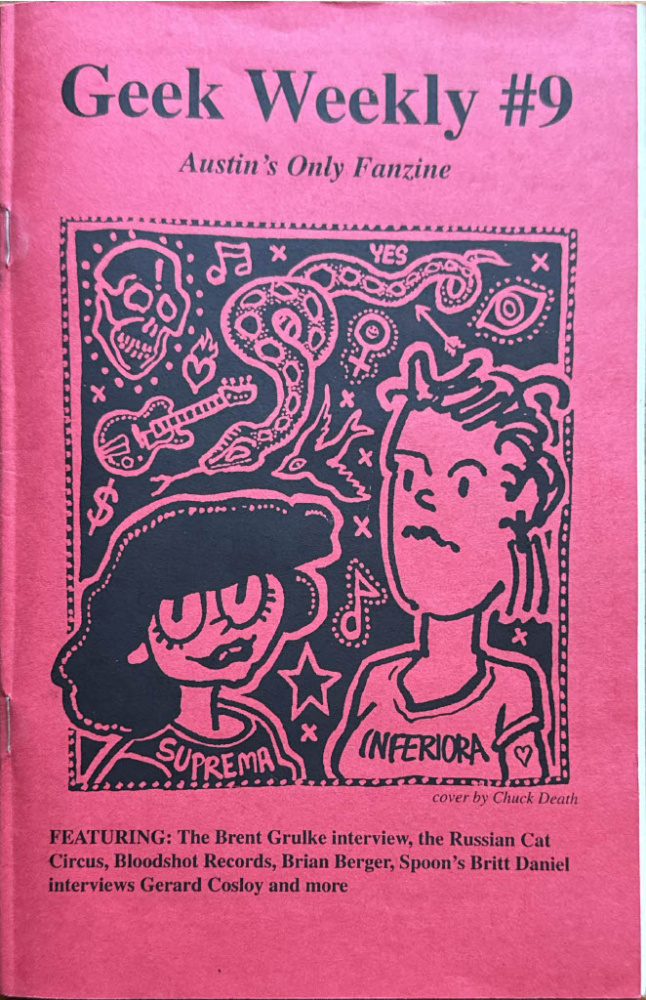
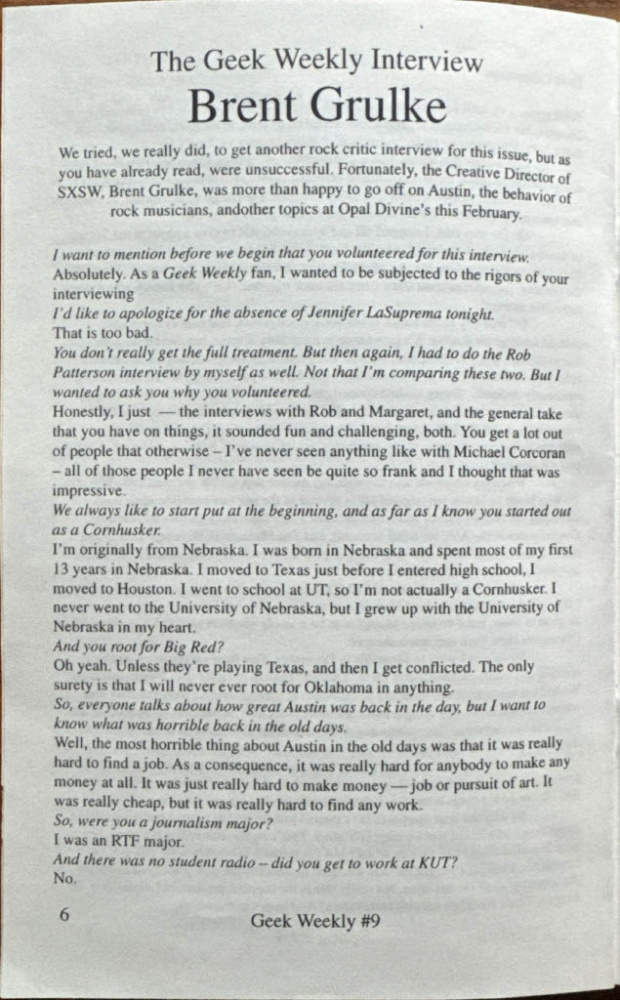
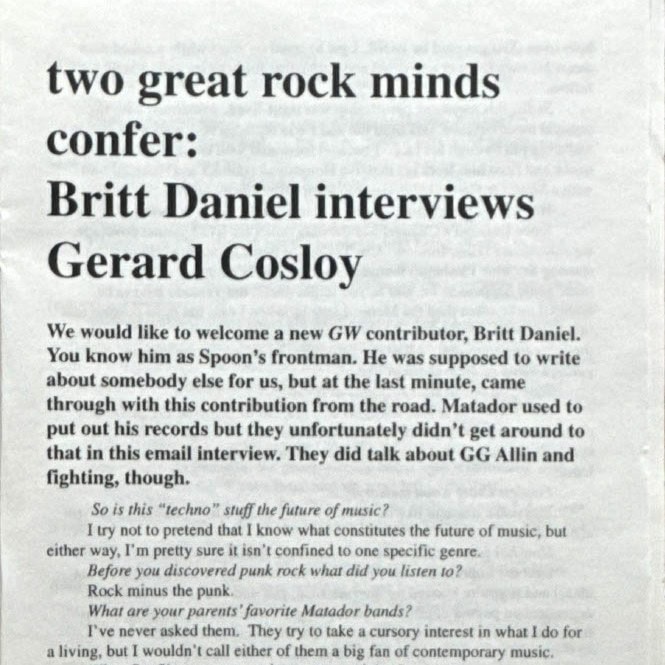

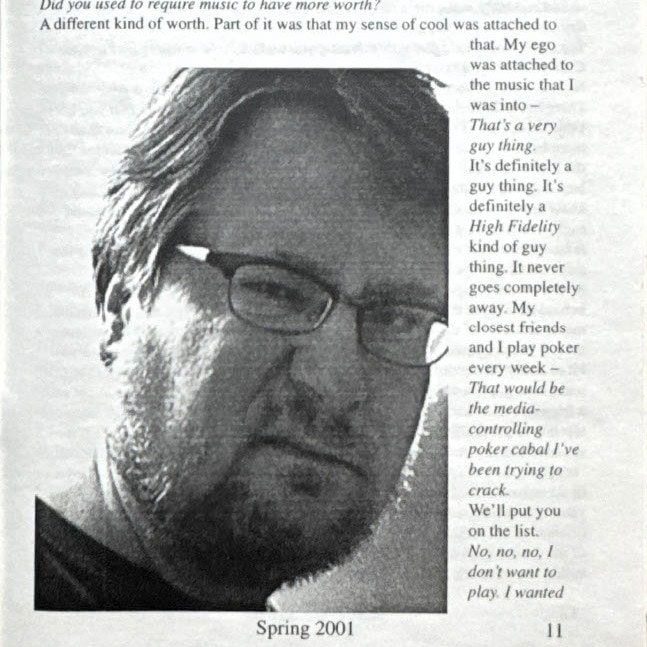
I started Geek Weekly in the fall of 1994 and copied it on unbleached greyish recycled paper on the staff copier upstairs at the iconic Whole Foods Market at 10th and Lamar. I think I put a couple bucks in the kitty as partial atonement for my sin. Many copy scams later, I’m still publishing the occasional zine, though I generally pay for the good stuff these days. The Chuck Death co-portrait on the cover of this issue pays homage to my longtime collaboration with Susan Shepard, and Ian Tennant’s scene report from his pilgrimage to see Bloodshot Records bands at the Calgary Folk Festival resurfaces the connection to the Austin-adjacent Bloodshot scene that captured my heart for twenty-five years. Susan’s long interview with late SXSW Creative Director Brent Grulke sadly proved to be an invaluable document of his legacy when he passed away way too soon in 2012. Lastly, a foreshadowing of Gerard Cosloy’s move to Austin a few years later and a testament to the 1990s ubiquity of Britt Daniel of Spoon!
Kids out there interviewing hardcore bands, making their own collage art, photocopying photographs, and giving their zines away for free
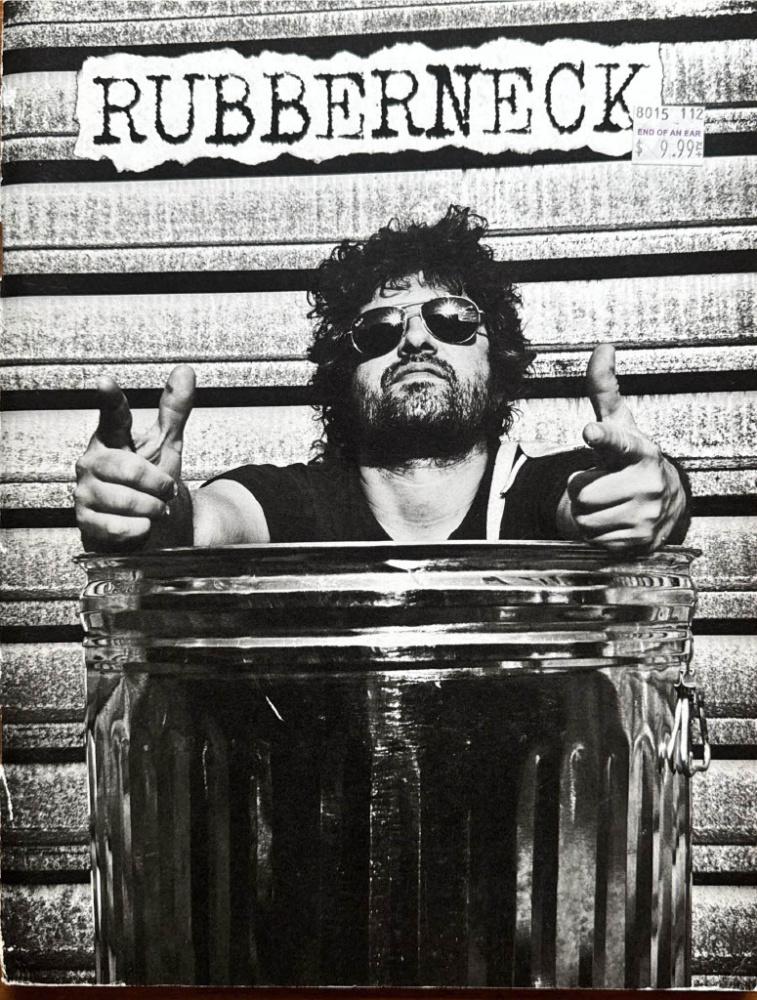
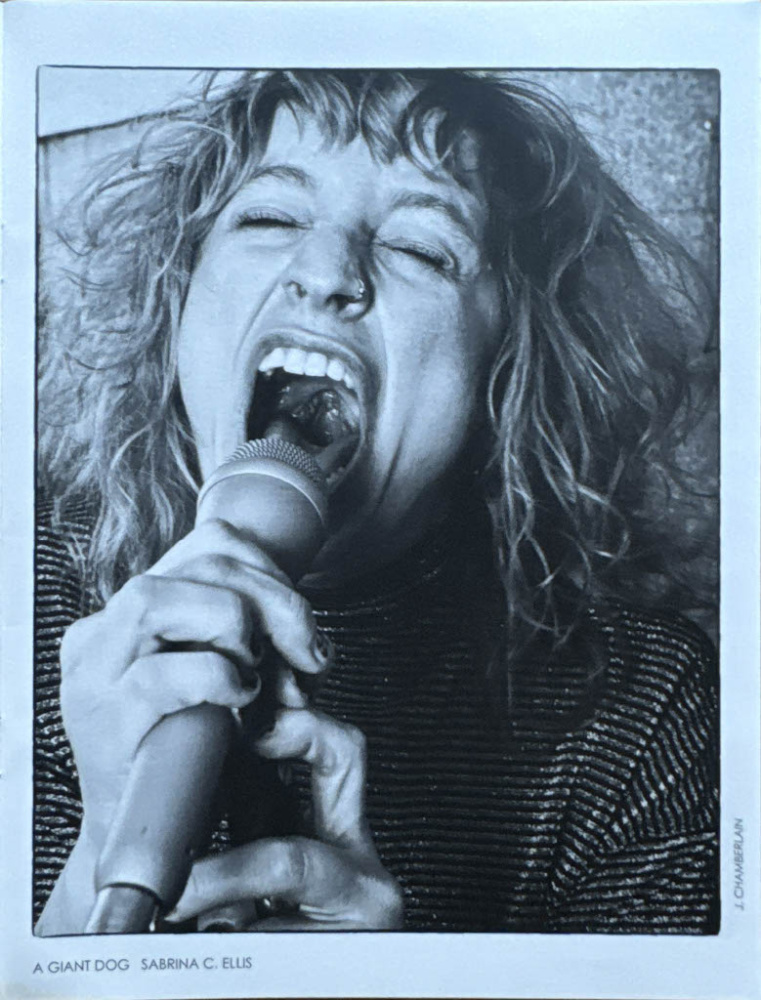

Photozine Rubberneck is just that: black-and-white photos of local bands in action printed on good, heavy, glossy paper. They put out eleven gorgeous issues.
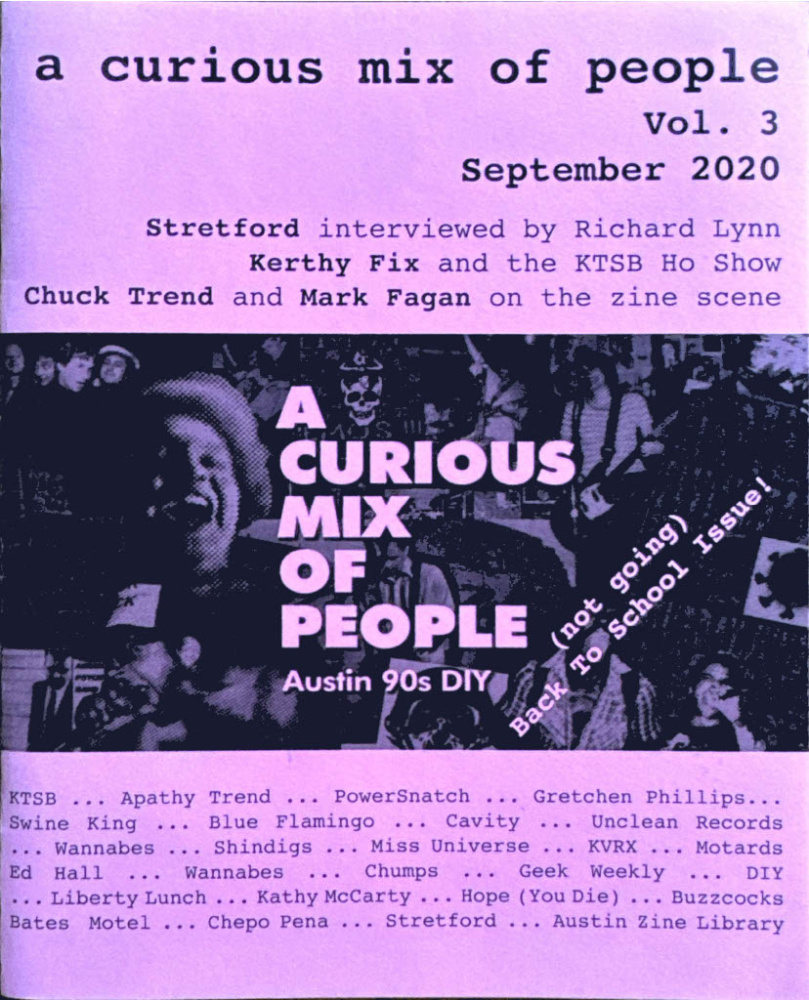

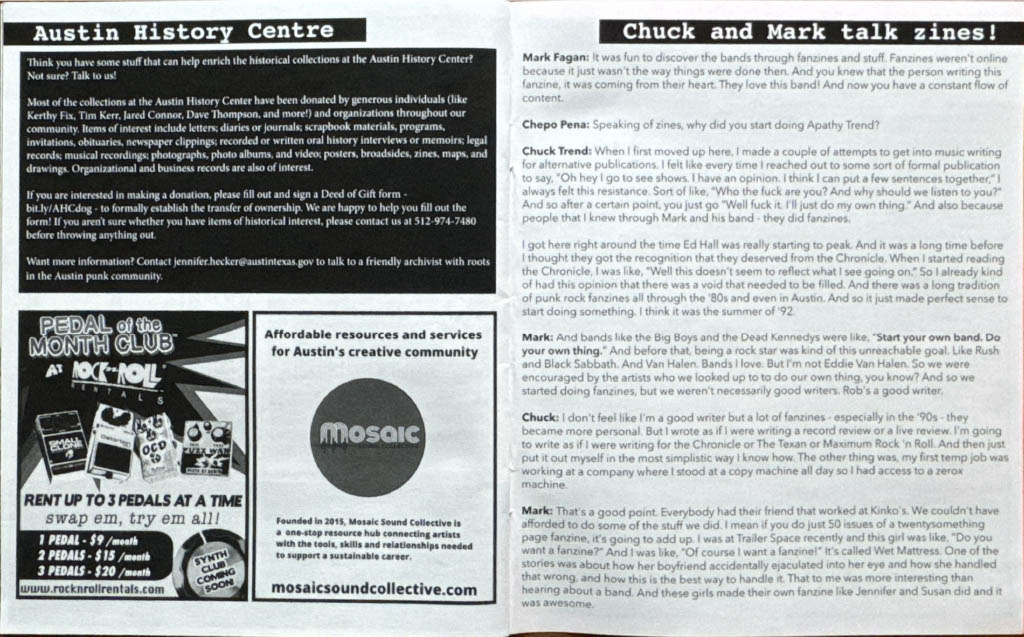
A Curious Mix of People, named after a live record recorded at the Blue Flamingo, a very curious dive bar, began as a documentary project but has now taken many forms as hundreds of hours of video oral histories are transcribed to create a book and a series of zines, along with a handful of venue-focused mini-documentaries. Here we re-meet Stretford, the Apathy Drugs and Driving creators reminisce about the ’90s zine scene, and we get a plea from the Austin History Centre [sic] to donate punk stuff to the archives.


A Curious Mix of People, showing its music history zine chops by documenting punk and queer spaces that were the backbone of “Red River,” or the strip of clubs and venues that is now called the Red River Cultural Heritage District.

Current zine with a super 1983 vibe. Kids out there interviewing hardcore bands, making their own collage art, photocopying photographs, and giving their zines away for free. Suck it, algorithm.