 ADVERTISEMENT
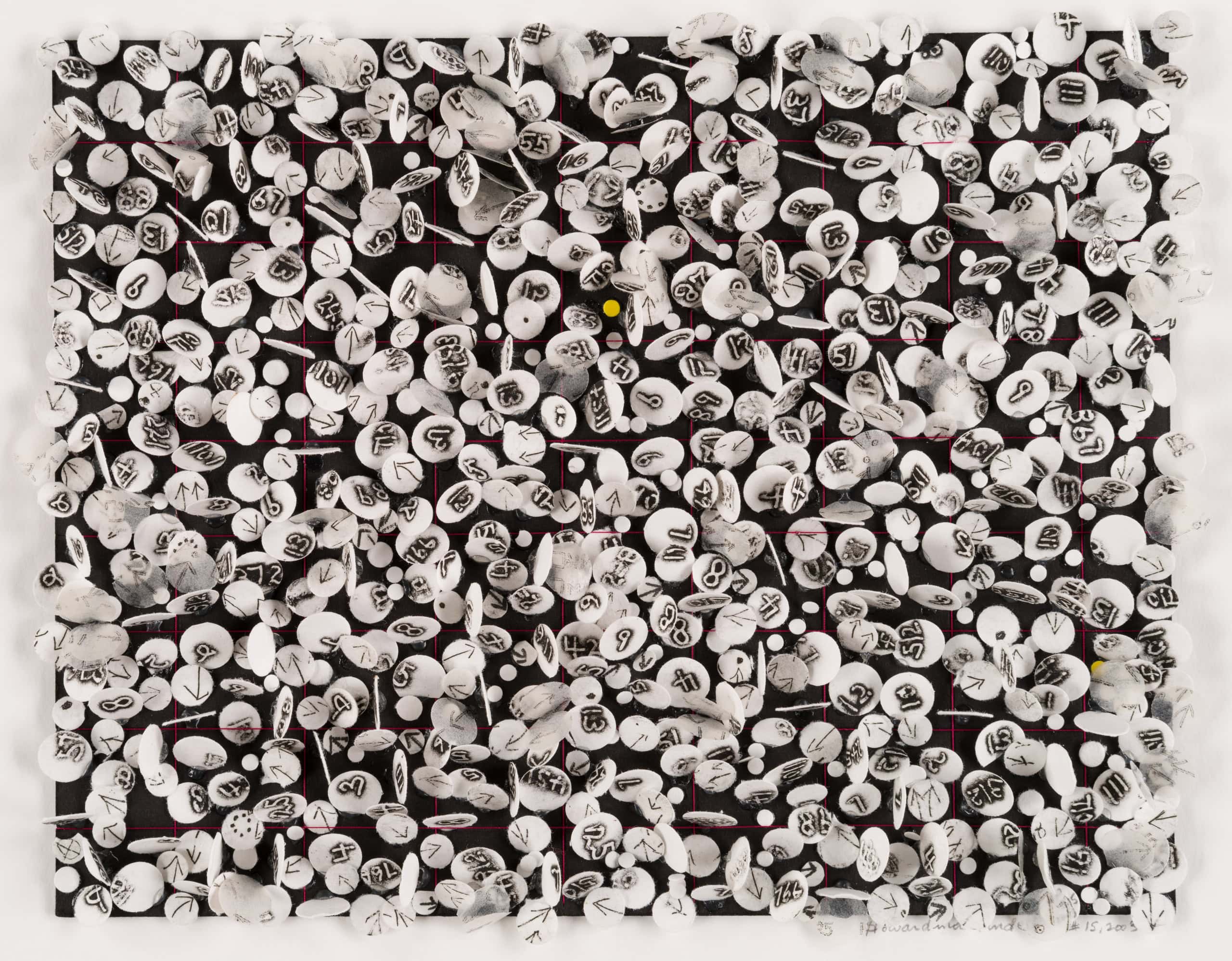
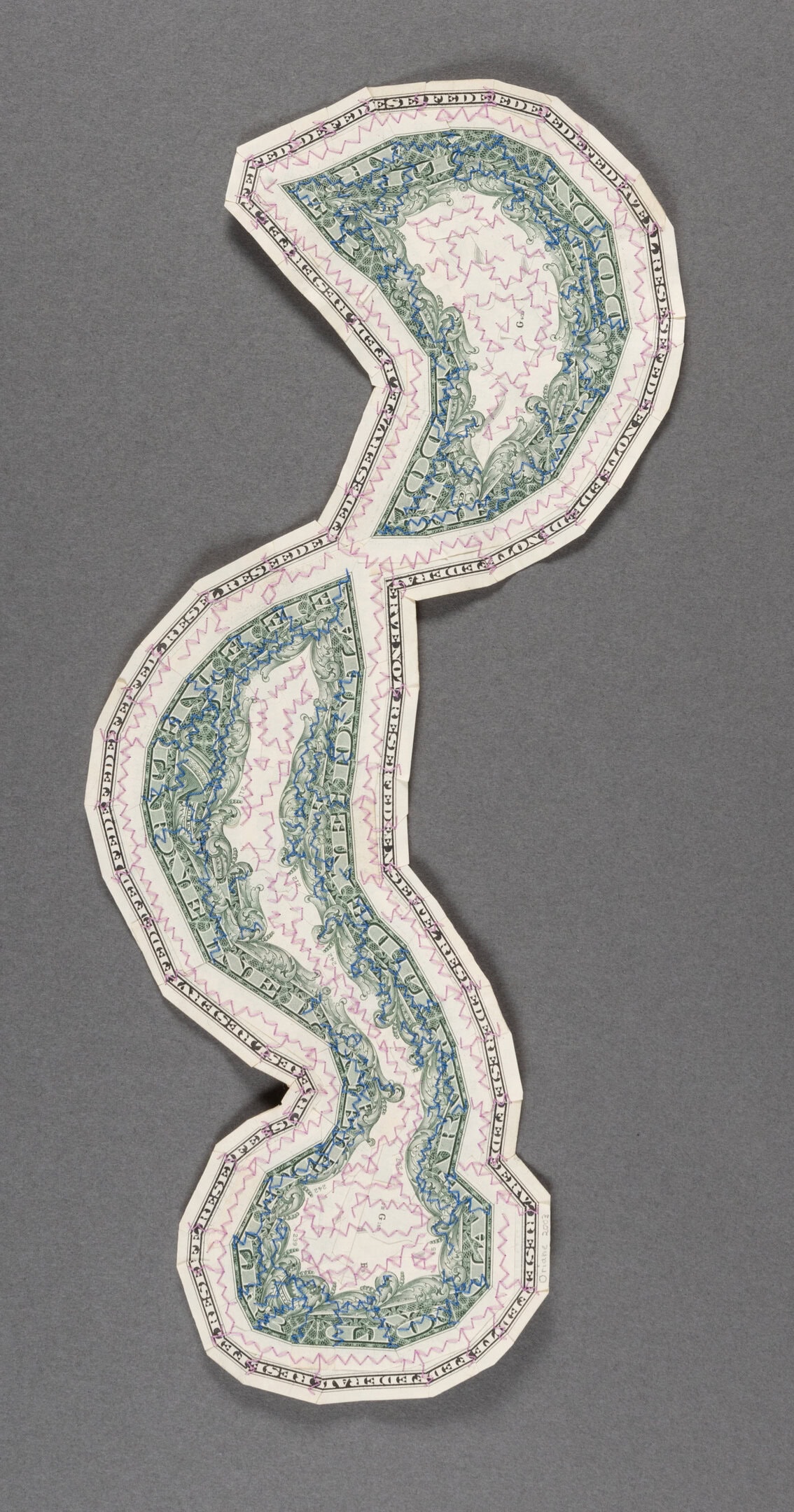
Howardena Pindell, Untitled #15, 2003, etching, punched papers, spray adhesive, and thread, 9 × 7 × 1/2 inches. Photograph by Edward C. Robison III and courtesy of Arkansas Museum of Fine Arts, Little Rock.
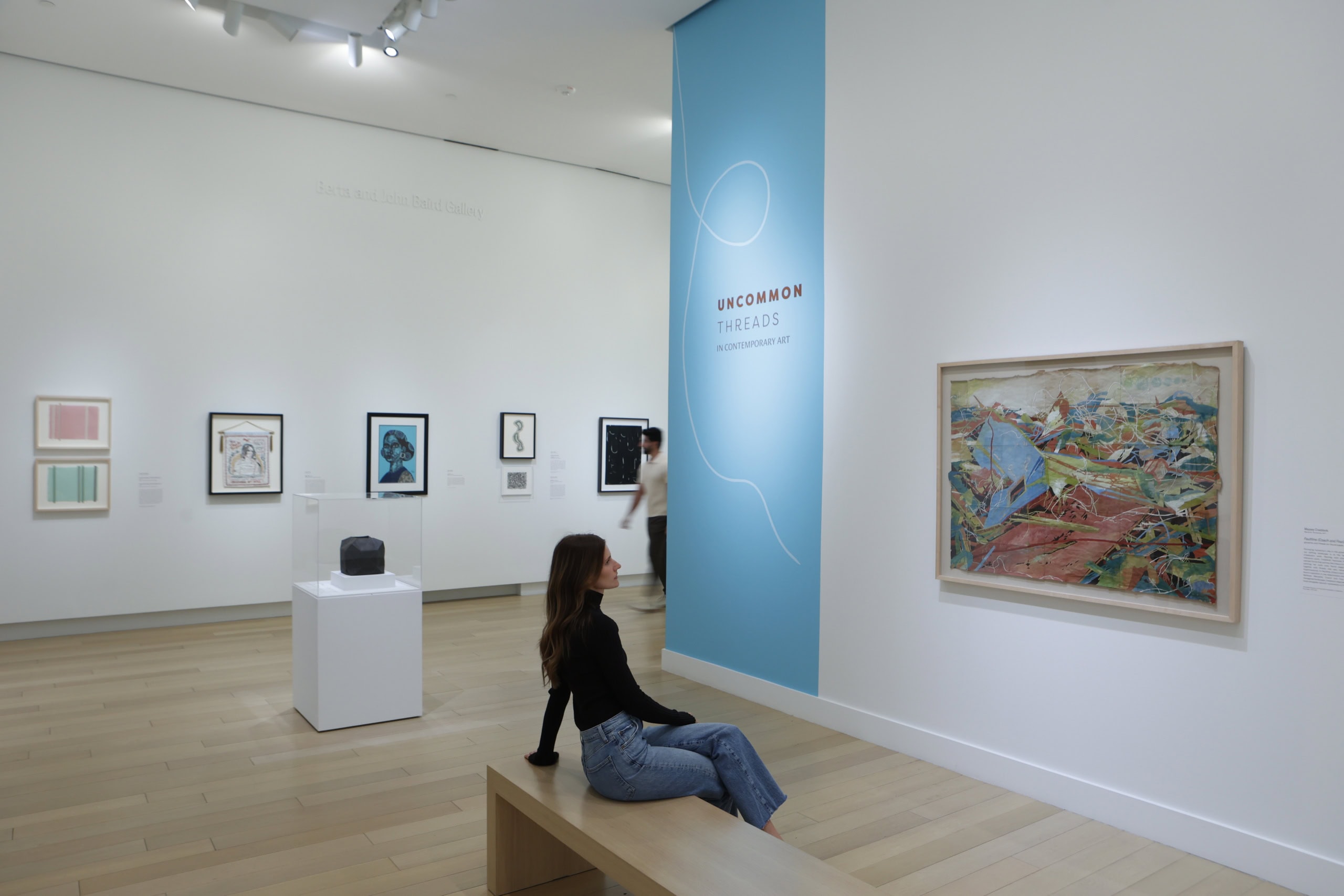
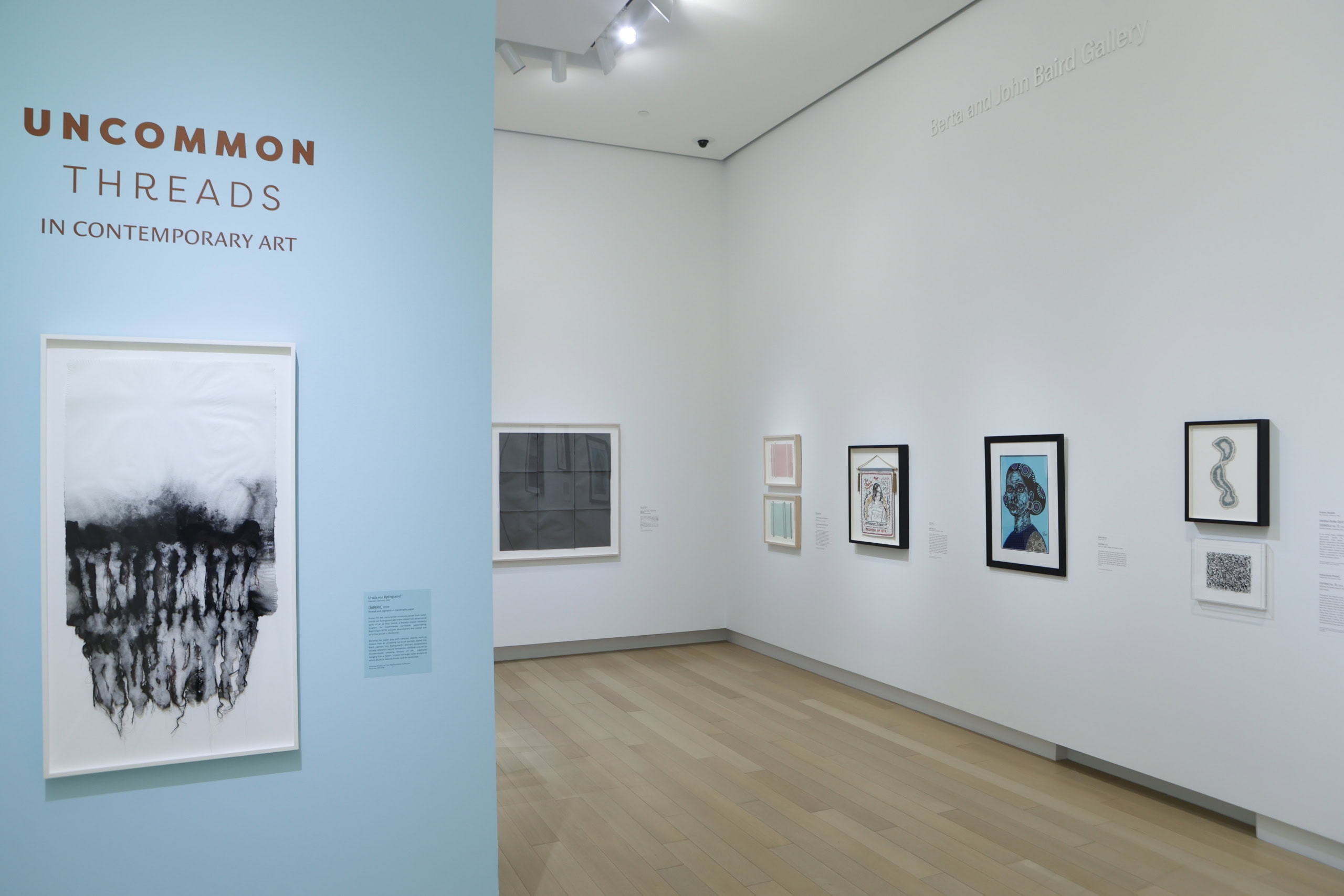
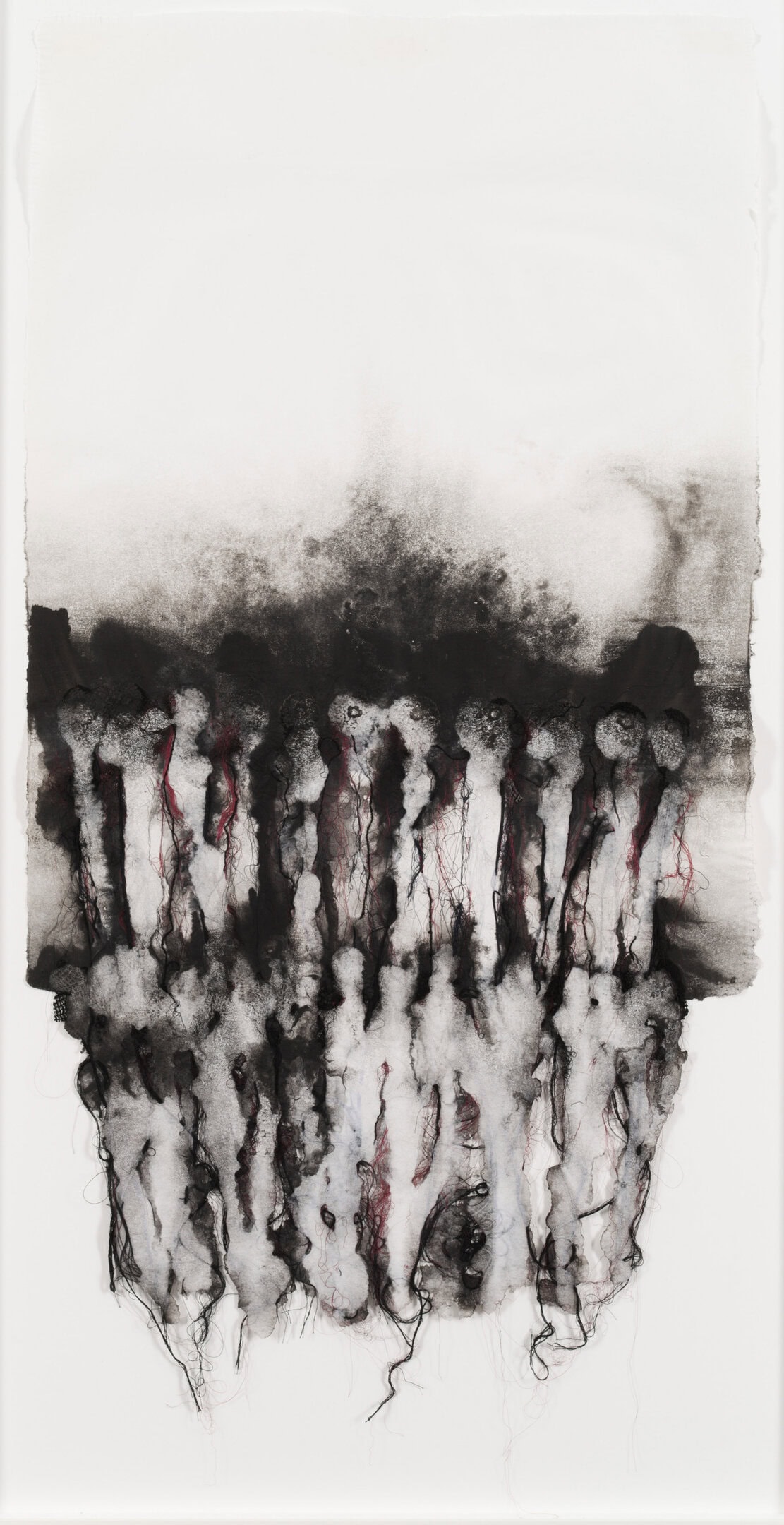
Uncommon Threads in Contemporary Art showcases work from the Arkansas Museum of Fine Arts Foundation Collection by contemporary artists who sew or incorporate various fibers into their drawings, photographs, and sculptures. Using natural and synthetic threads in both traditional and non-traditional ways, they experiment and metaphorically speak of the lines, networks, and webs that link people together. Working in innovative ways, artists such as Maysey Craddock, Howardena Pindell, Anna Torma, and Ursula von Rydinsgvard, among others, collapse the hierarchies between fine art and craft.
Best known for her visceral gouache paintings of ephemeral landscapes, Maysey Craddock reimagines fragments of wild habitat that, through fragile in the context of our actions, persist in their eternal cycles. Through saturated pigments and translucent elemental layers, she depicts the spaces in between, the interactions of nature and architecture, and what happens beyond the grasp of human control. Her imagery is dense and fluid, with trees, watery surfaces and roots figuring prominently as metaphors of the unfolding patterns of death, regeneration and, in some cases, vanishing. Craddock was born in 1971 in Memphis, TN and currently lives and works in Memphis. She received an MFA from Maine College of Art, Portland, ME and a BA in Sculpture and Anthropology from Tulane University in New Orleans.
Born in Philadelphia in 1943, Howardena Pindell studied painting at Boston University and Yale University. After graduating, she accepted a job at the Museum of Modern Art, where she worked from 1967–1979, first as Exhibition Assistant, then as Assistant Curator in the Department of National and International Traveling Exhibitions, and finally as an Associate Curator and Acting Director in the Department of Prints and Illustrated Books. The role made her the museum’s first African American curator. In 1979, Pindell began teaching at the State University of New York, Stony Brook. In 2019, the university honored her as a distinguished professor. As one of a small group of pioneering African American abstractionists including Al Loving, Sam Gilliam, Jack Whitten, and Frank Bowling, Pindell occupied a thankless territory for decades, making work that was not explicitly about the black experience while being excluded from the overwhelmingly white institutions that dominated abstraction. The difficult experience sharpened the artist’s lifelong political and social activism.
Anna Torma is a visual artist working in textile. She was born in Tarnaörs, Hungary, in 1952 and graduated with a degree in Textile Art and Design from the Hungarian University of Applied Arts in 1979. She has been an exhibiting artist since then and has produced mainly large-scale hand-embroidered wall hangings and collages. Anna’s work draws inspiration from folk art, anatomical sketches, gardens and graffiti, methodically composing fantastical stories. Torma has exhibited her work internationally and is represented in many public, private and corporate collections, including the Museum of Arts and Design, in New York City, the Art Gallery of Nova Scotia, in Halifax, and the Beaverbrook Art Gallery, in Fredericton. She was a 2014 recipient of the Lieutenant Governor’s Award for High Achievement in Visual Arts. Anna immigrated to Canada in 1988 and has lived and worked in Baie Verte, New Brunswick, since 2002.
Over a remarkable five-decade-long career, Ursula von Rydingsvard has become one of the most influential sculptors working today. She is best known for creating large-scale, often monumental sculpture from cedar beams, which she painstakingly cuts and assembles before finally rubbing a graphite patina into the work’s textured, faceted surfaces. Her signature abstract shapes refer to things in the real world—vessels, bowls, tools, and other objects—each revealing the mark of the human hand while also summoning natural forms and forces. In recent years, von Rydingsvard has explored other mediums in depth, such as bronze, paper, and resin, continuing to expand upon her unique artistic vocabulary. The artist’s large-scale bronze works can be found in many public spaces. Von Rydingsvard was born 1942 in Deensen, Germany. She has lived and worked in New York City for 49 years.
from the exhibition text
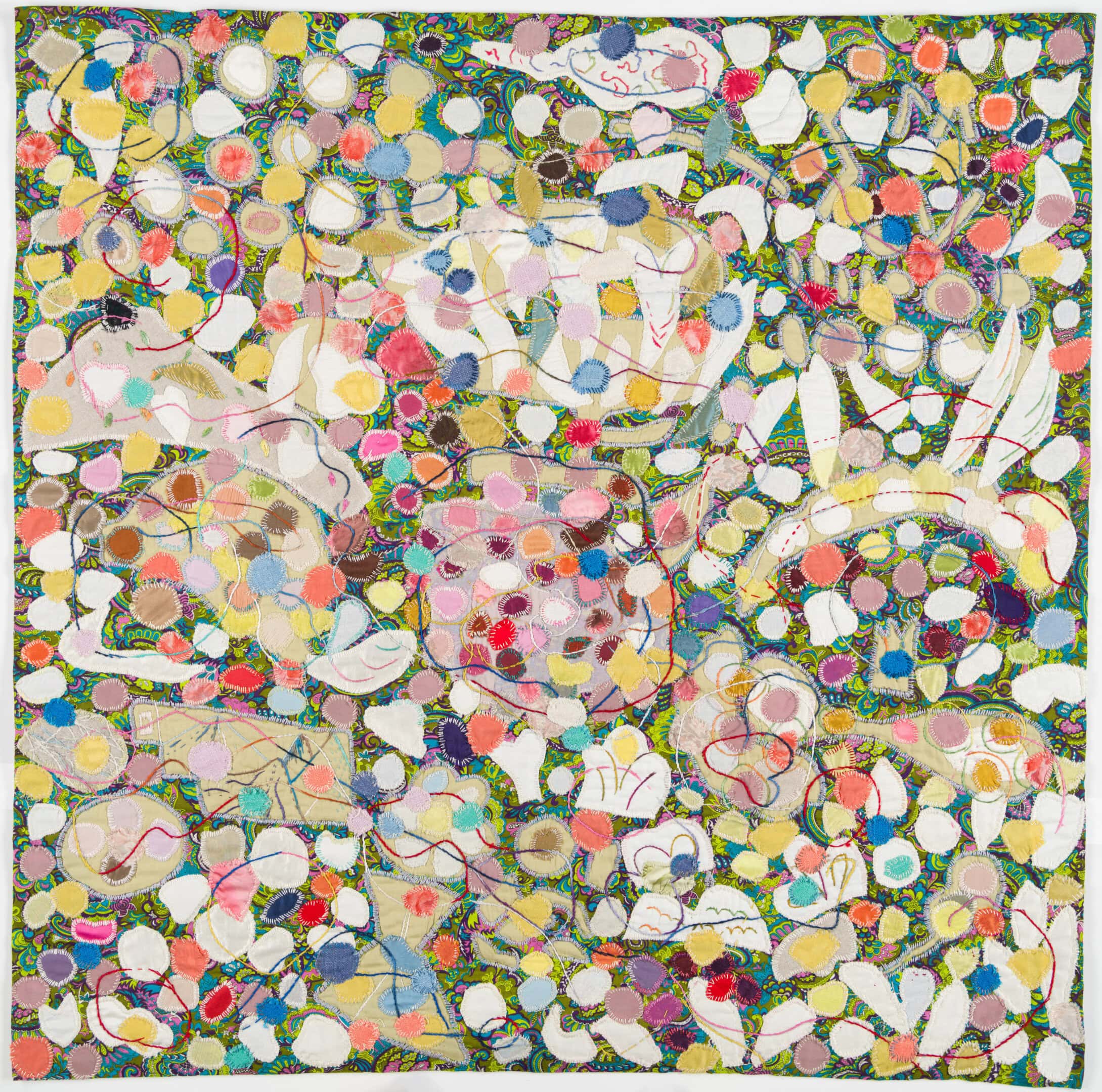
Anna Torma, Lux Garden I, 2006, appliqué and reverse appliqué on linen, 35 × 34 3/4 inches. Photograph by Edward C. Robison III and courtesy of Arkansas Museum of Fine Arts, Little Rock.
 ADVERTISEMENT