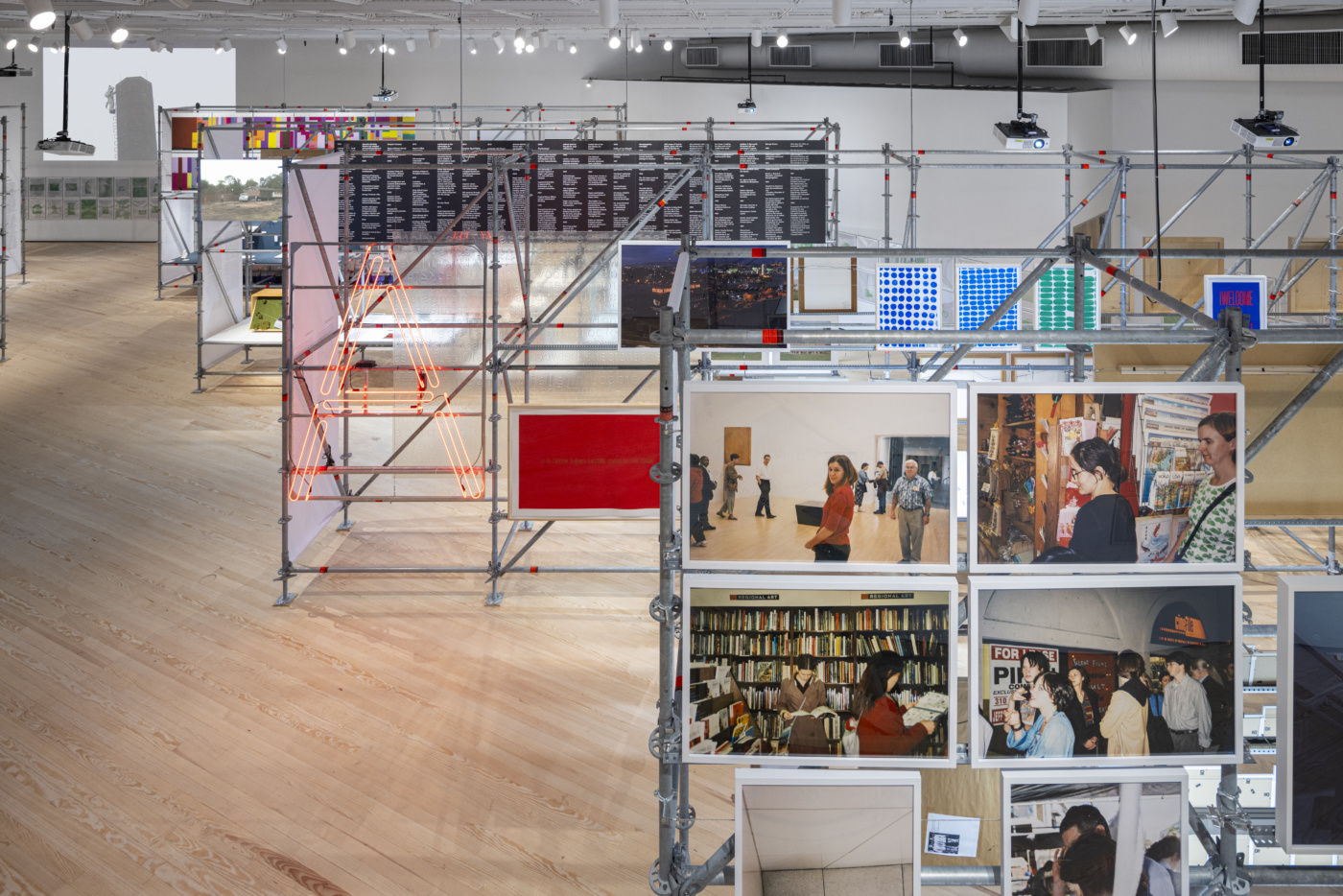
Although they have always resisted the notion of a signature style, artist Mary Ellen Carroll can be remarkably consistent, in word and action. Varied, trenchant, dense, and often funny, four decades of Carroll’s work assembles for a groundbreaking survey at the Contemporary Arts Museum Houston.
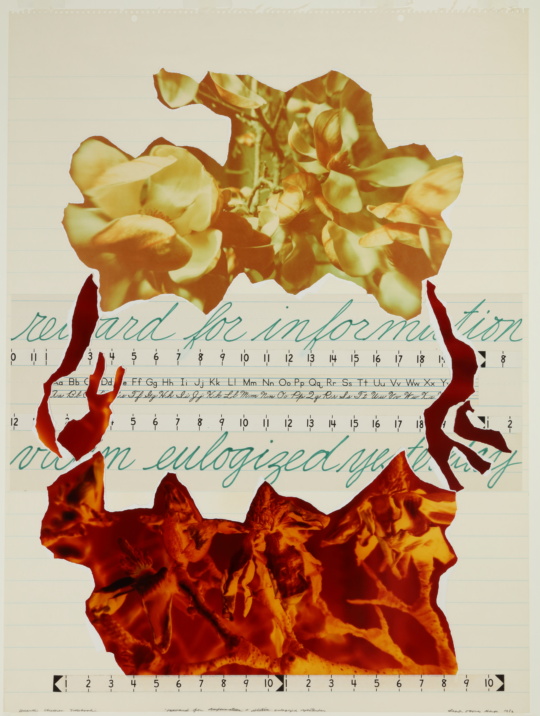
Organized over the past six years by CAMH Senior Curator Rebecca Matalon, Mary Ellen Carroll: How To Talk Dirty and Influence People contains over six hundred objects, including paintings, drawings, prints, sculpture, video, photography, costumes, furniture, correspondence, models, and ephemera. Arranged into six thematic sections and accompanied by an in-gallery booklet with extended labels and a catalogue, the exhibition surrenders no amount of complexity for easy legibility. While it looks back in time, How To Talk Dirty is not a retrospective: it refuses definitive interpretation and projects forward into open-ended futures.
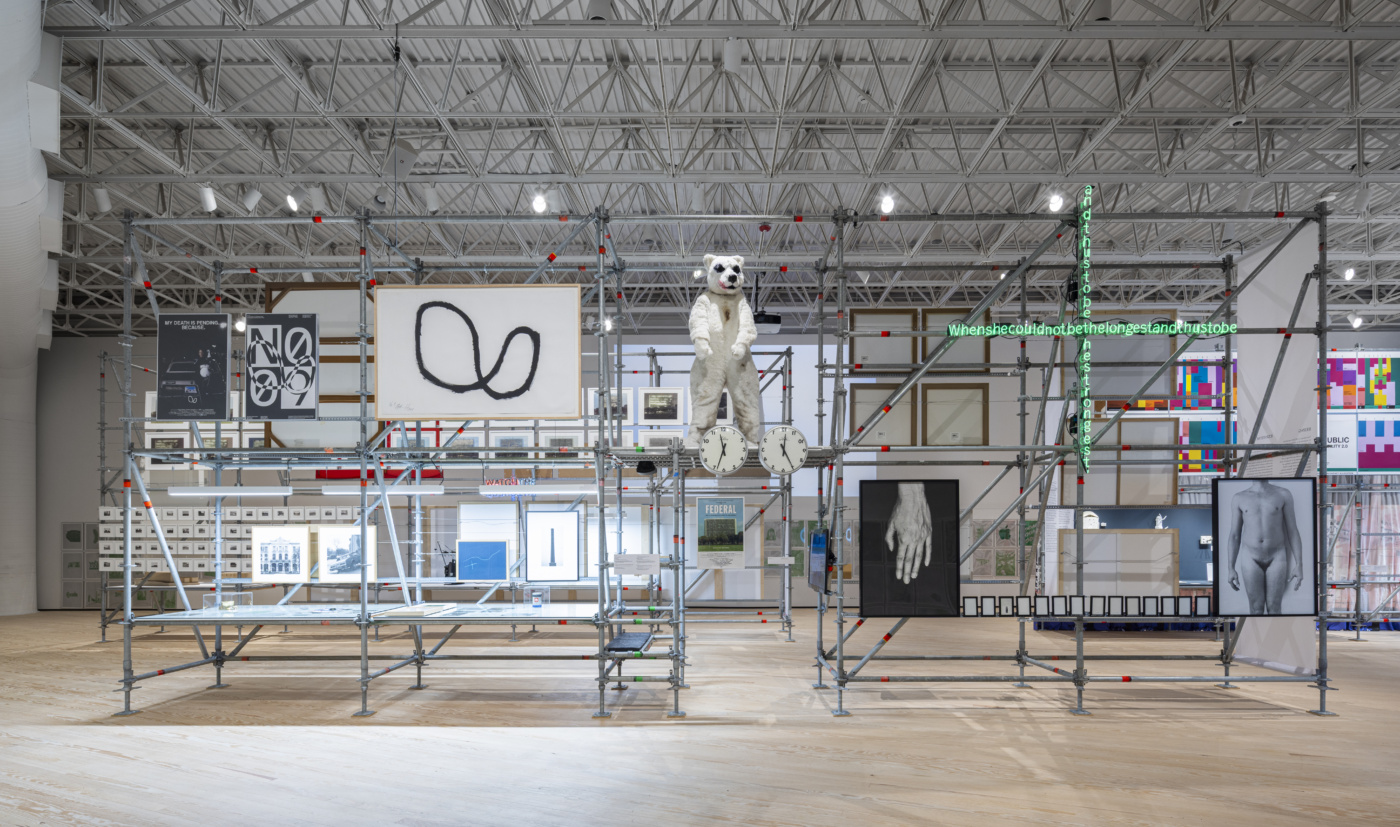
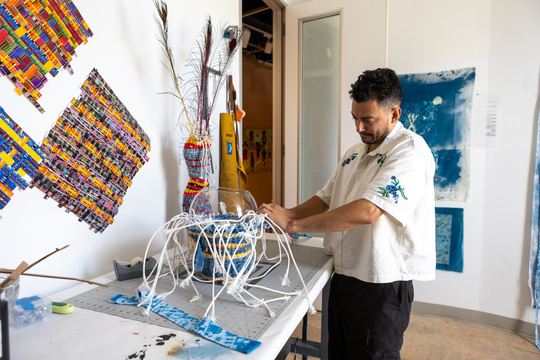
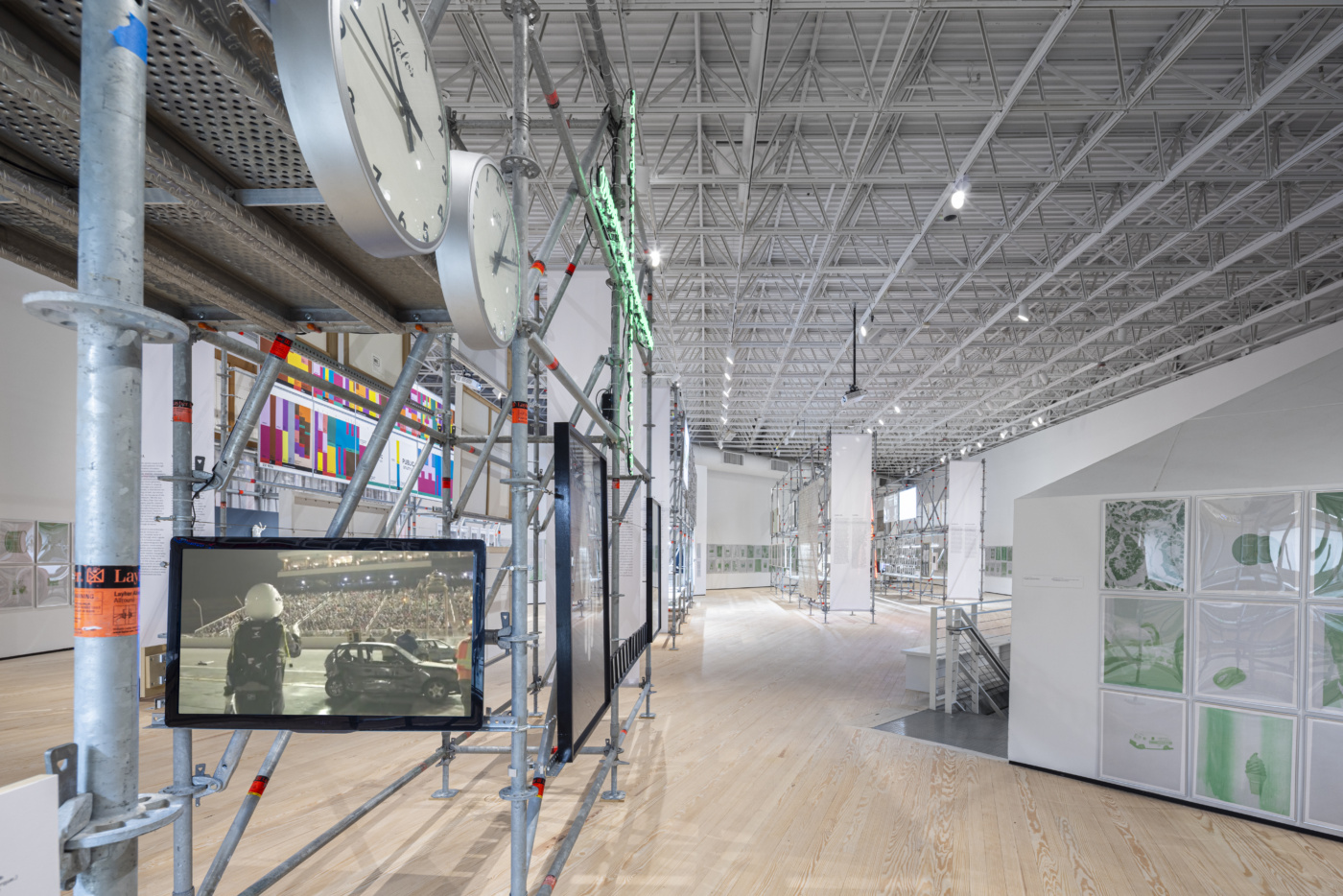
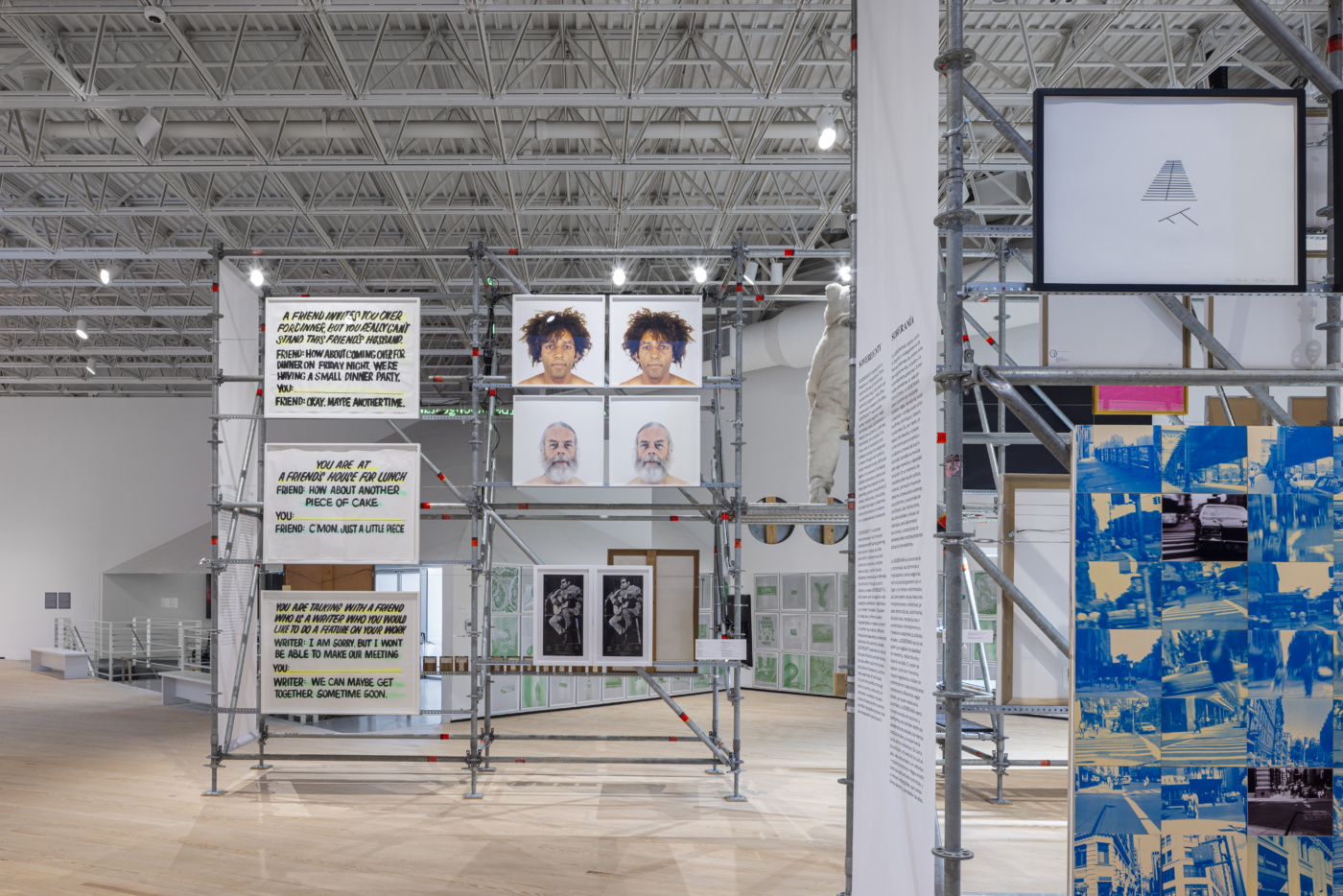
Carroll’s work assembles restlessly on six “italicized” modular units of industrial construction scaffolding designed by São Paulo-based architect and exhibition designer Juliana Ziebell. The latticed, transparent units evoke, as Carroll puts it, “a library stack meets a Costco warehouse meets Ken Isaacs,” a designer of modernist multi-use Living Structures.[1] By choosing this reusable material over the traditional drywall found in most museums, the artist and institution express their joint commitment to a green exhibition, which also guided their decision to hire an electric vehicle art shipper and purchase carbon offsets for the electricity the show will consume. Further, the scaffolding exposes aspects of objects and display that museums typically conceal, forcing viewers to acknowledge that everything has a front and back side and can’t be viewed except in relation to what surrounds it.
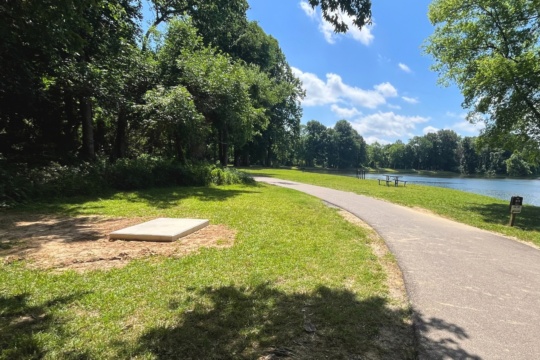
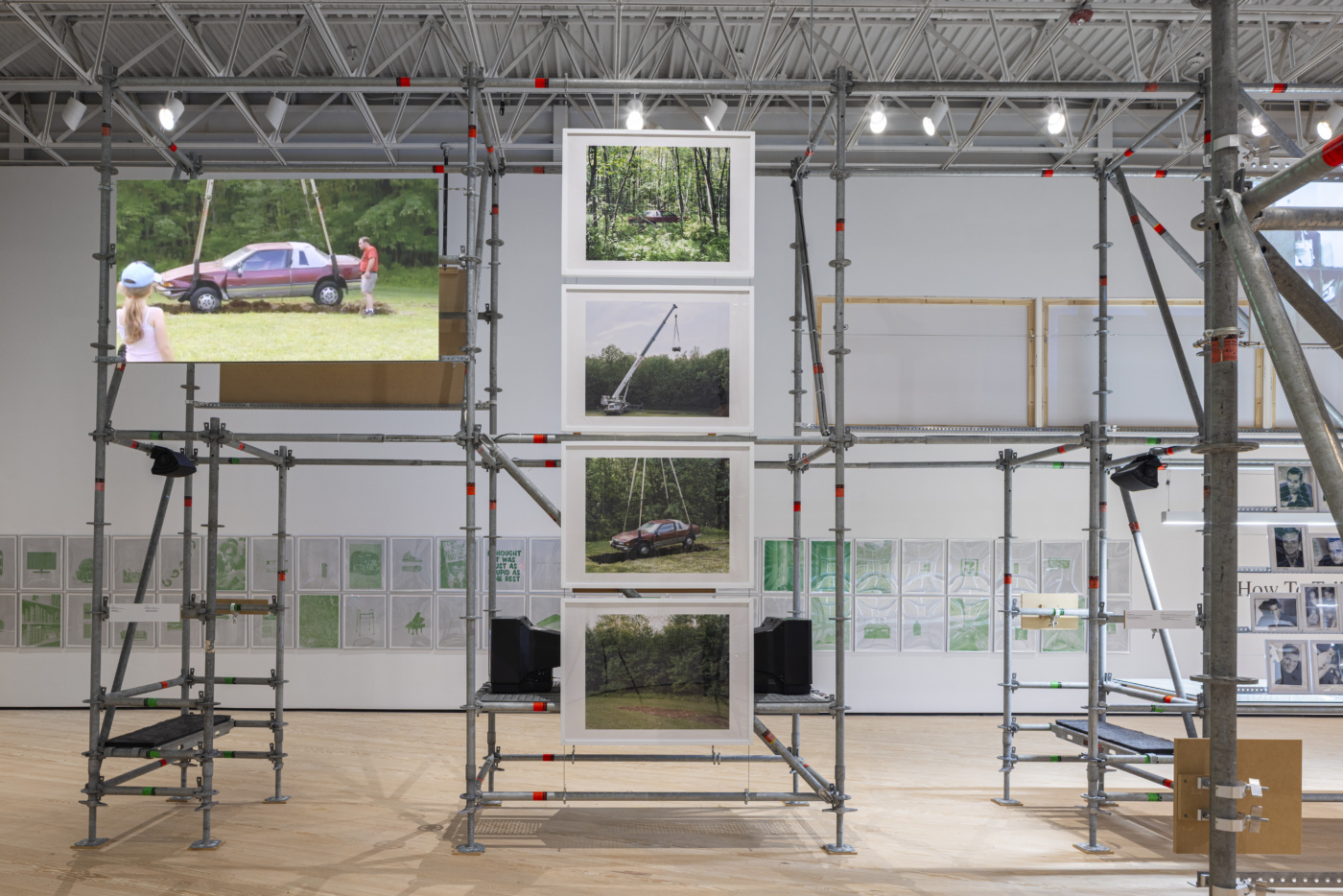
How To Talk Dirty is groundbreaking not only because it is the first solo museum show of Carroll’s work at this scale but because several works in it involve the actual breaking of ground. For example, in The Center and the Scoff (2001), the artist placed a stolen red car purchased at auction in the forest at the Art Omi sculpture park in upstate New York. Six years later for a work called In Reverse, they publicly buried that same car with nothing but its antenna sticking out. They crowned the antenna with an orange 76 gas station sphere, a wry comment on public sculpture’s pretensions to monumentality and reliance on petrochemical infrastructures. Twin videos of equal length stand in for the two works in the exhibition, projected high on either side of the module/section “DOUBLING.” This pendant structure of both montage and display recurs elsewhere in the show, as well as in Carroll’s 24-hour film Federal (2003), which will screen in full at the River Oaks Theatre on August 25–6.
Various scholars and critics have described the artist as an heir to the Land Art movement of the 1960s and 70s, especially because of their major ongoing project prototype 180, a suburban earthwork and material inquiry predicated on “the revolution of a structure and its surrounding property 180 degrees.”[2] Like Land Art, prototype 180 is a child of the highway: the artist first conceived of it in 1999 while stuck in traffic on their commute between Irvine and Los Angeles.[3]
Carroll has said that Houston “selected itself” as the site for prototype 180 because of its lack of zoning laws. They wrote that after the revolution (of the house, but the term speaks in multiple ways), “everything about the building and its surroundings as a system will be reconsidered…as the work of art.”[4] They hatched many plans in connection with the project, including renewable energy, livestreaming video, and community engagement strategies, as well as a debate among Houston mayoral candidates on the city’s zoning policy, which was staged at CAMH itself as part of the 2009 group exhibition No Zoning: Artists Engage Houston.[5] No zoning made it possible to site an artist-run speculative urbanism institute in a residential neighborhood, but long-term engagement with it became plausible when Carroll began teaching in the architecture department at Rice in the mid-2000s.
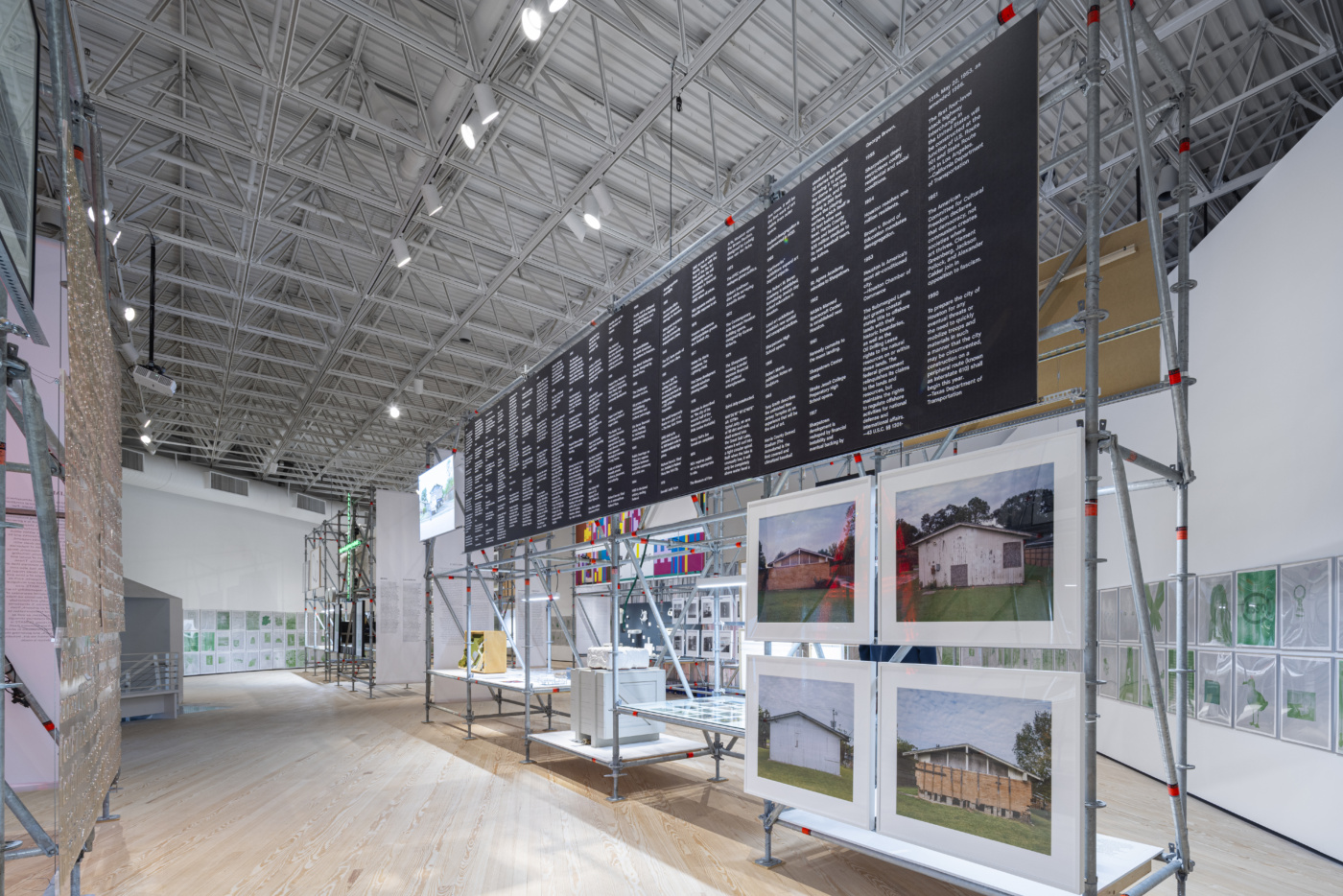
On November 11, 2010, Carroll realized their vision of lifting, turning, and relocating the house, which had been uninhabited for well over a decade, to the back of the lot. Seven years later, following significant hurricane damage, they continued to rotate the structure in Daringly Unbuilt, a choreographed performance-demolition. At CAMH, various stages of the project are represented in multiple media, including photographs, video, archival documentation, and models for prototype 180’s next phase, in which a doppelganger of the original structure will rise again from its own reconstituted materials.
How To Talk Dirty is more “investigated” than “seen”: a presentation of discrete artworks as much as a dossier of evidence through which to hunt for correspondences and clues that can help crack the complex, Rube-Goldbergian logic of the artist’s process. The investigatory mode aligns with one of Carroll’s greatest consistencies, the refrain that their work is motivated by a “single, fundamental question: what do we consider to be a work of art?” One answer to it lies in another Carroll-ism: the idea that the work of art has only to be itself. It is successful, they say, if it makes the viewer aware of their own existence, even if that awareness takes the form of boredom or alienation. With How To Talk Dirty, Carroll and Matalon offer viewers a ride on this question into critical territories at the edges of art and being: places where one might build prototypes of one’s own.
[1] Mary Ellen Carroll (@mecstudios). 2026. “How To Talk Dirty and Influence People…,” Instagram, June 17, 2026, https://www.instagram.com/mecstudios/p/DZtDxcelitC/?img_index=2.
[2] Mary Ellen Carroll, “A Conversation with Mary Ellen Carroll,” interview by David Joselit, October 170, (Fall 2019): pp. 120-145, https://www.jstor.org/stable/48560585.
[3] Its origin story echoes Tony Smith’s account of driving on the unfinished New Jersey Turnpike in the 1950s as an experience at “the end of art,” one that artists and critics took up in the 1960s in emerging discourses around minimalism and land art.
[4] Carroll, “A Conversation with Mary Ellen Carroll,” 123.
[5] Toby Kamps and Meredith Goldsmith, eds, No Zoning: Artists Engage Houston, exh. cat. (Contemporary Arts Museum of Houston, 2009), https://issuu.com/thecamh/docs/2009_no_zoning_reduced.