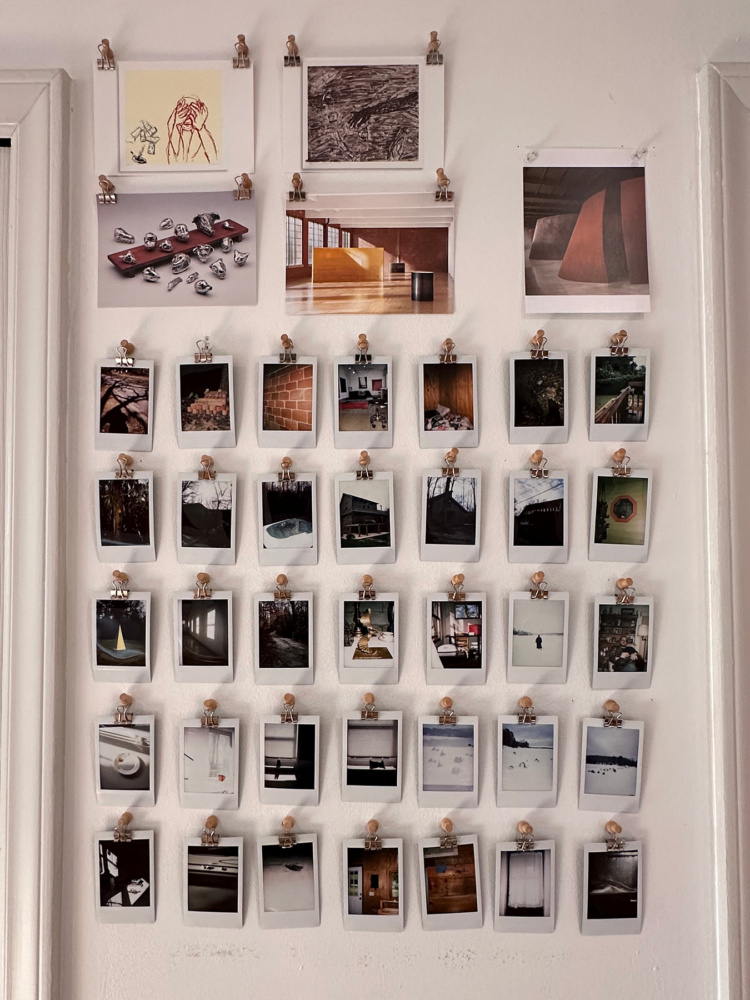
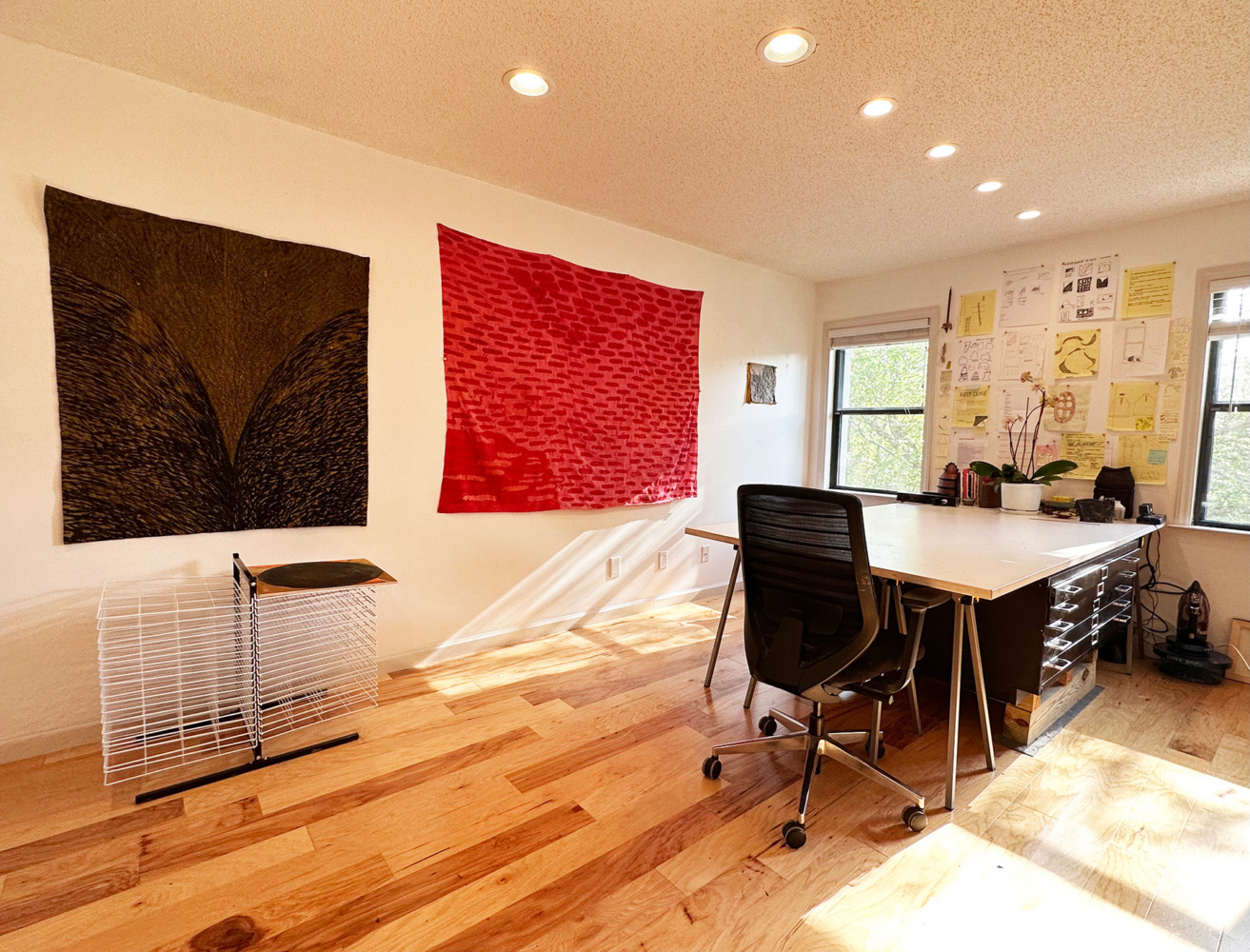
The sprawling tree outside Casey Engel’s Asheville studio has just leafed out, but enough light still filters through its branches to illuminate her tidy, colorful space. The artist is surrounded by inspiration—red-flecked silks, works-in-progress themselves, flutter next to tacked-up Polaroids and museum postcards, the versos embellished with sketches, poems, and swiftly jotted notes.
I first met Engel in her role as an accomplished curator, but quickly found that her talent extended far beyond the gallery’s white walls. Over the years, she curated over sixty shows at Asheville’s Blue Spiral 1 before dedicating herself full-time to her own art. Engel’s ceramic, fiber, and paper works are whimsical and organic. They’re like artifacts from an extraterrestrial world that resembles our own, yet makes the familiar feel discombobulating, wonderfully strange.
As I admired her freshly fired pottery and sculptural quilts, we talked about how artistic residencies and curation have influenced her creative practice, emphasizing the essential role of intuition as she pushes craft traditions into the avant-garde through sheer irreverence and play.
This interview was edited for length and clarity.
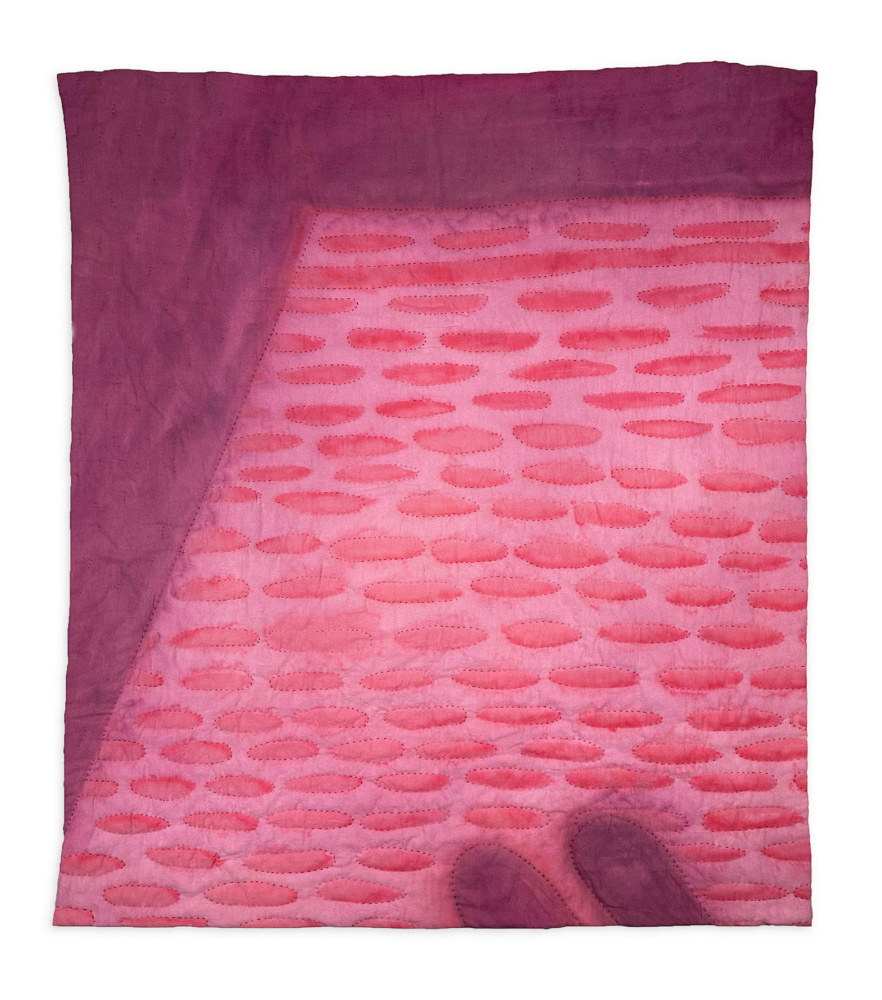
Merin McDivitt: Your work across mediums is so tactile. What does touch mean within your artistic practice?
Casey Engel: The evidence of touch is all over the work, through heavily pinched surfaces and hand quilting. Every square inch has been held and touched many times, and what remains is the evidence of those gestures.
One of the reasons I love working with clay is because I love the feeling of pinching and squishing it—just moving earth in the perfect squish. It is so grounding, pure sensory delight. Through an accumulation of gestures of your hand, you are able to surprise yourself.
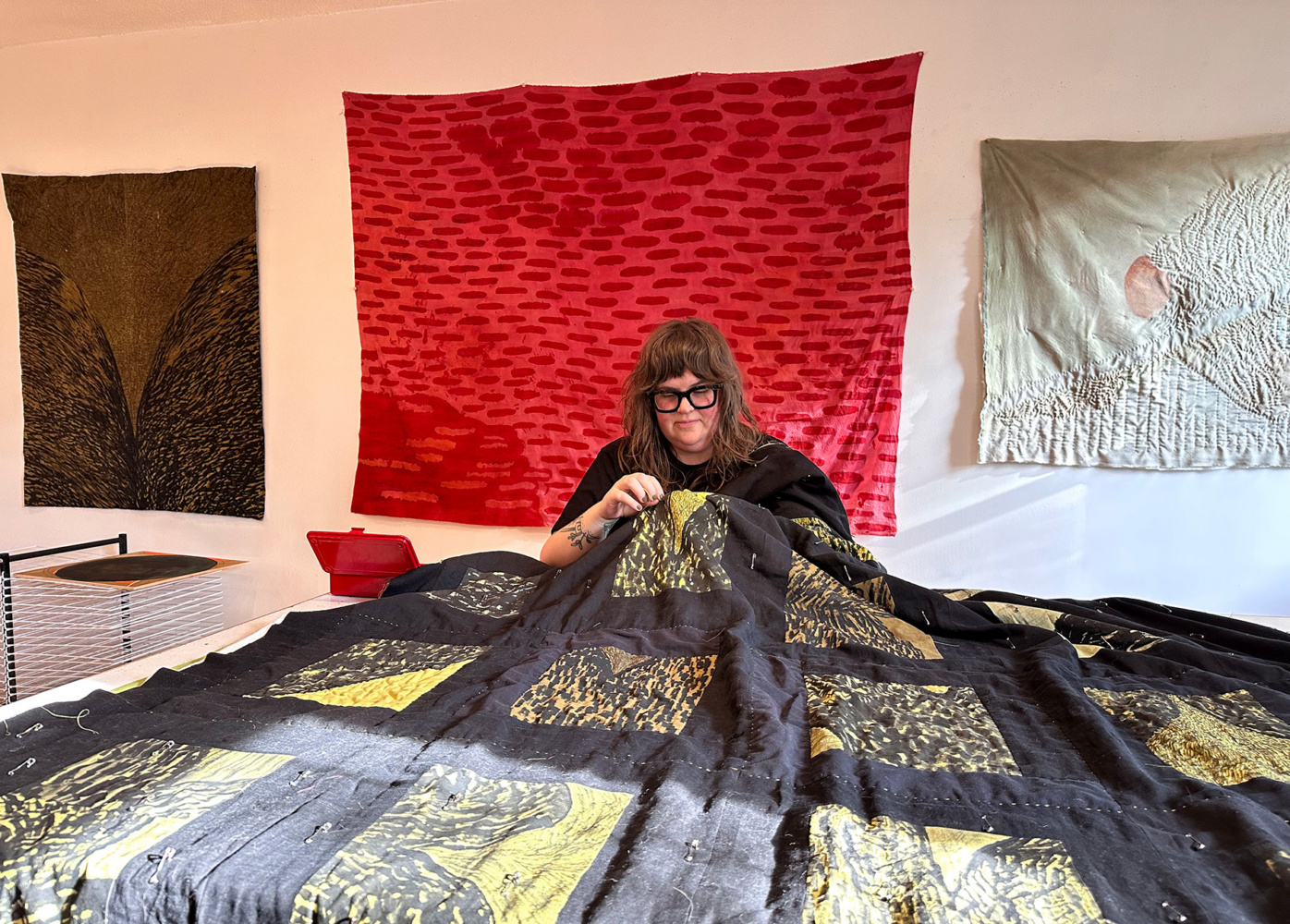
It’s the same thing with my quilts—they’re painted by my touch, but I always want to leave some things unresolved in the painting phase, some problems for the stitching to resolve. Then I don’t use any tension, like a hoop, to hold the fabric. Because there’s more loose fabric, the dimples and puckers are much more dramatic and play with the light. It becomes this bridge to sculpture.
MM: Of course, viewers of your art are unable to interact with the pieces in the same way you do, only look at them. What does this interplay of the tactile versus the aesthetic mean to you?
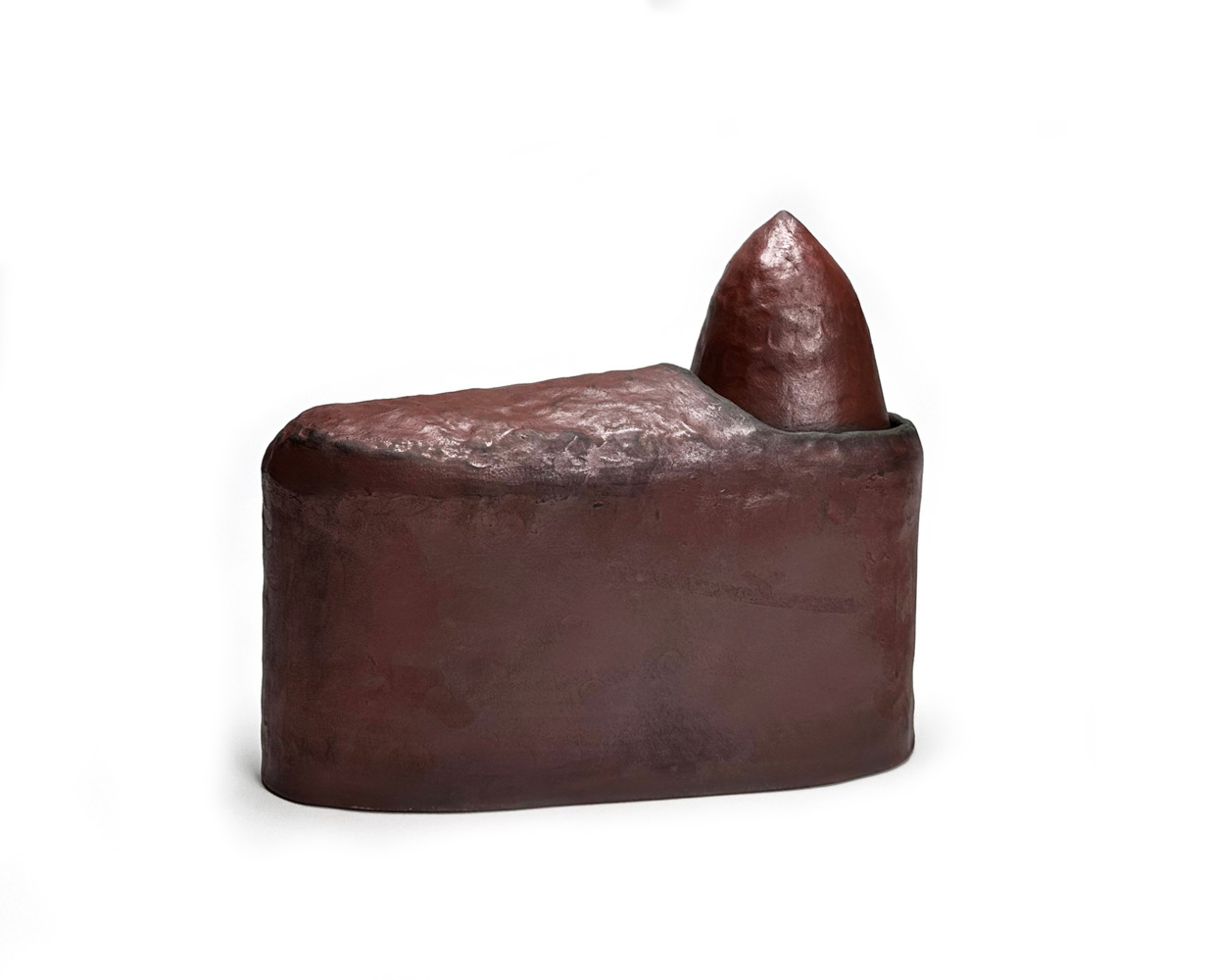
CE: The work is full of contradictions. I use functional methodologies and craft traditions, but deny use. The sculptures reference forms that suggest handling, yet resist it. They’re enticing objects, and withholding touch creates a tension between the viewer and the work that I’m really interested in. The viewer encounters touch visually, as a trace. It’s not all that dissimilar to relics of human history.
I had a real love affair with The Met’s antiquities section last year, especially their jars and bowls, which have an element of mystery because their practical or ritual use has been obscured by time. The rule for my ceramics is that they can look functional, but they can’t actually be functional. They are a vessel, but they cannot contain anything.
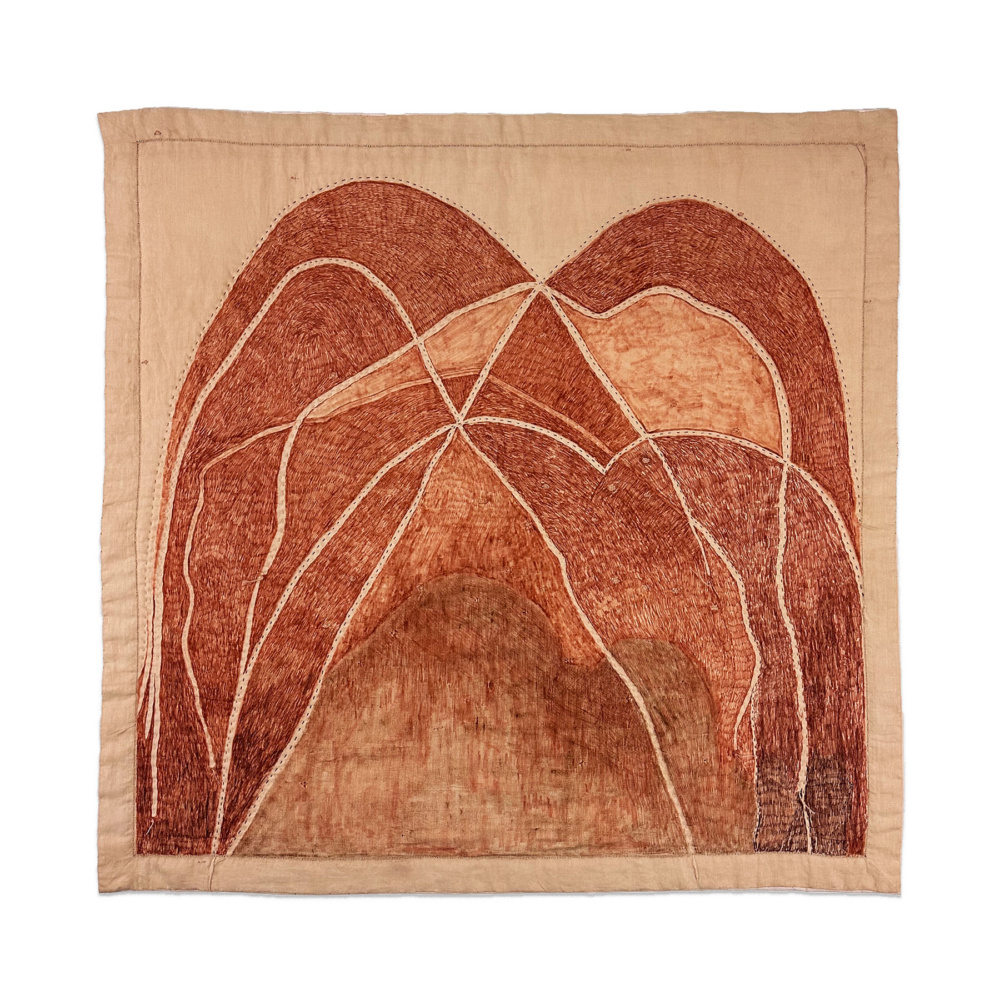
MM: Tell me more about your process to make quilted textile paintings.
CE: All of the paintings start from a very simple line drawing on a Post-It. Then I begin with direct-dye application on wet fabric, and parts of the fabric might be much more saturated with water than others, influencing how much dye is absorbed. It starts with a very frenetic energy—then, the paintings exist for almost a year before I start quilting them. I’m finding that this really suits my temperament, because I get to live with them for a long time.
The central ethos or philosophy in my practice is that imperfections or mistakes are encouraged. I recently read Ruth Asawa’s biography, which discussed how [her fellow Black Mountain College artist] Joseph Albers saw the purpose of art as to surprise.[1] I am constantly surprised by this process.
MM: You’ve participated in a number of residencies, including VCCA and Hambidge. What do these experiences in particular offer you?
CE: I really thrive creatively when I’m somewhere unfamiliar for a short period of time—around two to six weeks. Being away from daily distractions, the level of focus and flow you can reach is remarkable. My ceramics practice also relies heavily on having access to dedicated facilities, where I can work in series and on larger pieces.
Beyond that, I really love being in a group of other creatives. I generally only apply to residencies that include a mix of visual artists, writers, and composers, simply because the conversations are so dynamic and different.
MM: What influence has curation had on your own work—and how does it feel to dedicate yourself to the studio after balancing both worlds for so long?
CE: I think about the root of the word “curate” often, which essentially means to care for. It’s been a privilege to work with so many generous and inspiring artists, supporting their vision and shaping the narrative of exhibitions.
Spending so much time in the gallery gave me a rare perspective. I’ve witnessed firsthand how people experience art—what they’re drawn to, what they resist, what stays with them. I’m now channeling that energy into my own practice, finding connections across disciplines, reimagining forms, and thinking about how a body of work holds together, much like an exhibition. That’s something I’m excited to continue developing.
The transition to the studio feels almost indescribable. For a long time, I balanced both worlds within a very busy, extroverted lifestyle, but that isn’t my true nature. My day-to-day is much quieter and more introspective.
MM: You have an upcoming solo show this December at the Appalachian Center for Craft in Cookeville, Tennessee. What can visitors expect from that exhibition, and where else can admirers find your work in 2026?
CE: The ACC show is called “Keep Close,” and it is very much about the interconnected relationships within the forms in my work. I’ve been building it for almost two years, and I attended three residencies to make the work. All of the hand quilting was done at home. The exhibition will include ceramic sculptures, a large selection of quilted paintings, woodcuts, and a drawing. In 2026, I’ll also be in “America 250: Craft Today” at the Touchstone Center for Crafts [in Farmington, Pennsylvania].
[1] Chase, Marilyn. Everything She Touched: The Life of Ruth Asawa. 2020. San Francisco: Chronicle Books.