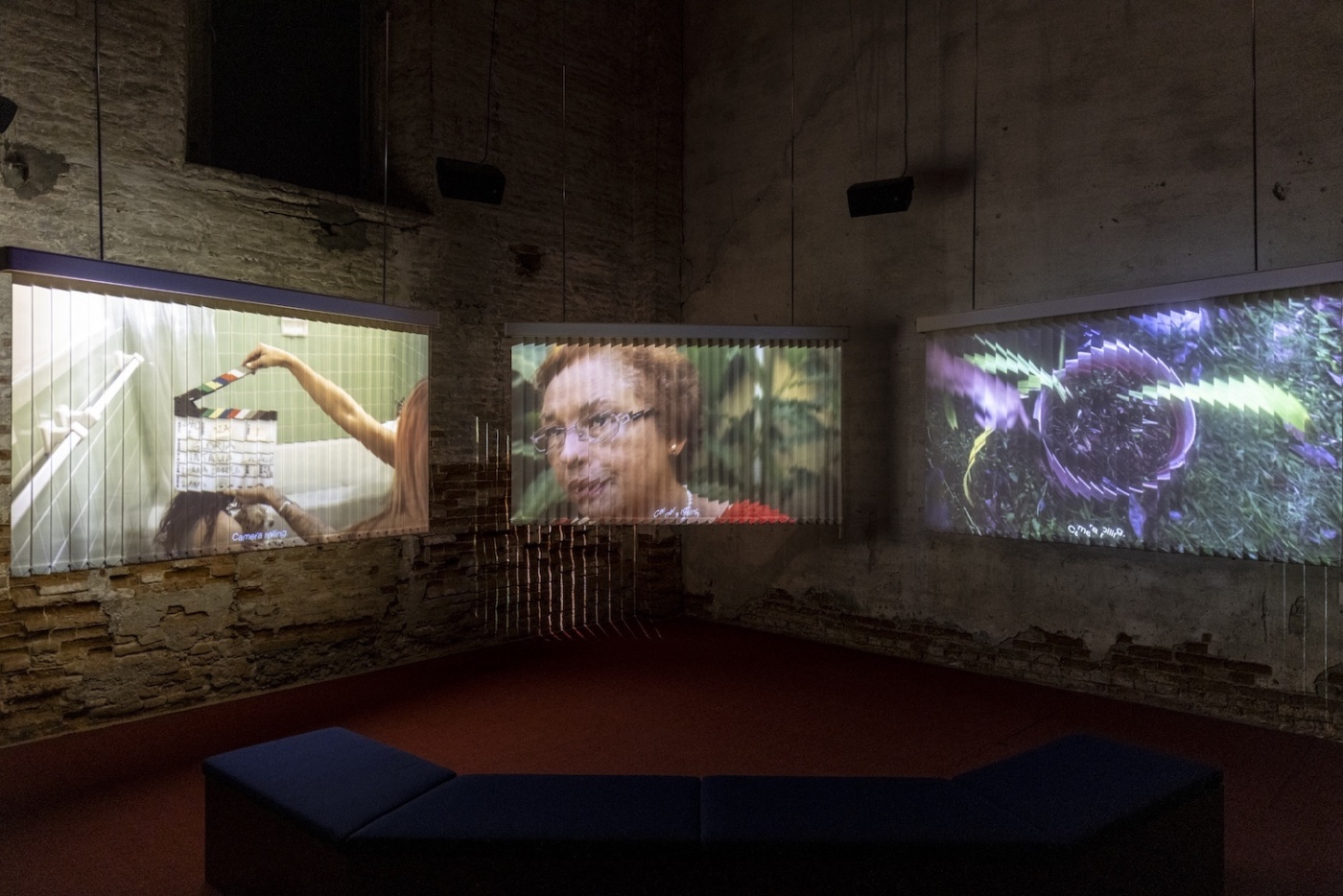
“Director,” Gloria Morillo calls her daughter, off-camera. Retiro (2019), set in their shared domestic space in Puerto Rico, opens in the midst of behind-the-scenes production dialogue: “What would be the beginning of your film?” Initiated with Natalia Lassalle-Morillo’s desire to interview her mother about youth, loss, and transcending gendered familial expectations in Puerto Rico, the joint desire to remember and grieve her maternal grandmother becomes the grounds for a shared film project. Retiro serves as a means to grieve and confront Puerto Rico’s history.
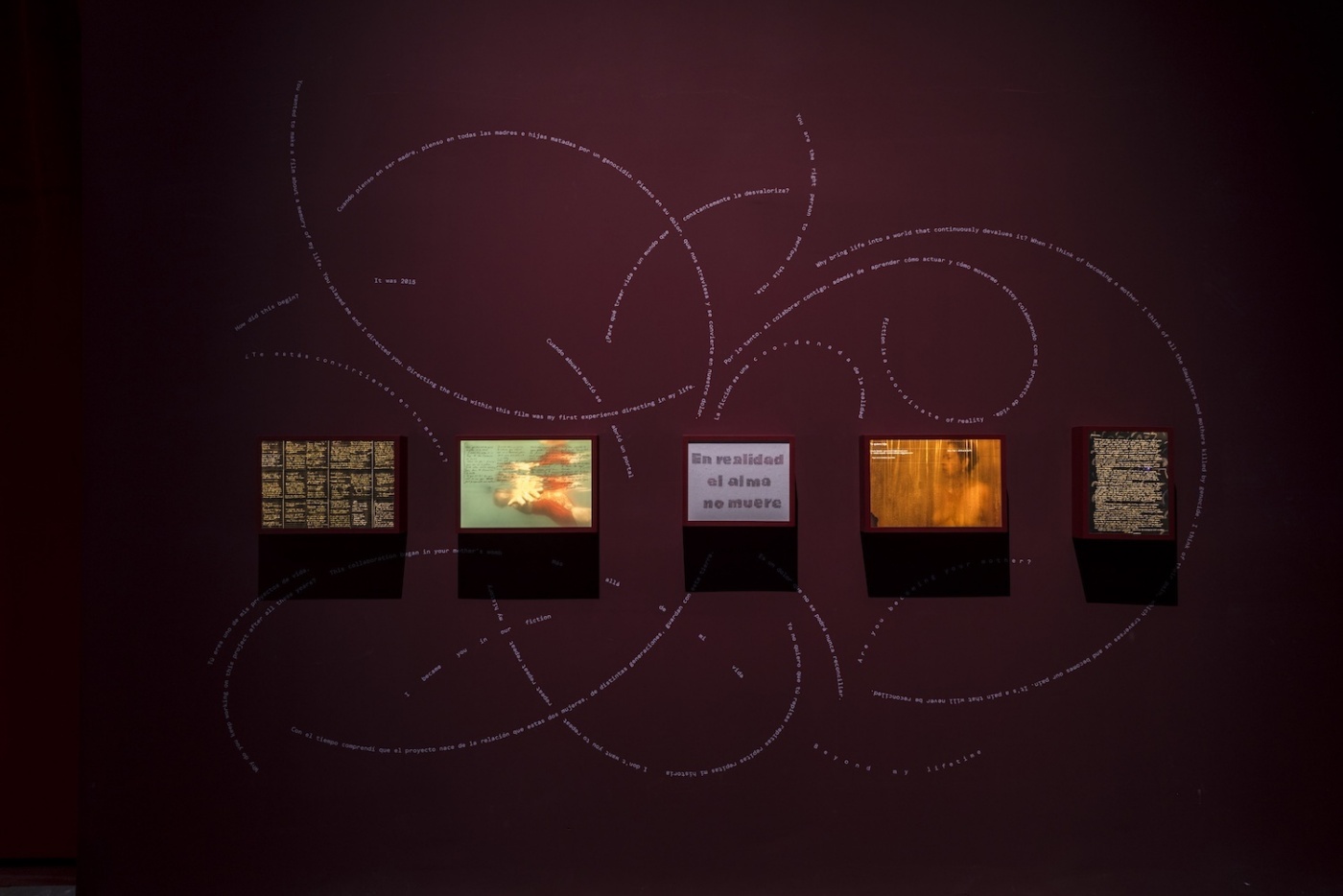
When selected to present the film for the 2026 Venice Biennale, In Minor Keys, Lassalle-Morillo was invited to produce new works as a way to revisit my collaboration with her mother. It was a choice that she felt allowed her to revisit the collaborative process of Retiro from her current perspective, from an artist more mature and with a different relationship to her mother.[1] This year, after a decade of discussions with her mother about loss, frailty, and motherhood itself, Lassalle-Morillo is the age Morillo was when she became a mother to her, affording the exhibit another form of synchronicity. The new works: lightbox installations for Correspondences & Projections / Correspondences y Proyecciones (2016-2026), including Morillo’s embroidery and speculative letter to her future grandchildren, and digital archival correspondences between the pair during the production, wherein text overlays photographic stills from Retiro.
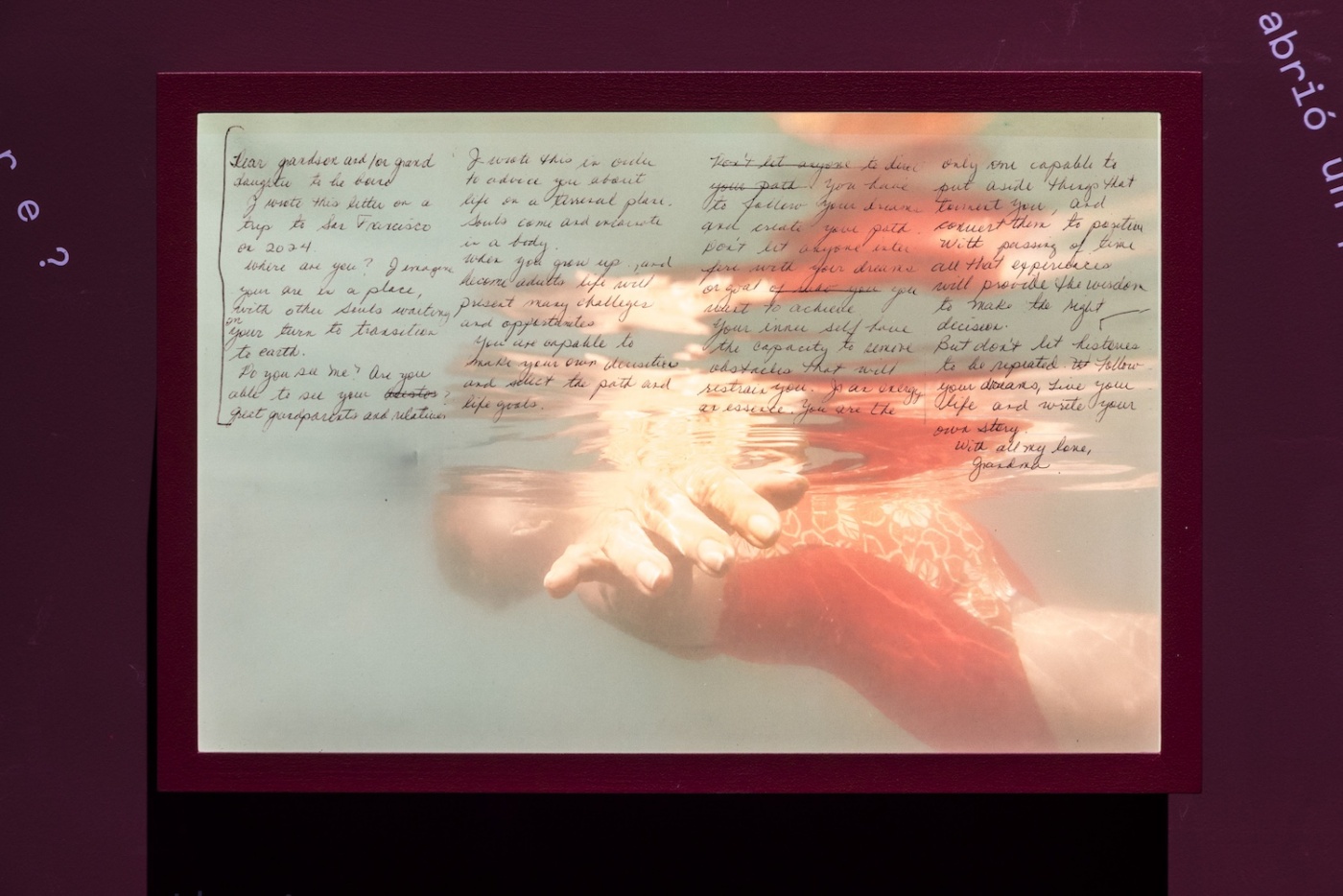
Below: Natalia Lassalle-Morillo & Gloria Morillo, Letter to my unborn grandchildren / Carta a mis nietxs que aún no han nacido, 2024-2026; reassembled photograph and correspondence UV printed on plexiglass, wooden lightbox, 19.5 x 13.5x 4 inches. Photograph by Marco Zorzanello. Image courtesy La Biennale di Venezia.
Through film, installations of handmade embroidery, reassembled photographs, letters and emails printed on plexiglass, the artists enact a practice of renewing the terms of both artistic production and familial relations. This tears open the theme that lies at the heart of all of Lassalle-Morillo’s incantatory work: insurgent and creative enactments of intergenerational collaboration as a political enactment. A practice wherein negotiated experiences of remembering and inherited memories become a means of contesting hierarchical currents of colonialism. This is made clear by Lassalle-Morillo paying homage in the Biennale to the Spanish translation of Isabella Hammad’s Recognizing the Stranger: On Palestine and the Narrative. The text wrestles with the particular philosophical questions constituted by Palestinian intellectual traditions and struggle.[2] In Lassalle-Morillo’s words: “Finding Isabella in the last year has been like finding yourself in a mirror of sorts—maybe a refracted mirror from Puerto Rico towards Palestine and beyond.”
Retiro combines the scripted film Lassalle-Morillo and her mother Gloria Morillo made together, behind-the-scenes footage of the film’s production, and interviews carried out with Morillo throughout the six years. Morillo becomes the director of the film, rewriting experiences of her past. It is Morillo, throughout the three-channel film, who gives the audience the conceptual framework of the film: beyond interviewing her mother about her life, loss, and desire, Natalia will act as her mother, Gloria, to reenact a certain moment she hopes to revisit. Lassalle-Morillo documents the process of filmmaking in real time.
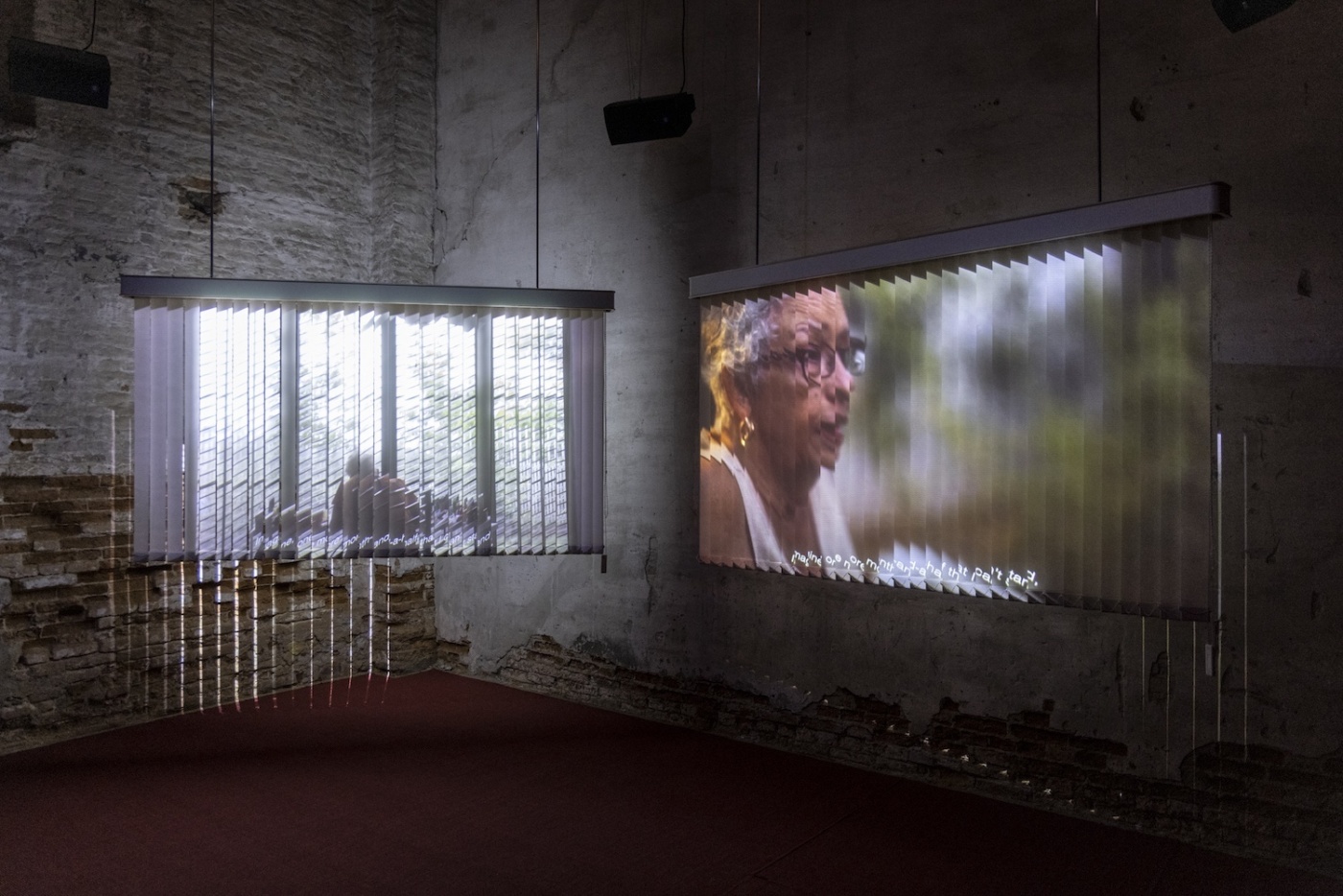
Throughout, Morillo insists: “Well, because eventually you [will] look like me.” In the film, the mother-daughter duo rarely share the same frame. In one scene, Gloria applies make-up to her daughter’s face. The small gesture of touching Natalia’s face—thus her own— announces itself as a grammar of liberation. The certitude—you will look like me—is the mood in this film’s examinations of collective history, the idea of resembling one’s mother. Constantly reversing and rewinding, confrontations of grief are conveyed through a chorus, the multiplicity of voices having been choreographed by Morillo. This is their shared domain: in collapsing the director-artist, succumbing to embodying her mother, Lassalle-Morillo opens possibilities—conceptual and existential— as a powerful language of liberation, one that must be understood itself as a refusal to Western hegemony. History becomes malleable in these moments of surrender.
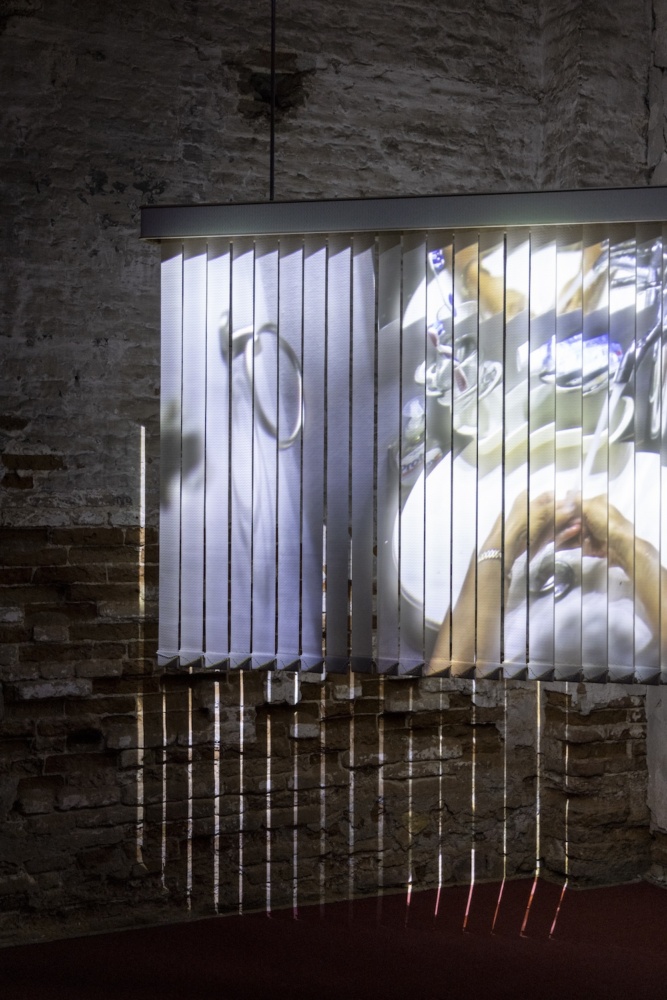
Lassalle-Morillo is drawn to ruptures and continuities in the matriarchal line. The film, screened on installed vertical window curtains, gives the image a repeated corrugated rupture.[3] The window panel itself becomes an emblem of a portal to the pull of family and the pressures colonial history places on women. Projected on the blinds, as Morillo shares with her daughter her memories and her dream, it is as if the camera, too, is being disrupted. And it is. “What am I thinking? That I’m losing my garden. Just look at how ugly it’s gotten.” Morillo’s repeated invocation of the plants as “ugly” and even “savage” delivers a disquieting, subversive link between her own daily life, her domestic space, and colonial violence.

In Puerto Rico, with ongoing negotiations of dreamscapes, travel narratives, and poetic imagery as an age-old survival mechanism in the region, beauty directly synchronizes with ashes of violence. Morillo, mourning her garden and the passage of time through the film, contests hierarchical Western constructs of beauty altogether. Asking for rigorous attention to the contours which hold our relation to and alienation from each other, the repetition of “ugly” begs viewers to reconfigure the scaffoldings on which the modern concepts of beauty are built. The irreducible “ugly” summons Lassalle-Morillo’s wider body of work that takes up the racialized construct of “strange” and “foreign.”[4] In these ways, aimed at testing and then shattering the limits of the use of “foreign” in the ongoing xenophobic state violence and economic extraction.
The film, and the exhibition it is part of, pry open a negotiation of the weight of the past and the accumulation of catastrophe.
The film summons the temerity to direct one’s presence and life. And direction occupies the two artists: viewers might recall from the piece Correspondences: “don’t let anyone direct your life,” or the spiraled text on the wall, “it was the first experience directing in my life.” Moved by the intimacy of what it is to become and know one another, the encounters of maternal figures take place over and over again. The inclination for filmmaking’s fantasy of critical distance cannot seep into Lassalle-Morillo’s portrait of her mother. She trusts her mother to be the authority on her own experience, knowing her understanding of sovereignty is shaped by her generation. Namely, the economic, legal, and psychic restitution following the loss of a person’s homeland takes place in the small creative refusal of acting as one’s own mother—speeding, undoing, reversing the timeline.
At the Venice Biennale, in a city confronted with pressures of rising seas, this piece brings to bear the simultaneous collapsing and separation of colonized islands in the Caribbean Sea. What makes conditions “hospitable to live,” as Koyo Kouoh wrote in her curatorial statement for this year’s Biennale, is evident between Natalia Lassalle-Morillo and Gloria Morillo: in capering with their own mirrors as each other, these artists mirror struggle from Puerto Rico towards Palestine and beyond.[5]
[1] In conversation with Puerto Rican curator Marina Reyes Franco: “It’s important to note that Natalia was really young when she started working on Retiro”. Interview between curator and the author, June 24, 2026
[2] For many years, The Biennale Library has invited artists to share literary works of arts that inspire their work and process. In addition to Hammad’s essay, the artists submitted their work, En Parábola/Conversations on Tragedy (Part I) to inscribe their own publications into the archive. (email exchange from Natalia Lassalle-Morillo to author, June 28, 2026)
[3] One of the first screenings of Retiro took place in the artist’s aunt’s home, the film projected on the blinds. This speaks to the work as a conduit to a larger body of political artwork in Puerto Rico, anchored in the maternal and domestic. Interview between Puerto Rican curator Marina Reyes Franco and the author, June 24, 2026
[4] [4] The clear invocation of ugly is reminiscent of Lassalle-Morillo’s En Parábola/Conversations on Tragedy (Part I), 2024, where the film’s collaborator, Emma Suárez Báez, speechifies herself as “a strange-in-between thing.” This film voices Puerto Rican civil disobedience in the form of a Greek tragedy (Antigone), animating ongoing refusal to significant historic economic disinvestment in the island, infrastructural failures during and after Hurricane Maria, and increased migration stemming from colonial US policies.
[5] This line draws from Cici Peng’s article “Canicula”, where she aptly summons Koyo’s statement within. Cici Peng, “Canicula,” e-flux : Criticism, June 18, 2026, https://www.e-flux.com/criticism/6782443/canicula.