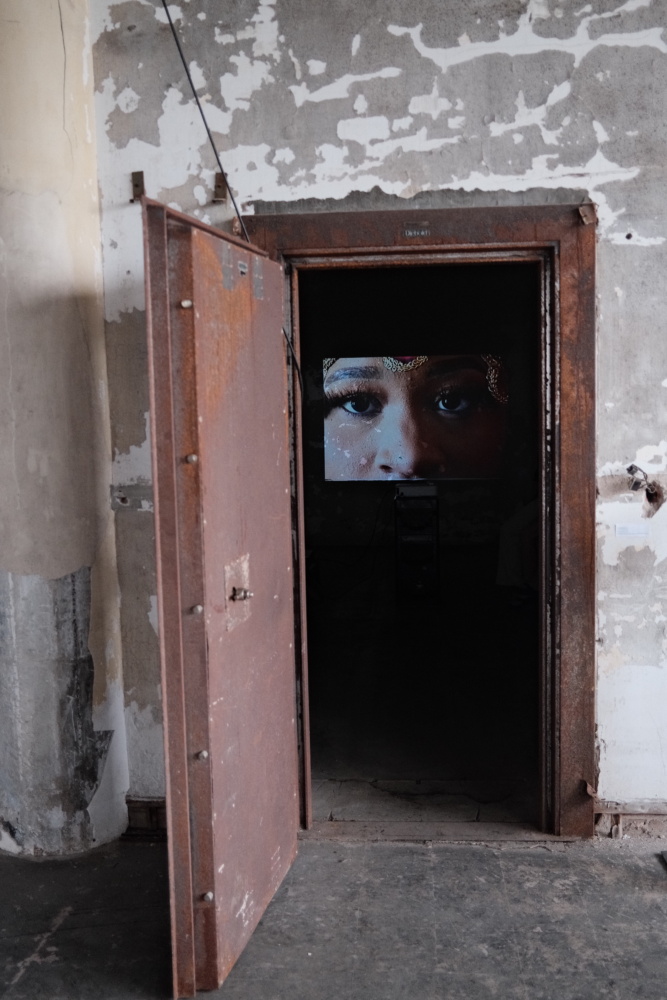
In Arabi, LA, an exhibition in the old Ford Motor Plant leans into a growing trend. On the bank of the St. Bernard Parish view of the Mississippi River, industrial decay becomes a site for understanding socio-ecological time in the South. Ironically, and rather serendipitous to the installation’s intent, inside Henry Ford’s money vault is a collection of film works. Part of the new Creative Industries Assembly supported by the Creative Alliance of New Orleans, Land of the Free, a multimedia projection series by HBO Original Katrina Babies filmmaker, Edward Buckles Jr., plays on legacy and the perception of time. Land of the Free also features works by photographers and New Orleans natives, Buckles’ mentor, Eric Waters, Ashley Lorraine and Jamal Denzel Barnes. Centering the Black Masking Indian tradition, and site specificity within New Orleans neighborhoods, their works speak to the assembly of New Orleans from inside of the “Land of the Free.”
Inside the Ford Motor Plant, there’s a sense of timelessness witnessing the industrial decay of the building— archival manipulation in conjunction with hyper imposed linear time. The texture, acoustic of the spaces, and the haunting of Dinah Washington’s, “This Bitter Earth” to score the film, all serve as a way to perceive industrial time versus cultural time.
This interview was edited for length and clarity.
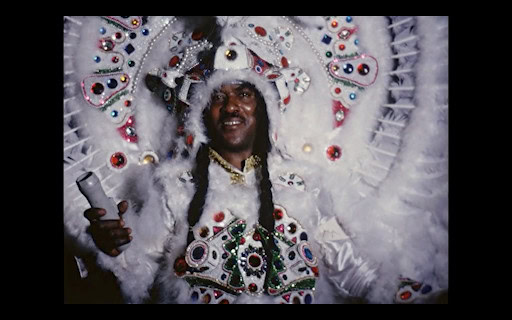
Yashira Davalos: You mentioned you’d like for the viewer to have no true sense of archival time in viewing this work. Do you feel this form of experimenting creates a continuation of Pre-Katrina New Orleans? Do you want to design a study of the visual performances and find the variations in cultural language over time?
Edward Buckles Jr: You can’t really tell what time this is, you know? So, there’s a clip in here where we are at St. Joseph’s Night in 2023. I’m using these images that we got in 2023, mashed up against an archive from the 60s and 70s, on St. Joseph’s night. But it’s in the same location—it’s uptown, at AL Davis park. I think that it just shows that we are still in these same places, even with disruption. You know, even with disruption, we are still gathering in the same places as an act of resistance.
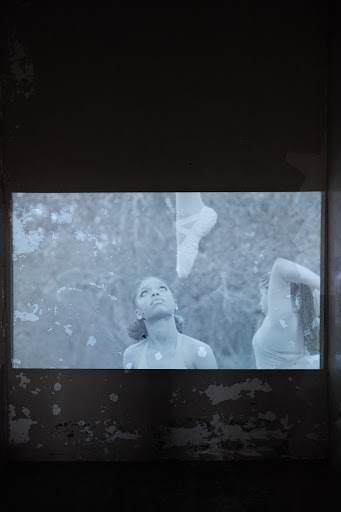
I’m definitely studying this visual language, but also, I am studying how it’s changing and how it’s being elevated by way of preservation. If I can place archival footage of a cultural moment alongside present-day images and the viewer can’t distinguish between the two, that feels like a sign that our culture is still alive and being preserved. You know, the housing projects where we shot this footage, it’s no longer there, right? So, like, it looks different—it feels different. You know, some of the people that once called this place home, they probably can’t even afford to live there anymore.
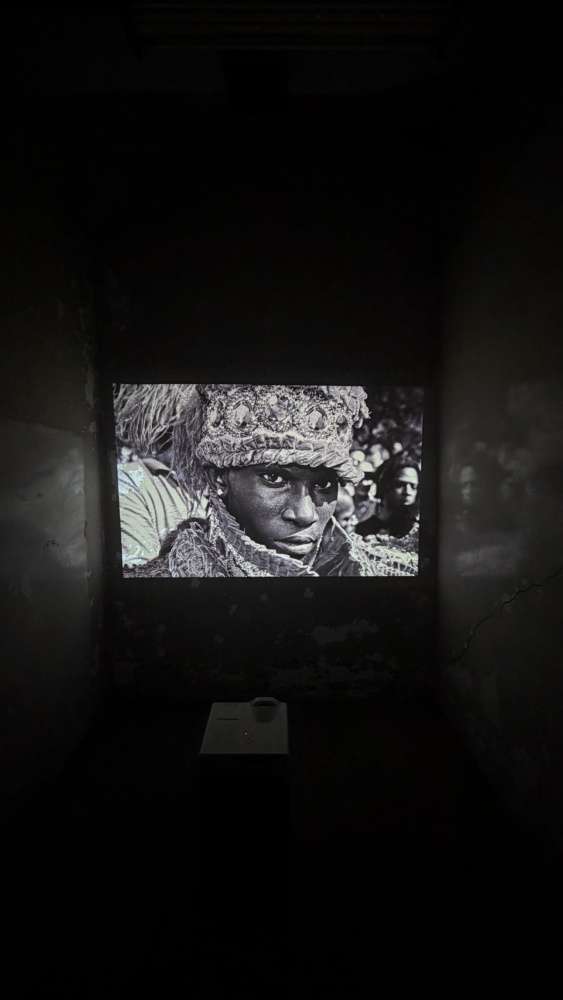
YD: In terms of the cultural language and how it varies over time…what is your method? When you’re pairing the clips together, are you tracing neighborhoods, or by the silhouette? Are you tracing by the tribe? Are you tracing the location in which it was performed?
EBJ: I trace it by location and I trace it by action. One year I walked all the way to Bullets Sports Bar, and we walked over the interstate. Coming from Uptown and going downtown, it is the most intense and dramatic buildup; especially once you cross that bridge and you end up downtown. That used to be neighborhoods. So, it takes us longer to conduct a meet, right?
"How we show up for our culture. It intensifies every year."
So, they [Black Masking Indians] still meet under the bridge. They still meet, literally where they built a highway to disrupt their gatherings. And it’s an act of intense fucking resistance. I’m sorry to put it that way, but it gets more intense every year, you know, because of how our city is changing, because of how our city is being co-opted, because our homes and our businesses and our gathering places are being taken over. How we show up for our culture. It intensifies every year.
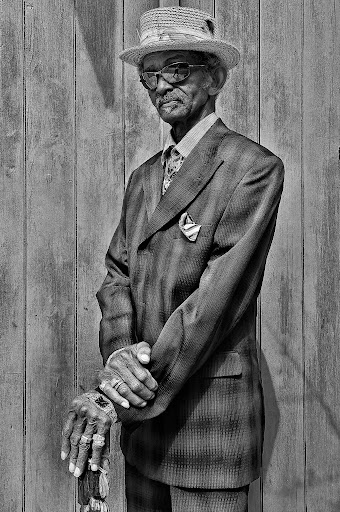
YD: Mr. Waters, you’ve been documenting New Orleans Masking and the second line tradition for over 30 years. How has the moving image changed during your practice? How has storytelling changed?
Eric Waters: Well, things have changed since I’ve been shooting what I call street culture, and the term that I use is the African retentive culture of New Orleans. And there’s only two spaces, or two places that have African retentive culture in the contiguous United States. The only two places that have African retentive culture that has been sustained over 150 years is, of course, New Orleans and Gullah-Gechee culture up the coast of the Southeast Coast Corridor.
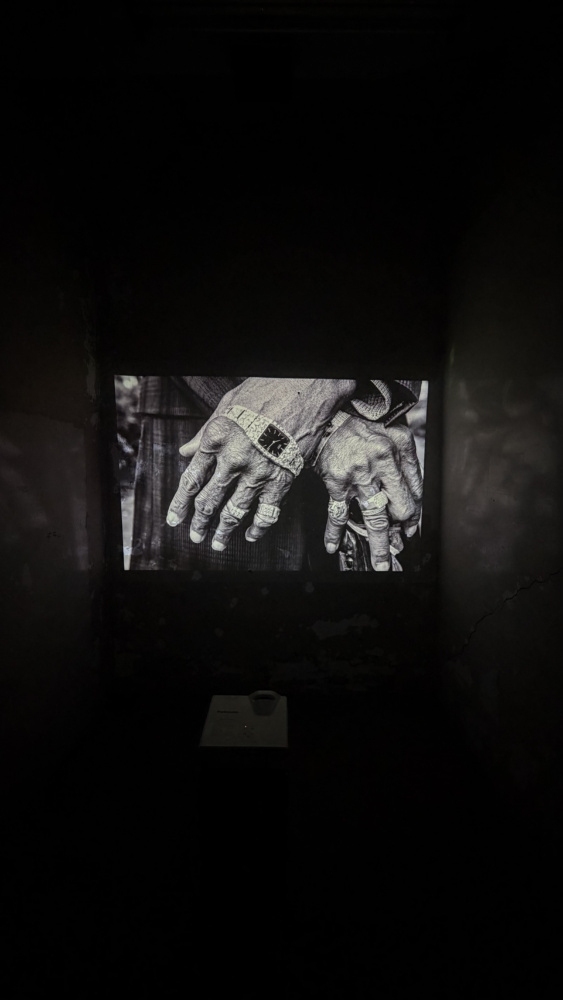
I physically can’t go out and shoot a second line from the beginning to end; although I have shot the Black Men of Labor. I’ve been their official photographer for 30 years. You know, I just don’t want to walk that far now. But it’s just different. And there’s only three clubs that really stay true to tradition. It’s the Black Men of Labor, Sudan, and the Sidewalk Steppers. So I don’t want to use this verb, but I’ll use it anyway. It kind of has been bastardized, the second line, in terms of what I’m used to seeing, people actually second lining. And another thing I want to address is people really don’t know that there’s a difference between second lining and buck jumping. I have been second lining since I was in high school. That’s just what we did. Buck jumping is a whole other level. You know, tap dancing is Fred Astaire. Buck jumping and tap dancing is Bojangles. There’s an astronomical, big difference between the two. I can second line. A lot of people can second line. But a lot of the buck jumping happens outside the ropes. ’cause that’s where the dance and the serious dancing is being done. And those are the things I used to capture, in terms of second line groups, second line funerals. Those kinds of things.
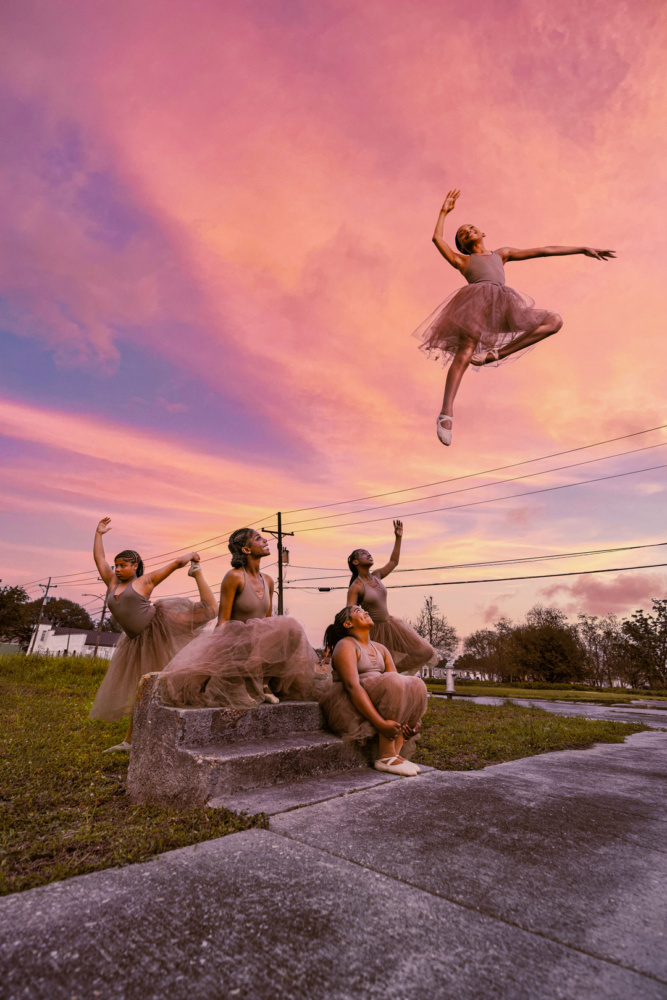
When it comes to creative industries there’s an assumption that capital and access is what makes contemporary culture. In the American South, tradition gets exported from an “industry perspective.” It has an agenda around what’s historicized and what’s generative. My criticism of this exhibition as a whole and its footing in the contemporary art landscape is that there is in fact a separation between the ecosystem at large that is “creative industry” in New Orleans, and its social cartographies. While other contemporary works exist there in theoretical play with the decaying assembly plant, it’s only the work of New Orleans natives that exist in multiple time perceptions at once by simply telling the truth. Cultural language, and its nuances will always speak against exported fragments of culture.
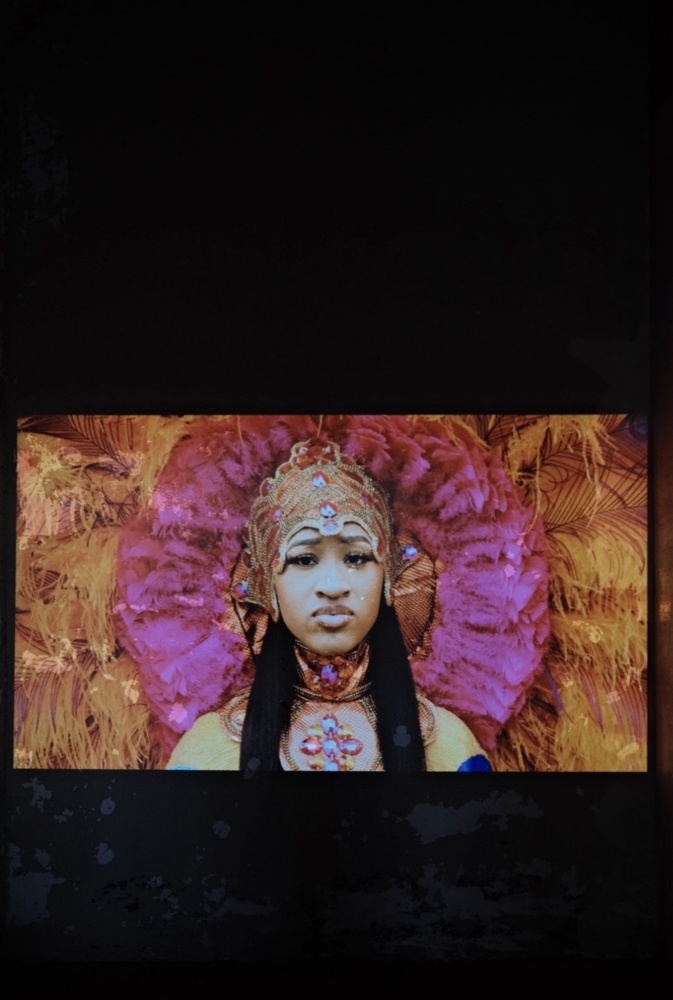
It is often theorized that the geographic shape of New Orleans could be perceived as a womb. Employing this theory you could follow what is incubated in its cultural activities, is praxis against infrastructural disruptions. A language of decorum, attire, and gesture—always moving. This counter hegemonic way of keeping time in different New Orleans neighborhoods is the act of restoring people’s futures and their traditions in a land, or rather inside of the womb, a womb where practice was designed to last through a social fabric.
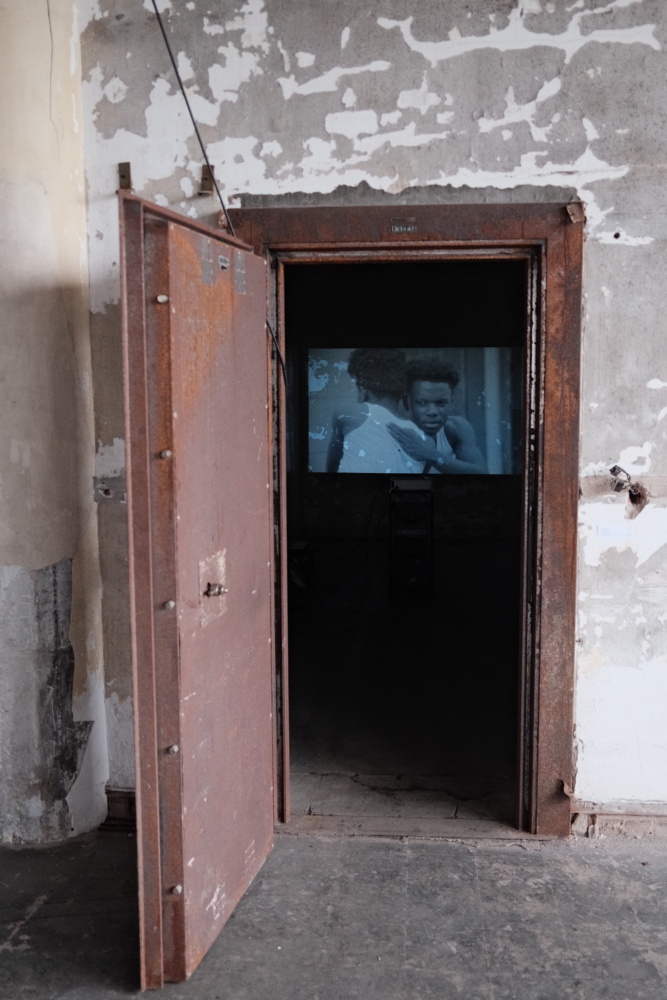
With proximity to the site where the levees broke, and where parish lines were drawn to keep industrial uses of labor protected in Arabi, the view of the river from the plant could either be grieved or celebrated. Today, there’s an impending imposing of Industrial Zoning Expansion, Industrial Canal Lock Replacement, PORT NOLA, and economic development districting that are soon to affect yet again, the lower ninth ward’s residential threshold.
Yet, Land of the Free’s speaks to what fragments of New Orleans culture persist. There’s the distinct cadence of the people’s steps in the footage, syncopated to the 5-4-1 jazz cadence in the score. It would seem as though true continuity in the South can only be perceived against the grain of linear time. In regards to aesthetic decay, the film creates the reclamation of a failed imposed reality. Where there is infrastructural neglect or imposition, the social fabric is the foundational form of resistance. Further, in New Orleans, this social fabric would also exist even without a force to oppose. And that is a different type of timing, it’s infinite.