Courtney McClellan: At Burnaway’s 2023 Art Writing Incubator you spoke about your exhibition titled Are We Free to Move About the World and addressed the passport in contemporary art as it related to the incubator’s theme of Movement.[1] I continue to see movement as a guiding principle in your work. When we spoke recently, you talked about leaving and being left as a cyclical kind of movement. Why is this kind of movement important to you and your work now?
Grace Aneiza Ali: I’ve been rereading Christina Sharpe’s In the Wake: On Blackness and Being (2016), her concept of “wake work” and what it means to live in the wake of grief. I’ve found so much connection to migration’s wake—its grief, its losses, its rupturing. I’ve been asking: What does it mean to live in the wake of migration?
Migration is usually told through the people who leave. But migration is a reciprocal relationship. In order to leave, you have to leave people behind. You leave places behind. You leave a former self behind. Migration is not just about leaving, but it’s also about who and what is left. In the book I’m writing, I’m retooling how we think of migration by shaping my theory of “migration work.” That is to say, migration is not just about the people leaving, it is equally about the people who set us up to leave, give us permission to leave, make it easy for us to leave, put themselves second, third, last so that we can leave. That too is “migration work.”
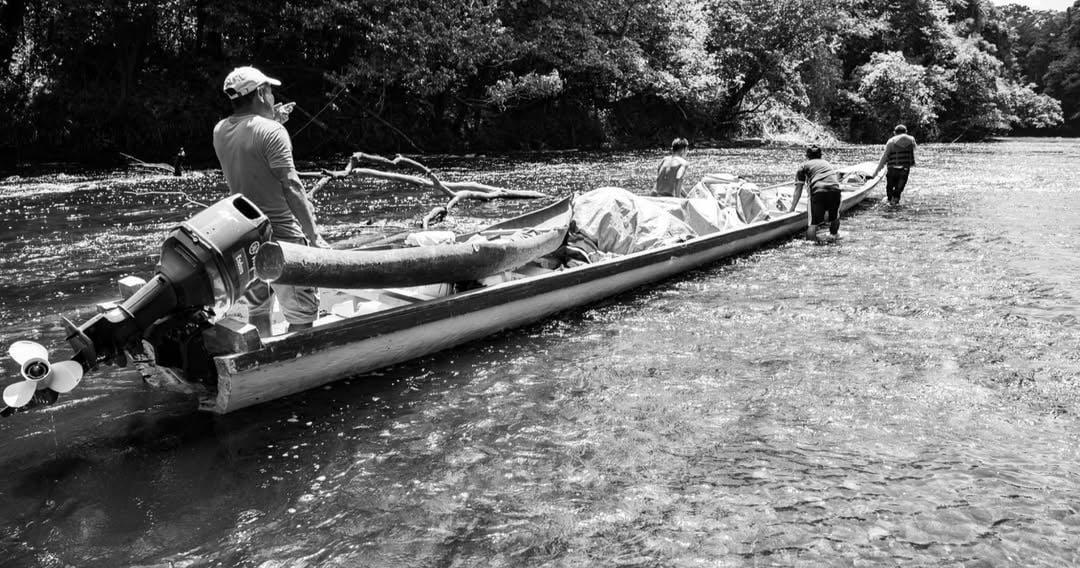
One of the films I’m writing about is The Seawall (2011) by Guyanese-American filmmaker Mason Richards, where the protagonist is a grandmother who has seen her daughter leave Guyana for the United States and now must see her grandson off—the last generation in her care.[2] She endures a double leaving, a double departure, a double abandonment across generations. The strength and dignity she shows, knowing she will be the one left by herself in this country, embodies “migration work”—what it means to sit in abandonment, departure, and anticipatory grief. We rarely see narratives like these where the story of migration is told through the lens of who is left behind.
Part of why this question, What does it mean to live in the wake of migration?, grips me is that it’s not abstract for my family. Before we migrated, my mother spent years in Guyana watching her siblings leave after their parents died. That experience of being the one left behind—of holding the house, the memories, the grief—haunts how I think about migration’s wake.
Natalie Willis Whylly: I know this isn’t unique to the Caribbean, but it just feels so specifically Caribbean. That sort of state between the ones who left, the ones who are leaving, and the way that you’re talking about migration as labor for everyone involved. I think it is really important, because there’s so much discussion on this side about the people who leave for better opportunities. They have more than you. They’re lucky. No, you are choosing to leave belonging, to try and help everyone. Just the way you’re unpacking the grief around this work is important because all of us have an experience with this, either with someone who’s left, or our families are made of people who left. The grandmother in this film feels like a metaphor for the Caribbean, in a way that gets my heart and just grips me. It’s beautiful. Thank you.
GAA: To tie this to Courtney’s framing about mobility, there’s a misconception that staying is static. Staying is incredibly volatile and incredibly mobile—ironically. One of the quotes I’m using in the book is by Edwidge Danticat from Brother, I’m Dying (2007): “Exile is not for everyone. Someone has to stay behind, to receive the letters and greet family members when they come back.” That’s not passive, nor static.
NWW: The people who are staying are grounding. And that is active to me. It can look like being still, like a tree with its roots still, but it is grounding itself, holding the soil together. That’s what it feels like for me hearing this.
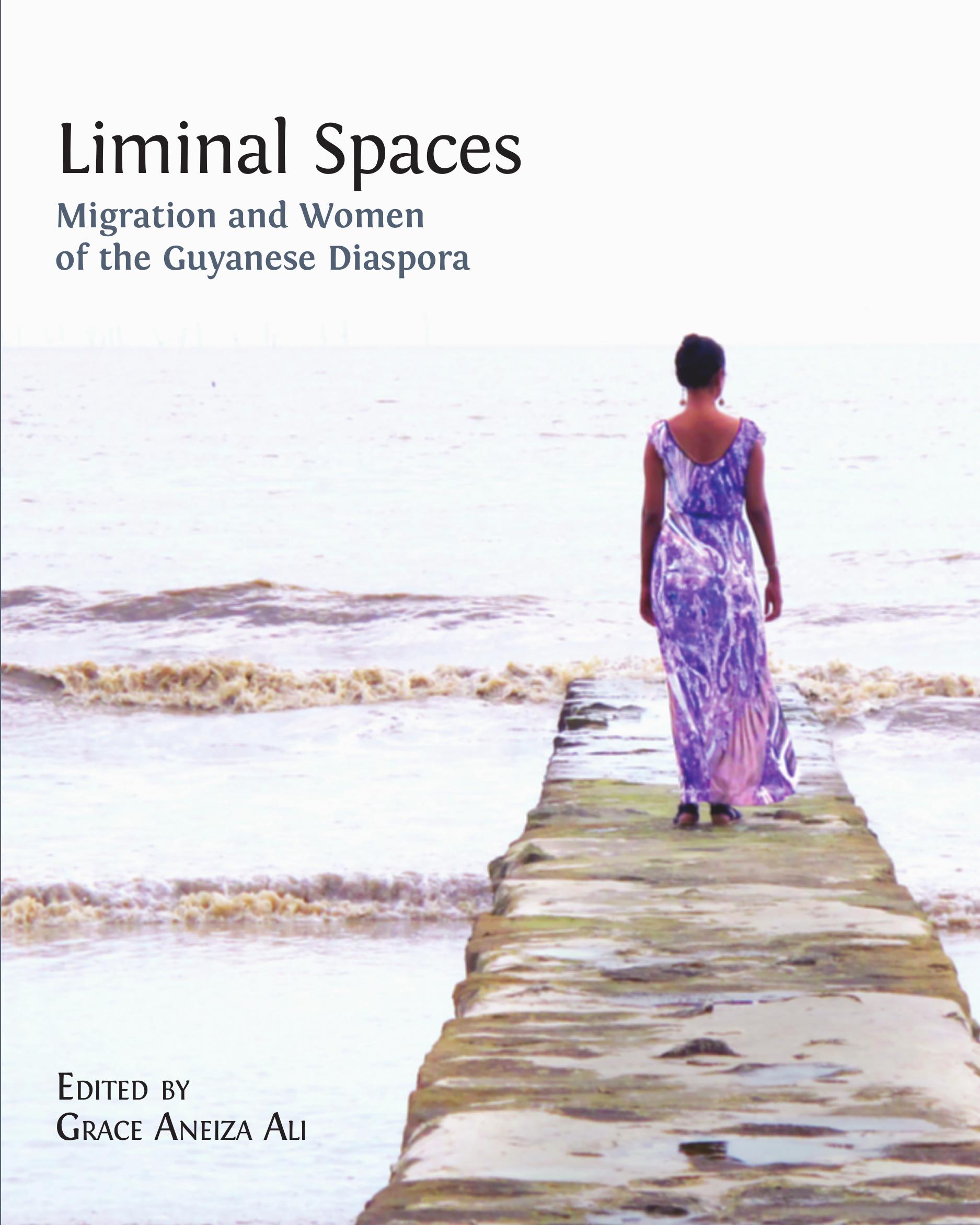
In your book Liminal Spaces (2020), you’re talking about the diasporic cycle and movement between Guyana and the rest of the world.[3] I was thinking about this idea of remittances, which are generally financial, but how diaspora artists and cultural workers send back care, grounding, decolonial representation, access to ideas, information, and things that they have culled from the spaces they’re in. What would you consider most meaningful or most valuable as your cultural remittances to Guyana and your diaspora?
The people who are staying are grounding. And that is active to me. It can look like being still, like a tree with its roots still, but it is grounding itself, holding the soil together.
GAA: What a beautiful phrase, “cultural remittances.” I never heard it put that way before. I really love it. That phrase intimidates me because I don’t think I am the one to assess my remittances. Perhaps, that’s for others to decide. What I can say is that when you truly love a place, that love demands intentionality.
The two most important geographies in my life are Georgetown, Guyana and Harlem, New York. I spent the first fourteen years of my life in Guyana and I lived in Harlem for fifteen years. I always found Harlem very Caribbean, and Caribbean people have a long history of shaping Harlem, so I was very at home there. Harlem introduced me to myself and I credit every ounce of my foundation to being born in Guyana. I hope that taken together over a lifetime, my work makes clear how fiercely I loved the places that shaped me.
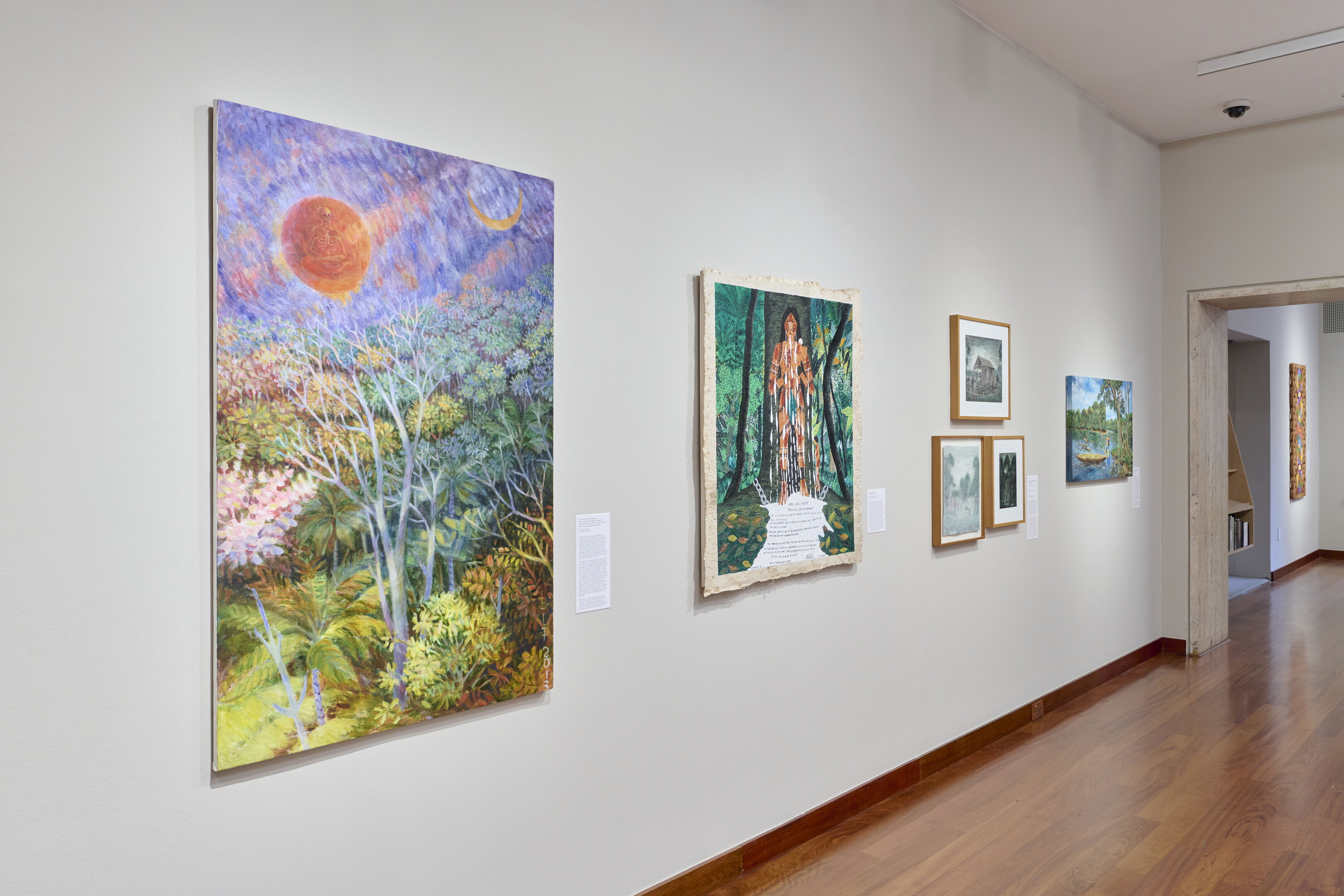
I’ve been very intentional and strategic about how I pour into Guyana. I know in my heart what I’m called to do and how I’m called to love this place back. A most recent example of this is my current exhibition, Amazonia Açu at the Americas Society in New York in which artists from South American countries are responding to the Amazon in a contemporary context.[4] As one of the co-curators, I was insistent that I wanted to include artists who are rooted there, who are shaping the present and future of Guyana from within Guyana—Darnell Carpenay and Bernadette Persaud.
NWW: I love that. Intention, love, and representation so that people are taken seriously when it’s so easy to write this place off because of how we’ve been written by the rest of the world. There’s such a love that has to be involved in activism that people forget because they think it’s fire and brimstone all the time. The more you can do to have people understand the reality of our experiences outside of this sort of paradise myth that plagues the Caribbean, there’s love in honesty and dedication.
GAA: I echo that for both of you. Through your work Natalie for and in the Bahamas and through your mission Courtney via Burnaway’s commitment to the South.
CM: You mentioned a calling. What does that calling feel like for you?
GAA: There is a singular question I return to every semester with my students and with myself: What is your work in service to? It’s a question that keeps me grounded, focused, ethical. It’s a question that provokes more questions: What values is this work aligned with? What is it repairing, naming, refusing, making possible?
The question of what even is the South is evolving and worth returning to over and over again.
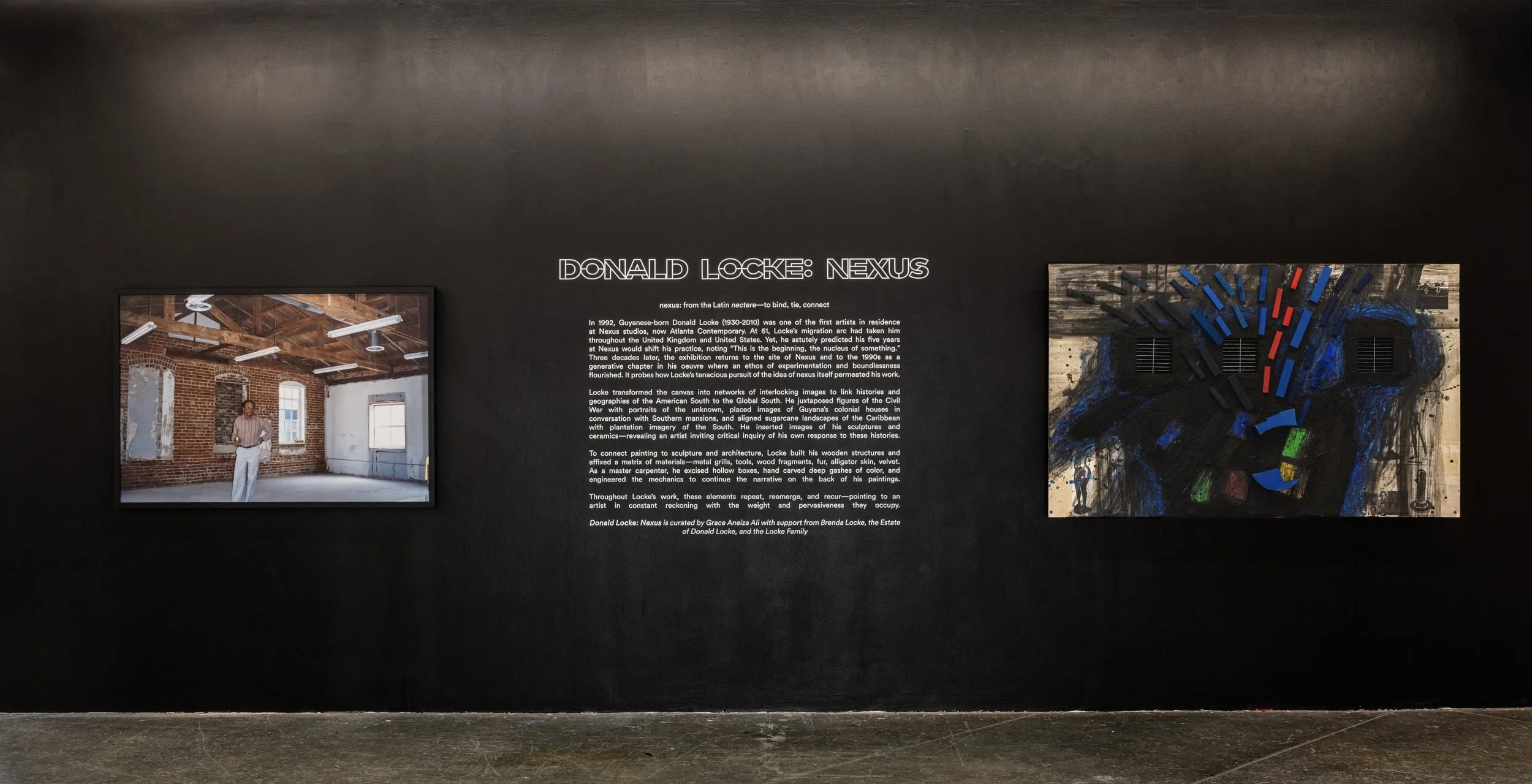
CM: I was thinking about your curatorial work in recent years—Donald Locke: Nexus at Atlanta Contemporary and Vanessa Charlot: Between Rivers and Revolutions at Vanderbilt University—both address the relationship between the Caribbean and the South. Could you talk about that relationship and why it’s shown up so strongly in your curatorial work?
GAA: We’ve accepted that certain cities like New York and Los Angeles are immigrant cities and we see that in very visible ways. I was in Los Angeles for the summer, staying in Echo Park near Chinatown, during the protests and ICE raids—watching a swarm of helicopters overhead, being warned not to walk in the neighborhood because of the arrests happening, witnessing an immigrant city steeped in this kind of twenty-first century violence. But there are other immigrant cities that are less visible and whose stories don’t get told, like in the American South, which has always been a space of migration.
When María Magdalena Campos-Pons, founder of the Engine for Art, Democracy & Justice (EADJ) in Nashville invited me to be its curator, this was the undertold story I wanted to examine: the American South as a migratory space.[5] Nashville has even been called “the New Ellis Island”—it’s home to the largest Kurdish population outside the Middle East, along with communities from East and Central Africa, Egypt, Central America, and more.[6] All of this migration has been happening for decades, yet it rarely makes headlines.
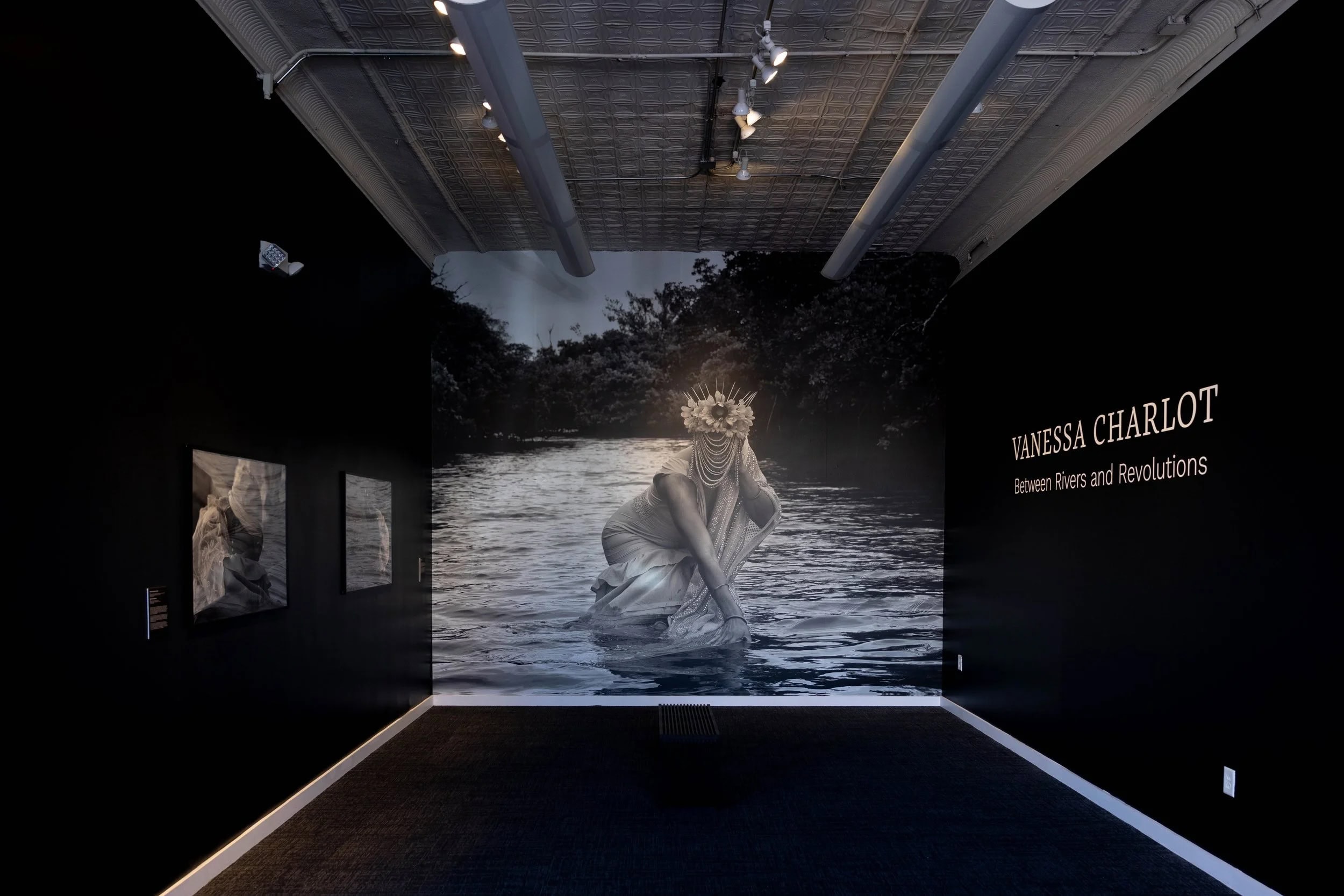
Within EADJ, the project last fall was with the painter James Kuol Makuac, a Sudanese refugee of war who found asylum in Nashville and has been painting, living, and working there for the last twenty years. The spring project, Between Rivers and Revolutions, was with Vanessa Charlot, who is Haitian American, and it bridged the larger American South from Mississippi to Haiti. And Donald Locke: Nexus traced yet another route—following a Guyanese-born artist whose life and studio practice positioned Atlanta as a key node in that Caribbean-Southern map. All of these projects, one anchored in an African refugee experience in Nashville, one connecting the American South to the Caribbean through Haiti, and one following a Guyanese artist who ultimately rooted himself in Atlanta, map the migratory routes that are shaping what the South is.
The question becomes, why don’t we see these Southern cities as immigrant cities? What was really important for me to do was to root that contribution not only in history, but to show how they’re shaping the future of these cities as well. They are moving these cities forward and now under incredible political duress.
CM: With Burnaway, the part of the mission I’ve always loved is that it ends with a question: What is the South? One of the things that’s been nice about this work is inheriting that mission statement. It’s not geographic. It’s not defined by state borders and lines. Instead, it’s ecological and it’s cultural.
I’m never worried Burnaway is going to run out of interesting artists to cover. I’m never worried there won’t be a need for what we do, because this is still such an underserved, under-understood coverage area. That’s another connection between the South and the Caribbean that we’re always teasing out—the sense of being misread, or partially read. The question of what even is the South is evolving and worth returning to over and over again. Having lived here and done this work, it has made me more uncertain about what the answer is, rather than certain.
GAA: Yes. As editors, writers, and curators, what is our work to begin to turn that immigrant lens onto these cities? This is why I love what the two of you are doing. If you look at Burnaway and take stock of the mosaic of reporting on exhibitions that you’ve built across these digital pages—you’re doing this work too. You’re reshaping the way we think about the South(s).
CM: It leads me back to where we started: the book that you’re writing. I’m imagining how this conversation about being left, leaving, migration, might impact the form that your writing is taking. How does that come out on the page for you or how does that impact the way that you’re thinking?
GAA: I’m not writing an academic book although I hope that it resounds within academia. The things I’m trying to unpack—raw, visceral things such as abandonment, being left behind, and departure—I don’t think academia has yet found the language for me to frame that in.
I was sharing these insecurities with Jessica Ingram, an incredible photographer based in Nashville, doing groundbreaking work on the American South.[7] I told her I was worried that my writing was going to come across as sentimental. And she said, Let sentimentality be your method. To get that permission and let that be my methodology freed me up. It’s requiring a lot of vulnerability to push against the things that are taught in my field. We’ll call it my sentimental turn.
As editors, writers, and curators, what is our work to begin to turn that immigrant lens onto these cities?
CM: I often feel that the desire for things not to be sentimental is about retaining an upper hand. It’s obviously a power thing, but it’s also about distancing—all those small, dehumanizing parts of things so that something can be accessed and not really taken in.
NWW: How do you find practical, intentional, subversive ways to work in a heart centered and human centered way in these spaces of power? You’re saying the language has to be filtered through things that aren’t quite so human all the time. How do you try and bring the human back into the institutional machine?
GAA: The single through line in my curatorial projects is my relationships with people. That’s what I mean when I say I don’t work with institutions—I work with people who are at these institutions. And, to use Courtney’s language, people have their own mission statements too. Those are the questions you have to ask the person: What is your mission statement for your work and your life? I know I have to operate a certain way when I’m dealing with large institutions—and I try to be better at that. It’s a steep learning curve. But my approach has always been: Who are the people that I’m doing this work with?
NWW: Institutions are the people in them, and the variety of people in them. Some of them are decolonial agents. Some of them reinforce the power strata. Ultimately, it’s finding those kindred.
GAA: And many times people are not their institutions. And that makes the relationship even more profound when you understand the complexities that someone is under and the delicate walk that person is doing within that institution—a kind of double consciousness. Your respect for them grows even more because they’re clear: I am me, I am not the institution, but I understand that in order to get X, Y, and Z done, I have to do it through the institution.
CM: In this work those collisions are constant. I had someone who works in nonprofits outside of the arts describe it to me as policy hacking, and I really like that term. How do you get what you need to service the community you’re trying to work with, to the degree that you still feel creatively fulfilled, engaged, moving something forward in that space—and then how you do that inside the parameters of an institution.
[1] Are We Free to Move About the World: The Passport in Contemporary Art, Museum of Fine Arts, Florida State University, Tallahassee, FL, February 2–May 20, 2023, https://www.graceali.work/curatorial-projects/are-we-free-to-move-about-the-world.
[2] “Filmmaker Mason Richards Brings Guyana’s Stories to Global Audience,” OF NOTE Magazine, March 3, 2012, https://ofnotemagazine.org/2012/03/03/2490/.
[3] Grace Aneiza Ali, ed., Liminal Spaces: Migration and Women of the Guyanese Diaspora (Cambridge, UK: Open Book Publishers, 2020), https://www.openbookpublishers.com/books/10.11647/obp.0218.
[4] Amazonia Açu, Americas Society, Art at Americas Society, 680 Park Avenue, New York, NY. Exhibition on view September 3, 2025–April 18, 2026. https://www.as-coa.org/exhibitions/amazonia-acu.
[5] Engine for Art, Democracy & Justice (EADJ), “Somewhere We Are Human,” Vanderbilt University, https://www.vanderbilt.edu/eadj/.
[6] Leah Donnella, “Reporter’s Notebook: The South Is Home to a Growing Black Immigrant Population,” NPR, May 12, 2023, https://www.npr.org/2023/05/12/1165055943/black-immigrants-memphis-nashville-tennessee.
[7] Jessica Ingram, artist website, https://www.jessingram.com.