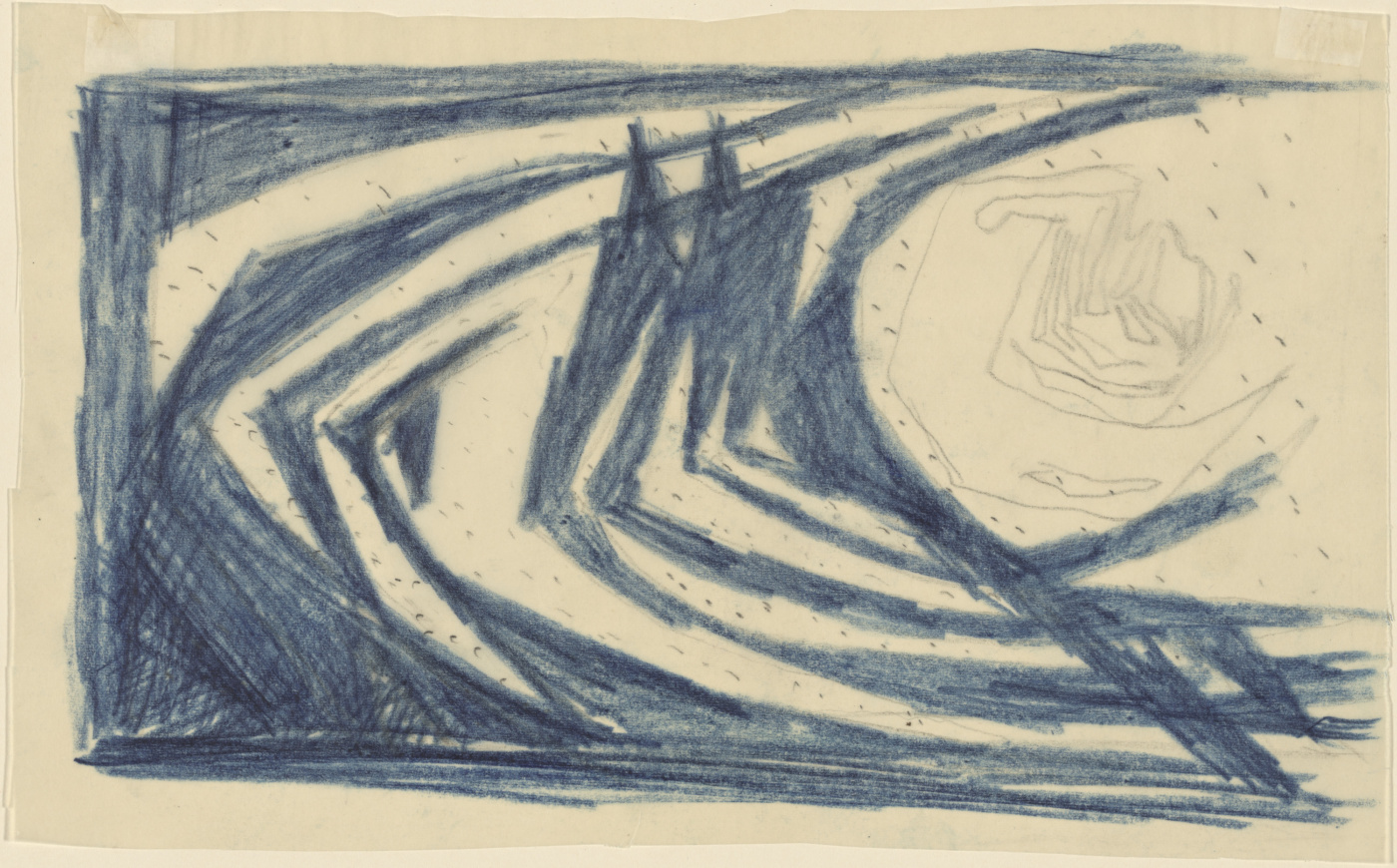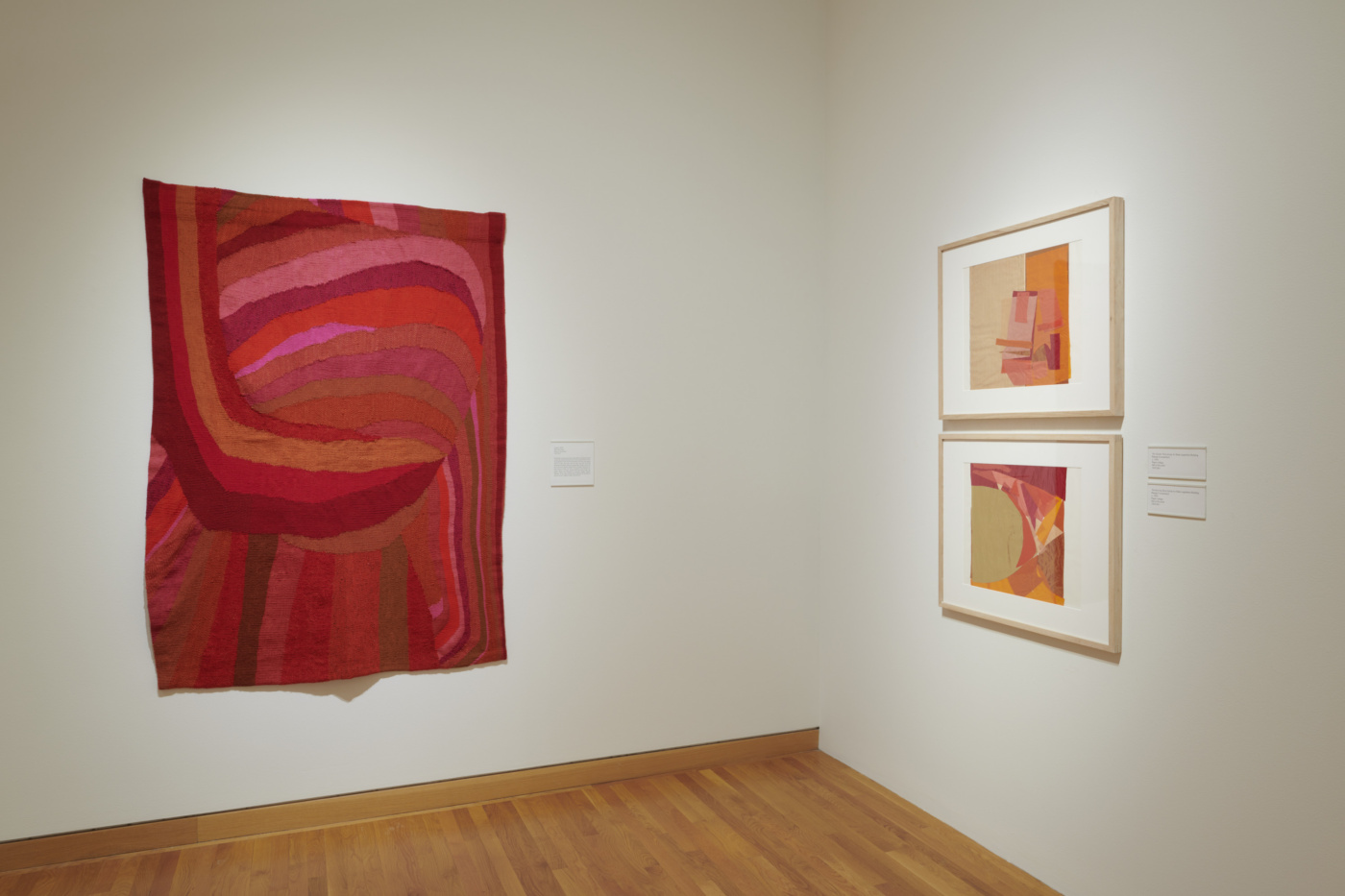
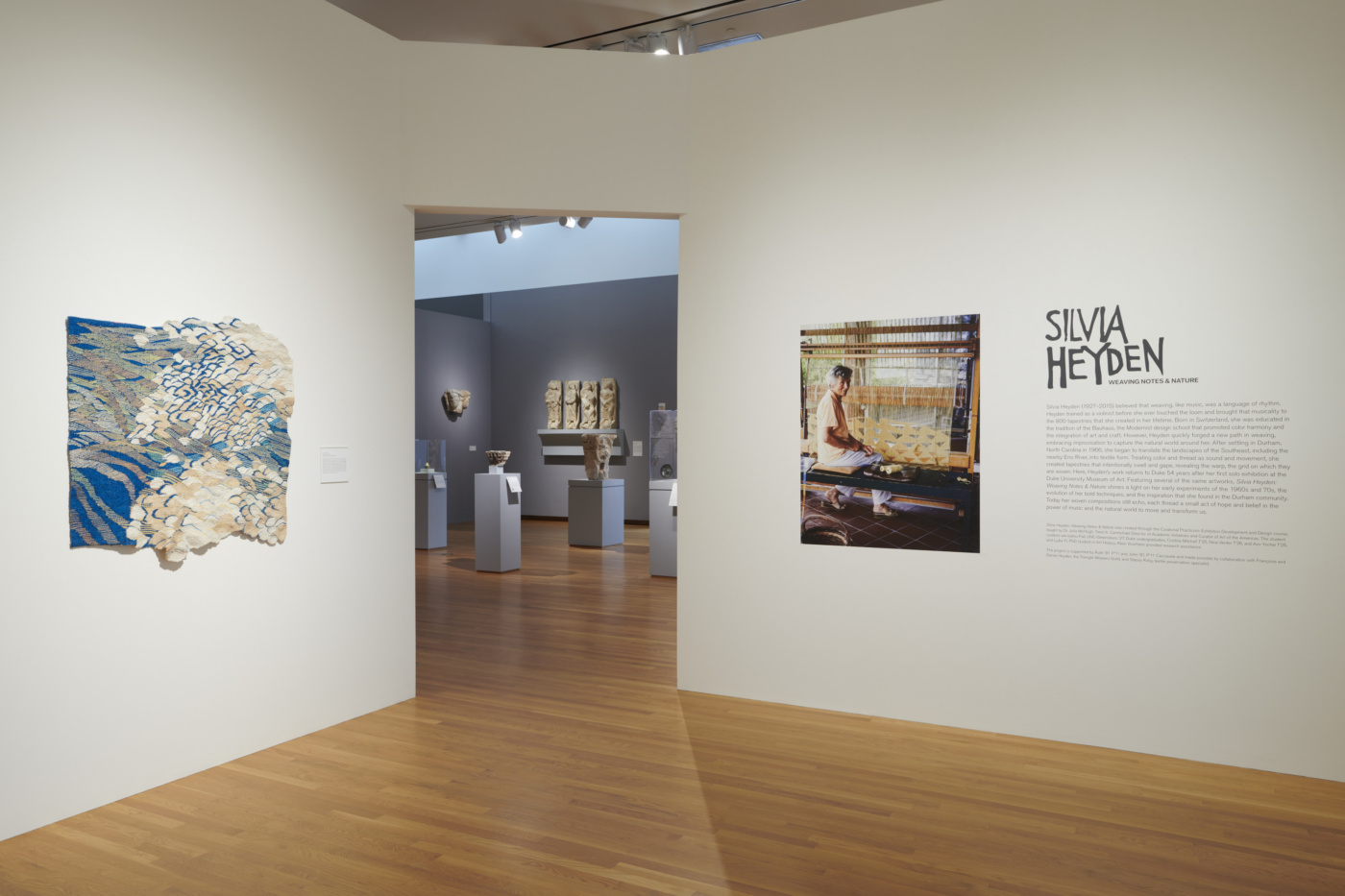

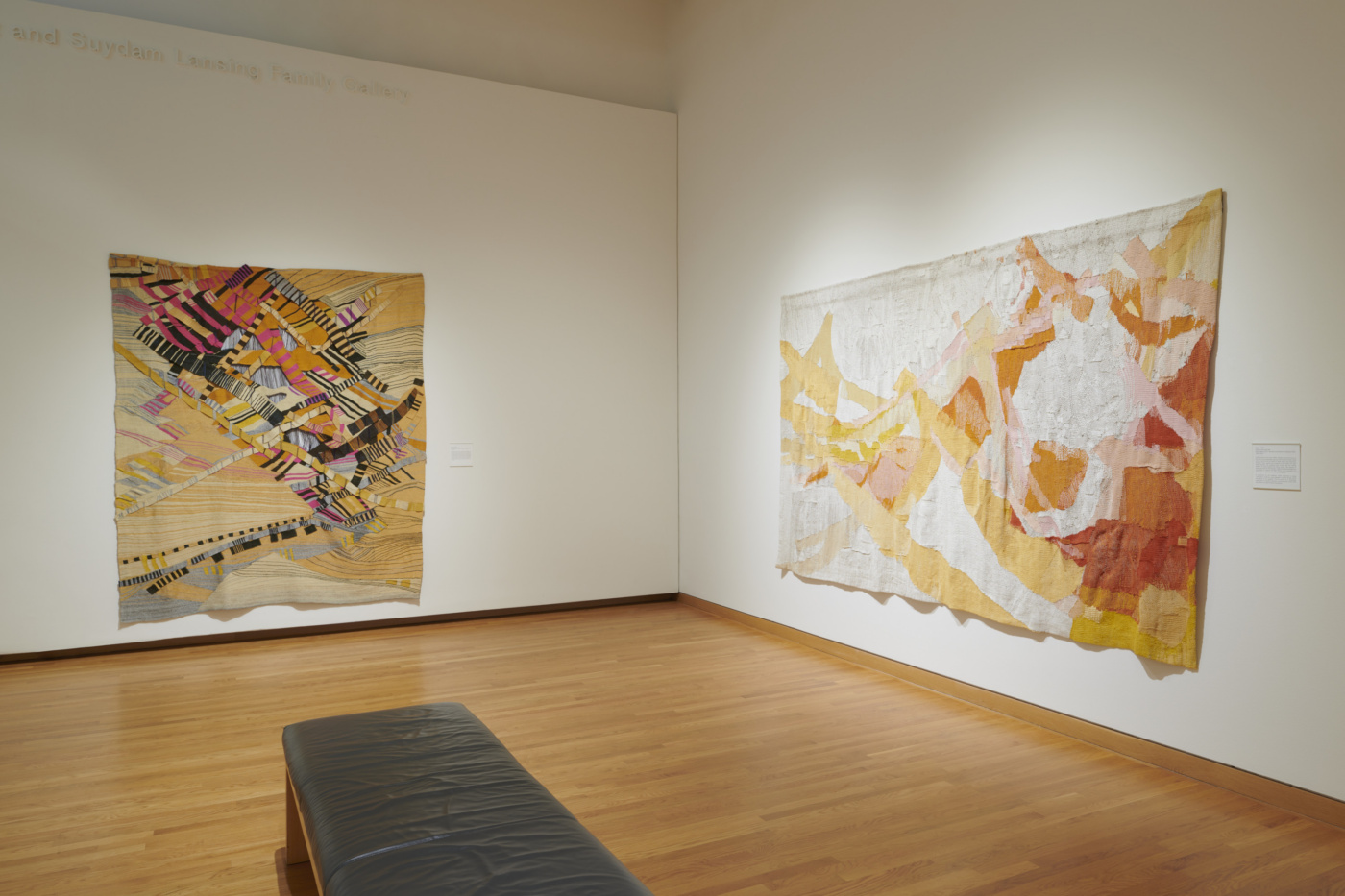
The Nasher Museum of Art at Duke University presents Silvia Heyden: Weaving Notes & Nature, an exhibition that celebrates the rhythmic, experimental tapestries of Silvia Heyden (1927–2015), an artist who understood weaving as a form of music. Opening more than five decades after her first solo exhibition at Duke, the presentation brings Heyden’s work back to campus, reconnecting her legacy to the place that profoundly shaped her artistic voice.
Originally trained as a violinist, Heyden approached the loom with a musician’s sensibility. Rhythm, movement, and improvisation guided her practice as she produced more than 800 tapestries over her lifetime. For Heyden, thread and color were never static; they were expressive, alive, and capable of evoking sound, emotion, and the natural world.
“Heyden’s work reminds us that textiles can be both rigorously constructed and deeply poetic,” said Dr. Julia McHugh, Trent A. Carmichael Director of Academic Initiatives and Curator of Art of the Americas at the Nasher Museum of Art. “Her tapestries make visible the harmony she achieved between structure and flow, and they reflect the profound dialogue she maintained with the natural world and with Durham itself.”
Born in Switzerland and trained in the Bauhaus tradition, Heyden embraced bold color, strong design, and the unity of art and craft, later moving beyond traditional weaving in favor of intuition and experimentation. After settling in Durham in 1966, she drew inspiration from the landscapes of the American Southeast, particularly the Eno River, and created tapestries that swell, shift, and breathe. By revealing the loom’s underlying “warp,” Heyden infused her textiles with a sense of movement and vitality that distinguishes her work within fiber art of the 20th and 21st centuries.
Silvia Heyden: Weaving Notes & Nature features several works originally shown in her first Duke exhibition 54 years ago, alongside key experimental pieces from the 1960s and 70s. The exhibition traces the evolution of Heyden’s bold techniques while honoring the lasting impact of the Durham community on her practice. Today, her tapestries continue to resonate—each thread a quiet expression of hope and a belief in the power of music and nature to inspire and transform.
The show was developed through the Curatorial Practicum: Exhibition Development and Design course, taught by Dr. McHugh. Student curators include Isatou Fall (UNC-Greensboro ’27), Duke undergraduates Cristina Mitchell T’25, Nina Venter T’26, Aviv Yochai T’25, and Lydia Yi, PhD student in Art History. Research assistance was provided by Klein Voorhees.
This exhibition also marks a milestone for the Nasher Museum’s Theory & Practice concentration, which celebrates its tenth year in 2026. Over the past decade, the practicum has fundamentally shaped the academic and professional trajectories of undergraduate and graduate students interested in museum work, offering hands-on training that demystifies the curatorial process and opens pathways into the field. By guiding students through every stage of exhibition-making—from research and object selection to interpretation, design, and public programming—the course has helped redefine what it means to learn curating within a university museum, inspiring a new generation of scholars, artists, and museum professionals.
from the exhibition text