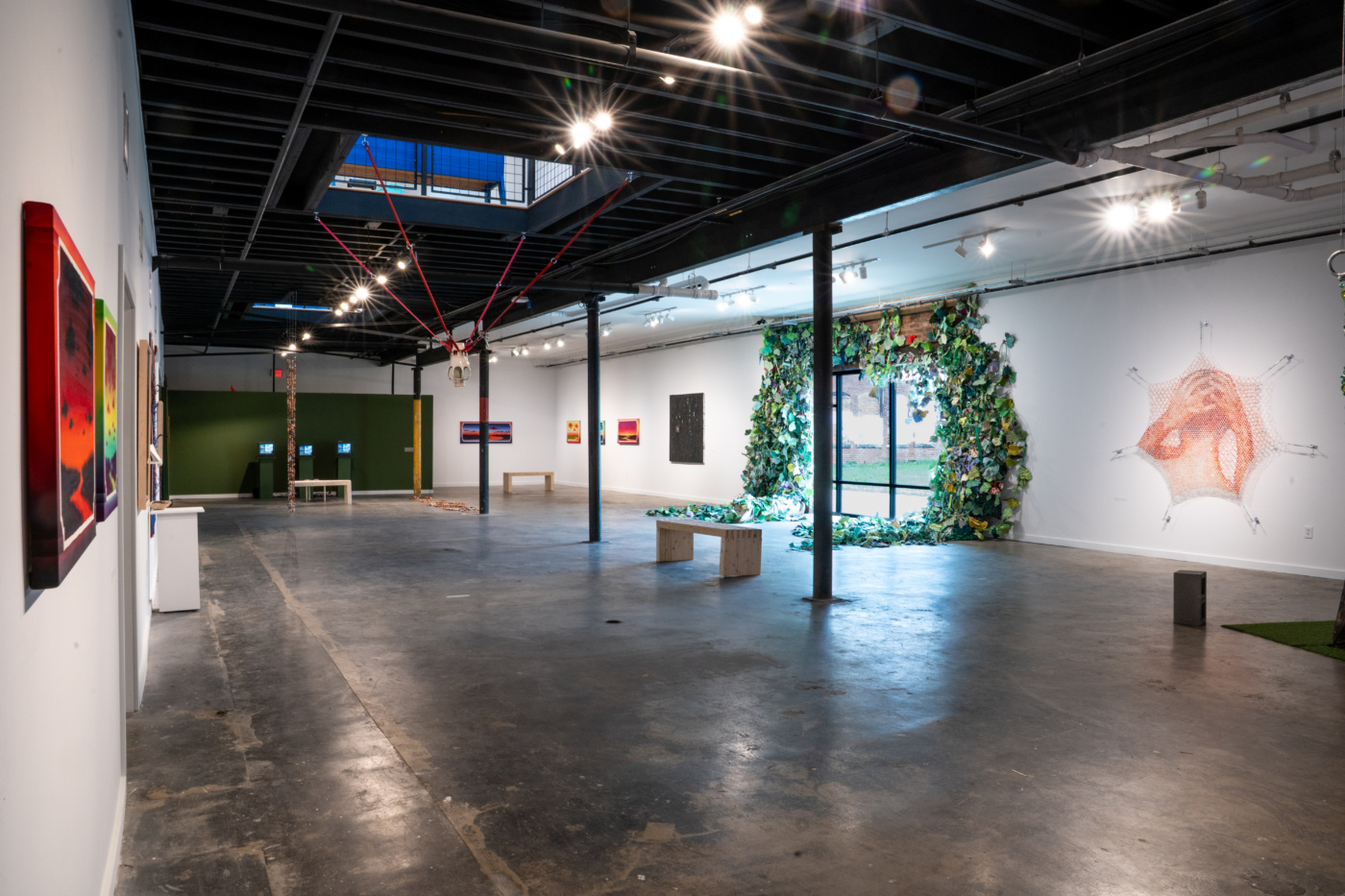
“Would there be a future? Was the past irreparably destroyed? What to do? Don’t waste time. Plant rosemary, red-hot poker, santoline; Alchemize terror into art.” This quote from Olivia Laing’s Funny Weather: Art in an Emergency greets viewers when they enter Paradise, on view at Stove Works (Chattanooga, TN). Curated by Graham Feyl and J. Sova and featuring works by thirteen artists, the exhibition centers abundant visions of queer futurity. Bright artificial flowers from Lisa Waud’s installation, tread/tender (2026), are lovingly spread across the gallery entryway. Their colorful presence exudes a sense of playfulness atop the industrial concrete floor within the former foundry turned art gallery, as viewers gingerly step around the silk and polyester petals.
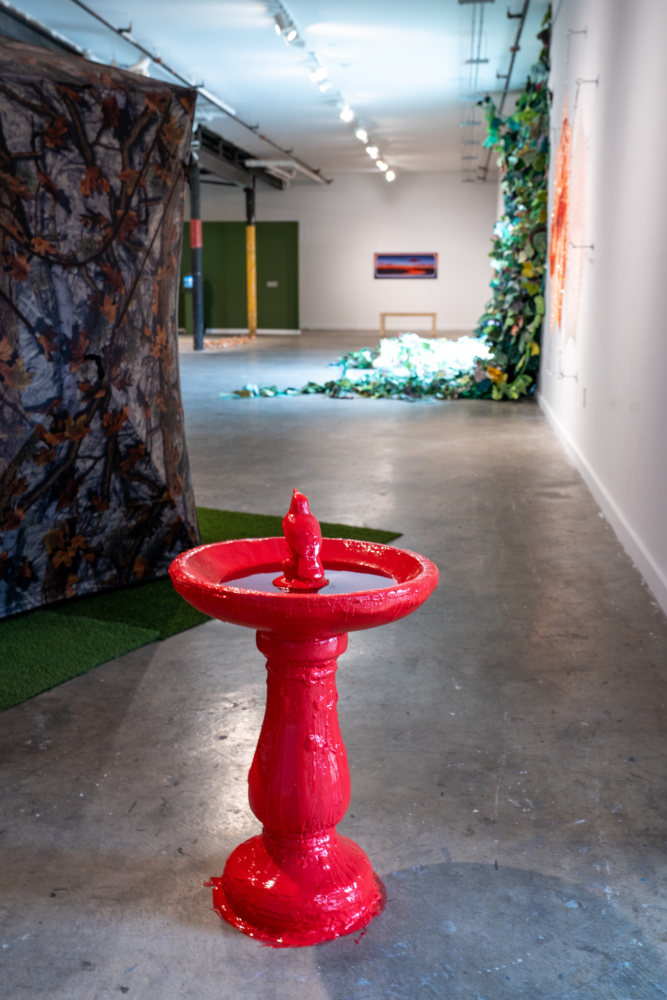
Nicholas Elbakidze’s bright red, bird-shaped Meissenettes (2026) perch in places high and low. Their flaccid tails—made with body-safe rubber—bring campy, erotic humor to the show. Erotic, in this case, speaks to Audre Lorde’s definition, “In touch with the erotic, I become less willing to accept powerlessness, or those other supplied states of being which are not native to me, such as resignation, despair, self-effacement, depression, self-denial.”[1] Many of the works in Paradise model this joyful refusal.
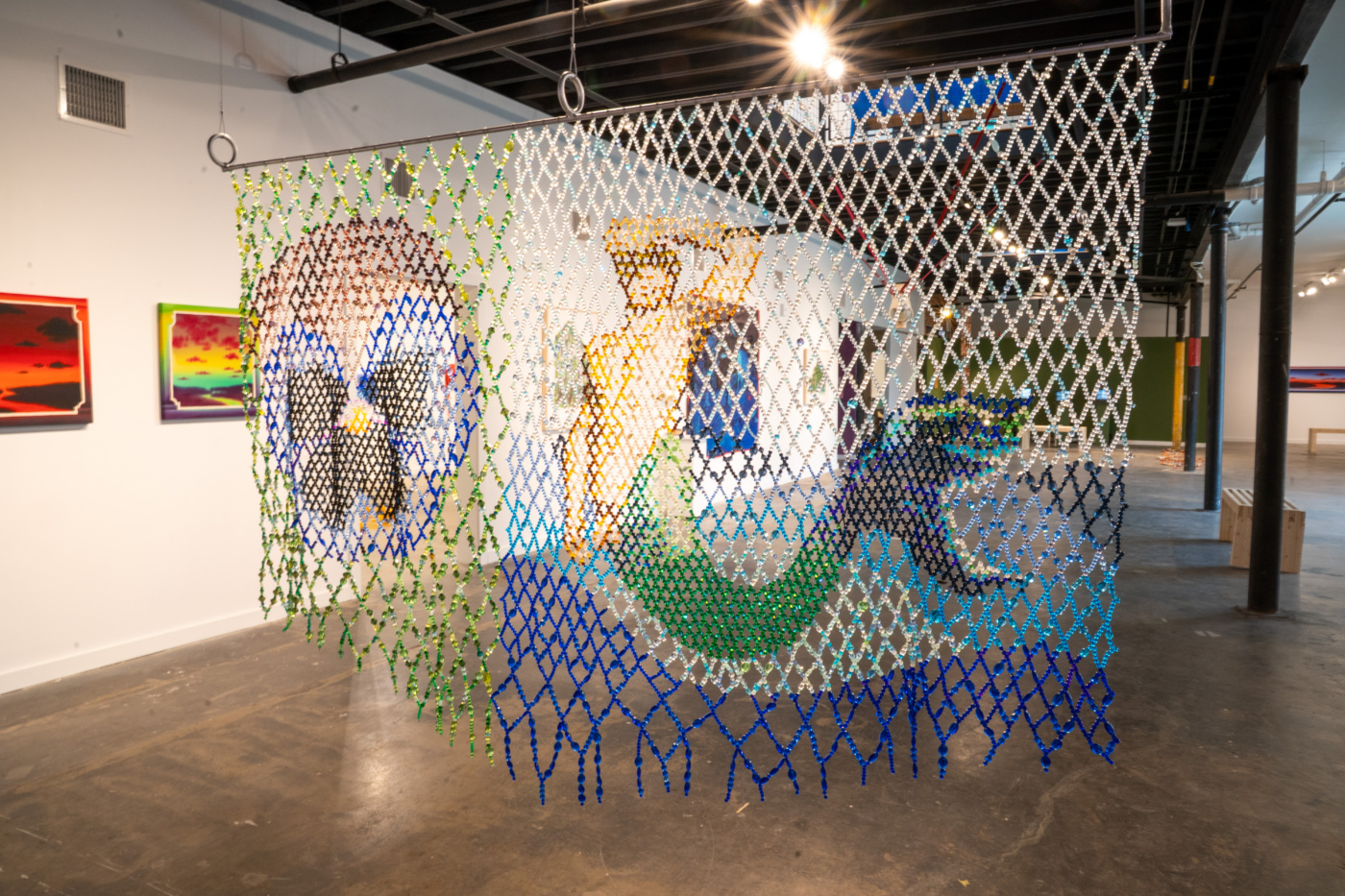
Brian Smith’s beaded and suspended nets, Lure of the Pansy (2024) and In Spite of the Bends (2026) glimmer meditatively under the gallery lights, recalling the sparkling aesthetics of queer nightlife spaces. While Lure of the Pansy engages botanical and oceanic imagery, In Spite of the Bends depicts a mysterious view of a figure from behind, their hands clasped around their head. The outstretched, carefully gradated beadwork is installed with kinky metallic hooks.
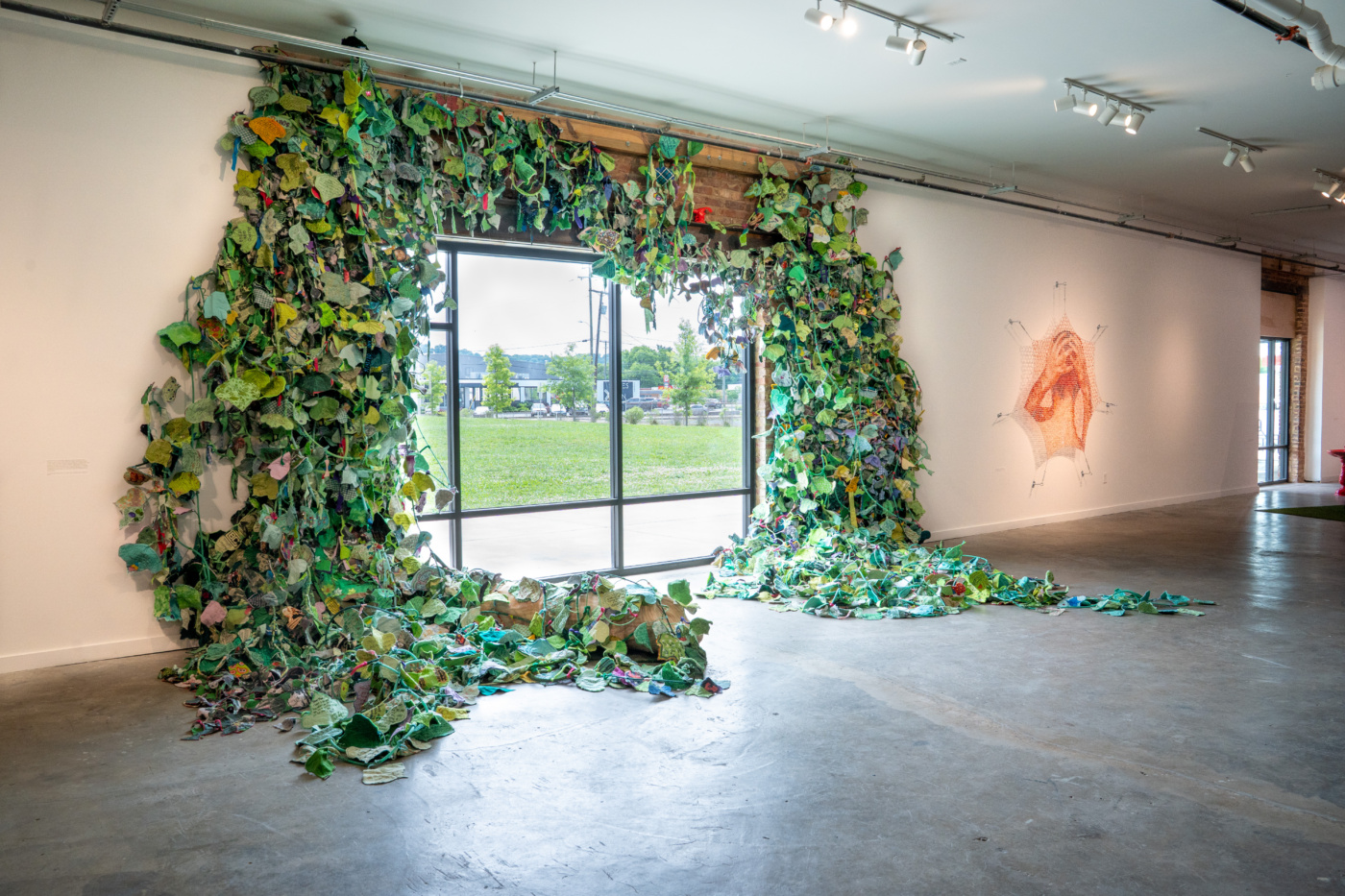
Several of the works on display, such as Yu Yan’s Vestige (2025) series and E. Saffronia Szanton Downing’s Seed Weaver (2026) and String/Trail (2026), physically assert the importance of more-than-human entities in visions of queer futurity. Aaron McIntosh’s monumental quilted installation, Invasive Queer Kudzu (2015-ongoing), considers the utility of kudzu as a metaphor for the strength of queer community in the South. Downing’s earthenware sculptures, created with clay sourced from five locations across the US and Canada, ask for a particular kind of encounter—one in which viewers walk carefully and look with reverence at the clay forms, source from earthen depths. Perhaps Downing’s sculptures are also instruction manuals for respectful engagement with land.
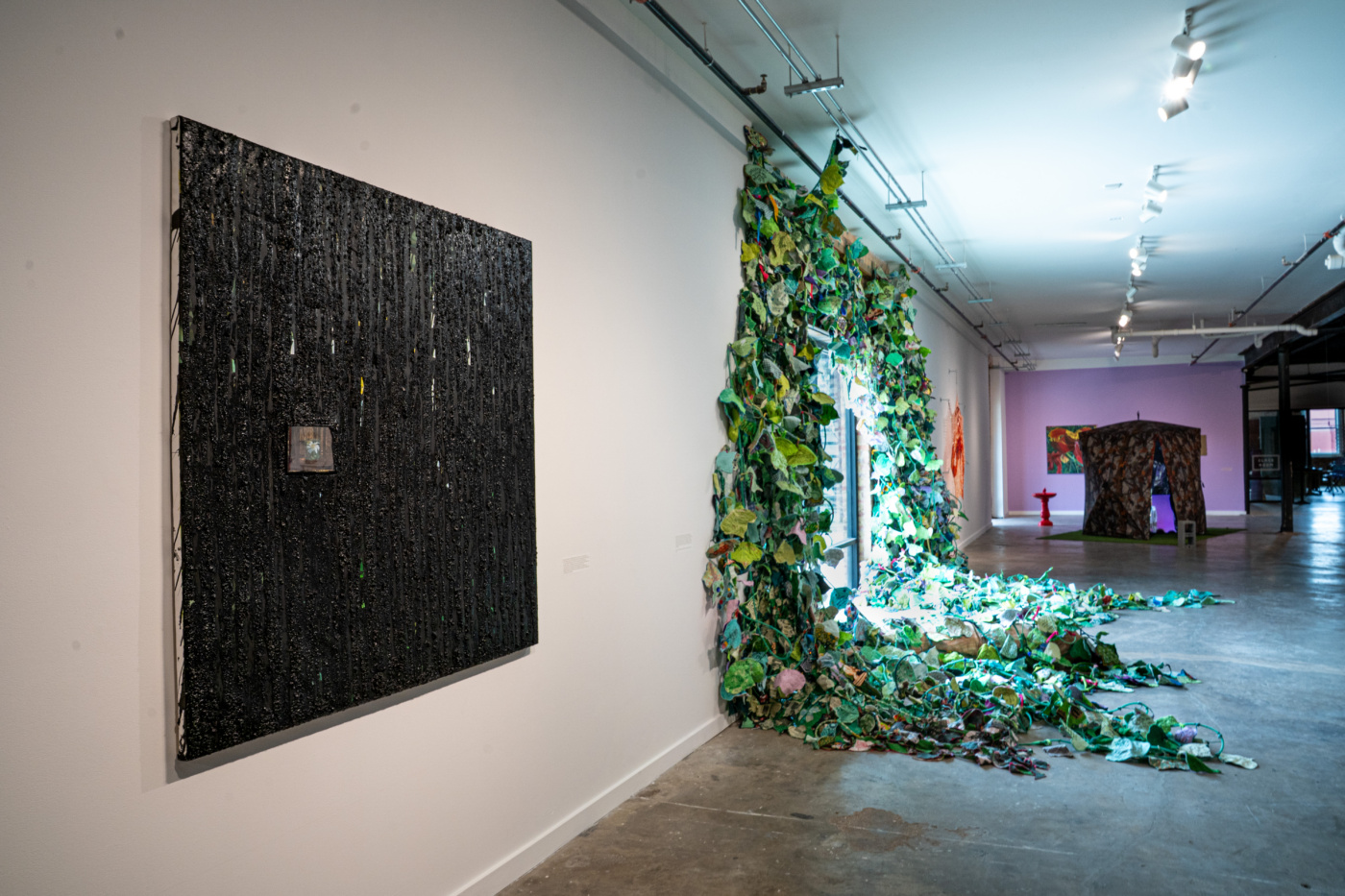
Paintings within the show feature covert archives of ancestral knowledge like Angie Jennings’ Silphium rendered in a crystal heart (2023) and Bloodroot (2023), or the neon celebrations of nude beaches, like Michael Childress’ Cyclorama series (2024), along with the blue-hued seascapes of healing from Hannah Banciella’s Where was I last seen this time?, (2026). In Jennings’ Bloodroot (2023), soil, latex, oil, and acrylic paint merge into a tar-like substance, acting as steward of the contraceptive plant’s strength and guardians of its continued usage, amid intensifying threats to bodily autonomy. Seen here through the protective stratum that guards the plant knowledge beneath, layers are a recurring theme throughout the exhibition. In Banciella’s collaged painting, Where was I last seen this time? (2026), land and sky dissolve into the sea, amid glowing embers. The reach of the deep blue coral paper cutouts exceeds the work’s linear borders.
José Esteban Muñoz, whose work is crucial to the show’s conceptual framework, proposes that queer visual culture “[…] frequently contains blueprints and schemata of a forward-dawning futurity.”[2] The works in Paradise create space for queer Southerners to build solidarity, connection, and perhaps seeds of the futures Muñoz imagines. Through its insistence on feeling despite the pressure to numb under facism, Paradise reminds viewers that their senses—and love—are powerful tools of resistance.
Paradise is on view at Stove Works in Chattanooga, Tennessee until June 6th, 2026.
1 Audre Lorde, “Use of the Erotic: The Erotic as Power” in Sister Outsider: Essays and Speeches (Crossing Press, 1984), 58.
2 José Esteban Muñoz, Cruising Utopia: The Then and There of Queer Futurity (NYU Press, 2009), 1.