Julia Roland’s A Seat at the Table at the Telfair Museums in Savannah, GA, might be easy to miss because it is tucked away in a corridor surrounding a conference table. The limited access is unfortunate, because Roland’s paintings are strong evidence of an artist at the beginning of a vibrant career. Her portraits employ bold color blocks in order to address the supernatural and ambiguous emotions.
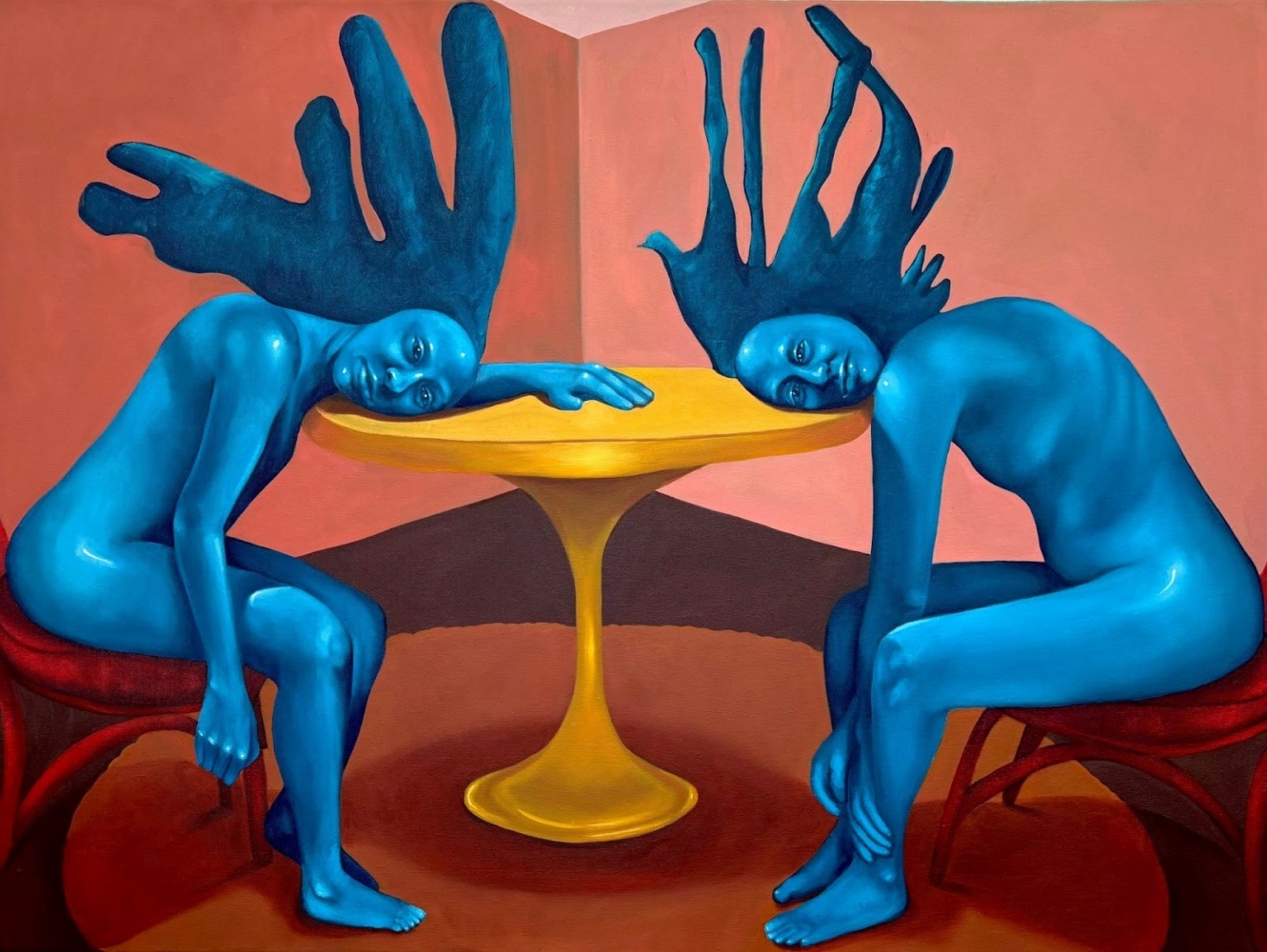
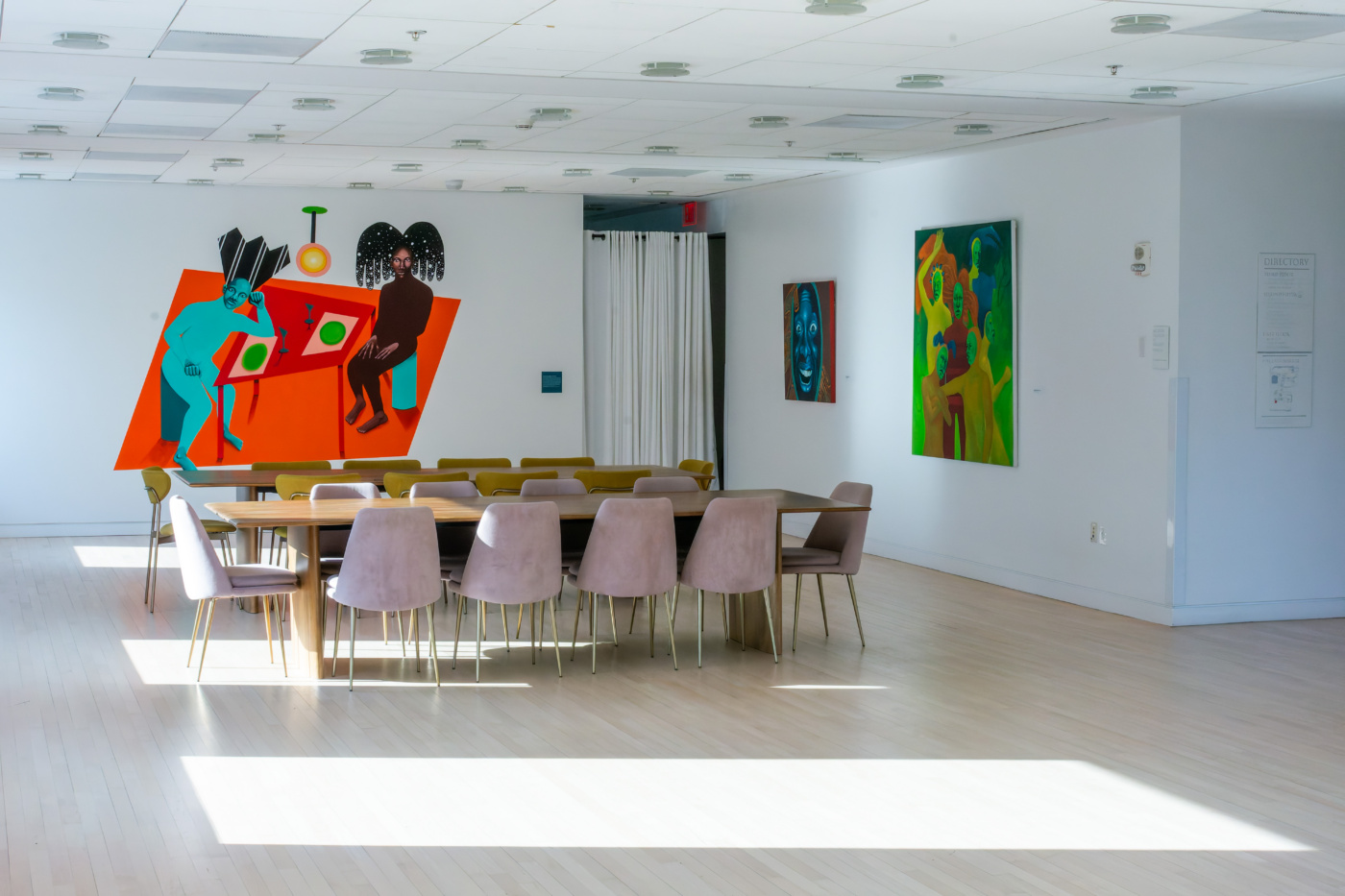
The viewer is included in Roland’s mysterious scenes. In Table for Three (2025), two blue figures sit slumped around a yellow table. Their heads rest on the small round top, their gaze turned to the viewer as their hair billows upward weightlessly. Like most of Roland’s figures, they are naked and androgynous, their gender irrelevant or the genderlessness is what is relevant. The viewer is the third guest at this “table for three.” The pair’s expressions are inscrutable. As perspective recedes to a corner, the scene is claustrophobic, crowding the couple.
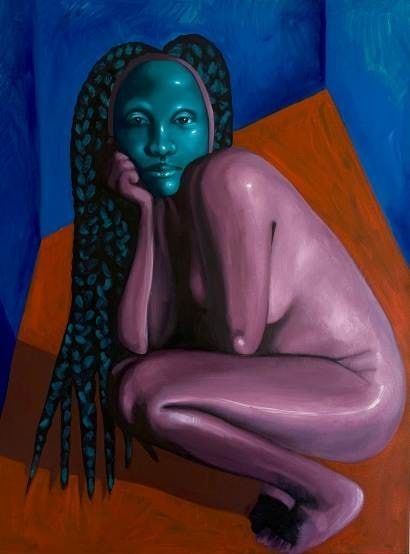
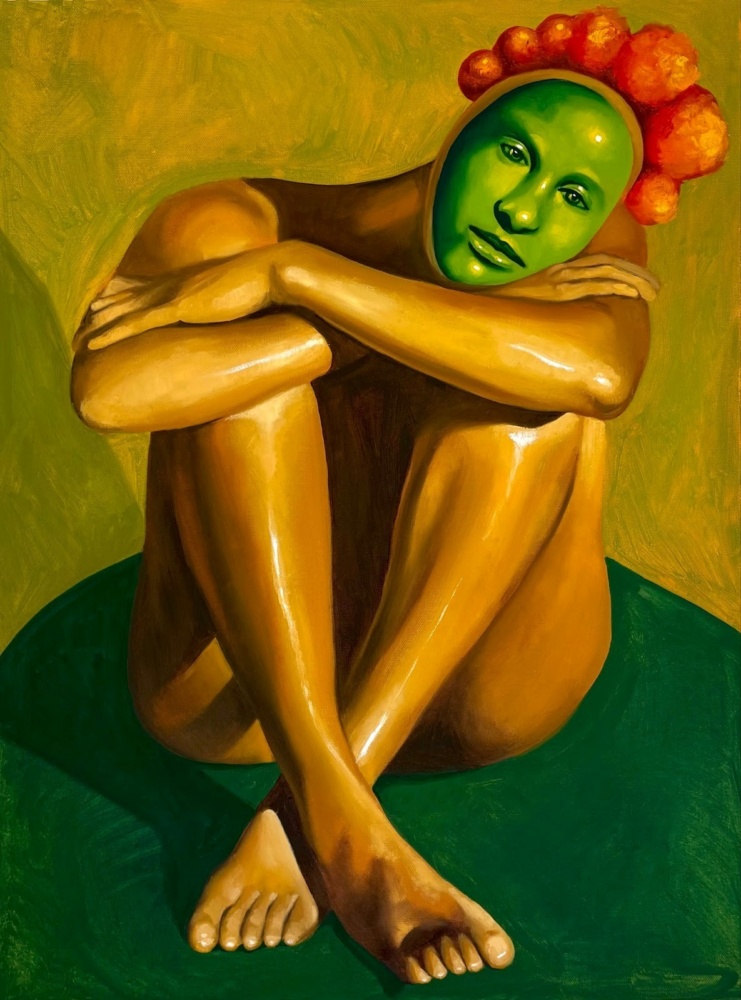
In Roland’s “Seated” series—Red Seated 1 (2015), Purple Seated 3 (2025), and Yellow Seated 2 (2024)—the claustrophobia continues. The subjects are posed with their backs to the wall or crouched in a corner. Their faces contain similar enigmatic expressions as the duo in Table for Three, with an added layer of a mask that further obscures the figure’s true feelings. Some appear relaxed, such as Yellow Seated 2, whose golden body lounges, ankles crossed, with their green-masked face leaning against their own arm, an almost bored expression across their face. In contrast, Purple Seated 3 is crouched, poised to spring up, their blue-masked face gazing directly at the viewer, waiting for a cue.
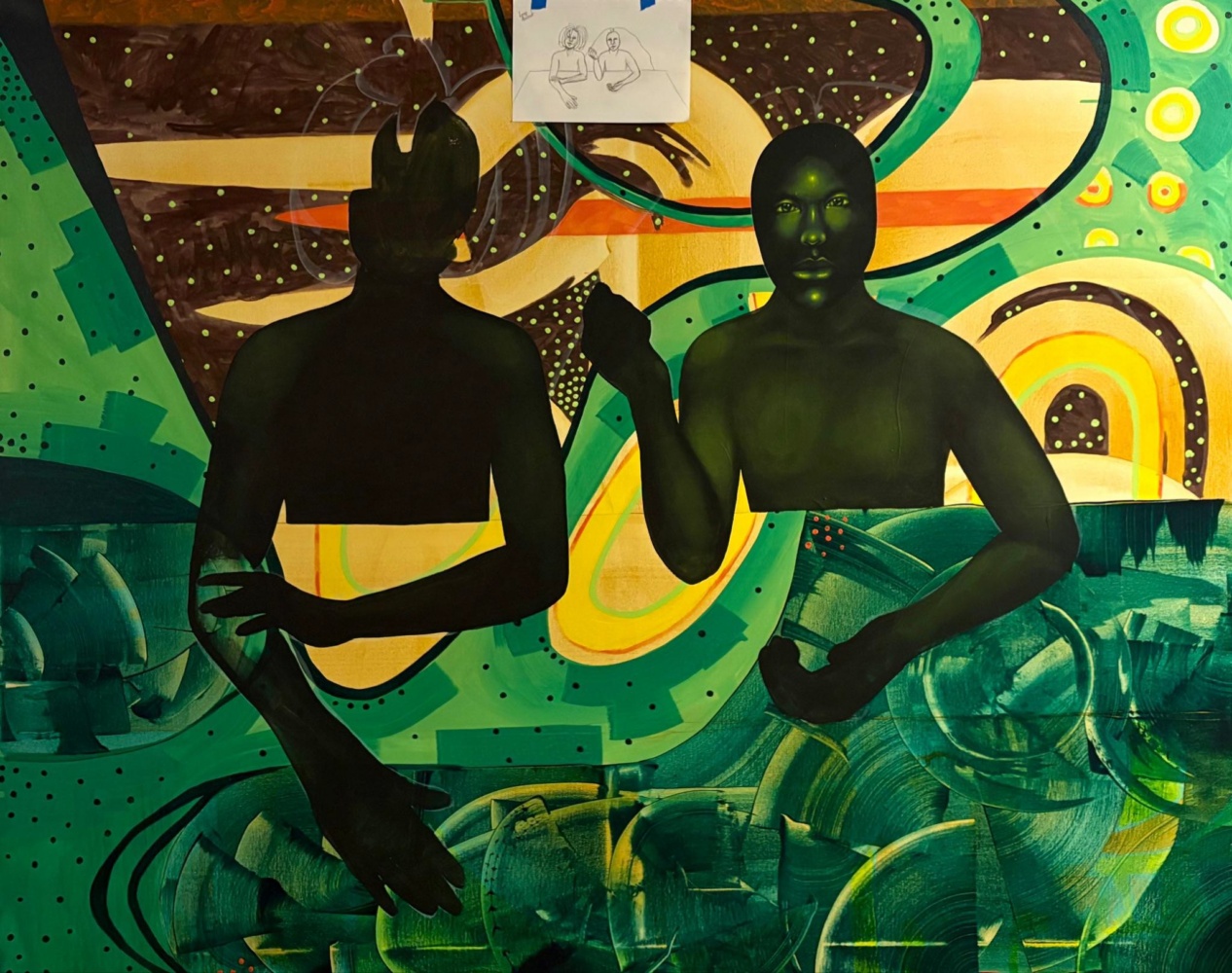
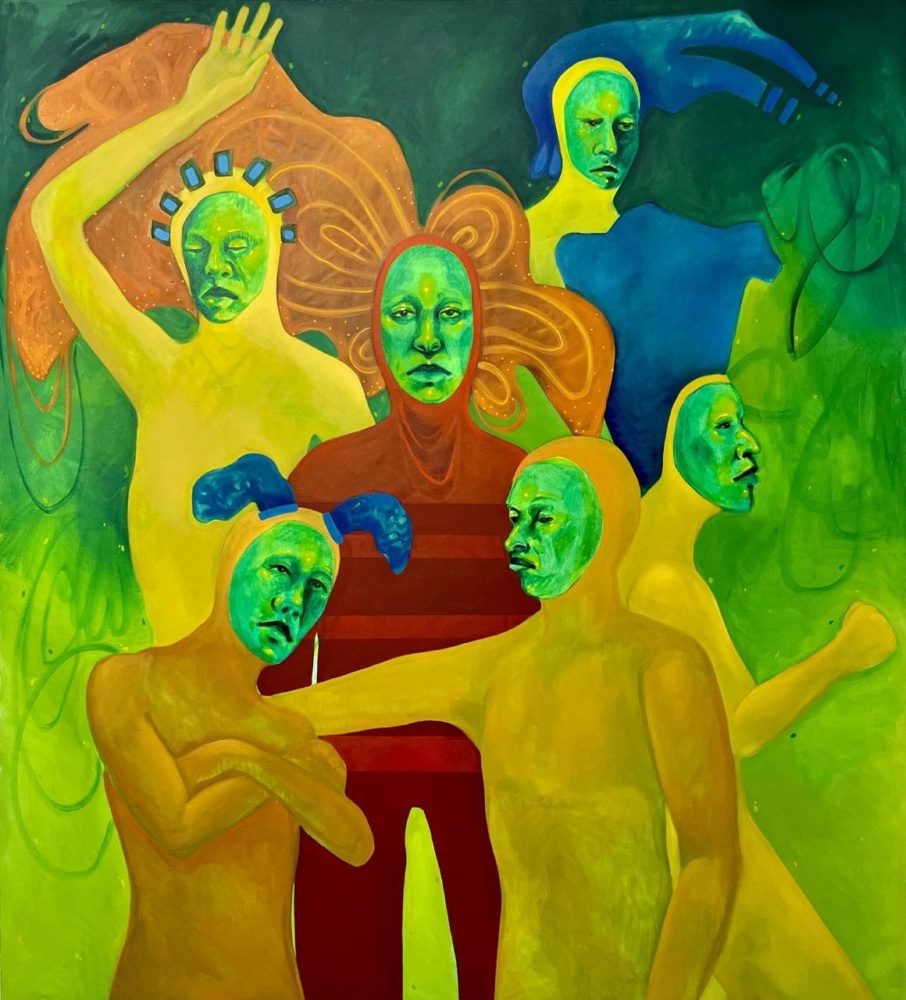
Some works appear to reference the aesthetics of Afrofuturism, a movement that intersects the African diaspora, alternate realities, and science fiction. In Three in Translation (2025), two Black people glow green, poised mid-conversation, facing the audience once again. Out the windows, the cosmos swirl, a movement that is further reflected on the table covered in heavy, circular brushstrokes. The lines and swaths of color in Time and Place (2024) are looser and wilder, and the six people in the painting are far more active, holding a gravitas that the other figures do not. One gestures upwards in a wave or a summons, eyes cast down. Another appears poised to run off the canvas, fixated to the right, heading toward an unknown destination. The background radiates blue and green, the painting captures a supernatural moment, maybe even a spiritual one. The role of the viewer is unclear; perhaps a witness or a congregant.
When viewing the work, I wondered if the central conference table was there as part of the exhibition, but that does not seem to be the case. This exhibition is a part of the Telfair Museums’ #art912 initiative, which is “dedicated to raising the visibility and promoting the vitality of artists living and working in Savannah.”[1] It is difficult to achieve this goal when the artwork also serves as decor for a meeting space that can close to the public at any time. A Seat at the Table presents an invitation that I wish more people could receive.
[1] “#art912: A Seat at the Table.” Telfair Museums, accessed June 22, 2026, https://www.telfair.org/exhibitions/art912-a-seat-at-the-table/.