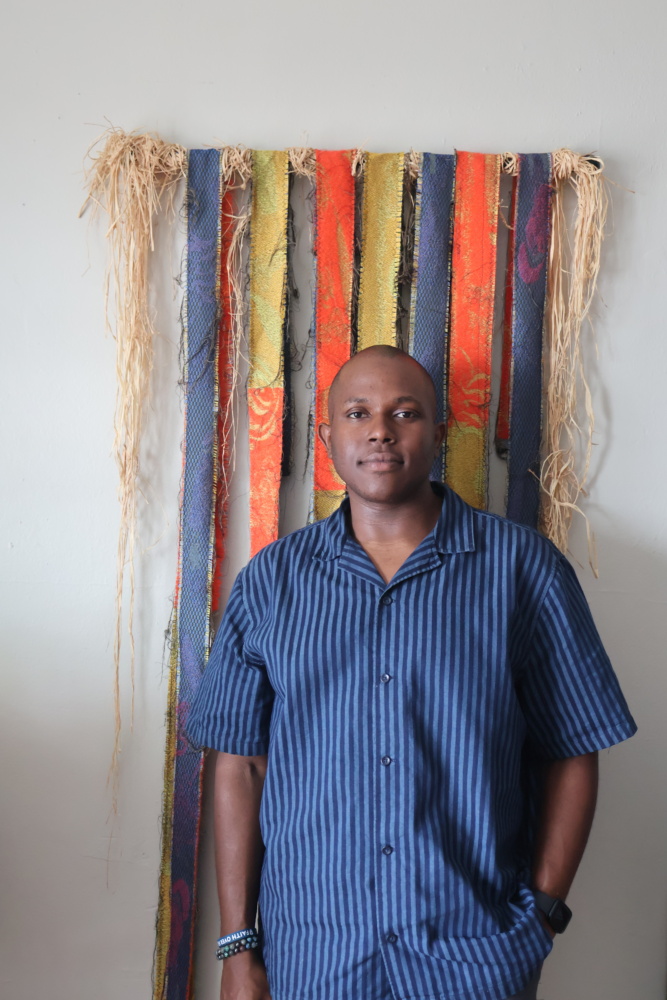
Blending, weaving, and mixing material with a fashionable edge, Jevon Brown’s work speaks to experiences beyond the seams. Brown, a Miamian born of Bahamian, Jamaican, and Black Southern descent, explores cultural identity, belonging, queerness, and history in his work. Using a myriad of media, from textiles and silkscreen printing to fashion and photography, his work exemplifies the boldness of his ancestral background. I visited his Miami Beach apartment and studio to discuss more about his practice.
This interview was edited for length and clarity.
Cordell Jones: Your work, a mix of textiles, printmaking, and design, showcases motifs inspired by your Queer, Caribbean, and Black South Floridian experience. How do you draw on these backgrounds to convey the experiences they contain?
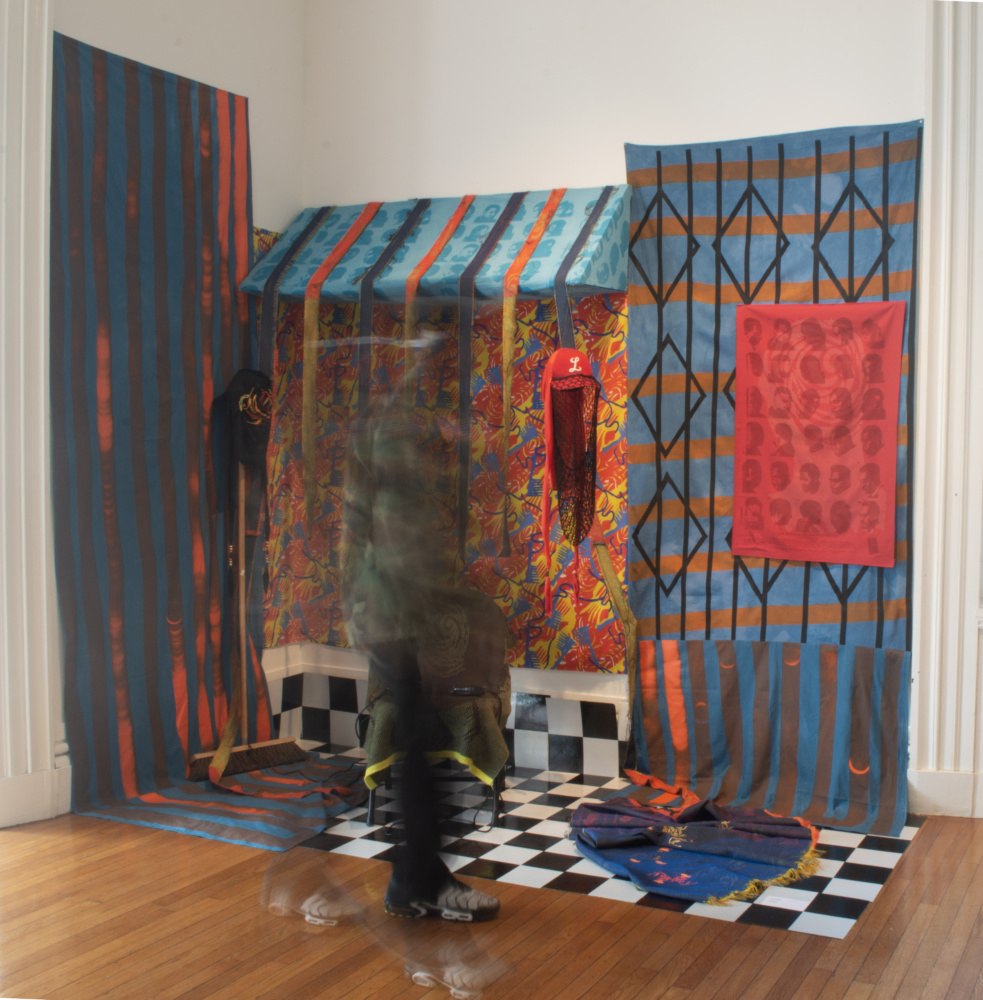
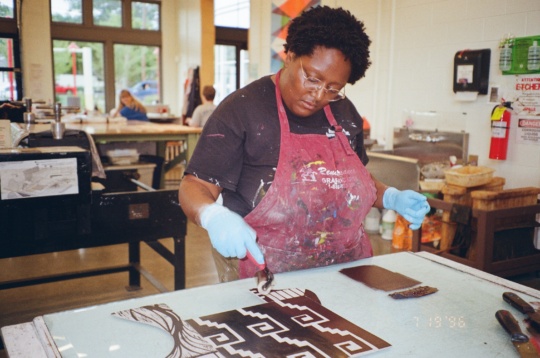
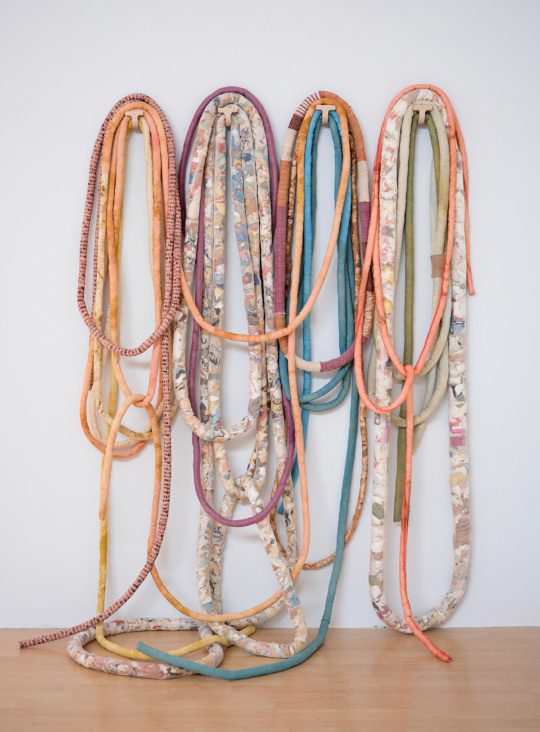
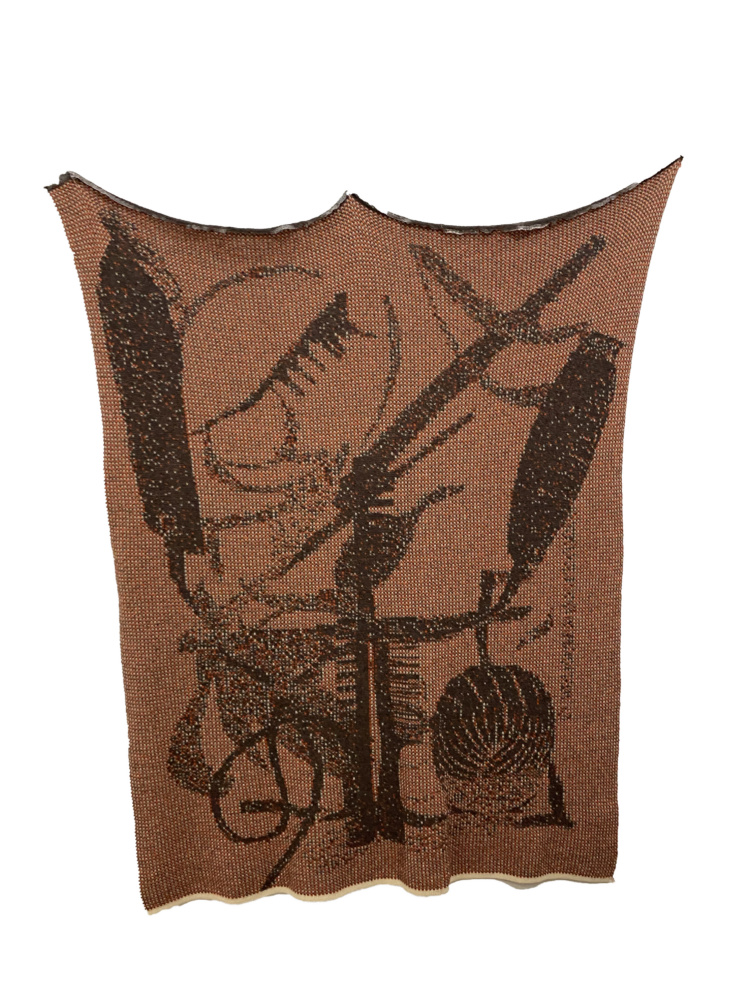
Jevon Brown: My process really starts with an idea, a place, or a specific memory. When I start my design process and the textiles I’m printing, I usually draw, paint, and write a lot about what these ideas are. When I think about the material that I’m using, I think about the feelings that these textures evoke. What’s the color? What does that color help bring out within the work? How do I want people to feel connected to work? I think about Miami sunsets, or those visceral memories of being here as a young child. I find more inspiration in the people I meet, the conversations I have, and in navigating life now as a young adult in South Beach. The layering, collaging, and embedding of my motifs and imagery really start in my sketchbook. Then I bring in more elements, like painting, collage, printmaking, and scanned images. I like to use a wide range of processes when working with both analog and digital materials.
CJ: Has there been a piece that you’d say is a pillar point for connecting back to your familial roots and ancestry here locally?
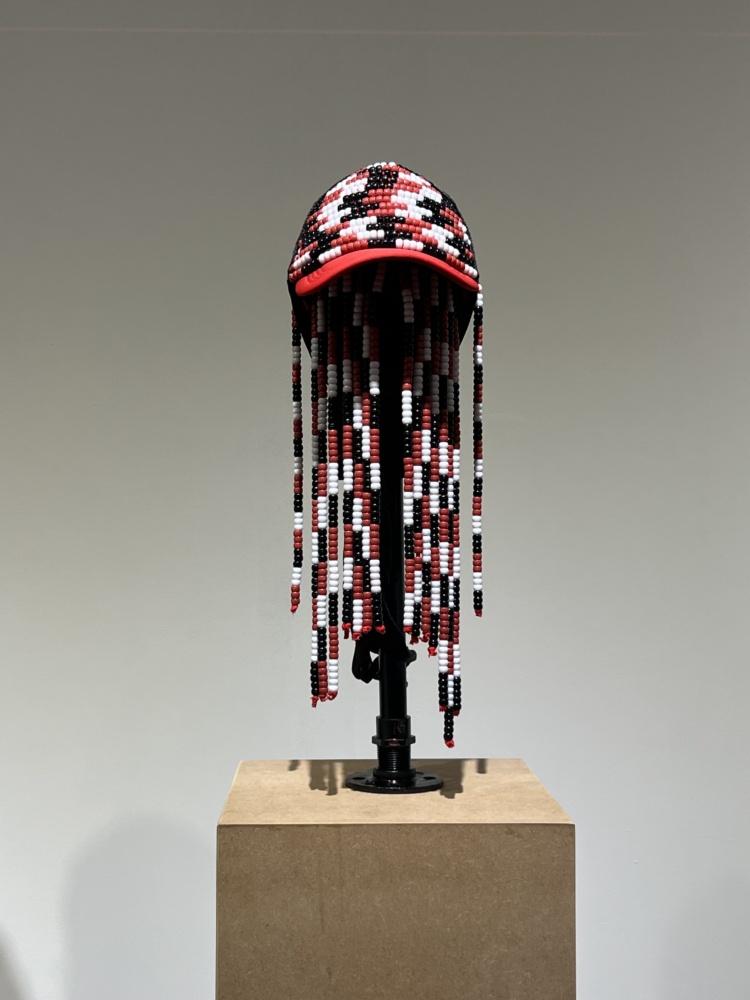
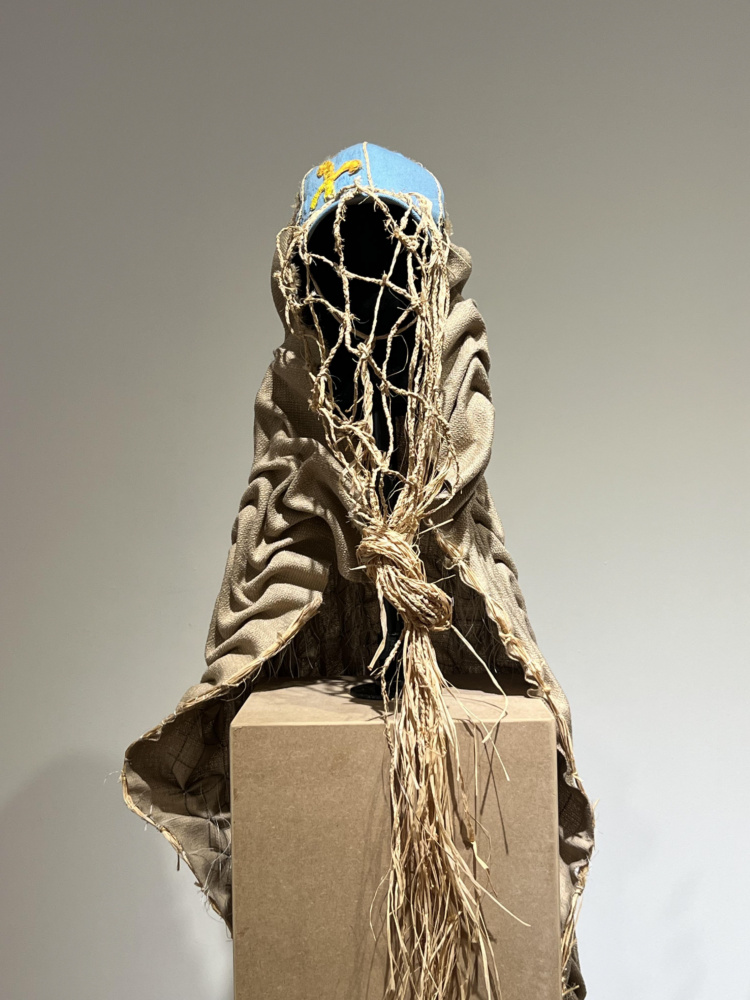
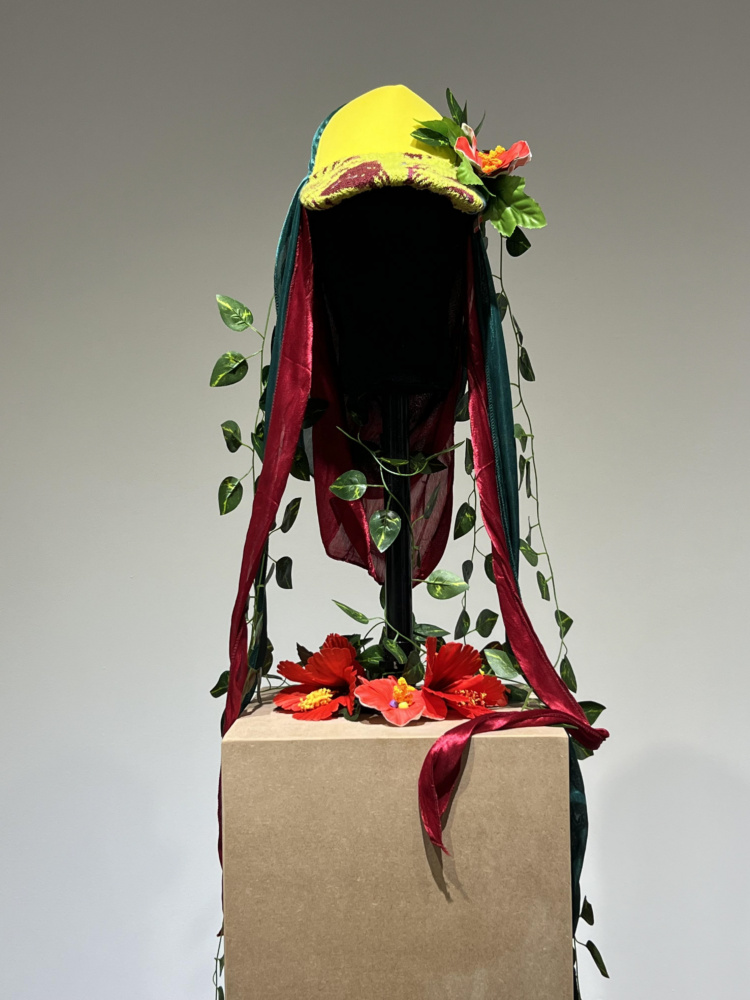
JB: When I began making HAIREtage (2025), it revealed something new in my work. I was thinking about craft as adornment, tying it back to the idea of streetwear culture and hats. Even more specifically, my uncle was a sneakerhead and a hat guy, back when I didn’t even know what a “sneakerhead” was. Seeing him and his wall full of hats, Nike boxes stacked against the wall, that was just something that I feel like connects to contemporary pop culture. When I started to reference this work for HAIREtage (stylized as HAIREtage/hairetage/ HAIRETAGE), I had this idea of what the definition of heritage means, specifically when I think about the head being your Ori (meaning head in Yoruba), and this idea of adornment and adorning your head. Even my family talked about protecting one’s hair when going places or navigating the world, protecting one’s crown. I started thinking about the idea of adorning hats, and I wanted to really think about how these contemporary objects can be referential to African and Caribbean spirituality and heritage.
The first one with the burlap is called HAIREtage/hairetage number 001; the one with the purple and green that has the hibiscus plants is number 002; and the one with the red, black, and white beads is number 003. When I was using these materials, like burlap, it reminded me of times when my grandfather had stacks of fabric or produce bags in his home. I would think about the materials I would see around as a young kid, then connect them to the newer materials I’m working with, like the raffia textile and basket weaving. I don’t feel like this work could have happened in school, honestly, because the fact that I made this work in Miami is super special.
CJ: In thinking of your recent inclusion in Material, Material World with the David Castillo Gallery, how do you work to show the limitless possibilities of mixing your artistic world with the material world?
JB: I don’t think my artistic world is mutually exclusive or separate from me. I think I rely heavily on my own perspective. I know no one else has my story or background, no matter how similar the work seems. My artistic world is deeply embedded in the visual culture. I synthesize so much across fashion, pop
culture, media, reading, and other things, and I’m constantly integrating and exploring new ways to define the work. That’s how I feed my artistic world.
Through the material world, the biggest thing is that I didn’t grow up with a lot of money. One of the things I remember about RISD is that there were people who could just drop hundreds and thousands of dollars on materials and create a fire project the next day. At certain points, I know I have the skill and talent to do the work, but I don’t have the materials or accessibility to it at that level. It’s constantly been a superpower to create something out of nothing. It’s the perfect example of how Black people in society, in the US and especially in the Caribbean, have created crazy innovations in fashion, design, technology, and more. The mixing comes from the things I’m drawn to day to day, which I then create in my material world. I’m really looking forward to seeing how the work develops beyond what’s accessible to me, and that’s just the story waiting to be told at this point.