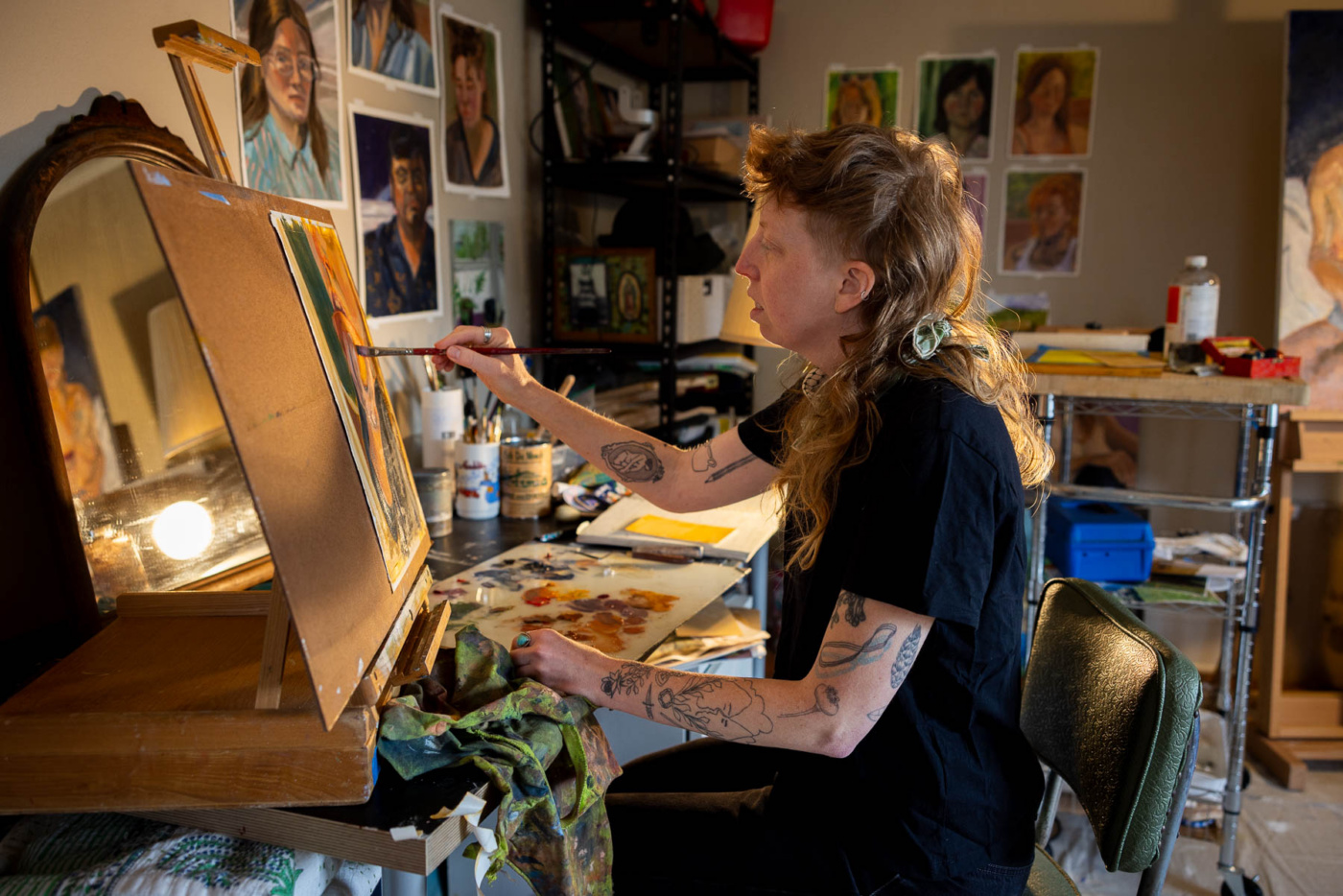
Harley Burns and I met serendipitously on my birthday—over a lamb kebab with a candle stuck in it—and I immediately appreciated their humor and their cool, confident demeanor. Their large-scale paintings share a similar energy: poetically and powerfully speaking to the experience of being trans and gender nonconforming in the South, with subjects posed as heroic, sacred figures that boldly embrace living courageously and authentically. A musician, curator, and artist, Harley came to painting after a well-lived early life, from volunteering with the Peace Corps to earning a Master’s in Public Health from UNC in Chapel Hill. I visited their apartment studio in Asheville one Saturday morning to discuss their work and the role of physicality in their creative process. We also talked about how their pivot to painting was partly inspired by cathartic experiences at craft schools, a topic near and dear to both of us.
This interview was edited for length and clarity.
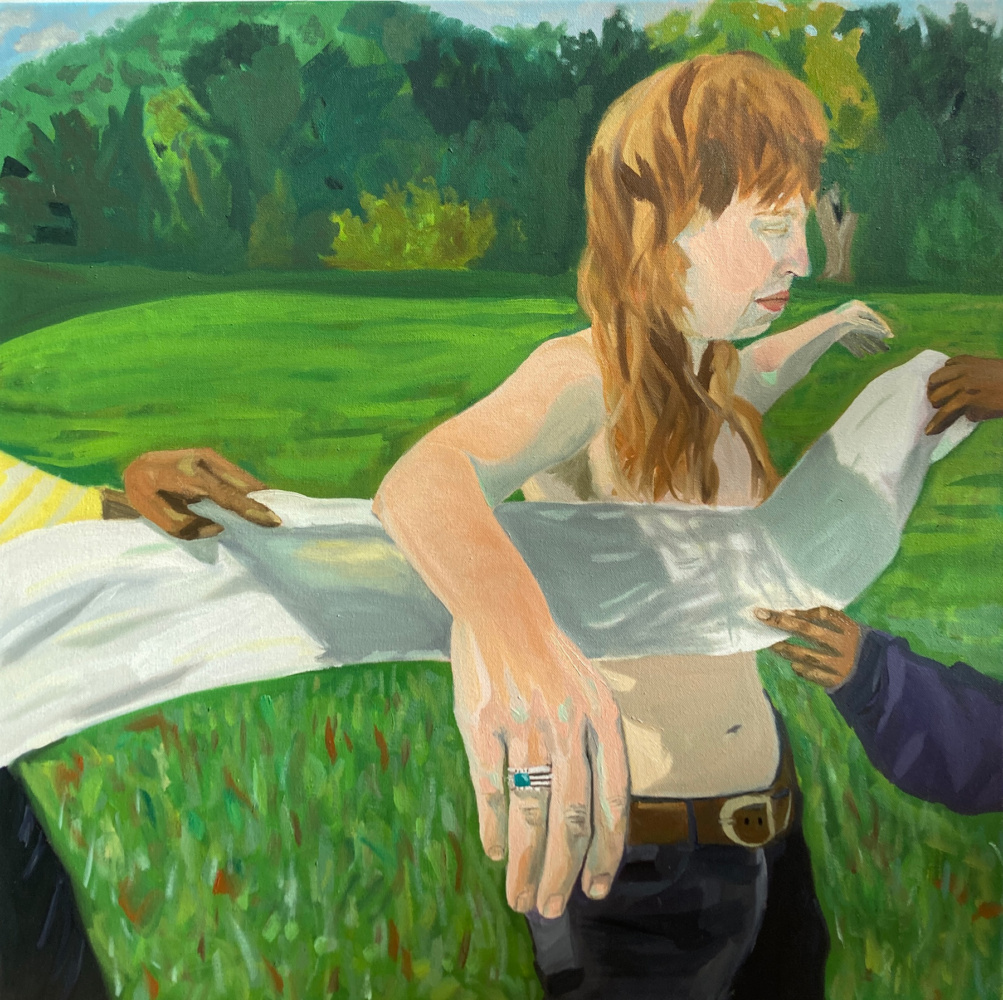
Robert Alan Grand: I want to start with the triptych Buttoning Back Up (2025), that’s part painterly documentation and part statement addressing, as you wrote, “the paradoxically hypervisible and invisible nature of being a nonbinary trans person.” How did these works come to be? How did you go about translating a performance into painting?
Harley Burns: I got a scholarship for a class at Penland called “Storytelling as Identity: Process, Performance, and Paint,” and even though it was literally in the title, I had it in my mind that I would absolutely not be performing—I would just be painting. Michael [Dixon], the instructor, was so skilled at slowly building our comfort and confidence over the course of two weeks. I did a collaborative performance where I read Judith Butler out loud, and my classmate acted out “gender,” which led to this performance.
I asked my class to join me in front of the dining hall at lunch, then took off my top layer and invited my class to bind my chest. It was interesting to see who stepped up to help and who stood by as a voyeur. Michael and some other classmates took a bunch of photos, and then I focused on the ones that felt they distilled the performance best. It’s been interesting to see the narrative develop when you look at them all together. It was this powerful moment where it forced people to grapple with my identity as a non-binary person who can be overlooked as cis.
RG: They’re so striking. What else would you say this process taught you as an artist?
HB: When I was first thinking of this performance, I wasn’t sure whether or not I should do it. It felt risky and, obviously, extremely vulnerable. I talked to Michael and told him the idea. He asked, “Do you feel safe doing it?” “Yes.” “Do you feel scared doing it?” “Yes.” And those questions were kind of a guiding light, reminding me to push myself to do the things that scare me as long as they don’t put me in serious danger. It showed me how taking a big risk is worthwhile and leads to greater growth.
RG: How else have craft schools and retreats like Penland and Anderson Ranch influenced your practice?
HB: Oh my god. Penland has changed my life every time I’ve attended. Anderson Ranch was an incredible experience as well, but Penland is quite possibly my favorite place in the world.
The first time I attended Penland, it planted the seed for me to leave my career. The second time, it showed me that being an artist wasn’t an outlandish idea–it was completely possible and this was how. It helped remove a sense of competition and completely refocused me towards being a collaborator and connector in the art world.
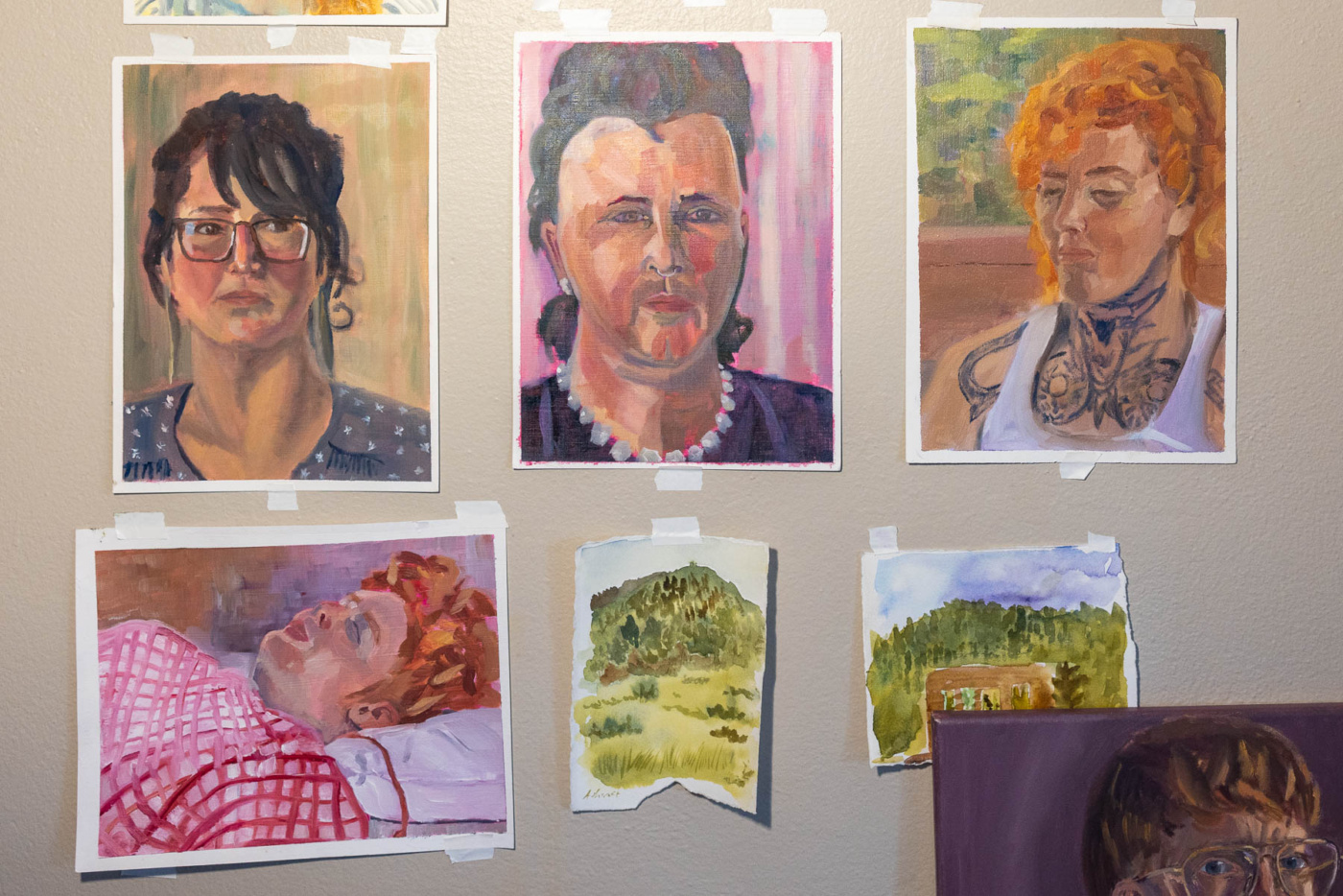
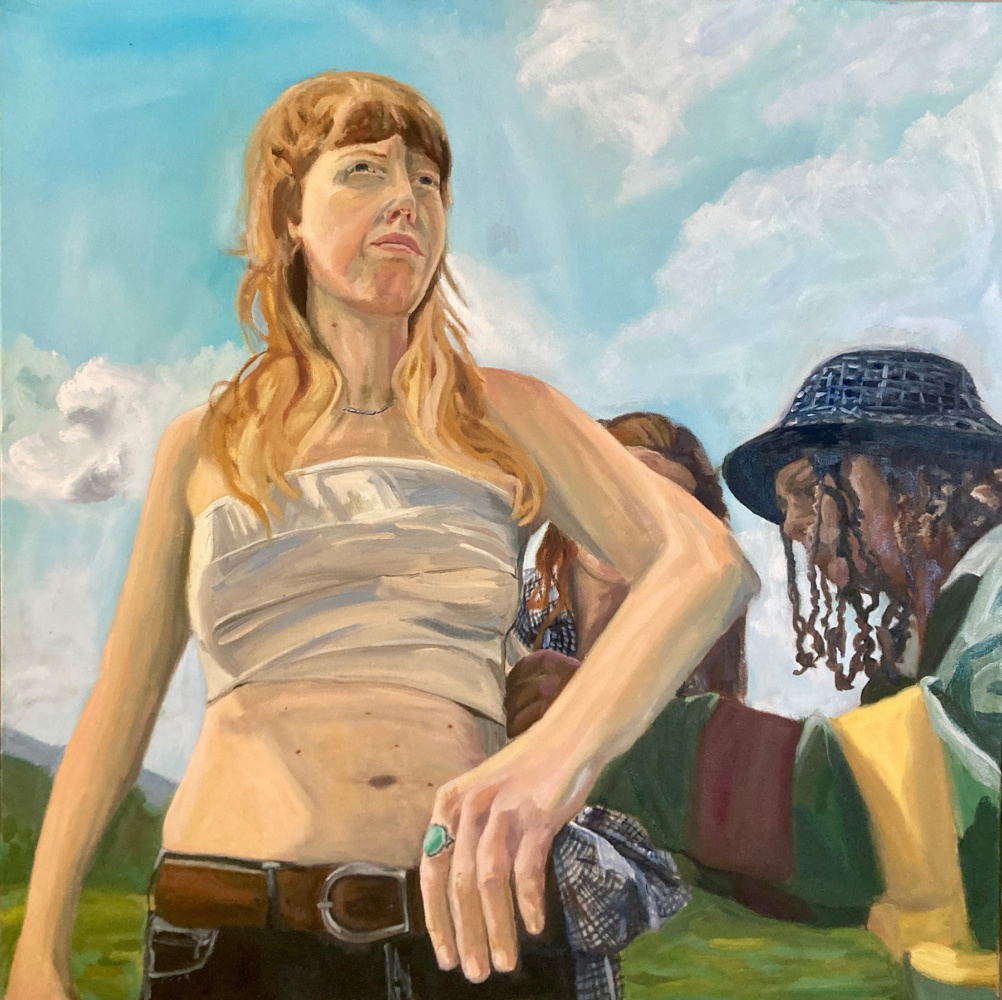
RG: Your other portraits and series in progress are personal, evocative, and depict folks living and showing up authentically—it’s focused on joy, not trauma. What do you hope viewers take away from these paintings? Thinking especially of these over here in your new series, The Sanctity of Transness (2025).
HB: Since I first started on the binding series, I wanted to bring together my social justice values, capture an emotional truth, and create a sense of beauty. I feel like the Sanctity of Transness paintings achieved that for me.
There’s a tension between a certain confrontational stoicism and a tenderness or vulnerability that comes when you are living authentically, and it’s not always safe. I want viewers to really pause and take it in. They feel contemplative to me. At a time when trans people are being villainized, and essentially they are trying to will us out of existence, I want people to stare face-to-face with us and see our wholeness, our humanity.
It takes immense strength and courage to be trans or gender non-conforming, and I think that in itself is worth celebrating. When you live authentically, you can really blossom and be your best self. I want that for everyone.
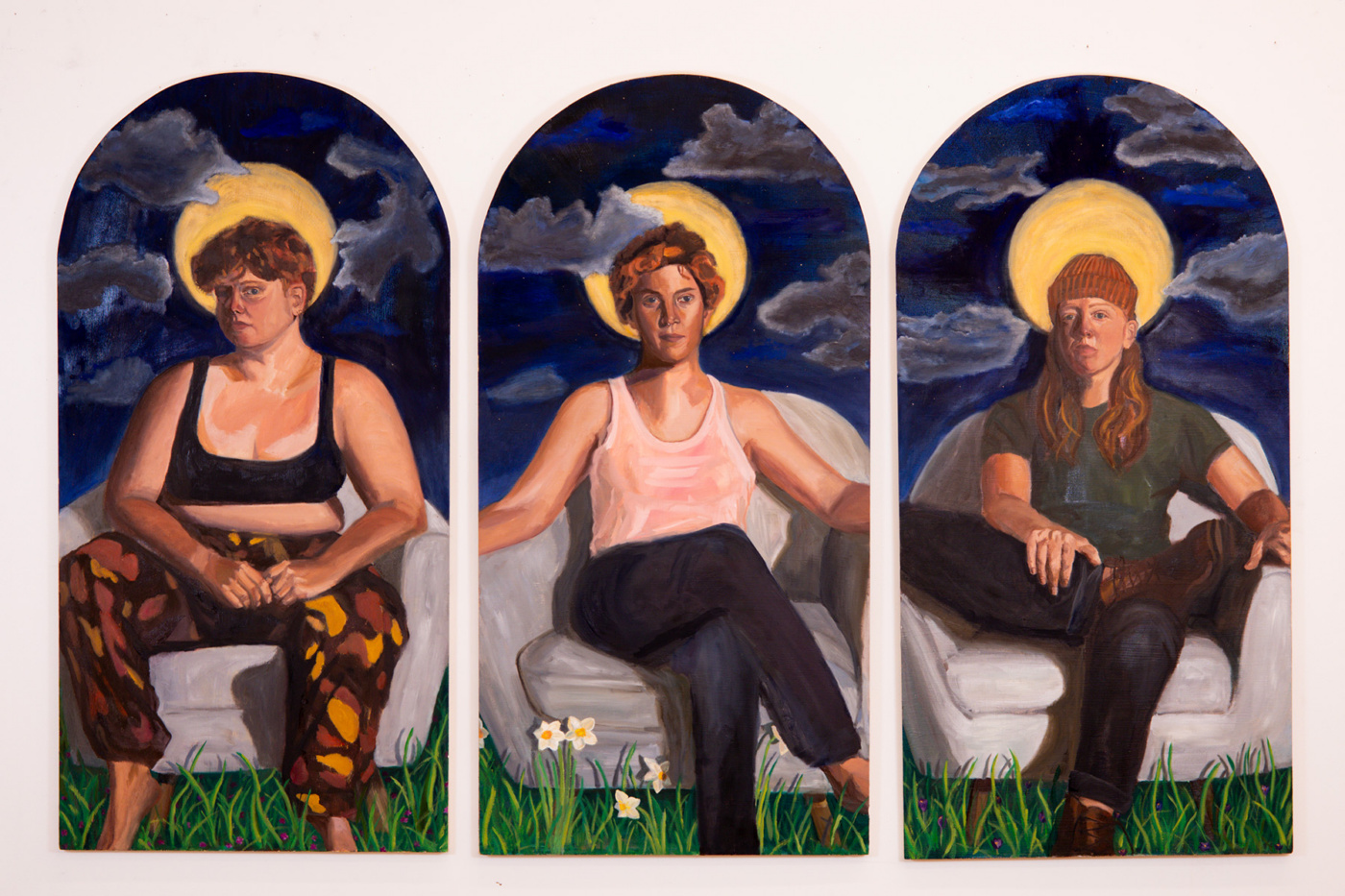
RG: Tell me more about the religious iconography aspect—are you looking to reference history, the gospel, or both?
HB: I was raised Catholic and always found religious imagery boring until I did the Peace Corps in Guatemala, where there is a lot of veneration of the Virgin. I’ve been thinking about what it means to be trans or gender non-conforming, and how we are just trying to live our lives like everyone else. How, when it comes down to it, we’re all part of the natural world, and I think that’s sacred. Ultimately, “We’re all god’s children,” is what I’m avoiding saying.
I wanted to put trans people on modern-day thrones under the blessing of the full moon in the natural world, bringing together these pagan elements while invoking Christian iconography. It’s about wholeness and holiness. We are whole, and we help make the world whole by being part of the larger human ecosystem.
RG: How has living in Asheville, in Appalachia, influenced your work or approach?
HB: Before I lived in Asheville, I was in Durham/Chapel Hill for five years, where everyone was obsessed with their job. Moving to western North Carolina reoriented my life and allowed me to slow down. Living here has meant being closer to the natural world and recognizing my role as part of that. I feel really lucky to live where there is such a rich cultural history and strong sense of place, which I’m currently integrating into my figurative/portraiture work.