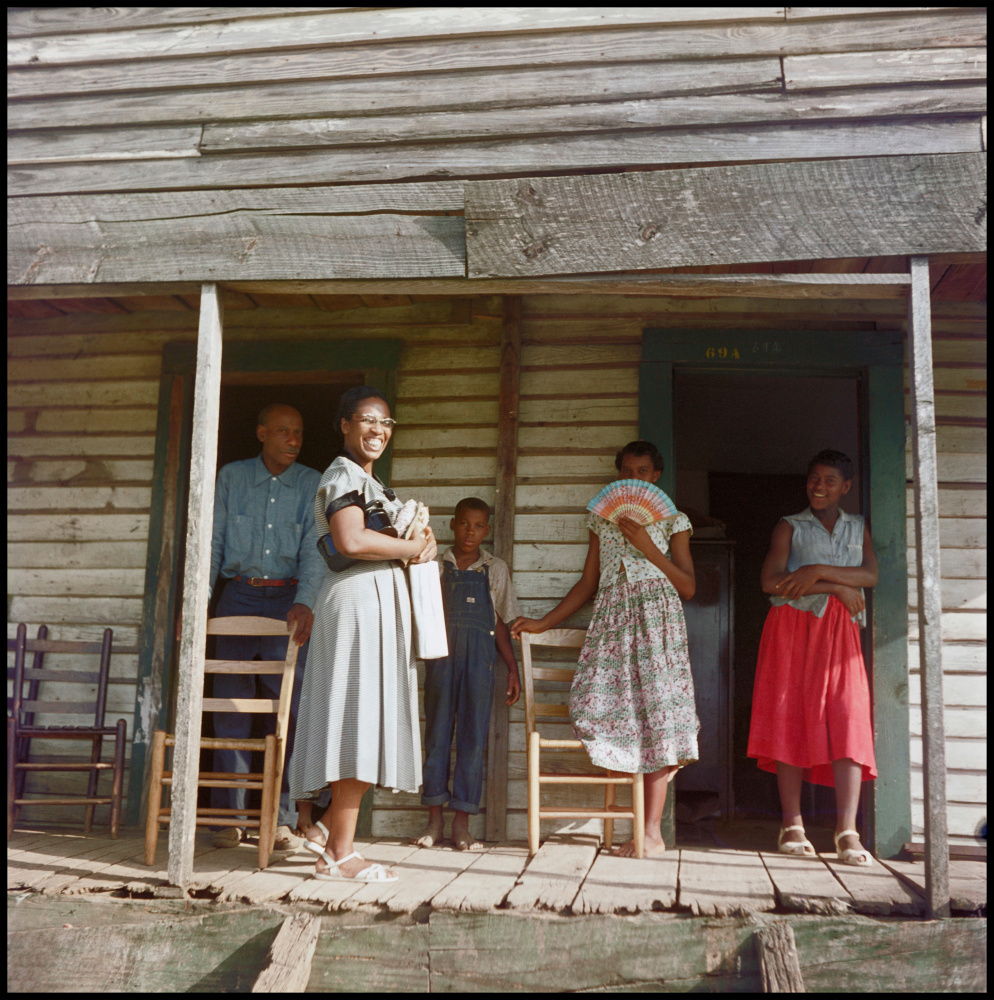
If Dawoud Bey’s call is to examine the Black present and past, his latest answer to that call can be found off Peachtree Road, in Atlanta. With over forty images from Gordon Parks’ Segregation Story series, Bey fills the sunlit space at Jackson Fine Art with intimacy that includes palpable dignity and power in every scene Parks captured. A tailored, convicted approach, Bey, the curator of the show, sees the South through Parks’ eyes.
When Parks went to Alabama in 1956, the Kansas native was afraid for his life.[1] Navigating the state with the guidance of a local, Sam Yette, Parks found himself feeling harassed, heckled, and hunted in what he called “the motherland of racism.”[2] Nevertheless, he captured what he sought: to elucidate a different perspective of what it meant to be Black and Southern in a community suffocated by the unmoving grip of Jim Crow. His task was to present an alternative view in the midst of the Montgomery Bus Boycotts, a resistance not with picket signs or with the dollar, but with determination, excellence, and the pursuit of normalcy despite the limitations faced.
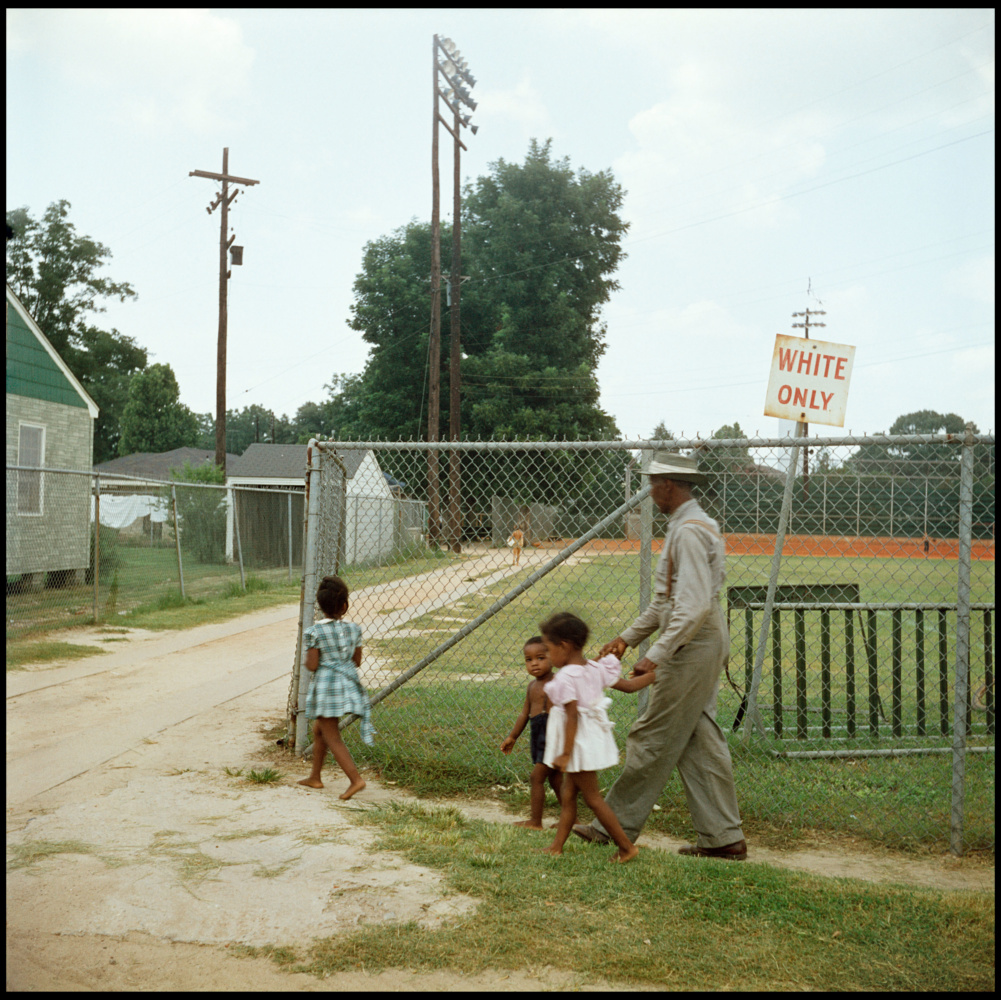
Captured using a medium-format twin-lens reflex camera, several images in the front room emit a sense of serenity in pastoral compositions filled with flowers, stillness, and the family stoically going about their days. Unpublished in the original 1956 LIFE story, a portrait of Mr. and Mrs. Albert Thornton, Sr. of Mobile, Alabama, finds them surrounded by soft pink flowers, with Thornton’s hand gently around the shoulders of his wife and the hint of a smile on both of their faces. No doubt recalling his time photographing society women in Chicago in the 1940s, Parks captures them with a subtle but entrancing air that brings nothing but dignity to the view of the elder Thorntons, eighty-two and seventy-years-old respectively.
It is with that same tenderness that the remaining images are conveyed. The curatorial decisions of Bey, a portrait-maker himself, is revealed in his selections from the over 200 images originally taken by Parks that summer in 1956, especially in those of children.

Youth in the segregated South is presented plainly in this exhibition: working children with more responsibility than opportunities, playful children with homes and roads falling apart around them, curious children surrounded by the watchful, weary, and worried eyes of their community. It is the images of the children that so clearly illuminate the restraints Parks sought to direct attention to and the ways in which families across the South subvert those limitations.
This exhibit, in commemoration of seventieth anniversary of the original publishing and the twentieth anniversary of the Gordon Parks Foundation, displays images that, in Bey’s words, “lend the Black southern presence, often under siege, a sense of lives fully and expressively lived.”[3]
Parks’ images, no longer bound and cropped by the editors of the magazine he worked for, live freely and brilliantly through Bey’s selection. Rather than dazzle, they glow with a soft familiarity that ignites a feeling of remembrance in viewers with similar family histories and, if they’re so fortunate, the photos to show for it.

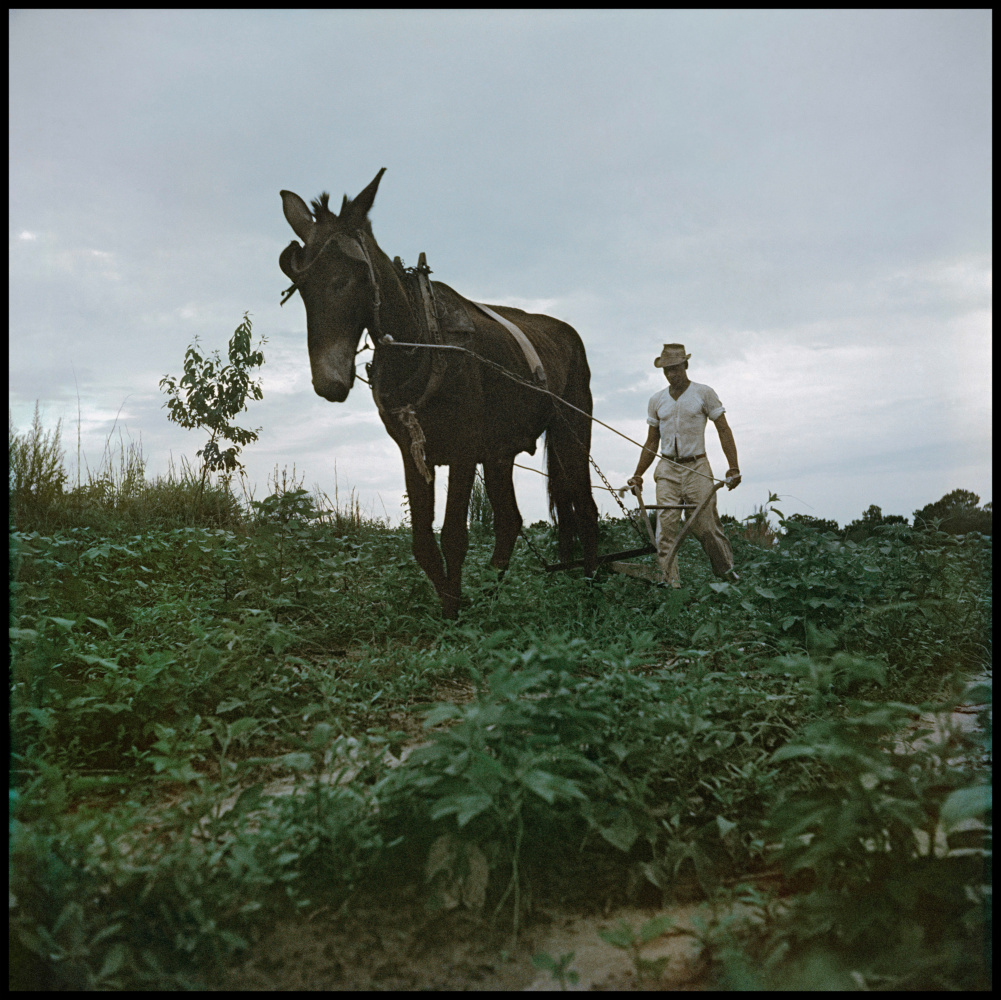
Gordon Parks: The South in Color is on display at Jackson Fine Art in Atlanta through July 11, 2026.
[1] “Gordon Parks: The Restraints, Open and Hidden,” The Gordon Parks Foundation, accessed May 28, 2026, https://www.gordonparksfoundation.org/exhibitions/gordon-parks-foundation-gallery/gordon-parks-the-restraints-open-and-hidden.
[2] “Gordon Parks: Segregation Story,” High Museum of Art, accessed May 28, 2026, https://high.org/exhibition/gordon-parks-segregation-story/.
[3] “Gordon Parks: The South in Color,” The Gordon Parks Foundation, accessed May 28, 2026, https://www.gordonparksfoundation.org/exhibitions/gallery-exhibitions/gordon-parks-the-south-in-color.