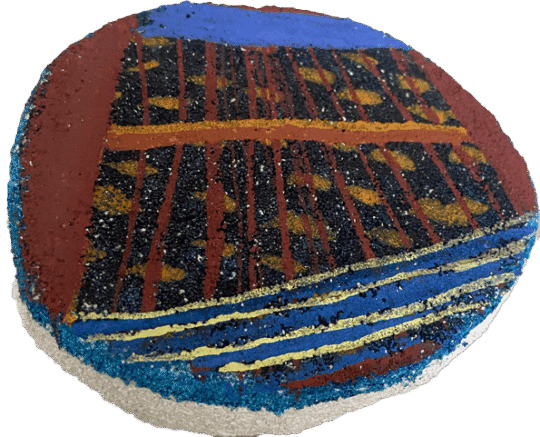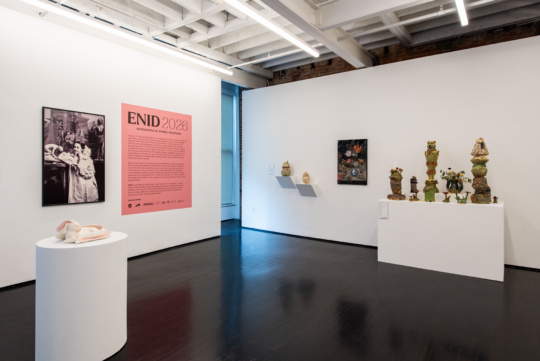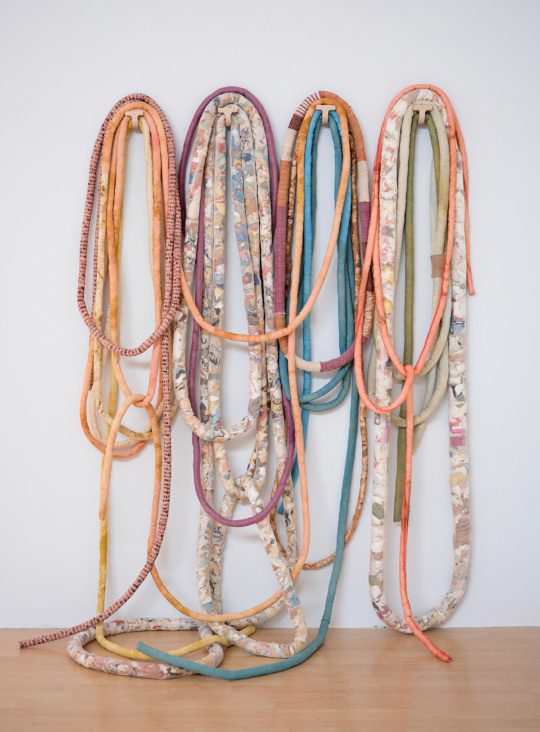

Entering Ground Floor Contemporary, one might feel watched by metaphors. Wobbly Grid by Daniel Luedtke is a collection of wall-mounted hydrographic screenprints on ceramics and faux ceramic tiles made of foamcore, resin, and ink, responding to the American health industry’s attempts to classify individuals into simplified categories.
Numerous eye shapes dot the vast bright blue, green, and yellow-tiled fourteen by nine foot wall titled Eyetracking Pattern (2026), facing the entrance; Luedtke dubs these tiles ‘ceramics in drag.’[1] They look like they could adorn a surgery clinic to protect the architecture from surrounding activities associated with human fluids. However, as Luedtke demonstrates, each tile weighs next to nothing. This lightness allows his tile offerings to travel from space to space with their messages.
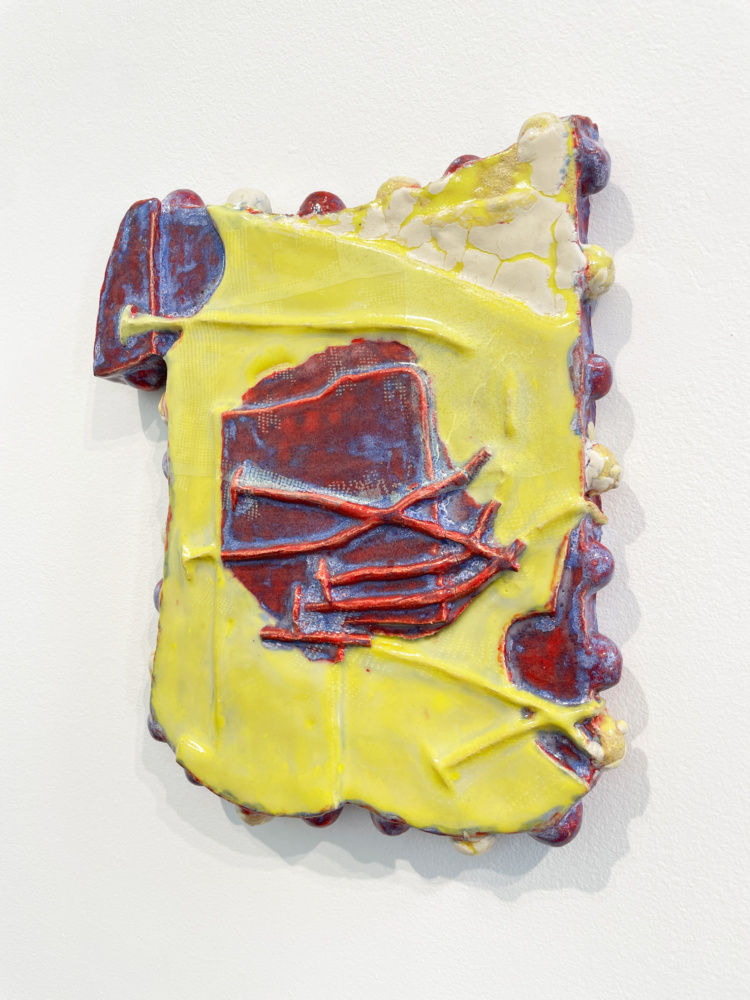
The screenprint illustrations and actual ceramic objects on the walls to either side are, in turn, ethereal and organic. The hydrographic process is usually associated with a masculine world. Accent pieces in car interiors, such as console trim, feature custom patterns printed on plastic, designed to cling to 3D objects; the same process adorns custom helmets and guns. By dipping his ceramic objects in water, Luedtke prints flat images that warp as they wrap around the clay body’s contours. In Heart Fruit (2022), the same hydrographic screenprint appears on and behind the ceramic piece, making the distortion process visible. Blood and Fat Data (2024) is made organic and grotesque with gauze and stitch-like textures on blood red and sickly cholesterol deposit yellow.
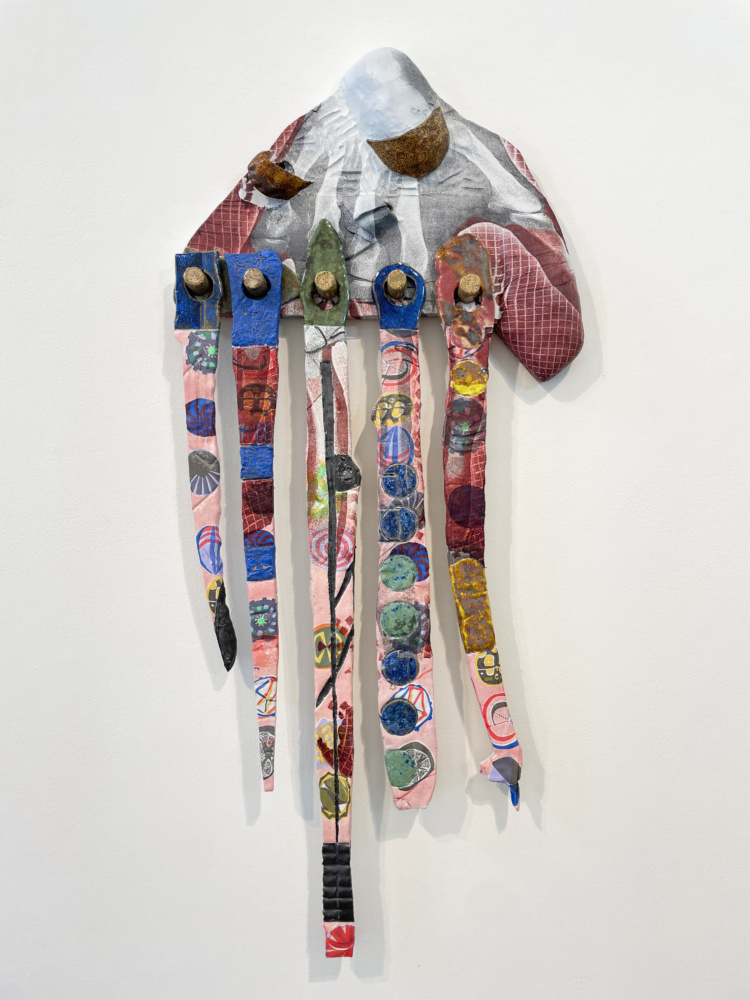
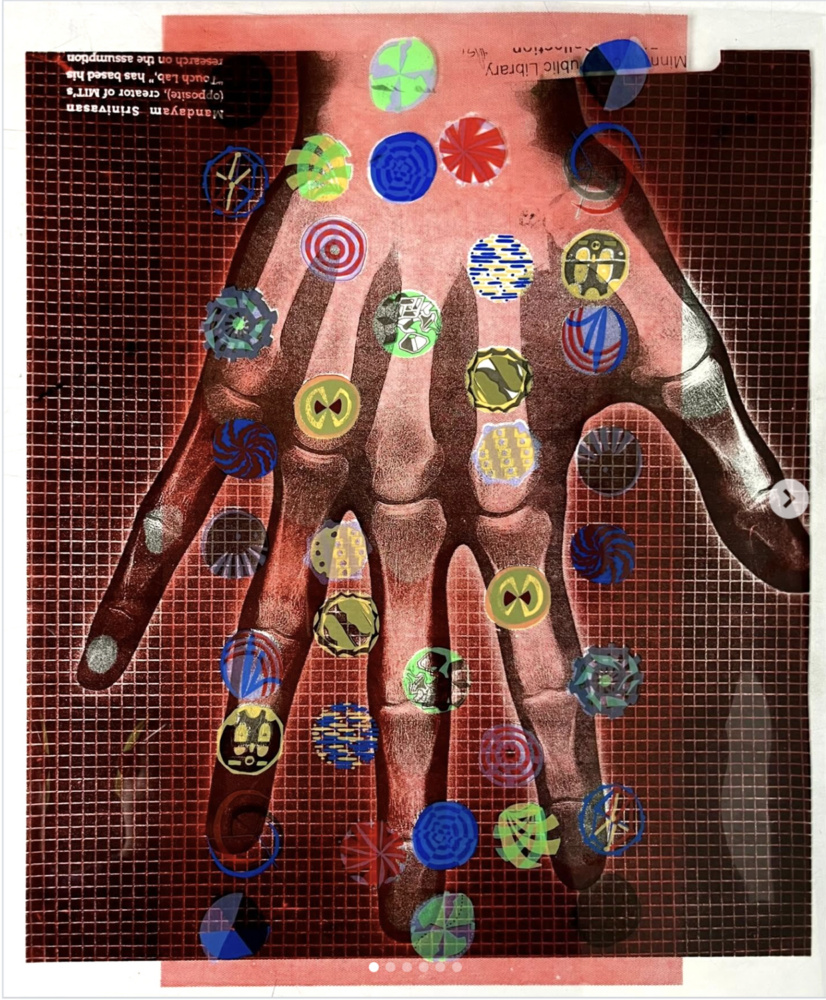
These ceramics respond to how medical and wellness information, including messages such as advertisements and lab results, affects the feeling of being in one’s body. The piece X-ray, Coin Toss, Knife Rack (2024) is creature-like and seems to embody hidden danger. The five ceramic ‘knives’ precariously hang on wine bottle corks. The X-ray of a hand appears to hold the knives loosely. It may be a central piece as it displays a multitude of distorted health information using the double-edged sword of an alarming shape.
As an individual living with HIV, Luedtke frequently encounters healthcare and insurance systems that monitor him, despite his adherence to his medical plan. In a world where human movement is quantified but not every human has the same value, the system decides whom to watch more closely—sometimes, not to protect the weak, but to protect the rest.
It’s curious to think about how water is involved in both processes—indirectly or directly: one method keeps it out, and another uses it to bind two surfaces together. Being an islander, when I think of water, I can’t help but think of borders.
Aberration in the body and its fluids refers to conditions outside normal ranges. But aberration is also an optical system, such as a mirror or lens, that causes an image to be reproduced unfaithfully. Luedtke displays the body’s interiorized information; the inside-out nature of Wobbly Grid encourages visitors to feel uncomfortable with normative medical standards.
[1] Interview with Daniel Luedtke, https://dnml.org/blog/wordpress/daniel-luedtke-tenure-review-resources/, August 3, 2026.
Daniel Luedtke: Wobbly Grid is on view at Ground Floor Contemporary, Birmingham through August 22, 2026.