“Just as the liberation theology of the past offered to African Americans a vision of a counterculture where justice could prevail, where excess and decadence were questioned, contemporary African Americans are in need of a spirituality that calls for renewal and restoration of the soul, a religion that truly celebrates coming together, reunion.”
bell hooks, Rock My Soul [1]
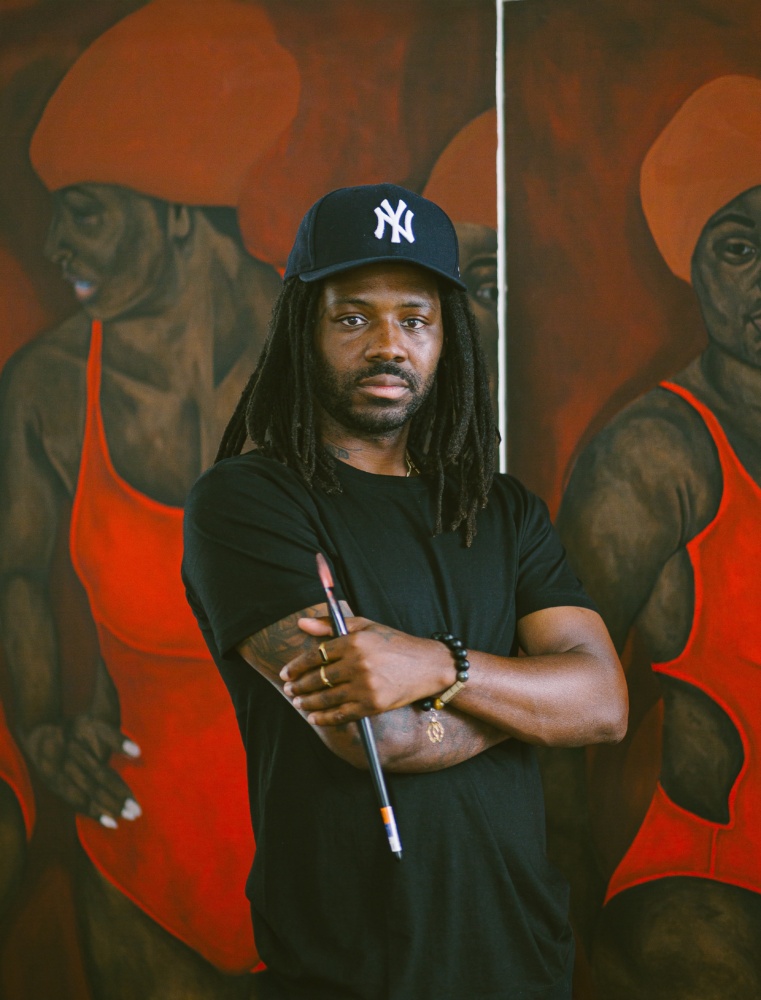
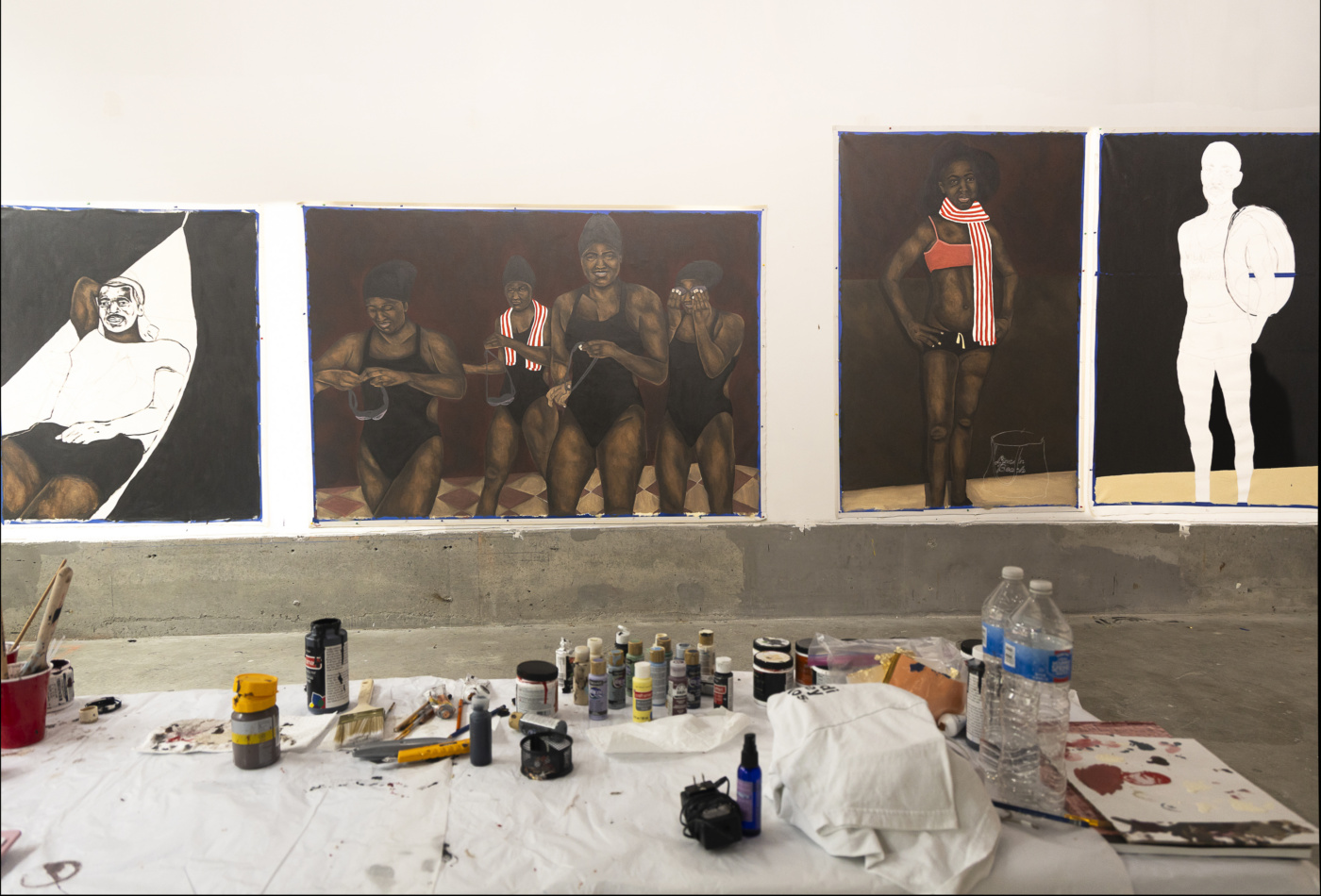
Contemporary dialogues around Black figurative works often focus on perceiving and depicting the body in a surrealist capacity. Centering hue, with eccentric uses of grey and blue, painters have created empowered personifications of Black bodies, in Black specific experiences. These surrealist moments in the 2D specifically centering the sites where Black vernacular is incubated, Southern culture is exemplary of how collectivity can effuse Black self-esteem. After visiting Auudi Dosey’s studio in the 8th ward of New Orleans, I can affirm that Black Southern artists use visual vernacular as a technology of individual and collective expression. In praxis, the South’s rendering of the Black collective places not only performance, but also the Black imaginary as primary setting.
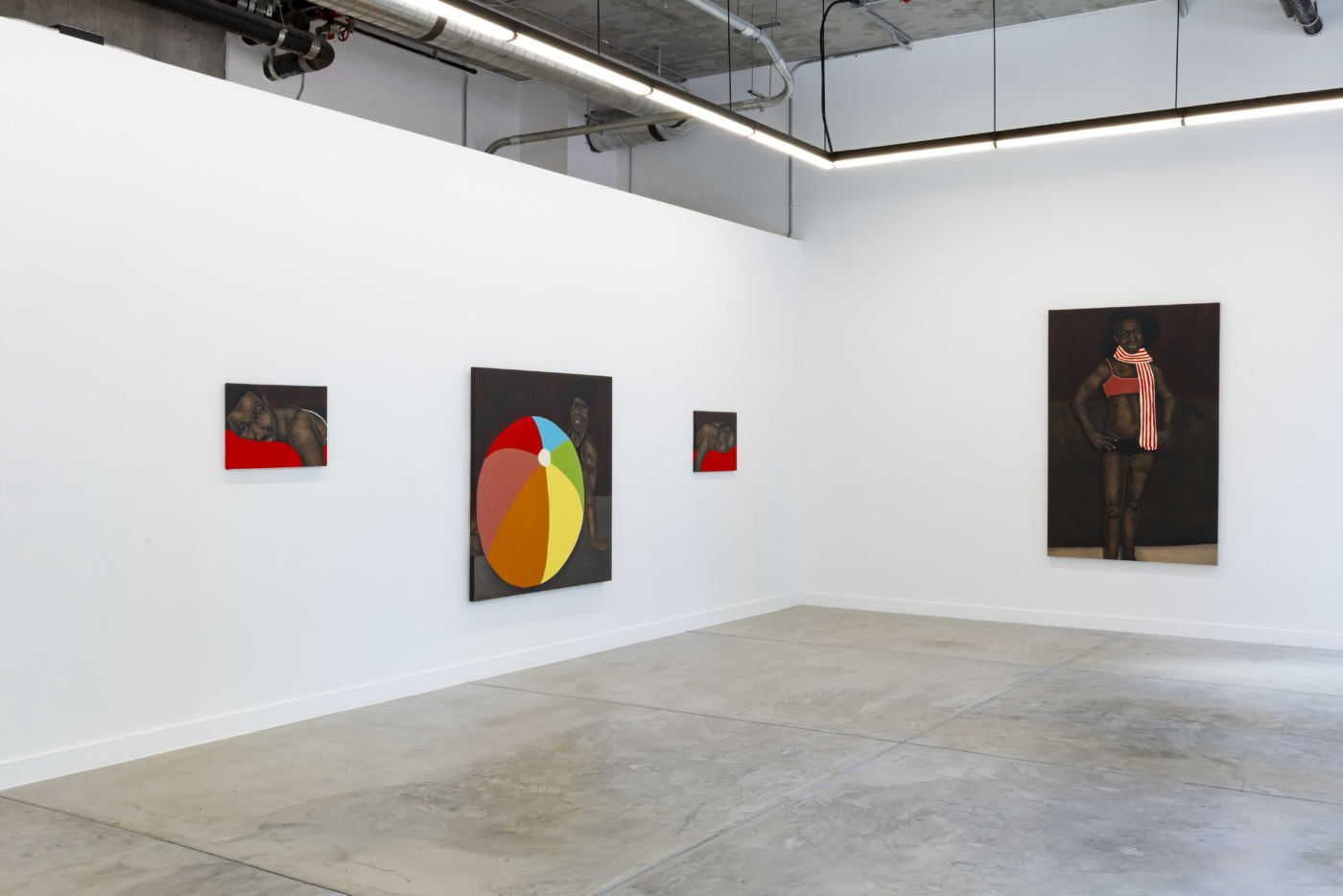
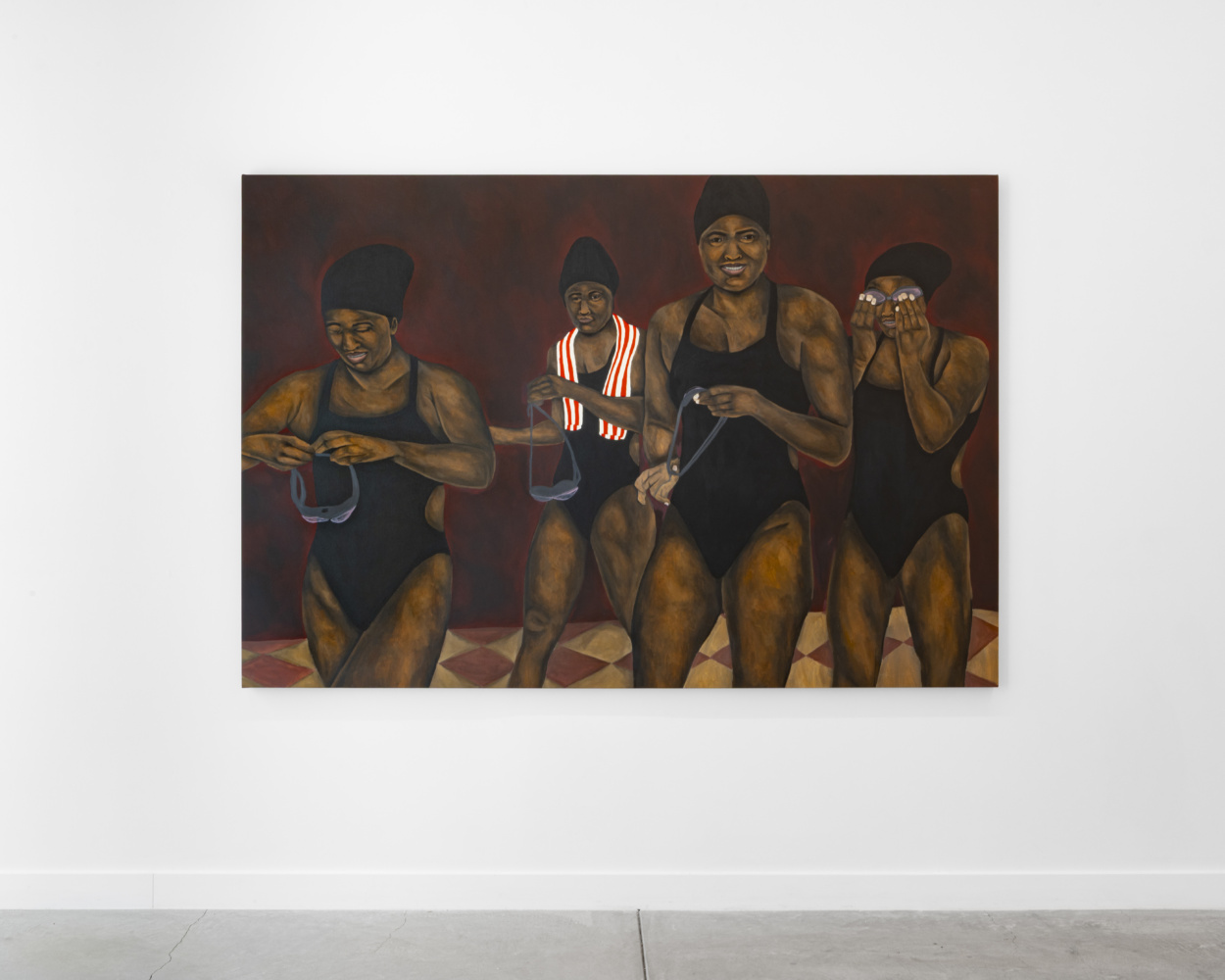
In his most recent exhibition, What’s Left, Never Left at Black owned Bay Area Gallery, Jonathan Carver Moore, Dorsey’s painting focuses on embodying Black leisure through the lore of Lincoln Beach. Dorsey paints Black families & figures of all ages communing in the former man-made beach in New Orleans East, sourcing images and stories from local elders and community members. The use of red garments worn by figures existing in shadows, signal to how there’s a uniformity in commemorating collective joy. Leisure, a technology of collective joy, is a conduit for things to not only be felt individually, but also shared. This of course is instrumental in archival narrative, creating the visual vernacular of those who’ve experienced and socialized what is not well archived. Centering this site in communion is not only commentating the fact New Orleans East was primarily a home to affluent black middle class Pre-Katina, but it’s also a reminder that this was a place where self-esteem was built.
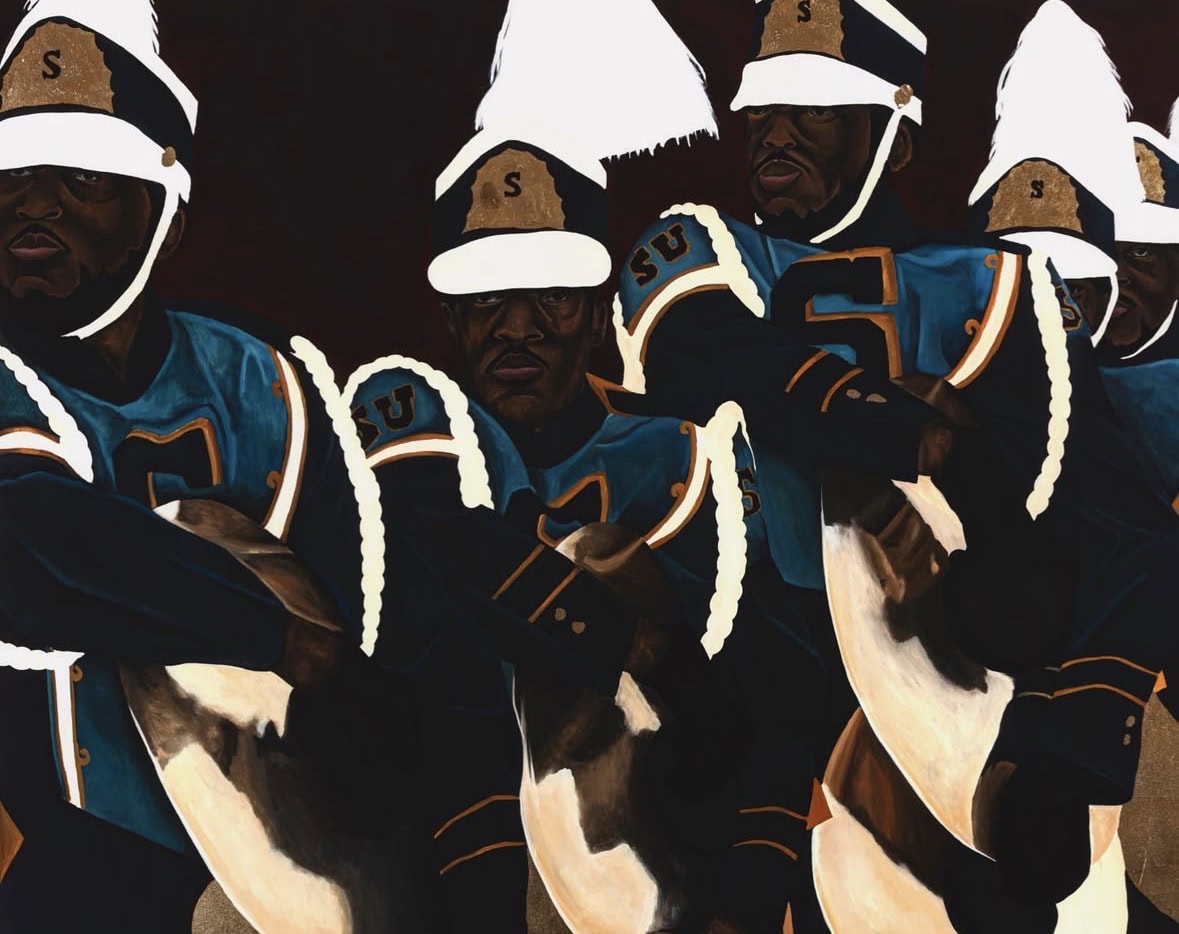
In the South from Baton Rouge to New Orleans, performances by HBCU bands at sites of collective ritual, the Bayou Classic, Mardi Gras Parades, etc. are experienced. Applying music theory, these bands create a cartography of sound when these performances are held in social spaces such as the Classic, where they compete or Mardi Gras where they perform as a cultural binder to other Black people of all classes in leisure. Also working as a cultural non export when tourists come to see them for pre-Lent celebrations. Here again is the motif of uniformity as excellence, but with the capacity to be perceived by more than just immediate community. At the 2025 iteration of Miami Art Basel, Dorsey displayed the work So Southern (2025) depicting a formation in of the Baton Rouge HBCU Southern University’s band, The Human Jukebox. Uniformity in the painting mimics eighth or sixteenth notes in the band members uniformity in collective performance. The 2D still working as a momentary expression of sonic vernacular—a technology for collective self esteem, in praxis.
Back in Dorsey’s studio for touch-ups after being collected at Expo Chicago was Rumble (2025). This painting embodies the narrative of Clifford “The Black Rhino” Etienne, the heavyweight boxer who boxed Mike Tyson in ‘03, and is currently serving a 105-sentence in the infamous Angola Prison. Located in Angola, Louisiana, the state penitentiary is surrounded by the Mississippi River and swamps. The plantation name was granted in a similar fashion that the Gullah Geechee Corridor was; many of its slaves were from the African Region of Angola. This prison, a former plantation, is currently home to more than 5,000 prisoners, the largest demographic being black men serving hyperbolically extensive sentences. When it comes to the single subject figuration in Rumble, Dorsey layers the composition gesture, iconic symbolism, and renders the subject as an embodiment of a code, an inner circle, idol type persona. Their skin color is almost always to the background, again as if all these narratives could only exist inside “Louisiana Marie.”
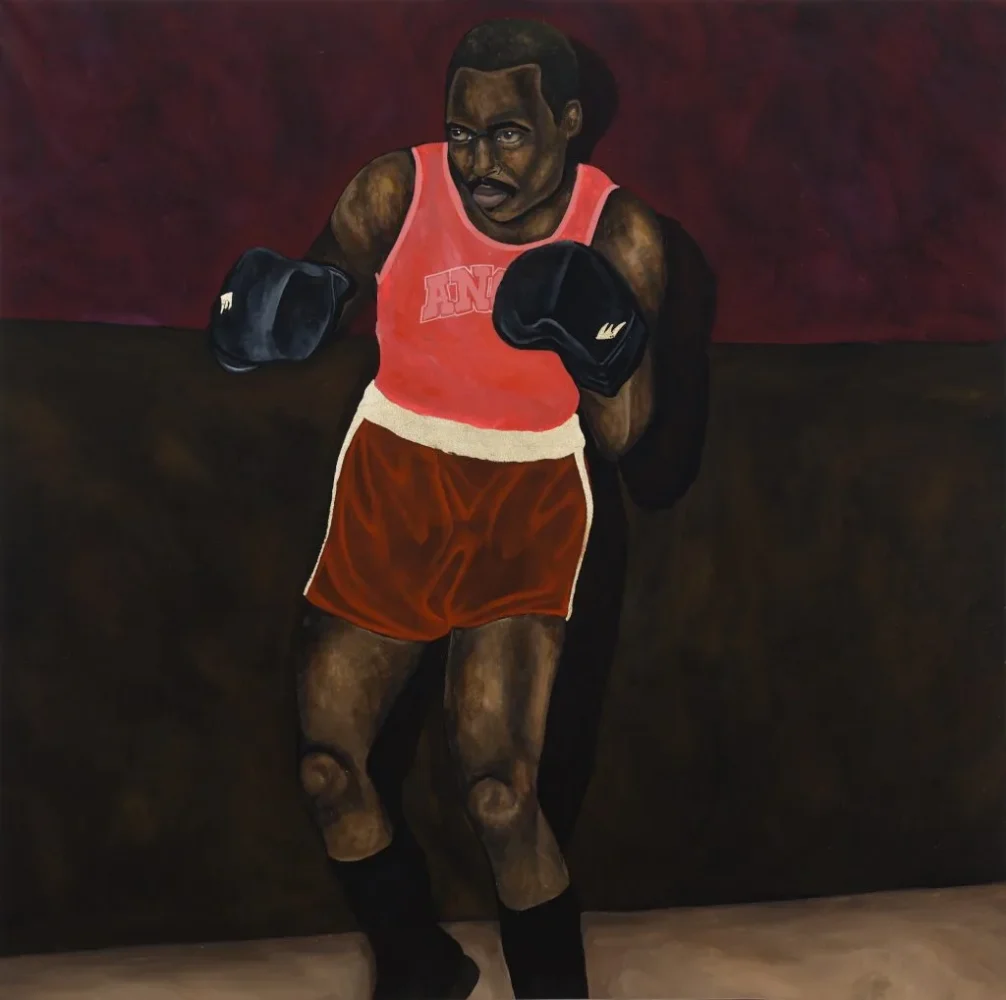
Angola Prison is infamously known for their prison rodeo, father and daughter dances, and their boxing matches. Etienne’s Angola jersey is more than a proxy to the subjugation of Black performativity in the American Prison Industrial Complex. Furthermore, in the context that Dorsey paints within, it’s a vernacular approach to the surrealism of self-esteem and applied merit. The notion that merit only exists in civilian life, or that civil compliance equates merit and is patriarchal normalization of capitalist exploitation. Civilians are allowed to come in leisurely fashion to see prisoners perform and this cultural phenomenon is depicted in this painting, without anything but Etienne’s focal point, boxing stance, and attire. A proxy to black self-esteem in motion. In this context there’s no visual collective, instead the suggestion that despite his excellence, there’s still a societal gravity to contend with. Being removed from the assumed protections merit could have provided him, there’s the reality that leisure from this perspective is a technology to challenge exploitation through celebration and ceremony.
In hooks’ Rock My Soul, she states “We often overestimate the degree to which exploitative behavior has been normalized and the degree to which we’ve internalized these norms. It takes, then, a commitment to an acutely self-conscious practice to be able to think and behave better than we’ve been taught.”[1] One could perceive Etienne’s infamy as an Angola prisoner boxer to be a satirical narration of the cost of Black excellence failing to secure a different reality. However, in the context that Auudi paints, there’s a visual vernacular, a narration of self-esteem in motion as a form of escape from physical reality, into a musicality, a meditation even on what the characterization a good performer, to be someone who can play the sport of self on their own strengths. But again, vernacular is a language you have to be socially conscious enough to speak.
[1] hooks, bell. Rock my soul: Black people and self-esteem. New York: Washington Square Press, 2025.
[2] Ibid.