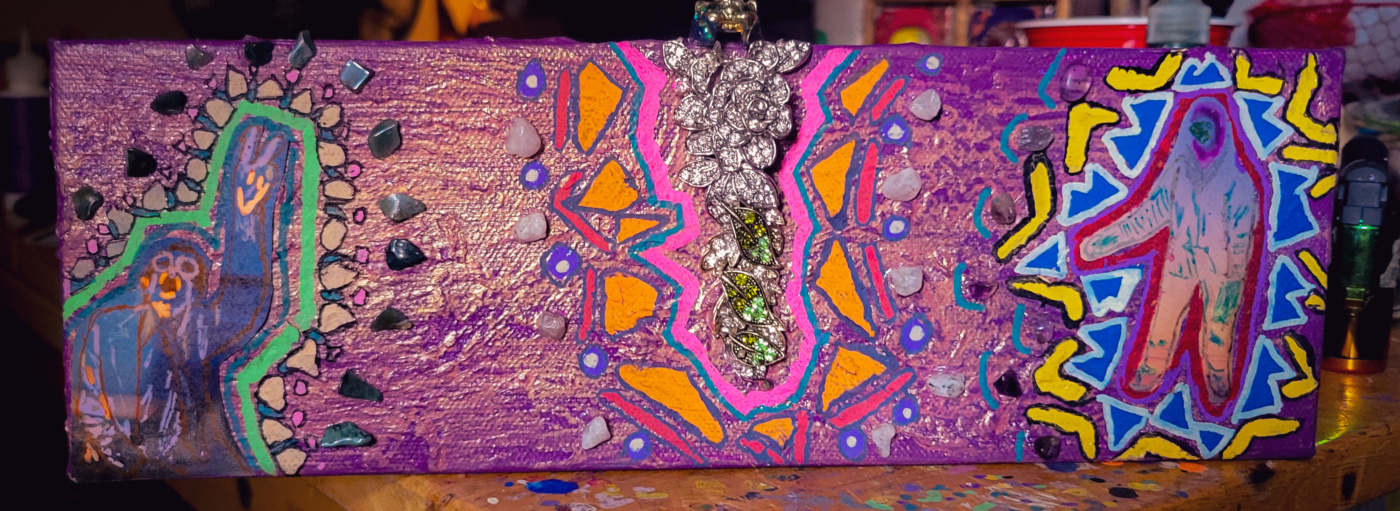
It’s the first conversation between two collaborating artists of the 2025 Indigenous Gulf Stream, a new media biennial featuring Gulf South Indigenous art and culture. For the fragile time of 24-hours, the stream presents an open-access occupation of attention to build relations and consider digital aesthetics in the Indigenous Gulf South.
Bvlbancha Public Access, an Indigenous-run non-profit media channel, produces this happening which is freely available through Twitch. The 2025 iteration organized on the theme of “Kinship” and collected content with two open calls. Recognized Stories call invites long-form interviews from Indigenous thinkers, and Stories for the Making calls contemporary Indigenous artists to create a new artwork in response. This interview is the first chat between Recognized Stories artist Dane Verret (unenrolled United Houma Nation), and Flowers (Mississippi Choctaw) who digested his concepts for Stories for the Making.
The United Houma Nation is a state recognized tribe in South Louisiana. Dane’s Recognized Stories interview covers his personal quest from finding his grandmother’s Houma enrollment card in 2012, to reaching out to connect back to his tribe in 2022, and the complexitied shared by many Afro-Indigenous people which caused the decade in between.
This conversation has been edited for length and clarity.
Flowers Darling: Dane, I have watched both of those interviews so many times. It’s a huge honor for me to be on this call.
HD: [Flowers sits on her bed in a New Orleans shotgun house with a “Trans Power” sign behind her.]
Dane Verret: Similar to you Flowers, I LARP as an Anarcho-Municipalist city governance worker. [His brown glasses catch the light as he sits in front of a framed glyph in a Minneapolis room.]
HD: [Dane manages an Afro-Indigenous farming collective and is a writer and PhD student who creates games centering Black and Native revolutionaries.]
DV: I try to facilitate spaces for my neighbors to figure out how we want to live with one another. I don’t have a ton of artifacts of the things that I make, besides the glyphs and the writing system that I’ve been working on for the last 10 years for people of African roots that survived the Middle Passage. I also have a strong interest in coming on down the bayou to see if folks want to make a writing system for Houma.
The interview is about the uncomfortable work of healing. I grew up in an era of blackness where there was this mix of cultural trauma where people want to be anything but connected to Africa. There was a lot of so-called appropriation of native identity. The response to that was to shut this shit down. So I swallowed [my] story for a long time. It was like trying to eat a crawfish live. It was a story that pinched at my insides.
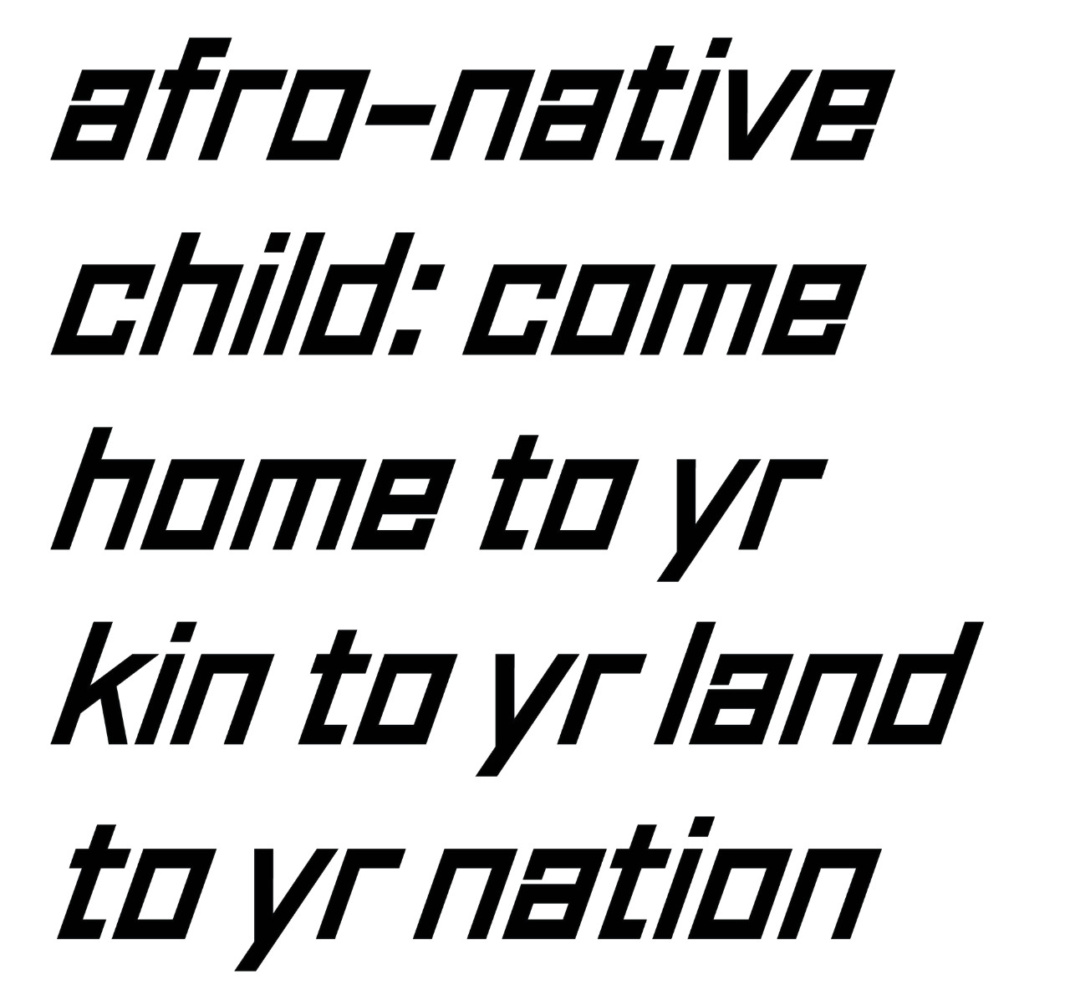
HD: [Dane tells us about a dream where he understood a meeting between peoples.]
DV: There were two white explorers looking for something on an island to steal. Two big red arms that came down out of the trees and picked them up by their heads. Then some Afro-Indigenous entity came out with a woven basket over its head and really long arms and legs. They didn’t do anything to me. It told me its name, and I woke up.
HD: [He interpreted this as a marker for stories which haven’t been told.]
DV: I don’t think it was until I got to telling the story [in the Recognized Stories interview] that I realized how intense the work is to suppress any kind of narrative that contradicts Blackness as a space of total lack. [Dane pensively works through his words.] There must be a collective healing for Black people who survived the Maafa (the Holocaust of Enslavement). We have to decide who we’re gonna be. I embrace the notion, whether historically accurate or not, that our people didn’t have a name for art. We just created. And created with deep intention, to impact the people we were with and the beings we are in relationship with.
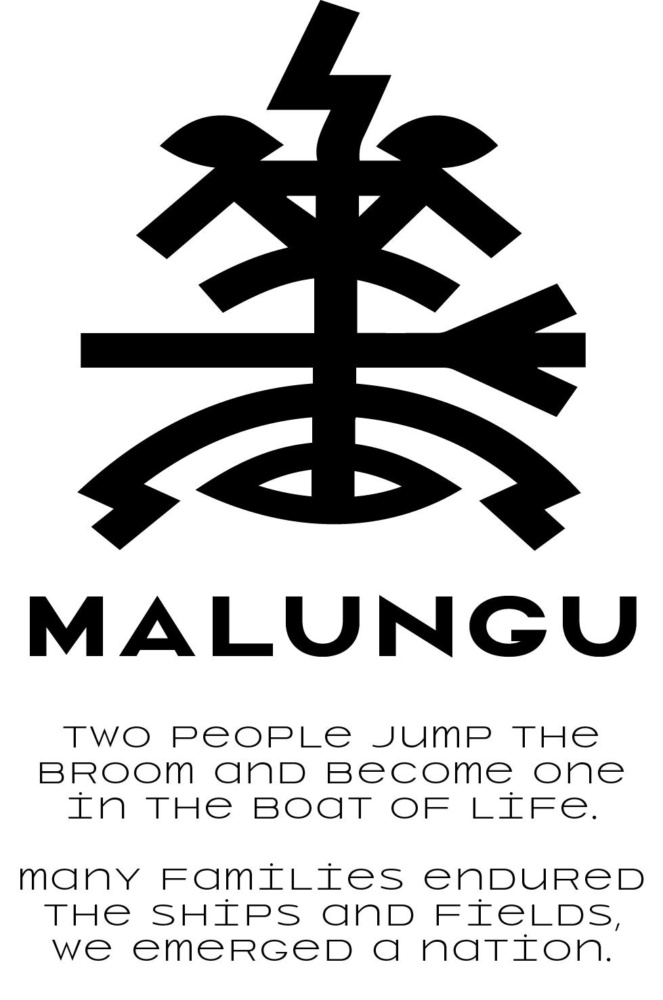
HD: [Flowers was assigned Dane’s piece by the curation team. She is a noise artist shifting into visual art. Her latest album, Shilup, loosely translated as ghost in Choctaw, is described as dark ambient noise from Bulbancha, the Indigenous term for New Orleans.]
[Dane is about it.]
DV: [Your music] is the kind of shit I be getting homesick for, but nobody makes it.
FD: I’m self-taught. Art has taken a form of ritual for me. The music I’m making now is very much abstract and more about medicine. There’s so much of American history that is tied in with Afro-Indigeneity. Things like blood quantum and the one drop rule erase the fact that people see Indigenous people everywhere, they just also are black. I’m from Mississippi. I grew up loving the blues. So many of these early progenitors of blues music were black Choctaw people. It wasn’t just a part of their bloodline, it was a part of their lived experience. One of Howling Wolf’s earliest hits was an iteration of the Choctaw stomp dance, and he was incredibly proud of his Choctaw heritage.
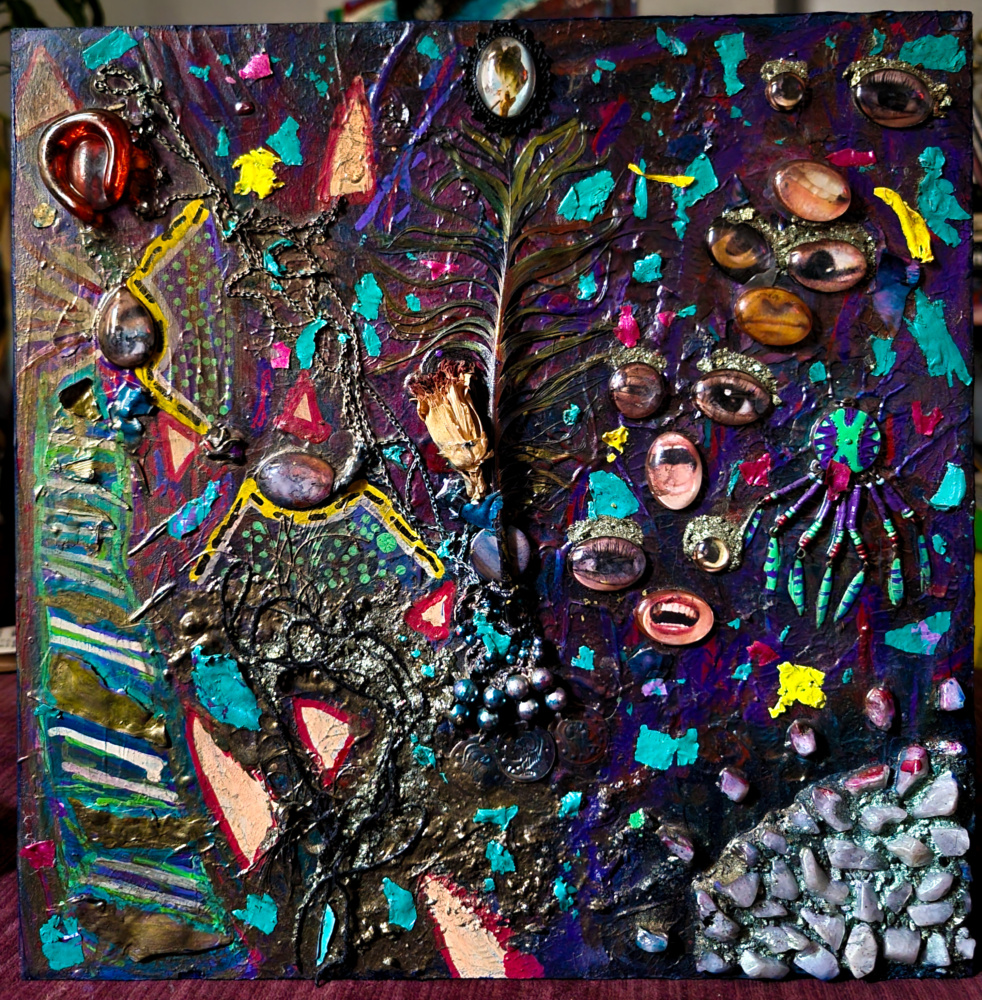
HD: [Her piece for the stream, titled Chata Blues, layers chanting and sounds with images of New Orleans, Indigenous people, and bold color washes of ambient motion.]
FD: I took a recording of Ardis Mose, who is the chanter, singing the drum dance. During the second half, the piece isolates the lead chanter’s vocals and adjusts the effects to where it sounded like a guitar. It sounds like blues guitar over some ambient music. I also incorporate the rest of the chanters in the background to celebrate this mixture of cultures. I even hesitate to even call it a mixture anymore, but to celebrate this Indigenous culture. The last part is a poem spoken by me. I had this dream, I came upon this large celebration of a bunch of Choctaws. One of them came up to me and said, You’re looking. You keep looking, and you don’t even know what you’re looking for. Look down and dig. And as I began digging, they were like, This is it. This is here. This is home. This is what you’ve been looking for. It’s right underneath you.
HD: [Flowers also established Showhole, bringing ambient noise music into outdoor spaces.]
Kinship is a practice of care. It's the only capacity worth having. It is the capacity of a group to hold one another.
FD: It felt really special to be under this gigantic oak tree with the Spanish moss coming down.
DV: It’s also really affirming that you are doing that. Because that is exactly the shit that I want to be doing. Even at a distance you are making space for people like us to give ourselves back the permission to just be creatives.
FD: The most important thing for me is kinship with space. “‘Land Back’ is not giving land back to native people, but giving the land back to itself. In the Choctaw origin story it is this land that made us Choctaw. Kinship is inherently understanding who you are in relation to the space that you’re in, and who you are in relation to the people who are sharing that space.
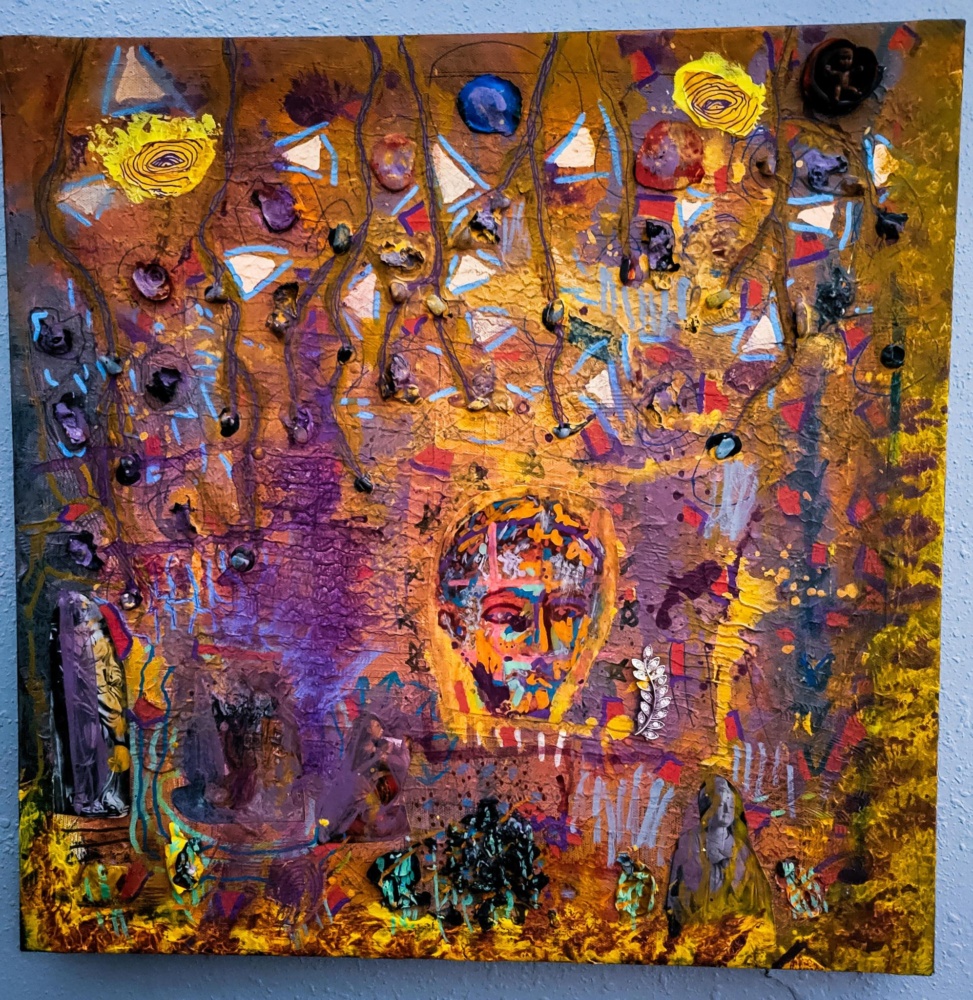
HD: [Flowers left the Mississippi Choctaw reservation 20 years ago, and grapples with identity beyond her land.]
FD: I connect with the idea of being a nationless person. So many people crave legitimacy. But what they think of as legitimacy is really just engaging in genocidal bureaucracy […] I don’t give a fuck about the state. To an insane degree. I’ve never had a driver’s license, and my car doesn’t have tags or insurance.
HD: [I laugh and offer to edit that out.]
FD: No, keep that part in. Reservations are extremely colonized spaces. Being two-spirit, being politically radical, I very much connect with the idea of creating spaces where nationless people can come and build something together […] that’s what tribes are, essentially. A community of people who want to live in love and connection. At least connection, anyway. You can be annoyed by a motherfucker but they still need to eat.
DV: Yea, I love you, but I don’t gotta like you right now […] Kinship is a practice of care. It’s the only capacity worth having. It is the capacity of a group to hold one another. It’s the capacity of the members of that group to be responsible for their shit, responsible to the people around them, and to more-than-human entities.