Bahamian textile artist Gio Swaby lives and works in diaspora, but after over a decade abroad she still maintains the Caribbean grounding that nurtured her work in its nascent years. While Swaby is featured in prominent collections, like many of her Nassuvian contemporaries, she first trained under practicing artists at the College of The Bahamas (now, University of The Bahamas). Informally, and a key divergence from her peers in terms of creative background, she was also matrilineally trained in the skill (and art) of sewing at home by her mother, who worked as a seamstress. This home training, paired with the direct support of established Bahamian contemporary artists at Popopstudios Residency (2012-2013), gave space for the artist to develop her signature method of linework.
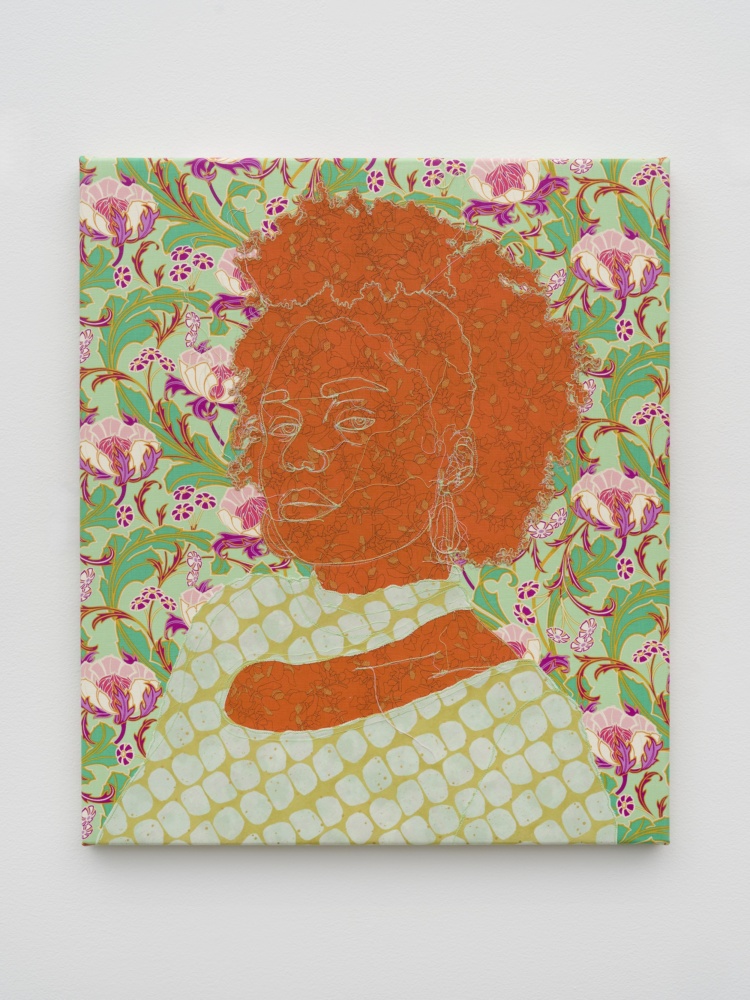
Her portraiture, a self-proclaimed “love letter to Black women,” transmutes the weight of body politics, history, fabric, and lived experience, to become tender lines drawn through the eye of a needle.
Tertiary educational experience in The Bahamas prior to her studies in Vancouver at Emily Carr University seeded conversations on intersections of colonialism, migration, race, and gender. Swaby’s working methodology centers community as much as its presentation. Collectively, these experiences impact how the artist approaches not just her aesthetic and presentation decision-making, but also how she engages with museums, galleries, institutions, and her collaborative portrait sitters. Swaby shared, “I was piecing together a lot of different ways of working to get the result that I wanted in the end. I think there’s an inherent Bahamianness to that. A resourcefulness that we have really had to always practice, that has become so ingrained and such a part of who we are.”[1]
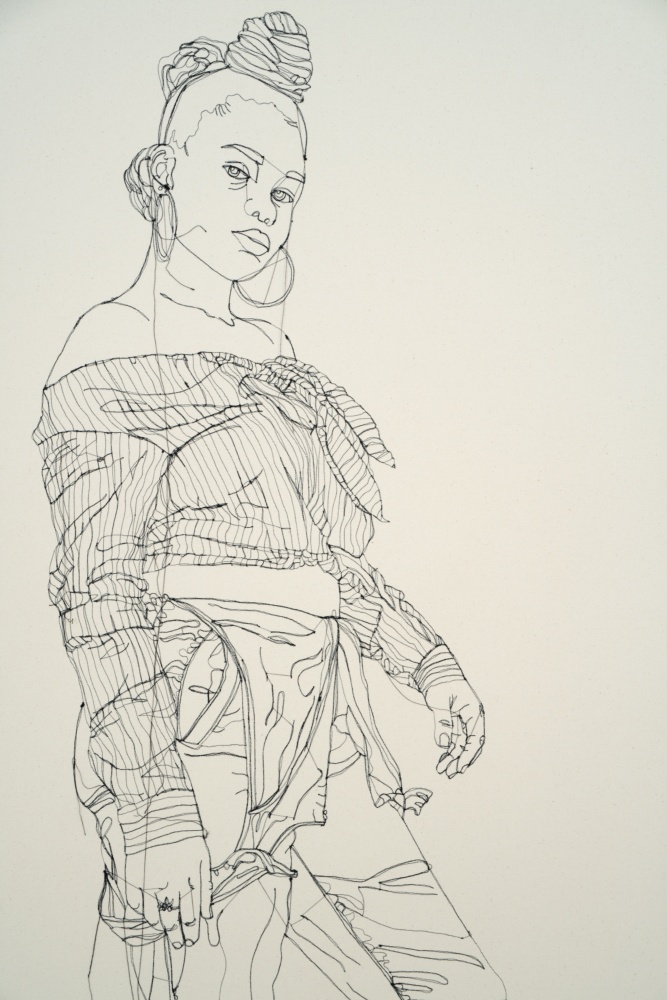
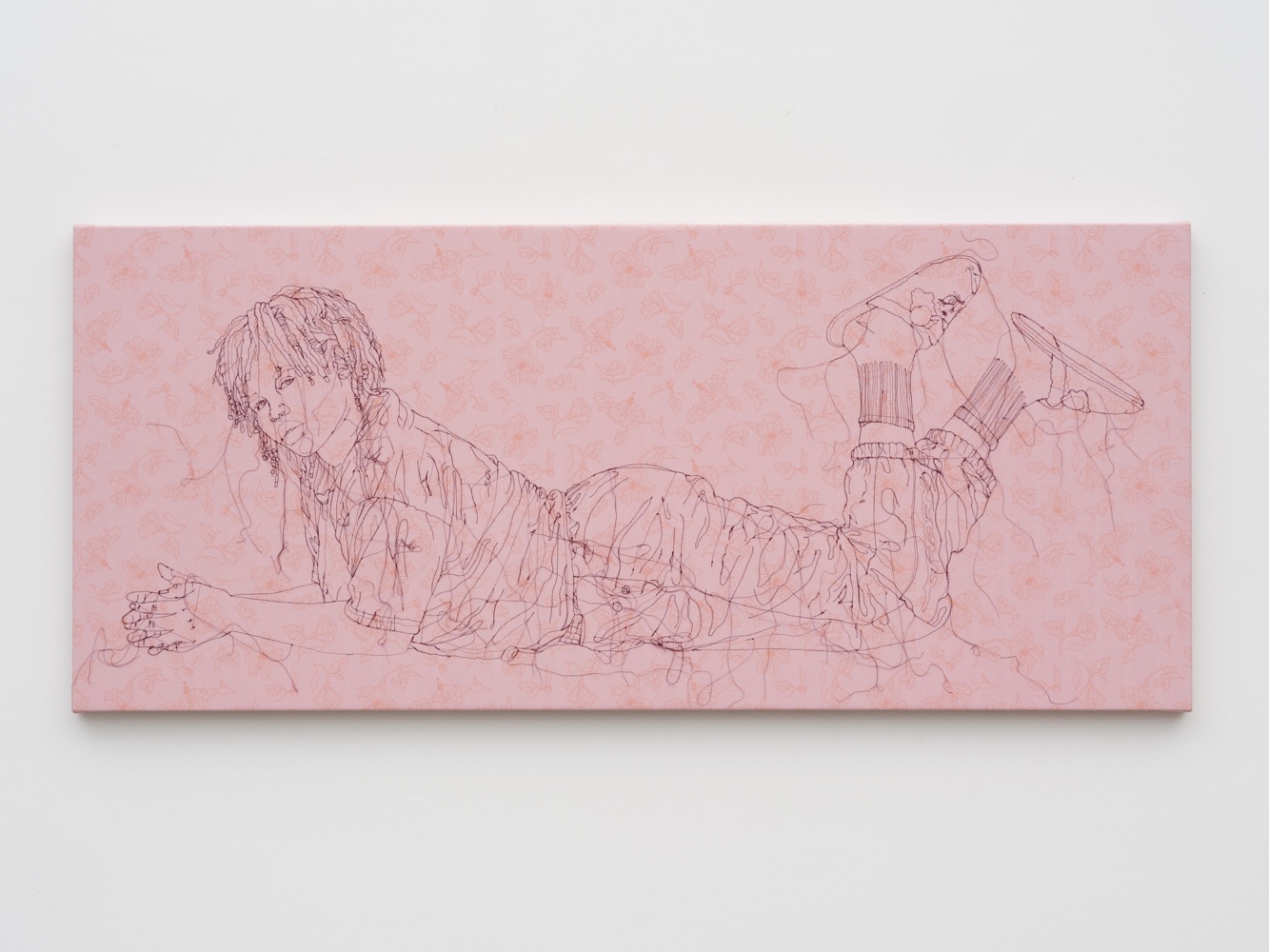
The resulting line drawings found in the portraits are airy and open, comprised mostly of negative space. Sitters are invited, not obligated, to be photographed by the artist for reference images for the final work. The resulting images remain private, to facilitate comfort, closeness, and free expression and engagement. Using thread as the choice material for this line-making evokes fragility, though her process and the weight of the canvas belie the weight of her labor. Hours of sewing and feeding heavy canvas and fabric through a machine comes, in some ways, from a Bahamian art history of effort as a way of denoting importance. It echoes the labor-intensive practices of other Bahamian artists, such as Maxwell Taylor’s painstakingly detailed woodcut prints of working-class Bahamians pre- and post-independence.
Citing bell hooks as her entryway into theory, sociology, and self-understanding, it is clear that the effort required to produce the work isn’t done with simply aesthetic in mind, but is all about love. It is a way of showing personal significance, using one’s body and time to honor the sitter or subject of the work—with an intentional focus on line and pattern rather than color. Instead of skin tone being used as a key representation of Blackness, the diversity of phenotypical features, choice of dress, and hair styling are centered for Swaby. The image denotes a kinship (without portraying Black womanhood as monolithic or reductive), paradoxically, by centering individuality within such an expansive global community.
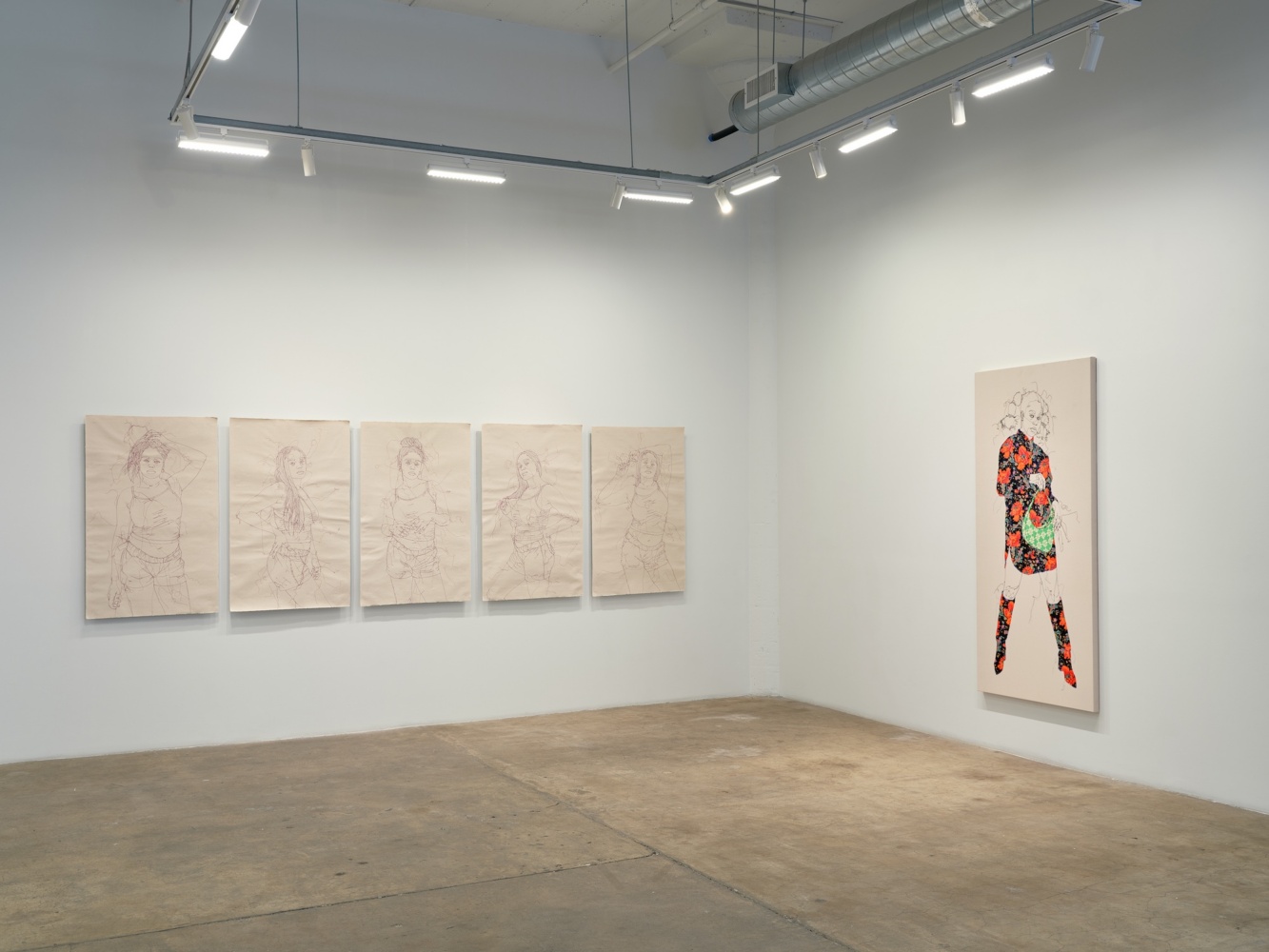
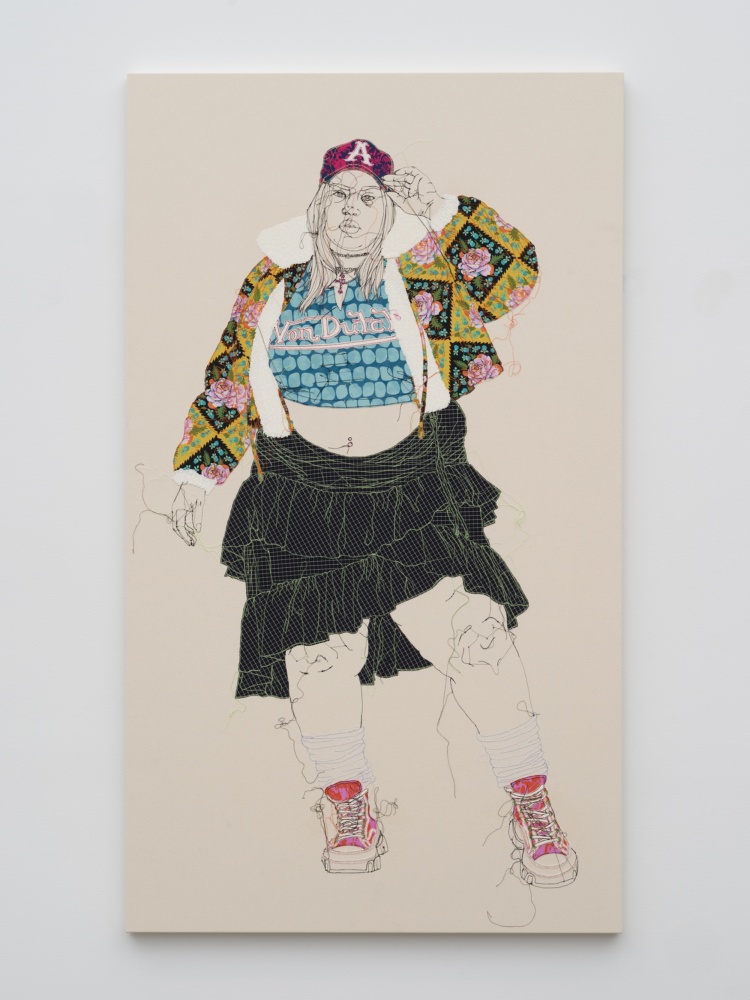
Exemplifying a sense of inter-connectedness is the inclusion of dialect in the titling of her work. Swaby makes use of Bahamian dialect and other West African linguistic retentions that persist in The Bahamas and Caribbean. She also extends this cultural expression into wider Black Atlantic cultural mores and commonalities amongst postcolonial and post-emancipation peoples. Highlighting one particular custom that has continued since British colonization of the region, the Pretty, Pretty series title makes use of the reduplication seen throughout the English-speaking Caribbean and other Commonwealth nations of the wider African diaspora, commonly seen in Jamaican patois and Bahamian dialect.[2] If the personal story of the individual can be one thread in the grand knit of life, then Swaby’s work aims to spin that thread in gold, cherishing the connection of the one with a greater collective.
Swaby’s practice is rooted in a distinct sense of place, but her place is sprawling. These figurative roots are rhizomatic mangroves of tenderness and sorority among Black women of the Atlantic. The wayward and unruly strands of thread in her figuration intentionally hang freely on her portraits: remaining connected, yet untethered to the rigid line of the sewn drawing itself, a line of flight. This gesture mimics the complicated sense of belonging that is often associated with living in diaspora: simultaneously roaming and rooted.
The portraits reveal a web of mannerisms, smiles, sayings, feelings, and experiences shared in the wider Black diaspora despite the vast diversity of origins and experiences that they all come from. Swaby’s uplifting, bold, “biggity,” portraits take up space and center joy as resistance to white supremacy, from and for Black women the world over.
[1] Shared in interview with the author April 24th, 2026.
[2] Rubino, Carl. “Chapter: Reduplication.” World Atlas of Language Structures (WALS) Online, 2024. https://wals.info/chapter/27.