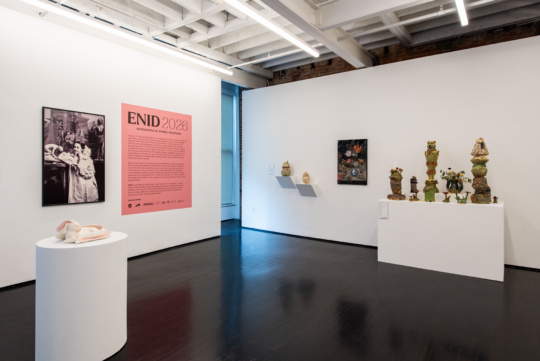
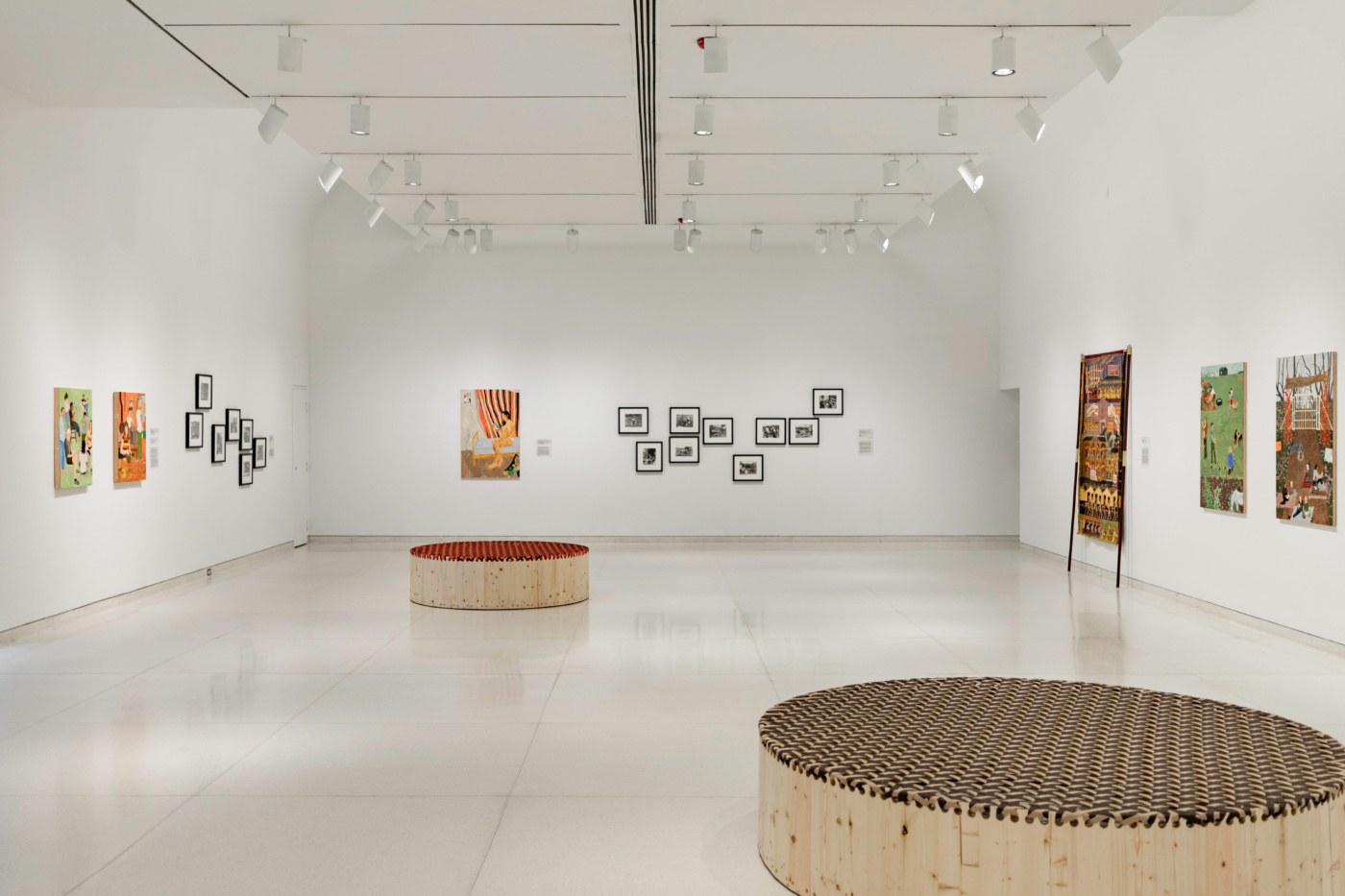
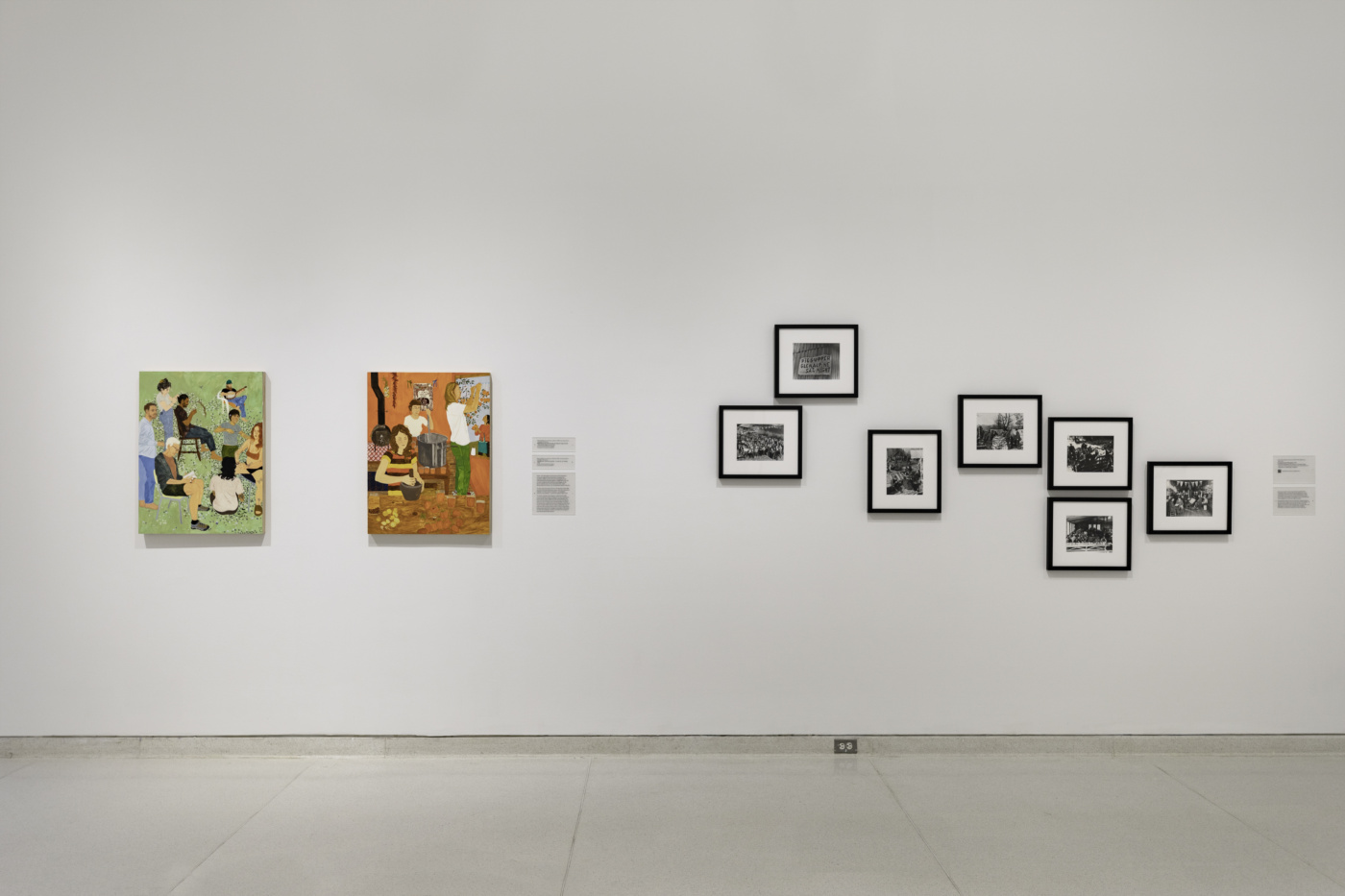
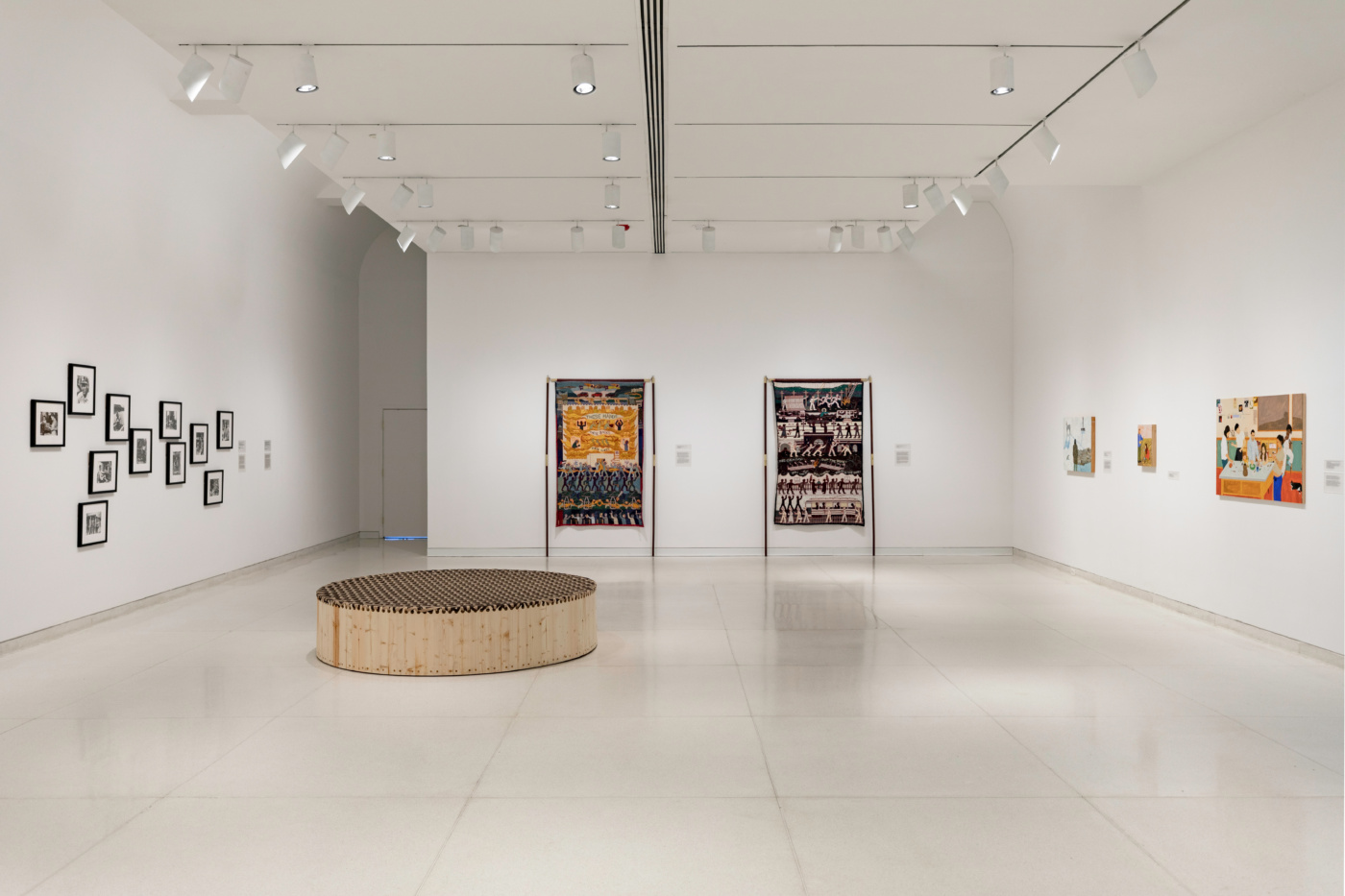
In The Body is a Drum, The Voice a Song, The Soul a Fire, the walls, floors, and auditory space pulse with visual and sonic records of movements, past and present. Featuring three artists whose work treads the line between art and activism, as well as archival audio from The Highlander Center, the exhibition engages pressing questions regarding resistance, liberation, and worldbuilding.[1]
Photographs by Lewis Hine ground the exhibition through asserting a visual legacy of workers’ conviviality in the South. Created during Hine’s time documenting Tennessee Valley Authority (TVA) projects and working class life in Eastern Tennessee, the images show laborers in the moments of collective care and sustenance that undergird workers’ struggles. In This Counter Restaurant is at CCC Camp, near Esco, Tennessee (1933), several uniform-clad men gather around a pile of wooden planks that have been arranged into a makeshift table. Individual soup pots cover the uneven surface of the table as the workers dig into a hot meal on a crisp autumn day. There is a dissonant sense of tranquility, despite the chaos TVA’s flooding of the land would bring in the years that followed.[2]
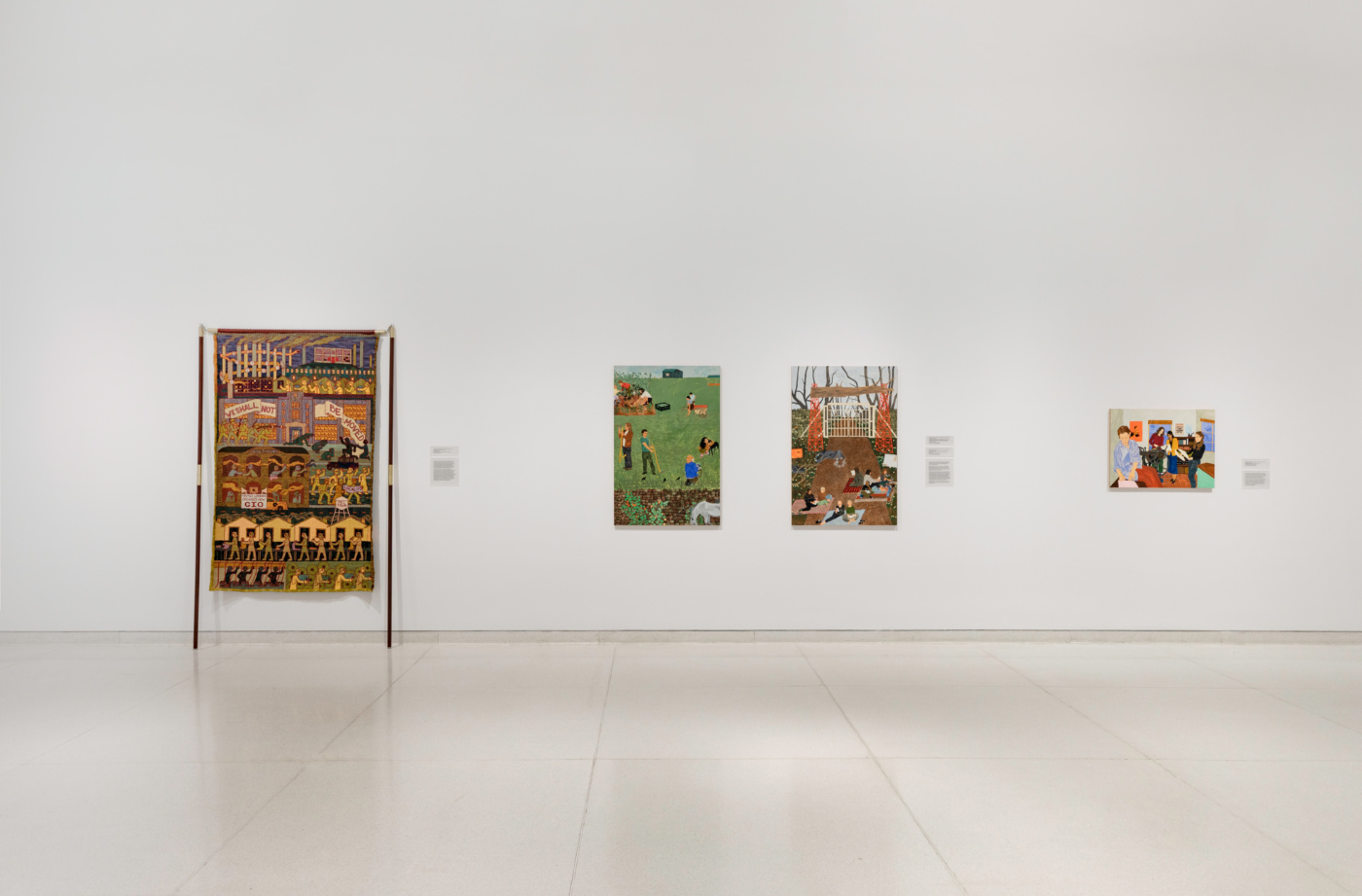
Tabitha Arnold’s punch needle embroidered textiles contain a resounding visual rhythm. They recognize existing labor histories–such as the Tennessee Volkswagen union struggle in These Hands (2024) and the Chattanooga streetcar strike of 1917 in I Walk (2025). In These Hands, an expansive bridge in Chattanooga is held up by the outstretched palms of workers as vehicles methodically travel across.[3] The piece lifts up the labor of collective organizing, intergenerational care, and skilled manufacturing performed by the Volkswagen workers in Chattanooga. A horn, a chant, and the clang of metal reach out to the viewer from the rich tapestry.
While viewing Dianna Settles’work, I feel a stirring mix of nostalgia and yearning in having danced myself between the worlds of organizing, creating, critical discourse, and community building through quotidian practices of care. I spent the most time with a self-portrait Settles created while pregnant titled Our work will be done when we can give these young ones a new world, a different world. I must be committed to the birth of that new world, which like every delivery will be painful and at the same time joyous (2025). In the painting, Settles sits on a blue striped mattress while reading Giorgio Agamben’s Creation and Anarchy: The Work of Art and the Religion of Capitalism, which problematizes the faith people invest in capitalism, and notes the liberation that comes alongside eschewing unnecessary things. Paired with the tattoos on her body, which center the labor of birth and parenting, the work considers what is brought into the world, as well as what is preserved.
As I move between works, I am affirmed that this is the vision of the South that I have come to know, tend to, and share with my own children. These striking works are oriented toward a future where the South can be understood as a longstanding stronghold of community care, reciprocity, and liberatory action.
[1] The Highlander Research and Education Center (originally the Highlander Folk School) is a legendary southern organizing hub in Tennessee founded in the early 20th century. It has been a key node in labor, civil rights, and social justice organizing since its founding and maintains an impressive archive documenting movement history–despite some materials being lost to arson in 2019. “The Highlander Movement School,” accessed February 25, 2026, https://beta.highlandercenter.org.
[2] Michael J. McDonald and John Muldowny, TVA and the Dispossessed: The Resettlement of Population in the Norris Dam Area (University of Tennessee Press, 1982).
[3] The bridge recalls imagery from both the iconic Walnut Street Bridge in Chattanooga, and the Francis Scott Key Bridge in Baltimore, which collapsed shortly before Volkswagen workers voted to join the UAW. https://www.npr.org/2024/03/30/1241539966/baltimore-port-workers-unemployed-key-bridge-collapse