The art and cultural production of Haiti traces a wide scope, from the intuitive and vernacular art practices they are renowned for like that of Frantz Zéphirin, or vodou drapeau artists like Myrlande Constant. There is also a deep critical engagement with the globalized contemporary: evidenced in part by the presence of the Ghetto Biennial, but also work from prominent artists like Edouard Duval Carrié, Manuel Mathieu, Tessa Mars, and my guest for this interview, M. Florine Démosthène.
Born in the US and raised between Port-au-Prince and New York, Démosthène is also firmly rooted in African diasporic context, having spent significant time living and working in Ghana, which was formative to her work. Her collage and sculptural practice demonstrate a syncretisation and mixing of waves of colonial activity and indigenous practices, wrapped up in self-determination—a mirror to shared Caribbean experiences in the contemporary.
This interview was edited for length and clarity.
Natalie Willis Whylly: When we first spoke, you mentioned the history of sugar chests as a new area of research within your practice, working toward a new body of sculptural work. Is there anything in particular that’s stayed with you since your investigations into this legacy of sugar, slavery, and colonial power?
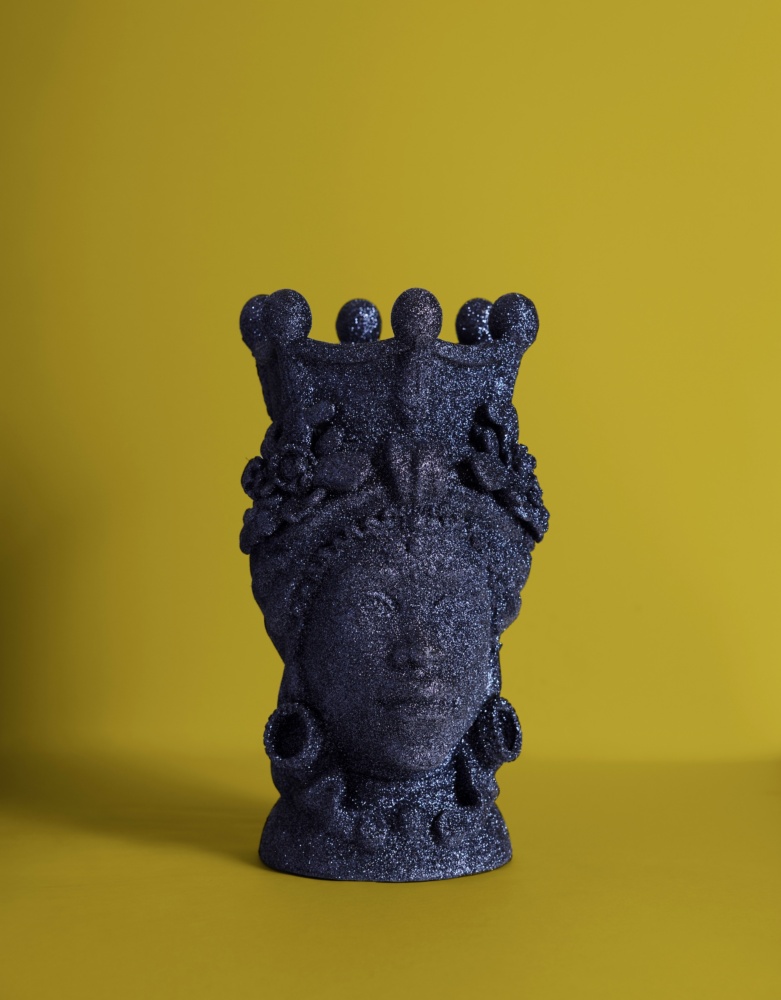
M. Florine Démosthène: What’s become really interesting is something else that I was looking into at the same time as the sugar chests—work around Blackamoor furniture and jewelry. Sometimes you’ll see these tables at an auction, with a romanticised figure of a Black man or woman, maybe holding up the top of the table. I was thinking, what’s the history behind that? I realised that, for my very preliminary investigation, it highlighted that I was more interested in the creation of furniture in this context. Through this, I now realise this is probably the course of study I actually want to delve into: really looking at the decorative arts and how the Black body was used throughout it.
NWW: Does your sculptural practice take up a different space for you mentally or creatively than your wall-based work?
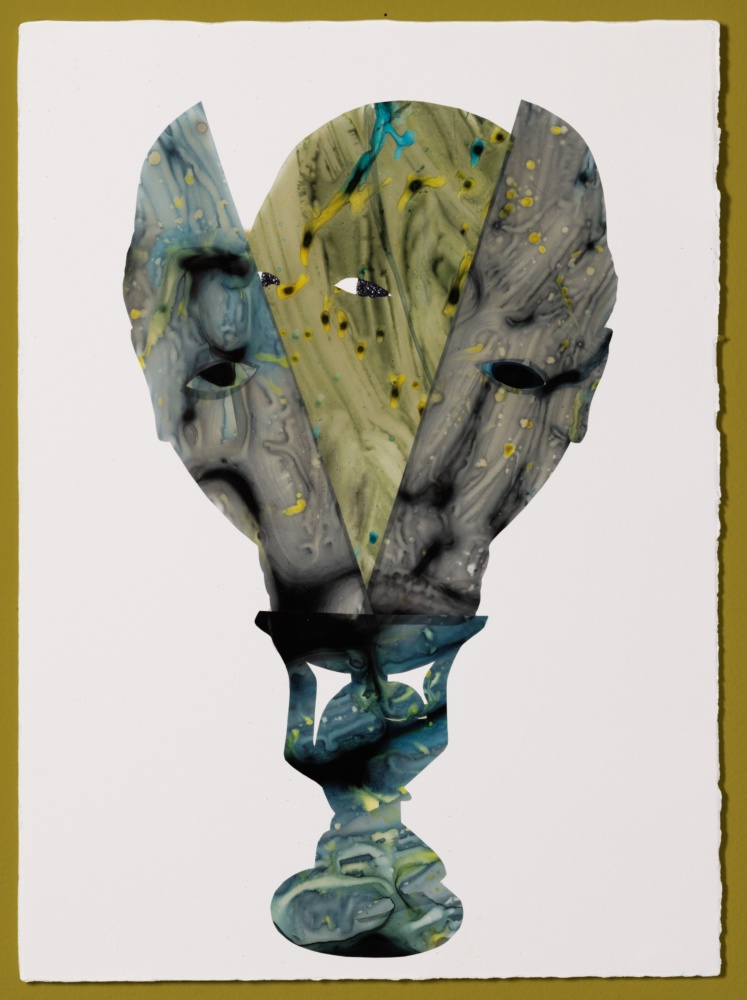
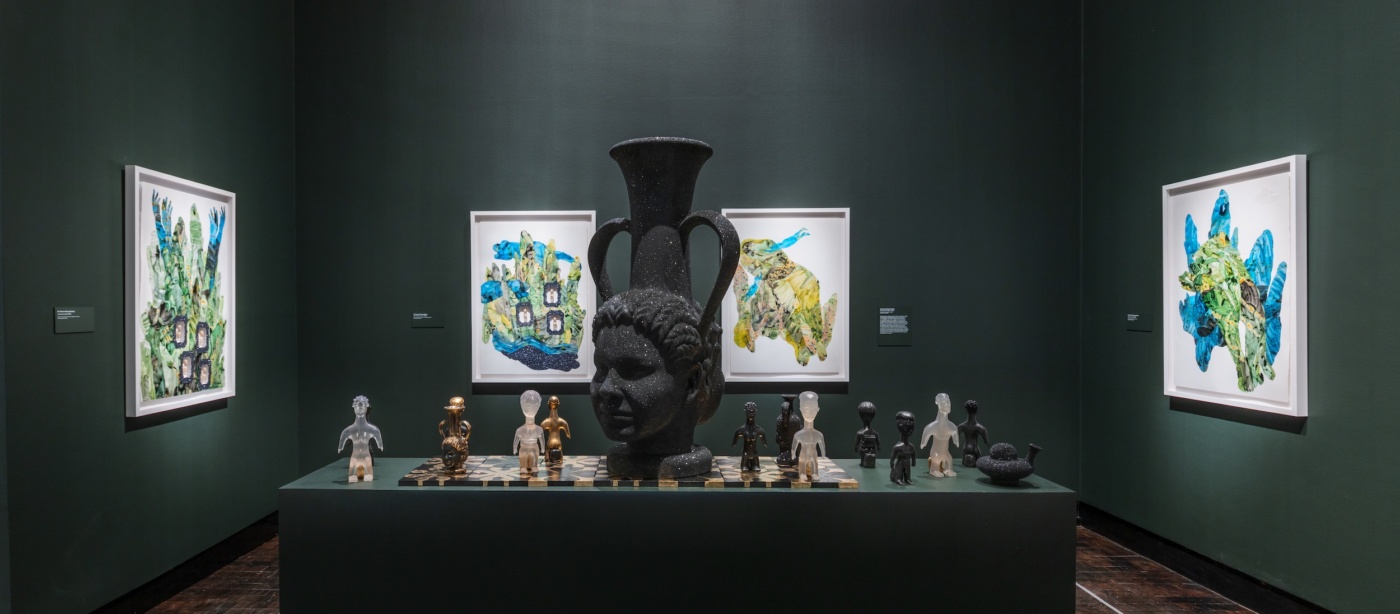
MFD: Oh yeah absolutely. It’s a completely different way of working. The sculptures reference objects that hold spiritual meaning, with stories that are not necessarily known. Almost all of the objects I’ve created, they’re kind of morphed from objects I found either at the British Museum or the Metropolitan Museum, those are the two main museum archives I’m using.
I’m trying to investigate how you take an object and empower it?
What I found interesting—and this goes back to when I was living in Ghana—was how much of what we know of African art is from objects stolen out of the shrine. In a way, when Africa was pillaged, its spirituality was pillaged as well. Not just through the influx of Christianity and Islam, but also just through the act of removing these objects. And to now see how Europeans covet these objects… They were looked at in a very formalised way that has really nothing to do with the object’s original purpose itself.
NWW: What’s one critical query or question that acts as an engine for your work?
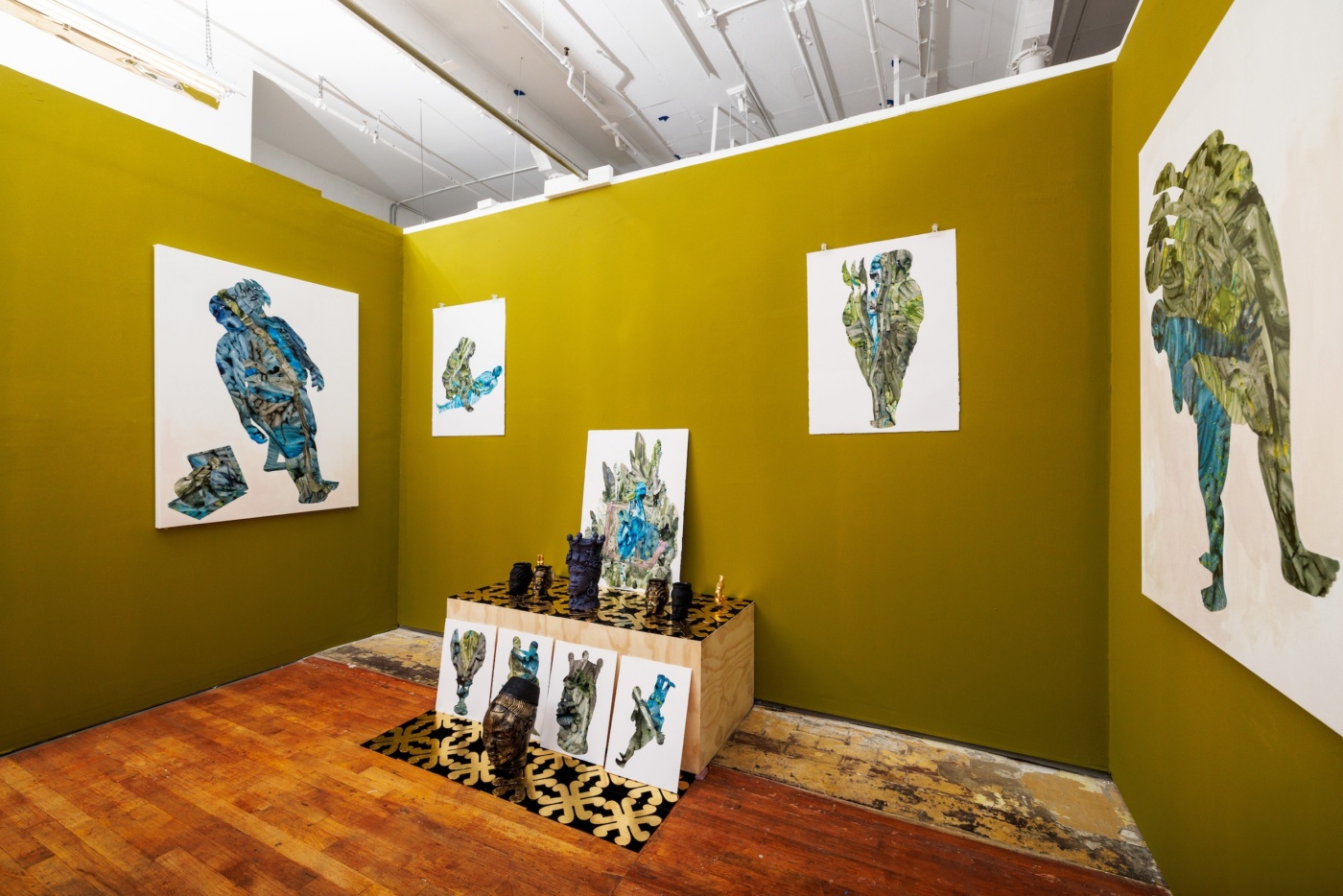
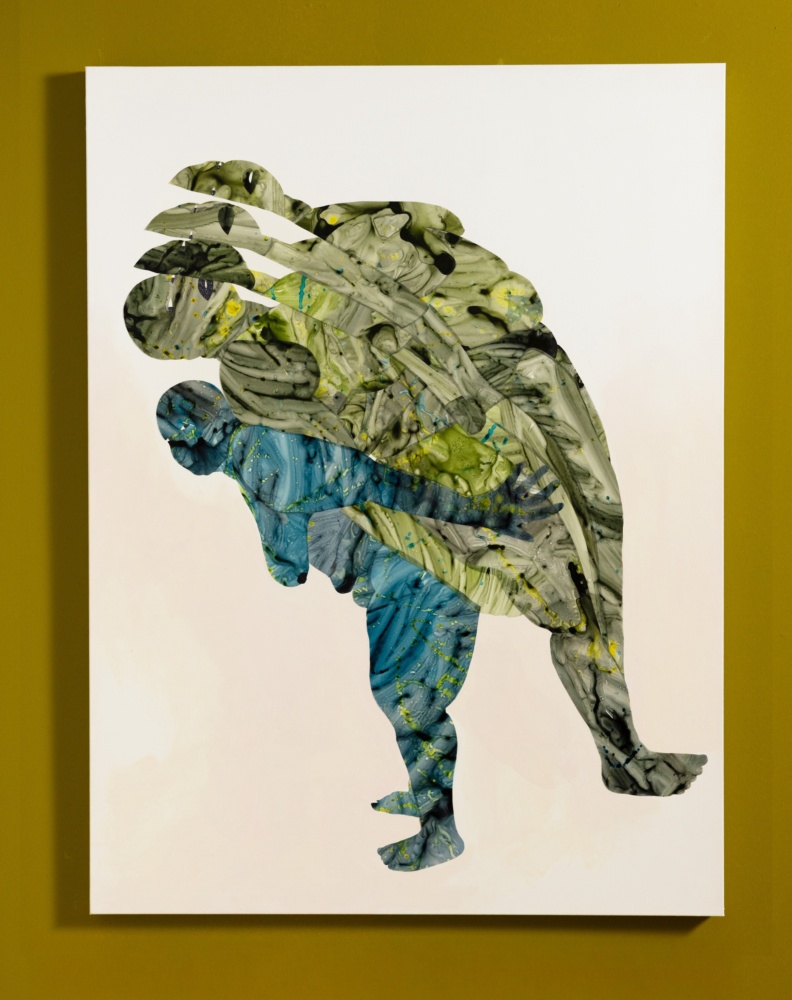
MFD: I think now… it’s almost a difficult question to answer, because I am in transition toward something else. At this present moment what I’m interested in is how our languages and spiritual systems come into play with technology. I like to go back and look at things, reconsider, and re-evaluate them in a different way. My previous works on paper were really looking at how spirituality transmutes through a physical form like the body. I’ve been working on that idea since about 2009/10.
So now, one of the things I’ve been looking at is how we [African people] were depicted in antiquity. We have hundreds and hundreds of years of Europeans depicting us. But, for whatever reason, we are left out of art history, out of archaeology, out of so many things. In my research what I found really interesting was how our image was used in ritualistic vessels, and how we mapped out this idea of spirituality. I use the term spirituality really loosely here, they’re more like systems.
NWW: How has the distance from home shaped your perspective on your work and the themes you explore?
MFD: It was vital, to really allowing me to create the work that I do, and figuring out what I want it to do without the burden of the US—in a way without the burden of racism, classism, slavery. That was probably the most important thing for me living abroad, was that ability to unburden myself from the histories, particularly the history of the US, and to just be an artist, to not necessarily have to carry the weight of what it means to be a Black artist. A lot of that has to do with that experience, in realising the levels of manipulation that we exist in. We’re not really able to truly be ourselves as human beings as Black people living on this earth.
NWW: Conversely, how have you experienced others reading your work?
MFD: I’ll talk about what the real turning point for me, with my work at a show at Gallery 1957 in Ghana back in 2018. I wasn’t nervous that Ghanaians wouldn’t understand the work, but my dealer was! The gallerist was super nervous, because I guess the works they’d been seeing were very, almost illustrative? They’d center things from the everyday: market scenes, people using or breaking down utilitarian objects, things like that. So here am I, by contrast, showing the female body in a way where it’s obviously nude and obviously me. I wasn’t necessarily nervous, I was curious. I basically took everything that I could do, and brought it all together within this show. The response was overwhelming. There were a group of young girls from a local high school who came through, with their art teacher walking them through the show. I happened to be there trying to get some things done, just listening to them talk, and they completely understood what the work was about. So as a diaspora artist, yes absolutely.
NWW: And as a Caribbean artist?
MFD: As a Haitian artist, yes and no. Because I think with Haiti’s canon, people still expect that the work should be about this naive or intuitive style of painting, or about particular Vodou deities. It’s either that, or going all the way to like Basquiat, which is completely different. So there’s still very much a stereotype about Haitian art, but I’m happy it’s changing. It’s very much influenced by the United States and Latin America, very much influenced by Europe and Africa. We’re a really interesting mélange, and I think people are starting to get a sense of that in the diverse work coming out of the Caribbean.