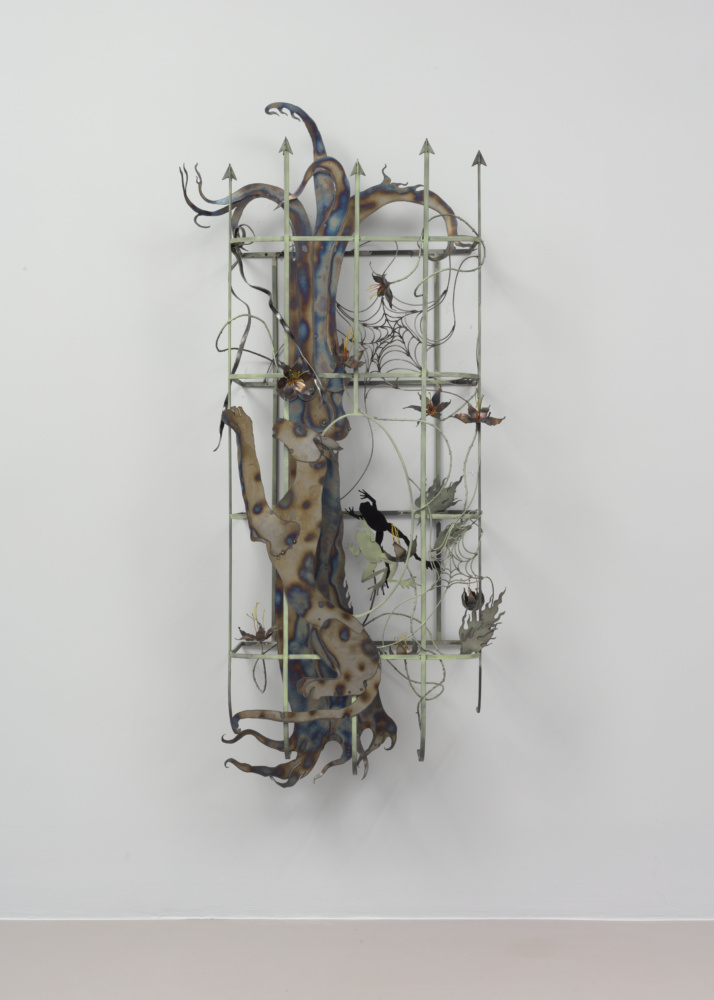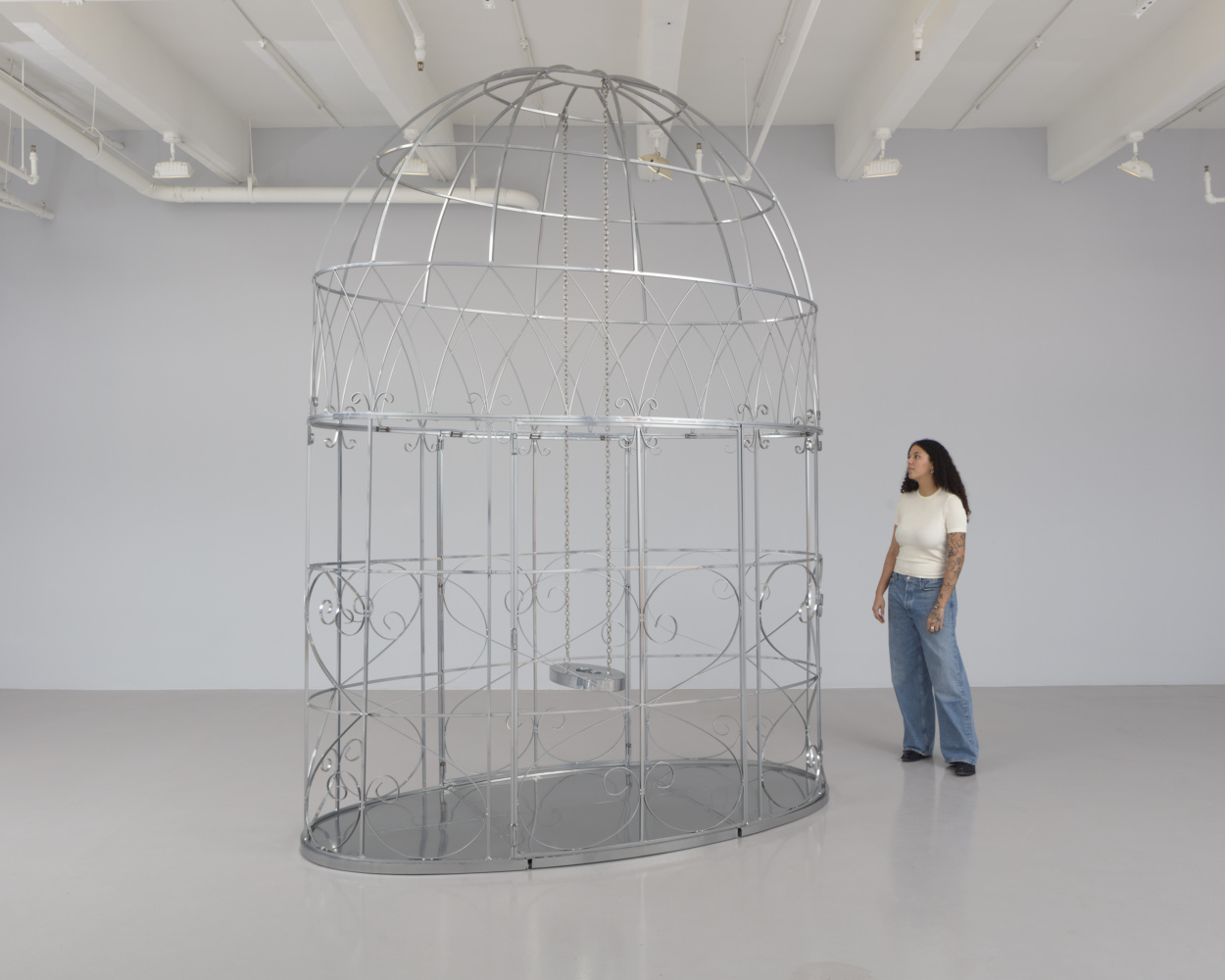
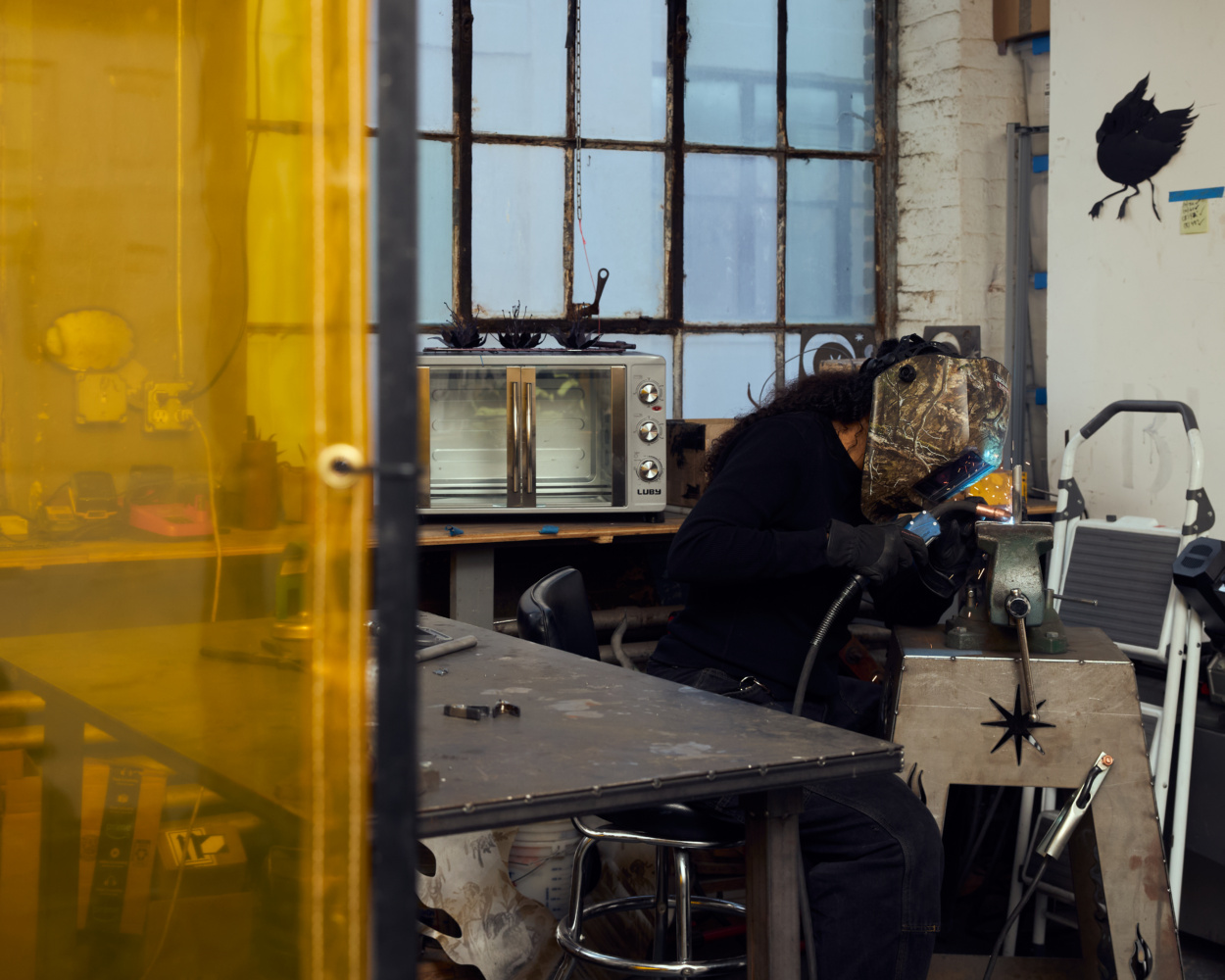
Raised between North Florida and Cap Haitien, Haiti, Abigail is a sculptor, writer and educator who arrived at welding through printmaking. In 2026 alone their solo exhibitions include Molt at the Center for Arts at Virginia Tech in Blacksburg, VA, Wrought at Nicola Vassell Gallery in New York, and opening this summer at the Art Institute of Chicago, Blood of the Earth. Throughout the interview we discuss language, ongoing motifs of enclosure and liminal space throughout their work and eventually, as a surprise to both of us, the stakes and prevailing lessons to be learned from Sailor Moon.
This interview was edited for length and clarity.
Justin Chance: So you have a show in Virginia?
Abigail Lucien: Yeah, Virginia is a solo exhibition at the Center for the Arts at Virginia Tech. There are two galleries within Virginia Tech Center and the other solo show that’s happening is by Didier William. There’s like a large poem that’s sponged with hibiscus dye onto the wall that will take up all of the gallery wall space, and then in the center is a collection of ten to twelve cast iron and hibiscus works that are sort of like floating in the space.
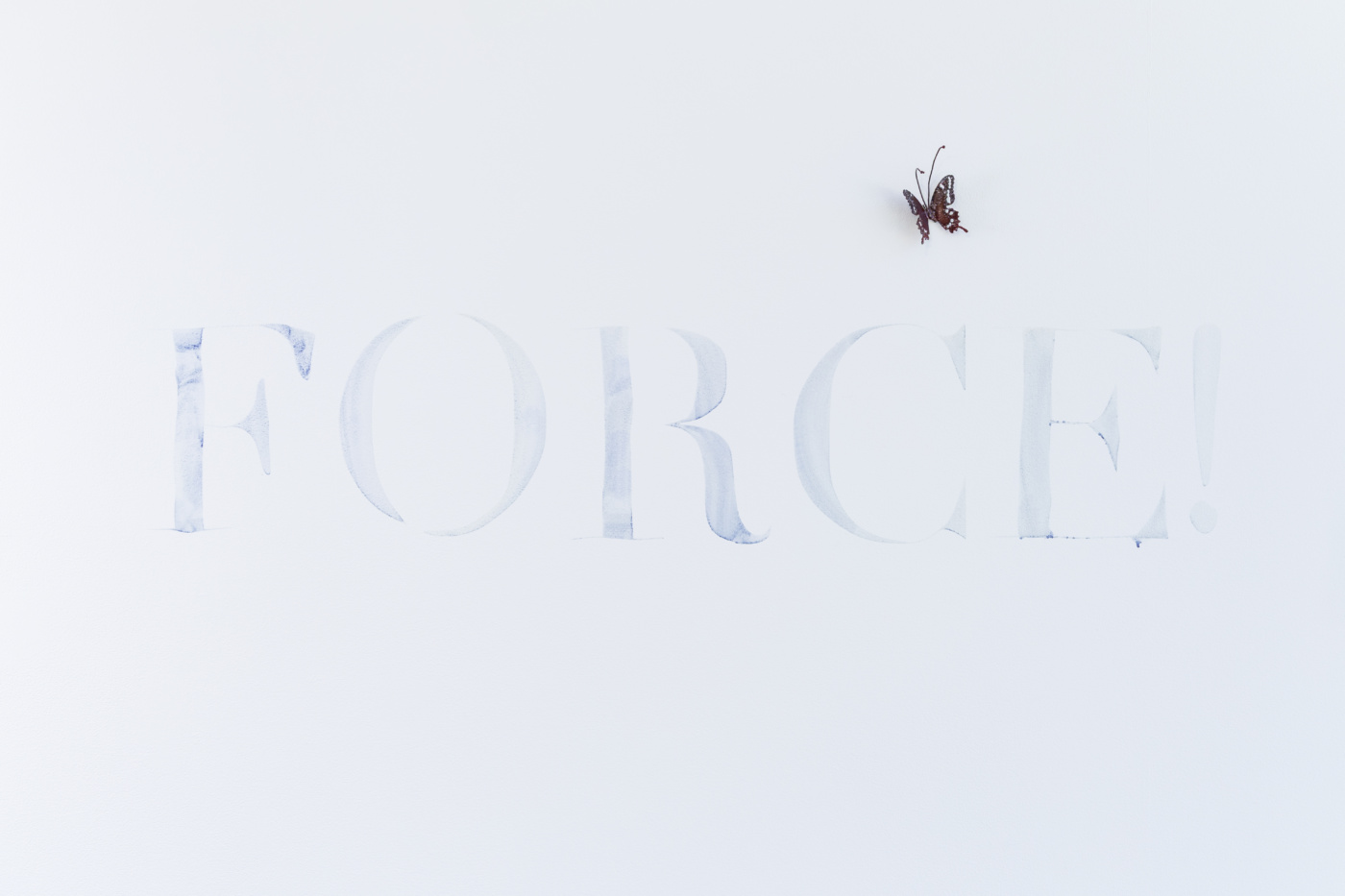
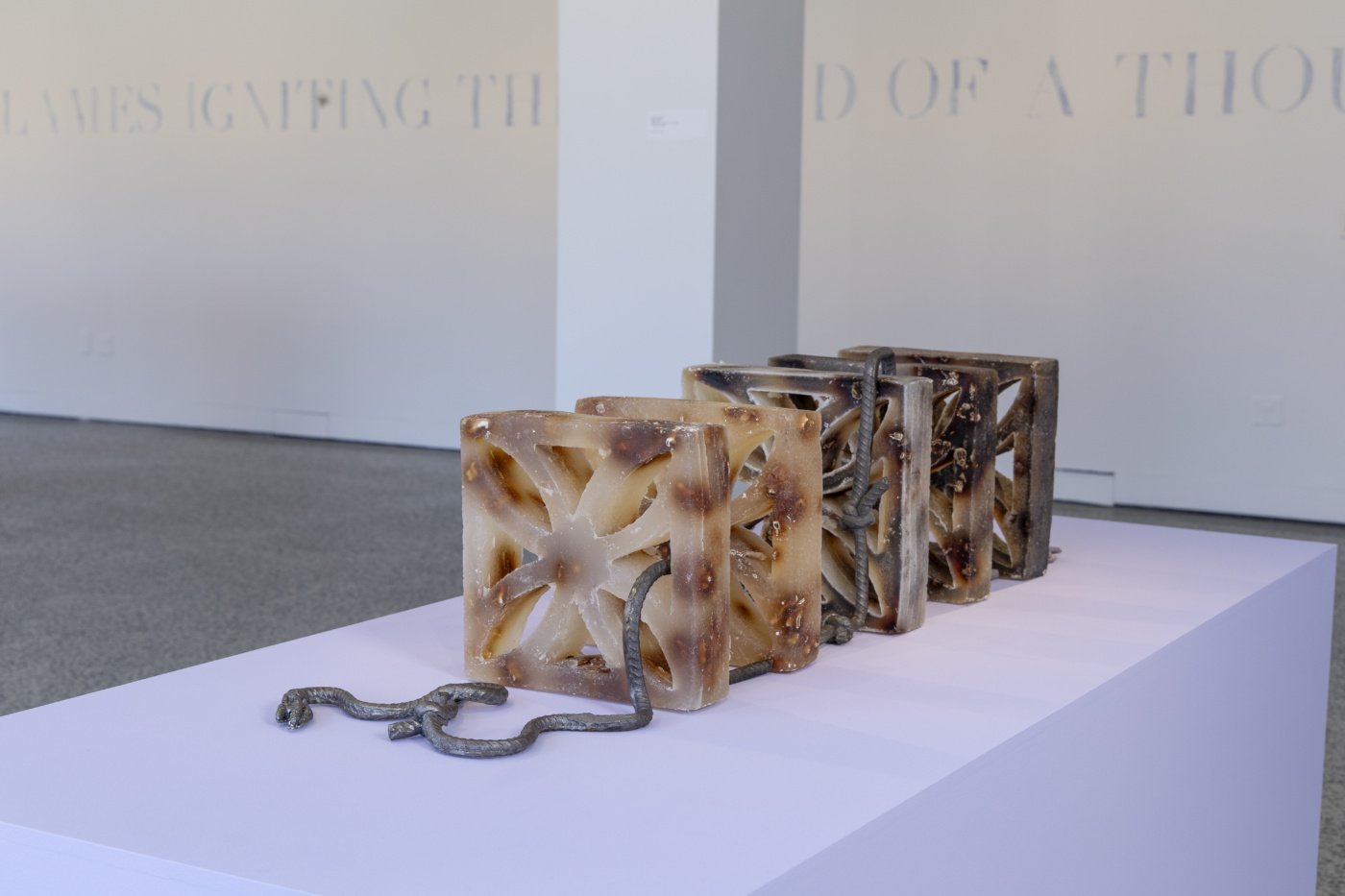
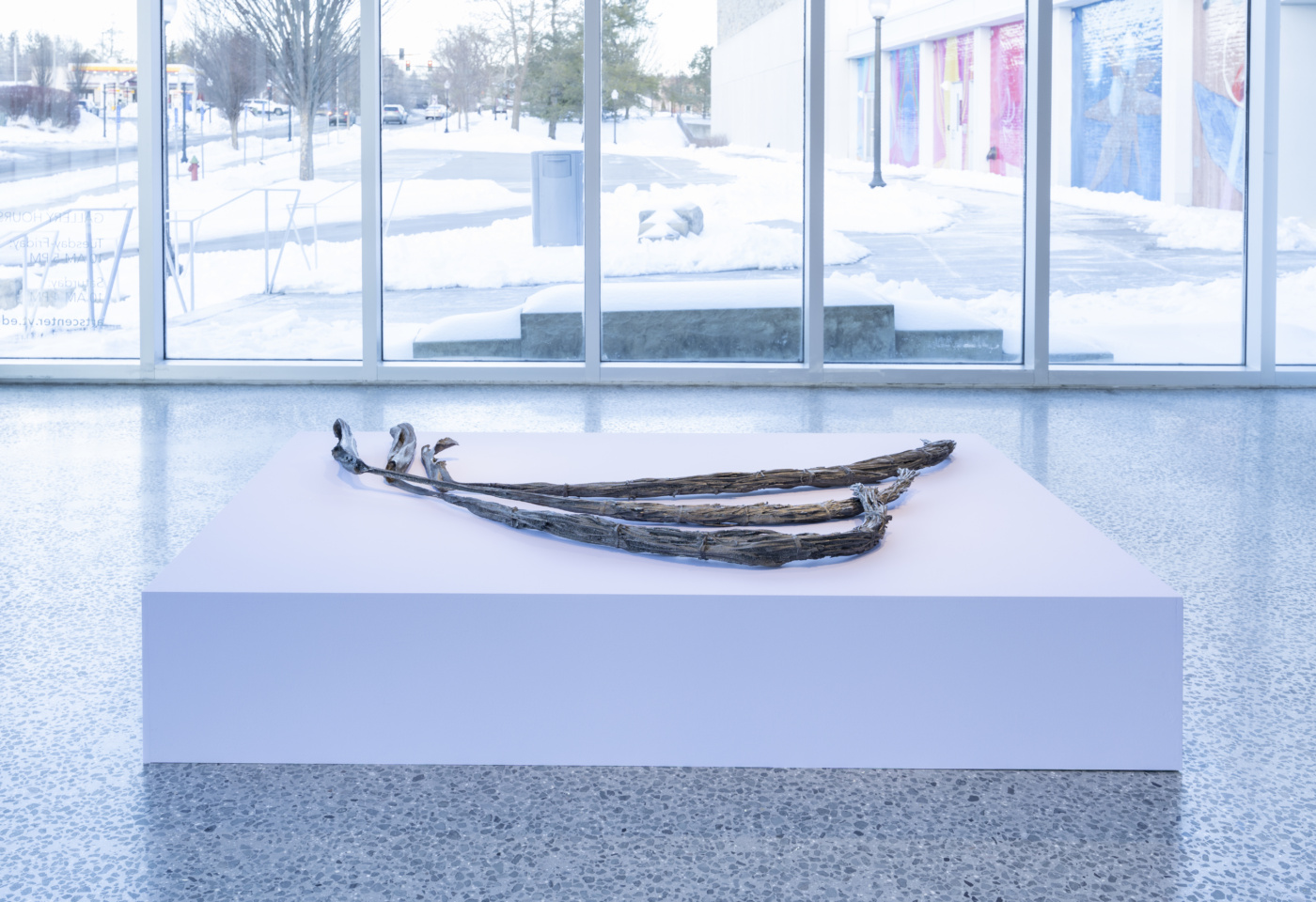
Throughout the exhibition there’s a play in permanence and impermanence, so casting things that might necessarily wilt or something that might go bad or decay is now kind of made immortal in this material, so there are bronze starfruit, there are palm fronds that are sort of wrapped from being shipped from South Florida to where I cast them in Virginia, and then there’s also rebar that has been cast a few different times to make it really fluid with chicken feet that are attached, and then the new things will be these woven bags that I’ve been casting. They are a normal sort of sachet bag that you would get in Haiti. These bags are kind of everywhere, and they’re all handmade and beautiful and when you cast them you’re able to keep this texture.
JC: How are they getting installed?
AL: I think in a few different ways. So there’s this open one where the center or rather, the inside is flocked with a dark fiber, so that when you look inside of it, it expands and has this kind of darkness. And then some will be painted with images. I’ve been thinking again about the language and signage of “bank borlettes” and “tap taps”, lottery stands and taxis in Haiti with names like, Bon Samaritan Rick Ross. I haven’t really been messing with the “Bank Borlettes” language and culture for a while.
JC: Interesting, these are getting painted? How?
AL: I’m using a vinyl stencil and then doing an airbrush with urethane and acrylic. I prime the whole surface after I buff them, sealing them so that it prevents rust and that acts as a really great primer. I have a lot of love for surface treatments and this kind of slows down the process in a certain way.
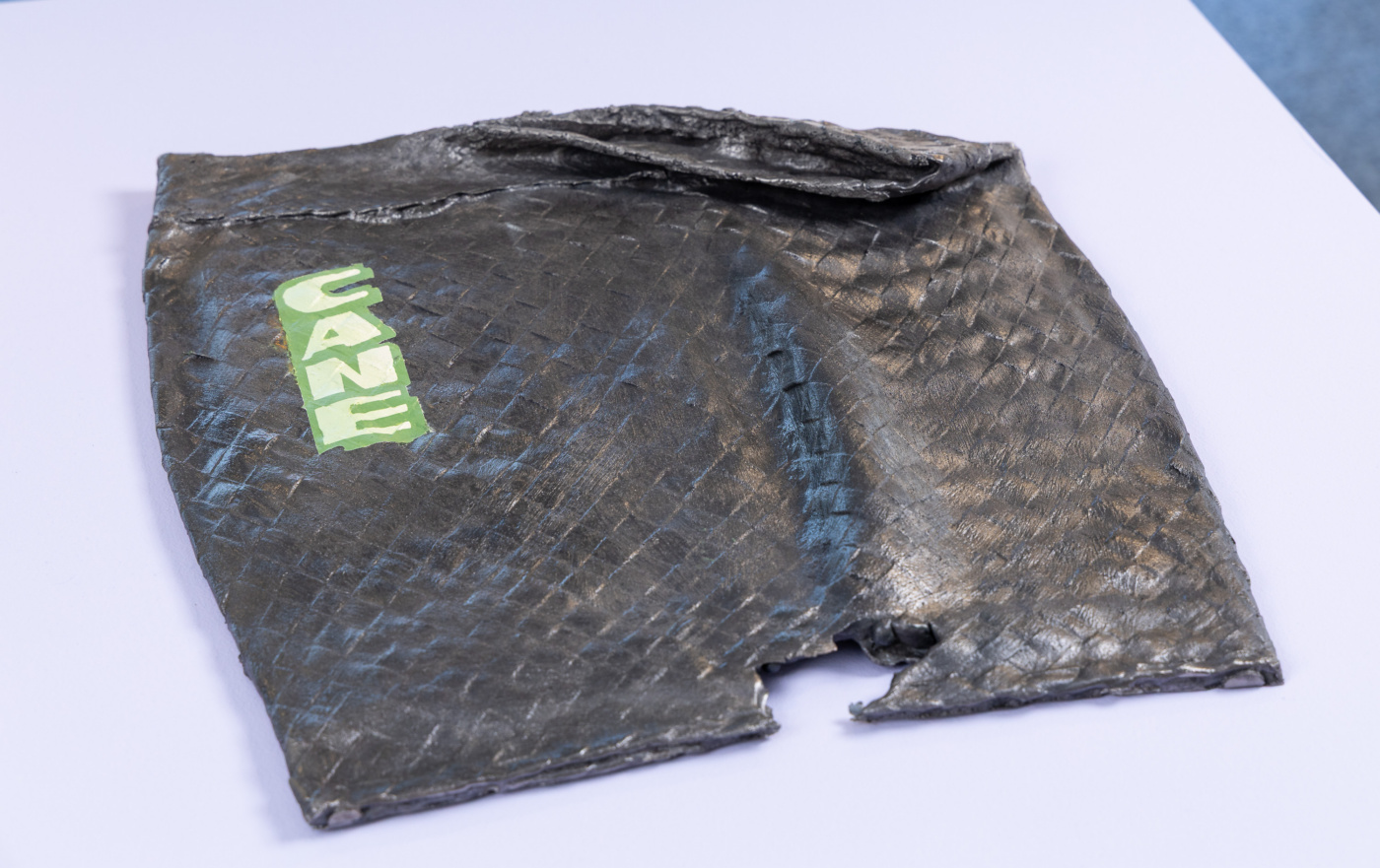
I’m also interested in how I can distort a sort of signage or language. I’m also excited about how the open bags could expand something. Expansion is a pretty large theme with these upcoming shows. Something that’s kind of been threading things a little is the Ursula K. Le Guin “Carrier Bag Theory of Fiction”.
JC: The Carrier Bag Theory of Fiction?
AL: Carrier bag, which is redefining what it means to think about how society shares history—thinking about history as storytelling. The shape of that storytelling being a bag or a sack, like something that can hold and be a container or something. She talks about this in relationship to this first idea of the hunter-gatherer and [questions:] What is the substance that’s actually keeping people together? And that it actually might be gossip.
"I go back and then get dizzy and then go back to something and think that I'm never going to make something like that ever again. I actually think that that spiral is very similar to the pattern of history."
JC: This is disappointing because I thought I came to that conclusion by myself today in your studio. Language is a vessel for meaning, those bags are literally vessels for carrying things. I wrote in my notes “vessel on vessel” and felt proud.
AL: And it’s a quick read. It’s really beautiful. I tend to read it with my grad students too. I’m always kind of slipping them things that I want to read also. I think it’s a really nice way of thinking about how we share history and how we keep passing down a sense of knowledge together.
Which I think is also sort of harping to some of Sylvia Wynter’s ideas of a non-topological sense of breaking down colonialism. It’s like that space is actually non-linear, right? It’s not about colonization and then emancipation. It’s actually so much more complicated than that and I love how Sylvia talks about it. It’s a kind of radical way of considering decolonization as actually a sort of merging and sharing stories. And so I think that kind of brings me back to the vessel again. Something that can hold something.
JC: So, two things: one is a question about enclosures and the other is about color. How do you think about those things together? Or better yet, when does color happen in the process? You’ve always been very strategic about color.
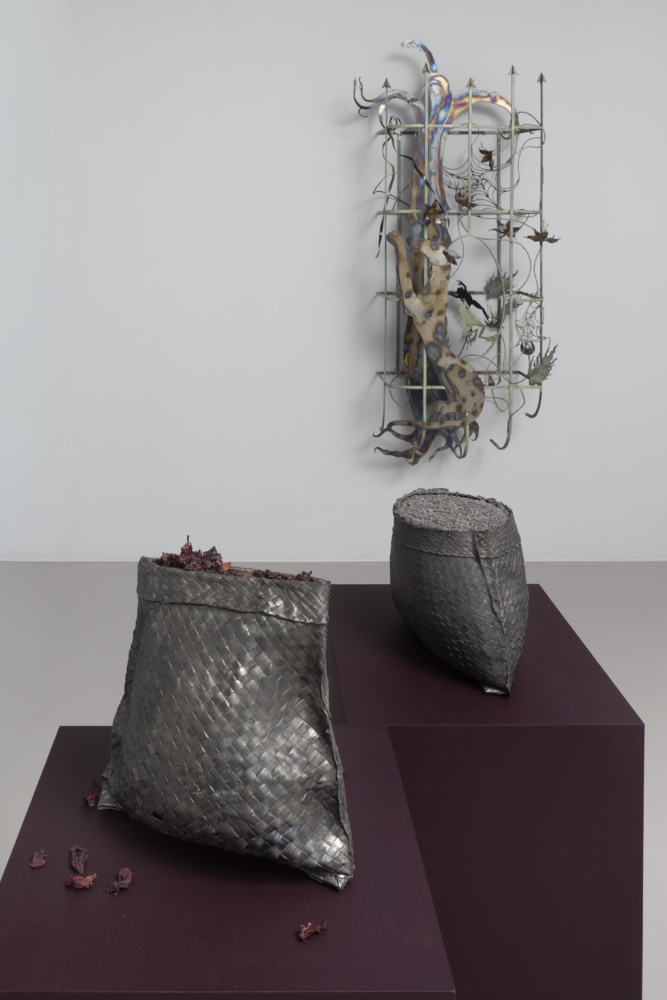
AL: I think color has this way of being able to change and balance the perception of an object. l remember when I was first asked questions about color. I was like, ‘What are you talking about?’ I felt like it was such a natural thing, I think because of the local color traditions of the places where I was raised. In the South Florida/Daytona Beach area, there are just these washed out 1980s colors that have been affected by the salt and the sand. And then in Haiti there’s also these lines. There tends to be a line that comes in the work that I really think about as a watermark or a horizon. Like some sort of liminal moment again that can separate things. But I’m also really interested in how it can change the way we think about gravity or space in an architectural way. So I think that is how I think about color in relation to enclosure.
JC: Another question I’ve been meaning to ask, What’s the deal with the bows?
AL: Right? That’s a very good question. I was watching Sailor Moon with someone who has never really watched it, even though it’s been a deep thing for me since childhood and watching it with them, they just looked at me and were like, “Oh, I get it…”
JC: I guess when you put it that way, I get it too. In Sailor Moon, particularly when they’re transforming, there’s a lot of ribbon all over the place. Sometimes the bows are flailing all over the place. Sometimes they’re wrapped around things. There’s kind of an animacy to them.
AL: Yeah, definitely and there’s about to be a lot of bows up in here.
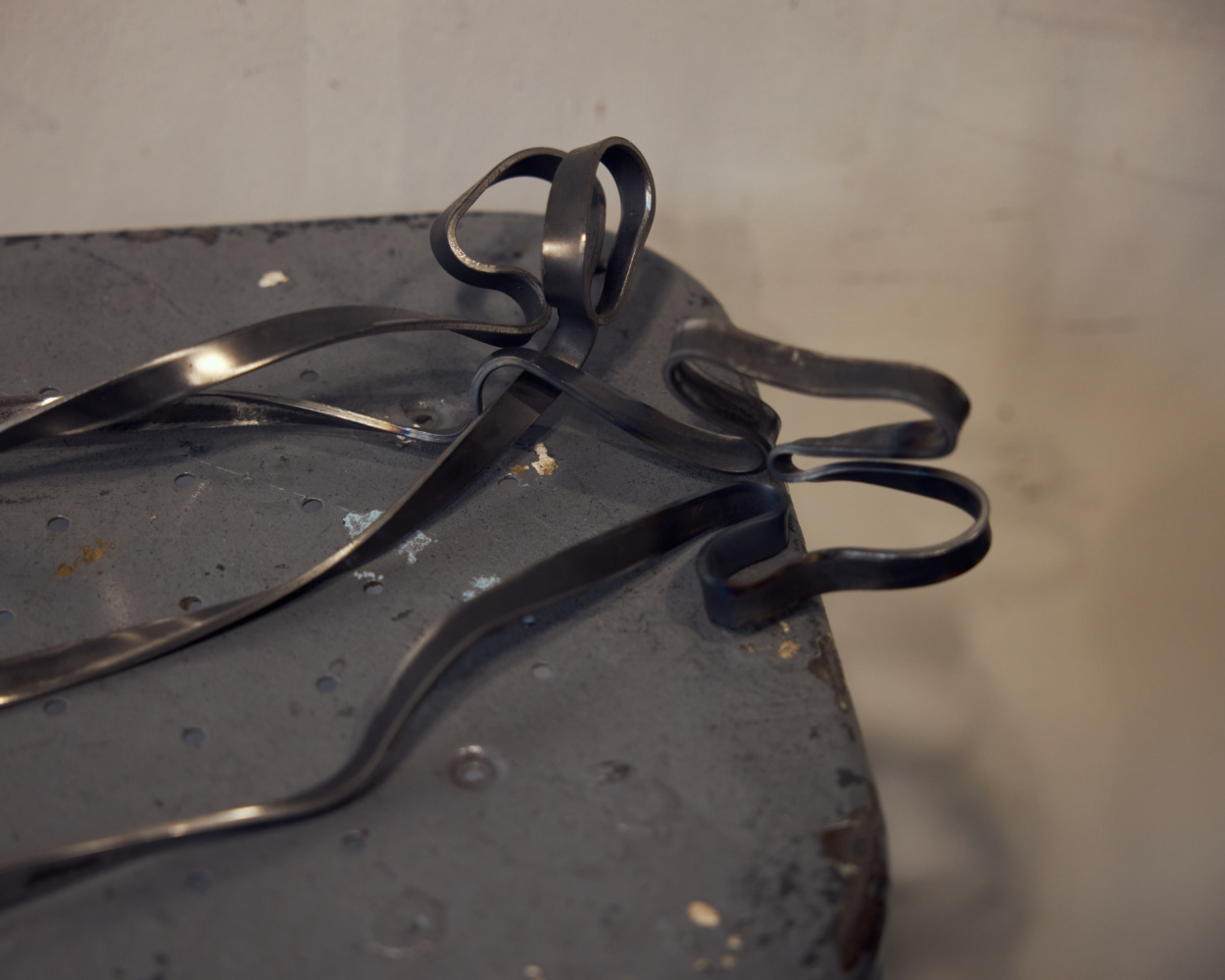
JC: What’s interesting about them, though, is that whereas the fences and cages, and now the bags all have a history of functionality to them, bows are technically mostly ornamental. They’re just mostly decorative.
AL: Yeah exactly, “put a bow on it”.
JC: Yeah so it’s been interesting to see them become a constant motif of the work.
AL: Yeah, I don’t think I expected that when they first showed up, I’ll say that. I do think that I’m also kind of constantly surprised about how high-femme things can get in here. And I don’t realize it at all. I was covered in glitter two days ago after powder coating, I didn’t see that coming. And it feels so… for me, they’re like… making them is the closest thing I have to drawing in space.
At this point, I’m way better at drawing in steel than anything else. It’s easier for me to think like that. And so there’s something about the process of doing them that is just fun and really freeing in ways. It’s fun to be like, “Oh, shit, that’s going there and this is going here.” There is something about them then in their shift in steel while also gathering this kind of animacy of becoming more than just decorative, but actually embedded with a kind of potential violence. They can be harmful, or they can cut or become these protective things when they’re in steel.
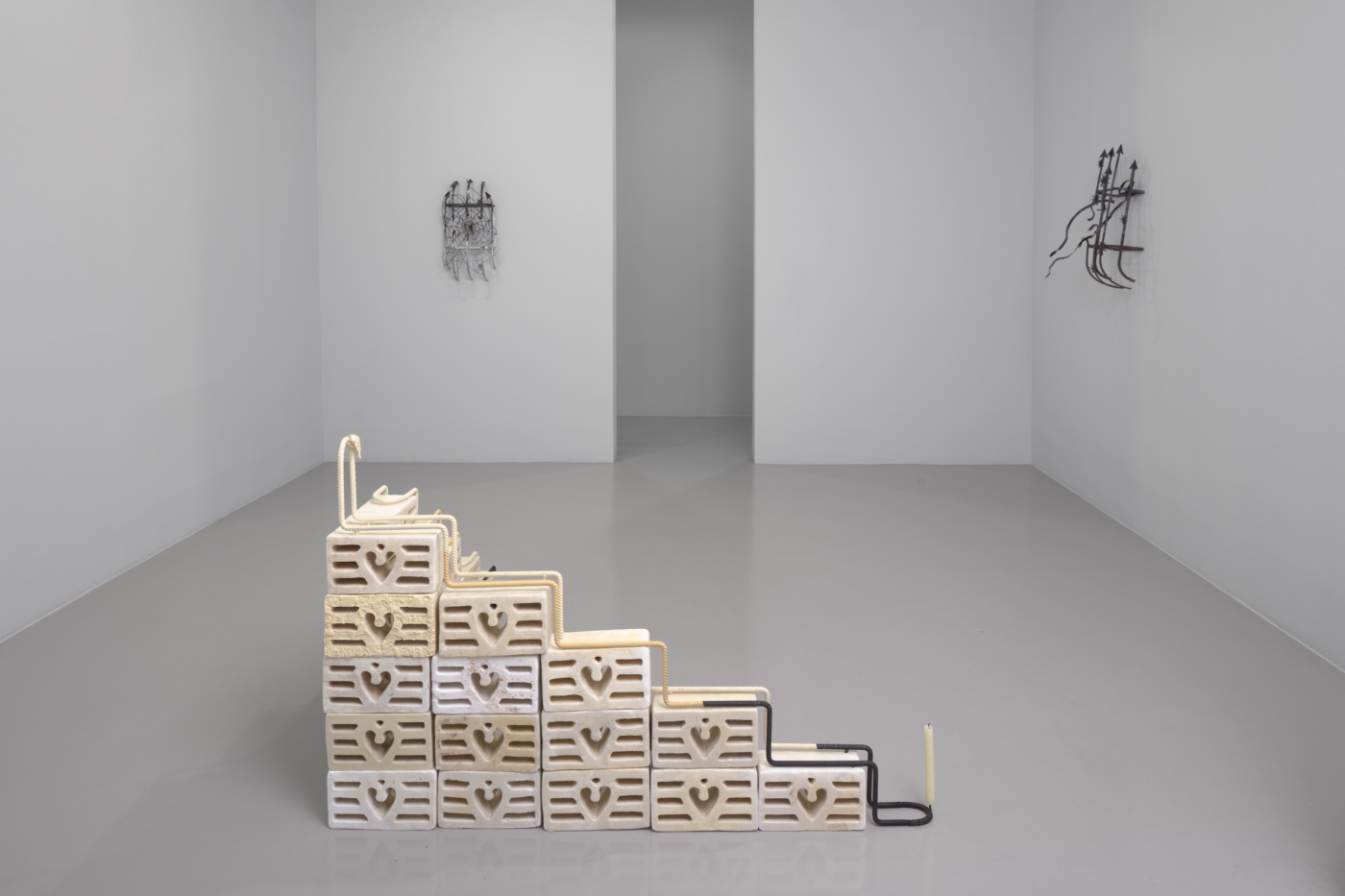
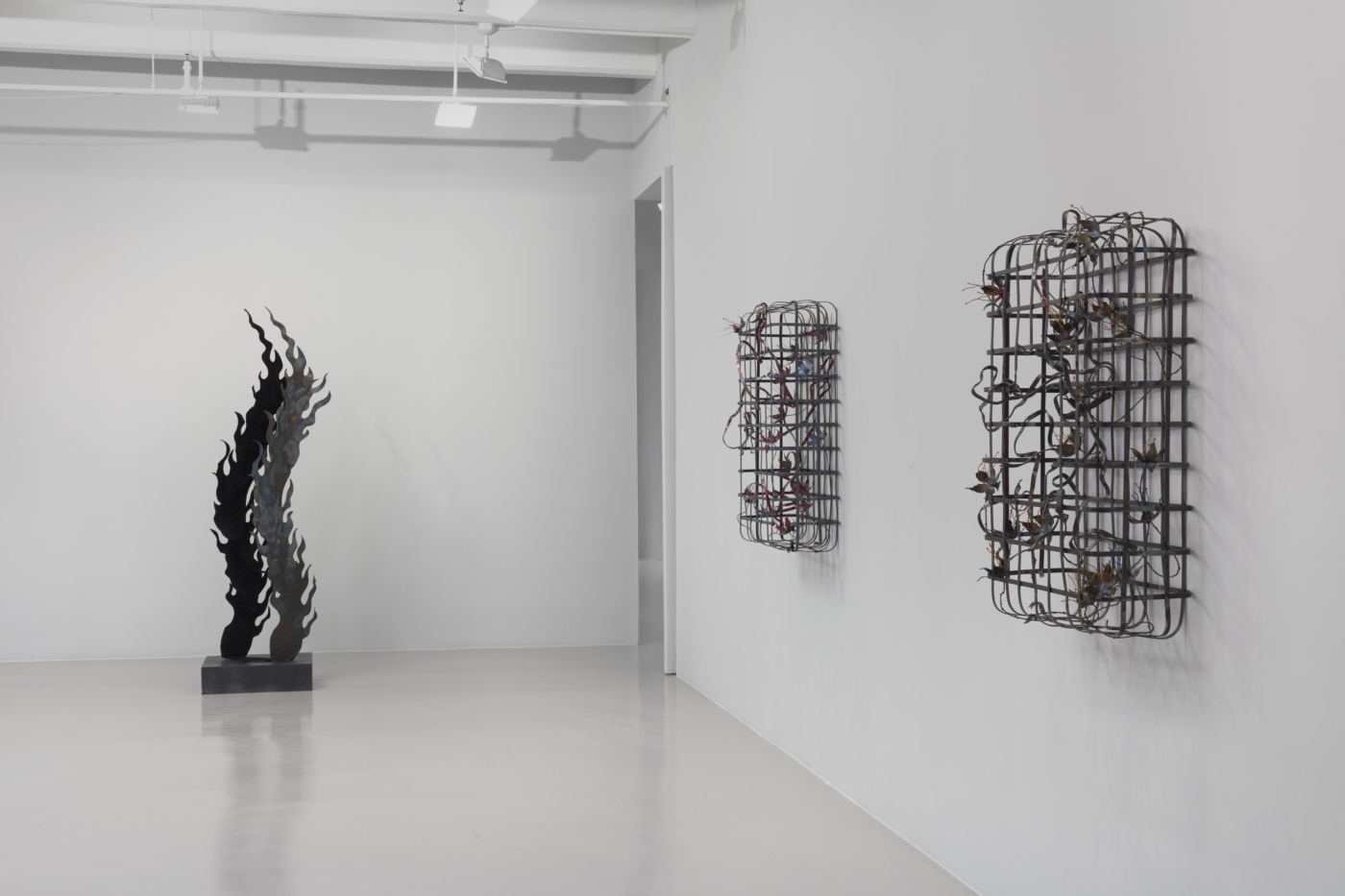
JC: And you know, to give it credit, just to talk about Sailor Moon, they’re not just transforming just to hang out. They’re transforming for combat.
AL: To vanquish cosmic demons who are trying to take over the world! So there is a point to it.
JC: That is their armor, it’s workwear.
AL: Yeah, absolutely. They put on those knee-high boots and they can kick ass. You know what I mean? That’s what it is.
JC: She needs her moon prism tiara.
AL: And it’s also, you know, it’s also such a beautiful space of femininity and friendship. And also, it’s so fucking queer. And it embraces a way of thinking about strength. It’s constant conversations and the sort of lesson of the episode boils down to a kind of finding a sort of inner value strength within yourself. Or finding a strength within friendship. Some beautiful shit, you know? So there’s some agency with these ribbons.
JC: Do you think there’s an objective in the work at all? Is there any big picture? Is there any big story you want to tell with the work?
AL: I think every project serves as a chapter in the narrative. I’m not sure what the book is overall or how it ends but I return to things. I think there’s a core. I think that things tend to touch that core and then sort of spark out. I think there’s also ways that things float around each other, sort of like a constellation. There’s a lot of spiral movements that are happening in the work. I go back and then get dizzy and then go back to something and think that I’m never going to make something like that ever again. I actually think that that spiral is very similar to the pattern of history.