
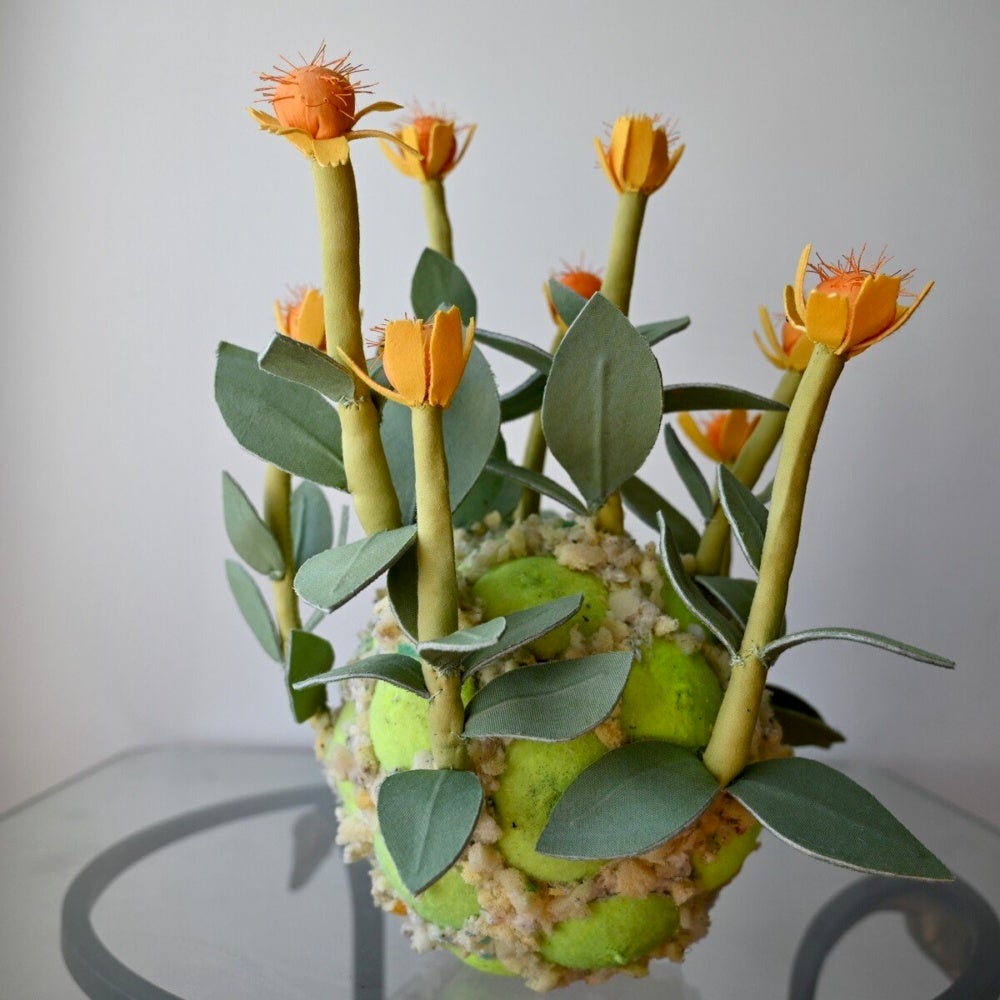
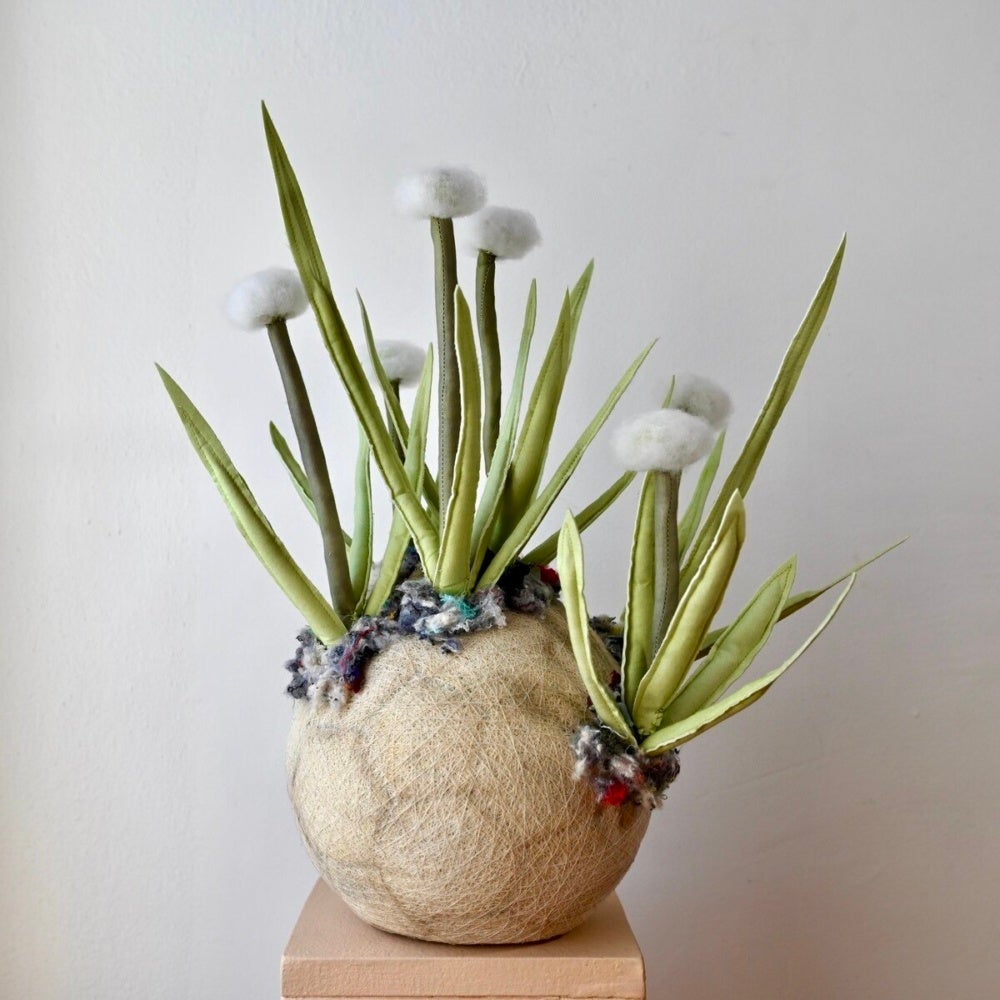
Weathering is a solo exhibition featuring the work of South Florida-based artist Alissa Alfonso, curated by Veronica Pesantes, and on view at the Miami Beach Botanical Garden. Freestanding sculptures, like Sunshine Mimosa (2025), Sea Ox-eye Daisy (2025), Dollar Weed (2025), and Fragrant Spikesedge (2025), are eponymously named and made in the image of local flowers and fungi. These works are nearly all “potted” in repurposed soccer balls, kickballs, or footballs reclaimed from the physical education grounds and recreational rooms at Miami-Dade County and Broward County schools. The pots are turned inside out, painted over, or somehow reimagined to abstract them from their former lives. Several abstracted, fluffed skyscapes representing the long, flat, and green horizons of the Everglades hang adjacent to the sculptures. Together, they create the effect of a surreal nature that is at once emblematic of the gardens around the exhibition and of an entirely different world.
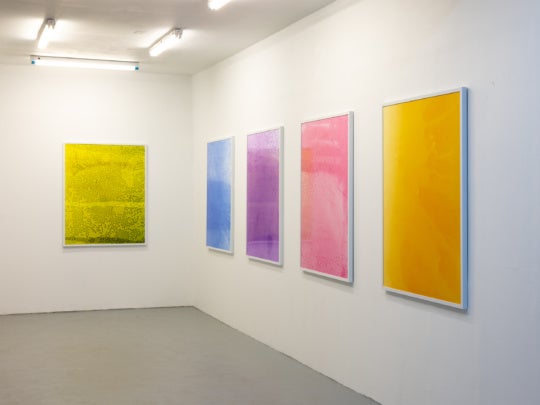
The fiber works on view are entirely sustainably made, from the colorful fabrics that Alfonso purchases secondhand, to the shoddy—a form of reclaimed wool—she sources from Fab Scrap in Brooklyn, New York to stuff her works. Growing up in Miami, Alfonso is a lifelong lover of the Everglades. While walking along its trails in the winter months, or during the feverish break in the sweltering yearlong heat when such trails are bearable to walk in the first place, she uncovers the subjects of her sculptures. Many of her materials are found in picking up trash that pops up along the natural habitat’s paths, like the shimmery lining of broken balloons that she reimagines as clouds in works like Dawn Rainbow Landscape 3 (2025) or Glades Night Landscape ll (2025).

As a UNESCO world heritage site, which engulfs nearly every border of South Florida county lines and provides the region with drinkable water, the Everglades is a point of contention between different subsets of the surrounding population. To developers, it is land ripe and ready for the taking, reflective of Miami and Fort Lauderdale’s ascension into mid-tier city status over the past sixty years. To local children, it is a sweaty place to learn about how alligators mate as Florida’s education system glosses over Indigenous history. To environmentalists like Alfonso, the Everglades is a site of inspiration and mission. In her practice, she offers a reclamation of natural spaces. Her intention is to heal one’s relationship with nature by re-representing the very plants Miamians have seemingly disowned. As with Oppositeleaf Spotflower (2025) and Leopard Plant (2024), many of the featured plants in the works on view are medicinal, representing the healing that takes place alongside nature rather than against it. Even in these sites of beauty, however, evidence of human development creeps in.
Golden Cloud Blanket (2025) features what the sunsets of today’s South Florida look like, with blue fading into orange and pink backdrops that resemble a smattering of clouds. These picturesque views demonstrate the realities of human degradation, since their frequency and vibrancy are a result of an unnatural phenomenon known as the “Rayleigh scattering,” where dust and air pollutants reflect light so as to create this effect.[1] While new awareness of the global value of the Everglades grows, much of the damage is already done.
Alfonso’s Weathering recreates an Everglades of her own imagination, with its emblematic sunsets and its varied fauna, and made entirely of the very waste society heaps off carelessly into its terrain. In doing so, she offers viewers a moment to remember the rare pearl they have in their backyard and re-imagine the many ways in which such waste can take on a new life.
[1] Maxwell, Amanda. “What Causes a Pink Sunset, and Where Can You See One?” Northrop Grumman, December 2, 2022. https://now.northropgrumman.com/what-causes-a-pink-sunset-and-where-can-you-see-one.